admin

  • Posted in:

    Hercules/Wallace grapples Cerberus

    “It seems extraordinary that NAMA did not know who the legal advisors to Cerberus were until after the Project Eagle portfolio was sold. Someone should be fired for incompetence”, Wallace told Village

    Loading

    Read more

  • Posted in:

    More help, faster

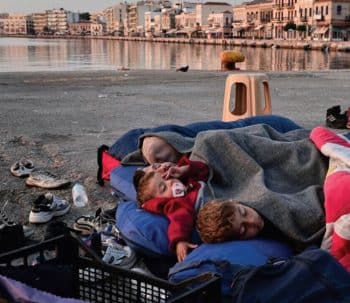
    Ireland has the power to respond to the refugee crisis in Greece Nadi, a young Iraqi woman wrings her hands in despair. She has brought her family this far in search of safety and is now waiting to see if they will be relocated to another country in Europe. Her husband, who has difficulty walking unaided due to an injury from a bomb blast, sits in silence beside her as she recalls their journey. They travelled by boat from Turkey to Greece with their three small children and her brother who has an intellectual disability. After several months spent in a refugee camp on the island of Chios Nadi’s family awaits its fate in Athens. “I want to be relocated to Ireland, the people are so friendly and welcoming there”. Many families, like Nadi’s, are stranded in Greece waiting to be relocated. During my trip I met numerous refugees wishing for a better life in Ireland and elsewhere. Greece continues to be at the frontline and in recent weeks more and more people have arrived on the Greek islands following the attempted coup in Turkey. Conditions in refugee camps, particularly on the island of Chios, are extremely difficult. The camps are overcrowded, with inadequate sanitation facilities; vast areas of tents and tarpaulin with families waiting in the sweltering, exhausting heat. There are only six showers with no hot water for approximately 1,100 refugees in Souda camp in Chios. Rats and snakes also malinger there. The tension sears the camp as people grow increasingly frustrated. A feeling of abandonment permeates the air. If it were not for the tremendous work of volunteers and NGOs, the situation would be much worse. At the ‘hotspot’ of Moria on the island of Lesvos (Lesbos) what strikes you is the barbed wire: huge swathes of it around every corner of the camp. Some refugees are housed in steel containers while others are left in plastic tents. A compound enclosed by a chain-link fence and more barbed wire is home to the unaccompanied children on the island when there is no space left for them in the specialised centres. Approximately 1,470 unaccompanied children are detained in this manner throughout Greece. Approximately 95 unaccompanied children were detained in Moria in this manner during my visit. At the time of writing, due to a fire which destroyed the Moria camp, local Greek authorities have committed to moving all unaccompanied children to the mainland. Existing trauma and mental health issues are exacerbated by these living conditions. No child, no person should live like this. With more than 59,000 refugees, the Greek authorities are doing what they can but are completely overstretched. In comparison Ireland only received 3,276 asylum applications in 2015. Relocation: An effective response One act of solidarity the Irish government can make is to support Greece by relocating more refugees here in a swift manner. In September 2015, when the Irish Refugee Protection Programme was established, Minister for Justice Frances Fitzgerald declared that “It is only right that we do all we can as a nation to help… Ireland will offer a welcome safe haven for families and children who have been forced to leave their homes due to war and conflict”. Are we doing all we can to help? Where is that welcome? Although efforts have been made with the resettlement of refugees, our response under the relocation programme has been poor. So far only 69 people have been relocated from Greece, including only one unaccompanied child. Not one refugee has been relocated from Italy. The Irish government’s response is in stark contrast to other countries such as France, the Netherlands and Portugal which have relocated 1,431, 439 and 307 refugees respectively from Greece alone. Portuguese representatives even went to Greece to advertise Portugal to refugees as a destination under the relocation programme. When the EU decision to relocate 160,000 refugees in 2015 was made, it was based on the urgency of the situation, solidarity and the need for an exceptional emergency response to alleviate the situation in Greece and Italy. The spirit of the relocation programme was to speedily act to support Greece and Italy. That need for speed has not been picked up in Ireland’s response. In our time spent planning to ensure that facilities are in place for when relocated people arrive here we are failing refugees who are losing hope living in places like Souda camp in Chios. A fast response is essential. Although operational delays in Greece hampered the start of the relocation programme, that is no longer a factor. The Greek authorities, in collaboration with the European Asylum Support Office and the International Organisation of Migration, are processing relocation cases and the delays are more attributable to other countries not responding to requests quickly enough. Recent pronouncements from Minister Frances Fitzgerald show a commitment to ensure that the relocation programme will become more operationalised here in the coming months. That is to be welcomed, but the urgency of the situation in Greece cannot be emphasised enough. The scale of the humanitarian crisis requires an emergency response. In contrast to our relocation efforts, Ireland has made significant progress in resettling refugees. So far, 377 refugees have been resettled from the Lebanon with Ireland committing to resettle a total of 520 refugees by the end of this year. The Irish defence forces have also done tremendous work as part of their humanitarian mission in the Mediterranean Sea where they have saved more than 11,500 lives. As part of our response to the refugee crisis it is also important to remember the 4,300 people who are already here, living in Direct Provision, on average for three years before they receive a decision on their application for refugee status. Nearly 1,000 children currently live in this system which has been widely criticised as being an entirely unsuitable environment for young people. Avoiding a discriminatory two-tiered system for different marginalised groups is essential. Resources also need to be committed to those languishing in Direct

    Loading

    Read more

  • Posted in:

    Villager

    Quays, pees, pleas Years after they banned trucks from the riverside, Villager’s principal experience of Ormond Quay in front of the Village office is still really just somewhere to get run over. The gentlemen from Eircom have kindly removed the two drug dealers’ telephone boxes outside the door, so urine from the city’s drunkards can now flow undiverted into the gutters but it is still difficult to be enthusiastic. It is very difficult to love the River Liffey. It’s not somewhere from which you hear the peals of joyous children at swim or at play. This magazine has in the past promoted the idea of a jungle from O’Connell St to Heuston but the city fathers will never do anything until it has been tried and tested in Leicester and Wolverhampton and a decade or two passed. So it is no surprise that plans for pedestrianisaton, less still greening, of the quays have been botched for want of civic imagination and civic bottle. Nevertheless it is encouraging that Dublin City Council, is keeping its nerve on a quayside cycle route, for the moment. In the teeth of residents’ pleas, it intends, we hear, to permanently ban private cars and lorries from Ellis and Arran quays, on the north side of the river, and to divert vehicular traffic for 1.5km through the residential streets of Stoneybatter, Dublin’s Greenwich Village, and Smithfield, Dublin’s Times Square. While diverting traffic into residential areas is, as Councillor Mannix Flynn says, unethical, there is no option and the hope must be that all, especially the discommoded residents, will make life so difficult for blasted cars that they simply stay at home, or in the ground. Menxit The case that Brexit was about the underclass, globalisation, and rising inequality has been inconveniently assailed by poll data presented by Professor Danny Dorling, Professor of Geography at Oxford University in a report for BBC’s ‘Newsnight’. “The vote to leave Europe was largely a middle class, English vote”, he has concluded.   Meaningful surnames As part of his ongoing quest to link surnames to appropriate occupations or behaviour, Villager notes: May Theresa May is most interesting for whether she may Not. Gunning Fatima Gunning, an anti-abortion zealot, recently posed in a Repeal jumper with a banner designed to discredit her opponents, appealing implausibly for “abortion for terminally ill babies”. Handler, Jolie, Pitt Jennifer Aniston’s interests are well mediated by her pal Chelsea Handler who, among other things, recently ripped into pretty Angelina Jolie on her Netflix comedy show, berating her husband for getting involved with her in the first place. The outspoken TV host called Jolie a “f***ing lunatic” who had driven badly-behaved Brad Pitt to booze and pot as an escape. She went on: “Maybe because he could have been spending the last 12 years at Lake Como hanging out with George Clooney and Matt Damon, instead of being stuck in a house with 85 kids speaking 15 different languages”. Someone noticed Village, it’s Trump… Donald Trump quoted and linked to a profile of Denis O’Brien written by the editor and published in Village in the candidate’s press release indicting the media mogul’s links to the Clintons. The passage stated that O’Brien “is a mate of former President, Bill Clinton. Indeed he flew him to the recent Dublin Castle beano in his jet, and later paid the tab for a late-nighter in the Unicorn restaurant, with Clinton, the strangely ever-present Séamus Heaney, and 22 others”. …but, maybe, not the Irish Times A piece by investigative Titan, Peter Murtagh, in the Irish Times documenting Trump’s press release recorded the other six organs cited but strangely omitted Village, which is usually hysterical about the Irish Times and once said its nice editor, Kevin O’Sullivan, should resign when his failure to publish part of the Dáil transcript of Catherine Murphy’s allegations about Denis O’Brien’s banking arrangments was found, as it surely later was, by the High Court to be legally without any grounds. Not O’Reilly And we can add Trump to the list of people who may have commissioned the mysterious Red Flag dossier on O’Brien! What are you doing, Caitriona Perry? The media, led by RTÉ continually report that Denis O’Brien still “challenges” the findings of the Moriarty Tribunal that he channelled £867,000 to Michael Lowry after Lowry had granted the third mobile-phone licence to O’Brien’s Esat in 1995. Since there is no sign of a legal challenge to the Tribunal’s findings – indeed a challenge would be out of time – the word can only be being used in a sense so weak that it is scarcely worth bothering with. They all partied The IMF is urging governments to tackle record global debt of $152tr, 225% of global GDP and rising, with the private sector responsible for two-thirds of the total. The debt level is more than twice the size of the global economy and unprecedented as a proportion of GDP, the Fund says. So if the world wanted a mortgage, it wouldn’t get one. One-way? The EU is sponsoring free Interrail passes for all 18-year-olds. Why not one for everyone in the UK? Missed that meeting Villager’s favourite soccer and Olympics administrator, John Delaney, issued a release saying he “had no knowledge or awareness of PRO 10 or its position as the Olympic Council of Ireland’s ticket reseller”. It is strange that he would have no knowledge of it as PRO 10 has donated over €50k in sponsorship to the OCI of which Delaney is eminent Vice-President. Labour Party ideology A policy introduced in 2012 by former minister for social protection Joan Burton, of compelling lone parents to look for work could make families poorer, according to a Government-commissioned report from the UNESCO Child and Family Research Centre at NUI Galway. It was part of the move since the late 1980s from passive to active labour market policies within the Irish welfare state. ‘Lone Parents and Activation, What Works and Why’ includes a review of international experience of

    Loading

    Read more

  • Posted in:

    Martyr for a cause

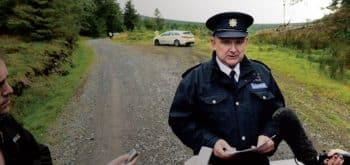
    A man whose body was found in the Dublin mountains on Friday 30 September had successfully campaigned to have a quarrying operation in the area closed down last year. Michael McCoy, a father of three in his early sixties, who was last seen walking his dogs in the Brittas area of county Dublin on the previous day, was a leading member of the Dublin Mountain Conservation Group. Last October, he won a landmark judgment when the High Court ordered the closure of the quarrying operation on the site of the 465 metre Butler Mountain near Brittas, county Dublin. Ms Justice Marie Baker ordered that the unauthorised quarrying by Shillelagh Quarries Ltd should cease and remediation work carried out. McCoy’s successful application for an order to cease the quarrying operations on a 3.27 hectare area of a larger 25-hectare site was supported by South Dublin County Council. Two special areas of conservation (SACs) are located near the quarry site. The case was taken against Shillelagh Quarries Ltd and the site owners. According to the heritage officer of An Taisce, Ian Lumley, McCoy was a committed environmentalist whose main concern was that developments in the scenic Dublin mountain area where he lived should comply with the law. This despite much of the media implausibly describing the killing as resulting from a “land dispute”. “I was in regular contact with Mr McCoy over the years”, Lumley told Village. “He was very focused on the surrounding environment. All he was concerned with was that development activity should be in compliance with the law. He was a reasonable, measured and sensible person who was also realistic when it came to the legal process. He campaigned about illegal dumping, quarrying activities and development generally if he felt they threatened the environment”. In her judgment last year, Judge Baker rejected a claim by the quarry operators and landowners that the works had commenced before the coming into force of planning legislation in 1964 and were therefore exempted and not unauthorised. She also rejected their argument that the case was time barred and/or that the council and Mr McCoy were guilty of such prolonged and unexplained delay that the court should refuse the orders sought. Ms Justice Baker said Shillelagh Quarries Ltd. had carried out their commercial activities despite a refusal of their application for planning permission by An Bord Pleanála in 2010. She said that the quarrying work had “created a discordant landscape in an area of exceptional public amenity”. A man believed to have been known to Mr McCoy was arrested and later released without charge a day after the discovery of the dead man’s body close to a forest track at Ballinascorney Hill near Brittas at 4.00 a.m. on the Friday morning. A file has been prepared for the Director of Public Prosecutions. The distress of McCoy’s family has been aggravated by the disappearance of one of their long-tailed boxer dogs and they have issued pleas for help in finding the dog, who was seen on the Ballinascorney Road, and asked anyone finding her to take her to the DSPCA.   Imminent judgment in ‘Three Trouts’ defamation action Elsewhere, Judge Baker is expected to deliver her judgment later this month in the long running defamation case brought by a member and former member of Wicklow County Council against the council and now retired county manager, Eddie Sheehy. Councillor Tommy Cullen and former councillor Barry Nevin took the action following comments in a press release issued by the council in April 2013 which accused the politicians of making “unfounded and misconceived” allegations in relation to the compulsory purchase of lands by the council close to Three Trout stream at Charlesland near Greystones several years previously. The press release said that the “misconceived” allegations of Cullen and Nevin has resulted in a loss to the Council of circa €200,000 in respect of interest foregone and administrative costs in addition to the costs of an independent review commissioned by then environment minister, Phil Hogan into the CPO. The defamation claim was first rejected by the Circuit Court two years ago but the decision was appealed and the case continued for several weeks in the High Court earlier this year. Councillor Cullen last week met environment minister, Simon Coveney, and asked him to complete the long promised review by his department into a series of allegations in relation to planning and rezoning matters, as well as illegal dumping, in county Wicklow.   By Frank Connolly  

    Loading

    Read more

  • Posted in:

    The serious business of proofing

    The May 2016 Programme for Government commits the Government to “develop the process of budget- and policy-proofing as a means of advancing equality, reducing poverty and strengthening economic and social rights”. In doing so, it specifically recognises the Irish Human Rights and Equality Commission (IHREC) as an independent expert body to support the development of this proofing. The commitment focuses on equality and human-rights budgeting including by developing institutions to support proofing processes in key Government Departments and strengthening the budget-scrutiny role of the Oireachtas. There is a separate commitment for the Department of Public Expenditure and Reform to advance the role of social impact assessment. Ireland was once a leader in policy-proofing. The 1997 National Anti-Poverty Strategy ‘Sharing in Progress’ pioneered ‘Poverty Proofing’ to assess all major policies and programmes at design and review stages to ensure that they either contribute to reducing poverty or, at least, do not increase poverty. It was applied to major economic and social proposals and was embedded in the Strategic Management Initiative for the public sector. A National Economic and Social Council evaluation in 2001 found a high level of formal compliance with poverty- proofing. However, there was confusion as to whether the objective was tone-setting or practical. Over time there was a shift from overall poverty-proofing to specific poverty-impact assessment in the Office for Social Inclusion. The non-statutory exercise became a ‘tick box’ exercise, and there was a gradual rundown of the supporting institutions including the Office of Social Inclusion. Elsewhere, the Gender Equality Unit in the Department of Justice, Equality and Law Reform developed, promoted and supported Gender Impact Assessment Guidelines for the National Development Plan 2000- 2008. This had been mandated by the EU for disbursement of its Structural Funds. Progress was found to have been made on mainstreaming gender under the headings dealt with by the National Development Plan. However, progress uneven. The process ended with the closure of the Gender Equality Unit. An Equality Proofing Working Group was established in the Department of Justice, Equality and Law Reform. It was an initiative of the Equality Authority which funded it 2000-2008. It instigated a number of pilot projects, promotional events, proofing tools, and data analyses to support policy-making to take account of the situation, experience and specific needs of groups experiencing inequality and covered by the grounds in equality legislation. This initiative collapsed with the diminution of the Equality Authority over the 2009-2010 period. It is difficult to isolate specific outcomes generated through these processes. However, progress includes: process innovations including in information provision, data-gathering and analysis; greater transparency; greater accountability; and culture change within public institutions. Improvements were also made in various policy areas. The procedural and substantive progress smoothed the path for new commitments to human-rights and equality-proofing, including equality and human-rights budgeting. The commitment to human-rights and equality coincides with changes to, and pressure for reform of, the budget process. An OECD report, ‘Review of Budget oversight by Parliament: Ireland’ in 2015 recommended a range of reforms aimed at improving the quality of policy-making, resource-allocation and accountability, and ultimately at promoting better outcomes for citizens. These reforms included greater ex-ante engagement of the Oireachtas in fiscal planning through commitments by Government to provide more information to the Oireachtas and the establishment of a Parliamentary Budget Office to analyse information about taxation, expenditure and performance, and to cost policies. There have been a number of important new developments in the budgetary process this year. These include publication of the Spring/Summer economic statement (SES) and parliamentary engagement in the National Economic Dialogue (NED), which the budget scrutiny committee attended, in June. In July the Tax Strategy Group papers were published and forwarded to parliamentary committees. The Budget White Paper will continue to be published on the Friday before Budget Day. Documents available on Budget Day will now include distributional analyses. SWITCH analysis will be available before the Social Welfare and Finance Bills. The Department of Public Expenditure and Reform will have regard to equality and human-rights-proofing as part of its social impact assessment framework. There will be a new ex-ante focus on the ‘Stability Programme Update’ with more parliamentary comment encouraged, and there will be greater parliamentary engagement with mid-year expenditure reports. At the end of June 2016 the ‘Report of the Select Committee on Arrangements for Budgetary Scrutiny’ set out proposals, on foot of the Programme for Government, for a new budget scrutiny framework. This should include: a Budget Oversight Committee which has since been established; enhanced budget scrutiny by existing Oireachtas sectoral Committees that should involve engagement with civil society; and the early establishment of the Independent Parliamentary Budget Office – on a non-statutory basis in the first instance and on a statutory basis within two years. This Report also states that Government proposals for budget changes and policy changes should be policy-proofed with specific reference to gender, age, disability, poverty and regional impact, and should be subjected to a distributional impact assessment. It recommends that the Independent Parliamentary Budget Office should liaise closely with IHREC, taking opportunities for exchange of information and learning about their respective agendas. As to Budget 2017 on 11 October, the Select Committee recommended that, to advance the proofing arrangements, the Department of Finance and the Department of Public Expenditure and Reform should be requested to provide an early briefing on the development and implementation of the Government’s proofing of the budget-making process – to the Committee on Budgetary Oversight. However, it would be better if individual Ministers could also be asked to engage with their counterpart committees in the early autumn over progress made in the proofing of any specific proposed policies. All this represents substantial progress on the Government’s commitment to enhanced engagement with the Oireachtas throughout the budget cycle. However, it is clear that the 2017 staging posts are constrained by Constitutional provisions and by executive prerogatives. Therefore, it is expected that much of the meaningful parliamentary engagement with the budget will focus on the legislative stages

    Loading

    Read more

  • Posted in:

    Too big to fail, or even be reformed

    Since the start of the Global Financial Crisis back in 2008, European and US policymakers and regulators have blamed the international banking system for systemic risks and abuses. Regulatory and supervisory authorities have begun designing and implementing system-wide responses to the causes of the crisis. What emerged from these efforts was an explosion of regulatory authorities. Regulatory, supervisory and compliance jobs mushroomed, turning legal and compliance departments into a new Klondike, mining the rich veins of regulations, frameworks and institutions. The edifice, it was presumed, would address the causes of the recent crisis and create systems that can robustly prevent future financial meltdowns. At the forefront of these global reforms are the EU and the US which took two distinct approaches to beefing up their responses to the systemic crises. Yet, the outrun of the reforms is the same. The US has adopted a reform path focused on restructuring of the banks – with the 2010 Dodd-Frank Act the cornerstone. The capital adequacy rules closely followed the Basel Committee which sets these for the global banking sector. The US regulators have been pushing the folk at Basel to create a common ‘floor’ or level of capital a bank cannot go below. Under the US proposals, the ‘floor’ will apply irrespective of its internal risk calculations, reducing banks’ and national regulators’ ability to game the system, while still claiming the banks remain well-capitalised. Beyond that, the US regulatory reforms primarily aim to strengthen the enforcement arm of banking supervision. Enforcement actions have been flying since the ‘recovery’ set in, in 2010. Meanwhile, the EU has gone about the business of rebuilding its financial markets in a traditional, European, way. Any reform momentum became an excuse to create more bureaucratese and to engineer ever more Byzantine, technocratic schemes in the hope that somehow the uncertainties created by the skewed business models of banks get entangled in a web of paperwork, making the crises if not impossible at least impenetrable to the ordinary punters. Over the last eight years, Europe created a truly shocking patchwork of various ‘unions’, directives, authorities and boards – all designed to make the already heavily centralised system of banking regulation even more complex. The ‘alphabet soup’ of European reforms includes: • the EBU and the CMU (the European Banking and Capital Markets Unions, respectively); • the SSM (the Single Supervisory Mechanism) and the SRM (the Single Resolution Mechanism), under a broader BRRD (Bank Recovery and Resolution Directive) with the DGS (Deposit Guarantee Schemes Directive); • the CRD IV (Remuneration and prudential requirements) and the CRR (Single Rule Book); • the MIFID/R and the MAD/R (enhanced frameworks for securities markets and to prevent market abuse); • the ESRB (the European Systemic Risk Board); • the SEPA (the Single Euro Payments Area); • the ESA (the European Supervisory Authorities) that includes the EBA (the European Banking Authority); • the MCD (the Mortgage Credit Directive) within a Single European Mortgage Market; the former is also known officially as CARRP and includes introduction of something known as the ESIS; • the Regulation of Financial Benchmarks (such as LIBOR & EURIBOR) under the umbrella of the ESMA (the European Securities and Markets Authority), and more. The sheer absurdity of the European regulatory epicycles is daunting. Eight years of solemn promises to end the egregious abuses of risk management, business practices and customer trust in the American and European banking should have produced at least some results when it comes to cutting the flow of banking scandals and mini-crises. Alas, as recent events illustrate, nothing could be further from the truth. America’s Rotten Apples In the Land of Freedom [from individual responsibility], American bankers are wreaking havoc on customers and investors. The latest instalment in the saga is the largest retail bank in North America, Wells Fargo. Last month, the US Consumer Financial Protection Bureau (CFPB) announced a $185m settlement with the bank. It turns out the customer-focused Wells Fargo created over two million fake accounts without customers’ knowledge or permission, generating millions of dollars in fraudulent fees. But Wells Fargo is not alone. In July 2015, Citibank settled with CFPB over charges that it deceptively mis-sold credit products to 2.2 million of its own customers. The settlement was many times greater than that of Wells Fargo, at $700m. And in May 2015, Citicorp, the parent company that controls Citibank, pleaded guilty to a felony manipulation of foreign currency markets – a charge brought against it by the Justice Department. Citicorp was joined in the plea by another US banking behemoth, JPMorgan Chase. You heard it right: two of the largest US banks are felons. And there is a third one about to join them. This month news broke that Morgan Stanley was charged with “dishonest and unethical conduct” in its dealings in Massachusetts securities “for urging brokers to sell loans to their clients”. A snapshot of the larger cases involving Citi and its parent company shows they have faced fines and settlement costs of over $19bn between 2002 and 2015. Today, the CFPB has over 29,000 consumer complaints against Citi and 37,000 complaints against JP Morgan Chase outstanding. Citi was the largest recipient of the US Fed bailout package that followed the 2008 Global Financial Crisis. It obtained heavily subsidised loans totalling $2.7tr or roughly 16 percent of the entire bailout in the US. But there have been no prosecutions of Citi, JP Morgan Chase or Wells Fargo executives. Europe’s Ailing Dinosaurs This state protection is matched in the case of another serial abuser of market rules: Deutsche Bank. According to US Government Accountability Office (GAO) data, during the 2008-2010 crisis Deutsche got $354bn of emergency financial assistance from the US authorities. In contrast, Lehman Brothers got only $183bn. Last month, Deutsche entered into talks with the US Department of Justice over the settlement for mis-selling mortgage-backed securities. The original fine was set at $14bn – enough to effectively wipe out the capital reserves cushion in Europe’s largest bank. Latest financial-market rumours

    Loading

    Read more

  • Posted in:

    Clinton in perspective

    Rejected Democrat candidate Bernie Sanders would have done nicely. He is passionate about the agendas of equality, sustainability and accountability. On equality: “The issue of wealth and income inequality is the great moral, economic and political issue of our time”. On Climate: “Climate change is the single greatest threat facing our planet. On accountability: “Are we prepared to take on the enormous economic and political power of the billionaire class, or do we continue to slide into oligarchy?”. Sanders, much more than Corbyn in Britain, more than the anti-property-tax, anti-water-charge Radical Left in Ireland, gets it. However, in his absence we are left with two conservative candidates: one sober and clever, the other bombastic, mendacious, fascistic and intolerant. Clinton is strong on the environment and climate but doesn’t buy the rhetoric or the meat on equality, and her record on accountability is tainted. Trump never mentions equality, doesn’t believe in climate change and can’t stop lying and reversing his positions. It would be better to like Hillary Clinton but she’s just too boring, just too insincere, just too compromised and above all just too conservative for this magazine. Since every word she has said since Bill became Governor in Arkansas in 1978, when she was 30 has been parsed and often shredded, she has not really been alive to exciting new ideas. Her intellectual curiosity seems to have peaked as an academic in Yale when she had radical views on children. Her political life has been a history of triangulation, of compromise, of expediency with, for America, a vaguely liberal, Democrat- just-left-of-centre gloss. This is a woman who until three years ago was not even in favour of gay marriage. In 2005 she said “I believe marriage is not just a bond but a sacred bond between a man and a woman”. She does not have the instincts of secular European liberals: “Bill and I went into our bedroom, closed the door and prayed together for God’s help as he took on this awesome honor and responsibility”, Clinton wrote of her husband winning the 1992 election. She grew up in a Methodist household, taught Sunday school like her mother and is a member of a Senate prayer group. Hillary has had a difficult time in the public eye but coped with some dignity, for example, with a husband who had a nastily roaming eye. Unfortunately for this otherwise gilded couple: for many the rosy picture they paint of undaunted mutual support rings false. This is something Trump was always liable to exploit. She is not an empathetic candidate. She is a shocking orator, shouts at public meetings and weirdly emphasises the wrong parts of words and sentences. More substantively, Hillary was never far from nancial wrangles when Bill was in the White House: there was Whitewater, Travelgate, Filegate, and a cattle-futures controversy. Anomalously and disturbingly for someone whose earnings ow almost exclusively from her public life, she now has an estimated worth of $45m. For the fifteen months ending in March 2015, Clinton earned over $11m from speeches and in 2013 she was paid $225,000 to speak at a Goldman Sachs’ conference on ‘Builders and Innovators’. When the Clintons’ indulgence of a revolving door of their policy-makers into and out of top positions in delinquent banks is taken into account, it leaves an unpleasant odour. Inevitably with such a long record in public life Clinton has left a legacy of controversy. Her failure to get healthcare reform through Congress during her husband’s Presidency has been attributed to arrogance. Her political life has been a history of triangulation, of compromise, of expediency with, for America, a vaguely liberal, Democrat-just-left-of-centre gloss steady and wonkish but generated a number of controversies. When in 2012 members of the US diplomatic mission in Benghazi, Libya, were killed, Clinton was forced to take responsibility for security lapses. In 2015, it was revealed by the State Department’s inspector general that Clinton had always used personal email accounts on a private server instead of a federal server, during her tenure as secretary of state. In July the FBI concluded an investigation. The FBI said: “It is possible that hostile actors gained access to Secretary Clinton’s personal email account”. Although Clinton or her colleagues were “extremely careless in their handling of very sensitive, highly classified information”, the FBI recommended no charges. Clinton has tended to exaggerate the extent of the FBI’s exoneration of her. On many issues, the positions of Clinton and Trump align with that of their parties – Clinton wants to raise taxes on high-income households while Trump wants to cut taxes for all income brackets Clinton is pro-choice, Trump is pro-life; Clinton supports the DREAM Act and a path to citizenship for undocumented immigrants, while Trump wants to deport all undocumented immigrants, build a wall on the Mexican border and be nasty to China; Clinton wants to expand gun control legislation, Trump does not;. Clinton is for LGBT rights; Trump says he sees himself as a “traditional guy” on the issue. On other issues, the lines are more blurry. Ironically, for example, alleged billionaire Trump claims to be for the small voter. Clinton has served as Secretary of State in the Obama administration, where she was responsible for orchestrating US foreign policy. She is perceived as more interventionist than Obama. Trump tends to non-intervention. Unless someone annoys him. Michael Smith

    Loading

    Read more

  • Posted in:

    ‘A Date for Mad Mary’, into the difficulties of a troubled woman

    ‘A Date for Mad Mary’ is one of the most heartfelt and immediately loveable films of the year. Based on Yasmine Akram’s play, ’10 dates for Mad Mary’, and directed by first time director Darren Thornton, the film is a compassionate tale of friendship, love and adversity. The film stars relative unknown Seána Kerslake, as the titular character “Mad” Mary McArdle. The plot involves Mary’s recent release from Mountjoy prison, after an apparent assault charge, as well as her subsequent attempt at reintegration into her old way of life, in Drogheda. But, as she soon comes to realise, the life she left, for better or for worse, is not the same as the one awaiting her upon her return. Her best, and only, friend Charlene (Charleigh Bailey) is about to get married. Charlene denies Mary a “plus one” invite to the event, assuming that she would be unable to find a date in time, leading Mary to become determined in disproving her. Struggling to find her place in a world she is completely ostracised from. This relatively unassuming plot summary does nothing to speak of the true richness of this film, which lies in its characters and the quality of its script. Through our protagonist of Mary, we are granted insight into the very down-to-earth life of a young woman who finds herself at constant odds with the world around her, while desperately clinging to a life she once knew, but which has left her behind. Alienated by her friends and family she attempts to both mature as a person, while staying true to herself. Mary is an incredibly well-written and captivating character. Seána Kerslake gives an incredible, nuanced performance of her character’s subtle complexities, especially for such a new face in film. From her gruff, abrasive exterior to her more sensitive and lonely side. Eloquently expressing emotion with little more than a twitch of the lip or a seemingly vacant gaze, achieving a calibre of performance, which even the recent breakout success ‘Sing Street’ could not. Thornton masterfully directs scenes from beginning to end, with a particular highlight being the scene in which Mary comes face to face with the victim of her assault. This wordless encounter manages to say more than any dialogue could about the ways in which Mary’s past haunts her, like an inescapable, ghostly presence, looming over her at all times. His incredible sound work with this scene is enthralling. On one level, ‘A Date for Mad Mary’ is a wonderful, true to life look into the difficulties of a troubled woman transitioning into maturity. But, on another level it is also a sign of the times for Irish cinema, which has seen a recent renaissance of sorts, with modern Irish films such as ‘Calvary’, ‘Frank’, ‘Brooklyn’, ‘Room’ and the previously mentioned ‘Sing Street’ all receiving international, critical acclaim. With two of the aforementioned films receiving nominations for best picture. As well as the country itself being used by larger productions as a frequent filming location, such as ‘Game of Thrones and Star Wars: The Force Awakens. One contributors to the current success in Irish cinema was made possible by the re-establishment of the Irish Film Board in 1993. The Irish Film Board attempts to bring Irish films to international audiences, through their assistance and funding. The fruits of their labour, however, have begun to truly ripen in the past half decade or so, with an increase in recognition for their achievements. The film industry has taken years to get to this point, with over twenty years already spent in the funding of Irish projects. It was a long process for the board to acquire the necessary skills to both identify viable projects and to advise film makers on the production of those projects. Unfortunately the Irish Film Board’s funding is down 40 per cent to €11.2 million from its 2008 peak of €20 million. The challenge now for the Irish film board and the industry is to make a persuasive  case for a re-establishment of funding levels seen prior to 2008. To do this they will need to both persuade the government and the wider film going audience of its merits. Brian Lenihan

    Loading

    Read more

  • Posted in:

    Ideology Debate

    Good or bad not right or left What does “left” mean today now that socialism is no longer on offer? By Desmond Fennell My exasperation with the use of language in current political commentary has culminated with a word that is now much-favoured by the commentators, namely, “populist”. The Oxford English Dictionary says that populist means: 1. “A member or adherent of a political party seeking to represent the interests of ordinary people. 2. A person who supports or seeks to appeal to the interests of ordinary people. Origin Latin populus ‘people’”. Political commentary (call it PC) always couples populism with “far right” as in “a populist far-right party”. “Right”, as we all know, means in PC language wrong; “farright” very wrong; an illegitimate intrusion into the democratic process no matter how many citizens it comprises. Clearly this view that politics “representing the interests of ordinary people” is by that very fact wrong is an elitist, anti-democratic view But it does raise the question: why is there is no mention of a left or far-left populism? Is it that simply there is no such thing? True, the Irish Labour Party could not qualify. When Eamon Gilmore, Ruairi Quinn and Pat Rabbitte were ministers they pursued in their respective spheres neo-liberal policies calculated to appeal to Dublin 4. But what of the water politics of Paul Murphy and associated Independents which drew many thousands of “ordinary people” onto the streets? Whatever the explanation, the fact is that – outside perhaps of Village Magazine – PC makes no mention of left-wing populism. I said at the start that my exasperation with PC has culminated with its use of “populist”. That means that other things about it had been building up to that exasperation. Basically, why doesn’t current PC use ordinary contemporary language, with its dictionary meanings, to express what the writer believes about individual politicians or groups or parties: words like ‘good’ or ‘bad’ with explanations of why good or bad, rather than a jargon which does not express in plain words what the writer means to say? Surely such hoary members of the political cast as “left”, “right”, “progressive” and “conservative” have more than had their day? At least in the French National Assembly of more than 200 years ago from which “left” and “right” derive, one knew that they referred to the Assembly’s seating arrangements and to those who sat accordingly. But what does “left” mean today now that socialism is no longer on offer? As for “right” the PC jargon equates it with “authoritarian”; but what is more authoritarian than Communist Russia which PC gave out to be “left”, or Communist China and North Korea today similarly? And take “progressive” meaning “moving forward”, but forward towards what? Is a state moving forward towards war “progressive” and if not why not?As for “conservative”, that is, “preserving something existing”, must such preservation always be objectionable as current PC implies? In short, I look forward to the day when some political commentator takes the present mess of the profession in hand and writes about politics in language that plainly and unmistakably means what it says. Left – egalitarian Good and bad won’t predict how politicians exercise the mandate voters give them By Michael Smith Desmond Fennell is exasperated. In a typically erudite piece (left) it is nevertheless not clear just what his analysis and vision are. The suspicion is that the piece is grounded in an unarticulated conservative right-wing populism, ill at ease with the reality that that is the prevailing international ideology. To start with the beginning of his piece, political commentary doesn’t always – or even predominantly – couple populism with “farright”. It really doesn’t. Venezuela, Brazil, Cuba and much of South America historically represent far-left populism writ large and have been defined as such. Podemos in Spain and Syriza in Greece have dominated political commentary for the last few years and are far-left populists. People Before Profit and the Anti Austerity Alliance in Ireland are far-left populists, pursuing that agenda through “issues-based” campaigns especially on charges for water and waste and the property tax – campaigns that are chosen for their popularity, not their leftistness. Sinn Féin also pursues the same campaigns from an apparently left base. Right doesn’t mean wrong for political commentators. Right is right for most of the US and British Press, for the emanations of IMN and Denis O’Brien, for the Sunday Business Post, the Sunday Times and, in incarnations like Stephen Collins and Cliff Taylor, for much of the Irish Times.   PC – and there’s sleight of hand here because PC has a very well-established voguish meaning of political correctness even though that’s being glossed over here – uses little but ordinary language with its dictionary meanings. Left, right, progressive and conservative will never have had their terminological day because they describe the basic stances that drive particular politicians in ways that enable voters to predict what stance they’ll take on issues that haven’t arisen yet but on which their vote is delegating the politician to take stances. Most analysts consider politics can be expeditiously considered on lef t-to-right, equality-to-freedom, progressive-toregressive, liberal-to-authoritarian, conservative- to-radical spectra. Wanting commentators to break everything down into what is good and what is bad – as Wilde claimed books are written only well or badly – would be a terrible bind for political scientists and politicians. You need to have pointers. The lesson from Fianna Fáil, from Fine Gael, from the entire history of post-Independence Irish politics, is that without ideology Irish parties fall back on parochialism, on nepotism, on short-termism, on confusion. You need to know what you’re voting for. If you’re seeking votes there is a moral obligation to indicate how you intend to ventilate your mandate. You can’t just say, like De Valera, you’ll simply look into your heart. Because people won’t trust you to. The seating positions afforded left and right in the French National Assembly, like Latin and all its emanations, are

    Loading

    Read more