Global capitalism frees private owners from the social controls that sovereign States alone are strong enough to impose on them
by admin
Global capitalism frees private owners from the social controls that sovereign States alone are strong enough to impose on them
Posted in:
by admin
We need an independent State conservation-promotion office
Posted in:
by admin
We are not required by the film to consider sectarian inequality, the corruption of London administrations, underinvestment, the racism of Paisleyism, centuries of colonialism, or cronyism in all walks of life
Posted in:
by admin
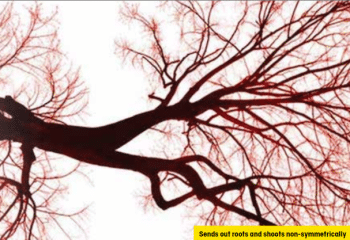
Neo-Darwinian consensus is cast in doubt by the new era of Epigenetics that suggests genetic codes are altered by the use of certain faculties by an organism over the course of its life
Posted in:
by admin
Political commentary doesn’t “always” couple populism with far-right. South America, Podemos, Syriza, People Before Profit and the AAA are far-left populists
Posted in:
by John Gibbons
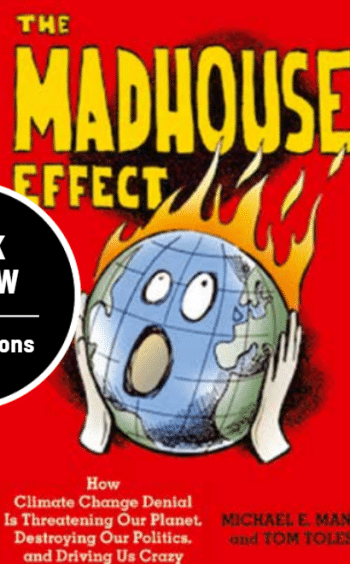
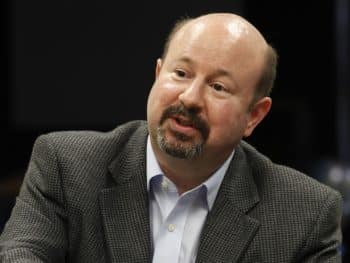
Imagine for a moment the dilemma: you’re a celebrated paleoclimatologist whose work has helped shape the modern science of climate change. In the course of your work, you have gradually come to the same basic conclusion as most of your professional colleagues: humanity and the industrial civilisation we have constructed is hurtling on a oneway collision course with physics. Clearly, as a scientist, your job is to check and recheck the numbers, then, once the evidence is solid, alert the politicians and policymakers and provide them with the expert guidance so they can make the toughbut- necessary decisions to avert the worst of the projected negative impacts, while hunkering down for those which can’t be entirely avoided. That, in a sane world, is how the system works. This is not, however, the world in which we live, and it certainly is not the planet that renowned paleoclimatologist, Professor Michael Mann inhabits. He sprang to fame in 1999 with the publication of a reconstruction of the global climate record stretching back some 1,000 years, which became known as the ‘Hockey Stick graph’ since, from past to present, it slopes gently downwards, before turning sharply upwards in recent decades, like the blade of an American ice-hockey stick. This graph appeared in the IPCC’s Third Assessment Report in 2001 and quickly became the signature icon of rapid climate change. This made Mann the target of vicious and sustained personal and professional attacks by shills funded by fossilfuel interests, culminating in the ‘ClimateGate’ smear attack in 2009 which targeted hacked personal emails written by Mann and other climate scientists. This scam was swallowed whole by many in the mainstream, including Irish Times columnist, Professor William Reville, who described ClimateGate as an “explosive development” that will “undoubtedly weaken the AGW case…”. Reville went on to defame the entire field of climatology, claiming there was “an understandable temptation for environmental scientists, who depend on government grants, to exaggerate dangers”. When ClimateGate was finally exposed as a canard many months later, Reville duly reported this fact in his column, while modestly omitting his own role in promulgating this sinister campaign in the first place. It may seem hard to believe in the post-factual era of Donald Trump and the Republican party’s long-running war on science, but not that long ago, politicians of all hues actually listened to – and generally acted on – the advice of scientific experts. Even as recently as 1987, a binding international agreement to rapidly phase out the use of ozonedestroying CFCs could be rushed through by politicians (led by Margaret Thatcher, a scientist) in response to a newly identified threat to the global ozone layer. It is almost inconceivable that such concerted bipartisan action could happen today, no matter how dire the threat and no matter how strong the scientific evidence. There is no greater or better-researched threat than that of climate change, but instead of mobilising societies to act, financially compromised politicians dither and squabble as the climate crisis slips into an ineradicable emergency. In Ireland and around the world, the mainstream traditional media, struggling with declining revenues and shrinking newsrooms while chasing clickbait, have spectacularly failed in their primary watchdog duty of alerting the public to the greatest existential threat human civilisation has perhaps ever faced. The media that have been most surprisingly effective at communicating climate change, and why we are screwing up royally in our response have been the US comedy channels. First, Jon Stewart on the influential ‘Daily Show’ on Comedy Central, and now John Oliver’s often brilliant ‘Last Week Tonight’ on HBO have deployed biting satire and ridicule to rip into climate deniers and anti-science zealots, the people who have been so skilful in abusing the mainstream media’s conventions, including their obsession with ‘balance’. This leads to the constant framing of TV discussions as representing two diametrically opposed views of equal status. This may work reasonably well for politics and opinion, but when it comes to science, it’s a recipe for disaster. Closer to home, RTE’s vanishingly rare forays into covering climate change (via Prime- Time’s ‘balanced’ studio debates) are casebook studies in how not to present science. “The success of the industry-funded climatedenial machine derives in part from media outlets’ willingness to emphasise conflict over consensus, controversy over comprehension”, is how Mann and Washington Post cartoonist co-author Tom Toles put it in their new book, ‘The Madhouse Effect – how climate change denial is threatening our planet, destroying our politics and driving us crazy’. By stripping away the pretence of balance and focusing instead on the motivation, techniques and shady funding sources of the main actors, under the umbrella of satire, Jon Stewart and John Oliver have been devastatingly effective at uncloaking a panoply of fraudsters, from the seemingly plausible to the downright crazy, and exposing them to contempt and ridicule. After all, when the so-called news channels like Fox and CNBC are a joke, many are now turning to actual comedians for the real news. In the print media, a few cartoonists have been effective where their editorial colleagues have stumbled and failed, none more so than the brilliant Tom Toles who has kept a constant bead on the climate crisis, deploying scores of cartoons to the subject and, more specifically, mercilessly lampooning the crooks, phoneys, blowhards and liars collectively known as climate deniers. In what is by any measure a highly unusual collaboration, ‘The Madhouse Effect’ sees the left-brained scientist and the right-brained satirist put heads together to see if they could somehow bridge that gap between what we know about the science of climate change and how we feel about it. “A scientist tries to understand the way the world works. An editorial cartoonist tries to show the ways it doesn’t”, is how they squared their joint venture. It’s worth taking a moment to consider what science is exactly, how it works and what distinguishes it from opinion, dogma and pseudoscience. Here, ‘Madhouse’ provides an excellent guide. It also clearly sets
Posted in:
by admin
What does “left” mean today now that socialism is no longer on offer?
Posted in:
by admin
Most of our often impressive disability legislation has simply not been commenced
Posted in:
by admin
Alternative needed to this pervasive zombie doctrine
Posted in:
by Ken Phelan
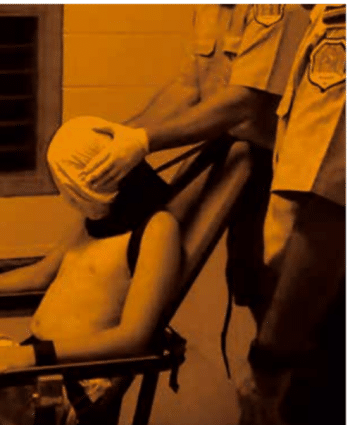
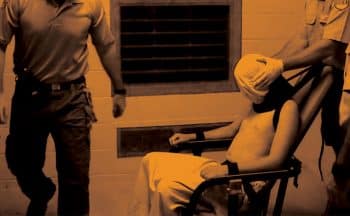
On July 25th 2016, Australia’s ABC network broadcast a documentary from its ‘Four Corners’ series that was to shake the country’s reputation. ‘Australia’s Shame’, exposed the conditions and practices of the Northern Territory’s Don Dale youth detention facility in Darwin, and revealed the harrowing circumstances in which children were being kept. Of the detainees incarcerated at Don Dale, 98% were Aboriginal children, some as young as ten. In CCTV footage obtained from 2014 onward it was clear that children were being held in isolation cells for up to 24 hours a day, sometimes for weeks on end in a detention block that reeked of urine and faeces. Children had to eat meals using their hands, losing track of time and not knowing when, or if, they would be released back into the main detainee population. A child is seen being dragged away from a phone by one of the guards – apparently for spending too long using it, kneed in the stomach, punched in the head and knocked to the ground. The child is then dragged out of the common room with the help of another member of staff. From accounts given by some of the Aboriginal children, such abuses were commonplace. In another scene, reminiscent of Abu Ghraib or Guantanamo Bay, a half-naked child is bound by the ankles and wrists to a ‘mechanical chair’. The boy’s face is covered with a ‘spit hood’ – a brown cloth sack – and he is left alone in the room for close to two hours. This, according to ‘Four Corners’, was common practice in Don Dale. What really discomfited the public, however was the ‘tear gas incident’ as shown in the documentary. Caught on CCTV, a child held in the isolation wing is seen leaving his cell, which had mistakenly been left unlocked by one of the guards. The child, disorientated, confused and having been left there for days, begins striking a door with a light fixture. How the guards reacted was reprehensible. This time recorded on an officer’s handy-cam, one officer is heard saying: “Go get the fu*kin’ gas and gas them through”, after which the cell block is sprayed ten times with tear gas. A news release falsely asserted that six boys had escaped from their cells and guards told police it was a “riot” but it involved, as shown on CCTV, just one detainee. The incident saw the remaining locked cells, housing five other boys, engulfed with the gas for a total of eight minutes. Children were pictured cowering beneath blankets, scared for their lives and struggling to breathe. After the eight minutes, the children were then marched outside, wrists bound, thrown face down on the ground and their heads sprayed with a fire hose. Guard laughter intersperses the recording. Lawyer Jared Sharp, who works with the North Australian Aboriginal Justice Agency and contributed to the ‘Four Corners’ documentary – has represented many of the children of Don Dale. He has been scathing in his criticisms of the brutal and at times barbaric conditions there. He told Village: “In 2014 I went to Don Dale with some of my colleagues and we were taken on a tour of the facility. As part of the tour, we were taken to this back area, which could only be described as a dungeon; it was damp, dark and actually pretty medieval looking. There were no immediate signs of life, but as we were being shown through the area we heard noises. I said to the guards: ‘there aren’t kids in there, are there?’. They said there were, and it raised alarm bells straight away. When we looked we saw that these boys were being kept locked up in these tiny little cells. There was no natural light, no air-conditioning and no running water. Some of them had been kept there for weeks. It was after we found out who these boys were that we began to document the conditions they were being kept in and then to try to advocate for them to get out”. Jared wrote to the then Corrections Minister demanding these issues be addressed. In his letter he highlighted the physical conditions in which children in solitary confinement were being held, and said that the most striking thing was the “removal of all hope” – how the children were left feeling they were being detained for an indeterminate period of time, without any hope of being returned to the main part of the detention centre. When a satisfactory response wasn’t forthcoming, Jared wrote to the Children’s Minister, and an investigation was immediately launched. However, questions were raised about the independence of the investigation, since it was conducted by a superintendent of a New South Wales youth detention centre who was known to the Corrections Commissioner. The investigation was also conducted over a very short period so that there were serious questions as to how rigorous and detailed its analysis was. However, as a result of it, a damning report of the practices at Don Dale was made, along with a list of recommendations. Despite this, abuses continued to happen at the centre: “Since the tear-gassing incident we’ve seen many incidents of young people being treated below the standards that any reasonable person would find acceptable, and beneath the standards that international law requires. Things like use of force, use of restraints, use of isolation and being kept in a facility that is really not fit for purpose. The children are currently being kept in a facility that was an adult prison, and was decommissioned because it was deemed no longer suitable to hold adults. This is the same facility where some of these children have had family members incarcerated, some of whom have committed suicide, so it’s a facility that’s associated with enormous despair and anguish amongst the Aboriginal community”. One glaring omission of the 2014 investigation concerned children who suffered self-harm/ suicide ideation. A child who displayed signs of self-harm/suicide ideation was accorded ‘at risk’ status.
Nationalism, nativism, populism are in the air these days. Their relation to democracy is widely seen as problematic. Can political philosophy help? I offer Village readers this ABC of the so-called “national question”: A. For democrats and progressives internationalism, not nationalism, is the primary value. We are internationalists out of solidarity as members of the human race. As internationalists we seek the emancipation of mankind. The human race is divided into nations. Therefore we stand for the selfdetermination of nations. The right of nations to self-determination was first proclaimed as a collective human right, a democratic principle of universal validity, in the Declaration of the Rights of Man of the French Revolution. It is now a basic principle of international law and a core principle of modern democracy enshrined in the United Nations Charter. Internationalism does not mean that one is called on to urge people of other nations to assert their right to self-determination, but that one respects their wishes and shows solidarity with them if they do that. It is as true of the life of nations as of individuals that separation, mutual recognition of boundaries and mutual respect based upon that – viz. legal and political equality, neither dominance nor submission – are the prerequisites of free and friendly cooperation between the parties, of internationalism in other words. Good fences make good neighbours. B. Nations exist as communities before nationalisms and nation States. Some nations are ancient, some young, some in process of being formed. Like all human groupings, for example the family, clan, tribe, they are fuzzy at the edges. No neat definition will encompass all cases. The empirical test is to ask people themselves. If people have passed beyond the stage of kinship society where the political unit is the clan or tribe, they will know themselves what nation they belong to. This is the political and democratic test too. If enough people in a nation want to establish their own State, they have the right to do that, for normally political democracy exists only at the level of the national community and the nation State. C. To analyse nations and the national question in terms of ‘nationalisms’ is philosophical idealism, looking at the mental reflection rather than the thing it reflects. Nationalism developed as an ideology legitimating the formation of nation States in the 18th century, although its elements can be found centuries before in some of the world’s oldest nation States – Denmark, England, France, China, Japan. Nations evolve historically as stable, long-lasting communities of people, sharing a common language and territory and the common culture and history that derive from that. These generate the solidarities, mutual identifications and shared interests that distinguish one people from another. Such features characterise the demos, the collective “We”, that constitutes a people possessing the right to national self-determination. D. Nationalism, properly understood, is the complement of internationalism, not its opposite. The word nationalism can refer to very different things. Hitler and Mussolini are stigmatised as nationalists in their countries. Gandhi and Mandela are praised as nationalists in theirs. Pearse and Connolly in ours. Nationalism can mean imperialism, xenophobia and chauvinism in one context, or patriotism, love of country and support for its political independence in another. If policy discussion is to be fruitful, one should indicate the sense in which one uses the word. E. As there are different social classes in every nation, national movements are normally multi-class. If the political Left does not stand for a country’s national independence and democracy, the political Right will. The Left then often stigmatises movements for independence as ‘right-wing’. That is the main reason why much of the Left in Europe today is truly “left “- namely left high and dry, wanly contemplating developments it cannot influence or control, bereft of the capacity for ideological hegemony. Ireland’s James Connolly taught that the Left should above all else be national, but Connolly has had small influence on the evolution of Ireland’s “Left”. F. Mankind is still at the relatively early stage of the formation of nation States. Only a dozen or so contemporary States are more than a few centuries old. The number of States in the United Nations has gone from some 60 in 1945 to a little under 200 today. European States have increased from 30 to 50 since 1989. This process has not ended even in Western Europe where people have been at the business of nation State formation for centuries. For example Scotland, Flanders, Catalonia. It has scarcely begun in Africa and Asia, where the bulk of mankind lives, where large numbers of people still belong to clan-tribal societies based on kinship, and as yet have only an embryonic national consciousness. The world is almost certainly moving towards an international community of 400 or more States. G. Multinational States, whether unitary or federal, must respect the right to selfdetermination of the nations that comprise them if they are to be stable and endure. The right to self-determination does not require that a nation seek to establish a separate State. Nations can co-exist amicably with other nations inside a multinational State, as for example the English, Welsh and Scots have done for centuries inside the British State, or the many Indian nationalities inside India. They can do this, however, only if their national rights are respected and the smaller nations do not feel oppressed by the larger ones, in particular culturally and linguistically. If this condition is not observed, political pressures are likely to develop to break up the multinational State in question. H. Shared civic nationality is the political basis of multinational States; shared ethnic nationality the political basis of nation States. In both cases, if the State is a democratic one, all citizens will be equal before the law and the rights of minority nationalities in multinational States and of national minorities in nation States will be equally respected. I. Internationalism and supranationalism are opposites. Internationalism, from Latin “inter”, “between”, refers to co-operation
Posted in:
by Ronnie Fay
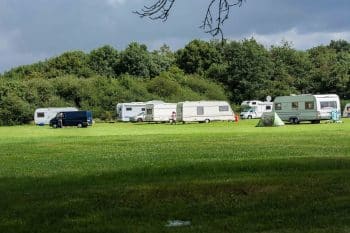
The European Commission has made impressive efforts to secure the wellbeing of Roma and Travellers across the Member States. In 2011, it developed the ‘EU Framework for National Roma Integration Strategies up to 2020’ to tackle the marginalisation and poor socio-economic conditions of the Roma (including Irish Travellers). Each Member State was required to draw up a national Roma integration strategy that set targets in education, employment, health and housing and that allocated sufficient funding to achieve them. The response to date by the Irish Government has been inadequate. The European Commission has not been impressed. It assessed Ireland’s current strategy in 2013 and 2014 and found that Ireland only met four out of the 22 criteria required. The lack of a timetable of actions, targets, indicators and budget to secure effective implementation were highlighted. The Commission also stated that improved consultation with Roma and Travellers was needed. These criticisms reflected concerns Pavee Point had been raising since 2011. Ireland is now seeking to respond to the challenge posed by the European Commission by developing a new and more ambitious National Traveller and Roma Inclusion Strategy (NTRIS). The Department of Justice and Equality (DJE) has established a national steering group with representatives of Traveller organisations and Roma community members and a range of government departments – chaired by the Minister of State. It launched a public consultation process to develop the new NTRIS. This was welcomed by Traveller organisations and Roma. The preparation of NTRIS started in 2015 and involves three phases. Phase one was an initial round of consultations to identify the priority themes to be addressed in the NTRIS. The second phase was to identify and agree specific objectives under each of the themes identified. The third phase is to focus on identifying precise and measurable actions, as well as timescales for achievement of each of the objectives that emerged from Phase 2. On foot of this the NTRIS is to be considered by Government. Pavee Point was commissioned, in late 2015, to compile a report of the priority themes identified through a public consultation process. Four regional consultations on NTRIS objectives were organised. These took place in February 2016 in Dublin, Sligo, Limerick and Athlone. A report of the feedback from the consultation process was given to the Department in April 2016 and Pavee Point’s work for DJE came to an end in May 2016. The NTRIS was planned to be available by early 2016. Unfortunately there has been slippage in the timescale anticipated. This is largely due to change in and shortage of personnel in DJE. There was a significant time lag in replacing the officer who was driving this work. The second round of consultations on the NTRIS, which were due to take place in May 2016, had to be postponed. These consultations were to discuss what actions should be included in the NTRIS under each of the objectives identified. Pavee Point, ITM, NTWF and Mincéir Whiden had written to DJE urging them to postpone this second round of consultations. They were concerned that local Traveller organisations would not have sufficient time to review the draft actions due to be discussed. The draft actions had not yet been circulated to Traveller organisations a week before these consultations were to begin. Traveller organisations needed time to discuss these and prepare their members to attend the consultations. It was effectively impossible for groups to prepare in advance and this would have resulted in a tokenistic consultation process. They were also concerned that no discussion had taken place at steering group level about the information gathered from the first round of consultations and how this would be incorporated into the NTRIS. There had to be clarity on this if Traveller organisations were to have confidence in the consultation process. The second round of consultations is now scheduled to take place at the end of September, and a NTRIS steering group meeting has been scheduled for mid-September. The NTRIS is an important development. It is important that its preparation is completed quickly and with adequate participation. It is equally important that the NTRIS is not posed as a panacea for all Traveller and Roma policy and programme development. To-date it is the answer of choice in response to the many challenging questions being posed to Ireland by a range of UN human rights monitoring mechanisms. Progress on equality and human rights for Traveller and Roma has been really slow. Most important of all must be to ensure that when agreed the NTRIS is implemented and adequate structures and processes are created to drive its implementation. We have had good plans before that have fallen at this key final hurdle. Ronnie Fay is Co-Director of Pavee Point
Posted in:
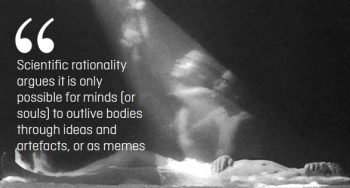
We think of ourselves as unique, and so we are, but defining individuality is problematic. Ninety percent of a person’s cells – mostly bacteria – are not their own while those cells with our distinct genetic codes only last up to ten years. In terms of consciousness this poses questions such as: where is memory located if cells in the brain degenerate along with the rest of an atrophying body? Is it possible that morphic fields containing recollections lie beyond ourselves – like data stored in a cloud – as Rupert Sheldrake has proposed? Is this close to the elusive idea of soul that scientific rationalism considers impossible? In ‘The Science Delusion’ (2012) and other works Sheldrake (who has a PhD from Cambridge and is the author of numerous articles in peer-reviewed scientific journals) argues for his hypothesis of morphic resonance employing a scientific methodology, albeit not to the satisfaction of many sceptics including his nemesis Richard Dawkins. Dawkins’ ‘The Selfish Gene’ (1976) remains a classic exposition of neo-Darwinian genetics. His persuasive argument is that the battle for survival is at the level of the gene which conveniently uses the replicator, our bodies or that of another species, for its purposes. But even within the field of genetics the neo- Darwinian consensus is cast in doubt by the new era of Epigenetics that suggests genetic codes are altered by the use of certain faculties by an organism over the course of its life. Apparently the child of a practising musician enjoys a musical predisposition beyond any genetic inheritance. It goes to shows how mistaken it is for any age to assume its reigning ideas are impregnable. Nevertheless this should not provide an excuse for abandoning measured analysis or the quest for elusive truths notwithstanding the limitations of human minds. Scientific methodology yields extraordinary results but we must be careful to avoid new dogmas. It could also be that there is wisdom in ideas now considered obsolete. Faced with our own mortality and that of those around us, many of us entertain the possibility of an afterlife, a phantom echo from a person’s life on earth, and possibly a unifying principle, or One, conventionally called God. But scientific rationality argues it is only possible for minds (or souls) to outlive bodies through ideas and artefacts, or as memes in the rather obtuse description of Richard Dawkins, and mostly dismisses the idea of a unifying principle. And make no mistake the arguments adduced by scientific rationality are compelling. But a consequence of accepting this approach of scientific rationalism is moral ambivalence. For example, although science shows the effect of human activities on planet Earth there is no discourse within it to offer a way of prescribing our behaviour, it is simply descriptive. Moreover per Dawkins, if it is a case of elements within us competing for expression it is hardly possible to invest them with any moral sensibility. Within the framework of a supersensible world redemptive possibilities seem to arise: if souls exist beyond bodies this appears to impose moral obligations as we could be compelled to endure the consequences of our actions for an eternity. The idea of a unifying principle also suggests that truth can be arrived at through the exercise of intellect. This concept is domesticated by religions through ideas such as sin and karma but we need not accept the tenets of a particular religion in order to accept the possibility of Oneness and immortality. Let us consider evidence of those possibilities then, especially through the lens of art, which need not succumb to the dogma of a particular organised religion. Our own WB Yeats, perhaps the foremost English-language poet of the twentieth century and certainly the greatest Romantic, held ideas anathematic to the intellectual culture of his day, and perhaps even more antipathetic to those of our own time. But what might be dismissed as superstition, far from holding him back, liberated an artistic imagination engendering verse of truly magical quality that he attributed to presences beyond himself. If Yeats had simply expressed his ideas in philosophical terms they would easily be dismissed but through the beauty of their poetic form they are more acceptable to the wider society. Passively or otherwise this poetry is still a conduit for notions adopted by most school children, inculcating what many would normally dismiss as obscurantist notions about faery realms and spirits. And who would dare remove such perfectly crafted verse as Yeats’ from the school syllabus? O sages standing in God’s holy fire As in the gold mosaic of a wall, Come from the holy fire, perne in a gyre, And be the singing masters of my soul. Consume my heart away; sick with desire And fastened to a dying animal It knows not what it is; and gather me Into the artifice of eternity. In an article entitled ‘Magic’ written in 1901 he set out his beliefs: “I believe in the practice and philosophy of what we have agreed to call, in what I must call the evocation of spirits, though I do not know what they are, in the power of creating magical illusions, in our visions of truth in the depths of the mind when the eyes are closed; and I believe in three doctrines, which have, as I think, been handed down from early times, and been the foundations of nearly all magical practices”. He identifies these principles as: “1. That the borders of our mind are ever shifting, and that many minds can flow into one another, as it were, and create or reveal a single mind, a single energy. 2. That the borders of our memories are as shifting, and that our memories are part of one great memory, the memory of Nature herself. 3. That this great mind can be evoked by symbols”. Yeats comes from a tradition in Western thought that stretches back to Pythagoras and Plato which has been the philosophical basis of Christianity also. The statements, or revelations,
Posted in:
by Sarah Lennon
When a State enacts legislation that creates a right for a category of person, it is acknowledging that society has excluded or marginalised those people and is seeking to rectify this. This is why people with disabilities welcomed the Assisted Decision- Making Act 2015 last year. It is why, despite some misgivings, they welcomed the Citizens Information Act 2007, the Disability Act 2005, and the Education of Persons With Special Education Needs Act 2004 in the years before. However, the gap between acknowledgement and action, reflected in the failure to fully implement this body of legislation mocks any such welcome. It is not enough to bestow symbolic rights nor is it acceptable to indefinitely delay enforceable rights. If justice delayed is justice denied, then the delay in implementing rights-based legislation for people with disabilities must be described as a scandal. The Assisted Decision-Making Act was enacted in December 2015. It has not yet been commenced. Although the Act is ostensibly disability-neutral, it would create a system of supports for people with disabilities and others to exercise decision-making. The indications are that the Act will be commenced – partially only – towards the end of 2016, twelve months after its enactment. ‘Partial’ commencement is not a new phenomenon in Irish disability law. The Citizens Information Act was enacted in 2007. This Act provided for, among other things, the introduction of a Personal Advocacy Service, where advocates with a range of statutory powers would be employed to support persons with disabilities. The Personal Advocacy Service was never established. Instead, in 2011, a ‘National Advocacy’ Service was created, a limited service that employs advocates who do not have statutory powers. The Disability Act disappointed many disability campaigners in 2005 as it was limited in scope and not ‘rights based’. The Act did provide for a right to an ‘assessment of need’, however it did not create a right to any service to meet that need once it had been assessed. After a decade of torpor all parts of the act have now been commenced except the crucial part providing for that right to an assessment of need. Currently, only children are entitled to an assessment of need and even with that there are difficulties. Some parts of the country report waiting times of up to a year for these assessments. The Education of Persons with Special Education Needs Act (EPSEN) provides a comprehensive statutory framework for education of children with disabilities. Rightly welcomed as inclusive, the Act proposed a right to an individual education plan for children with disabilities. The implementation of the Act was to be staggered, but in 2008 this ground to a halt and was postponed indefinitely. Successive governments have merely passed the buck for failure to implement these laws. In 2015, the Minister for Education Jan O’Sullivan blamed the previous government and admitted that the preferred avenue was now to bring in EPSEN’s provisions on a non-statutory basis. Most recently, in answering a Dáil question, Minister for Disability Issues Finian McGrath blamed decisions made in 2008 for the failure to commence the Disability Act and the EPSEN Act in full. It is true that exchequer finances were in a poor state in 2008. However, this cannot be used to gloss over the fact that 2008 was a full three years after the enactment of the Disability Act and four years after the EPSEN Act. For much of that period the exchequer was flush. The various Programmes for Government over these periods paint the picture. In 2007, three key commitments were made to “Complete the roll out of [EPSEN]”, to provide “a legal right to independent assessment of need”, and to “implement the Citizens Information Act”. By 2011, the Government had changed and the ‘Statement of Common Purpose’ committed to publishing a “plan for the implementation of the EPSEN Act” with no mention of the Disability Act or the Citizens Information Act. In the current ‘Programme for Partnership’, there is a commitment to “consult with stakeholders to see how best to progress sections of the EPSEN Act” and an ambition to “improve services … particularly for early assessment and intervention for children with special needs”. Again there is no mention of independent advocacy. It seems the rights of persons with disabilities are simply slipping off the page. Resources were scarce for much of the past decade but it is simply undeniable that where there were competing demand for resources, the rights of persons with disabilities lost out. That seems to be a part of who we are. Sarah Lennon is Training and Development Officer with Inclusion Ireland
Posted in:
What is it about Irish legislation? We set up this complicated institutional apparatus to enact it. We elect all sorts to devise and deliberate on it. Much of the time of civil society is diverted to lobbying for it. Legislation doesn’t come cheap or easy. However, while we are entitled to have some minimum expectations, it would be foolish to expect anything much. The last session of the Dáil passed hardly any new legislation. The scandals in Console and St John of God’s revealed that the Department of Justice and Equality had failed to commence large portions of the Charities Act 2009. The Irish Human Rights and Equality Commission Act 2014 included a duty on public bodies to have regard to the need to eliminate discrimination, promote equality and protect human rights in carrying out their functions. Not only is this piece of the legislation not being implemented, public bodies don’t even seem to know it is in place. The big test for this duty on public bodies is now. The duty specifically requires public bodies, when they are preparing strategic plans, to assess the equality and human rights issues relevant to their functions and to identify policies, plans and programmes they are deploying or will deploy in response to these. Under the Public Service Management Act 1997 Government Departments are required to produce a strategy statement within six months of the appointment of a new Minister. These statements are currently being prepared by all Government Departments. The Equality and Rights Alliance has been doing some investigating. The strategy statement process is being led by the Department of the Taoiseach. It has not included in its guidance any reference to the public-sector duty being one of the obligations each Department should be mindful of in preparing their strategy statement. The personnel in Government Departments responsible for the preparation of the Departmental statement are not aware of their obligations under the 2014 Act. The Department of Justice and Equality, which was responsible for the 2014 Act in the first place, has taken no action to secure implementation of the duty. The Irish Human Rights and Equality Commission which has a mandate to encourage implementation of the duty does not appear to have raised the issue anywhere, in any way. Civil society campaigned for the introduction of such a duty for over two decades. The former Equality Authority published research in 2005 that suggested Ireland was in breach of the Belfast Agreement in failing to introduce the duty. The Belfast Agreement commits the Government to ensuring an equivalence of rights with Northern Ireland. Public bodies in Northern Ireland have been subject to a duty to have due regard to the need to promote equality and good relations in carrying out their functions since 1998. The difference is that there they actually implement it. In short, its inclusion in the 2014 Act was a huge success for a weary campaign. The Equality and Rights Alliance have informed all Government Departments that they are subject to this public sector duty. They have asked that the strategy statement of each would be developed in compliance with the duty. This would firstly require Government Departments to carry out and document an assessment of the human rights and equality issues relevant to their functions as policy-maker, service-provider, employer and/or procurer of goods and services. It would then require Government Departments to identify and set out the policies, plans and actions they already have in place or propose to put in place to address these issues. The strategy statement should be published in late October. The extent to which Irish legislation dealing with progressive and important social issues holds any sway in Government Departments will be suggested by whether or not these strategy statements include such an assessment with accompanying commitments. The Equality and Rights Alliance recommended that Government Departments should include commitments in their strategy statement to secure ongoing implementation of the public sector duty. This would include: establishing a working group to drive implementation; training staff to be able to implement the duty; developing indicators and data-gathering systems to identify and track equality and human rights issues; and putting in place an equality and human rights impact assessment methodology that would be used for draft legislation, policies and plans. They can’t say they don’t know. The challenge has been promulgated. We will know in a month where the public sector is to stand on equality. By Niall Crowley
Posted in:
For the current partnership Government and its political-allies-in-opposition the end of summer has brought with it some rather unpleasant affairs. And a string of seemingly never-ending, insider scandals rocking the Irish charitable and sports ‘sectors’, is just a small headache, compared to the migraines of Irish economic and tax-policy fiascos. The reason is simple: in its quest for sustaining our decades-old economic growth model of beggaring our neighbours, Ireland always relied heavily on our PR-and-charm-driven international reputation for being a ‘straight down the line’ regulatory and tax arbitrage location for the Multinationals. Thus, in the absence of any dramatic change in the way we intend to do business here, no Irish Government could afford the country’s reputation to be marred by the realisation that our entire economic strategy is distorted by the very same Multinationals we so desperately need to sustain the narrative. The Paris-based OECD has been probing international tax regimes, at the request of the G20 group, in the hope of developing a face-saving mechanism to curb the more egregious abuses of global tax codes. Ireland was in its crosshairs from the start. A US Congressional investigation and a number of on-the-record statements by senior US politicians flashed the spotlight on Ireland as an alleged ‘tax haven’ for US corporations, opening Dublin to the scrutinisations of the OECD and the G20 taxpolicy artillery. Through traditional and alternative media, the global public was fed a steady flow of leaked documents from around the world highlighting Ireland’s prominent position in tax avoidance by Multinationals. With all that past attention, the government in Dublin did not need the EU Commission pointing a finger at Ireland as one of the most aggressive facilitators of tax optimisation in Europe. And yet, this is exactly what is unfolding in front of our eyes today. In simple terms, within a span of just 50 days, the Irish establishment has been hit by a perfect international storm. The first thunder rolled over our shores on July 12 when the CSO released the final numbers for Irish GDP for 2015. Declaring that the Irish economy had grown by a whopping 26.3 percent in one year would have been a cause for celebration anywhere on earth. Ireland had set the record for any OECD economy in GDP and GNP growth terms. Alas, the announcement drew international ridicule of Dublin of an intensity not seen since the night when Dustin the Turkey flopped at the Eurovision. Paul Krugman declared the number “leprechaun economics”. Micheál Martin, the ever-adaptable leader of the pro-Government opposition (!) had to make a strongly worded statement about the need for an official inquiry into the figure. Even Irish Stockbrokers, well-schooled in the arts of selling anything a Bloomberg terminal throws at them under the ‘Irish economy’ heading, had to admit that the CSO statistic a chimera. Quite hilariously, one Irish Stockbrokerage analyst told Bloomberg that the whole problem was, of course, down to the Eurostat methodology for measuring GDP that “Clearly, …is not fit for purpose as an indicator of economic growth in an economy like Ireland”. He did not mention that the Eurostat approach doesn’t work here precisely because corporate tax arbitrage underpins the Irish economy. But the “leprechaun economics” would have been merely embarrassing were it not a herald of worse news yet to befall Ireland. Contrary to the wishes of our establishment, the CSO release pushed the Irish corporate tax system straight back into the global headlights. Most of it focused on Ireland being the world’s favourite location for corporate tax inversions – a dubious distinction that makes us hot in the US as a lightning rod for all Presidential candidates and a score of zealous legislators. It also shoved Ireland to the front of a number of political debates raging across Europe, where entrenched establishment politicians are desperately seeking a foreign scapegoat to blame for domestic trends that fuel the rise of the populist left and right. Based on data compiled by the US Congressional Research Service and published in April of this year in one of its reports, Ireland now leads the Cayman Islands and Bahamas at the top of world league tables for inversions by US corporations. That, despite the Irish authorities repeatedly claiming that the Government here has been closing tax loopholes since Budget 2014. This fact is not even referenced in the US Congressional office report. Nor has it been figuring in academic studies. The Rutgers Business Review 2016 paper published in August surveys aggressive tax avoidance practices by US and other Multinational corporations. It reserves an honourable place for Ireland as one of the world’s leading tax-optimisation locations, without citing any of the recent tax reforms passed by the Government. Then, on August 29th, the EU Competition Commissioner, Margrethe Vestager, who is an outspoken opponent of tax arrangements which amount to hidden state aid, delivered another blow to Official Ireland when she produced her long-awaited report on Apple’s tax affairs here. The report had been anticipated. And it was also heavily lobbied by the Government through media and diplomatic channels. An extraordinary spin was bought by the media – that the back tax was only a couple of hundred million euro, that it could only be used to pay down the national debt. The media was utterly suckered. In the end, Vestager found that Apple paid vastly less tax in Ireland than the ‘headline 12.5 percent rate would imply – some €13bn less. Summoning Cowenesque opaqueness, Ireland’s Finance Minister has already managed to signal that he doesn’t accept the ruling: the Government will appeal the Commission decision to the European Court of Justice. Appeal or not, the damage is now done. Ireland’s entire Multinational-based model of economic development has been exposed as a zero-sum game in which our neighbours and trading partners surrender their tax revenues to us. It is futile to paint the case as the Big Bad EU against Good Little Ireland, for the case is not based on a challenge to the