Village
- Posts: 3005
- Comments: 0
- Since:
- Website: http://www.villagemagazine.ie
-
-
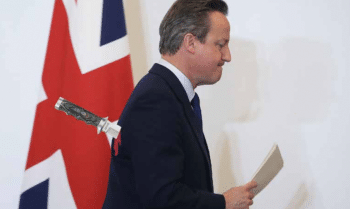
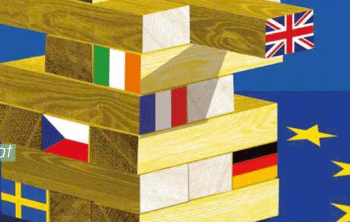
This is a saga of sadness, a tragic tale of three ‘whiches’, a fairy ‘which’, a whichsoever ‘which’ and a wicked ‘which’. In initiating each of three referendums, David Cameron said, “You have a choice, ‘this’ or ‘that’, which do you want?”. So all three ballots were binary, and while the first two delivered what he wanted, the last one was, in effect, political suicide. All three outcomes were inaccurate reflections of ‘the will of the people’. Let’s have a look, and then let’s consider a better methodology. 2011 Referendum on the Electoral System After the 2010 general election, the UK had a coalition government: Cameron’s Conservative Party (Tories) and the Liberal-Democrats. And he probably thought to himself, “How can I rid myself of the Lib-Dems’ persistent pursuit of proportional representation, PR?” Hence the first ‘which’, so to silence any further debate on electoral reform. Some people liked single-seat constituencies, either the UK’s first-past-the-post, FPTP, a plurality vote; or France’s two-round system, trs, a plurality vote followed by a majority vote; both are single preference systems; or again, there is the Australian alternative vote, av, a preference vote which is like a knock-out competition – in a series of plurality votes, the least popular is eliminated after each round and his/her votes are transferred to the voters’ second or subsequent preference… until a candidate gets 50%. Meanwhile, many wanted PR in multi-member constituencies. There is the German half FPTP and half PR-list system called multi-member proportional, mmp. There is PR-list – in Israel, you vote for a party; in the Netherlands, for a candidate of one party; in Belgium, for one or more candidates of one party; and in Switzerland, for those of more than one party. Or there’s the Irish PR-single transferable vote, PR-STV, where voters can vote cross-party in order of preference; STV is like AV except that success depends on (not a majority but) just a quota of votes. Overall, then, the choice was huge. But Cameron’s 1st preference was FPTP and his 2nd av. So that was the 2011 referendum, the first ‘which’: “FPTP or AV, which do you want?” For countless (and uncounted) supporters of pr, this was like asking vegetarians, ‘Beef or lamb?’. Now maybe FPTP was the most popular but, based on data from just a two-option poll, impossible to say. For Cameron, however, it was a dream: he chose the question, and the question determined the answer, just as any fairy godmother would have wished: a massive 67.9 to 32.1%. Magic. Furthermore, the Electoral Commission said the question was fair. Amazing. The Ombudsman agreed. Incredible. And many thought this was all democratic. So that was the end of that argument. So why not a second fantasia, another referendum? Scotland 2014 “Double, double, toil and trouble”, said the witches in Macbeth. The Scottish Nationalist Party, (SNP), always on about independence. How can I rid myself of these skittish Scots? This was Cameron’s second problem, and so, as if on a broomstick from the darkest recesses of Westminster, the second ‘which’ enters the political stage. There were three options: (a) the status quo, (b) maximum devolution or ‘devo-max’ as it was called, and (c) independence. Thinking that (a) would easily beat (c) in a two-option contest, just as FPTP had wiped out av, Cameron waved his wizard’s wand and demanded a binary ballot. So the second ‘which’ was again dichotomous: “(a) or (c), which do you want?” In the campaign itself, however, the gremlins were grumbling, option (c) was gaining ground. Cameron twitched; no – panicked: and so, as if at the witches’ coven, a vow was made – zap! – and option (a) morphed into option (b). On the ballot paper, however, there was no switch, the ‘which’ was still “(a) or (c)?” So the result was a stich-up: 55.3% and 44.7% respectively were highly in ated levels of support for (a) and/or (c). Furthermore, the winner was (b)… but no-one had voted for it! For Cameron, though the potion was fading, the plebiscite was still successful, and that was the (very temporary) end of that argument too. We return to the diviners’ den. The EU Referendum Believing as it does in majority voting, the Tory Party (and many another) is a beast of two wings and no body. Little wonder that this weird creature is often in a ap, especially over Europe. “Those cursed Europhobes”, he might have muttered. And then, stage extreme right, another scary monster, the UK Independence Party, Ukip. “Oh how can I rid myself of these damned devils?” Ah-ha, the third… but this was the wicked ‘which’. The wrong side won. The Electoral Commission’s semantic change from ‘yes-or-no?’ or ‘in-or-out?’ to ‘remain-or-leave?’ did not change the poisonous potent of the poll, its binary bind, its divisive ‘positive-or-negative’ nature. The question – “Which do you want?” – was again adversarial. The campaign was horrible. And the result? 48.1% chose ‘remain’ to 51.9% ‘leave’. But nobody knows what the latter actually want! To suggest, then, that this outcome is ‘the will of the people’ is, again, bunkum. Meanwhile, politically, Cameron is dead, impaled on his own petard; in a word, ‘bewhiched’. Democratic Theory and Practice So what should have happened? Well, consider first a hypothetical example. The average age of the electorate cannot be identified by a majority vote. If such a piece of research were to be attempted, the question would probably be, “Are you young or old?” In which case, no matter what the answer and by what percentage, it would be wrong! If, however, the question were multi-optional, ‘Are you in your twenties, thirties, forties, etc.?’ the answer could be pretty accurate. With average age or collective opinion, as in a German constructive vote of con dence, voters should be positive. No-one should vote ‘no’ or ‘out’ or ‘leave’; instead, everyone should be in favour of something: for the UK to be in the EU, or like Norway in the EEA, or like Switzerland in a looser
-
Posted in:
Irexit
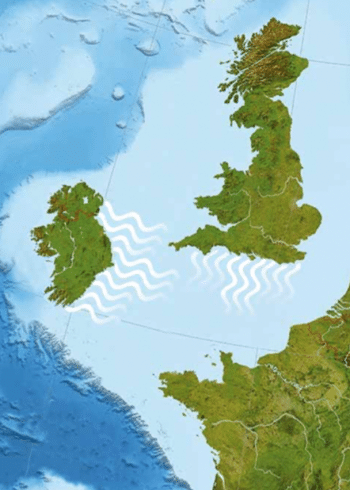
Since the Brexit referendum in June I have been rapporteur of a Private Study Group of Irish economists and constitutional lawyers who have been examining what we should do when and if the UK leaves the EU. In August their report was sent to the Taoiseach, his Ministers and the Secretary-Generals of all Government Departments. It has been sent also to the EU embassies in Dublin, to UK Prime Minister Theresa May, her key Ministers and senior civil servants concerned with Brexit, and to a wide range of British Brexiteers whom my colleagues and I have got to know over the years. The report’s basic conclusion is that it is in the interest of the Irish people that Brexit should be accompanied by “Irexit” – Ireland exit. We applied to join the then EEC in 1961 because Britain and Northern Ireland did so. We joined simultaneously with the UK and Denmark in January 1973. Now that Britain and the North are leaving, we should do the same, for three principal reasons. The first is that Ireland is nowadays a loser, not a gainer, from EU membership. In 2014 we became a net contributor to the EU Budget for the first time, paying in €1.69bn and receiving €1.52bn. This means that in future any EU moneys that come to the Republic under the CAP, EU cohesion funds, research grants, support for community groups and the like, will be Irish taxpayers’ money coming back, employing some Brussels bureaucrats on the way. Henceforth the EU will no longer be the ‘cash cow’ most Irish people have regarded it as for decades, and which is the basis of much of our official and unofficial europhilia. A bonus would be that outside the EU Ireland can take back control of its sea-fishing waters. Eurostat’s estimates of the value of fish catches by non-Irish boats in Irish waters since 1973 are a many-times multiple of the EU cash we got over that time. The second reason why Irexit should go along with Brexit is that that is the only way of preventing the North-South border within Ireland becoming an EU external frontier, with new dimensions added to Partition, affecting trade, travel and different EU laws and legal standards as between Dublin and Belfast. For example without the UK as an EU Member alongside it, the Republic would be in a much weaker position to withstand pressure to adopt continental norms in EU crime and justice policy, which differ signi cantly from Anglo-Saxon ones in such areas as trial by jury, the presumption of innocence and habeas corpus. Such divergence would adversely affect good relations within Ireland as a whole and while it would not undermine the Peace Process, it would not help it either. If we stay in the EU while the UK leaves it would mean that for Irish reunification to come about at some future date the people of the North would have to rejoin an EU that Britain had long left, adopt the euro-currency, take on board a share of the €64bn of private bank debt which the ECB insisted that Irish taxpayers nance during the 2008-2010 currency crisis, and implement the further integration measures that are likely to be needed over the coming years if the Eurozone is to be held together. It would give 26 EU Governments in addition to the UK and the Republic a veto on eventual Irish reunification. Such a development should be unacceptable to all Irish nationalists. Another consideration is that if the South remains in the EU while the North leaves along with Britain, future Irish reunification would make the whole of Ireland part of an EU military bloc that is likely to come under greater Franco- German hegemony following Brexit. That potentially could be a security threat to Britain. This will surely change significantly the calculus of British State interest and give Britain a strategic reason for keeping the North inside the UK, an interest it has not got today. The third reason why most Irish people should now reassess their attitude to the EU is that the business case for Ireland remaining an EU member diminishes significantly if the UK leaves. Most foreign investment that comes here is geared to exporting to English-speaking markets, primarily the UK and USA, rather than to continental EU ones. Once the UK leaves the EU two-thirds of Irish exports will be going to countries that are outside it, as they are going today to countries outside the Eurozone, and three-quarters of our imports will be coming from outside. Outside also, Ireland’s 12.5% corporation tax rate would no longer be under EU threat. Of course our relations with the UK and the EU in the Brexit context are complicated by our membership of the Eurozone. Irish policy-makers abolished the national currency and joined the Eurozone in 1999 on the assumption that the UK would do so also and that by going first they would show how communautaire they were. It was an utterly irresponsible action in view of the fact that the Republic does most of its trade with countries that do not use the euro. With the pound sterling falling against the euro as the UK disengages from the EU, Ireland desperately needs an Irish pound that can fall with it, so maintaining its competitiveness in its principal export markets – the UK and America. That is why the Irish State urgently needs to get its own currency back. Economist Chris Johns noted in the Irish Times on 20 August that if the Irish pound existed today it would be worth some 10 percent more than the pound sterling. This was the level it reached in January 1994, when Irish industry was in crisis because of its overvalued exchange rate – explicitly then, implicitly today. That in turn precipitated the major devaluation which inaugurated our ‘Celtic Tiger’ years. Ireland needs to regain the freedom of being able to determine its own exchange rate. There is no legal way to
-
Posted in:
Oxford, Britain
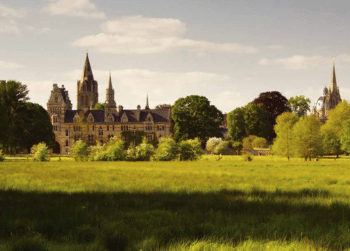
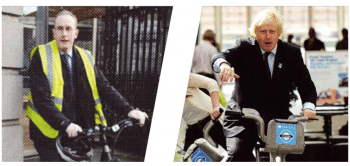
North Oxford is a heartland of academia where leafy halls of residence mingle with stately homes and rarefied hostelries. Situated in almost the very centre of Britain a windless calm favours scholarly reflection removed from modernity’s fugue. Even the traffic is orderly with bicycles sensibly preferred. It is one of the most attractive places in the world. Spend an afternoon on the lawns at Christchurch if you doubt it. Oxford is world-class in so many ways: the city and the university. PWC and Demos rated it the best place to live in Britain, in 2012, across a wide range of criteria. Shanghai ratings names Oxford University the seventh best in the world. South Oxfordshire was recently named Britain’s best rural place to live. It is transcendent England. What has this to say about Brexit, the political issue of this generation? The City of Oxford is located on the confluence of the Isis (the idiosyncratic name for the Thames here) and Cherwell rivers. Broadly, it may be divided into three zones with a clear north-south divide: that affluent and mature north Oxford of Jericho and Wolvercote; predominantly twentieth-century suburbs including Cowley to the south; and the historical and commercial centre linked to Botley and Osney Island, built around an Anglo-Saxon settlement of which little remains. This contains renowned colleges such as Christchurch, Balliol and Magdalen. The first sign of incongruity is how close it nestles to the ‘any-town-UK’ commercial centre and its array of gaudy chains. Moving south, there is yet another Oxford as housing gets cheaper and industry is evident. The first industrial revolution passed Oxford by as colleges objected to the contagion of commerce. Only after World War II did significant manufacturing arrive as the city attracted a car industry. By the early 1970s, 20,000 people were employed in the sector and the original Mini Minor was developed here in 1959. Unfortunately, as in much of the country, a significant proportion of heavy industrial jobs have departed. The working class areas now face social problems familiar in many English cities. Living as a jobbing tutor and supply teacher in Oxford for two years I encountered classroom behaviour that made experiences in schools in socially-deprived areas of Dublin seem almost meditative. Oxford is a place of profound educational inequality. Oxford accomodates a great literary tradition: JRR Tolkien, CS Lewis, Lewis Carroll, Kenneth Graham and Irish Murdoch wrote from Oxford. The number of Prime Ministers that have passed through Oxford University is startling. 28 overall. Only Jim Callaghan and John Major, who revelled in his immersion in the university of life, among English Prime Ministers since Winston Churchill (who finally left office in 1955) did not pass along its quads. Alumna Theresa May (St Hugh’s, 1974) joins a list that includes Labour Prime Ministers Tony Blair (St John’s, 1974), Harold Wilson (Jesus College, 1937) and Clement Atlee (University College, 1904) as well as Tories Anthony Eden (Christchurch College, 1922), Harold MacMillan (Balliol College, 1914) Edward Heath (Balliol College, 1939), Margaret Thatcher (Somerville College, 1947), and David Cameron (Brasenose College, 1988). Oxford indubitably has seeded the post-War UK political establishment. Moreover, numerous Tory politicians maintain an association with the wider shire. Churchill himself was born in the nearby ancestral estate of Blenheim Palace (though he passed some of his early childhood in Dublin’s Phoenix Park). David Cameron, MP for Witney, Oxfordshire, lives in Chipping Norton close to Rebekah Brooks, Jeremy Clarkson and the rest of the well-placed Chippy set. Michael Heseltine (Pembroke College, 1954) dwells in style nearby though one imagines he looks slightly askance at the gobby neighbours. Theresa May grew up in the village of Wheatley a few miles east of Oxford where her father served as vicar. Further east towards London, Boris Johnson (Balliol College, 1987), the new foreign secretary, lives in Henley-on-Thames. Jeremy Paxman, Richard Branson, Kate Moss, Kate Winslet, Rowan Atkinson, Jeremy Irons and Ben Kingsley: celebrities, high-and-low-brow, live in Oxfordshire. Perhaps the county has a quality – an England of the imagination – that grandees of all sorts gravitate towards. It could be the low rural population density, a legacy of the Enclosure Acts (1760-1830) that placed formerly common land in the hands of expanding gentlemen farmers. Today, though located only an hour from some of the most in ated land prices in the world in London, it is possible to drive for long stretches without seeing a single dwelling. The hoi polloi were kept at bay, in Oxford and swathes of its hinterland. As an Irish person living in the city of Oxford I never had a sense that I was unwelcome, or at least any alienation was no different to that felt by the bulk of the population before a converging aristocratic and mercantile elite: unlike the ancient regime in France since the Tudor era, nobility has been open to the highest bidder and an Oxford education provides the polish. One must however acclimatise to the southern English reserve and a sardonic sense of humour. The historian Tony Judt (St Anne’s College 1980- 87), who concededly knew little of Ireland, wrote that the English are perhaps “the only people who can experience schadenfreude at their own misfortunes”. Succumbing to generalisation I regard English friendships as firmer than Irish for all the latter’s sociability. But these societies of companions generate mosaic communities often hostile to one another. Better the devil you know and bugger the rest. In the era of the Internet there is a growing suspicion of the ruling class of politicians. Many do feel “shat on by Tories, shovelled up by Labour” in the words of Uncle Monty in ‘Withnail and I’. They are often seen as a separate cast reflecting the cultural dominance of Oxford and Cambridge Universities (‘Oxbridge’) which extends to the media and business. This trend perhaps explains why maverick and grumpy (though otherwise profoundly different) outsiders such as Jeremy Corbyn, Nigel Farage (and Boris Johnson who went rogue over Brexit) are appealing to a jaded electorate; a state of
-
Posted in:
Galway Sprawlway
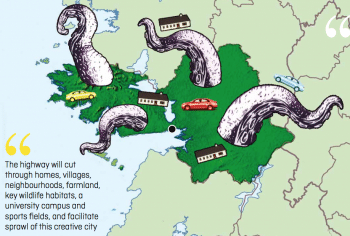
Around one hundred submissions were received by Galway’s City Council on its Draft Development Plan 2017-23 by the deadline of 5 October. Meanwhile, a number of well-known community and environmental activists in Galway City have come together to form a new alliance to promote a ‘Future Cities’ concept based on “regenerative urban development, ‘green’ living, smart technologies and a sustainable transport. They have a lot on their plate. It’s a planning and transportation mess with no visionary Messiah. In many small cities comparable in size to Galway, people are regenerating and humanising their urban environments by introducing woodlands, gardens, recreational parks and city-wide 24/7 cycling, walking and public bus or train systems. Yet here in Galway City we are now proposing to build the N6 ringroad that will cut through homes, villages, neighbourhoods, farmland, key wildlife habitats, a university campus and sports elds, and lead to further mindless urban sprawl of this, in so many ways, creative city. Then, having spent €700m on a new road, there will be no incentive or money left to introduce the Public Transport improvements being promised “after the road is built”. If Galway City is to have a sustainable future, the authorities should immediately bin a policy based on a discredited ‘predict and provide’ private car-based transportation model and instead should use the available €500-750m to construct a hierarchical transport model based on a ‘new mobility’ prioritising pedestrians, cyclists and users of public transport”. When the IDA first developed its business parks at Parkmore in the early 1970s there were very few businesses initially established out that far. So having only one main entrance avenue wasn’t a problem. In the intervening years the estate has exploded so it now accommodates many of the world’s leading medical device and IT manufacturers. With very little available public transport passing, let alone actually entering the estate: the sheer number of private cars coming in has now reached crisis point. Yet Galway Co Council actually gave permission for a new sub-standard entrance/exit point and junction giving the planning board no choice but to refuse permission. In September An Bord Pleanála duly reversed the permission because “its construction would endanger public safety by reason of traffic hazard”. This decision could, should, force debate about the much larger can of worms around Ireland’s lack of a ‘sustainable’ National Spatial Strategy’. The daily traffic chaos in Parkmore is a symptom of the much wider problem we have in historic spatial planning in Galway, with rapidly increasing numbers of people having to commute from their new homes in County Galway to their workplace in the city, by car. This phenomenon has become overwhelming over the past 40 years. Workers living in the city but working in Parkmore/Ballybrit have been failed by the lack of civic imagination that might have provided an adequate public transport system in the city. For a youthful and fashionable city, capital of ‘craic’, dubbed as progressive, and once crowned ‘the fastest growing city in Europe’ this is anachronistic. In its May 2014 Newsletter, the Western Development Commission – using an IDA case-study, stated that “of the 16,701 rural dwellers commuting to work within the gateway of Galway city, one quarter (25.6% or 4,285) commute to work in the IDA estates”. The first figure refers not just to people heading in to Ballybrit, Parkmore and Galway Technology Parks, but others who commute further still into the heart of Galway city, for work at GMIT, NUIG and UCHG, our largest city-centre employment nodes. As James Wickham said in his book ‘Gridlock’: “Car dependency is an issue for social policy. Car dependency exacerbates social exclusion, for those who do not have a car run the risk of being excluded from normal life. Their access to jobs is restricted, they find it difficult to move around the city, they are not full citizens”. There is a belief that transportation problems result from the antedeluvian planning policies of the 1980s and 1990s, both at local and national level. These intensi ed in Galway from the time Colin Buchanan and Partners published its ‘Galway Transportation and Planning Study’ in September 1999. This report together with its subsequent 2002 ‘Integration Study’ commissioned jointly by Galway City and County Councils, led to a situation in Galway, not dissimilar to that of Dublin, where availability of sufficient reasonably priced housing units in the city failed to keep up with growing public demand. This, combined during the madness of the Celtic Tiger years, with pressure being applied by county councillors and developers turned Galway’s surrounding towns, villages and particularly countryside into worker dormitories: for families that had been priced out of continuing to live in Galway city. The Galway County Development Plan of 2002, which integrated the recommendations from the Buchanan Report, facilitated development in places ringed around the city: Bearna, Moycullen, Claregalway, Tuam, Oran- more and Athenry. And everything in between. Responding to Galway County Council’s then- Draft Development Plan in July 2002, then City Manager John Tierney wrote to Donal O’Donoghue, then County Manager, expressing some concern over proposed policies which would continue to promote a wider spread of settlement, and not the concentration into the 38 towns, villages and proposed development at Ardaun that had been planned. He stated: “The cumulative effect of these policies/objectives all greatly undermines the ‘Galway Transport and Planning Study’ GTPS, any sustainable approach to a settlement structure and consequently any ability to promote a sustainable public transport system. It would exacerbate the current dependence on private vehicular transport and the consequent negative effects of this”. Tierney’s pleas went ignored, and widespread ‘one off’ housing development in County Galway continued unabated, with septic tanks mushrooming leading to water pollution, cryptosporidium, and a culture of lengthy commutes into once homely Galway City. So a long-term strategic policy for planning where people might be sustainably housed was scupperedd, due to the regime, the report and thousands of concomitant individual acts of planning anarchy, cumulatively undermining any regional strategy. The problem is now self-pepetuating and solution-less.
-
by Ken Phelan
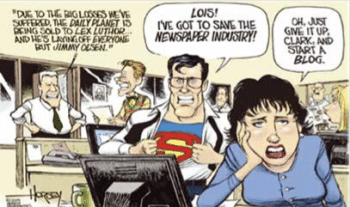
The recent Audit Bureau of Circulation (ABC) figures for newspaper sales for January-June 2016 show an alarming decrease for nearly all Irish newspaper titles, with the demise of the industry itself now, for many, inevitable. Of the national newspapers, The Irish Times dropped 5.5 percent compared to the first half of last year, The Irish Independent is down 6.4 percent, The Irish Examiner 6.7 percent and The Evening Herald 8.4 percent in the same period. Most daily tabloids are down, apart from the Irish Sun, which saw a rise of 4.6 percent year on year. The Sunday Independent dropped 6.7 percent year, The Sunday Business Post 3.5 percent, The Sunday Times 6.4 percent and The Sunday World 8.9 percent. The Irish Mail on Sunday fell by 7.2 percent while the Irish Sun on Sunday recorded the only rise in circulation at +9 percent. Overall, the circulation of daily print titles was 5.7 percent lower and of the Sundays 6.3 percent lower. Globally, the threat to newspapers is epidemic. In May 2016, the 121-year-old Tampa Bay Tribune, Florida, ceased publication; in March, the London Independent and Independent on Sunday ceased their print publications and November 2015 saw Russia’s only independent English-speaking title The Moscow Times end its daily edition in favour of a weekly format. In 2013, The Washington Post was sold to Amazon.com founder and chief executive Jeffrey P Bezos for $250m. In September 2010, the Chairman and Publisher of The New York Times announced to an International Newsroom Summit that: “We will stop printing the New York Times sometime in the future, date TBD”. The Guardian, whose web edition is the world’s second most popular English-language newspaper website – after the Daily Mail online, has shed 200 jobs and clocked up losses of £69m for the last financial year with falls in both print and digital revenue leading to an £8m fall in total turnover to £209.5m. Digital revenues were £81.9m, down almost £2m from the preceding year as Facebook and Google ate up the bulk of the money it had made from mobile advertising. Based on current trends, commentators have predicted that only the Sunday and weekend newspapers will survive in a culture immersed in Facebook, Twitter, Snapchat and Youtube and with the proliferation of citizen journalism offering free ‘news’ content. What New Media offer is ‘free’ news as it happens from an infinite number of sources around the globe; in the age of New Media, traditional values of accuracy, accountability and professionalism are at risk from unverifiable facts, unconfirmed sources and the constant need for instant news; and gossip. With daily newspapers, today’s news is essentially yesterday’s, or this morning’s at best. Newspapers have made a concerted effort to shift content towards analysis and commentary, but this hasn’t been enough. What the recent ABC gures don’t reveal is where these disenfranchised readers are migrating. The loss of newspaper revenue may be partly attributable to growing internet usage and online culture, but this does not necessarily mean those same readers are now reading news online. A decline of 10,000 readers for a national newspaper does not equate to an additional 10,000 people reading or accessing news online. Youtube, Facebook, Twitter and other social media account for most internet usage, so perhaps not all migrated readers/users will be regular perusers of the Guardian online edition. A ‘cornerstone of democracy’ for over 400 years is now in danger of imploding. Attempts by newspapers to embrace New Media by offering pay walls for access to online content have so far been largely unsuccessful (though the Guardiannow boasts 50,000 ‘subscribers’); cynics point to the obvious – there is simply too much ‘free’ news to be harnessed online. Print Media’s only hope is to reinvent their current business model and somehow embrace their biggest rivals. What that does for journalism is another story. Ken Phelan
-
by Paul R Hyde
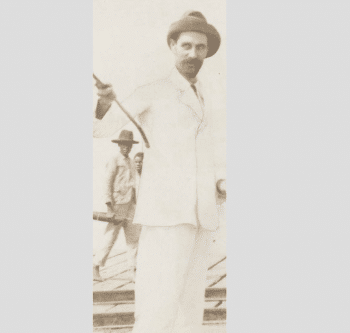
It is today widely believed that between Casement’s arrest and execution in 1916 the Black Diaries now held in the UK National Archives were clandestinely shown to in uential persons in order to disarm appeals for his reprieve. This belief was once again articulated by law professor Sean McConville on 2 June, 1916 at a Casement event in London when he stated to a TV audience of millions “…the diaries were circulated in London … Blackwell … was circulating these diaries at a time when Casement’s fate had not nally been decided …”. The original sources of this belief, however, are the books written by Rene MacColl BL, Reid, Roger Sawyer, Brian Inglis and Séamus Ó Síocháin. These volumes comprise more than 2,000 pages and at an average of two years of research for each study, we have around ten years research. Strangely, in these 2,000 pages there is not a single verifiable instance recorded of the diaries in the National Archives being shown to anyone in that period. How can this be? It is not credible that these authors of research overlooked this crucial aspect after ten years. If they found instances of the diaries being shown in that period, then it seems they withheld that vital information from their readers. Since this is not credible, we must assume that none of them found any instance of the diaries being shown in that period. It is well attested that typescript pages were circulated in that period and that a large quantity of these eventually found their way to Singleton-Gates who published them in Paris in 1959. But Casement did not type those pages. What would constitute a proof of authenticity of the diaries held in the National Archives? There are no witnesses to Casement’s authorship and there have been no rigorous and impartial scientific tests. The only evidence that has been adduced in favour of authenticity is a resemblance in handwriting. The attempts at corroboration in July 1916 are not evidence of authorship. But perhaps the question about authenticity is a false trail. In the period from 25 April to 3 August the British authorities claimed to be in possession of the five bound volumes now held in the UK National Archives. However, there is no verifiable record that these volumes were shown to anyone in that period. Rather than show the diaries, the Intelligence chiefs had decided to prepare typescript pages and to show these to influential persons, journalists, editors, politicians, churchmen and others. They told these persons that the typescript pages were authentic copies of original diaries written by Casement. They failed to provide any proof that the typescript pages were copies of anything written by anyone. The proof which they did not provide would have been exhibition of the bound volume diaries now in the UK National Archives. No explanation has ever been proposed for this failure. Today there are five bound volumes in the UK National Archives. Their existence today does not prove their existence in the period 25 April to 3 August 1916. That the bound volume diaries were not shown in that period means there was some impediment to showing them. The protagonists – Blackwell, Thomson, Hall, Smith and others – had the strongest of motives for showing the bound volume diaries which they said had been discovered but they did not do so. The impediment certainly existed and it was such that these powerful men neither jointly nor singly could overcome it. Therefore it was out-with their joint power to show the bound volume diaries in that period. This circumstance indicates that the impediment could not have been overcome by anyone in England at that time – not even by the monarch. In this regard these powerful men had touched the limit of theirhuman power. The question is therefore not about forgery or authenticity but about the material existence of the bound volume diaries at that time. The absence of verifiable evidence that the bound volume diaries existed before August 3, 1916 means that questions about authenticity are meaningless. What first requires to be proved is their existence in that period before August 3. Those who claim the typescripts were true copies have now had 100 years to produce evidence of the existence of the bound volumes in that period. That they have not produced the necessary evidence indicates that they too have been unable to overcome the impediment which defeated their powerful predecessors, Thomson, Smith, Hall etc. In these circumstances an impartial court of law would decide to act as if the bound volume diaries did not exist at that timeand would dismiss a case for their authenticity as being un-tryable. The case for the typescripts being copies at that time could not be tested or proved without verifiable independent evidence that the bound volumes existed before August 3. Thus the case in favour of the material existence of the bound volume diaries before August 3 rests entirely on the word of Thomson, Hall, Blackwell, Smith and others and these are the people who at that time were circulating typescripts which depicted Casement as “addicted to the grossest sodomitical practices”. These persons can only be considered as hostile witnesses by virtue of their uncontested behaviour. There are no neutral witnesses who testified to seeing at that time any of the bound-volume diaries now in the UK National Archives. Absence of proof of existence of the bound volumes at that time entails that no proof of their authenticity can be derived. That no proof of authenticity can be derived entails that – until such proof of existence is provided – the veracity or falsity of the typescripts cannot be considered. Ei incumbit probatio qui dicit, non qui negat; the onus of proof rests on the accuser, not on the defence. If questions about authenticity are meaningless due to lack of conclusive evidence after 100 years, claims favouring authenticity do not rest upon verifiable facts or upon independent testimony. Therefore such claims rest upon
-
On 4 January 2016 I found myself in a court-residents. The review group recommended a move to a room in Castlebar, Co. Mayo. One man and ve women were on trial, charged with assault alleged to have occurred in Áras Attracta. Sitting in the courtroom my hope was to use this experience as part of my own catharsis, having lived through physical abuse in Áras Attracta which is the HSE-run residential centre in Swinford, County Mayo where 96 men and women with intellectual disabilities live. It featured of course in a recent exposé by RTÉ’s Prime Time programme. Bodily integrity, in the context of receiving support for personal care, brings an unspoken vulnerability. Fear is ever-present. Dignity and respect should be basic imperatives. Those of us involved in the rhetoric of human rights and the independent-living movement must remember that our sisters and brothers with learning disabilities are uniquely susceptible to abuse. The material captured on the hidden camera placed by Prime Time’s undercover reporter showed staff shouting, pushing, force-feeding and dragging residents across the floor. The footage was used in evidence in the case by the State prosecutor. The five staff, including nurses and care workers, were found guilty of assault. All but one avoided jail terms. Four were sentenced to community service orders in lieu of prison terms. The fifth was given a prison term of four months which is currently under appeal. The protracted saga of Áras Attracta is a reminder of the slow pace of the State’s apparatus. Two years on from Prime Time’s exposure of what was happening in Áras Attracta an independent review group published the ‘What Matters Most’ report in August with thirteen recommendations and an action plan for all congregated settings. The most pertinent of these was to “accelerate the process of supporting people to move into community living, avoiding transitional arrangements”. The HSE has committed to implementing this and claims that “individual needs assessments have been completed for all residents to identify their future support requirements to live a successful life in the community”. The independent report stated there was “widespread institutional conditioning and control” of people living in Áras Attracta. It found that this was generally imposed for the convenience of staff and management and the model of service was structured to suit staffing constraints rather than the needs and aspirations of residents. The review group recommended a move to a rights-based social model of service delivery in one of its overarching recommendations for Áras Attracta. Most service-providers for people with disabilities are state-funded. They remain institutions where power and control exerted over us and people’s right to independence and choice is denied. The report tells those of us who have to have relationships with service providers nothing new. It con rms unspoken realities. There have been a series of HIQA reports on these services that back up this analysis. The inertia in implementing recommendations from these reports coupled with the lack of rights-based legislation further demonstrates state inertia when it comes to people with disabilities. The Áras Attracta situation merely highlighted the insidious practices that take place in residential institutions. Often there is an inference that somehow people who are abused brought it on ourselves. In the context of Áras Attracta, what was considered, or diagnosed as challenging behaviour could better be described as very challenging circumstances for the residents. There are still over 2,700 people living in congregated settings throughout the country. Residential settings echo a discredited previous era. We suspect, we fear and we know. However, still they continue. Twenty-seven people currently living in Áras Attracta are now waiting to move into new supported accommodation. The Minister for people with disabilities, Finian McGrath, has announced that the Government has provided a dedicated €100m capital fund to facilitate de-congregation over the period 2016-2021. €20m has been provided for 2016 and Áras Attracta has been prioritised to receive funding in this first phase. Action is now needed, not just another report or political promise that will become redundant as time passes and nothing changes. The kernel of the ‘What Matters Most’ report is in the overaching recommendation for Áras Attracta that “The voices of the residents need to be facilitated, listened to and promoted”. Why would you need to make such a recommendation? What has gone so badly wrong that this has to be one of only three overarching recommendations. Fostering the independent voice of the people accessing services, attending to their preferences, and ensuring people know their rights and have access to advocacy services should have been a given. These are the voices that must now determine the future. Rosaleen McDonagh
-
In any discussion about Mayoral governance’ in Dublin there are assumptions: firstly, that it is a good thing, that it will solve lots of problems in the city; and second, that the mayor should be directly elected. We usually hear the paraphrased quote – ‘who do I ring if I want to talk to Dublin?’. We want to be able to identify who runs the place. We want someone to be running the place. Directly-elected mayors give us that. The ‘direct’ in direct election, a bit like in direct democracy, is a ‘Yay’-word. It is seen as an unarguable good. Who could not be in favour of giving people a direct say in, a direct link to, who runs the city? These assumptions ignore the relationship between central government and city government and what competencies are appropriate for the mayor, what geographical area the mayor might rule over, and the central issue of funding. They also ignore the fact that we can and do have strong political leaders who are not directly elected. There are broadly three models for city governance. One is the Council-Manager system we currently have – where the mayor has no executive powers. There’s an assumption that it is a bad thing. It certainly isn’t very democratic: it is not responsive to voters’ wishes and there are no clear links between the vote in local elections and local government policy. It’s also not very transparent – though that might be due to the absence of real media reporting of city government. It in turn might be a function of the lack of clarity in decision-making. The second model is the directly-elected mayor or Mayor-Council system. It is used in London, some other European cities, such as Rome, and about half the big US cities, including New York and Chicago. Probably because our nearest neighbour and biggest influencers adopted and use it, we naturally assume it is the one for us. But within this system, things aren’t uniform. They can be strongly mayoral or weakly mayoral – so the Council’s control of the legislative and financial functions can vary considerably. There is a third model. It is a Council system. The elected councillors appoint a mayor, who has executive functions. As with the directly-elected mayor, depending on rules, the mayor’s power can vary quite significantly. The system is quite common, used in many northern European cities, such as Amsterdam, Berlin, Stockholm and Paris. So which works best? Well I’m not an expert in local government, but even the literature doesn’t have a clear conclusion. So the short answer is, we don’t know. But I am interested in the functioning of central government, and we can think of the two models, the directly and indirectly-elected executive mayors as functional equivalents to the presidential and parliamentary systems at the national level. And there is a long debate in political science about the relative success of the two systems at delivering democratic stability, human development, and a range of other indicators of a country’s success. So which should we choose if we are to be guided by the relative performance of presidential or parliamentary systems? The presidential system, which is the system analogous to directly-elected mayor, has some advantages. Candidates are required to present a vision to the public. It puts power in the hands of one person, on the basis of popular election. That means the presidential system is clearer and appears fairer. We all know who we vote for; and the person who gets most votes becomes mayor. Unlike in parliamentary systems, there is no messing about with coalition-building based on backroom deals that aren’t transparent and over which the voters have little control. Much of the debate in parliamentary elections is about who will coalesce with whom, a debate that could be avoided in presidential-style systems. Instead the rival candidates for mayor could debate the issues facing Dubliners. The presidential system also weakens the power of parties. Many people dislike parties, and regard them as gatekeepers of political ambition. With a presidential system new leaders can emerge without having to be sanctioned by a party. This is much less likely in a parliamentary system. And at a time when people complain that government is unresponsive to their needs, and lacks leadership, the mayor could have clear lines of power to deal with the big problems. A suitably empowered mayor might be able to deal with the housing crisis in a way that the local authorities, minister and agencies can’t. The parliamentary system, that is the indirectly-elected mayor, however, has some advantages of its own. One might seem a weak one, but it might be important. We are used to parliamentarianism – it’s in our political culture. Political culture governs how we behave and are expected to behave. It changes slowly and doesn’t always respond to institutional changes – perhaps not at all, or perhaps not in predictable ways. This is important because picking systems that we are used to means we are less likely to get nasty surprises. A stronger argument in favour of parliamentarianism is the way it divides power. Politics is meant to do at least two things. It should solve collective action problems: those that make us collectively better off if we are guided to behave in certain ways than if we were left to act individually. The classic example is fishing. Individually we have an incentive to extract as many fish as we possibly can from the seas. We would over fish, making us collectively worse off when fish stocks are depleted. So we are made better off being forced to restrict our fishing. Politics is therefore also a mechanism for the resolution of conflicts, such as the fishing one. In parliamentary systems the mechanism for the resolution of conflict is negotiation, and parties representing different interests compromise, strike deals and build consensus, embracing a wide range of views in the decision. This manifests itself in coalitions, with a formal opposition offering alternative policies. In presidential systems conflict
-
by Anton McCabe
The news that serial non-litigator Gerry Adams is to sue over allegations he sanctioned the murder of IRA informer Denis Donaldson, cannot surprise. Contrary to what has become the received wisdom, the former security force agent in the IRA did not tell BBC Northern Ireland’s ‘Spotlight’ programme on September 20th that Gerry Adams sanctioned the killing of Denis Donaldson in 2006. His allegation was much more tentative. Despite this, media outlets have run with the allegation that the decision to carry out the killing was agreed by Adams, and that the IRA carried it out. An example is the Irish Independent headline: ‘Gerry Adams sanctioned the killing of British spy, claims former IRA man’. This is based on a section of the programme, where reporter Jennifer O’Leary is interviewing ‘Martin’, a former IRA man and police agent. A transcript reads: Jennifer O’Leary: “Martin also said he told his Special Branch handlers what he had learned about the murder”. Martin: “Not too long after Denis was murdered I was told by a member of the IRA, an active member of the IRA, that the IRA had killed Denis, and not anybody else. I gave that information to the Special Branch.”. Jennifer O’Leary: “What was your handlers’ reaction to that information?”. Martin: “They were just totally mute. There wasn’t any acknowledgement of what I’d said. The subject was changed to something else”. Jennifer O’Leary: “Are you surprised?”. Martin: “No. I think they knew themselves. You see I just think you know they and the whole status quo had seen Denis’ death as internal housekeeping and they were happy enough to put up with it. I believe they acted on some information and didn’t act on other information because it was too politically sensitive to do so”. Jennifer O’Leary: “Martin believes that the shooting of Denis Donaldson was sanctioned by the man at the top of the Republican movement, Gerry Adams. Spotlight understands that by 2006 Gerry Adams had stepped aside from the IRA Army Council but Martin claims that Adams was consulted on all matters”. Martin: “I know from my experience in the IRA that murders have to be approved by the leadership and they have to be given approval by the leadership of the IRA, the political leadership of the IRA and the military leadership of the IRA”. Jennifer O’Leary: “Who are you specifically referring to?”. Martin: “Gerry Adams. He gives the final say”. Note: there is nothing indicating this IRA man had first-hand knowledge of Adams’ approving the killing. Note also: the final line is “He gives the final say”. Not “He gave the final say”. What we may call the alleged allegation runs contrary to the Real IRA’s claim of responsibility for the murder in 2009. After the programme, a former Real IRA army council member spoke to journalist Suzanne Breen of the Belfast Telegraph, and reiterated the claim. Breen is a trenchant critic of Adams and the mainstream IRA, so the claim must be taken seriously. Unfortunately, Donaldson was cavalier about his own safety. Some time after he was unmasked in 2005, he went to a cottage in Donegal that had been a safe house for the INLA and IRA for years. It was secluded, so killers could stake it out if necessary. It was near a main road, in an area with a lot of holiday homes, so escape was easy and strangers didn’t stand out. Donaldson had been an informer since at least the mid-1980s. Two groups had particular grudges: families and friends of those killed as alleged informers, people not as well-connected as Donaldson; and families and friends of those IRA members killed or imprisoned because he may have betrayed them. Crucially, the IRA did not need to kill him. He no longer had their protection, and there were plenty of others willing to do it. The killing was similar to that of Dungannon taxi driver Barney McDonald in 2002. In both cases a shotgun was used, making forensics difficult. The current story took off because there is a media obsession with Adams, who is a safety-valve for Sinn Féin’s opponents in politics and the media. It must be said that he has left himself open by seeming ridiculous with his denials of IRA membership. Martin McGuinness receives nothing like the same treatment, despite his admitting having held high rank in the IRA. As Deputy First Minister, McGuinness is central to the political process in the North. The DUP perceive him as a ‘moderniser’ in Sinn Féin. So a media campaign against him might damage the political process. The episode of ‘Spotlight’ is available on the BBC I-player until October 19th. The relevant section can be watched beginning at 51 minutes. Anton McCabe
-
Former County Manager of Donegal, Michael McLoone, is continuing with his High Court proceedings for defamation against Village. In 2014 the magazine printed allegations which it claims were both true and contained in an affidavit opened in court proceedings, by former Donegal senior planner, Gerard Convie, an employee of Donegal County Council for 24 years. McLoone claims he has been massively defamed. Meanwhile Convie’s allegations are being assessed by a senior counsel appointed by the Department of the Environment. Convie has consistently, in court and elsewhere, claimed that during his tenure there was bullying and intimidation within the council – of planners who sought to make decisions based exclusively on the planning merits of particular applications. He claims one councillor constantly referred to him as a “wee shit from the North”. In the opened affidavit, Convie alleges McLoone: 1. Recommended permissions that breached the Donegal County Development Plan to an extent that was almost systemic 2. Submitted planning applications to Donegal County Council on behalf of friends and associates 3. Dealt with planning applications from submission to decision, including some from friends, family and associates 4. Ignored the recommendations of planners 5. Destroyed the recommendations of other planners 6. Submitted fraudulent correspondence to the planning department 7. Forged signatures 8. Improperly interfered as described in a number of planning applications 9. Was close to a number of leading architects and developers in Donegal, including the head of the largest ‘architectural’ practice in Donegal, with whom he holidayed but the relationship with whom was undeclared. Convie made a number of complaints dating from 2006. He had a list of 20 “suspect cases” in the County. As he later reverted to private practice he claimed to have discovered many more, perhaps hundreds, “a cesspit”. In 2006 he complained to the Standards in Public Office Commission (which ruled the complaints out of time). That same year the Council sued Convie for his allegations, but dropped the proceedings after a fractious four years, without any damages or costs award. In another case McLoone won damages from a local newspaper which had printed some of the allegations but which did not fight the case in a full hearing. Following complaints from Convie after the Greens got into government Environment Minister, John Gormley, announced ‘planning reviews’ in 2010, not of corruption but of bad practice – in seven local authorities including Donegal. Convie’s case studies comprised all the material for the review in Donegal. But when the new Fine Gael and Labour government took over they very quickly dropped the independent inquiries. A lazy 2012 internal review by the Department of the Environment stated of Donegal – according to Minister Jan O’Sullivan in the Dáil, that: “… the complainant [Convie] has failed at any stage to produce evidence of wrong-doing in Donegal Council’s planning department”. Convie felt this left him in an invidious position and he successfully sued. In the High Court Order, all the conclusions by the Minister were withdrawn and an apology issued. Counsel on behalf of the current Donegal County Manager, Seamus Neeley, objected to the decision as it did not know why the case had been settled, though Convie’s barrister noted that the Council was a notice party that had played no active part in the case. There appear to have been no ramifications for the civil servants who concluded that Convie’s complaint did not constitute “evidence”, less still for the ‘progressive’ Minister who accepted the conclusions. The government was forced to reinstate the planning enquiries and found maladministration but not any sort of corruption in the cases outside Donegal. After the ‘RTÉ Investigates’ programme which apparently uncovered examples of corruption in planning last year, the government sheepishly announced a package of ‘radical’ planning measures which included the belated publication of the independent review which uncovered considerable evidence of malpractice throughout the planning system and includes 29 recommendations to improve “standards of transparency, consistency and accountability” which the Department says it will implement. The Convie file was referred to the Attorney General for direction and in the end senior counsel, Rory Mulcahy SC, was appointed to look into it. Convie by all accounts engaged with Mulcahy over the issues which were the subject of the complaints, but has now withdrawn from the process. Mulcahy has spoken to the Council and informed Convie that he would be seeking to interview other relevant parties. He is around half way through the exercise. In February this year Alan Kelly, the then Minister for the Environment, claimed, “this independent process underway remains the priority of the Minister, his Department and his officials”. However, though in general content with the process – which being non-statutory is precariously ‘open-ended’, Convie has some particular concerns. He considers the Minister changed the terms of reference for Mulcahy by re-inserting a confidentiality clause, which unlike an earlier version omitted to state that the provision would continue in force “notwithstanding the termination of this contract by either party for any reason”. In the end the Minister partially reinstated the term relating to the confidentiality of his work. Moreover Convie wants the process to embrace An Bord Pleanála to which he claims improper representations were made. He claims that in the 1990s he bid on a site in Magheraroarty, Co Donegal, never trying to hide anything. His bid was accepted by the owner but on reflection Convie says he felt it was far too much land which his family could not afford. He was approached by a builder in Donegal, Patrick J Doherty, and was delighted when he agreed to take the land and Convie bought a site from him. This posed potential conflicts of interest for Convie. However at all stages of the multifarious transactions, Convie made the necessary declarations of involvement in the land. Doherty made a pre-planning application to determine the attitude of the planning office to the development of the site. As the relevant planning official was on leave [and Convie was dealing with his work as well as his own] he says
-
Posted in:
The 1916 Rhizome
by Cormac Deane
It seems significant that the documentary film ‘Bobby Sands: 66 Days’ has come out this year, the centenary of the 1916 Rising. Brendan J Byrne’s impressive account of the H-Block hunger strike of 1981 claims, through its interviewees and in its own narration, that nothing was quite the same in this country after those traumatic 66 days during which Bobby Sands starved himself to death. The same of course is frequently said of the Rising – Ireland before and Ireland after the seven days of the rebellion in Dublin were two very different places. There are merits to both claims. In one of the many interview contributions by Fintan O’Toole in ‘Bobby Sands: 66 Days’, he suggests that we can view Sands’ hunger strike as marking the beginning of the end of the physical-force tradition in Irish republicanism. The argument goes like this: the enormous propaganda success of the strike demonstrated to everyone, most particularly to the IRA themselves, that you ‘get into people’s minds’ more effectively by demonstrating your readiness to suffer than by demonstrating your capacity to kill and maim; the moment you admit your fascination for Sands, republicanism has won. When the half-dead Sands won the Fermanagh- South Tyrone by-election, he broke the longstanding boycott of the Westminster parliamentary system that had for decades been a defining feature of republican strategy. Granted, when Gerry Adams was elected MP two years later, he abstained from taking his seat, a policy observed to this day by Sinn Féin’s four (non-)sitting MPs. But the fact remains that from 1981 until the present, mainstream republicanism has demonstrated a readiness to engage with the British political system. It would be a strange documentary that did not talk up the centrality of the event that is its subject. But the film does succumb to the temptation to position the Sands strike as the event that shaped all that followed, and it even suggests by its shifting back and forth along the timeline of the strike and the Troubles that the hunger strike was the culmination of all that had come before. 1916 is often thought of in the same way. There is no doubt that what happened in Easter Week was crucial, but we say this because of the many events that cascaded in its wake: the surge of support for Sinn Féin in the 1918 election, the mobilisation of the IRA across the country in the years following, the readiness of the British government to withdraw, and so on. If none of these other events had taken place, then 1916 would be as relatively non-pivotal as the also unsuccessful uprisings of 1867, 1848, 1803 and 1798. This is not to say that these other events were inconsequential, but it is to point out that only one of these rebellions is generally known about and the centenary and bicentenary celebrations for those earlier events are small fry compared to the full-scale, countrywide commemorations of 2016. The broader point here is: when we hear a historical event described as pivotal, a watershed, a key moment, a revolution, a turning point, a tipping point, we are being exposed to what the social historian Richard Sennett has called “a view of human history based on the life cycle of the moth”. Abrupt transformations simply do not happen. The Ireland that existed before the 1981 hunger strikes did not stop and was not replaced by a different Ireland. The same goes for 1916. A useful metaphor for an alternative way of viewing historical causes and effects is the rhizome, which is a botanical term for a part of certain plants that send out roots and shoots in a non-symmetrical, apparently higgledy-piggledy way. Rhizomes have been contrasted, most notably by the philosophers Félix Guattari and Gilles Deleuze, with plants that observe a more regular pattern of a central stem or trunk that grows side shoots in a predictable way. A rhizomatic view of history does not search for a before/after logic, or even necessarily a cause/effect logic to historical events, instead viewing them as being connected in a non-linear and networked way, producing feedback effects and disruptive interpretations of past and future events. 1916 and 1981 are indeed important years in the history of this island, but the rebellion of 1916 becomes the canonical Easter Rising only when viewed backwards in time from the vantage of events that followed. And among the events that have followed 1916 are the commemorations of 2016. The fact that these events are being celebrated so effusively this year casts new, retrospective significance upon them. 1916 had occupied a venerated position in the emotional history of nationalism for many decades, but had slipped into disrepute in the south in particular as the revisionist account of Irish political violence became standard. But the 1916 that is celebrated now is rather different from how it was remembered in 1966. With the distance of time and the commodification of our own historical experience, the new 1916 has receded sufficiently from our current political dispensation to become a quaint, sepia-toned, costume-wearing, heritage event festooned with interactive, touristic, multimedia, virtual experiences. The 1916 rhizome, in other words, continues to send out new shoots. ‘Bobby Sands: 66 Days’ does a good job of connecting previous events of the Troubles to the day-by-day experience of the Sands hunger strike. As such, it is a decent history of the period. But its major assertion that things changed pivotally with Sands means that it fairly rushes past the events that followed 1981. The over-emphasis on Sands and his strike means that the other nine people who starved themselves to death in prison that year are not all named. The film gives the impression that the conflict was effectively brought to an end by a combination of Sands’ political coup plus the peace-process nous of Adams, aided by the briefly seen Albert Reynolds, Bertie Ahern and Tony Blair. Fair enough, these are indeed the events that followed, in some shape
-
Posted in:
Controlling the s****
Not too quietly, but without a great deal of fuss, NPR (National Public Radio), the American public radio network, killed commenting on its website in mid-August. In a statement announcing the change, the network explained that an analysis had revealed that only a fraction of one percent of their monthly 25 to 35 million audience was making use of the comment facility on their website. Over a three-month period, only 2,600 people had left a comment – 0.003% of the 79.8 million NPR.org users who visited the site during that period. On 23 August, after eight years, the boards went silent, joining may other North American news sites which have decided that reader comments just aren’t worth the bother. That isn’t to say that NPR no longer talks to – and listens to – its audience. The network runs a daunting range of social media accounts, including more than 30 Facebook pages and 50 Twitter accounts, as well as accounts on Snapchat, Instagram, and Tumblr. Its primary Facebook account reaches over five million readers. Individual journalists also run their own social-media accounts. In Ireland, media outlets have taken a variety of approaches to commenting, from free-for-all to no comment capability at all. Differing defamation regimes also affect how commenting is managed. The courts are still working out the niceties of when a reader comment is published by a website, and when the website becomes liable for defamatory content, so different publishers have taken different approaches to ensure their comment sections stay within the bounds of the law as they see it. The need to police harassment and trolling by site users also influences those editorial decisions. Trolling has little to do with Scandinavian ice giants, rather, trolling was the act of fishing for comments, baiting users with inflammatory statements, analogous to how one might fish by trolling bait along a riverbank. So for example, the Independent website requires commenters to register, either using Facebook or Google Plus (both of which have real-name policies), or by registering, using an email and password combination. In theory, such measures can reduce harassment and aggressive posting, but the ease with which throwaway email addresses can be created reduces its effectiveness. Sister publication the Herald doesn’t host commenting on its stories at all, while the Irish Daily Star (through its online vehicle Buzz.ie) simply requires users to provide a name and email address before posting comments on tits stories. Both the Star and the Independent require – labour-intensive – pre-moderation, so commenters have to wait and see if their insights and observations are deemed worthy before they are shared with the world. Pre-moderation has the advantage of reducing harassment and improving the tone of the comments sections, but it does mean that the publication becomes liable for any defamatory statement that slips through. The Examiner requires registered users to log in (using any of their Facebook, LinkedIn, Twitter, or Google Plus identities, or by registering an email and password combination), but in most cases doesn’t offer an option for readers to comment on stories. Registering does, however, allow the Examiner to collect data on what stories readers are interested in, and to tailor news alerts on phone and tablet apps. Like the Examiner, the RTÉ website offers users the opportunity to register, but this is in order to access and keep track of programmes on the RTÉ Player across different devices. No commenting facility on its news or entertainment offerings is available. RTÉ does ask for a lot more data than most sites during registration (full name, gender, date of birth, and location). The Irish Times, meanwhile, limits commenting to paid subscribers. The Sunday Times, through its Times of Ireland daily product, is behind a hard paywall, which also has the effect of restricting access to comments. This raises the intriguing question of what might happen when trolls – who have paid their subscription fees – cross the bounds of acceptable speech. Is moderation made more difficult when it could lead to a potential loss of revenue? Are those with disposable income to cast at social media more reticent online than those with nothing to lose? In summary, although most Irish traditional news outlets offer some form of reader participation, there are heterogeneous requirements before comments can be left on sites. The particular software solutions managing comment sections can also act as an impediment to commenting (the Examiner site in particular was extremely slow in loading comments) and premoderation can lead to delays which reduce the likelihood of participation. With news outlets that were actually born on the web, commenting seems much more vigorous. While The Journal, for example, requires a sign-in with Facebook or Twitter, comments are not as a rule pre-moderated (although on some controversial stories, commenting is disabled). Joe.ie/Her.ie do not offer a comment facility. Broadsheet, arguably the site most dependent on comment, is mostly unmoderated, although software may occasionally stop a comment until it is vetted by a staff member, if for example it is from a previously unknown account, and presumably if it contains any of a list of blacklisted phrases. Broadsheet articles are often little more than a handful of sentences, linking to a tweet or facebook entry, and the real reason readers stay is to read and join in commenting. That audience, in turn, can expect an occasional longer article, including some longform journalism running to several thousand words. The free-for-all spirit in the Broadsheet comment section is strongly reminiscent of the culture of early bulletin boards, dating back to the earliest days of the internet, before Tim Berners-Lee came up with the idea of the web. In the early days of the internet, there was no world wide web, and there were no newspapers online. But there were discussion groups, first with emails carbon copied to multiple recipients, then with mailing lists managed through central subscription-software listservs, and eventually, through user networks anyone could subscribe to. The Users Network (Usenet) was built on earlier electronic bulletin
-
Posted in:
Documenting what’s left
by John Gibbons
John Gibbons interviews Liam Lysaght, Director of the National Biodiversity Data Centre. Ireland’s largely dysfunctional relationship with its natural environment was neatly summed up by former Taoiseach, Bertie Ahern, when he moaned that his ill-fated Celtic Tiger was being stymied “because of swans, snails and the occasional person hanging out of a tree”. While the Ahern era was hardly a high watermark of environmental awareness and ecological literacy, one useful resource to emerge from this time was Ireland’s National Biodiversity Data Centre, which was established by the Heritage Council in 2007 and is funded by it and the Department of Arts, Heritage and the Gaeltacht. The Centre was set up to collate, manage, analyse and distribute data on Ireland’s biodiversity. Headed by Dr Liam Lysaght, the Centre is based in Waterford city. “We are trying to put in place systems to track changes in the countryside”, Lysaght told Village in a recent in-depth interview. “It’s about building the evidence base to support biodiversity policy”. It is, he adds, “quite remarkable that at the moment we don’t even know how many species of organisms we have in Ireland. We know of 31,000 (species) but it’s estimated the total is closer to 40,000, yet they remain to be discovered, so we’re trying to build knowledge on what species there are in Ireland, where they occur and how they are changing over time. That is absolutely vital to feed into policy development”. Biodiversity and nature conservation, he notes, are seen in Irish public life as a problem rather than an opportunity. Hence the decision by Heritage Minister, Heather Humphries, at the behest of the Irish Farmers Association, earlier this year to extend the hedge-cutting season.The ban is vital in protecting habitats during nesting and breeding season. Ireland’s hedgerows are among our few remaining semi-intact areas of biological diversity. This IFA-led and politically sanctioned incursion underlines the asymmetrical balance of power between those trying to defend Ireland’s imperilled wildlife and the well funded and politically connected lobby groups seeking to erode environmental safeguards at every turn. Lysaght is an advocate for education and enlightenment rather than conflict. “We have to counteract this view… people love getting out into the countryside, they love being out in the natural environment”. To coincide with the International Year of Biodiversity in 2010, the Centre pioneered an ongoing initiative called the Bio Blitz. This brings together groups of people to see how many species can be identified within a defined area. While the Bio Blitz is an imported idea, the particular spin put on it in Ireland results in four or five teams simultaneously in the field at various locations, competing against one another. “It’s astonishing: everyone is surprised when you tell them there might be 900 different species of moths or 100 species of bees. These kinds of figures communicate very simply and effectively”. A winning Bio Blitz site can expect to record over 1,000 species in a 24-hour period – an illustrative glimpse into the staggering complexity of the natural world in a country that is in no way thought of as a biodiversity hotspot. Lysaght is intrigued by the paradox that while nature conservation, at least in Ireland, has negative connotations, on the other hand: “There’s hardly a person in the country that isn’t moved by hearing a cuckoo in the wild. If you talk to those same people about the need to conserve the countryside, or do something positive for nature conservation – well, there is a disconnect there”. The ongoing ecological catastrophe of bogmining is, in Lysaght’s view, “symptomatic as to how poor our attitudes to nature conservation are. Frankly, what we are doing to Irish peat bogs is a scandal, there’s no getting away from it. And that’s both private individuals and the State”. Raised bogs are, he reckons, probably the rarest habitat that we have in Europe: “Ireland is fortunate to still have some of them remaining, but only a very small percentage of our raised bogs are still intact, and frankly I don’t understand why, for the common good, we don’t just say these, for the common good, have to be protected. Full stop”. While fair compensation for existing turbary rights needs to be paid, there is, he says, absolutely no reason, other than politics, that this is being allowed to continue. Contrast, he says, projects like the Abbeyleix bog, where the locals have taken ownership of a raised bog donated by Bord Na Móna. This is an oasis of diversity, especially when compared to the adjacent ‘commercial’ bogs, where, he notes, “the scale of destruction is just staggering”. Their dual role as carbon sinks makes this even more reprehensible, he adds. Lysaght was unimpressed by Bord Na Móna’s ‘Naturally Driven’ advertising and PR campaign earlier this year: “I think it’s disingenuous; what I would say about Bord Na Móna is there are some very good staff in the company who are trying to do a lot in terms of giving back some of the land that’s been cut away; I’d like to see more of these sites being given over to biodiversity and tourism”. Lysaght finds it ironic that MEP and bog-cutting lobbyist Luke Ming Flanagan is also a big fan of Dutch liberalism, particularly regarding cannabis, but seems to have failed to notice that the same Dutch have spent over €100 million on peatland conservation. Amazingly, as far back as the late 1970s and early 1980s, a Dutch foundation raised the money to buy three Irish raised bogs and donated them to the Irish State for nature conservation. The crucial role of the National Biodiversity Data Centre is gathering, computerising and making sense of reams of raw data, in an attempt to benchmark the state of Ireland’s biodiversity. Without this, how can we measure future losses or gains? Examples of this are two insect-monitoring schemes it operates. These are spread across more than 120 sites all over Ireland. “This is the kind of empirical data that are needed.
-
Ads are expensive and are intended to be effective. They tend to bring up the spirit of the age. So why are ads in 2016 so boring, so annoying? Is our time sterile and passionless? Has consumerism become not just the only lifestyle but the only idea? As Google pivots to world dominion have our glistering global agencies started employing yellow-pack copywriters for TV and radio? What happened to teaching the world to sing or taking the horse to France? It’s as if no one feels the need to be clever, to provoke. If I ask my nine-year-old daughter to finish her greens she now recites verbatim the Ulster Bank ad until I relent. “Help for the movers and for the shakers. Pure innovators. Help for the dreamers. Help for the fingers that work with the soil. For hands that know labour and hands that know toil. From the swearing of vows to the sharing of platters. It’s helping each other that’s help for what matters”. I forget about the uneaten broccoli and make for the exit, my teeth grinding off my bleeding tongue. The video is fine, it’s the verbal clichés: “movers and shakers”; and the nonsense – “helping each other that’s help for what matters”. And coming from a bank, of all unhelpful forces! Ulster Bank have now updated the, still mediocre theme. The same over-extended, ever ancient-hat shuffle with the universe: “It’s not just the big things. Because helping each other is help for what matters”. And they’ve been sponsoring RTÉ’s ‘Drivetime’. It’s all a bit like the ad for Specsavers where the car gets bashed by the automatic garage door. “Dad, my car is broken’. Or the bad toes in the Scholl nail ad. How did it come to this? Aren’t they trying to get us to like them, to do what they want? Advertising was always about really bad messages “Coke: The Real Thing”, “I’m with the Woolwich”. But the great agencies are now purveying big messages that enshrine sweeping bad advice. Ford advised the great gormless brexited British public to “Unlearn everything”. Hyundai implores us that “Change is good”. And on what basis is Change Good? Because. They. Say. That Change. Is. Good. “My name is Hannah Ware [whoever that is. It turns out she played Sara Hanley in the ABC primetime soap opera ‘Betrayal’ (2013–2014)]. Acting allows me to explore. To change. It’s the unexpected that attracts me. Why? Because Change is good? Hyundai because Change is Good”. Were we not brought up not to do things because of what others say? And isn’t change often…well, bad? Nor even with a honeying Jeremy Irons intoning it could it ever be true that ‘better’ and ‘Sky’ fit in the same sentence: “Sky. Believe in better”. In fact Sky will make you worse. George Hook who did the ads a few years ago was a better fit because he knew that. Less ambitious , though intriguing are the pointless ads that now drive our soulless private utilities. Vodafone, I mean you. “Lovely to finally meet you”. Ring any bells? “What do you think she’d like to watch? There’s someone I want you to meet. Her name’s Sue. Hallo Sue. Oink Oink. Music. Oink Oink Oink. Oh Suu-oo”. Or the other one where the tv unwinds: “Oh we missed the beginning”, and the whole ‘family’ troop through the romantic cottage to get a fondle of the pig. Joe.ie surmise that the story here is that the canoodlers’ love-making is interrupted by the quinquagenarian’s ex-wife, who he improvises to call Mam to throw the innocent new girlfriend. The fascination comes from the incongruous ages. 50-year-old bloke, 30-year-old girlfriend, so who can the 55-year-old fat one be? Lovely to finally meet you indeed. Phone companies struggle to assert anything interesting simply because they are not: “Brewing up a storm. That’s data as it should be. 3”. Roll on the day when, after a long lunch in Dublin 2, 3 becomes 4. More interesting though hardly pinpoint relevant is the dot.ie ad which, knowing – like the gas-boiler company – that their whole business is tedious focus instead on some national parodies: “You know you’re Irish when you can’t stop talking about property prices…you say like a lot, you call your mother mammy”. Over 100 businesses sign up daily to dot.ie the official website for Ireland. Official but boring. Car ads are the most loathsome, promoting the smuggest, most damaging products that cost the most. For these metal dinosaurs anodyne messages are best: “It’s time to rediscover Toyota. There’s never been a better time to buy a Toyota”. “Renault: Passion for life”. Love that colon. The Mitsubishi Outlander apparently puts “the Air into extraordinary, the spec into spectacular. All other can take a back seat”. A. Back. Seat. “The all-new Hyundai Tuczon. It’s a game-changer”. Isn’t game-changer a phrase you’d dump your girlfriend for using – why is it being used as if it was a good thing for a car to be? Volvo at least has attempted to counter the sterility of car advertising. Volvo “comes from a different place”, “with a different mindset”, trumping the others. “We care about everyone”. Ideally car ads –especially for SUVs – embrace a status undertow. The irritating VW Tiguan ad features cool kids embarrassed by their parents followed by the coolest of the kids with her cool dad, watched by the other open-jawed cool ones. Knuckle bump. “There’s never been a better time to buy VW”. Unless you dislike implicating yourself in lying, corrupt planetary destruction. But that just tickles the skin when compared to the Trivago Bunny. Pretty as pie yet somehow with no personality. “Remembah. Before you book check on Trivaigo. Saive Thuddy puhcent. Hotel. Trivaigo”. The ad misfires. Beautiful surely, she just doesn’t seem much fun. Pretentiousness seems to be a current vogue. “Patrick is about to enjoy his third oyster of the day” on the Atlantic Way when their ad interrupts him. “Meadows and Byrne. And
-
Posted in:
The vanishing Devane
by admin
It’s time to treasure and protect the legacy of Ireland’s most underrated modernist architect, Andy Devane
-
Posted in:
Where optimism died
by admin
n Shanganagh Vale, in the Dublin suburbs, the 1960s American dream was bludgeoned
-
-
-
Posted in:
Australienating
by admin
Institutionalised abuse of Aboriginal children in the Northern Territory