In 2007, the chairman of the Revenue Commissioners was Frank Daly, now head of NAMA, and it might be instructive to have his view on how a tax ruling by his officials threatens the government, in 2016
Posted in:
by admin
In 2007, the chairman of the Revenue Commissioners was Frank Daly, now head of NAMA, and it might be instructive to have his view on how a tax ruling by his officials threatens the government, in 2016
Posted in:
by admin
Two-and-a-half times as many in South as in Dublin Mid Leinster
Posted in:
by admin
Villager is Village’s standards man. He likes to see a good standard maintained but he espe-cially dislikes to see one dropped
by admin
Margrethe Vestager, the European Union’s competition commis-sioner, serves as an inspiration for the main character in ‘Borgen’,
Posted in:
by Ed Carroll
Depressing as the US election may be for progressives at least it’s spawning some spirited political art from which the rest of us can learn. For example ‘Indecline’ went viral when it erected guerrilla statues overnight of a naked Donald Trump, in several US cities. Each bore the title, ‘The Emperor has no Balls’. Though that much is clear from the works (see right). Arts and culture grasped an immediate relevance in offering a provocative perspective on electoral politics. Less noticed, but still indicative of a desire to heal the splintered resistance, and broker the solidarity that an effective civil society must embody, is the ‘United States Department of Arts and Culture’ (USDAC). It initiated a ‘Super PAC’ for the forthcoming election. In mainstream US politics, Super Political Action Committees (PACs) are used to funnel millions of dollars into election campaigns. These PACs can’t make direct contributions to candidate campaigns or parties. However, they can engage in unlimited political spending independently of the campaigns. They can raise funds from individuals, corporations, unions, and other groups without any legal limit on donation size. The ‘United States Department of Arts and Culture’ (USDAC) plays with the rhetoric of a Federal agency or think tank. It is the engine room for a grassroots action network. Its work is about inciting creativity and social imagination to shape a culture of empathy, equity and belonging. It organises at local and national levels and works with artists and community members to address social issues. It seeks to promote programmes and policies that move art and culture from the margins to the centre of civil society. USDAC aims to power democracy with mass artistic creativity. It has garnered cross-community and crossgeneration traction. Over 170 communities signed up to host events and share stories online in a collective national self-portrait. Cultural Agents are recruited to organize and host ‘Imaginings’, art-steeped community events that have included more than 3000 people. Volunteers come from a pool of 4,500 Citizen Artists. Over 10,000 people have been part of USDAC events in 40 states since late 2013. The USDAC ‘Super PAC’ doesn’t have anything to do with the political spending of the PACs. Its ‘Super PAC’ is a Super Participatory Arts Coalition that nurtures high-impact, low-infrastructure models for building a creative community. It promotes participatory public projects that activate agency, inspire meaningful dialogue, and embody community and equity. These projects could disrupt narratives of hatred. In the midst of a hugely volatile election cycle, they serve as a reminder of what democracy looks like. One of ten models chosen for the Super PAC came from a proposal by ‘Les Agents Provocateurs’ which choreographs flash-mobs to challenge consumerism and reclaim public space. Their plan is to create the same flash-mob performance simultaneously in twenty different cities worldwide. The performance is dancing riot police – they assemble in a public space in riot formation and break into a kind of ‘Chorus Line’ movement, something that resonates for many in our fractious world. Broadway meets the official use of force. Another is ‘Democracy Uncut: A Hearable Dialogue on Race and Social Justice’, a filmmaking technique was used to create meaningful media channels to deal with traditionally polarising topics. This is built on the idea that democracy works best with conversation, which is preferable to riots or tank warfare. It tries to take some of the toughest topics and find ways to bridge the gap between two starkly opposing groups. It has adopted a technique called ‘Question Bridge’ to pose questions, videoing one group at a time, and then letting the opposing group view those questions and reply on video. You take out the noise, the clutter that happens when you get two opposing groups talking at the same time. It ends up with a dialogue you can clearly hear. Finally Sara Taliaferro’s ‘Buffalo Commons Un-Voting Fair’, again for USDAC, is a playful pop-up fair with messages for public officials, historic re-enactments, hugs, zines, and more. There is an ‘un-voting booth’ where you can talk, write, or make art about why you do or don’t vote. The anatomy of democracy in the US has congealed and encrusted. Old mechanisms for participation and meaningful discourse are no longer available. Creativity, arts and culture are evoking new ways to engage. Ireland should emulate. Ed Carroll is the Blue Drum convenor
Posted in:
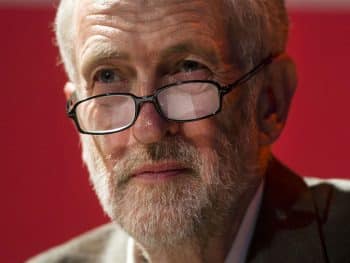
Trolls, bullies, and wounded egos stalk Twitter and Facebook. Blocks are interposed. Friends are defriended. The internet is the forum of choice in the most recent Battle of Britain that is Jeremy Corbyn. The mainstream media has joined the battle rather than offer any analysis. Cool perspectives are not available. ‘Corbyn: The Strange Birth of Radical Politics’ by Richard Seymour is not itself always dispassionate. Tony Blair, for example, appears as “an SDP viper in the Labour breast”. Nonetheless, Seymour usefully takes us behind how Corbyn emerged, to explore why he did. This generates lessons for all concerned with advancing a more equal society. Seymour identifies Corbyn as a product of crises in politics, social democracy, and the labour movement. Of course a popular withdrawal from politics is depriving democracy of its lifeblood, participation, across Europe. Voter turnout is on an ongoing downward trend. Membership of political parties has dropped precipitously. This is not a matter of apathy driven by contentment and affluence. Seymour argues rather that it is about deliberate abstention, a rejection of the choice on offer, and the lack of difference between political parties. He concludes “it is not apathy that characterises a growing chunk of the electorate, it is their effective exclusion from political power”. This abstention is particularly evident among young people and those living in poverty or from ethnic minorities who might otherwise be expected to vote Labour. Social democracy has been a “casualty of neo-liberalism”. The strategy of Social Democratic parties had been to fund welfare state commitments from a thriving capitalist economy. However, they ended up embracing austerity policies as economic crisis took hold. Social democracy has not yet been able to present or pursue a convincing alternative economic model. Its economic base has disappeared, and it has “lost its purpose”. A ‘Social Liberalism’ has taken its place, where “the leadership is neo-liberal and the direction of policy is aimed at gradually converting the base to a neo-liberal common sense”. The crisis in the labour movement is seen in falling trade union density, the decline of leftwing groups, the transience of social movements and the sparsity of egalitarian publications. It is presented by Seymour in terms of the impact of Blair on the Labour Party. Under Blair’s ‘third way’, equality was abandoned for meritocracy and welfare shifted from being a safety net to being a lever to get people into paid work. While power had never been vested in party members, party conferences became ever more stage-managed as power was concentrated in a leadership that relied on polling and focus groups for its vision. Seymour suggests “Corbyn is the culmination of a series of defeats for a form of political organisation that seems to be inadequate in today’s world”. He offered real choice, pointed to a different agenda, and practised a new politics. However, he considers that Corbynism is “headed for a defeat of its own”, particularly if progress is not made in the short term in addressing: popular values; party organisation; electoral prospects; and policy. Ideologically, Corbyn’s call for a “kinder politics” is important, particularly on issues of immigration and welfare. Seymour considers, “Corbyn is willing to challenge more than the establishment; he aims to run against popular prejudice and win”. Corbyn must revitalise the Labour party. The influx of new members is encouraging. However, there is a challenge to democratise the party and secure active engagement from members. Corbyn’s electoral strategy aims to “rebuild the core disintegrating vote while motivating abstainers”. Labour’s share of the vote has not grown, though Seymour notes that polling companies weight against young and poor voters on the basis that they don’t turn out, obscuring any rise in support. However, he concludes that Corbyn is “unlikely to recoup enough of Labours electoral losses to carry a general election”. He suggests that there is a contradiction, however, in prioritising this electoral goal in that the “main point of Labour’s existence is to win Labour governments, however much these governments may undermine Labour’s other purposes in the long-term”. For policy the “most pressing task is to demonstrate that there is a coherent alternative economic model”. Corbyn has committed to end austerity and introduce a “People’s Quantitative Easing” with investment in infrastructure, jobs and high-technology industries. This is to be funded by closing tax loopholes, stimulating growth, and spending less on, for example defence projects like Trident. Seymour highlights that this “agenda is not the stuff of which revolutions are made”, but he is not convinced that, if elected, Corbyn would be able to implement these policies anyway. Ireland still awaits its Corbyn, its Sanders or even its Podemos. This book offers some insights as to what a new politics might really look like and the challenges it would inevitably face. By Niall Crowley
by admin
EDITORIAL Make Ireland ethical, equal and beautiful; and put economics in its proper place M argrethe Vestager, the European Union’s competition commis – sioner, serves as an inspiration for the main character in 'Borgen', a Danish prime minister who tries to juggle family life. She will know how economic concerns do not drive all agendas, that quality of life is more important than GDP. Apparently she also like to knit elephants in her spare time, because, she says, “they bear no grudge, but they remember well”. The tech world won’t soon forget August 30th 2016: that is when Ms Vestager ordered the Irish government to recover up to €13bn, plus interest of up to another €6bn, in unpaid taxes from Apple. The decision was expected, vested interests had cynically played down the figure and the purposes for which the back taxes – and they are rightfully due, not some windfall – can be put. The Commission concluded that Irish rul- ings in 1991 and 2007 artificially lowered the tax Apple was due to pay, and that although the firm did not break any law, this arrangement was in breach of EU state-aid rules preventing member states from offering preferential treat- ment to particular firms. The spat centres on two Irish-registered sub- sidiaries that hold rights to use Apple’s intellectual property to make and sell its prod- ucts outside the Americas. The commission argues that a dubious profit- allocation deal allowed most of their profits to be moved to a “head office” that existed only on paper and was tax-resident in no country — allowing Apple to shrink its tax rate in Europe to well below 1%. The ruling is the most important—and contro- versial—moment so far in the war on corporate tax avoidance. It is one that has liquidised the moral armature of Ireland’s laissez-faire Fine Gael party. Michael Noonan would rather “defend the integrity of our tax system” than accept a windfall that could transform the coun- try. Something about seeds. It is all part of an impoverished lack of vision. Enda Kenny’s principal vision is to make Ire- land the best little country in the world in which to do business. Our leading politicians have made it clear that the only “absolute red line” in Ireland’s internationals affairs is retaining Ireland’s Corporation Tax Rate of 12.5%. New thinking is required. Ireland is an imagi- native, youthful and dynamic country. It has nothing to fear from pursuing ethical impera- tives and imaginative politics. We do not need to be the slave of the tax-evasive multinational sector. €19bn could change the country, belea- guered after nearly a decade of austerity. It would take a chunk off the national debt, which now stands at €200bn. It could pay for a few years of the Universal Social Charge, which brings in around €4bn a year annually, or the school building programme between 2016 and 2021 currently capitalised at €2.8bn. It would pay for the health system for a year, or perhaps enable a shift to a free National Health System. It could rebalance a society where at the moment the top 1% owns 15% of wealth. There could be no stronger message that Ireland intends to pursue a mature and equitable poli- tics than that it recognises that one of the major beneficiaries of globalism, should pay its debts to the people on whom it depends, and in par- ticular to the beleaguered populus that in important ways has been hung out to dry by global capital. It could be used to address some big goals. To reduce inequality, improve the quality of life, plan a green and efficacious new Ireland with sustainable employment for all and high-qual- ity well-planned housing, revitalising and rebeautifying all the cities and towns of the country. The money should be used to address social, environmental, cultural and governance issues. To make us the best country in the world to live in. We owe nothing to the transient multinational sector. It should pay corporate at taxes at a full and reasonable rate. Ministerial deference to multinationals cannot be justified by any scientific assessment of the consequences of alternative actions. As with burning bondholders, taking our just deserts from Apple would lose us no significant friends but gain us some pride and even respect. Observers would see that expecting justice from our past dealings bespeaks a country that can be relied upon, a mature partner and not a deferential slave to the ungrateful global finan- cial system The judgment is the EU operating at its best. We should grasp it, and sideline any dinosaur who seeks to appeal it. We should take Apple for every dollar it owes us. It will stay in Ireland for the quality of our workforce anyway. Then let’s look to forge a great little country, not a deferential little econ- omy; and move to pursue serious policies in fields other than economics. We may even even- tually start to grow comfortable with the enhanced political and ethical standing that doing the right thing would afford us. Shove your best little country for business obsession 4 September 2016 EDITORIAL NEWS Ken Foxe Frank Connolly Frank Connolly 12 COVER STORY Michael Smith Michael Smith Anton McCabe Constantin Gurdgiev Eoin O’Malley POLITICS Ronnie Fay review by Niall Crowley George Monbiot Sarah Lennon Niall Crowley OPINION Conor Lenihan IDEOLOGY DEBATE Desmond Fennell Michael Smith John Waters MEDIA Gerard Cunningham CULTURE Frank Armstrong Ed Carroll review by Cormac Deane
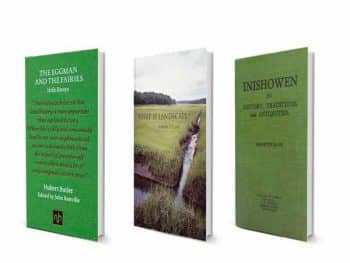
General disparagement that anyone concerned with their own patch must be a small-minded xenophobe fuelled the Brexit debate. Such lazy stereotyping of Leave voters by the liberal collective undermines its own self-perception as open-minded. In the midst of this continuing existential maelstrom, my metaphysical GPS has been happily trekking a terrain of books based on the idea of place and our connection to it. The volumes are very different in style, sensibility, and age. But each one possesses a common thread: a love of the local, be it knowledge; the land; or the language we attach to it. This convergence of homegrown thought enveloped a strong environmental message too. The books are a perfect rebuke to anyone who vaingloriously carries a lumpen backpack around the globe (with the associated grotesque carbon footprint) in an effort to accumulate knowledge about the world. The writings prompt questions: why do we disdain knowledge of the wild flowers that grow in our own fields, for example; why do we think learning is only impressive when the flowers grow 6000 miles away? One of the books is by Hubert Butler, who died 25 years ago this year. His relatively littleknown voice is fortunately abloom again in a collection of essays published by Notting Hill Editions called ‘The Eggman and the Fairies’. I am grateful, otherwise I might not have found this tactful and enlightening writer. Butler’s unfussy talent might have been tucked away quietly in his home county of Kilkenny, travelling no further than the libraries of the literati. The central philosophy of Butler’s connection with civic consciousness literally jumps off the page – the engraved quote on the cover reads: “I have always believed that local history is more important than national history. Where life is fully and consciously lived in our own neighbourhood, we are cushioned a little from the impact of great far-off events which should be of only marginal concern to us”. His inherent sense of locus is a refutation to the hate-lacquered acronym NIMBYISM and its implied curtain-twitching malevolence. Instead, Butler’s cipher could read: KYOBISM, Know Your Own Backyard: for there you will find a world of wonder to be getting on with. In his introduction to the book John Banville places Butler alongside Hazlitt, Orwell, and Robert Louis Stevenson in the canon of great essayists. Banville describes him as “the least noisy of writers”, which is delineating as one moves through the pages with Butler, for he seemingly shuffles through places such as the River Nore or Fethard-on-Sea. His markings are usually near to hand, but his mind is always large, pan-European, in spirit. The sensibility can remain broad, even if the eyes are restricted. “These essays appear to be about Russia or Greece or Spain or Yugoslavia, (but) they are really about Ireland”, he writes in the preface, before expounding on subjects as diverse as Wolfe Tone or plans to build ‘a new Geneva’ on the River Suir in Waterford. “I go on believing that the strength to live comes from an understanding of ourselves and our neighbours or the diaspora that has replaced them”. Butler was born in 1900. After an education at Charterhouse in England and St John’s College, Oxford, followed by some travel through Europe, he returned to his birthplace Maidenhall in Kilkenny for the rest of his days. His family was part of the landed gentry, yet he was staunchly Irish, describing himself as part of Ireland’s rich strain of Protestant Republicanism. The essays were written over a period of sixty years for various newspapers and magazines, as he cleaved – to use Banville’s word – steadfastly to the home place. The book is a treasure trove of knowledge, shared with dignity and a deliberate style. The topics are unapologetically indigenous, yet the themes resound universally, in an artful synthesis akin to Orwell’s musing on that quintessential English subject: the per-fect cup of tea. Michael Harkin contrasts markedly to Hubert Butler in background, but when it comes to wit they could have been brothers. Born in Carndonagh, Donegal in 1830, he penned a precious jewel of local history while working as a post office master, ‘Inishowen – its History, Traditions, and Antiquities’ under the nom de plume Maghtochair. “Our legends and traditions are dying, the customs and habits of the olden time are nearly extinct, but in order to preserve some of them from total oblivion I thought it well to gather this collection”, he declares. The book is a tidy volume of rural life and community in microcosm: mixing topography, history, songs, anecdotes, and verse. Just like Butler, Harkin drew beauty and depth and anchored a deep-seated affection, in the local. Presented in gazette format, these segments also appeared initially in a newspaper, The Derry Journal(how many local or regional papers carry such columns today?). The stories were inspired by Harkin’s travels around the Donegal peninsula in a rattling little car, stuffed with books of poetry and prose, collating information from the local seanachies all the while. In Maghtochair, the people in the Big Houses are sidelined. Instead we find monks or clergy, and issues such as the fight for better rights for farmers in rural Ireland: “Was it the landlords who made our valleys smile with plenty and teem with fertility?”, Maghtochair asks pointedly. “Certainly not; it was the peasantry”. A chapter on ‘Illicit Distillation’ is a joy to drink in, combining fact with plenty of fiction in all likelihood. It humorously sends up officialdom’s presumptive interference and folly in trying to reform human nature. He seems to say, “we like things that are bad for us: if you commit to the futility of preventing us from enjoying them, we will only enjoy them even more”. Maghtochair describes “the lynx-eyed constables of the Revenue Board” tilting at windmills with their still-hunting and concludes, not without reason, that the production of contraband Inishowen whiskey “probably will be carried on while light and dark succeed each other”. The imagination flickers at the thought
by Anton McCabe
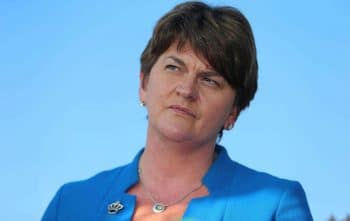
Newish Northern Ireland First Minister Arlene Foster is in the middle of a successful charm offensive. She is popular, even with some Nationalists. The vortex into normality engulfs ever more of the increasingly hateless political classes despite themselves. We have recently emerged from one of the quietest marching seasons since the Troubles began. Any friction was small-scale. The last highly-contentious parades to survive into the present are the annual July 12th morning and evening parades by Orange lodges and associated bands from Belfast’s Upper Crumlin Road area. These pass the Catholic Ardoyne area. The Parades Commission has refused permission for the return leg of this. In recent years, there has been serious violence on it. This year, there was a short stand-off, then some skirmishing. Only one of the lodges involved in the parade took part in protests. There have been talks between representatives of the Orange Order and Nationalist residents. Both parties, in principle, accept the need for dialogue. Nationalist representatives are willing to accept a march, while Orange representatives accept provocative behaviour is unacceptable. Overall, the great majority of Protestants believe the Loyal Orders have a right to march. However, pointless street violence is a turn-off. There are internal tensions, with a perception that the more intransigent sections of the Orange contingent come from areas with few Catholics. Some Loyalists disparagingly refer to them as ‘seaside Orangemen’, whose intransigence fuels violence around interface areas. Then they go home, leaving community workers on the ground to pick up the pieces. Some Orangemen feel that these drive an agenda of refusing to talk to Nationalist residents – because they don’t have to face the issue in their own areas. Within the Orange community, there is also a tiredness. Many feel ‘protested out’ after long protests at Drumcree in Portadown and Ardoyne were unsuccessful. On the Catholic/Nationalist side there is no great love of Orange. However, there is also an acceptance that marches are a part of life, and no great appetite to oppose them as long as they are properly conducted, and there is consultation. Marching, of course, has been a lively issue in the North, and Ulster, since the Orange Order was established in the 1790s. Even in quiet periods like the early 1950s there were occasional riots in the curtelage of Orange processions. However, what the summer produced was the unexpected. We’re used to Somme-visiting Martin McGuinness taking tea with royalty but no writer would have been bold enough to make up the contact between flag protestor Jamie Bryson and Sinn Féin’s Assembly Finance Committee Chair, Dáithí McKay. Bryson came to prominence as an organiser of protests when Belfast City Council voted to cease flying the Union Jack every day on City Hall. He was against Sinn Féin being in government. However, there he was undoubtedly, exchanging friendly messages with McKay. McKay, one of Sinn Féin’s most able performers, has resigned. Bryson’s limited credibility as a hardliner has been tainted. It is unclear who leaked the messages. Bryson has strenuously denied responsibility. He is, though, the main suspect. The affair has damaged Sinn Féin’s image of discipline and control. Bryson is a loose cannon. He had good information on the actions of NAMA in the North: this obviously came from the anti-Robinson faction in the DUP. If Sinn Féin is established to have been working with him they will look far worse than duplicitous: they will look stupid. It is interesting that Frank Connolly reported in Village last year that Gerry Adams was “telegraphing” messages to ensure Peter Robinson knew that unless he resurrected the suspended executive Sinn Féin would play hard ball on his Nama travails. Meanwhile, this controversy has taken the focus away from the sale of NAMA properties in the North at significantly below value. There is no evidence that former First Minister Peter Robinson engaged in any illegal activity. However, several of those involved in the sales were perceived as close to Robinson. There are still big questions to be answered: the Bryson- McKay controversy has (to date) diverted attention from this. The summer also showed how the Sinn Féin – DUP arrangement is still stable. Foster’s political honeymoon will, naturally, not last but she has people skills that Robinson lacked. It is significant that the DUP did not call for the head of Finance Minister Máirtín Ó Muileoir until late in the day – and is not threatening the Executive on the issue. DUP sources see the Executive as solid. There were unexpected developments on bonfires, too. As expected Sinn Féin posters were burned on Loyalist bonfires round the 12th. They were also burned on a bonfire built by alienated young people in Derry’s Bogside. That youth alienation, across the community, is a bigger threat than the growth of Republican or Loyalist dissidents. By Anton McCabe
Posted in:
Reading a Pulitzer-winning New York biography over the summer it was difficult not to think of Pat Hickey and his control of the Olympic Council of Ireland (OCI). Hickey’s ego and ability to run rings around ministers is reminiscent, on a much smaller scale, of the way Robert Moses domineered in New York from the 1930s to the 1960s. Moses’ career is brilliantly expounded in Robert Caro’s outstanding, if at 1336 pages remarkably long, biography, ‘The Power Broker’. Moses unsuccessfully stood for New York State governor in 1934. But never achieving elected office didn’t stop him from becoming the most powerful man in New York. He rebuilt much of the city, in some ways positively, though he had little regard for the poor, and none for blacks. He created more public parks and recreational areas for New Yorkers, but in almost half a century he also committed the state to the car, building more roads, and starving public transport of investment, with predictable results. His story is one of remarkable power ostensibly based on the control of innocuous-sounding public authorities. His superior knowledge of rules, rules he often drafted himself, gave him control of these authorities. He collected information on every potential collaborator, who were, of course, also potential enemies. But most of all Moses organised the corruption of the city’s public works programmes. He ensured that anyone with any power had an interest in Moses’ success. He was able to defeat powerful enemies this way. And his successes made him powerful friends. In this perspective, the OCI ticketing scandal is pretty small beer. It might be a sign of how healthy our democracy is that we’re getting so exercised by it. More likely is that it happened in August and so, other than an underwhelming Irish performance at the Olympics, the media had little else to report. But it has become a scandal, and scandals create a vacuum that must be filled by the outrage of the overwrought. ‘Shell shocked’ ministers promised action. If Joe Duffy is currently pandering to the self-appointed morally superior, his interlocutors are sure to have been aghast. It will have provided proof for them, not that any was needed, that ‘they’re all the same’. And so to fill the vacuum, Shane Ross rushed in with an ‘independent’ inquiry. As a non-statutory inquiry it will depend on the goodwill of those it’s seeking to investigate. If there is wrongdoing, it is unlikely to find anything other than a lack of co-operation. It would be very hard for Pat Hickey to co-operate, should he want to, while under threat from the Brazilian criminal system. It does mean, however, that the OCI can’t sweep the matter away, which presumably it would prefer to do. But above all the purpose of the inquiry is to be seen to do something. Hopefully judge Carroll Moran will have the sense to see that and not drag it out longer than is needed. The real lessons are entirely predictable. When we look at the scandals that have emerged in Irish state-dependent organisations recently, a common thread is evident. The problems in Console, Rehab, the Central Remedial Clinic and the OCI – as well as Irish Nationwide, whether a result of corruption or mis-management, all happened in organisations that became dominated by one man or woman. They could get away it for so long because the dominant player controlled money, information and personnel and was dependent on absentee directors who showed little interest or taste in propriety. They went along usually because of the generous rewards associated with the roles. Sonia O’Sullivan’s admission that anything she knew about the OCI scandal she knew from the media shows a surprising lack of interest, given her position on its board. But badly managed organisations depend on the torpidity of others. The Irish scandals dwarf in comparison to Moses’ operation, but if we are serious about avoiding the excessive rewards and mismanagement of important Irish institutions, we need to think about regulation certainly, but even more about how directors operate and the terms of their leadership. Because many were overpaid we assume that no pay is the answer. This, it is thought, ensures that only the honest and genuinely interested will serve. But it means they may take it less seriously, and they may feel entitled to pursue other ways to get rewards. Moses made a big deal of the fact that he served in his many public jobs (except as New York City Parks Commissioner) without compensation, but he lived royally and enriched those around him in public and private life who aided him. Some pay is reasonable and desirable. Unless directors are made personally responsible for the activities of their organisations these scandals will continue. And if they are dominated by egotistical individuals, then scandal is almost a certainty. By Eoin O’Malley
Shane Ross knows a thing or two about US multi-national corporations and the way they operate in this globalised economy. They avoid tax, in particular the 35% rate that applies in the US. No amount of huffing and puffing by Tim Cook, Michael Noonan or anyone else can alter that fact, and Ross knows it. As Joseph Stiglitz put it, the Irish government has been complicit in assisting Apple, or more precisely, its Irish subsidiary ASI, in massive tax avoidance: “The fact is you were avoiding tax and you knew it”, said the Nobel-prize-winning economist. “Whether the income was correctly attributed to Ireland is another matter. If Apple is saying that this is Irish income, you have an obligation to impose taxes on income that they say originated in Ireland”. Pocket the money and use it to meet the needs of the Irish people for homes, schools and hospitals, he told RTÉ. Put simply the EU commission has said to the Government that a Revenue ruling in 2007 was not based on any real figures but was more a negotiation with Apple that helped the giant corporation avoid paying any tax on profits it gained from sales of its products in countries across Europe and the world. The 2007 ruling was a negotiation with Apple based on earning projections provided by the company, the EU Commission argues. It was wrong in that it allowed Apple to declare income earned in other states as Irish income because it was booked in this country. The ruling was based on a similar 1991 letter of comfort provided by the Revenue Commissioners to Apple. The Minister for Finance in 1991 was Bertie Ahern and in 2007 it was Brian Cowen but it is unclear what knowledge or involvement either had in the deliberations between Apple and the Revenue. In 2007, the chairman of the Revenue Commissioners was Frank Daly, now head of NAMA, and it might be instructive to have his view on how a tax ruling by his officials at that time has ended up threatening the collapse of an already shaky government, in 2016. For Shane Ross and the Independent Alliance (IA) the issues are more immediate and stark. Fine Gael ministers and staffers have already conceded a recall of the Dáil which will provide the political cover for the coalition independents when they vote in favour of an appeal of the EU Commission ruling on Apple. That cover will be provided in the main by Fianna Fáil supporting the government in a Dáil vote. “Fianna Fáil are the crucial ones”, one IA source told Village as we went to print. The party’s finance spokesman, Michael McGrath has already indicated such support and that is hardly surprising as Fianna Fáil were in power when the controversial tax rulings were made and never expressed any concerns with the arrangements over the past 25 years. Fine Gael ministers are not so happy about the second demand by the IA which is for a “strong and decisive” motion on taxation policy which Noonan and his advisors argue has the potential to undermine decades of an industrial strategy based on foreign direct investment and the 340,000 jobs it supports across the country. As the internal coalition wrangling continues few in Leinster House believe that Ross et al. want to pull the government down or that he will not bring his troops across the line when it comes to the vote on an appeal of the EU ruling. What matters is the public perception of how the various parties and independents have acted in the face of an apparent gift to the exchequer of €13bn (plus €6bn interest). No one seriously believes either that this amount will somehow arrive in time for a budget anytime soon or that it would survive intact the legal challenges any transfer to the Irish state from Apple would meet from the company itself, from other states where the income was earned or from the US authorities. And of course Apple is to appeal the EU ruling. But there is no harm in seeking the sun, moon and stars. The €13bn Apple debacle comes on the back of the government turmoil over fatal foetal abnormalities before the summer and the recent trauma of the Olympic games when Ross was humiliated by the chairman of the Irish Olympic Committee before Patrick Hickey landed in Bangu jail in Rio for alleged ticket touting. Not for the first time the survival of this weak administration depends on Micheál Martin and his party. How long can this go on? By Frank Connolly
Posted in:
We live in an age of ephemera and digital myopia that befuddle our wits and have thrown up the possibility of a Trump Presidency. Britain departs the European, stage right, after a campaign marred by cynicism and misinformation. The Siren sounds of advertising impel us to consume beyond what we need and corporations and their despots exercise unaccountable power over vast, and growing, fortunes. In an effort to understand this cultural drift I turn to philosophy, evolution and the effect of changes in technology, for answers. In philosophy I attempt to harmonise two seemingly contradictory notions that inform my understanding. The first is a notion expressed by the early Greek philosopher Heraclitus (d 475 BCE) that “no man ever steps into the same river twice, for he’s not the same man and the river is not the same”. This phenomenological view rests on observation of a constantly evolving reality. It is a process similar to the gathering of scientific data. The second approach is ideological but might be seen as analogous to over-arching scientific laws. This is the idea of prior knowledge, an objective belief in identifiable forms of justice or beauty. In Western philosophy this is identified with Plato (d 347 BCE) and his successors who trained their ears to the strains of an elusive harmony. Inferring truth solely from observation of phenomena is problematic, especially where life is reduced to competition between individual genes for expression as expounded by Richard Dawkins in his formative, ‘The Selfish Gene’ (1976). These competing ideas may be resolved by allowing for an evolving objectivity: a fleeting truth. That is to say that answers to questions posed in Ancient Greece are quite distinct from those we seek today. It is dangerous talk, no doubt, to assume that humans have a capacity to discern principles arising from observation of a shifting reality, but without that assumption there is little hope for us. We can reject that idea and see homo sapiens as no more than a primate with a powerful brain that has successfully stored knowledge over millennia, beginning with farming and proceeding through literacy into the Internet. But then there is a temptation to retreat into relativist angst and dismiss our thoughts as idle. Most political ideologies, Marxism not least, eschew nihilism and posit a Utopia that we should drive towards, the best acknowledging the word’s origins in Greek as ‘no place’, but an aspiration. For example Village magazine promotes equality and sustainability as substantial ideals necessarily shifting with the flow of events. Agreeing on principles is a treacherous business, not least in crooked Ireland. It requires serious engagement over time with a great range of information and disciplines. Moreover, we must also leave a space for mystery as most Ancient Greek philosophers assuredly did. It was in that Greece of Antiquity that it seems that ideal and reality – form and content – came into closest balance. Fifth-century Athens was not human perfection incarnate: slavery was commonplace and women were not seen as equal to men, but still their achievements are unparallelled in a host of domains, including architecture, where an accommodation with Nature appears to have been reached. In his ‘History of Western Philosophy’ (1945), Bertrand Russell wrote that: “nothing is so surprising or so difficult to account for as the sudden rise of civilisation in Greece … What they achieved in art and literature is familiar to everybody, but what they achieved in the purely intellectual realm is even more exceptional”. How to comprehend the virtually simultaneous arrival of science, history and mathematics, the very fundaments of a dominant Western civilisation? The psychiatrist and literary scholar, Iain McGilchrist, in his ‘The Master and his Emissary’ (2009), proposes that a steep evolution occurred in Ancient Greece when an abrupt collective separation in function between the two hemispheres of the brain – broadly a creative right and rational left – occurred. To begin with the hemispheres achieved a beatific balance. But he argues that, since our Hellenic heights, left-brained rationality has emerged dominant over the creative right hemisphere. Thus we have developed extraordinary technologies but failed to use them wisely, bringing us to the brink of auto-destruction, a process that continues apace in the age of the Internet. McGilchrist writes that: “The Greeks began the process of standing back; and the beginnings of analytical philosophy, of theorising about the political state, of the development of maps, of the observation of the stars and the ‘objective’ natural world, all may be mediated by the left hemisphere; though the urge to do it at all comes from the right”. He also sees the origins of the individual “as distinct from, as well as bonded to, the community”. He wrote of this evolution in our minds: “My thesis is that the separation of the hemispheres brought with it both advantages and disadvantages. It made possible a standing outside of the ‘natural’ frame of reference, the common-sense everyday way in which we see the world. In doing so it enabled us to build up that ‘necessary distance’ from the world and from ourselves, achieved originally by the frontal lobes, and gave us insight into things that otherwise we could not have seen, even making it possible for us to form deeper empathic connections with one another and with the world at large. The best example of this is the fascinating rise of drama in the Greek world, in which the thoughts and feelings of ourselves and of others are apparently objectified, and yet returned as our own. A special sort of seeing arises, in which both distance and empathy are crucial”. However: “Separation also sowed the seeds of left-hemisphere isolationism … At this stage in cultural history, the two hemispheres were still working largely together, and so the benefits outweighed by a long way the disadvantages, but the disadvantages became more apparent over time”. A technological development that McGilchrist associates with the shift was the emergence of money currencies, reigning ascendant by the fourth century
Posted in:
by Sarah Lennon
An army of of taskforces is contemplated in the current Programme for Government, covering everything from electric cars to broadband rollout to mental health of young people. There is one among them that holds particular promise for people with disabilities.This is the taskforce promised on the implementation of “Personalised Budgets” for people with disabilities. There is a commitment in the Programme for Government to “devolve budgets to the person so they may shop beyond traditional service providers to better fit their needs”. The taskforce is to draw up an application system, brokerage models to assist people to connect with and purchase the services that meet their needs, systems of accountability, and practices to monitor the Personalised Budgets. This is a crucial development for people with disabilities. The taskforce is to be set up within three months of publication of the Programme for Government in May this year. It is to be led by public-service officials and to consult with civil society. After a period of five years, it could change into a national agency. One key concern is that people with a day-to-day experience of disability must be among the taskforce membership. Personalised Budgets are not a new idea. They can be traced back to the Independent Living Movement in the USA in the 1970s. They have been in operation in England for almost 20 years. They go by many different names such as ‘individualised funding’, ‘direct payments’ or ‘service brokerage’. All of these refer to different systems, but the key characteristic in all of them is the element of choice. It can be disquieting for those of us who receive, or will receive, a social care-service to know that, unless we have the means for private support, we have little choice over what services will be provided. For many people with disabilities this lack of choice is a lived ongoing experience. Personalised Budgets afford choice to people with disabilities about where, when, and how their needs are met. Personalised Budgets should be flexible to reflect a person’s changing needs over time. They must acknowledge that a one-size-fits-all approach does not work. In some countries the Personalised Budget changes in certain circumstances such as upon reaching a certain age or moving from community living to nursing or residential care. The idea that a person should control his or her budget and therefore the services received is based on a social model of disability. This understands disability as being caused by the way society is organised and emphasises the need to remove barriers that restrict the life choices of people with disabilities. It departs from the charity model that pervades Irish disability services. Such choice should be a straightforward principle, but in practice progress on choice for people with disabilities has been slow in Ireland. A central problem is that nobody is actually entitled to a service to begin with. Therefore nobody is entitled to a Personalised Budget. While there is an entitlement to secondary education to age 18, there is no entitlement to any service following that. The Disability Act which was enacted in 2005 is not ‘rights-based’. This means that a person is entitled to an assessment of their need but has no corresponding entitlement to a service, therapy or support to address that need. You simply take what you are given and, at present, only children are covered for the assessment. Issues of cost have been raised as a barrier to introducing Personalised Budgets. However, in many jurisdictions – British Columbia for example, it has been has shown that Direct Payments cost the same as traditional services and, even where costs were initially higher, they evened out over time. An issue of legal, or more usually ‘mental’, capacity among people with intellectual disability in particular has also been cited as a barrier. However, the Assisted Decision-Making (Capacity) Act will alleviate many of these concerns about capacity once it is commenced. Its implementation will ensure people can get appropriate decision-making support. Research has shown the positive impact of such support on the physical and mental wellbeing of people with Personalised Budgets and how they feel more in control. This suggests further value for money. A 2012 Value for Money Report for the Department of Health, which looked at disability services, recommended a move away from block grants and towards disaggregation of services. This would facilitate a Personalised Budgets approach but has yet to happen. The taskforce is to be established to implement Personalised Budgets. The use of the word “implement” is critical in signifying action and delivery. We cannot be satisfied with further reports, scoping exercises or pilot projects. The task of the taskforce is to put Personalised Budgets into effect. Sarah Lennon is Training and Development Officer with Inclusion Ireland
Posted in:
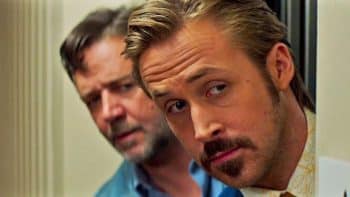
‘The Nice Guys’ is a charmingly funny, buddy-comedy detective-thriller, written by Shane Black, of ‘Lethal Weapon’ fame. It stars Ryan Gosling, Russell Crowe and Kim Basinger. The narrative is purposefully familiar: in 1977, Los Angeles, down-on-his-luck PI (Gosling’s pretty Holland March) and an enforcer for hire (Crowe’s grizzly Jackson Healy) find themselves working on opposing sides of an investigation involving a missing girl until, as the case goes on, they discover that they will need to work together, if it is to be solved. ‘The Nice Guys’ is Shane Black’s return to comedy after a short foray into the superhero genre (‘Iron Man 3’, 2013). ‘The Nice Guys’ is a bubbling admixture of styles, pulling, and balancing, influences from the likes of ‘Boogie Nights’ (PT Anderson, 1997), ‘Chinatown’ (Roman Polanski, 1974) and ‘Lethal Weapon’ (Richard Donner, 1987). Withal, it contrives to be both diverse and tonally consistent from beginning to end, despite its unconventional embrace of scenes involving a large talking bee and a ghostly former American president. Black’s blackish humour dominates, though perhaps he has attenuated the acerbity lately. Gosling reaches for, and finds, the comic timing and acting range that drove Academy Award winner ‘The Big Short’. The homespun chemistry between the main characters is at times electrifying. The film’s dialogue is realist and punchy – as where our heroes in an effort to coax information from a hotel-bar witness debate everything from contacting the police to eunuch existentialism, reminiscent of Tarantino’s earlier work (‘Reservoir Dogs’ and ‘Jackie Brown’). The script indeed more Tarantino than Tarantino himself, these days. Sadly, ‘The Nice Guys’ won’t necessarily make money. The movie is floundering at the box office despite scoring a 91% critics’ rating on online review aggregate site Rotten Tomatoes, no trivial arbiter. So how can such a critical success fail so badly financially? Because critics don’t really matter. Budget is the biggest predictor. For a start an extra 10 percentage points on Rotten Tomatoes critics’ score is worth only $1m in extra box-office takings. Between 2006 and 2016 it averaged four times that. Admittedly a ten percentage point improvement in audience – not critics’ – reviews now generates $11.5m but it’s still not that significant as a force for profitability. ‘The Nice Guys’ merited 82% in audience review ratings but it hasn’t been enough, or much. A good point of comparison with ‘The Nice Guys’ is the egregious ‘Neighbors 2 (Sorority Rising)’, a Seth Rogen comedy film released on the same day (Rotten Tomatoes scores: 52% Critics; 62% Audience). One scathing review castigated: “we have seen all the jokes before and there’s nothing really that shocks or makes you laugh out loud”: but remember it doesn’t really matter. ‘The Nice Guys’ has struggled to barely pull a profit, but in contrast ‘Neighbors 2’ (called ‘Bad Neighbours’ in Europe) has almost tripled its budget in box-office revenue. Both movies were released at the same time – summer releases earn an average $15m more than others – and draw from the same broad comedy genre. So what is the major difference between the two films? One is a stand-alone film, not based on a popular pre-established franchise and the other a sequel to a recently released, commercially successful film. This of course echoes what Hollywood industry analysts have been pointing out for years, that – against a background where one in three movies is making less than half its production cost back – low-quality, cash-cow sequels and superhero movies, are killing off new, and in many cases, more creative, films. Studios are less inclined to produce a widerelease film based on an original idea, says Lynda Obst, author of ‘Sleepless in Hollywood’, a book which explores the industry’s sequel mania. Although in 1983 screenwriter William Goldman declared that in Hollywood “nobody knows anything”, a little is clear: the pulling power of Hollywood star actors is on the wane (except apparently in the burgeoning Chinese market), the $20m lead is rare and the voguish sureshot for Hollywood in 2016 is the franchise movie: the likes of ‘Captain America’, ‘Jurassic Park’, ‘James Bond’, ‘Star Wars’ or ‘Fast and Furious’. These films now account for one in five of the major studios’ outputs, up from one in twelve 20 years ago. 14 of them earned more than $500m last year, up from five in 2006. Their average production cost in 2014 was $150-200m. According to the Economist magazine: “All other things being equal, sequels earn $35m more than non-sequels at the box office. Franchise films increasingly depend on superhero characters. Hollywood made just eight superhero films between 1996 and 2000, but 19 in the last five years. A $200m-budget superhero film will earn $58m more at the box office than a non-superhero film of the same budget. Superhero films tend to be child-friendly, for good reason: films that receive an “R” (restricted) certificate typically earn $16m less in cinemas”. An interesting point of speculation is whether this phenomenon is an inevitable stage of a capitalist industry (little input, large output), which must be accepted, or if it is a fad which will pass. ‘Neighbors 2’ is an easily marketed sequel, which by all accounts, reprises the same formula as the original. Avoid By Brian Lenihan and Michael Smith
Posted in:
The talk these days is all about ‘new politics’. Claiming Our Future suggests we should be talking about ‘broken politics’. That is some gap to be bridged. It goes back to how we judge our politics. The ‘new politics’ seem to be confined to how the Dáil goes about making decisions. ‘Broken politics’ is more concerned with the decisions made. ‘New politics’ give us better debate at Dáil Committee level and the strange sight of the main opposition party keeping the Government in place. ‘Broken politics’ give us decisions that have no evident capacity to address the big issues of our day such as inequality or climate change. In convening a national deliberation for civil society activists and organisations Claiming Our Future recently chose to focus on ‘broken politics’. The deliberation, however, was not about politicians and political reform, but about how civil society organisations could best step up to the mark to advance their vision of transformative change for society in a context of ‘broken politics’. Participants celebrated the potential and creativity of civil society. This was based on testaments from an emerging disability movement, the People’s Energy Charter network, the challenge to the cultural sector to re-purpose itself, and the achievements of the Right2Change movement. In a context where change is elusive and hardship widespread, the need to inspire hope was emphasised and, within that, the importance of taking time to celebrate success. The event, however, was also one of reflection, a rare moment for people from across the different strands of civil society to talk together about the shared challenges faced in working and co-operating to make change happen. There were no speakers, only conversations involving people from community, trade-union, environmental, culture, and global-justice organisations. There was discussion about the agendas pursued by civil society and how these were developed. Tensions were pointed to in the agenda-setting process between paid workers and unpaid activists, between working-class communities and middle-class NGOs, and in the invisibility of some groups like people with disabilities. There was a strong sense that further action was needed to empower these agendas. There was a challenge posed to build a greater popular understanding of and commitment to the values and issues raised by organisations. The further development of civil-society media was suggested to enable this. The strategies being implemented by civil-society organisations were explored and analysed. The importance of mobilising people, engaging them in the issues and offering different ways and levels for them to get involved in seeking change was emphasised. Local activism needs to be stimulated and supported. There was a strong desire for greater creativity in strategies and the cultural sector was identified as holding potential in offering new ways of engaging and educating people. A challenge was posed to move outside the parameters set by the political and administrative system in seeking change. The need for civil society to connect and collaborate more effectively was debated. Fragmentation between the different parts of civil society was seen to have increased over the period of economic crisis. Leadership within civil society for greater collaboration was called for. Collaboration is not only needed between the different sectors of civil society, but also between the different levels of action (local, national, and international). A set of propositions emerged from the deliberation. The first focused on the need to build effective solidarity behind different campaigns currently being pursued. A task force of alliance-builders was proposed to identify the campaigns that civil society organisations could collaborate on to achieve greater impact. The need to create formal spaces where organisations can discuss and build collaboration on shared issues was put forward. Ideas for less formal networking were also mooted, using digital platforms to share information, advance campaigns and secure active solidarity between organisations. New structures, such as Public Participation Networks that include community, voluntary, cultural, and environmental organisations, could be used to build shared actions at local level. The value of creating new links for civil society with both politics and academia was stressed. These links need to be thought through to reflect new types of relationships. Organisations across all sectors need a relationship with politics that goes beyond lobbying and negotiation to include partnerships with those parts of politics that share their values. A more active engagement by academics with civil society could facilitate penetrating analysis and generate evidence to ground the call for action to seek change, fuelled by innovation. Claiming Our Future is now planning a ‘reflection’ meeting to consider the various propositions and how they might be implemented. By Niall Crowley
Posted in:
1:Need for Change There has been much public discussion as to whether or not our Constitution is in need of replacement. Various attempts at reform including those conducted by the Constitutional Review Group and the Labour-Party-promoted Constitutional Convention have led to little change. The recommendations merely unleashed a great deal of well-intentioned hot air, all of which is largely ignored by our political classes. When there is a referendum to amend the constitution it is often dictated by Europe or is a result of a political spat or a flavour-of-the month response. None of these cosmetic, sometimes ill-considered referendum proposals have constituted fundamental solutions. It was a diversion to institute referenda on judges’ salaries and the age of the president, for example, when there were much more important and pressing issues at hand. In fact, our state-sponsored referenda to the existing text often skirt away from important issues of structural reform and hijack a designer, populist issue, like gay marraige. In the interests of clarity such a remark is not intended to diminish the importance of substantive equality, but simply to question what the motives behind the referendum were. I am of two minds as to whether a new constitution is needed to present us with a fresh vibrant document for the 21st century or whether we can tinker with the old one in such a fashion as to effect the requisite structural change. The South African Constitution is the model here but it derived from a new societal dispensation. I am, however, absolutely convinced that structural change is needed. Of course the document has been developed historically by the judiciary through creation of unspecified rights from 1965 until about 2001. This process of modernisation to the construction of the document – a ‘living instrument’ approach – led the judges to ‘read in’ rights that were not there – dividing academic opinion. This practice, mirrored in the general current interpretation of the US Constitution, freshens up the document. Its merits are that such fundamentally important rights as privacy, the protection against inhumane and degrading treatment and the prohibition against torture, were read into a dated document by an expansionist judiciary. The document was modernised by judicial construction largely to mirror international-humanrights instruments. The problem is that this process of teleological (aims-based) construction has been aborted and, since 2001, no new rights have been created, with neo-conservatives having taken over the judiciary. Little is left of judicial activism or progressivism. Ideologically-conservative judges are in general anxious, above all else, to uphold the status quo, to mask judicial inaction as deference to the separation of powers. We are therefore unlikely to see a modernisation of the Constitution by the judiciary, unless some liberal judges are appointed to balance what is an unrepresentative and unbalanced, conservative judiciary. For example, many important Constitutional cases are heard by Judge Gerard Hogan, now of the Court of Appeal, formerly of the High Court and one-time Trinity academic – probably Ireland’s leading Constitutional expert and in some respects the most progressive of the existing bench. He starts from the self-restrained vantage point of literalism and a textualistic approach to the document. He is against adding new rights, confining himself to the precise language of the text. In effect he sees innovations as an overstepping of the judicial function and an interference in executive decision-making processes: a breach of separation of powers with the courts acting as quasi-legislators. Though in his case such language can often be manipulated to achieve socially just outcomes, the language restrains and prevents the expansion of the document, literally. Judge Hogan and indeed former Chief Justice Keane (in the TD case) have in effect brought into question the whole power of the courts to declare unspecified rights. Judge Hogan, with other members of the Court of Appeal, sought to revive an under-utilised section of the document, in Article 40.3 the protection of the person clause, most noticeably in their judgment in Fleming (the right-to-die euthanasia case), to suggest that such obviously important rights as privacy and bodily integrity, rather than being separately declared as unspecified rights, could be adequately embraced within the specified rubric of protection of the person. Though these views were not in substance endorsed by the Supreme Court, nor were they specifically rejected. Thus, there is judicial inertia about modernising the document to create new rights prompting questions about whether we need a new constitution. If our new breed of judges won’t do it out of constitutional necessity, it must be done through political initiative. 2: The Reform of The Existing Provisions I propose to go through the document from beginning to end, highlighting what I believe needs to be revamped and also what needs to be added, making some salient points about the incompatibility of aspects of the document with our present fragmented, divided, mildly chaotic and multi-cultural society. The preamble, which is non-binding, starts off as a declaration of the aims of the document and invokes “Our Divine Lord Jesus Christ” and “The Most Holy Trinity”. The preamble cannot be amended as it is not an official part of the text, but a new constitution would, of necessity, delete these unmandated phrases. We are not all Christians. Some of us are agnostic or atheist. Some of us deeply distrust the effect organised religion has had on our society. Some of us might regard religion, as Christopher Hitchens did or Richard Dawkins does, as evil. Some of us are Islamic, for example, and might be somewhat perturbed at the words of the preamble being as confined as it is to the Christian religion. The Trinity is a particular focus of the Roman Catholic, not other Christian churches. I propose as part of an overall metric of considerations, that we adopt a strict severance of Church and State and that such phrases in the preamble be deleted. This disentanglement or disestablishment is what the architects of constitutionalism, the Americans and the French, settled on. In the preamble there is
Posted in:
It attests to the eccentricity and archaic nature of British democracy that it has taken all of 13 years to finally receive an independent report from John Chilcot on why Britain was dragged into supporting the George W Bush invasion of Iraq in 2003. Viewed from the perspective of today it is not unfair to conclude that the war on Iraq was “another time, another place”. A similar phenomenon registered in Ireland with both the Mahon inquiry into planning corruption and the Moriarity Tribunal into Mr Haughey’s money-taking. Back in 2003 I was a backbench government member of the Dáil, making speeches, and writing sometimes controversial articles for the Evening Herald that were, in some cases, critical of the government I was mandated to support. As to the War in Iraq I was strident in my support of the US position but justified it on the basis of the record of Saddam Husssein rather than any spurious resort to the idea that he held or was ready to deploy chemical, biological or nuclear weapons. In short I believed him to be a nasty dictator, quite capable of twinning up with terrorist networks like those who had carried out the 9/11 attack on the World Trade Center in New York. During my 14 years in the Dáil, the only occasion on which Bertie Ahern rang each of his deputies in turn, was before the Dáil vote on the use of Shannon Airport by the US Army to transport troops and military materiel to Iraq. Keeping Shannon open to the Americans was a vital national interest in the context of US support for our peace process, Foreign Direct Investment from the states and the historic connection between the two countries. Bertie Ahern was taking no chances with the relationship. It was hardly necessary that he ring me given my very public support for the US. Many of us were hugely spooked by the huge demonstration that occurred in Shannon and the effect it had on some of our US investor friends. Quite a few leading US business people rang me as minister to complain of the protest, as if we in the government were somehow responsible for the large turnout when in fact we were the subject of the ire of those demonstrating precisely because we insisted on facilitating the US troops there. When America goes to war everyone, even sane-minded businessmen, closes ranks. Meanwhile Tony Blair was performing all sorts of gymnastics in his efforts to ensure that the UK would be quids in with its long-term partners on their latest military adventure. Chilcot’s report reinforces what we already suspected: that private notes written by Tony Blair to George Bush, well before the military intervention required justification, had pledged the UK to join the war effort no matter what the circumstances. Tony Blair was prepared to gamble everything, including his own long-term credibility, on supporting the US because he clearly felt that the vital or ‘special’ relationship between the US and the UK superseded all other considerations. Depending on your view of Blair and the war itself this was either a very brave or foolish decision. It is certainly one that has dogged Blair in retirement but on the other hand underpinned huge fees and earnings in his political afterlife as international advisor and investment professional. It is deeply ironic that the Chilcot report should come out precisely at a time when Britain is going through its own, distinct, existential crisis caused by the electorate’s decision to vote to exit the European Union. The war in Iraq led to a puncturing of the ‘politics of spin’ so adroitly deployed by both Bill Clinton and then Tony Blair. Blair and Clinton were the world’s high priests of a political art that has enjoyed a prolonged life. Its final destruction is evident in the recent referendum result in the UK and the sundering of David Cameron’s career as Prime Minister. Cameron continued the largely value-free politics of Blair and Clinton, reinforced by the gloss of the old Etonian, one who had worked directly as a professional in the public relations industry. Cameron, superficially, believed he could both spin the EU into major concessions on how it would reform itself and then win the referendum. He came back with meagre fare and the electorate believed it was being sold a pup. He was prepared to risk selling his country and his legacy for his party and, now this has been detected, there is every danger his party will be the greatest loser of all. Under a new Conservative leader the UK is likely to get a Norway-style deal from Brussels, with a face-saving, but totemic, gesture made to accommodate it on the hot-temperature issue of immigration. Few in the EU will enjoy appeasing the UK but the importance of the City of London and the trading-investment relationships make it foolhardy to push it out altogether. We are in the middle of the collapse of the period of politics when everything the electorate did or said was monitored by focus groups so the political elite could play it back for the electorate, to maximum political advantage at least in the short term. This was the era when Blair and figures such as Peter Mandelson, the Prince of Darkness, shaped a politics which, in effect, suppressed the truth to the point where every mistake, contradiction and error could be justified or apologised – parallel to the truth. They were in effect creatively re-working what had already happened in the private sector – advanced customer care meets mendacious marketing by way of polling research. In many ways it was the triumph of ephemeral, commercial, values over substantial political, and public, service. In the US, George Bush and his neo-conservative supporters and friends became the first major victims of the souring of the Iraq War and its aftermath. It is quite clear that the Neocons (Wolfowitz, Cheney, Rumsfeld etc.) had in a real sense captured the President’s
Posted in:
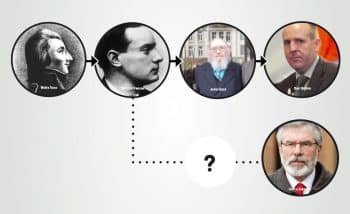
On a Saturday in April Republican Sinn Féin (RSF) gathered outside the Garden of Remembrance at Parnell Square in Dublin for their national centenary commemoration. As Garda Special branch approached members and onlookers from the public for their names and addresses, the RSF colour party formed up in front of the garden. To the music of the Coatbridge band which lined up behind the colour party, they marched down O’Connell Street, passing the Gresham hotel and the now closed Clerys department store. The parade marched alongside barricades present in the middle of O’Connell Street which had been erected ahead of the official State commemoration that took place on the 27th March, Easter Sunday. The symbolism of the colour party’s flags brushing against the barricades as they marched was not lost. The parade turned at the Middle Abbey Street junction to continue their march up the other side of O’Connell Street to the GPO, where they ceased. Once again Garda Special Branch constituted an obvious presence, looking on as the colour parties of Republican Sinn Féin, Na Fianna Éireann and Cumann na mBan formed up facing the GPO and stood to attention. The occasion was in great contrast to Provisional Sinn Féin’s Easter Rising commemoration in Dublin the following day, which has been described in the Irish Times by historian Eunan O’Halpin as “necessarily decommissioned”. Mandates and Support When we hear the words ‘dissident republican’ in popular outlets they are ubiquitously followed by references to violence, the Omagh bombing in 1998 or low levels of public support. Since May of this year the threat level from republicans has been raised by security services from moderate to substantial. Sinn Féin President Gerry Adams has announced that “dissidents have no support”. Moreover, in the aftermath of the killing of two British soldiers at Masareen and PSNI Constable Stephen Carroll in 2009 the Deputy First Minister of Northern Ireland, Martin McGuinness, while standing on the steps of Stormont Castle, famously labelled so-called dissidents as “traitors to Ireland”, and referred to an absence of support for such groups in the community. Narratives about so-called dissident republicanism are shrouded in questions of mandates and legitimacy. A common criticism levelled at Republican Sinn Féin, and the Continuity IRA (CIRA) which shares RSF’s ideology, is that they lack public support- in votes – and that they fail to secure elected representatives. In fact Republican Sinn Féin does have an elected Councillor in Galway, namely Tomás O’Curraoin who has held the position since 2009. Councillor O’Curraoin has always contested the election on an RSF platform. However, to concentrate on mandates in an electoral sense neglects the historical reality that republicanism has not traditionally taken its mandate from the polls. 1798, 1916 and the First and Second Dáileanna are invoked as legitimising the current republican campaign. Legitimacy is not sought at the polls; rather, a line of continuity is drawn through republican history. To put undue emphasis on electoral mandates fails to acknowledge the core of republican ideology. A dream deferred As talk of continuity and unfinished business hung in the air that Saturday outside the GPO, I snapped the adjoining photo of RSF President Des Dalton and the commemoration’s guest speaker John Hunt. The image coincidentally captured the reflection of a blowing tricolour on the glass of the GPO; the reflected flag was on a pole in the centre of O’Connell Street. This image embodies more than a 1916 commemoration. It reveals a living historical link between the 1940s and present day republicanism. Competing with a helicopter over-head, John Hunt addressed the crowd with an oration entitled, ‘1916: A dream deferred’. After the speech Hunt was congratulated on his oration and the ninety-six year old veteran replied “if I hadn’t got a cold you’d have heard me at the other end of Connell Street”. A rebel till the end John Hunt travelled to the commemoration from Chicago in the US where he has lived since the late 1940s. Originally from Limerick he is one of only two surviving internees of the Curragh internment camp in the 1940s, Tom Doran being the other. Hunt was born in Athea in Limerick in 1920. His childhood memories include attending republican commemorations. The earliest commemoration he can recall took place when he was nine-years old. He attended a commemoration at Gortagleanna in Knockanure in County Kerry with his Father. A few years later John was among the crowd listening to a speech by Tom Barry in Abbeyfeale, County Limerick. John worked as a cobbler and was an active member of the local unit of the Irish Republican Army. Early in 1940, along with approximately 500 other men John was interned for IRA activity. He was first taken to police barracks in Limerick and was then transferred to Cork jail. His final destination was Tintown at the Curragh military camp. In the huts the IRA maintained its structures and members reported to the Officer Commanding. In protest at poor conditions and at the treatment meted out by Free State soldiers, who were former comrades, internees burnt a number of the huts on 14 December 1940. The resulting punishment was solitary confinement for a number of the men including Hunt. In 1941 Hunt was sentenced to four years and was transferred to Mountjoy prison and then on to Arbour Hill where he spent one year before being transferred back to the Curragh. His eventual release came in 1945 when he was one of the last men active in that era to be released. Hunt’s attendance at the commemoration was viewed through the RSF lens as conferring legitimacy to the organisation. A line of succession was stressed reaching back to the Fenians, the Young Irelanders, Robert Emmet, Wolfe Tone and the United Irishmen. From the podium John Hunt bellowed out “as a young man, in the darkness of my prison cell, I understood that the sacrifices of the republicans before me would inspire generations yet unborn”. Hunt went on to quote the oft-cited words of
Posted in:
by John Clarke
The World Giving Index consistently ranked Ireland in the top five until 2015, when it dropped to its lowest rank of ninth perhaps due to certain scandals in the Irish charity sector. Before the recent revelations concerning Console there had been a number of high-profile scandals over the last five years, affecting the reputation of the sector as a whole. To-date, there are 18,543 civil society organisations in Ireland, with just over 8,000 charities. While reputational damage can be difficult to quantify, charities have reported a drop in their fundraising income in the wake of each controversy. A survey conducted by The Wheel, a national representative network for the voluntary sector in Ireland, in 2014, showed that 59% of the 297 charities surveyed reported a drop in public funding (by as much as 10%) from the previous year. Reductions in government funding, largely due to austerity measures in the past few years, have further savaged charity’s income. Consequently, in the past few years charities have seen their income shrink while demand for their services continues to grow. Historically, charities have relied on people giving up their time and money to a help others. However, the latter half of the Twentieth Century saw charities’ operational plans shifting towards private-sector business models, and charities are fast becoming accountable to the standards and norms of the private sector. While the ongoing Console scandal gathers headlines and the charity is now to be wound up, it is important to note that fraud can occur in any sector.Nevertheless, there are certain measures that can be undertaken to mitigate the dangers. More stringent governance codes, tighter regulations, stricter oversight and greater investigative powers must be imposed. In particular, certain provisions of the Charities Act 2009 have yet to be passed. Part IV of the Charities Act 2009 would grant the Charity Regulatory Authority investigative powers to take pre-emptive action into the affairs of charitable organisations. This includes the power to require them to produce documents, entry and search of premises, and the ability to impose intermediate sanctions under Section 73(5)(a), including the removal of the charitable organisation from the register for such period as the Authority deems necessary. Moreover, in order to ensure uniformity, the Charity Regulatory Authority should set a financial reporting standard for charities, such as the Statement of Recommended Practice for Financial Reporting by Charities (the SORP). The role media play in shaping public perceptions of the charity sector is crucial when assessing a charity’s virtuousness. Media coverage of a controversy, though appropriate in holding management to account, can foster negative perceptions which damage an entire sector. This is not surprising given the inbuilt cognitive bias called the availability heuristic: a quick method for making judgements about the likelihood of something happening. Altruism Ireland was formed to build up a partnership of trust with the general public; a trust founded on transparency. Transparency is more than a buzzword. The truth is people won’t, and shouldn’t, donate their hard-earned cash unless there is trust that the money is being suitably spent. Therefore, each charity that comes on-board its platform is given a transparency score out of ten, based on three main criteria of communicating their projects, results and financial standing. The latter includes the requirement to disclose a CEO’s salary. The reason for this is not to expose individuals, but to help combat public scepticism around ‘golden salaries’. In May of this year, The Journal.ie reported on top charity executives earning in excess of €100,000 euro a year. What Altruism Ireland asks is for people to make informed decisions. Ultimately it is a matter of personal sensitivity to decide if a salary is appropriate for the level of responsibility of a CEO, but before making any judgements about salaries, Altruism Ireland encourages people to look at CEO compensation as a percentage of total expenses. For example, a charity with an annual income of €10m is more justified in paying their CEO €100,000 a year (1%), compared to a smaller organisation with an income of €1m. Furthermore, unlike private fundraising platforms that charge in the region of 5-7% on donations, Altruism Ireland charges 0% commission, ensuring more of the money that people raise goes directly to the charity and into the hands of those who need it the most. Donating and fundraising for charity ought not to be driven by a for-profit motive. Negative perceptions, however, continue to have real-life consequences. The World Giving Index; an annual report published by the Charities Aid Foundation which ranks how charitable a nation is, consistently ranked Ireland in the top five. That was until 2015, when it dropped to its lowest rank of ninth. Again, it is hard to quantify whether this is a direct result of certain scandals in the Irish charity sector, but it seems likely to have played a part. In order to combat a further fall and the lack of dialogue between the public and the charity sector, Altruism Ireland seeks to act as a bridge between the two in order to generate a better understanding of how the sector operates, and in doing so facilitating trust. The ultimate aim of all involved in the charity sector is not only to ensure Ireland’s status as a highly generous society, but to turn it into the most efficient and transparent one. John Clarke is Relationship Manager of Altruism Ireland By John Clarke
Posted in:
by Lorna Gold
The impact of Brexit on the internationalist agenda and international development remains to be seen. The 28 member states of the EU constitute the world’s biggest donor group, providing over half of international aid. European institutions deliver aid under the EU’s neighbourhood policy to countries such as Turkey and Morocco (the largest recipients), as well as to India and Brazil, where the UK has a limited and diminishing aid presence. The EU is also the largest single source of humanitarian aid for Syria, providing support to groups in Syria and the neighboring states. The UK’s pro-active, largely progressive, agenda-setting role in development co-operation has been an EU centrepiece for over two decades. The UK channels around 10% of its total aid budget through the EU, but research shows that each £1 of aid the UK spends through EU institutions is matched by £6 from other EU member states. This gives British development aid particular leverage. The creation of the Department for International Development (DfID) under Tony Blair, in the mid-1990s, significantly shaped international policy for the better. It played a key role in the Millennium Development Goals and the pro-poor focus of aid. Despite changes of Government, DfID has established itself as a leader. Scale is part of this leadership. The fact that its budget has been growing at a time when most OECD aid budgets have been contracting, has given it added weight. The UK is now the fourth largest donor globally and the third in terms of percentage of aid by GNP, exceeded only by Norway and Sweden. It is a massive and trend-setting presence within the aid community. In his resignation speech, David Cameron listed the things he felt were put under threat due to Brexit. Amongst them he cited the achievement of the last Government to legislate for 0.7% of British GNP to go to Overseas Development Assistance (ODA), compared with the EU average .4%. The potential unravelling of this legislation, which he signalled, is a concern. A more isolated, insular UK is one which may put its own interests first. Legislating for 0.7% of GNP going to ODA has already been challenged within the UK, on the grounds that poverty at home is more important. If a more right-wing government emerges it may yield under pressure of an ascetic recessionary agenda, as well as of ideology. Depreciation of Sterling has already led to a drop of 10% in the value of UK aid globally – or £1 billion lost from current spending. This depreciation will prompt tough choices around the world. Serious questions are emerging for development and humanitarian organisations across Europe that are in receipt of EU funds. Brexit implies a massive restructuring of the entire EU Aid programme. The UK currently contributes €1.2 billion to the European Commission’s aid programme. Take that out and everyone, not just UK NGOs, is affected. Humanitarian organisations, which receive a large portion of their funds from ECHO, the EU’s humanitarian body, are particularly vulnerable. There is a further sad irony since, even in the short-term, Brexit will greatly complicate the multilateral effort to stem the migration from conflict-ridden countries, the very migration that clearly influenced the Leave vote. Critical funds will end up stuck amid uncertainty over funding cuts. In the longer term, a possible shrinking role for the UK in defining the EU’s development co-operation priorities is equally worrying. The UK is disproportinately influential in setting the priorities of the European Union aid programme, EuropeAid. It has had a key role in shaping the Sustainable Development Goals. The work on incorporating these into EU aid programmes is only now beginning. In the coming years, the UK will be absent from key discussions about the future of the EU’s Development Consensus, the Cotonou Agreement and other key processes. The withdrawal of the UK from EU common positions at the UN too will lead to a weaker EU and UK influence. It allows other forces which may not share such an internationalist vision to become more prominent. The UK has been no angel when it comes to development co-operation. Certain pro-private-sector, public-private-partnership approaches which DfID has recently been promoting caused consternation within the NGO community. However, overall, the work of DfID has had a net positive contribution to the development sector. The UK’s leadership on providing public development finance has been critical in making the promises of the Sustainable Development Goals more than hot air. The direct and indirect effects of Brexit are bigger than anyone has realised. Lorna Gold is Head of Policy and Advocacy with Trócaire