Posted in:
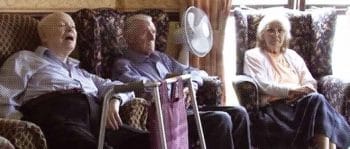
The unfairest deal
In June 2016, a major report substantiated rumours of multiple serious flaws in elderly care services. The norm, it says, is disorganisation and inconsistency. Social workers state that as many as half of their clients processed for long-term institutional care would not have needed it if suitable home supports had been available. Although the number of people aged over 85, and those with dementia, has increased, Health Service Executive (HSE) funding of home support services is lower than it was in 2008, though, as Village went to press, more money was being found to address acute hospital pressure, including through homecare support for the elderly. It is now common practice to place elderly people in acute hospitals and nursing homes rather than in community care though virtually nobody wants this highly emotional uprooting. Tellingly, service-users availing of the Nursing Home Support Scheme, also ironically known as the Fair Deal Scheme, tend not to be consulted about plans affecting them. The social workers’ report (produced jointly by the Irish Association of Social Workers, Age Action, The Alzheimer Society and UCD’s School of Social Work, titled ‘I’d prefer to stay at home but I don’t have a choice’ Meeting Older People’s Preference for Care: Policy, but what about practice?, [the ‘I’d prefer’ report] estimated that about one in six have zero say in their care; often ‘tokenistic’ anyway when taken into account. Defensive considerations of safety are to the fore, drowning out the older person’s wishes and rights to accept the risk of living more independently. In such cases, social workers often feel forced to stand up for their rights. Before 2009, eligibility for nursing-home care officially cost the elderly nothing, beyond discretionary state-pension deductions. In 2016, by contrast, the statutory regime extracts 80 per cent of income, 20 per cent of house value and 7.5 per cent annually of the inmate’s assets on admission to either public or private nursing homes. This surrender of personal estate may be exchanged for characterless accommodation and scant attention, not conducive to wellbeing. Budget-hostel conditions for five-star hotel fees. The Fair Deal Scheme covers approved private, voluntary, and public nursing homes. An applicant medically assessed as requiring longterm care and having disclosed all assets, pays some or all of the fees while the State funds the balance due. Private nursing homes are not necessarily superior − clinical environments, wheelchairs everywhere, warning signs on fire-doors, uniformed staff in file-laden offices, and ranks of elderly people sprawled in chintzy 1970s chairs. Small single or double rooms are characterless and utilitarian, with white walls, a floor-shower with plastic white chair, white locker, and an open wardrobe space. However, it is a bureaucratic contrivance to regard a bed and locker-wardrobe hemmed around by a thin curtain, as suitable long-term for a home. This arrangement is still found in a dozen public residences. Company is essential, but not when so imposed. Only the food trolley and drug round are sacred. Interruptions such as repeat alarms, vacuum cleaners, loud radios and moans burden frail mentalities: no quiet room or safe garden to retreat to. Visitor and doctor business is typically done at bedsides. Greasy hair, encrusted skin, and plaque-caked teeth tell tales. Everyone here is naked to the world, always on show, denied the security and privacy you and I insist on. Yesterday’s heroes and heroines consigned to anonymous decay, deprived of a little corner to wind down in peace. Environment matters. Home is a place to feel safe, respected, content and heard. Psychology studies by Langer, Harris et al have clearly established how crucial qualitative, as opposed to quantitative, numbers-based components are to a sense of home. Mobile people in the community can avail of a change of scene, or spend time in nature. Not so for those confined. The building, and the grounds, if there are any, are their whole world. The trade-off between access to these services and surrender of individuality is egregious. According to the the ‘I’d prefer’ report, sheltered housing, home adaptations, and flexible home-care packages, day and night, would help people to manage. Their scarcity prolongs hospital stays and fuels unsound detention. Nellie Bly published her harsh experience of institutionalisation in the late 1800s. Foucault, Goffman and other experts have convincingly decried its eroding effects, yet prolonged incarceration is still readily authorised across populations. Since July 1st 2015, the licensing body for all public and private nursing-homes has begun to refuse registration. As the Health Information and Quality Authority (HIQA), the independent health watch-dog set up in 2007, insists on the implementation of higher standards, up to forty facilities under inspection face the prospect of full or partial closure for not upgrading accommodation, and may be told not to admit new residents until improvements are made. Since standards were defined in 2009, centres which produced a schedule of planned works, even without commitment, had been treated leniently. But without follow-through, tougher measures of closure pending overhaul may be the answer. HIQA’s latest report, published in April 2016, acknowledges compliance in most centres, but notes that much remains to be done in the areas of governance, risk management, fire precautions, staffing levels, and above all, premises quality. The HSE’s website conveys assurances that a full range of residential and community care for older people is readily available for all, without mentioning gaps and challenges. The last major Departmental report on the elderly, ‘The Years Ahead’, published in 1988, is now 28 years old. Another beautiful noble document, rarely read anymore, it made recommendations about the proper organisation of community care for the elderly. The 1994 general strategy, ‘Shaping a Healthier Future’, set the ambitious target that no less than 90 per cent of over 75’s would live at home. With few new nursing home beds coming on stream, many have no choice. If home support packages aren’t forthcoming, sick older people may wait in acute hospital beds, leading to consequent bottlenecks in A & E wards and elsewhere. Low dependent ‘social cases’ end up living