Frank Connolly

  • Posted in:

    Left in the shadows

    As predicted a month ago in Village, and following a pathetic shadow dance by the two main parties, climaxing as Village went to press with Fianna Fáil’s rejection of Fine Gael’s offer of Partnership in a government with them and a few Blueshirt-diluting independents, the former two giants of Irish politics still have little choice but to ride the tide of history and engage in negotiations to form a government – or go back to the people. Any assessment of their policies, not to mention shared ideologies, only serves to confirm that their differences are far fewer than their common interests and that only by exaggerating the former, such as the future of Irish Water, can they mark out separate territories. Of course, there are other obstacles to agreement that will need to be thrashed out and overcome, including the constituency concerns of deputies and rivals of both parties and the much-hyped reluctance of ordinary members, particularly in Fianna Fáil, to embrace the old enemy. But just as the senior spokespeople and TDs of each, cynically and with straight faces, claimed over the past four seeks to be on course to lead the next government, everyone knows that the members will go with the flow and ultimately digest even the most unpalatable of outcomes. Think Charlie Haughey and the PDs, 1989. It is not beyond the capacity of negotiators of the two parties to find the necessary compromises on the broad range of issues that can ensure a government that will survive a reasonable period and is not at the mercy of immediate collapse when FF decides, inevitably, to pull the plug. The respective and again predictable outcome of the vote for Taoiseach on Wednesday 6th April, with support for each from just their own TDs (plus Michael Lowry for FG) – 51 for FG and 42 for FF (Ceann Comhairle excluded) confirms the fruitlessness of the engagement with most of the Independents over recent weeks, though it appears a rural few were prepared to support Fine Gael’s proposal to Fianna Fáil. In the meantime, the Left has problems of its own making and will require a significant amount of time and political space to identify how it can progress to become a realistic alternative to the parties and independents of the Right. Sinn Féin will be the largest opposition party of the Left but with just under 14% of the vote and 23 seats it has a long way to go before it can challenge for leadership of a future government. Labour with seven seats will go through an internally destructive selection process to replace Joan Burton before spending a long time deciding where to place itself on the political spectrum, further to the left or in coalition, sooner rather than later, with one of the larger parties or whatever emerges from them. With an eye to the more vibrant Social Democrats and a deep underlying hostility to Gerry Adams and Sinn Féin, which was magnified over recent years, a new Labour leader has to find potential allies if it is to offer anything new over the coming period. Similarly, those in the People Before Profit/Anti Austerity Alliance have to find a path that leads to the viable and concrete political change to which they aspire but which also requires a fresh willingness to agree and compromise with others on the Left. The Right to Change campaign achieved a certain degree of cohesion around a broad policy platform but it was clear there was reluctance in individual constituencies to cede ground to political rivals. Nevertheless, if you put all these components together, along with a significant number of progressive independents, the potential exists for the Left to grow in tandem with a broad swathe of non-party activists, greens, NGOs, community organisations and trade unions seeking fundamental change. As the day-to-day crisis for many ordinary people continues and intensifies, in health, education, housing and through precarious work, youth unemployment and emigration, the objective conditions for a more coherent Left will become more obvious. But serious and sensible people must recognise them. By Frank Connolly

    Loading

    Read more

  • Posted in:

    New Standards established for community groups

    The issue of standards for community work might seem a bit on the esoteric side. Yet, they cannot be ignored by anyone concerned about our unequal and harsh society. They need to become a central point of reference for a community sector under ever increasing threat and pressure, if it is to continue to make its key contribution to social change. The new All Ireland Standards for Community Work serve as a guide for those involved in this work. Moreover, they should catalyse a discussion on the priorities for this work at a time when funders’ bureaucratic requirements increasingly distract energy and attention. They should also guide the funders and policymakers who interact with the sector. In particular, those who are marginalised, excluded and living in poverty, must have a direct say in the decisions that affect their lives if the decisions are to be effective. Community work has a key role in ensuring this happens. It engages those who depend the most on quality public services, and who therefore need, more than anyone else, support in decision-making. Representative democracy is no substitute. Community work is identified in the Standards as a “developmental activity comprised of [sic] both a task and a process”. The task is social change to achieve equality, social justice and human rights. The process is participation, empowerment and collective decision making in a structured and co-ordinated way. It is about the right and the capacity of people who experience exclusion to have their voices heard. In the past, this work was given greater recognition and support by the state. It was accepted as an important and valuable means of promoting participative forms of democracy. The collapse of this support is one reason why these Standards are important. Funding for community organisations has been slashed. The Community Development Programme funded over 150 independent projects working in local areas with high levels of disadvantage and poverty and with groups, such as Travellers and women, experiencing inequality and discrimination. The participation, empowerment and collective decision-making which the projects promoted have all but disappeared. Many previously independent organisations are now effectively under the control of local authorities. The role of community work in informing public policy and in mobilising communities to articulate and pursue their interests is no longer recognised. Many of those involved argue that their role has been reduced to delivering services that the state cannot or will not provide. The Standards reassert the role of community work. Promoting equality and inclusion will inevitably, from time to time, bring those involved in this work into public debate and disagreement with decision makers. Policy-makers need to acknowledge the importance, for democracy, of this critical and constructive dissent. The Standards demand professional standards from people working in community organisations, whether this work is being undertaken on a paid or voluntary basis. These demands are based on giving practical expression to five core values: • Collectivity, with action to support communities to come together, reflect on their situation and take action for change, given that shared issues won’t be addressed by dealing with individual problems alone. • Community empowerment, with action to ensure that people experiencing poverty and inequality are supported and empowered to work for change. • Social justice and sustainability, with action to support people to advocate for their rights, challenge the unequal distribution of power, wealth and resources, and advocate for policies and practices that are environmentally, economically and socially sustainable. • Human rights, equality and non-discrimination, with action to support communities to recognise and challenge oppression, stereotyping, and prejudice, build connections and solidarity with people in other parts of the world, and promote the human rights of women and marginalised groups; • Participation, with action to ensure meaningful participation by people experiencing poverty and inequality in the design, implementation, and monitoring of policies and programmes addressing these issues. The former Department of Community, Environment and Local Government has produced a new Framework Policy for Local and Community Development. Community Work Ireland is concerned about the failure of this policy to address some key issues. The Department’s next step is to prepare an implementation plan. This plan must shape an approach and a structure for supporting community work based on the core values in the Standards. The Standards were produced by the All Ireland Endorsement Body for Community Work Education and Training and were supported by Community Work Ireland. Rachel Doyle is joint national coordinator of Community Work Ireland. By Rachel Doyle

    Loading

    Read more

  • Posted in:

    Treatment of trans in transition

    Transgender issues are becoming more visible. Last year’s Gender Recognition Legislation was mostly progressive and things are improving. However, it’s not all plain sailing for this community and their families. Families of transgender people face many challenges as their loved one undergoes a gender transition, and often have to shelve their own emotional needs as they battle recalcitrant public services. Despite legislation that is seen as among the best in the world, there are still gaps. The problem is the lack of legislation for children under 16 years. This creates challenges in the school system with knock-on effects. Ironically before the recent legislation everybody was in the same situation, and every situation was technically up for negotiation. Now, trans people under 16 don’t exist. The Passport Office had discretion to change the gender marker on a passport for young people. That is no longer the case: you can only have the gender marker changed on your passport if you have a gender-recognition cert or your birth certificate has been amended. Changes can be made to your PPS number to reflect the gender identity of a young person who is undergoing, and has proof of, a medical transition. That omits younger children who are socially transitioning. They feel let down and isolated. Parents are left trying to navigate a system that doesn’t recognise their children. TransParenCI is a peer-support organisation for family members of transgender people, which is open to all family members over 18, not just parents. The group has grown from 14 people back in November 2011 to a massive 150 families. TransParenCI supports these families with the assistance of TENI. There are now four groups – one in Limerick, Dublin and Carlow, and the Transformers group for young people. Families experience challenges when trans family members express themselves to be trans. Needs can be wide-ranging. In some cases, families experience a relational rupture as they struggle to understand what is happening with their loved one. It can cause conflict within the family and with external family, which in turn de-stabilises the family unit. TransParenCI’s monthly meetings and annual residential sessionn endeavour to address these issues by facilitating the needs of the family and allowing them to take a journey. However, the parents often realise that their own emotional needs in many situations have to be set aside, as they engage with systems that are ill equipped to meet their child’s needs. Healthcare and official treatment are a major obstacle that parents and families have to navigate. They can initially experience a foreboding about medical interventions. However, on further investigation and after speaking to other families, they realise that such options have been found to be safe and that an International protocol has been developed. The treatment received is currently influenced by what area of the country the family resides in and the experience of health professionals in that area. Consultations are underway with the HSE about an official treatment pathway for trans young people and adults. Health professionals throughout the country have been offered training through a partnership between the HSE and TENI. In 2015, 69 training events were delivered to over 2,000 staff. This partnership is having a positive impact on service delivery and patient safety. Feedback suggests high levels of client satisfaction. This approach is addressing some of the gaps. However, they need to be narrowed further and an official treatment pathway will help. TENI, in partnership with parents, is calling for further changes in legislation. It is organising workshops with the Department of Children and Youth Affairs in July. The hope is that, over the coming months, the issues of legislation, education and healthcare are clarified, and resolved. In turn, families can then begin the journey of understanding their unique situation, and TransParenCI can continue facilitating the needs of all family members. TransParenCI can be contacted through: office@teni. ie, Catherine@teni.ie or 01-8733575 (TENI) and 0870637933 (Catherine). Vanessa Lacey is Health and Education Manager, Transgender Equality Network Ireland (TENI).  By Vanessa Lacey

    Loading

    Read more

  • Posted in:

    Judicial disappointments

    Review by Michael Smith Enda Kenny’s former legal adviser has published a book. Jennifer Carroll MacNeill tells “the inside story of the process by which judges were chosen over the past three decades, both in cabinet and in the Judicial Appointments Advisory Board”. Barrister (and former solicitor), Dr Carroll Mac- Neill has worked as a lawyer in the public service, both within the Oireachtas as Legal Adviser in the Office of the Leader of Fine Gael and within Government as Special Adviser in the Department of Children and Youth Affairs and in the Department of Justice and Equality. Carroll MacNeill is married to Hugo, head of Goldman Sachs in Ireland. Enda Kenny sees the book as “A defense [sic] of the basic principles of democracy … This book is indispensable for the makers of policy … invaluable … one of a kind”. He (Enda not Hugo) was speaking at the book’s launch. The problem is that the book that needed to be written would not have been one Enda Kenny would have been comfortable with. This book should, but does not, spill the dirt on the cronyism that underlies all these appointments, notably including his. Since it does not, it is better categorised as “the outside story”. There are of course different ways for a state to handle appointments to the vital third branch of government, the judiciary – involving more or less compromising roles for the other two, the executive and the legislative. None of the machination is ideal as it results in undesirable transgression of the balance of powers. It would be an improvement if judges could be selected without the tainted hand of politics, or even humankind, in the process. Perhaps by some comprehensive futuristic algorithm! According to Carroll: “Some systems are exclusively based on the preferences of the executive, some systems require approval of nominations by the legislature, some appoint judges according to a quota by different branches of the political system and some restrict the involvement of politicians to selecting among individuals who have been pre-screened by an independent body comprising judges and representatives of the legal profession”. Interestingly, the US alone among common law countries has literally no requirements for appointment to its courts, though of course there is stringent scrutiny of Supreme Court candidates by the legislature including a Senate Judiciary Committee. In Ireland, tediously, judges must have 12 years (10 for the District Court) experience as a barrister or solicitor. Carroll clearly has a very tidy mind and the use of consistently clear graphics is a boon to readers. For example she highlights the processes that have led to reform of judicial appointments in various countries showing, across a range of criteria, how relatively little consultation there has been in Ireland. Indeed the entire debate on reform took only two years, as opposed to years in the other countries she considered. She notes the tradition of political appointments in both Ireland and England. Between 1800 and 1921 in Ireland over half of judges had sat in the House of Commons and nearly three quarters had been law officers ie apparatchiks like the Attorney General or Solicitor General. The tradition of allowing them the right of first refusal on judicial appointments that arise during their tenure also arises from that time. In Ireland High Court, Court of Appeal and Supreme Court judges are now recommended by the Judicial Appointments Advisory Council and the Cabinet (ie the executive) makes the decision on advice from the Minister for Justice and Attorney General and with the consent of the Taoiseach. In practice of the ‘executive’ only the Taoiseach, Minister for Justice and leaders of any coalition partner, are involved in the selection. Unlike in England and Wales (where the Prime Minister selects the judge after nomination of one candidate by the Judicial Appointments Commission) and unlike Israel (where the Judicial Selection Committee selects the judge), the Irish government retains significant discretion to choose any person to fill a judicial vacancy. This is because unfortunately, “over the 20 years of its operation, the advisory board did not use the range of powers given to it to assess judicial candidates, was not provided with sufficient secretarial or professional supports and suffered from a substantial absence of process and Oireachtas oversight”. Worse, Carroll MacNeill says, the board made a “crippling“ change of strategy when it decided to change its process for recommending judges. Instead of performing a careful selection that would recommend the seven (or fewer) best candidates as provided in law, the board decided it would in the future simply approve all applicants deemed not to be explicitly “unsuitable”. The number of names recommended to government “increased substantially from about seven to roughly 20, 50 or 100 names for a High Court, Circuit Court or District Court vacancy respectively”. In Ireland this means the executive has almost free reign to appoint someone whose – real or perceived – politics they favour or, more pertinently, who favours theirs. A Bill proposed by Sinn Féin recently would have reduced the number to three and added two members to the Board, another lay person and a Chairperson who would be the Chairperson (I believe she means Chief Commissioner) of the Irish Human Rights and Equality Commission, and the reasons for recommending the candidates would be published, something Carroll MacNeill considers risky. Ireland gets the lowest score for political commitment to reform of all the countries she looks at. Even the debate on reform took two weeks as opposed to years in all other countries. And this poses the question why there was – nonetheless – reform. The answer – the centrepiece of this book – appears to be as a reaction to the collapse of the Fianna Fáil- Labour government in 1994. This had two causes. Labour wanted to appoint Donal Barrington to the vacant chief justiceship but he was on the European court and, apparently frustratingly for them, not entitled to be considered. Fianna Fáil wanted to appoint Liam

    Loading

    Read more

  • Posted in:

    Morally Most Wanted

    Christopher Hitchens, no stranger to contrarian positions, once wrote a remarkable polemic called ‘The Trial of Henry Kissinger’ impugning Kissinger for being as guilty as any common war criminal of crimes against humanity. In evidence Hitchens proffered his inculpation in the murder of democratically-elected Chilean president Salvador Allende. After General Pinochet assumed power Kissinger told Richard Nixon that the US “didn’t do it”, but “we helped them…created the conditions as great as possible”. Hitchens also marshalled in evidence Kissinger’s sponsoring of the carpet-bombing of Cambodia, and his and Gerald Ford’s oblique tolerance, and perhaps approval, of genocide in Indonesia. At the time the book had an incendiary effect but the allegations were not immediately directed into concrete legal action. Ultimately of course Kissinger had to leave France with unseemly haste with an arrest warrant pending and return to the safe refuge of the US where he thrives as a nonagenarian staple of talk shows, the idol of Fox News and a totemic visionary of Realpolitik. Such is the shadow existence of a once lethal global potentate. But Kissinger is old news, disempowered, with the historic crimes fading over time and mercifully, absent a call from Trump, out of harm’s way. Though you never know, such is the plausibility in our unethical world of the king of statecraft. Realpolitik has moved on from such crude seventies tactics as murdering a head of state to simply disemboweling him metaphorically – as with Tsipras – with the panoply of capitalism. Moreover we have, some of us, moved on to business-craft. From the modernist, almost industrial complex of building that is UCD stands out a splendid new addition, the Sutherland school of law, a sleek new premises which “incorporates teaching and learning facilities which are purpose built to foster and support more experiential styles of learning”. This is most apparent in the Clinical Legal Education Centre which incorporates a trial room suitable for mock trials, though not of its benefactors of course. If Peter Sutherland were a building it would be this building for, though well-upholstered, it’s a little top-heavy. Why do we never name schools of law after true heroes, or at least flawed ones? The Mansfield School of law, The Sean McBride or Mary Robinson School of law? Of course international businessmen and plutocrats of all sort seek, in the dusk of lives dedicated to the pursuit of money, to have their reputations magnified for future generations. Tony O’ Reilly, by far the most elegant of the Irish philanthropists, has his sponsored buildings in Trinity and UCD, named – perhaps – after his parents. But these things are done better and with fewer strings in the US, where the culture and indeed the tax regime are more conducive: Warren Buffett and Bill Gates are charitable icons and are scrupulously divesting themselves of their assets in the common good; many US universities depend on philanthropy. Naturally the Sutherland school seems a bit more business- friendly than its fuddy-duddy anonymous predecessor: it aims to make “our teaching and learning challenging, rewarding, relevant, and critical in engaging with the challenges of law in Irish and international business, social, political and economic life”. If Goldman Sachs did law faculties it might probably do this one. It is not clear whether the minions and opinion-formers, rushing to their lectures, have been encouraged to downgrade human rights, the environment and culture as part of the process of embracing their exciting challenges. Peter Sutherland is a unique case; a pasha of world fuzzy democracy, a knight of the British realm described in the Financial Times in 2009 as “at the centre of the establishment in all its forms”, a querulous and basilisk Buddha, looking down from a great height at the mortals of the world and their fig-leaves of democracy and national sovereignty, barriers to the elevation of trade that his career has so eminently promoted. But let us construct a narrative for this man. Gonzaga, UCD and King’s Inns educated and aggressively-rugby-playing, he became Attorney General of Ireland in his 30s, after a brief and unsuccessful electoral dalliance with Fine Gael; and then was made the youngest ever EU commissioner – for Competition, in which capacity he was famously dynamic, driving competition in the airline, telecoms and energy sectors, and attracting the admiration of federalist Commission President, Jacques Delors. He chaired the Committee that produced The Sutherland Report on the completion of the Internal Market of the EEC. Only Ireland’s dreary civil-war politics deprived Sutherland of the job he coveted most when, back in 1994, the UK recommended him for the post of European Commission president. His strings to Fine Gael meant he did not enjoy the support of his own country’s government, then led by petfood Taoiseach Albert Reynolds. Tellingly, he once told the Financial Times: “I do absolutely believe in the European project. I think it’s the most noble political ideal in European history in a thousand years”. The Competition Commissionership was the first step in his championing of globalisation, internationalisation, sovereign fluidity, and the promotion of economic liberalisation. Of course Sutherland can surely speak the language of progress and ethics – and he is even, as a Good Catholic, an economic advisor to the Vatican, Consultor of the Extraordinary Section of the Administration of the Patrimony of the Apostolic See (and President of the International Catholic Migration Commission). Nevertheless his work – and even his lifestyle – bespeaks slavery to the amoral deities of capital, profligacy and greed. Globetrotting private jets, secret meetings in the Vatican or with the Bilderberg Group, carefully regulated and deliberately evasive public appearances: bread and butter for decades for this warrior for the business agenda. It is of course an ambivalent existence – grey: not a matter black and white. He is an agent of liberalisations the upshot of which he feels no obligation to take responsibility for. The Moral Charge Sheet So we propose a new offence. Let’s leave it shy of a crime for there is no

    Loading

    Read more

  • Posted in:

    Collaborating but not listening

    The Arts Council and the County and City Management Association (CCMA), the local government management network, have just agreed ‘A Framework for Collaboration’. The Framework culminates thirty years of collaboration between the Arts Council and the local authorities. It is promoted as a new way for these partners to work together, maximise the impact of their collective efforts, and reflect their shared belief in the contribution of the arts to cohesive and sustainable communities. Could this new partnership agreement be the Irish hub to lead-out a strong, democratic voice for culture? Could it reflect the ambition of The Agenda 21 for Culture, with its concern for the interdependent relationship between citizenship, culture and sustainable development? These are the expectations which should underpin the Framework. Local authorities spend €37.5 million annually through their arts services. They are the most significant supplier of the arts – appropriately since they are the elected bodies with the closest relationship to person and place. However, local government is poor at community-led participation. This raises questions as to the very starting point of the Framework and its capacity to live up to any expectations of a strong democratic voice for culture. The state and its executive will lead out the Framework Agreement with no sign of engagement by elected representatives or citizens. In 2016 the first in a cycle of three-year plans will be developed by a Management Liaison Group that will establish strategic priorities. A Working Group will develop and implement strategic actions to reflect these priorities. Both structures are limited to Arts Council, CCMA, and local authority executive representatives. This is more of the discredited top-down management approach to the arts. There is a notable absence of the obvious linkage to the community-development responsibilities of local authorities. The Framework puts too much emphasis on its own role and infrastructure and not enough on its potential to integrate the arts into a community development agenda and to ‘work with’ rather than ‘on’ or ‘for’ communities. It ignores the role of civil society, artists, and communities. It gives no consideration to their pioneering work of re-rooting the bonds between people and place across people of diverse backgrounds and orienations, and of empowering these diverse communities. The four shared commitments identified in the Framework do suggest an intention to foster some interdependence between citizenship, culture and sustainable development. There is a commitment to “access to and engagement with the arts for all people”. However, this is posed in economistic terms: ensuring public investment in the arts “benefits as many as possible”. There is a more promising if nebulous commitment to ensuring “a diversity of contexts and types of participation that constitute public engagement, most particularly social and cultural diversity”. After that there are the workaday commitments to value the work of artists and to achieve quality and the best possible artistic outcomes. Sadly, with our closed-in artocracy focused on who gets funded and on mechanisms of control, our arts institutions and services continue to be more interested in the objects rather than the subjects of culture. The Framework reflects this situation in leaning more towards being a service agreement. Five of its eight goals are internal to its own modus operandi, focused on issues of delivery rather than content or vision. We get a delivery mechanism for arts services to citizens, when we need improved capacity and resources for local authority arts officers to deliver as agents for a local arts ecology sustained in tandem with citizens. The Framework fails to open up fresh thinking and remains trapped between binaries: the right to art and its intrinsic value versus the cultural tourism and economic arguments for the arts. It is silent when it comes to the stark reality of cultural inequality; issues of gender inequality and discrimination in the arts; and opportunities presented in the diversity of local communities. The Framework should have paid more attention to the way people experience their engagement with arts and culture. It should place more emphasis on the cultural value and public value of the arts. Local sustainable development is about people and place. It belongs to all citizens and is only given to local authorities to administer. The Agenda 21 for Culture highlighted “Cultural goods and services are different from other goods and services, because they are bearers of meaning and identity”. It set out a challenge in noting “Artists, cultural organisations and cultural institutions play a central role in developing sustainable urban and rural space”. The Framework remains far from any such aspiration. By Ed Carroll

    Loading

    Read more

  • Posted in:

    Transcendent industrial relations

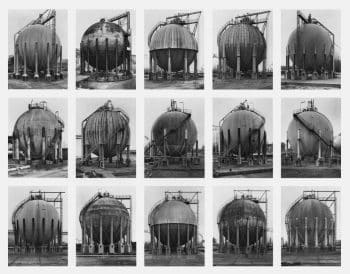
    When probed by critics to contextualise their vast collection of photographs of industrial architecture, Hilla and Bernd Becher stated that, “just as the medieval thought is manifest in a Gothic cathedral”, then “so too is the industrial age captured in the machinery once scattered across our lands”. For more than 40 years the Bechers, husband and wife, documented a world made up of water towers, gas tanks, blast furnaces, grain elevators, collieries, and mine heads: a world of machinery that was no longer used, obsolete; a world that was being swiftly and ruthlessly dismantled. The epoch of the Industrial Revolution was vanishing without trace, so the Bechers decided to watch, camera at hand, capturing the death throes of a once robust epoch. Hilla and Bernd met in 1957 while working at an advertising agency in Dusseldorf and discovered they had a mutual love of industrial architecture, especially that of the Ruhr region. Bernd had grown up in the area and initially planned to draw and paint these huge structures. But he soon realised that they were being demolished before he was finished with either pen or brush. Hilla, who was an experienced photographer by then, thought it more effective to use this medium instead, and instructed Bernd in technique and printing. A beautiful relationship was formed, and they married in 1961. During this decade the Bechers, with their son Max in tow, travelled around in a VW camper pulling an old caravan customised as a darkroom. Their itinerary included Germany, Holland and France, while in 1966 they embarked on a six-month journey through England and Wales taking pictures of the coal industry. A love of collieries also took them to North America in 1974, Pennsylvania, where they recorded the coal mine tipples. The objects of their affection might seem cursory upon first impression, but the Bechers’ working methods were anything but. Hilla described their style as “direct, descriptive photography”. This usually meant using ladders and scaffolding to shoot on their large-format plate cameras, with overcast conditions to minimise shadows and allow a neutral backdrop. The same standard was applied to each photograph to give complete objectivity. Photos were published in gelatin silver prints, and no monolith was considered too humdrum to be reverently and painstakingly recorded by them as one of their “anonymous sculptures”. What transformed the Bechers’ work from documentary to art (although critics remain divided on this categorisation) was their use of typologies, which saw structures being exhibited in grid formations made up of six to fifteen photographs. “By placing several cooling towers side by side something happened, something like tonal music”, Hilla said: “You don’t see what makes the objects different until you bring them together, so subtle are their differences”. Individually the pictures are impressive, but collectively they take on a rippling power that pulses right out across the grids: a series of gas tanks that morph into displaced industrialised glitter balls; framework houses that variegate across the page like real-time mosaics; winding towers that could be desolate fun parks. “When you look at something”, they explained, “you look at first one detail and then another until your memory builds up a complete picture. You never see anything in detail at once but the camera can”. Contemporary critics found the Bechers’ exhibitions workaday, detached and indifferent: sets of stark black-and-white pictures of water towers and gas tanks will not engage everyone’s sensibility, understandably. But this did not deter them or their vision. The Bechers were awed by the ambition of design invested in objects that were functional tools of the industrial landscape; they were enraptured by the imagination and effort invested in composing the perfunctory. Hilla and Bernd Becher also sensed the cultural value of the likes of the collieries in Wales, while other watched them fall. They understood how these structures were markers on the maps of our age, soon to be erased. “Someone who concerns himself with scorpions must love them to a certain extent. And photography is there precisely to portray what is, not to sort and reproduce only the good and the beautiful”, stated Hilla. I often wonder what the Bechers would document of our digital age if they were alive: sadly Hilla passed away near the end of last year, Bern in 2007, aged 81 and 75 respectively. An empty office space, sprinkled with sleek computers slumbering atop linear desks at the break of dawn maybe; scrubby Chinese warehouses stacked with smart devices, just off the production line and freshly boxed for shipping; or perhaps the tools fuelling our vast electrical appetites now: static wind turbines, enervated energy grids, or thundering power plants. All of them fixed, purposely static. Who knows? What is for certain though is that the Bechers marvelled where others might only have overlooked as mundane. With clarity and objectivity, they rendered beauty in places where it should have few expectations. And in the end, criticism of their work did not concern either of them – they were as detached in their reactions to commentary, as they were in their working methods. Their legacy is assured, and their influence lives on in the work of Andreas Gursky, Thomas Struth, and Candida Hoffer. “The question if this is a work of art or not is not very important for us”, they said. “Probably it is situated in between the established categories. Anyway the audience which is interested in art would be the most open-minded and willing to think about it”. By NJ McGarrigle

    Loading

    Read more

  • Posted in:

    How the medium is changing the message

    Barely noticed, outside a few articles recalling its early days as pirate station Phantom, alternative music radio station TXFM announced at the end of March that it will shut down before year’s end. Unfortunately, despite a recent rebranding, TXFM was never able to attract more than 19,000 listeners according to JNLR surveys, a number which made it unsustainable as it could not attract advertising revenues. Even Denis O’Brien and Paul McGuinness cannot afford to subsidise a loss-making music station forever. The problem TXFM faced was a simple one. When its potential audience can programme Spotify or similar apps on their smartphones to cater to even the most eclectic of musical tastes, why would they listen to a radio station where the music is constantly interrupted by a stream of adverts, DJ patters, weather and station idents, and news bulletins? No matter how mission-focused a station is, those interruptions, to raise revenue and satisfy Broadcasting Authority requirements, are a necessity of business. TXFM is a straw in the wind for other radio stations. “Smart” as in “Smartphone” is almost a redundant term for millennials. A Google survey last year showed 97% own a Smartphone. As podcasting becomes more accomplished, growing out of the same garage roots romanticised in Phantom FM obituaries into swanky professional studio surroundings, it too will challenge over-the-air broadcasters. From the Irish Times to the New York Times publishers are adding audio offerings to their websites. And while most products remain studio-bound and indistinguishable from the radio broadcasts they compete with, the best are moving out of studios and exploring new formats a public-service bureaucracy like RTÉ cannot easily adjust to. Sponsorship opportunities; sponsored- content podcasts – embracing advertorials and commercial features; and new software allowing easier advertising inserts and listener measurement, all make it likely that the current generation of talking-heads podcasts will find itself quickly moving into the territory of drama, location reporting, and edited news and documentary packages. The medium even lends itself to a renaissance in fiction drama, and comedy, and access to niche audiences rarely catered to at present outside the community-radio sector. But the disruptive impact of “phones” goes beyond radio and podcast. Newspapers, having first adjusted to the death of in-depth and at-length reporting as their readers moved from print to computer screens, have spent the last decade learning to cater for attention-scarce readers. So it is we see brief news reports rarely going above 300-400 words – roughly the number of words that can fit on a computer screen without scrolling), and increasing use of listicles, quizzes and click-baiting headlines. And yet, just as news outlets have adjusted to the new paradigm, a new report from the American Press Institute (API) shows that phones are changing how readers consume news once again. Readers checking the latest headlines on their favourite news websites on a computer screen are typically doing so at work. Behaviourally, they feel they are “stealing” some time from their employers to catch the latest update, whether that’s an Indo or Irish Times column, an RTE news report or a Broadsheet joke. According to the study, readers minimise their guilt over this “stolen time” by only catching up on news in quick bursts. When it comes to phones though, that behaviour changes. The phone belongs to the reader, not to an employer and so when readers choose an article there they are much more willing to invest time in a longer story. Stories longer than 1,200 words, got 23 percent more engagement, 45 percent more social referrals and 11 percent more pageviews than shorter stories in the API study. Similar research findings may be behind the decision by the Sunday Times/Times of London to abandon “Breaking News” on its website, instead recreating an old-style emphasis on “editions”, with new stories updated three times a day, at 9AM, midday, and 5PM. It cannot be a coincidence that those times match the beginning of the workday, lunch-break, and the end of the workday: the times when people are most likely to check their phones. Of course, not everyone will get off the news carousel. The Times, already one of the more successful paywall sites, can afford not to chase every click, while advertising-only free sites will still tumble over each other to be the first with breaking-news flashes and hot takes. But, combined with an audience already willing to invest more time in individual stories, it may herald a widespread return to considered and in-depth reporting. By Gerard Cunningham

    Loading

    Read more

  • Posted in:

    Noonan had information to stop dodgy Project Eagle sale

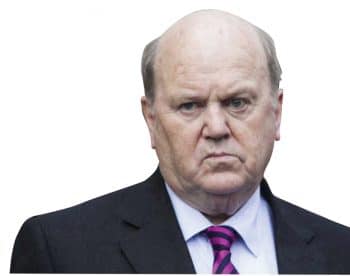
    Isn’t it nothing sort of remarkable that the Irish Independent failed to explore the extraordinary role played by Michael Noonan and his officials in the Department of Finance in the Project Eagle affair until just after the votes were counted in the February election? While the newspaper had covered the story over several months it found space on its front page for an exploration of Noonan’s role only after the election results were in, and partisan energy had considerably dissipated. This followed the publication of a report by the Stormont finance committee into the Project Eagle affair which, as Village has revealed over several months, contributed directly to the resignation of Peter Robinson as first minister and DUP leader late last year. The committee report expressed concern at Noonan’s willingness to ignore embarrassing information about controversial fee payments of which he was informed and instead of halting the bidding process instructed NAMA to proceed with the disposal of the massive residential and commercial loan portfolio. In early 2014, NAMA was informed by Pimco, a US fund bidding for the £4 billion (€6.5 billion) property portfolio that it had been asked for a £15 million success fee to be divided between US law firm Brown Rudnick, Belfast solicitors Tughans and a member of the agency’s advisory committee in Northern Ireland, Frank Cushnahan, in connection with the Project Eagle tender. NAMA informed Noonan of this irregular and enormous side-payment request but, instead of halting the process, the finance minister suggested that the largest sale of property assets in the history of the state should proceed. Pimco withdrew from the process on the instructions of its compliance officers in the US. Another giant US fund, Cerberus, subsequently purchased the portfolio for £1.2 billion (€1.6 billion) later that year before it emerged that in excess of Stg£6 million (€7 million) had been lodged by lawyers acting for it in an Isle of Man account. The money was lodged by then Tughans partner, Ian Coulter and, according to Mick Wallace TD, was intended for Cushnahan and others including, it has been alleged, a leading politician or party. In February last, the BBC Spotlight programme broadcast a secret recording in which Cushnahan admitted that he was due a significant fee from the Cerberus deal, contradicting previous claims that he was not due to receive any money. Cushnahan, a former adviser in Robinson’s office of NI First Minister, also claims he and Coulter had put the Cerberus deal together but his role was kept secret from Nama. On top of these claims it has now emerged that a senior executive from Fortress, the underbidder against Cerberus in the deal, met Cushnahan and Ronnie Hanna, then NAMA head of asset recovery, in December 2012 to discuss the agency’s Northern Ireland loan-book some 12 months before it was put up for open sale. Cushnahan left the NI advisory board of NAMA in late 2013 while Hanna resigned from NAMA in late 2014, six months after the sale to Cerberus was completed. Mike George, the managing director of the US private equity group, a Belfast man, made a presentation to the NAMA pair at the Tughans office in Belfast during the December 2012 meeting. NAMA has refused to respond to queries over this latest revelation which puts a former senior NAMA executive in a room alongside a former advisor to the agency who has admitted to seeking side payments from the enormous sale. George refused to confirm that such a meeting took place when contacted by Village last autumn but said he was concerned about the manner in which the Project Eagle sales process was conducted, indicating that some bidders had access to more information than others on the quality and value of the huge portfolio of distressed assets across the North. Can anyone seriously suggest that Michael Noonan is suitable to have have his tenure as finance minister renewed in a new government while questions surrounding his judgement and actions in the Project Eagle controversy remain unanswered? By Frank Connolly

    Loading

    Read more

  • Posted in:

    The Chassis underneath the Stasis

    It’s a couple of years since I observed somewhere or other that, if Enda Kenny chose to have an election in the springtime of 2016, he would fight it not against Micheál Martin and Gerry Adams but against Pádraig Pearse and Joseph Mary Plunkett. So it has come to pass, although this meaning of the outcome, like most of the others, has been overlooked or fudged in the moronic cacophony of the pol corrs, who have managed to achieve a quite astonishing feat of anti-journalism by reducing an unprecedented moment in Irish politics to a succession of quasi-routine news days. I had been hoping to stay out of it. Having deliberately abstained from voting for the first time, and for the most part reading and listening to nothing but the dogs’ and street-criers’ accounts of the fallout through my open window, I imagined the whole thing would be over by now and we restored to our normal state of non-government by showroom dummies. When I heard the outline of the outcome – some five weeks’ since, at the time of writing – I immediately perceived that the arithmetic presented an insoluble conundrum for virtually every one of the 158 freshly-elected deputies, not to mention those we laughably call leaders. What has astonished me (somewhat) is that almost nobody mentions the impossibility of the arithmetic. Most of the commentary since February 27th appears to have consisted in speculations, hints and musings about likely alliances, ‘exclusive’ information about possible seductions, lists of demands and breathless whispers of phone calls and texts, all delivered well into April as if it were still February. But there is no possibility – other than a theoretical one – of a workable government being formed out of the present Dáil arithmetic. This is so obvious that we should be deeply concerned by the fact that it has not become conventional wisdom and given rise to the rather urgent question: what now? When the pol corrs have not been talking up the talks about talks aimed at a minority administration of Fianna Fáil or Fine Gael supported by the other, or a National Government of the two, they have been murmuring about the feasibility of various permutations of independents and others in conjunction with either FF or FG. But it must surely be obvious that this latter category of administration is conceivable only at the most theoretical and abstracted level of conjecture, since it would require the harmonic incorporation of between half-a-dozen and a dozen discrete and differently-minded entities (imagine a menagerie of wildcats, badgers, rats, ferrets, foxes and, sitting in the middle calling for order, Willie O’Dea). Since most of the swollen ranks of the raggle-taggle technicolour brigade have been elected on the basis of either local grievances or broader anti-austerity platforms, no government dependent on their continued concurrence could hope to last anything more than a few weeks. The first time a contentious issue cropped up, the mavericks would be tripping over one another to be first out of the door. In the old days, mavericks were simply bought off, but those days are gone. There are far too many, and what would the IMF say?   And in case you have not already guessed this from the track records of those predicting it, there never was the slightest prospect of a National Government. Fine Gael, having peddled a localised relapse of the Celtic Tiger as a national ‘recovery’, is hoist on its own rhetorical petard: it cannot now claim that conditions exist for the declaration of a national emergency. A minority government of either of the theoretical options is almost equally improbable. Two words: Tallaght Strategy. The dismal political fate this phrase invited upon the head of its architect, Alan Dukes, speaks to us of the perils of statesmanship in a context where Darwinian principles obtain. Nearly three decades ago, Dukes thought to gain himself a place in history by doing the decent thing and placing the national interest before party-political advantage, supporting the then minority Fianna Fáil government in a programme of austerity that would have made Claire Daly choke on her own fulminations. Perhaps Dukes foresaw the electorate rewarding his selflessness, or perhaps he had a more Machiavellian intention, but in any event history records the electorate as computing something to the effect that martyrs should seek their rewards in the next life. Fine Gael failed to cash in and Dukes became political toast. Kenny and Martin may not be Pearse and Plunkett, but they didn’t get where they are today without functioning memories and finely tuned instincts for the meaning of past events in the present. Neither of them wants to end up like Dukes, wandering the post-political landscape, the lost soul of a former contender. This is why all the continuing talk of ‘horse-trading’ is simply smokescreen: they must SEEM to be trying to form a government, but both of them know that, whichever of them ended up supporting a minority government led by the other would have signed his own political death warrant. There is, in other words, no horse. The abortive Fine Gael proposal for a “partnership government”, rejected as Village was going to press, was no more than an attempt to deny the result of the election. Any such arrangement would amount, in effect, to the nullification of electoral contests, since it would mean that in future any number of parties and candidates could engage in all kinds of debates and disagreements during an election campaign in the knowledge that, once the election was over, they were free to carve up the cake between them as though nothing had been said and nothing had occurred. The idea of a ‘rotating Taoiseach’ amounts to a satire on the office: why not – as an alternative to two periods of 30 months – simply have a night shift and a day shift on an alternating weekly basis? I have never been one for attributing a mind to the electorate. We

    Loading

    Read more

  • Posted in:

    Country Report in Limbo

    It’s hard to remember now. It is more than a month ago. Who remembers the delayed European Commission Country Report on Ireland, the one that got postponed until after the February election so it would not influence the voters? There was all sorts of hype about the timing and what the European Commission was or was not up to. There was little about the content of its report and nothing about why the European Commission was publishing it. As the European policy process grinds on, there is now complete silence as the time approaches for Ireland to respond to the report. That is, of course, if we have an Ireland, in the form of a working Government, that can respond. The report was part of the ten-year ‘Europe 2020 Strategy’ for smart, sustainable and inclusive growth. Each year, in February, the European Commission publishes Country Reports on each Member State. These assess the overall economic situation in the country and highlight issues to be dealt with. In April of each year the Member States submit a National Reform Programme setting out the steps they are taking to address the targets of the Europe 2020 strategy, taking into consideration the issues highlighted by the European Commission. In April the European Commission presents Country Specific Recommendations to each Member State after assessing their National Reform Programmes. It is all a bit tedious. But wait! The aims of the Europe 2020 Strategy are to increase the employment rate, to reduce the rate of early school leaving and to increase the numbers completing third-level education, to reduce the number of people living in poverty, to increase investment in research and development, and to reduce greenhouse-gas emissions. These ambitions surely merit public scrutiny and debate. The Country Report on Ireland opens with a round of backslapping for all concerned. The “remarkable economic rebound” is applauded. The successful implementation of an “ambitious series of reforms”, austerity in other words, “with the support of the EU- IMF programme of financial assistance” is lauded. Turning “Ireland into the fastest growing economy in the European Union in 2014 and 2015” is a success story. It goes gently downhill after that with positive steps taken by Ireland celebrated in the report but ongoing vulnerabilities grimly laid out. The vulnerabilities include quaintly termed “legacy issues’ of “private and public debt, and financial sector repair”. There is an unenthusiastic nod to “some progress” being made by Ireland on last year’s Country Specific Recommendations. These addressed the need to reduce the deficit, increase the cost-effectiveness of health provision, increase the work intensity of households and reduce child poverty, and resolve the mortgage arrears issues. We heard nothing about these last year. It would seem, however, that we are more compliant when it comes to taking ownership of austerity reforms from the EU, IMF and ECB troika than when it comes to implementing more positive policy strategies. We get good marks in the report for our performance on the employment-rate target and the early-school-leaving target of the Europe 2020 Strategy. We get a polite “more effort is needed” mark when it comes to the targets for investment in research and development, reducing greenhouse-gas emissions, increasing the share of renewable energy, improving energy efficiency, reducing poverty, and completion of tertiary education. A wide range of issues needs addressing, it says: unemployment, infrastructure and health are of particular interest from an equality and sustainability perspective. Long-term unemployment is highlighted as a concern. The report identifies skills mismatches and skills shortages. It suggests a lack of inclusive growth, a polite reference to poverty and inequality. It makes particular reference to inactivity traps for certain households, the high proportion of people living in households with very low work-intensity, child poverty and the lack of access to affordable, full-time and quality childcare. Infrastructure emerges as a difficulty. It is acknowledged that “seven years of sharply reduced government investment have taken a toll on the quality and adequacy of infrastructure”. The big infrastructure issues identified are inadequacies in housing, water, public transport and climate change mitigation capacity. When it comes to healthcare, cost-effectiveness, equal access and sustainability are identified as being at issue. So now April has arrived and Ireland must submit its National Reform Programme. Incredibly the first barrier to this is the lack of a Government, and that particular barrier does not look like being resolved any time soon. That’s still the easy part. The next step is to secure a National Reform Programme that introduces new measures to address these issues from the report. By Niall Crowley

    Loading

    Read more

  • Posted in:

    An optimistic take on the stasis

    After the General Election the political vista remains hazy. A minority Government led by Fine Gael but backed by Fianna Fáil looks the most likely after Fianna Fáil’s churlish rebuttal of Fine Gael’s Partnership Proposal. Before the election, Fine Gael and Fianna Fáil said they refused to go into coalition with one another. Sinn Féin is refusing to go into coalition with anyone, and Fianna Fáil seems to be serious about it. Radical-left groups such as the AAA/ PBP despite proclaiming to represent the people couldn’t convince many of them to join their cause. These are the fundaments of the situation. A week before the General Election, Fine Gael ran an ad in The Sunday Times that stated Ireland was the envy of Europe. This depiction of Ireland and its reflection of Fine Gael will undoubtedly have jarred with who was vulnerable or angry at the incompetence, iniquity and misconduct of the outgoing government. During the general election campaign the Labour party leader Joan Burton demonstrated all the bluster we expect from Irish politicians on the cusp of demise. “The worst mistake we could make now”, she told her party conference in January, “is to squander our hard-earned progress by gambling on uncertainty”. She inferred from this that the people would return Labour to Government. The efforts by Labour to appeal to its voter base failed, in large part because people were jaded being lied to. A lot of people voted for Independents because of discontentment with the mainstream political parties but this vote was largely cast without expectation that the agenda of the Independent would ever be enshrined in any government policy. Interestingly, perhaps dangerously, in fact low expectations of the implications of these protest votes may be confounded. Irish politicians lie brazenly with no apology. It is the cynicism that this has generated that underpins the current deadlock. The lack of integrity has become so pervasive that it verges on a lack of legitimacy. A lot of people may simply just sigh at these remarks but that is the problem. In Ireland we have become so accustomed to political corruption and contempt that it doesn’t strike us as an issue, less still one we can do something about. Before the 2011 election Fianna Fáil was keen to insist that it “made all the difficult decisions”, despite the fact it had bankrupted the country. Dishonesty shines through even when our politicians have cornered the market in attempting to be honest: Lucinda Creighton voted against the Protection Of Life During Pregnancy Bill – an issue of conscience. What was extraordinary was that she didn’t explain why she didn’t vote with her conscience on a range of other poltical issues, many of which she felt strongly enough about to form a new political party, the earth-bound Renua party. There have been some attempts to resolve this: an elected Ceann Comhairle for example will tend to work against government (or even Fine Gael-Fianna Fáil) hegemony, albeit that it would have been more encouraging had the incumbent come from outside the ranks of the big parties. Eoghan Murphy proposed a series of “radical” reforms to the whip, which would include the ostensibly rather unradical freedom of TDs to question the leaders of their own parties. Partisan jealousies have undermined many efforts at progressive legislation. Last year the Social Democrats proposed to create an Anti-Corruption Agency based on an Australian model. It was voted down by the coalition parties. The Parliamentary structures in Ireland don’t allow independent and opposition party TDs to influence policy in a meaningful way. In the US Senate Committees are structured in such a way that independently minded politicians can influence policy. Quite recently the OECD also revealed that Ireland had one of the least effective Parliaments in Europe. On the budgetary process Ireland ranks lowest. In the UK, politicians voting against the party whip are only rarely expelled from the party. If anything the internal ethos of Irish political parties limits reform more than the internal structures of out political system. In many other countries, it is possible for politicians in the same political party to differ greatly from each other on key issues. In the Conservative party in Britain the views of David Cameron would differ greatly from those of Eurosceptic Daniel Hannan. Likewise In the UK Labour Party, the views of Trotskyite Jeremy Corbyn are radically different from Blairite Liz Kendall’s. In the US, Democrats and Republicans from the same parties disagree with each other on a host of issues: think Trump and Romney. In Germany it is an offence to interfere with the conscientious decision of a member of Parliament. In Ireland it’s almost impossible to point to any mavericks within the mainstream political parties, rather the mockable pathology is to defend everything the ruling party does as if it were gospel. The Irish political system is broken. We are facing the prospect of a second election or a coalition of parties which defied their democratic mandate by going into coalition with a party they said they would not go into coalition with. When individual TDs in coalition Governments can’t be trusted to stand up for an ideology, a mandate or even their constituents a minority Government would probably be the best option. It will be more difficult to get legislation passed, but at the moment there is virtually no oversight, almost all legislation that is proposed by the Government is passed. The second house of Parliament the Seanad is only capable of delaying legislation not repealing it; Seanad reform looks unlikely. In the US legislation has to be passed through three houses before it can be approved. A minority Government would not guarantee support for every piece of legislation that the ruling parties propose. But any stringent analysis suggest that is no bad thing. The only case for optimism is the possibility of the creation of a left and right divide in Irish Politics. The Lanigan’s ball of Fine Gael and Fianna Fáil allowed

    Loading

    Read more

  • Posted in:

    Love over hate

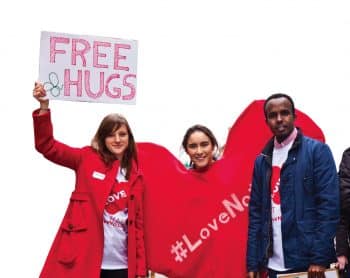
    On March 8 this year – International Women’s Day – Dubliner Victoria Curtis posted a photograph of her recently bruised face on Facebook, and wrote: “This is what misogyny looks like. This is what being a faggot looks like. This is what happens women on Saturday nights walking home with their friends. This is what a man did to me after I told him it wasn’t cool for him to tell us to take off our trousers, pull down our knickers and show him our arses …This is Ireland 2016”. Curtis’ post went viral, grabbing the attention of national radio, momentarily re-opening the much needed national conversation about hate crime. The discussion provided a sober reminder, after marriage equality, that in spite of formal equality before the law Ireland in 2016 isn’t yet an equally safe place for all who live here. Almost uniquely among members of the European Union (EU) and the Organisation for Security and Cooperation in Europe (OSCE), the Republic of Ireland lacks effective hate-crime legislation (not counting the inoperable 1989 Incitement to Hatred Act). In this regard our government has come in for multiple criticisms from the Council of Europe’s Commission against Racism and Intolerance (ECRI), the EU Fundamental Rights Agency (FRA), and the United Nation’s Committee for the Elimination of Racial Discrimination (CERD). It is likely also that the State will be deemed in breach of the 2008 EU Framework Decision on Racism and Xenophobia, and the 2012 Victims Directive. For some years a coalition of NGOs representing, migrants, Travellers and other ethnic minorities, lesbian, gay and transgender communities, and disabled people, has been working closely with members of the Oireachtas, the Irish Council for Civil Liberties and academics at the University of Limerick who produced ‘Out of the Shadows’, an evidence-based roadmap for addressing hate crime. It was hoped that at its launch there would be an announcement by government that it would present the accompanying Criminal Law (Hate Crime) Bill 2015 for enactment. The bill provides a solid formal mechanism for gardaí to identify a racist or other bias-motivated element in a crime, and for the courts to consider this at sentencing. It promised to be a very welcome first step for groups most likely to be the targets of bias-motivated violence. To the surprise of the groups involved, this anticipated move by the government did not happen. Only days later, on July 22 2015 – International Day Against Hate Crime – The Examiner broke the story about “Jane”, a working mother living in west Dublin whose young family had been subjected to a years-long and escalating campaign of racist bullying, harassment, threats and criminal damage, culminating in two masked men spraying “Blacks Out” on her living-room window and front door, and slashing all the tyres on her car. After six years of investing in relationships in her local community Jane threw in the towel, took her children out of school, and fled to stay with relatives in Donegal. In spite of some of the best will, Gardai and the local authority were powerless to protect Jane and her children. Jane’s experience is not unusual. The iReport.ie confidential racist incident reporting system, administered by the European Network Against Racism (ENAR) Ireland, records around 140 criminal acts motivated by racism each year, while the State with all its resources logs fewer than 40. Action Against Racism (AAR) is an ENAR-Ireland-supported campaigning group comprising people who have experienced racism and who are determined that our Republic should – as the name requires – promotes a safe sense of belonging and participation for all who live here. This year AAR launched the Love Not Hate campaign to push for the enactment of Hate Crime legislation by the nex government. The campaign has produced promotional material, including brochures and a video that has gone viral, explaining how hate crime works. On March 19, to mark European Day Against Racism, members of AAR dressed as love-hearts and offered free hugs to amused shoppers on Dublin’s Grafton Street. The tactic was very effective in supplementing the online petition that has already collected thousands of signatures. There will be a strong Love Not Hate contingent at this year’s Dublin Pride march. Hate-crime laws are not a panacea, and on their own will not eliminate the structural and institutional racism (and other forms of bias) of which hate crimes are a violent manifestation. But in the UK, Sweden and Finland, where such laws have been embedded for longest, the data show that they can provide a criminal justice system with a range of instruments that can facilitate the targeting of behaviours, and the promotion of a culture where in future Victoria Curtis will be able to challenge bigotry, and “Jane” will be able to live and work in a neighbourhood and raise her children, without fear. Shane O’Curry is the director of ENAR Ireland, a network of 50 organisations campaigning for political and cultural change on racism. ENAR Ireland manages iReport.ie, Ireland’s independent racist-incident-reporting mechanism. http://enarireland.org/hatecrime By Shane O’Curry

    Loading

    Read more

  • Posted in:

    More to be done

    The situation is stark according to the report issued in late March. 56% of LGBTI people aged 14 to 18 year old have self-harmed, 70% have had suicidal thoughts and one in three has attempted suicide. Compared to the ‘My World National Youth Mental Health Study’, lesbian, gay, bisexual, trans, and/or intersex (LGBTI) young people reported twice the level of self-harm; three times the level of attempted suicide; and four times the level of severe or extremely severe stress, anxiety and depression. Being LGBTI does not accounts for this situation. It is caused by the unnecessary and preventable stresses that LGBTI children and teenagers still encounter as they grow up. This situation was revealed in The ‘LGBTIreland’ Report – the biggest ever survey – launched by former President Mary McAleese. She made the telling point that things will not improve by chance, only through change. It is important for LGBTI young people and their families to know they are not alone. There are LGBTI youth and community services across the country. Schools, mental-health services and other support agencies are being increasingly proactive about creating safe and supportive environments for the LGBTI people in their care. The report highlights, however, the urgent need to accelerate this work. Last May Ireland changed what it means to grow up LGBTI: first with a resounding ‘Yes’ in the marriage equality referendum and then with the Gender Recognition Act. The research did find that the majority of LGBTI people aged 26 and over are doing well. They report good self-esteem and are proud of their LGBTI identity. However, these positive findings are not shared across all age groups. LGBTI people still face considerable barriers to good mental health, including bullying at school, fear of rejection, discrimination, harassment and violence, and negative attitudes and stereotypes. We still have much work to do to achieve the equal and inclusive society so many voted for. The LGBT Ireland Report was Ireland’s largest ever study of the mental health and wellbeing of lesbian, gay, bisexual, transgender and intersex people. The study was funded by the National Office for Suicide Prevention and commissioned by BeLong To and GLEN. The study provides vital evidence that must now drive change. However, the findings were of little surprise to us here in BeLonG To Youth Services. We see these high levels of mental health challenges amongst the hundreds of young people we are supporting every week in our frontline services in Dublin and throughout our national network of youth services. There has been a doubling in the numbers of young people in crisis who have come to our services in recent time. Homophobic and transphobic bullying in schools, communities and even homes, is a major cause of these harrowing findings. The study found that 67% of those surveyed had witnessed anti-LGBT bullying and 50% had experienced it. It found that the majority of second-level schools do not provide safe and inclusive environments for LGBTI students. However, it did find that a growing number of teachers and principals are making an effort to change this. 25% of post-primary schools took part in BeLonG To’s ‘Stand Up!’ awareness campaign in 2015. This campaign, supported by the Department of Education, aims to end homophobic and transphobic bullying in schools by increasing awareness, friendship and support for LGBT students from other students. Clearly there is a long way to go from a base of 25% but it does represent an encouraging start. The study points to the urgency of building on this work. A 2014 evaluation of the Stand Up! campaign found that LGBT students, attending schools that participated in the campaign, reported a greater sense of empowerment and ownership of their education, and that the school was a more inclusive and accepting place after the campaign. They highlighted that they were more confident that the staff in the schools would be receptive to their needs and that they were more willing to approach a member of staff, and in particular the Social, Personal and Health Education teacher or Guidance Counsellor. BeLonG To has declared May 22nd as #BeLonGToTheFuture day to raise funds to ensure LGBT young people have access to youth support services such as peer support, resilience programmes and suicide/self-harm prevention programmes and to ensure more schools create environments that are fully inclusive, safe and supportive for LGBTI young people. Everyone has a part to play in creating this new culture, a culture that can save young lives. We achieved so much last May but there is still a job to be finished so that all LGBTI people are equal, safe, included and valued across Irish society. Moninne Griffith is Executive Director of BeLonG To By Moninne Griffith

    Loading

    Read more

  • Posted in:

    Planning Tribunal is too kind to itself

    When Mr Justice Feargus Flood – the Planning Tribunal’s original sole member – embarked on his mission for the truth, he was wont to require various parties to provide him with full and frank “narrative statements” to answer the many and varied allegations of wrongdoing made by Mr James Gogarty in an affidavit he had sworn and submitted to the Tribunal. Mr Gogarty was the main agitator for the Tribunal’s establishment in October 1997 but had not sworn his affidavit until 12th October 1998 – a full year later. Upon receipt, Justice Flood circulated it to Mr Gogarty’s various “accuseds” on 20th October 1998 with a demand for responding narrative statements within two weeks and a notification that public hearings into Gogarty’s allegations would commence with Mr Gogarty’s own evidence a week after that. Without understanding the furore that ensued and its backdrop to the contemporaneous decisions that have since become the subject of Supreme Court scrutiny, it would be impossible to understand what has occurred to cause the abandonment of most of Justice Flood’s findings. Certainly none of the Tribunal’s statements issued since January last year have helped such an understanding. The Tribunal’s current members should now make a full and frank narrative statement about what really went on to cause the withdrawal of all bar two of Justice Flood’s Second and Third Report corruption findings. Their recently issued, carefully crafted web statement fails miserably to do so and is disingenuous in the extreme. It advises that the Tribunal has made “alterations” to these reports and that the “so revised” reports are available to download from its website but is short on specifics, long on fudge and very misleading. Firstly, far from making mere alterations to Justice Flood’s two reports, they have been cannibalised. The Second Report (dealing with Ray Burke) has lost nearly 40% of its body weight and fourteen of its sixteen corruption findings and the Third (dealing with George Redmond) is only a shadow of its former self with all corruption findings gone (though one controversially persists in the final report). But how does the statement deal with this? Yes, it advises that all adverse findings have been removed against 11 named individuals but asserts that “adverse findings” remain against Ray Burke, Tom Brennan, Joseph McGowan, John Finnegan, Tim O’Keeffe, Roger Copsey and John Bates. It would have been more forthright to make it clear that only two of Flood’s eight corruption findings against Burke (involving Brennan & McGowan) have survived the cull and that the other adverse findings it lists are merely those of a failure to co-operate with the Tribunal, not findings of corruption at all. And the back story outlined for the Reports’ “alterations” and delays in effecting them is inaccurate, self-serving and, in some cases, demonstrably untrue. For instance, taken at face value, the statement suggests that the reason for the finding withdrawals is that Mr Justice Flood made a bona fide mistake in a ruling he delivered in early 1999 concerning the criteria he would apply in deciding which information he would and would not circulate to those accused by Mr Gogarty. It also states that this ruling was only found unconstitutional in 2005 Supreme Court judgments delivered in a challenge mounted by the Cork developer, Owen O’Callaghan, to the ruling’s continued application by the Tribunal’s current members in a later module. The statement also asserts that none of the parties condemned by Justice Flood’s two reports challenged the decision “either before or in the years immediately following” their publication. Leaving aside the fact that the Tribunal’s collapse has nothing to do with Justice Flood’s public ruling and that nobody knew what he was actually up to, this latter claim is extraordinary in view of proceedings issued by JMSE and George Redmond in 2004 and 2005 respectively. Concerning the JMSE case, the statement’s recital of its significance – that it decided that Justice Flood was also wrong in assuming the power to find parties guilty of the crime of hindering and obstructing him – is accurate as far as it goes. However, a more frank statement would have acknowledged that it was the facts that emerged during those proceedings (and the later Redmond case) about what Justice Flood had done with evidence behind the scenes, and not the O’Callaghan judgments that has done for his reports. The JMSE case revealed that, far from making an innocent mistake, Justice Flood had – according to 2010 Supreme Court judgments in that case – under cover of his 1999 ruling (later condemned in O’Callaghan) “concealed without justification” evidence which was “patently relevant” to his enquiries and, “on one tenable view, explosive”. And as if this is not clear enough, the judgments also repeat the explanation offered to the Supreme Court by counsel representing the Tribunal (including its current members) for this concealment. This gives the lie to the Tribunal’s claim that it was a bona fide error on Justice Flood’s behalf. Justice Adrian Hardiman’s judgment recites that; “He (the Tribunal’s counsel) then referred to the Tribunal’s “need to limit collateral credibility issues: they redacted the documents”. “The need to limit collateral credibility issues” is counsel-speak for an admission that Justice Flood’s purpose was to conceal the fact that Gogarty was, at worst, a serial liar. And this concealment happened at a crucial moment in the Tribunal’s history and remained unknown to any of the other participants who were already up in arms about what they did know of Justice Flood’s plans. It only became known to the JMSE side when, within weeks of its High Court outing and very late in the day, the Tribunal complied with a long overdue order for discovery made against it. Back in 1998, Justice Flood had circulated the Gogarty affidavit within days of its receipt and announced his decision to move immediately to public sittings – taking Gogarty’s evidence first. This was more than unusual as it was established and best practice for tribunals to follow the

    Loading

    Read more

  • Posted in:

    Refugee Reality

    Bullying of a child by staff, unauthorised searches of bags and belongings, infestations of vermin, and rooms with no heating and broken windows … just another day in the life of Ireland’s direct provision system. Copies of letters of complaint by asylum-seekers, all of which were upheld after investigation, paint a grim portrait of life inside the network of former B&Bs, hotels, accommodation centres and caravan parks that almost 5,000 people are now forced to call home. The letters obtained by Village under the Freedom of Information Act are being made public for the first time. However, they represent just a small fraction of the issues within the direct provision system, with asylum-seekers increasingly less likely to engage in a formal complaint mechanism that offered them very little protection or anonymity. At a centre in Dublin, a mother wrote of how her six-year-old son had been bullied by a member of staff at her accommodation centre. “My son has a speech problem”, she said, “and he finds it hard to pronounce words … this has been a worry for me and he gets mocked by his peers but I always assure him that nothing is wrong with him”. The woman described how one evening she had asked her son to get a laundry tablet from a member of staff. “I was walking behind my son and heard the security man … mocking … with the way he speak. This is so humiliating for [a] six-year-old boy and I was so upset and disappointed. I asked why on earth he was doing that to my son and all he could say was ‘I was joking with him’. I noticed then whenever I send [my son to] get things from the office, he is always reluctant as that must have been happening for a while. I find it so offensive for an adult such as [redacted] to bully my six-year-old son because he has a speech problem. It is hard for me to even imagine that would ever happen in this world from a grown man to a little boy”. In a handwritten note on her letter, the incident was described as a “misunderstanding” but the resident’s complaint was upheld. At another centre, a mother wrote to complain of how her child had been physically assaulted by a resident after a row between two kids. “The mother draw [sic] my son upstairs with his ear and his ear was so red and my son was greatly terrified and was so scared to go outside afterwards”, she wrote. “Every child [is] supposed to feel safe in his or her environment, this is the only hostel that some women think they have the right to beat or threaten other people’s children; they have done it to my kids about twice or three times and I have seen them do it to other kids”. In a centre in the Mid-West, a group of residents wrote about repeated gross invasions of their privacy. “The manager get in any room and search our private bags and take our stuff”, they wrote. They explained how CCTV was installed to watch the windows of their room, which were locked so that they would not open more than a centimetre. The residents also described how they were made to sign in daily and, if they did not, a letter was sent to social welfare officers seeking cuts to the tiny weekly payment of €19 that they receive. In response, the Reception and Integration Agency said rooms were checked to ensure there was nothing causing a safety or fire hazard. They said under contract, the accommodation providers were obliged to return a weekly register saying if residents were still there and that unauthorised people were not allowed in rooms. At the same centre, a disabled asylum-seeker had pleaded to be allowed to share a room with his Afghan friends because he needed help in every “aspect of life”. “They treat us the way like we are in prison”, he wrote: “They don’t care about your health, your condition, [and] depression and will make your head burst out and become crazy. Our condition is even worse than prisoners because they have some respect inside the jail but we don’t have that at all”. The complaint was investigated and it was discovered that there were fourteen vacancies at the centre and the request to stay together could easily have been facilitated. Another complaint at that centre was also upheld, about freezing conditions in one of its rooms. The asylum-seeker wrote: “I am sharing a room with two other gentlemen. The room is very small, and I am studying almost full time, and I don’t even have room to put my books in place. There is no heating in the room and the window is broken. It is very cold these nights”. In the West of Ireland, the amount of food being provided had almost caused a “serious fight” between residents and kitchen staff. The letter of complaint explained how residents were asking about some food that was being cooked, only to be told it would not be served until the following day. “The shortage of food in the dining [area] is a recurring event”, a letter said, saying residents were left “starving” and parents left to manage without sufficient food for their children. An investigator’s report said: “I am fully satisfied that the residents had a complaint and were justified in sending it on to the Reception and Integration Agency”. A year later, the problems did not appear to have been resolved and another letter was received about the quality of food. Residents said that some of what they were served was “rotten” and “smelling”. “This is not the first time we are experiencing this problem. The residents have been complaining of taking their children or themselves to the hospital for food poisoning, and no change has been done. We have been served rice that has been rotting for days”, it said.

    Loading

    Read more

  • Posted in:

    Don’t just commit, implement

    So, now we have been promised a “Government working to give every person equality of opportunity in a fair society” in the Programme for Government. Leaving aside the limited ambition as goals of equality of opportunity and fairness, the Programme does contain a raft of equality commitments. There is something for nearly everyone in the audience. Women, people with disabilities, older people, young people, Travellers and carers get substantive mention. Lone parents are less fortunate and get one commitment on income disregards. Refugees and asylum-seekers are least evident with a vague promise to promote integration, but no indication of how this is to be done, and one to reform Direct Provision, but only for its negative impact on family life. The equality infrastructure is what sustains the commitment to such promises. It includes the policy processes, policy plans, institutions, and legislation that drives their implementation. It is useful to assess how the Programme commits to the further strengthening of this equality infrastructure. This strengthening is needed given its rather tattered post-economic-crisis state. The Programme has a dramatic commitment to “develop the process of budget and policy proofing as a means of advancing equality, reducing poverty and strengthening economic and social rights”. If properly implemented this has great potential. It is to be the responsibility of the Budget and Finance Committee with the involvement of a new independent fiscal and budget office and Government departments and with support from the Irish Human Rights and Equality Commission (IHREC). There is, however, no mention of the statutory duty on public bodies to have regard to the need to eliminate discrimination, promote equality of opportunity, and protect human rights. This has been in place since late 2014. No Government department has implemented it and no guidance has been provided by IHREC on its implementation. It would have been more convincing to commit to developing the institutional arrangements for implementing this statutory duty alongside the new budget-proofing process. Policy plans are valuable in establishing strategies to address the inequalities experienced by different groups and sustaining a focus on these. There is a plethora of policy plans promised: new National Women’s Strategy; new National Disability Inclusion Strategy; existing Comprehensive Employment Strategy for People with Disabilities; new National Traveller and Roma Inclusion Strategy; and new Action Plan for Educational Inclusion. There are further commitments to implement the 2012 Carers Strategy, develop a LGBT youth strategy, and pursue an integrated plan across Government Departments to reduce poverty, disadvantage and inequality. The issue with plans, though, is implementation. The development of such plans tends to be the responsibility of the Department of Justice and Equality. Their implementation tends to be the responsibility of a wide range of other less enthusiastic Government departments and agencies. Implementation of ambitious plans can get reduced to diverse projects supported by some Department of Justice and Equality funding. While the projects are valuable, this diminishes the potential of policy plans. The Programme makes no mention of how implementation of these policy plans is to be driven and ensured. Constant planning in a context of limited action and change rapidly gets disheartening. The only statutory institution for equality mentioned is the National Disability Authority. There is a vague commitment to review its role. This must be ambitious if this agency is to emerge from the shadows of uselessness. On a time-limited basis, but nonetheless valuable, a special working group is promised to audit the current delivery and implementation of local authority Traveller accommodation plans, and a taskforce is promised to promote implementation of personalised budgets for people with disabilities. The community and voluntary sector gets significant mention, but only for its provision of “the human, social and community services in all key areas of our national life” and its contribution “to the economy” and for creating “value for Irish society”. This passes over the central contribution of this sector in advancing the interests, and giving a platform to the voice, of communities experiencing inequality. Its value should be identified in terms of our democracy rather than our economy. Increased funding levels are promised to the sector. However, funding models are to focus on “quality, effectiveness and efficiency” rather than on advancing equality, rights, or social justice. The promise is further compromised by an emphasis on commissioning for services, a process that commodifies or marketises these services and turns community groups into commercial entities. Legislation gets hardly a mention. There is a strange commitment to refer the proposal of the Constitutional Convention to incorporate economic, social and cultural rights into the Constitution, for consideration by the Oireachtas Committee on Housing; and a vague promise to ratify the UN Convention on the Rights of Persons with Disabilities. By Niall Crowley

    Loading

    Read more

  • Posted in:

    The pro-life lobby

    I am in favour of liberal laws on abortion. I once initiated an abortive master’s thesis about it, coming down in favour of the liberal approach. This magazine has always taken a liberal stance, outlining all the obvious anomalies in the Irish regime. We have devoted cover and editorial space to the issue and given serial platforms to the lead campaigners. We would never of course give a cover to the pro-life agenda. However, I do not consider the issue is simple. For instance Una Mullally, a columnist in the Irish Times, says people are asking: “How could Ireland allow same-sex marriage yet deny women the right to choose?”. That is banal. More blatantly she has declared: “Personally, I believe there is no ambiguity to what needs to be done”. There is. Though the debate never addresses it, the problem is that: it is impossible to say what rights apply to a foetus. We only have a language for human rights. The lexicon doesn’t come close to addressing the rights of animals, nature, or life that is on course to become human. I am loath to criticise anyone who believes a foetus has enough of the stuff of humanity to benefit from human rights. I can understand why someone would take that view. I can understand that they may even see abortion as equivalent to murder and be driven to campaign on the matter with the zeal that would demand. I do not share the view but I respect it. As a feminist, I am reluctant to pronounce on a matter where a man can never be burdened with the downside of the zealous approach. I also consider society could not really function if women, upon whom humanity depends for the early nurturing of the species, drew obvious conclusions from any regime that coerced them to bear children they did not want to bear. Because of the complexity of the issue and indeed of modern lives, because unwanted pregnancies inevitably bespeak trauma of a sort, and contraception is not properly provided, or even explained, to vulnerable young people, I would abhor any attempt at moralising over women who are contemplating, or have had, abortions. A blog by comic Tara Flynn puts it well: “I had an abortion. I am not a murderer. I am not a criminal. I am not a vessel”. Nevertheless abortion is not an issue I am comfortable with nor one I think anyone should be comfortable with. I do not shy from saying that abortion is best avoided. I cannot agree with the view, recently ventilated, that it is the “opposite of wrong”, though certainly it can often be that, for a particular person. None of this is to say that certain aspects of the debate cannot be treated as black and white. It seems to me that Sabina Higgins was in fact not deviant, for example, when she said that it is uncivilised to prohibit pregnancy terminations where there is a fatal foetal abnormality. It seems to me she was, through it all, really only asserting a fact. I would also tend to believe that prohibiting terminations even after rape or incest is akin to enslaving women. But the central pro-life, anti-abortion proposition is more difficult to definitively denigrate. Against this background I am worried by the hegemonic unassailability in the media of the pro-liberalisation voice. This voice is the ascendant one though the dominant media deny even this. To the extent that mainstream media review the quality of the coverage of abortion, they seem to be biased to the point of denial. For example an article, again by Una Mullally, in the Irish Times under the heading: ‘Greetings from Ireland – the land of balance and crazy abortion laws’, claims: “Just as broadcasters made fools of themselves clambering for anti-gayrights opinions in the lead up to the marriage referendum, they continue to see voices that are pro-choice as things that need to be not listened to but opposed. What ‘balance’ is really about is censorship. Women get balanced. Gays get balanced. If only they’d stop talking about their rights. If only we could keep our fingers in our ears without hearing these horror stories. Balance. Help”. Village has dealt elsewhere with the phenomenon that right-on agendas suppress the facts, choosing to apply the evidence to the opinion rather than the other way around. For example it does seem that media treatment of the tragic Savita Halappanavar case tended to overemphasise the role of the failure to provide an abortion in her death, where medical deficiencies seem to have been the actual immediate cause. Liberal media cover stories where denial of abortion causes death but often do not cover cases where abortion causes death. Village promotes equality. It is a byproduct of that agenda that views that do not endear themselves to the editorial slant of the magazine, provided only that they are tenable, should get an occasional airing, even if fashion has deserted them, indeed especially if fashion has deserted them. Typically such views are designated to contrast them with the views of the magazine – “counterpoint’, “contrariwise” etc. The progenitors of the 1983 Eighth amendment were incompetent and their wording foolish, making the recent ‘Celebrate the Eighth’ rally offensive, but as we can see from that event and more generally, for example in the US, the pro-life viewpoint is not moribund. Mullally believes that: “Fine Gael’s shirking needs to be called out…What we need on abortion is political leadership”. The problem is that the leadership Fine Gael would provide if it stopped shirking is simply not in the direction Mullally advocates. By Michael Smith

    Loading

    Read more

  • Posted in:

    Leaderless

    Rural Ireland faces depopulation and outward migration. This is fed by limitations in access to transport, broadband and many services and supports which also undermine the quality of life for those who want to stay. However, rural Ireland maintains strong local communities. Its economic value and social role in agriculture and associated activities, mean that it remains a vital part of Irish society. The recent election has raised issues as to the survival of rural Ireland, its development into the future, and its relationship with its urban neighbours. The LEADER programme has been put forward by the new Government as a potential saviour. The funding available to Ireland from this EU programme is €250m, 2014-2020. €235m of this will be for local-development strategies in every county, excluding the five cities of Dublin, Limerick, Cork, Waterford and Galway. LEADER is supposed to contribute to economic development, enterprise development and job creation, and, crucially, social inclusion and the rural environment. If it is to fulfill its mission as saviour, it must alleviate poverty and social exclusion and promote human rights in rural communities. Rural poverty has traditionally been less visible than urban poverty. It tends to be linked to a lack of access to services and supports such as childcare, healthcare, transport and education. Rural isolation is a particular issue. Poverty is more likely to be experienced by those living in low-income families such as small-farm holders. It is, like urban Ireland, also experienced by groups such as lone parents, people with disabilities, Travellers, migrant workers, and older people. It is welcome that, this time around, LEADER has a more explicit focus on social inclusion and, specifically, the provision of basic services for ‘hard to reach’ groups and rural young people. LEADER can now not only support local economic and rural development but invest in marginalised communities so that economic and local development benefit the whole rural population. The Government has also communicated its requirement that LEADER must be complementary to other developmental programmes funded by the exchequer to support social inclusion, local development, and community development. This is an improvement but it is far from clear who will take responsibility for this. Any monitoring and evaluation must ensure that that this integration actually happens. Economic development of rural areas will not be enough to address the inequalities experienced by various communities. Many of them have limited power and say in the issues that affect their lives, they are often not organised collectively to engage with economic and local development, they lack the resources to apply for LEADER funding, and they experience additional inequalities that require specific responses. These issues will not be addressed unless there is an investment in meeting their particular needs. The LEADER companies responsible for delivering the programme must work with the organisations already working in these communities. If such organisations do not exist, they must provide opportunities and resources for people to organise. This is paramount so that these communities can influence and affect LEADER and benefit from rural economic and local development. LEADER funding for projects must be weighted in a manner that gives investment in social inclusion parity in resources and esteem with economic development and rural environment activities. This would be a new departure for LEADER. LEADER could provide an innovative model for social inclusion in rural communities. Investing in creating strong vibrant communities who can articulate their needs and demands, and who can participate in deciding on what they want and need for their communities, will pay dividends in the long term. This is achievable through LEADER but only if the political will is there. The relevant Ministers in the new Government should take time now to meet community organisations working with marginalised communities in rural areas and the LEADER companies. They should discuss and agree who are the excluded in rural communities and how LEADER will empower these groups to get resources from LEADER to address the inequalities they experience. These communities lack the social capital and resources required to harness LEADER funding and changing this must be a priority. We need to invest in people and move away from the flawed analysis that underpinned LEADER in the past: that social inclusion is about capital investment. For now, the jury remains firmly out as to whether or not LEADER will meet this challenge and take up the full scope of activities required to advance social inclusion, and as to whether or not it will be a saviour. What is Leader? The LEADER (an acronym in French meaning Links between Actions for the Development of the Rural Economy) programme is a European Union initiative to support rural development projects initiated at the local level in order to revitalise rural areas and create jobs. Over half of the EU’s population lives in rural areas. The first phase was in 1991 and the current phase is 2014-20. Since its launch in 1991, LEADER has supported the delivery of local development actions in rural communities and has formed an integral part of the EU funding framework, through the national Rural Development Programme (RDP) of each Member State. Rural development is a significant component of the EU Common Agricultural Policy (CAP) and is supported by funding from the European Agricultural Fund for Rural Development (EAFRD), which in turn is delivered through nationally co-financed RDPs. For 2014-2020, three long term strategic objectives have been identified for rural development policy in the EU: • Improving the competitiveness of agriculture; • The sustainable management of natural resources and climate action; • A balanced territorial development of rural areas. These broad policy objectives are given more detailed expression in six priorities for rural development: 1. Fostering knowledge transfer in agriculture, forestry and rural areas; 2. Enhancing the competitiveness of all types of agriculture and enhancing farm viability; 3. Promoting food chain organisation and risk management in agriculture; 4. Restoring, preserving and enhancing ecosystems dependent on agriculture and forestry; 5. Promoting resource efficiency and supporting the shift toward a low-carbon and

    Loading

    Read more

  • Posted in:

    AbortiON/OFF referendum

    The demand for change was evident before the general election. The hope was that the 32nd Dáil would finally deliver the necessary reform. But ultimately what the Programme for Government proposes is more waiting when it comes to repealing the 8th amendment and expanding access to abortion services. The commitment to a Citizens’ Assembly in the Programme for Government acknowledges the demand for change in our abortion laws, but it certainly cannot be described as a commitment by this government to deliver that change. I recently read a newspaper article written in 1988 by the late Dr Noel Browne, where he highlighted the issue of abortion access. The former Health Minister lamented the fact that at least 4,000 Irish women and girls every year were being forced to “take the lonely trek to England in search of abortion”. I read it with disbelief, having to remind myself how little the abortion debate has progressed in Ireland over all this time, but mainly I read it with despair. Despair that three decades and seven governments later, nothing has changed for women in Ireland and the same debate goes on and on, almost verbatim. Despair that women’s lives and health are still put at risk, and our autonomy and independence are still denied. Despair that we are still not respected and treated as equal citizens in a modern republic and that our human rights continue to be violated while successive governments have stood uselessly by, allowing it to happen. The Programme for Government states that a Citizens’ Assembly will be set up within six months to consider a range of constitutional and other issues, including the Eighth Amendment and that, rather oddly, politicians will have no role in it. That is all we know at this stage. We don’t know its terms of reference, remit and purpose, or makeup or structure. We don’t know who will chair it, who can make submissions to it, who will be represented, who it will report to, or the timeframe for reporting back. We have absolutely no commitment that the Government will act promptly on its recommendations. In short, we know very little about the Citizens’ Assembly, except that it involves more waiting. The rationale for holding a Citizens’ Assembly eludes most people who quite rightly feel that a referendum is the ultimate Citizens’ Assembly. It makes little sense, when many of the boxes required to justify calling a referendum publicly or politically are now well and truly ticked. Public opinion is transparently clear with polls consistently showing that the vast majority of Irish people are in favour of changing our abortion laws to expand access to abortion services. The makeup of the 32nd Dáil also favours change. One third of Dáil seats are held by TDs on the left of the political spectrum who would undoubtedly support a Government proposal to put a referendum to the people. With a growing number of Fine Gael and some Fianna Fáil TDs also in favour of repealing the Eighth Amendment, we know that 47% of the current Dáil supports holding a referendum. The Taoiseach has stated that “It is the people’s constitution and that it is only they who can change it”. The Tánaiste rightly believes that “the constitution is not the place to resolve complex issues like this”. Other members of Cabinet have stated publicly that the Eighth Amendment should be repealed and that they favour putting it to a referendum. The Irish State was again severely criticised during the recent UN Universal Periodic Review for its blatant violation of women’s human rights. Eighteen countries including Germany, Sweden, Denmark, the Netherlands and the United States made recommendations on reproductive rights and abortion law reform. The Government agreed to consider these. Reports have been published by a plethora of legislative, executive and judicial bodies on our abortion regime. What can a Citizens’ Assembly possibly add to our current knowledge about, and recognition of, the need for change? What is the point of waiting any longer when the public is demanding an overhaul? If the Government is determined to go through the motions of a Citizens’ Assembly, then it must be set up with an explicit commitment to bring about much needed reform. Women must be given a cast iron guarantee that they are not being sent to the back of the queue yet again, because this time the public feel that women have waited long enough. Ailbhe Smyth is Convenor of the Coalition to Repeal the Eighth Amendment, a growing alliance of over 50 organisations. By Ailbhe Smyth

    Loading

    Read more