Posted in:
We’re already doing/not doing it
Commitment required to equality-proofing policy and expenditure, not just to transparency
Posted in:
by admin
Commitment required to equality-proofing policy and expenditure, not just to transparency
Posted in:
by admin
Needed: childcare, cash, confidence, culture and candidate selection
Posted in:
by admin
We need to change specific provisions, and the restraint of judicial interpretation
by admin
A new source tells Village that Smithwick Tribunal unduly relied on double agent Fulton’s evidence that Corrigan was the colluder. Confusingly, the PSNI named someone else as the colluder
Posted in:
by admin
Free movement of persons has always been essential to fragile border areas
Posted in:
by admin
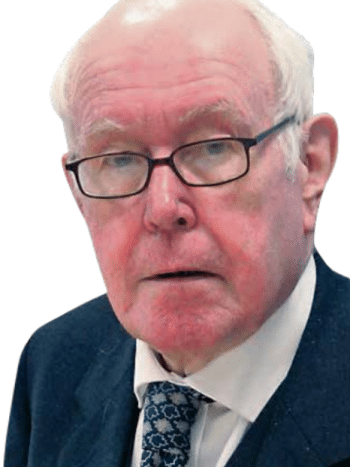
In 96-year-old John Hunt, Republican Sinn Féin traces the Fenian tradition, via the 1940s, into the present
Posted in:
by admin
Though there are substantive problems, charity transparency is improving
Posted in:
by admin
Victims of Windle-stopped-Swindle never reimbursed £339m leaving PTSB open to possible claims
Posted in:
by admin
Litigation and allegations of wrongdoing dog the garden county as a motion to downzone Newtownmountkennedy data-centre lands is defeated
Posted in:
by admin
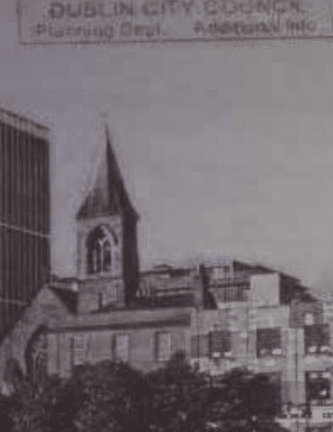
Developer TIO, including Nama, denies damaging church foundations and fabric and An Taisce’s allegation it jumped the gun on commencement notice and works on St Mary’s Church in Dublin’s docklands
Posted in:
by admin
Intrepid Wexford TD alleges Nama advisor, Cushnahan, was paid £5m by Cerberus for confidential information
by admin
The EU has been the most important force for social, economic and environmental progress and peace, in Europe – no petty agendas – for sixty years

Posted in:
There are well-meaning campaigns to increase the number of female voices in Irish media and politics. Equal treatment of the sexes is a war that needed to be fought. It doesn’t just benefit women, it benefits men as well, as men can be freed from a race to the bottom of macho culture that tends to invade work and social relations. It benefits us all when in politics women bring different views to a discussion. There is plenty of research that shows a plurality of views leads to better decision-making. We also know that women make decisions in different ways. Women tend to be more cautious, which means they avoid making massive (and grave) errors. Think bankers and their under-regulation. The cause of feminism is not over, but the war has in effect been won – no one would seriously argue against the principle. There are, however, some important skirmishes left to be finished in the clean-up operation. ‘Skirmishes’ is probably too soft a word for issues such as the pay gap and the glass ceiling. But the causes of these things are quite complex and certain measures to advance women’s rights might be unfair, ineffective or unnecessary. But who studies them? It’s usually just those people who feel most oppressed. It’s what the Canadian philosopher Joseph Heath calls ‘me’ studies. Because gender studies is dominated by a certain type of person it is (ironically) falling into the trap that the absence of women in decision-making positions in politics, science, business, academia and elsewhere suffer: they do not hear reasonable criticisms. That’s because now to criticise any form of feminism or a measure for gender equality is to expose yourself as against equality. Those who are in fact in favour of equality, but don’t want to appear to be opposed then stay silent from these debates. Only a small extreme minority vocalises against it, and this further convinces the ‘me studies’ crew of the moral rectitude of their position. Stopping the conversation has a number of negative consequences, led by the danger we lose sight of the real causes and complexity of the issues. Simpson’s Paradox is a quirk in probability that shows that trends in statistics disappear or are reversed when the data are combined. A famous case is admissions to Graduate School in Berkeley in 1973. The data showed a large and statistically significant bias in admissions in favour of men. A naive analysis of the data suggested Berkeley had a case to answer. But statisticians there observed when the data are broken down by department the trend is reversed. There’s a bias in favour of women! That’s because women are systematically more likely to apply to courses that have much lower admissions rates. Other cases are more complex. When we discuss the glass ceiling, factors that are less easy to measure or observe might explain discrepancies. Gender is pretty easy to measure – the vast majority of people can be put in the binary categories of male or female. We often focus on it to the exclusion of other sources of discrimination. But there are many other important sources of difference among humans. Gender equality isn’t the threat that class inequality poses. Feminism has largely won because middle-class women and middle-class men share interests. Why would middle-class men feel threatened by allowing their wives, sisters or neighbours to achieve equality? It won’t cost us anything. Middle-class Dublin voices are broadly the same regardless of gender. And the establishment will be happy to fixate on any remaining inequalities, because feminism deflects attention from the more threatening issue of class inequality. The next time you are invited to join criticism of a panel or committee deemed a ‘sausage fest’, also ask about class, age, race and nationality. In a gender-neutral panel or a gender-neutral cultural programme there are likely to be other important voices not being heard. An alternative view by Eoin O’Malley
Posted in:
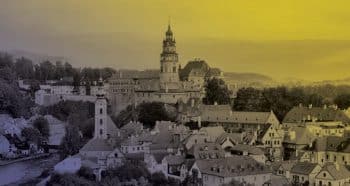
Aflons Mucha’s Slav Epic enjoys glorious pride of place in the Czech National Gallery in Prague. It is a cycle of twenty large and portentous paintings completed between 1910 and 1928 recalling the history and myths of a heterogenous people inhabiting territory from the Asian steppe to the shores of the Mediterranean. The artist imposes his peculiar predilections and aspirations in broad strokes to produce imagery simultaneously troubling and enthralling: a peaceable nature is emphasised but a belligerent Germanic ‘other’ is also apparent. The first painting has a contemporary resonance. Mucha claimed his intention was to depict the Origin, the Adam and Eve of the Slavs. The English guide says: “He portrayed them crouched down like defenceless refugees, wearing expressions of fear”. On the hill behind we see a hostile horde that has plundered and set fire to their village. Implicit is recognition that all peoples have at one time sought refuge from invasion. But that understanding is sorely lacking in the Czech Republic along with other countries across Central and Eastern Europe today. Not since the US invasion of Iraq have attitudes differed so greatly between what Donal Rumsfeld referred to in 2003 as ‘Old’ and ‘New’ Europe. Many in Western Europe are exasperated by the attitudes of their Central and Eastern European counterparts, regarding them as hypocrisy considering the number of Central and Eastern Europeans who have migrated west as both workers and political refugees. Central and Eastern Europeans appear to be from Mars and Western Europeans from Venus; but there is hardly a genetic basis for the intracontinental differences. Perhaps most surprising to Westerners are attitudes in the Czech Republic – a state, geographically and to an extent culturally, Western European: Prague’s architectural splendours are further to the west than Berlin’s and revolutions have been pacific West-friendly Velvet affairs. The State of Czechoslovakia was the only democracy in continental Europe apart from France in 1939. But successive opinion polls have shown Czechs to be overwhelmingly opposed to receiving refugees despite shocking scenes that have generated strong feelings of empathy elsewhere. Four factors ground this apparent imperviousness to the suffering of others: the first is the historical and current relationship with minorities; the second is the enduring economic fallout from the Communist era; the next factor is the malign influence of the current Czech President Miloš Zeman; finally, after a twentieth century during which the Czech people have been unwillingly controlled by three empires – the Hapsburg, Nazi and Soviet, there is a strong sense that the Czech people should be allowed to control their own affairs. The Czech Republic has produced statesmen of international renown. Former playwright President Vaclav Havel was one of the heroes of the struggle against Communist dictatorship; although his equation of the extension of US power with the expansion of liberty, culminating in support for the US invasion of Iraq in 2003, was naïve at best. Nonetheless his emphasis on individual autonomy and artistic expression was an antidote to the conformity of the dark Communist years. Looking further into Czech history we find the great Jan Masaryk the first president of Czechoslovakia whose liberal sentiments contrasted with the hateful rhetoric that pervaded the leaderships in countries surrounding an embattled state that was effectively handed over to the Nazis by the British and French in 1938. In a speech in 1928 marking the tenth anniversary of the foundation of the state he said: “I repeat and emphasise what I have said before, namely, that everything in the nature of Chauvinism must be excluded from our political life”. Arguing for a pluralist civic nationalism he said that: “the necessary State unity does not mean uniformity”. Although that state did not perfectly integrate its broad composite of minorities his benign leadership engendered tolerance, especially of religious difference. He said that Czechoslovakia should only have an army as long as other countries did. One individual who grew up in inter-war Prague recalls: “One of the pleasant aspect of living in Czechoslovakia at the time was that you never really knew what religion the other person had, child or adult, and more importantly didn’t care”. Masaryk also said that: “Politics is leadership and democracy therefore has its constant and urgent problem of leadership”. The current President Milos Zamen is offering leadership of a different character. Zamen is part of a rising phenomenon, apotheosised in Donald Trump. He speaks in foul-mouthed terms about marginalised groups. He regularly departs from political correctness, and appeals to fear and xenophobia. Thus in the wake of the New Year Cologne sex attacks he typically claimed that, “it’s practically impossible to integrate Muslims into Western Europe”. He has also previously stoked anti-German feeling, referring to his opponent in the 2013 Presidential election, Karol Schwarzenberg, as a Sudeten German and claiming that Sudeten Germans had been done a favour by their forced transfer to Germany, during which many thousands died, after World War II. The heavy-drinking President has also pursued friendly relations with Vladimir Putin and is roundly denigrated in liberal, relatively cosmopolitan Prague. But his divisive views, so out of step with the legacy of Masaryk, have proved a successful political strategy and today he is the most trusted politician in the country with a 56% approval rating according to a recent survey. A major reasons for this is the continuing discontent of the majority of the population with their economic status. Thus, in a survey conducted by the CVVM agency in October 2014, 55 percent of Czechs characterised the economic system that existed in Czechoslovakia before 1989 as “better” or “on the whole better” than the current one. This nostalgia for the Communist era may come as a surprise but it reflects the two-tier economy that has grown up. Prague now contains a substantial population that has grown wealthy in particular off the back of a booming property sector that has attracted significant foreign investment. There is also a high level of corruption that stalls development. This problem dates back to the
Posted in:
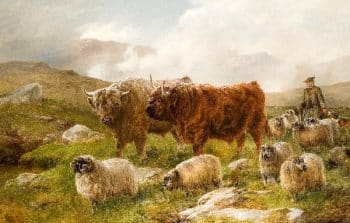
The figures were so astounding that I refused to believe them. I found them buried in a footnote, and assumed at first that they must have been a misprint. So I checked the source, wrote to the person who first published them, and followed the citations. To my amazement, they appear to stand up. A kilogramme of beef protein reared on a British hill farm can generate the equivalent of 643kg of carbon dioxide. A kilogramme of lamb protein produced in the same place can generate 749kg. One kilo of protein from either source, in other words, causes more greenhouse gas emissions than a passenger flying from London to New York. This is the worst case, and the figure comes from a farm whose soils have a high carbon content. But the numbers uncovered by a wider study are hardly reassuring: you could exchange your flight to New York for an average of 3kg of lamb protein from hill farms in England and Wales. You’d have to eat three hundred kilograms (300kg) of soy protein to create the same impact. In choosing what we eat – or making any other choice – we appear to take informed and rational decisions. But what looks and feels right is sometimes anything but. In this case, the very features we have been led to see as virtuous – animals wandering freely across the mountains, tended by horny-handed shepherds, no concrete and steel monstrosities or any of the other ugliness of modern intensive farming – generate astonishing impacts. The figures are so high because this form of husbandry is so unproductive. To produce one lamb, you need to keep a large area of land bare and fertilised. The animal must roam the hills to find its food, burning more fat and producing more methane than a stalled beast would. Yes, there are payoffs here. What is good for farmed animals is often bad for the natural world. The cruelties of intensive indoor production are matched by the wreckage of extensive outdoor production. Free-range pig and chicken farming, practised on the current scale, can be environmentally disastrous. Nitrates and phosphates sometimes pour from their paddocks and into the rivers. Unless they are kept at low densities or on well-drained fields, pigs tend to mash the soil: a friend describes some of the farming he’s seen as opencast pig mining. You can raise production – which means fewer greenhouse gases per kilo of meat – by dosing your animals with hormones and antibiotics. But this too has a cost. It’s now almost too late, the director of Antibiotic Research UK warned this week, to prevent a global superbug crisis. This is partly because unscrupulous farmers have been chucking shedloads of the antibiotic colistin – the last great hope of killing resistant bacteria – at their animals, as it raises their weight. But of all forms of production, the most attractive is one of the worst. Hill farming not only makes a wildly disproportionate contribution to climate change; it also trashes our watersheds, increasing the chances of dangerous floods, and destroys what would otherwise be our wildlife refuges: the great empty uplands, in which economic activity is sustained only through lavish farm subsidies. It is hard to think of any human activity with a higher ratio of destruction to economic product. My friends in the industry accuse me of being anti-farmer. It’s true that I emphasise the dark side, largely because so few other journalists seem prepared to cover these issues. But I have no visceral dislike of farming – quite the opposite. Visiting a farm on Exmoor last week, I was reminded of all that is beautiful about keeping sheep. The Arcardian idyll, a conception of the shepherd’s life (in both Old Testament theology and Greek pastoral poetry) as the seat of innocence and purity, a refuge from the corruption of the city, resonates with us still. But in the midst of a multifaceted crisis – the catastrophic loss of wildlife, devastating but avoidable floods, climate breakdown – entertaining this fantasy looks to me like a great and costly indulgence. As for eating local food, well in some cases it makes sense. It helps to engender a sense of place and belonging, which should not be lightly dismissed. When we buy seasonal fruit and vegetables from local farmers, it works environmentally as well. But we’ve tended to over emphasise food miles and to under emphasise other impacts. On average, transport accounts for just 11% of the greenhouse gas emissions caused by the food industry. Pulses shipped from the other side of the world can cause far lower impacts than meat produced here. A paper published in December suggests that switching from meat to green vegetables would be environmentally damaging. Per calorie, growing lettuces produces more greenhouse gases than rearing pork. But all this establishes is that lettuces are low in calories. You would need to eat 15kg of lettuce to meet your daily energy requirement, which might be reasonable if you were a 200kg rabbit. As another study remarks, “20 servings of vegetables have less greenhouse gas emissions than one serving of beef”. As the world’s people adopt the Western diet, a paper in Climatic Change estimates, the methane and nitrous oxide produced by farming could rise to the equivalent of 13 billion tonnes of carbon dioxide per year by 2070. This is more than all human activities combined can safely produce without exceeding two degrees of global warming. Climate breakdown looks inevitable – unless we change our diets. This, above all, means swapping most of the animal protein we eat for vegetable protein. It’s not painful, unless we make it so. Many British people used to eat dhal every day. They called it pease pudding, pease pottage or pea soup. As in South Asia, its ingredients varied from place to place and season to season. It’s just one component of a diet that offers plenty of variety – without trashing the great variety of
by John Gibbons
If you’re looking for a chirpy, upbeat assessment of how humanity will, in the nick of time, get its clappy act together to tackle dangerous climate change, then Kevin Anderson is probably not the person you need to talk to. Professor of Energy and Climate Change at the University of Manchester and deputy Director of the Tyndall Centre for Climate Change Research, Anderson is one of the world’s best known and most influential – and outspoken – climate specialists. On a recent working visit to Ireland, he ripped into any complacent notion that the Paris Agreement signed up to by almost 200 nations, including Ireland, last December meant that we could all relax a little in the knowledge that our politicians, guided by the best scientific advice, are finally getting on top of this crisis. Some of his most devastating critique is reserved for the IPCC itself or, more specifically, the wishful thinking that underpins many of its model projections. He fleshed this out late last year in a commentary piece published in Nature Geoscience, where he took apart some egregiously fanciful assumptions. “The complete set of 400 IPCC scenarios for a 50% or better chance of 2°C assume either an ability to travel back in time or the successful and large-scale uptake of speculative negative emission technologies. A significant proportion of the scenarios are dependent on both time travel and geo-engineering”, wrote Anderson. He repeated this point forcefully during his presentation at the Royal Irish Academy in Dublin, to the obvious discomfort of the representative of Ireland’s Environment Protection Agency, who found himself trying to explain how completely untested technologies could, somehow, be massively deployed to remove upwards of ten billion tonnes of carbon dioxide (CO2) from the air every year, liquefy it and pipe it into vast underground storage where it would have to remain securely for at least the next 1,000 years. Village sat down with Professor Anderson for an in-depth interview in Dublin. First question: what about our recent steps, such as the new Climate Act – does Anderson think Ireland is grasping the nettle of climate change? “I think certainly not; what Ireland has signed up to in the recent Paris Agreement, and particularly when you think that Ireland is one of the wealthier countries in the world, isn’t anywhere near what is necessary to meet its (Paris) commitments”. While the same can be said for the UK and much of Europe, Anderson stresses that “Ireland is a particularly wealthy nation, and it has wonderful renewable (energy) potential; it also has a very educated workforce. It has all that is necessary to make the rapid transition to a low-carbon energy system and indeed a much-lower-carbon agriculture system – at the moment, it is choosing to do very little in that direction”. So what about the view propounded by Irish politicians from Enda Kenny to Simon Coveney, that climate action is something we can kick down the road for another five or ten years, while concentrating on economic development instead? “That view completely, and I would say, deliberately misunderstands the science”, he retorts. “It’s the emissions that we put into the atmosphere now that really matters…these build up every single day in the atmosphere”. As for the oft-quoted argument that Ireland’s emissions are a small fraction of the global total, Anderson replies that every sector, from aviation and shipping to countries large and small, makes the argument that it only contributes a small share of the global total, but every percent is equally important. He is scathing of Ireland’s major expansion of its ruminant-based agriculture sector, believing the argument that if we don’t produce vast amount of beef and dairy products here, someone elsewhere will do it less efficiently, is bogus. “The climate does not care about (emissions) efficiency, it only cares about absolute levels of emissions, so if you are going to look at Ireland you have to look at these absolute levels”. Measuring ‘efficiency’ of CO2 per kilo of beef or ton of dairy produce is not, he argues, the right way to think about it. “If you are really concerned about feeding the world, then you measure it in terms of the CO2 per useful calorie you produce – that will almost certainly mean you will have to move away from the types of agriculture that have innately very high greenhouse-gas emissions”. Anderson describes the types of measurements being deployed to promote the ‘Origin Green’ image of Irish agriculture as “inappropriate and misleading”. A staunch public defender of agricultural emissions is retired UCD meteorologist, Professor Ray Bates, who has repeatedly argued against an ‘over-alarmist’ response to climate change that might, in some way, curtail our beef and diary sectors. Bates’ principal argument is that ‘climate sensitivity’ to CO2 may be on the lower end of the scale. Anderson is unimpressed. “I think it would be a foolish mistake to go down the ‘let’s keep our fingers crossed that climate sensitivity is on the low end’ dead-end, despite the fact that by far and away the majority of scientists think it’s likely to be on the middle to the upper end of the (sensitivity) spectrum”. What’s at stake, after all, is the habitability of the entire planet, and who would want to leave that to the toss of a coin?”. Anderson knows only too well the appetite among politicians, policy-makers and parts of the media for people who are prepared to downplay the risks and urgency, but believes that only by acting now in line with the scientific advice can potentially disastrous and irreversible damages be avoided. Quite how close we already are to the point of no return, no one can say for certain, but there is growing consensus that +1.5C, rather than +2C, should be the upper limit before really dire consequences become locked in. The findings emerging from climate science pose “fundamental questions about how we have framed modern society, the whole concept of economic growth, of progress – all
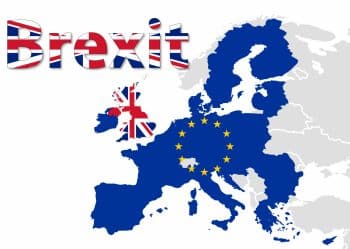
The people who brought us Brexit didn’t know what the effect of the breach would be. No one did; or does. Leading British Leave campaigners, including Boris Johnson, appeared to consider that Britain could retain access to its single market but implement some limits on free movement. In fact, if Britain is to be in the internal market for goods then it will have to accept, on all existing precedents, free movement of people, the application of EU rules that it will have no part in framing and the continuing surrender of substantial financial contributions to the EU budget. Even then it will not have full access to the internal market in services such as banking, hammering the British economy. Unfortunately for the UK, a lethal blend of ignorance, racism and manipulation of an undereducated and vulnerable working class, genuinely threatened by globalism and immigration (which on balance serves the country well) by opportunists in the Tory Party and UKIP, threatens the fundaments of the country’s economy and polity. It is primarily because it is a class-riven society with low educational standards that the UK, or more particularly England and Wales, has chosen to exit. Anyone with an understanding of history or economics would not want the EU’s collapse or Britain’s exit. It turns out that average levels of education of the people in a region correlate strongly with their Brexit orientations. People in areas where many residents have college degrees were far more likely to vote Remain, particularly in central London, where more than two thirds of the city population has a bachelor’s degree. Ironically but encouragingly, hosting a sizeable immigrant population seemed to sway communities against Leave, and denser cities tended against Leave, overall. Other factors mattered less. The median age of a community, despite the much emphasised youths-versus-retirees clash that many said would define the referendum, ended up correlating only slightly with how the vote actually went. Nevertheless it appears that of 18-24-year-olds, the age category that’s going to have to live with the consequences of this vote for all of their working lives, 75 percent voted to stay. Among over 65s the figure was only 39%. Britain is fissured to the detriment of the most dynamic, outward looking and young. Behind the now spreading turmoil, Europe faces extraordinary crises: from immigration to terrorism, from declining competitiveness to inequality to climate change and species loss. In the Netherlands, once a bastion of tolerance, at the moment Geert Wilders is topping the polls. He is “channelling” Donald Trump, with slogans like “Make the Netherlands great again!” He is preparing for a general election early next year – promising that, if he becomes prime minister, his first act will be to call an in/ out referendum on EU membership. Prime minister Mark Rutte’s Liberals, with 47 per cent in favour of staying and 45 per cent in favour of going it alone. Marine Le Pen, ascendant in Presidential polls, is promising a referendum in France. In Italy the populist Five Star Movement has emerged as Italy’s leading political party, overtaking Matteo Renzi’s ruling Democratic party and promising a referendum. There is a dangerous democracy-light nationalist government in Hungary and a court-ordered Presidential re-election in Austria that may facilitate the ultra-rightist Norbert Hofer of the Freedom Party. In the face of all this, the EU, led by secondraters cynically put up precisely because they are second-raters, has no plans beyond regurgitated schemes to boost EU economic growth through investment, to agree greater co-operation to boost security, and to work on creating job opportunities for young people. Above all no simply-stated fresh Vision for a volatile continent. The EU, if no other institution, needs charismatic and accountable leaders with big and popular egalitarian ideas. Let’s hear more about an agenda of people not capital or bureaucracy, of equality not commerce. The EU needs to become an agent of equality and the environment, driven in every case by efficiency, accountability and the common good. This institution, once so sharp and so idealistic, needs urgently to register a new Vision and a Passion for progress. In 1992 the Danes voted to reject the Maastricht treaty. The Irish voted to reject both the Nice treaty in 2001 and the Lisbon treaty in 2008. The Netherlands rejected the Maastricht treaty in June 2005 by a stinging 61.6 per cent. There were revotes in every case. The UK has two years to withdraw from the EU under Article 50 of the Lisbon Treaty. It is likely there will be a general election within that period. Indeed since Brexit has precipitated a 10% decimation in the value of Sterling, extraordinary stockmarket volatility and will lead to job losses – in financial services but more importantly in the English heartland that voted Leave, it seems likely that there will be time for a realignment of British politics to the centre, occasioning a Remain majority that will have a mandate to call a new referendum. It is to be hoped that such a referendum would concentrate the minds of Britons on the benefits of the EU, as well as of the EU on the need for a revamped Vision and Message. Before it really is too late.
Posted in:
by John Gibbons
Former NASA chief climatologist, Jim Hansen has a prejudicial knack of being right a lot more often than he’s wrong. And when it comes to projecting the future path of climate change, he has an equally unfortunate habit of being well ahead of the scientific posse. Back in the sweltering summer of 1988 Hansen testified to the US Congress on climate change, a phenomenon that was, until his electrifying presentation, seen as something of a scientific curio, an issue that distant future generations would, eventually, have to confront. Hansen confirmed that not only was it real, it was already happening. Calculations Hansen published in the late 1980s of likely future climate change track what has actually occurred with uncanny accuracy. Fast forward to 2015, a year in which global temperatures were smashed by record margins to make it, by some distance, the hottest ever recorded. And temperatures recorded in the first two months of 2016 have been described by climate scientists as “off the charts”. The February 2016 global temperature anomaly is +1.35C above average. It took from the beginning of the industrial revolution until October 2015 to record a +1C global temperature rise. To add another 0.35C within less than six months has left the scientific community running out of superlatives. And now Hansen is back. He and 19 colleagues have just published a blockbuster paper in the journal Atmospheric Chemistry & Physics. While the IPCC’s assessment reports represent the conservative mainstream view of climate science, Hansen and his colleagues can be said to be at the bleeding edge. What their research has concluded is profoundly disturbing, throwing into question almost everything we think we know about how climate change is likely to play out in the 21st century. While the IPCC plumped for a likely maximum sea level increase this century of around 1 metre, Hansen argues this may be a hopeless underestimate. “The models that were run for the IPCC report did not include ice melt, and we also conclude that most models, ours included, have excessive small-scale mixing, and that tends to limit the effect of this freshwater lens on the ocean surface from melting of Greenland and Antarctica”, Hansen told a press conference marking the launch of his paper last month. How Hansen sees this playing out in the real world reads like apocalyptic science fiction. Instead of a slow, incremental increase in sea levels, he believes we are looking at multi-metre sea-level rises in the coming decades, not centuries. Nor will this be a gentle process: he predicts devastating superstorms quite unlike anything since the last Ice Age, and the near-shutdown of major ocean currents such as the Atlantic Meridional Overturning Circulation (AMOC), or the Gulf stream, that vast current of warm tropical water that keeps northwest Europe, including Ireland, from not being frozen solid for several months a year. If this is beginning to sound familiar, you’re probably thinking of the movie ‘The Day After Tomorrow’, where abrupt climate change triggered a massive freeze in the northern hemisphere. That, of course, is purely speculative; there is already far too much excess heat in the system for the return of widespread Ice Age conditions anytime in the next hundred millennia. What is truly alarming, according to Hansen, is that as the heat differential between the equator and the northern hemisphere increases, this is likely to fuel powerful mid-latitude storms, on a scale not endured in thousands of years. Such storms could be powerful enough indeed to pick up massive boulders weighting thousands of tonnes and toss them hundreds of metres inland. We have clear evidence that this has happened before – and he believes it can happen again. With severe storms battering the world’s coastal regions, compounded by rapid sea-level rise, the nightmare scenario of most of the world’s great cities being lost to coastal inundation moves from being some distant spectre far beyond the year 2100 and bang smack into the middle of this century. Cork, Dublin, Galway, Belfast, Limerick, Wexford… the list goes on, and that’s just on this tiny island. Apart from the unimaginable human misery and forced migration of millions, the economic impact is almost incalculable Most of our critical infrastructure, including all the world’s great ports and trading hubs would be lost. Not everyone agrees. Professor Peter Thorne of NUIM was among those who reviewed Hansen’s paper, and while not ruling out worst-case scenarios, believes publicising them may be counterproductive. “Does this actually confuse, does it cause despair, does it help or hinder? I don’t know whether communicating something like this actually elicits a response that says: let’s do something”, he cautions. By John Gibbons