Frank Connolly

  • Posted in:

    Depressing and uncertain

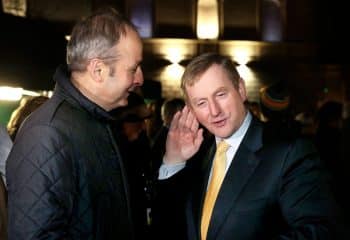
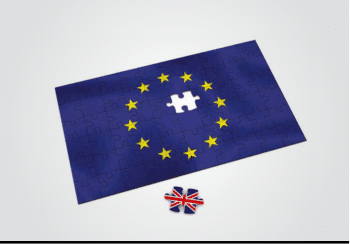
    After almost seventy days wandering in the political wilderness the two largest parties have finally agreed a programme with a 30-month timelimit. As Village was going to print the programme was being supplemented with whatever concessions are necessary to attract at least eight independents into the Fine Gaelled minority administration in a ‘Programme for Partnership’. But it was clear that it is a broadly centre-right deal. This reflects the largely indistinguishable ideological orientations of the two parties and sets out a range of proposals on the economy, public-sector pay and services, jobs, housing, crime and water. A fiveyear strategy for the health service is presumably intended to avoid the annual Health Services Executive cost overrun which destabilises budget planning.  Among its principles, the document has Fianna Fáil agreeing to permit the election of a Taoiseach and cabinet, to facilitate up to three budgets and to abstain or vote against on any motions of confidence in the government, its ministers or significant financial measures. In return, Fine Gael agrees to publish any deals it makes with Independents or other parties, allow the opposition to present bills without government obstruction and avoid policy surprises. Crucially, it accepts “that Fianna Fáil is an independent party in opposition and is not a party to the programme for government”. This particular figleaf is presumably intended to allow Michael Martin to pretend to his party members and supporters that he is not responsible for whatever the government does though Fianna Fáil has effectively written much of its agenda. In other words, Fianna Fáil is hoping to maintain its position of lead opposition party while ensuring that Enda Kenny, or whoever replaces him within the coming 12 to 18 months, sticks to implementing the policies contained in the eight page document. Clearly the agreement cannot include provision for the unexpected events that are certain to erupt over the coming three years or indeed for the outcome of the Brexit referendum in Britain, the ongoing refugee crisis in Europe or the outcome of the uneasy compromise on water provision and charges. The water can has been kicked under the bridge but will still cast a shadow over the minority government which will have to deal with the recommendations of the expert commission it will establish within eight weeks of its appointment and which will have until early next year to compile its report. The outcome is the ultimate in political fudge since the findings will be put to an Oireachtas committee and then to an Oireachtas vote sometime in the late Spring of 2017 if the timetable is realised. With the certainty that any proposed charging scheme will be opposed by a majority of TDs and senators the policy programme has included a convenient contingency which states that “those who have paid their water bills to date will be treated no less favourably than those who do not”. Realistically this signals the end of the shambolic charges regime imposed by Irish Water and the outgoing government and its probable replacement in a subsequent budget by a new household/property/utility tax. All of this hinges on the willingness of Fianna Fáil to allow this new dispensation where it seeks to influence the policy direction of the government, including a budget division of 2:1 in favour of public services over tax cuts, while sitting on the opposition benches posing as an alternative administration in waiting and dreaming of the next election result when it hopes to increase its tally of TDs to the mid-sixties. Martin and his more far-sighted colleagues also know that there is no longer a likelihood of any single party gaining a majority to allow it form the type of government Fianna Fáil used to dominate and are prepared to envisage a similar arrangement next time around, with FG as the facilitators. It’s either that or full-blown coalition with the blueshirts. However, they are also watching their backs and know full well that Sinn Féin, the other left parties and independents who do not sign up to Kenny’s temporary little arrangement will not give an easy ride to the new minority administration, and are certainly not obliged to. Equally, those independents who join government, mainly of centre-right disposition – or of the well-known disposition that allows the sacrifice of left-wing principles for a seat, or influence, at the cabinet table – are likely to get nervous if events don’t work out as planned. A failure to realise their ambitions, whether local or national, as the minority government totters unsteadily towards its near-three-year termination date will mean almost certain defections from the depleted ship of state. Add to that the potential for industrial unrest, as workers demand a greater share of promised recovery, continuing anger over the homeless, housing and health crises and general dissatisfaction at a weak administration unable to cope with big issues like climate change and international developments and you have a recipe for uncertainty. Not a lot to look forward to.

    Loading

    Read more

  • Posted in:

    (Water)rors

    For years vital Irish public services were consistently starved of funding at a time when taxes were being cut for electoral reasons. This is unfortunate but it has consequences which cannot be denied, whatever the ideology of the (non-)payer. Keeping water prices at an artificially low level leads to a vicious cycle of underfunded service-providers, insufficient investment, collapsing infrastructure and deteriorating services, according to the European Environment Agency. If this sounds bleak, that’s because it is – cheap or free water has been tried before. It doesn’t work. Irish Water’s five-year business plan proposes to spend €5.5 billion by 2021 on national priority schemes, on fixing leaks, on improving drinking water quality and on reducing pollution through sewage outfalls. Indeed it says that €13bn needs to be invested over the next 10-15 years. A flickering insight into what this means is that despite dominating the political discourse and its angst for several years, only €110m has been collected over the last two years. Diligent payers are in the lurch. Social Democrat TD, Stephen Donnelly, was on the mark when he suggested recently that: “Anyone who’s paying out €160 is essentially being asked to go out into their front garden and set fire to the money”. One of the problems is that Irish Water was so badly thought through. Phil Hogan, the minister, rammed the Bill for it through in three hours, after the opposition walked out. Of course consultancy and PR charges were scandalously inflated, metering seemed disproportionately expensive, the underlying principle of the polluter paying was undermined by the setting of standard charges and a misnamed conservation rebate was applied to the bemusement of all. The problem is homegrown. There is no infirmity in the EU regime which we purport to be implementing. Under the EU water framework directive the aim of water pricing is to “provide adequate incentives for users to use water resource efficiently”. “Social, environmental and economic effects” can shape these price levels; what is required from user groups is an “adequate contribution”. Of course one of the reasons for forming a commercial company was that it would be able to borrow without the loan registering in the now-EU-constrained national debt. This was a logistical imperative in itself and never implied that increasingly unfashionable privatisation was the covert agenda. In a country where referendums on for example property rights and protection of national resources are long overdue calls for a referendum enshrining Water alone as a resource which can never be privatised are little but cynical populism. The longer water charges are suspended, as a wily public reserves its rights during the party-political maneuverings, the greater the overall cost to households. This is because eroding the incentive to save water raises consumption and therefore demands more pre-treatment, pumping, post-treatment, elevating the cost which must be borne by someone. Charging works. In the Czech Republic, following charging reforms in 1990, household water consumption fell by 40%, from 171 litres per person per day to 103 litres a day, in the subsequent 12 years. Denmark, which extended volume-based charging in 1993, had much the same experience. In Ireland, losses to leakage are 49pc, almost double the 28pc in Northern Ireland where there are charges. Figures from Eurostat released in November 2015 suggest the average person in Ireland accounts for 400 litres of water use a day (146,000 litres a year), some five times higher than in Belgium. 1% of households use 22% of water, 7% of houses uses 6 times the national average of water and one house in Galway notoriously used the water allocation expected for 325 houses. Until 2013, water was the responsibility of 34 local authorities. The Republic has 856 water-treatment plants, Northern Ireland gets by with 24. 600 of our treatment plants are earmarked for closure, but the process is slow and expensive. Operating costs, expressed both in terms of population and kilometres of network, are almost double those at Northern Ireland Water. Meanwhile for example the Vartry tunnel (1860) in Wicklow, a 4km tunnel bringing drinking water to 335,135 people in County Wicklow and County Dublin needs to be replaced. A planning application has been submitted for a new tunnel. Meanwhile Dublin is vulnerable. Elsewhere, more than one-in-ten public supplies are inadequate, with, for example, thirty Kerry plants requiring attention. But there are problems with more than just supply and wastage. The pollution record caused primarily by insufficient funding is little short of calamitous. 30% of our 13,200km (8202 miles) of rivers and streams are polluted. In general, while Ireland treads water (charges), standards are getting increasingly stringent under the Water Framework Directive. Moreover as of 2012 less than 50% of lakes and transitional and coastal waters met EU standards for a ‘good’ or ‘high’ rating under the Bathing Water Directive. Furthermore the EPA’s Urban Waste Water Report 2014 found waste-water discharges contributed to (indictable) “poor water quality” at seven of Ireland’s bathing spots. Discharges from Youghal, Clifden and Galway city contributed to poor quality bathing waters at Youghal Front Strand, Clifden beach and Ballyloughane beach respectively. The same was true at South Beach, Rush, Co Dublin; Ardmore Beach, Co Waterford; Lough Ennel, Co Westmeath; and Duncannon Beach, Co Wexford. A recent Prime Time highlighted raw untreated sewage being pumped into the sea in the case of Rush, an expanding town of 9,000 people. Along much of our coast, semi-treated sewage is discharged through what appear to be streams. Children mistake these for attractive play areas. In Co Kerry alone, there are at least eight vulnerable beaches. E.coli risk will not materialise every year, and programmes to monitor and close beaches are in place. In fact, raw sewage is being discharged into 45 rivers, lakes and coastal areas around the State, the Environmental Protection Agency (EPA) has said. In 2013, there were 704 reported cases of verotoxigenic E.coli, a harmful bacterium. Some 5% to 8% of those affected suffered serious kidney complications. One in 20 of those died. Water-borne E.coli in Ireland

    Loading

    Read more

  • Posted in:

    Blueprint for the unemployed

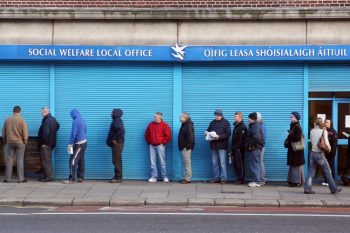
    ‘Sharing in the recovery’ was the big theme in the work of the Irish National Organisation of the Unemployed (INOU) in 2015. Our members and affiliates, the users of our services, and participants in our regional Discussion Forums and training events were all clear that this recovery had yet to be experienced by many people dealing with unemployment. There was a strong sense that the job recovery is urban-based and not evident in rural areas. Still, people living in disadvantaged urban areas noted the lack of visibility for any recovery in their communities. We need a Government that is serious about supporting unemployed people, their families and their communities. Any such commitment will only be credible if it is seen in action. The INOU have identified four key issues to be addressed. Firstly, they must strive to create an equitable and inclusive society. The second highest rate of discrimination was reported by people who are unemployed, at 23%, in the Central Statistics Office August 2015 ‘Equality Module’. This discrimination festers the absence of any protection. There is no ground in the equality legislation related to employment status and, therefore, no way for these people to challenge or change this experience. This first step for the new Government must be to commit to an equitable and inclusive society. The incoming Government should add socio-economic status as one of the grounds protected under the Employment Equality Acts and the Equal Status Acts so that unemployed people receive the full protection of this legislation. Linked to this, the Government must hold a referendum to enshrine economic, social and cultural rights into the Constitution, as already recommended by the Constitutional Convention. Secondly, the Government must support unemployed people to achieve a minimum essential standard of living. Given the impact of unemployment on people’s lives, it is critical that unemployed people receive social welfare payments that ensure they can meet their needs. ‘Jobseekers’’ payments must be restored to their 2009 levels. The age segregation applied to ‘Jobseekers Allowance’ payments in 2009 must be reversed. Further steps must be taken to protect unemployed people’s incomes. People whose primary source of income is their social welfare payment should be exempt from the additional charges introduced during the economic crisis. Rent Supplement and Housing Assistance Payments should be increased to more realistic levels that would support people to access accommodation. The third step that must be taken is to deliver better services for unemployed people. It is critical that these services enable them to make informed choices. Good career guidance, the provision of which would support unemployed people to access appropriate education and training and ultimately get a decent job, is a critical element. Frontline staff must be adequately trained to provide a top class service. A service that is built around the needs of the unemployed person is required: a service that provide additional supports to enhance unemployed people’s participation in education, training and employment programmes and ensures that this participation is by choice. This would lead to the more efficient and effective use of the resources. It would create services for which both providers and users would have a high regard. Community organisations play important roles in the delivery of services to unemployed people and others experiencing social exclusion. During the crisis, a lot of their funding was withdrawn, at a time when the demand for their supports was increasing. The new Government needs to acknowledge this work and re-invest in these community organisations to support the growth and development of their work on tackling inequality, poverty and social exclusion. Fourthly, the new Government must ensure that unemployed people can get decent and sustainable jobs. The creation of decent and sustainable jobs, jobs that pay a decent wage, must be prioritised and maximised. Employment programmes that serve as a stepping stone to such jobs must be developed. Action is needed with participants, providers and employers to secure better outcomes from such programmes. Part-time work can be a meaningful option for unemployed people and, in some regions, possibly the only option. It should be facilitated through tailored employment and social protection supports. Self-employment can be an important access point to the labour market for unemployed people experiencing exclusion because, for example, of their age, their ethnicity, or their locality. Their access to supports must be improved to make self-employment a more viable option for them. Brid O’Brien is Head of Policy and Media with the Irish National Organisation of the Unemployed

    Loading

    Read more

  • Posted in:

    The Gallo way

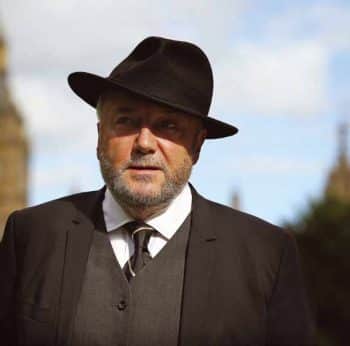
    I keep meaning to make a list of a certain category of politician: cataloguing those who wasted my time over the past 20 years, leading me on about seeking ways to extend fairness and justice to fathers, with dozens of whom I’ve sat over copious coffees while they took elaborate notes of the nature of the problem before going away and either doing precisely nothing or making things worse than before. Most of them I never heard from again, and now they cross the street when they see me coming, which is merely half-appropriate because, if they wanted to depict the situation accurately, they would need to cross the street not once but twice, a double-cross, except then they would have to encounter me and stare at their shoes in what you would be wrong in thinking shame. Last month, for the first time, I met a politician with whom I knew I was not wasting my time. Unfortunately, through unsurprisingly, he was not an Irish politician, but a British one, a Scot in fact, by the name of George Galloway. Since I invariably get irritated when people who come up to me in public begin by assuring me that they don’t agree with me “about everything”, I don’t intend to list the things I disagree with George Galloway about. And yet I have long had a snakin’ regard for his fiery eloquence, his polarising passion, his capacity to rile the kind of scoundrel who needs riling till the pips squeak, which often occurs when the subject of George Galloway comes up. George Galloway and I shared a Fathers4Justice platform in London on April 27th, along with the former EastEnders actor Mo George, Vincent McGovern of Families Need Fathers, Danny O’Brien of Anti-Knife UK and Matt O’Connor, founder and leader of F4J. The theme of the evening was ‘London: the Fatherless Capital’, with special emphasis on criminality and young fatherless men. Galloway seemed by then to have accepted that he was no longer a runner in the London Mayoral stakes, which has narrowed into a two-horse race (with George apparently a very distant third). The reason I felt confident George Galloway was not another time-waster was that I had heard that he had himself become a casualty of family-court anti-father tyranny. Now on his fourth marriage, he has been in dispute with a former spouse concerning what is termed his ‘contact’ with children born to that marriage. He made it clear at the outset, and reinforced the point more than once, that in anything he said about courts or the anti-father culture, he was not referring to his own situation. I spoke before him, and made some general points about the context of the savagery encountered by fathers who seek protected relationships with their children in non-marital or post-marital situations. I touched briefly on my own experience of the delightful family law jurisdiction of England and Wales, and the quaintness of this residual capacity for tyranny in what otherwise appears nowadays a relatively civilised country. For a long time, I said, I had naively thought of the problem as a ‘cultural oversight’ – an example of an unattended-to injustice which, once highlighted, would quickly be rectified. After nearly 20 years of banging my head on various solid walls, I came to realise that what was happening was not in the least a cultural oversight, but part of a planned assault on the very citadel of parenthood.   Galloway is an engaging speaker – good pacing, well-timed pauses, resounding cadences, arcs of rhetoric washing over his audience, easy on the ear even when you don’t much like what he is saying. I liked him far more than I expected. He’s real, not a realpolitik robot. He picked up and emphasised a point I had made about the issue not being ‘fathers’ rights’ but rather the mutual rights of fathers and children. “And if fathers are not getting justice”, he said, “that means ipso facto, to use a Latin and legal term, that the children are not getting justice. As John says, my child and my child’s rights are the same thing”. He went on: “I’m told that I don’t have any rights: it’s the child that has the rights. Well, I reject that. I have a right as the father of a child. The child is mine. It’s my blood. It’s my DNA. What do you mean, I don’t have any rights? That you, a total stranger, will decide on behalf of my children what will happen in their lives? What is a father? Just a cash machine?”. The word “contact”, he spits out like a broken tooth. “I don’t want ‘contact’ with my child, like I was a visiting uncle, or a social worker. What do you mean contact? That child is mine! Contact? I don’t want to be told, ‘You are precisely seven minutes late in bringing your own child back!’ I don’t want to be told, ‘You can pick your children up at school, but only until I move, maybe hundreds of miles away, and then you’ll never see them at school’. I don’t want to be told, ‘You can have overnight contact this week but I don’t really like your new wife, so I’ll start to take a different approach and you can do nothing about it’. And you know that if your wife leaves you and moves in with a complete stranger, that stranger has far more rights with regard to yourchildren than you, their father. How can that be justice? The law is an ass. And the fact that it’s secret is surely an affront to any idea of justice. Secret justice is not justice at all. The Magna Carta, 900 years ago, surely established that, because when it’s secret no one can criticise the decisions that it makes, because no one knows of them or can know of them”. The solution, he says, is: “The bleeding obvious: There’s actually an easy way to

    Loading

    Read more

  • Posted in:

    Visi on/off

    Moya Doherty – together with her husband John McColgan – is best known for founding Riverdance, the show that put a modern twist on traditional Irish dance. What began as the interval act during the 1994 Eurovision song contest ended up making Doherty one of the richest women in Ireland. The Sunday Times Rich List recently estimated the wealth of her and her husband at a cold €86m. Following the enormous commercial and cultural success of Riverdance, Doherty was formally admitted to full platinum-card membership of Ireland’s Great and Good. So she got to sit on a number of boards of directors including the Dublin International Theatre Festival (which she chaired for seven years) and The Abbey Theatre. She was also a founding director of radio station, Today FM. She has also received numerous awards and accolades over the years, including the Veuve Clicquot Business Woman of the Year, the Ernst & Young Entrepreneur of the Year Award and Honorary Doctorates from the University of Ulster and from the National University of Ireland in recognition of her ongoing commitment to the business of the arts in Ireland. Following earlier careers in RTÉ, Doherty and her husband established Tyrone Productions. It’s now one of Ireland’s leading TV production companies. For many years she was a director of the company. But when Communications Minister (at the time of writing we’re still waiting for him to go away you know) Alex White nominated Doherty to chair the board of RTÉ, Doherty gave up her Tyrone directorship. In part, that resignation was to avoid any conflict of interest, as Tyrone Productions does a lot of business with RTÉ. But, in part, it would have been to allow Doherty to concentrate on an RTÉ job that imports very considerable challenges. In a recent Sunday Independent article titled “50 influential women over 50”, Doherty was quoted saying “The 50s are a strange time for a woman, both physically and emotionally – a junction when you look both ways, to the past and the future”. It’s the same at RTÉ. The organisation looks backwards to its traditions and the legacy of its founders but it must look forward to a Brave New World where the role of national broadcasters is under severe pressure. The national broadcaster is widely perceived to have done an excellent job marking the 1916 centenary with historical documentaries and drama-documentaries combined with live coverage of set-piece commemoration events. But that’s essentially a throwback to its original role as national broadcaster. RTÉ’s problem is that it faces fundamental challenges to the role. It was all so different when Moya Doherty first left Pettigo, County Donegal, and large swathes of Ireland could only access one broadcaster. Today, satellite television and broadband mean that RTÉ’s rivals can broadcast into Ireland without difficulty. Moreover, specialist channels, that can use narrowcasting to chip away at different elements of RTÉ’s broadcasting audience, now proliferate. RTÉ must face massive threats from the likes of TV3 and Sky Sports – as more and more key events are bought up by commercial operations, and Youtube and Netflix, and people’s screen-time increasingly derives from the internet and new entities that may not have even existed a decade ago. RTÉ’s own annual report shows that its share of total TV viewership dropped from 27.7% in 2014 to 27.0% a year later. Meanwhile TAM Ireland’s survey of viewership habits in 2015 showed that only 80% of all audio-visual content is viewed on a TV set at home. A key focus of the national broadcaster is to protect its status as the main recipient of the TV licence fee. In 2014, this constituted over half of RTE’s revenue. Confronted with a drop in the proportion of people getting their audio-visual product from television, (Alex White’s predecessor as) Communications Minister Pat Rabbitte had floated the idea that the TV licence would be replaced by a household broadcasting charge. The idea that households would have to contribute to RTÉ whether they had a television or not was dreamt up in 2012. Then protests over water charges erupted. That prompted Alex White to say that the switch from TV licence to household charge would not be made until “public understanding and support” had been built. With water charges heading down the drain fast, that’s unlikely to happen anytime soon. So not only is RTÉ’s advertising revenue under pressure but so too is revenue from a licence which it describes as “not fit for purpose”. Some fundamental questions arise for RTÉ concerning its TV-licence income. It may not be appreciated by many but nearly €30 out of every €160 paid for a TV licence actually goes to subsidise RTÉ radio services, with over €35 going to RTÉ 2 to allow us watch such cultural jewels as ‘Friends’ and ‘Home and Away’. RTÉ is vulnerable to the charge that the licence is used as a slush fund to prop up the station regardless of whether any real public interest is in play. This apparent pretence makes RTÉ doubly vulnerable to a sceptical or incisive Minister for Communications. It goes a long way to explain the consistently deferential tone the station displays to the government of the day and to the country’s other governing interests. Whatever about its public service mandate, RTÉ did succeed last year in broadcasting 15 of the 20 most-watched TV programmes. Its bouncy Late, Late Toy Show headed the table. But the three next most-viewed programmes were all Rugby World Cup matches broadcast by TV3, which had outbid RTÉ for the right to broadcast something it had always held close to its bosom in the past. Frighteningly for RTÉ, TV3 has now secured the broadcasting rights for rugby’s Six Nations Championship from 2018 to 2021. When one looks down the list of 2015’s 20 most popular programmes, it’s notable that 12 were sports events such as the All-Ireland Football Final (5th place) and several Euro 2016 soccer qualifying matches (7th and 8th). But now Sky Sports has

    Loading

    Read more

  • Posted in:

    UNethical

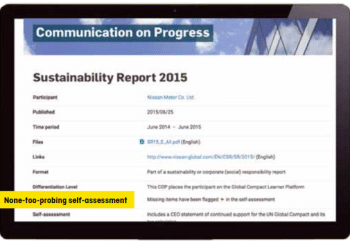
    Most right-thinking Irish people think the UN is progressive, scrupulous and transparent. They may think the Security Council is compromised by geopolitics but the intiatives emanating from the General Assembly are benign. All that worthy peace-keeping, progressive resolutions ending wars. Climate. Children. Education. We need then to take at look at the world’s largest corporate sustainability initiative, the UN-managed Global Compact: “a call to companies to align strategies and operations with universal principles on human rights, labour, environment and anti-corruption, and take actions that advance societal goals”. The self-financing UN Global Compact has attracted 13000 corporate participants and other stakeholders in over 170 countries (including Smurfit Kappa and Business in the Community in Ireland) with two objectives: “to mainstream [10 worthy] principles in business activities around the world” and “to catalyse actions in support of broader UN goals, such as the Millennium Development Goals (MDGs) and the global Sustainable Development Goals (SDGs), or Global Goals, which include a historic pledge in September 2015, to end poverty everywhere. Impressively, this is no empty commitment, you might think: companies have been delisted from the Global Compact because they did not comply with the obligation to report on progress, and the Compact has introduced a differentiation programme allowing businesses to distinguish themselves by going further than the minimum requirements. The UN Global Compact’s Ten Principles are derived from: the Universal Declaration of Human Rights, the International Labour Organisation’s Declaration on Fundamental Principles and Rights at Work, the Rio Declaration on Environment and Development, and the United Nations Convention Against Corruption. The Global Compact, however, is not all it appears. Although it can be seen as a reaction to climate change, the Enron debacle and the global anti-capitalism movement, it is also the creature of the business-fetishising wing of the UN, itself generated by some of the most right-wing influences in international affairs and their longstanding detestation of the UN. For example the Charles Koch-funded Cato Institute, a leading neo-liberal/libertarian think-tank, and the Heritage Foundation were assiduous critics of the UN in the 1990s. They adopted a similar ideological strategy, emphasising the primacy of unfettered market freedoms and calling for unilateral US funding cuts. The Cato 1997 Handbook for Congress described the UN as “a miasma of corruption, beset by inefficiency, Kafkaesque bureaucracy and misconceived programs”. Reflecting this, the Reagan administration systematically delayed the timing of US payments to the UN by appropriating funds nine months late, in the following US budget year. US payments to the regular UN budget, due on 31 January, began arriving in October or November, at the very end of the UN fiscal year. Since the US is the largest UN contributor, this occasioned the intended stress. Over the course of more than two decades, neo-liberal propagandists have defined the UN as an inefficient and unresponsive bureaucracy, threatening to impose itself on the world’s people. Again and again, editorial writers and newscasters have repeated the term “vast, bloated bureaucracy,” even though the UN staff is actually quite small. Boutros Boutros-Ghali of Egypt, who died in February, became UN Secretary General in 1992. Under heavy pressure from the United States and from lobby groups like the International Chamber of Commerce, he immediately set to work reforming the Secretariat and eliminating programmes that most irritated global commerce. For example, the annual Human Development Report drifted slowly rightwards after 1994 and began to promote economic growth as the main engine of human development. The trajectory was not all one way. Boutros-Ghali outraged the new conservatives by proposing global taxes as a solution to the UN’s financial crisis in a speech in Oxford University in 1996. Kofi Annan assumed the post of Secretary General in January 1997. Washington had summarily vetoed Boutros-Ghali’s campaign for a second term, saying it wanted a more reform-minded helmsman for the UN. Annan is a graduate of MIT’s Sloan School of Business. In 2004, allegations were made that his son Kojo Annan had received unethical payments but former US Federal Reserve Chairman Paul Volcker led an investigation which found insufficient evidence to indict Kofi Annan of any illegal actions, but did find the UN’s management structure and Security Council oversight deficient. Annan surfaces from time to time as one of the egregious ‘Elders’ with Mary Robinson and Jimmy Carter. After just three weeks in office, Annan made a pilgrimage to Washington to meet Congress, particularly key conservative Senator, Jesse Helms. He announced he would “streamline” the UN, bringing modern business practices to its management and setting “realistic” goals. He committed to further budget and staff cuts. Almost immediately Annan trundled to Davos, Switzerland, to the annual meeting of the World Economic Forum and also held talks with senior officials of the International Chamber of Commerce. The WEF subsequently kindly installed new video-conferencing technology that it used itself to the cash-starved UN. Extraordinarily, the system worked primarily to connect the Secretary General and other UN leaders with corporate executives, bypassing the intergovernmental process. Around the same time the Secretariat decided to impose an offputting financial charge on NGOs for electronic access to UN documents. Annan exhorted heads of UN agencies to open themselves to business, and to establish partnerships with corporations. In a short time, the UN High Commissioner for Refugees (UNHCR), the UN Educational, Scientific and Cultural Organization (UNESCO), the UN Development Programme (UNDP) and other agencies announced initiatives of this kind. In 1997, flamboyant media billionaire Ted Turner, who owned CNN, announced that he was making the largest charitable donation ever, a $1 billion contribution to the UN. In 1998, soon after attending his second Davos gathering, the Secretary General again met the International Chamber of Commerce (ICC) in Geneva. This time, there were 25 corporate enormouswigs in attendance, including representatives of Coca Cola, Unilever, McDonalds, Goldman Sachs, British American Tobacco and Rio Tinto Zinc. ICC Secretary General Cattaui heralded the new relationship. “The way the United Nations regards international business has changed fundamentally”, she gloated afterwards in the International Herald Tribune. “This shift towards a stance more

    Loading

    Read more

  • Posted in:

    Taking housing from scandal to right

    There are human rights to food, water, healthcare, a minimum standard of living, and housing. Despite western opposition they found their way into the International Covenant on Economic, Social and Cultural Rights (1966). They have wrongly been denied as rights in Ireland since O’Reilly v Limerick Corporation [1988]. This article is about the right to housing which is most famously recognised in The UN’s Universal Declaration of Human Rights (1948). “There can be no fairness or justice in a society in which some live in homelessness, or in the shadow of that risk, while others cannot even imagine it”, according to Jordan Flaherty [in Floodlines]. Yet the Irish State is not providing enough housing that is adequate and affordable. The problem is easily addressed. For as US educationalist Jonathan Kozol reminds us: “The cause of homelessness is lack of housing”. Clearly we need to build more houses. They should be of excellent quality, sustainable, built in accordance with a spatial strategy and using new funding models, such – for example – as have been suggested by the credit unions which seem to recognise a feasible and financially viable model which government ignores. In the boom although Ireland completed up to 20 new homes per 1,000 population – the highest rate in the EU, less than two new homes were for social housing, one of the lowest rates in the EU. More starkly, since 2008 the capital expenditure on social housing has been ruptured by successive budgets with cuts of 80% (from €1.3bn to €275m). Certainly Labour Minister Alan Kelly’s Urban Regeneration and Housing Act legislates for social housing. It requires developers to provide “up to 10%” of their housing units for social housing, though even Martin Cullen, as well as Ministers ever since, maintained the rate of “up to 20%” introduced in the 2000 Planning Act, albeit that the percentage was for “social” but also “affordable” housing. The new Act also allows the dubious retrospective application of reduced development contributions and the introduction of a vacant site levy. Elswehere the Minister promoted a reduction in apartment sizes. All in the supposed interest of increasing housing supply. Moreover, the last government failed to address problems in the rental market. The current rent supplement for a single person is €520 per month and for a couple, €750 per month, despite the fact that the cost of renting a two bedroom property in Dublin city, for example, is €1,700 per month. That government also tolerated an epidemic of evictions by banks and vulture funds that it has not adequately regulated. Instead it permitted them to engage in unfair commercial practices often in breach of both consumer protection and EU law. The non-interventionist obsession, nurtured in the voodoo logic of neo-liberalism, also drove failure to nationalise the banks permanently in the public interest – to provide public-interest lending, to secretive and apparently profoundly unstrategic deal-making in the deeply suspect NAMA and to a banking inquiry which failed, through lack of zeal, to hear key evidence; and inevitably to define the root cause of the canker. Why has NAMA not intervened to provide public infrastructure, – parks, museums and above all housing? Its website states: “As at end June 2015, NAMA had identified over 6,542 residential properties as potentially suitable for social housing. Of these, demand has been confirmed by local authorities for over 2,500 properties, of which 1,386 have been delivered for social housing use. Confirmation of demand is a matter for local authorities and is not something in which NAMA has a role”. NAMA has been interventionist in its deal-makings, why not in its public-interest interventions? In short we have become a socially dislocated nation where many of our citizens do not feel part of the society that has clearly abandoned them. The level of homelessness in Dublin city centre in particular now generates an almost surreal zombie-like feel to the streets late at night, redolent of New York in the early 1990s or the streets of Nairobi where multitudes walk the streets and fields in a non-directional and tragically aimless way. The question arises what causes such matters and what can be done. First, it is obvious that the root cause was our banking collapse responsibility for which our top lawyers, civil servants, bankers and their symbiotic plutocrats have been serially let off the hook, most recently by the feeble Banking Inquiry which toiled under a smokescreen of legal manoeuvres. It was morally correct of Pearse Doherty and Joe Higgins not to sign their names to such a charade. In my practice as a barrister I have noticed that the banks have pursued the policy of reneging on their contractual obligations to reinstate consumers to tracker mortgages after expiry of a fixed-rate period. Significant litigation in the Four Courts is now geared at understanding precisely what went on in this context. Further, banks with no interest in Ireland – Danske Bank and the Bank of Scotland – simply left the room and disposed of their assets leaving to others to hike up interest payments and/or sell the assets off to the underworld of vulture funds. The banks also bundled assets. In a particularly scandalous case now wending its ways through the courts Danske Bank refused a repayment offer of €90,000 from the consumer and then sold the house via receiver to a composite property portfolio at the bargain-basement price of €60,000. This is simply an outrage but it passed unprobed. Recent reportage suggests that the vulture funds are now gathering for mass evictions and in Tyrellstown we have witnessed a vulture fund perpetrating a mass eviction even where the residents can afford to pay their rent. As Village went to press, it seemed a new government would prioritise homeless, housing and mortgage difficulties. However, the commitment it the ‘Programme for Partnership’ between Fine Gael and Independents and in the ‘Confidence and Supply’ deal with Fianna Fáil are notably nebulous. Why does the incoming government not also investigate the proposal from High

    Loading

    Read more

  • Posted in:

    Sinn Féin loophole could lead to Irish PAC funds

    With calls to review their policy that their TDs and senators should only take the average industrial wage (in Dublin because of higher living costs in the capital), Sinn Féin’s financing arrangements are again in the news. According to its press office, Sinn Féin staff have taken an average wage for as long as the party has been involved in public institutions. It was already a long-established part of political discourse during the last Presidential election campaign in 2010, when Martin McGuinness promised to draw down only the average industrial wage (AIW), if elected. A Google search reveals a 2002 article highlighting the policy. Nor is the policy exclusive to Sinn Féin; a 2002 Socialist Workers manifesto also mentions the practice. In the case of the SWP/PBP and the Socialist Party, it appears funds are distributed to various charitable and community groups within their constituencies. On the other hand a 2005 post to the Politics.ie bulletin board, specifies that Sinn Féin TDs excess incomes pay for a local “office and a full-time member of staff”. According to the same poster, councillors “give up their standard expenses to fund offices”. It is not quite clear how this ties in with the SIPO regulations prohibiting any political party from accepting a donation in excess of €2,500 from any individual. Party stalwarts lionise the practice on several grounds. Firstly, it discourages ‘career’ politicians by limiting the financial benefits of elected office. Secondly, it ensures representatives don’t lose touch with their constituents as their pay packets increase, and of course, the money goes back to the party and helps it grow. The first claim is somewhat mistaken. The average is not necessarily the typical income for a voter, particularly a Sinn Féin voter, in an economy where one in three workers earns the minimum wage (or less, due to part-time hours). The often-cited practice of Sinn Féin TDs and senators who only take an AIW, with the rest spent for the benefit of the party, remains curiously unclear. The Sunday Independent recently reported that the excess over the AIW amounts to some €47,000 a year, which can then be used to pay for a constituency worker or office rentals. On the face of it, no more than €2,500 in donations can be accepted by “a political party, accounting unit of a political party, or a third party from an individual or a registered corporate donor in any calendar year”, according to the guidelines published by the Standards in Public Office Commission (SIPO). SIPO is responsible for enforcement of the Electoral Act 1997 and accordingly addressed the question of donations by Sinn Féin TDs and Senators in its 2012 annual report, on the back of media reports relating to then-TD Sandra McLellan and enquiries from members of the public. (In the interests of full disclosure, I began blogging on the topic of political donations and the average industrial wage in 2011, and so may have been one of the “members of the public” mentioned in the 2012 annual report). In relation to McLellan, SIPO reported that both she and Sinn Féin “emphasised that elected Members’ salaries and expenses are paid directly into the Members’ own bank accounts and after awarding themselves the average industrial wage the Members use the remaining funds to expand and develop their constituency service… As the Commission did not uncover any evidence of a breach of the Act through any transfer of funds from the Deputy’s bank accounts to the Sinn Féin party it decided that its enquiries into this matter should be closed”. This 2012 investigation appears to be the first time SIPO looked at the question of Sinn Féin TDs’ spending, as a previous inquiry in February 2011 showed that SIPO had no record at that time of any advice sought by or given to Sinn Féin on the legality of donations made by its TDs to party and constituency organisations. SIPO has further stated in correspondence to the author that “a constituency office/service could not be regarded as a subsidiary organisation within the meaning of the act”. A subsidiary organisation is defined by the Electoral Act 1997 as “a body or association which: (a) forms part of such political party, or (b)  is established by or under the constitution of the political party, or (c)  is effectively controlled by the political party or the officers thereof, or (d) has functions conferred on it by or under the constitution of the party”. Put simply, if a TD gave money to Sinn Féin, and Sinn Féin hired a worker for a constituency office with that money, then it would constitute a donation to the party. But if the TD hires a worker herself, and the worker’s wages never pass through a Sinn Féin account, the same expenditure is not a donation. And if that’s not enough, a constituency office is not deemed to be a subsidiary of the party for purposes of donations. Given the differing legal requirements for the reporting of donations in the two jurisdictions, Sinn Féin’s Northern counterparts appear to operate a different policy, going by public comments by Martin McGuinness, who said during a presidential-election radio debate that as deputy first minister he earned £112,000 annually “but I don’t see it. It goes straight into a Sinn Féin account and I’m paid a subsistence out of it”. Contacted about the details of its donations policy, the party was content with a statement which simply said “Sinn Féin are fully compliant with the Standards in Public Office Commission. Your questions would be better put to them in this regard”. UCD Sutherland School of Law legal lecturer John O’Dowd points out that, while the policy may seem to fly in the face of the spirit of the law, the party is entitled to the benefit of the doubt. “There is a general legal principle that if two interpretations are possible, and one leads to no law being broken, you give the benefit of the doubt”, he said:

    Loading

    Read more

  • Posted in:

    The Problem is influence

    Money for Nothing? Lobbyist Frank Dunlop told the Planning Tribunal in Ireland that his phone would “walk off the desk” with calls from candidates seeking money as soon as a general election was called. There are analogies with Australia. For years the heavy reliance of both major Australian political parties on developer donations has been known. One developer (Jeff McCloy) memorably told the New South Wales (NSW) Independent Commission against Corruption he felt like a “walking ATM”. Both givers and recipients have insisted that nothing is expected and nothing is given in return for these donations, and it has been impossible to disprove this “money for nothing” proposition. Instead it has been suggested that donations are simply a way of “participating in the political process”. The Courts: donations as communication The notion that donations are simply a way of “participating in the political process” reflects US Supreme Court jurisprudence, which has elevated donations to the status of “speech” and forbidden US legislatures to act to prevent anything short of “quid pro quo” corruption. The Australian High Court followed the US Supreme Court part of the way along this path, characterising donations as a form of “political communication”. An attempt to confine donations to voters (as is the case in Canada) was successfully challenged in the Australian High Court by Unions NSW, on the basis that this was an unreasonable imposition on an “implied freedom of political communication” . A recent challenge by McCloy to the constitutional validity of the pre-existing NSW ban on donations from property developers (in place since 2009), and caps on the amount of donations (in place since 2010), was however unsuccessful in both respects. The High Court rejected the US Supreme Court’s reasoning that governments may only limit political communication to prevent quid quo pro corruption. It confirmed that the prevention of both corruption and undue influence are valid reasons for legislatures to restrict political donations, and that in the final analysis, the Australian constitution must be interpreted to serve the interests of democracy. This should come as a great relief to Australian citizens. Proving quid pro quo Anti-corruption agencies with strong investigative powers (including the power to undertake covert operations) have uncovered what many suspected was the truth, both in Ireland and Australia. There is now firm empirical evidence in both countries of cases in which donations from the property development sector have in fact had “strings attached”. Something was expected of public officials in return, whether explicitly stated or not, and that something was some form of rezoning or development approval, or an action that cleared the way for these approvals. The reality of donor influence has been admitted in the public statements of some donors and some recipients in Australia, most recently in the submissions for the plaintiffs in the McCloy case in the High Court. This evidence is backed up by research in the field of psychology. A donation, like any gift, tends to activate the very human urge to reciprocate. The resulting cognitive bias may be genuinely unconscious, but it is real, and potent. The Planning Tribunal In Ireland the Tribunal of Inquiry into Certain Planning Matters and Payments (the “Planning Tribunal”) ran from 1997 to 2008 in Ireland, and made its final report in March 2012. It found 14 separate rezonings that had been influenced by corrupt, improper or inappropriate payments in the form (or guise) of political donations. The Tribunal made adverse findings against public officials from George Redmond, Dublin’s Assistant City and County Manager, right up to a Taoiseach, Bertie Ahern. The approach taken by the Tribunal is encapsulated in a passage from its final report. The Tribunal found that the developer Owen O’Callaghan had provided his lobbyist Frank Dunlop with large amounts of cash (IR£80,000 in 1991 and IR£73,500 in 1992) and that most of this money was paid to councillors to ensure their support for the rezoning of land at ‘Quarryvale’: “The Tribunal considered that such payments were always corrupt from the perspective of Mr Dunlop and Mr O’Callaghan, and were often (although not always), corrupt from the perspective of the recipients”. Having considered an enormous amount of evidence, the Planning Tribunal developed a set of principles relating to payments to local councillors, covering both givers and recipients. These principles are summarised below. Donors In the eyes of the Planning Tribunal it was “probably corrupt” for a developer/landowner to pay money to an elected councillor, where: (a) the developer/landowner was, or was likely to be, or to become, the subject of a decision by the County Council in which the councillor was an elected public representative; (b) the councillor would be entitled to exercise the right to vote, or to otherwise act, in relation to such a decision. Depending on the circumstances, however, the payment might alternatively be classed as “improper” or “inappropriate”. The Tribunal’s concept of improper or inappropriate payments corresponds with the concept of “undue influence”. Donors often argued that payments could not be corrupt because they did not change the recipient’s actions, but this claim was either rejected or made no difference to the Tribunal’s overall view of them: “The Tribunal did not consider it necessary that the recipient was actually influenced by the payment or even aware of the payer’s intention to influence him or her for the payment to be corrupt on the part of the payer”. Recipients The principles applied by the Planning Tribunal in the case of the recipients of donations were: a) It is corrupt to solicit or accept money from a developer/landowner, specifically in return for exercising his/her vote (or for undertaking any other act open to him/her to take in his/her role as a councillor); b) It is corrupt for a councillor to exercise his/her vote in the expectation of a payment of money; c) It is inappropriate, improper or corrupt to solicit or accept money from a developer/landowner, where it is known, believed, expected or suspected that land in which they have an interest

    Loading

    Read more

  • Posted in:

    Now not Then

    The recent multitude of events commemorating the centenary of the 1916 rising has provided ample opportunity to reconsider and admire the original wording of the 1916 Proclamation of the Irish Republic. “The Republic guarantees religious and civil liberty, equal rights and equal opportunities to all its citizens, and declares its resolve to pursue the happiness and prosperity of the whole nation and of all its parts, cherishing all the children of the nation equally…”. Despite the power of such rhetoric, this vision for the Irish Republic has never been achieved. Opportunities to implement it have been squandered and political promises of radical reform have not been delivered. The muddled and uninspiring outcome of the 2016 general election lends supports to the view that our politics and our political choices are driven by short-term considerations and that we lack an overarching vision of the type of society we should be working to create. The abhorrent living conditions of the tenements of 1916 underpinned a serious housing crisis at that time. While thankfully, 100 years on, such living conditions are no longer accepted, escalating rents and the level of homelessness today means we have a housing crisis in 2016. We remain a relatively unequal society in which many groups face discrimination and exclusion. Our economy, betrayed in recent times by an unsavoury coalition of politicians, bankers, developers and regulators, serves neither our society nor our environment. The vision of the 1916 Proclamation remains valid. It inspired Claiming Our Future to examine how civil society could respond to the celebration of the 1916 anniversary. Rather than focusing on failings in the implementation of the Proclamation’s vision, Claiming Our Future developed a new blueprint for a vision. Our Declaration for a Future Ireland sought to look forward rather than backward. We posted an invitation to participate on a dedicated website and met organisations around the country. This allowed for drafting and submitting of personal versions of the Declaration. We offered to facilitate groups and individuals adumbrating their hopes for the future as “Future News” in a two-minute newsshow format. The groups that took part ranged from Young Friends of the Earth to the Migrant Rights Centre Ireland and the Longford Women’s Group. The final Declaration for a Future Ireland embraces a fundamental transformation of our current society to become a flourishing Ireland based on the core progressive values of equality, environmental sustainability, participation, accountability and solidarity.  It proposes 21 wide ranging Guarantees. These have been grouped to resonate with the key demands that emerged from the process: Equality, Rights and Justice; A Participatory, Accountable and Inclusive Democracy; An Environmentally Sustainable and Vibrant Economy; and A High Quality of Life based on Solidarity. Like the Proclamation, the Declaration for a Future Ireland aspires to be a visionary document. On closer inspection, the guarantees it pledges are not that radical. Each one is underpinned by a value that will echo with  most people’s own fundamental beliefs. It is this values-based society that we ask people to critically reflect upon and declare for themselves. Claiming Our Future is now embarking on a process to engage with civil society organisations on how best to implement this Declaration. How could this values-based framework be used in their own advocacy work in seeking social change? We want to engage with any new Government on taking up the ideas in the Declaration. What values underpin their future policy proposals and how could they espouse the guarantees made? Claiming Our Future asks that you join with us to now, raise our heads, reclaim our voices, our rights and our dignity and pledge support to this, our Future Ireland.   Equality, Rights and Justice Guarantees: Fulfilment of fundamental and inalienable social, economic, cultural, civil, political and environmental rights. Equality between women and men. Protection from sexual violence and exploitation and caring support to allow for control of fertility and family planning. Equality for all people and diverse groups in our society respectful of diversity of age, disability, gender, religion, ethnic identity including membership of the Traveller community, sexual orientation, marital status, family status, or socio-economic status. Protection from institutional abuses, isolation, segregation, discrimination and violence together with equal treatment before the law. Equitable distribution of income so as to ensure a guaranteed adequate minimum income for all, whether in paid employment or not, which is sufficient to live life in comfort and with dignity, achieving a socially acceptable ratio between maximum and minimum incomes. Participatory, Accountability and Inclusive Democracy Guarantees: Pluralist, participatory, diverse, gender-balanced and accountable democracy, with strong local government and inclusive systems of decision-making, which listens to all voices and reflects collective opinion, celebrating diversity of opinion and dissent. Public participation in policy-making, including for those experiencing poverty, inequality, and social exclusion; and a constructive say in decisions. Vibrant civil society with effective community and environmental organizations, trade unions, community-culture groups and cooperative enterprises which, through collective effort, build strong communities which are flourishing places of caring, sharing and well-being. Safe and legal avenues to enter Ireland for those from outside Europe who are in need of our protection and an assurance of welcome, integration and empowerment for migrants and refugees. Opportunities to express creativity and participate in and celebrate our social and cultural heritage as well as the traditions of other cultures in our society. Sustainable Environment and Vibrant Economy Guarantees: Environment that is protected, renewed, and made available for future generations; is freed from the use of fossil fuel; promotes recycling; and values and protects its biodiversity. Vibrant economy that serves the needs of society, provides sustainable jobs and respects environmental limits: an economy that promotes the development of cooperative enterprises and that organises the production, distribution and consumption of goods and resources in an egalitarian and environmentally sustainable way. Banking and financial system that is strongly regulated and prohibits excessive speculation and rewards. Progressive, just and equitable taxation system that balances taxes on labour, wealth, corporate profits, financial transactions and resources, that fosters equality and that enables long-term

    Loading

    Read more