Archives

OK

Random entry RSS

Loading

  • Posted in:

    Britain was responsible for The Rising and WWI

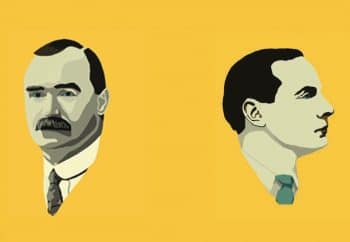
    As July 1, the centenary of the start of the Battle of the Somme – a asco in which one million soldiers were killed or wounded to make a six-mile advance for the Franco-British forces, comes nearer we will no doubt be asked to counterpose once again the heroism of the Easter Rising participants with the heroism of the combatants in the Great War. Heroism is surely an ambiguous category. Can heroism in a discreditable cause be admired? Is not indignation the most appropriate retrospective response to the politicians and generals who sent millions to their deaths in that mass slaughter? And compassion, rather than admiration, for those who followed their lead? The 1500 or so Irish volunteers of 1916 were taking on the British Empire at the height of its power. History has by now justified their cause by passing a negative judgement on that and other territorial imperialisms. The Easter Rising inaugurated the first successful war of independence of the 20th century, an example which many other colonial peoples have since followed. It set in train the events that led to the establishment of an Irish State. As the world moves from some 60 States in 1945 to 200 today and to a probable 300 States or more over the coming century, it is unlikely that either history or historians will look negatively on that Irish pioneering achievement. The 1914-18 war was by contrast a war between Empires which unleashed a catastrophe on mankind whose effects still haunt us. Quite apart from its 17 million deaths, 20 million wounded and economic devastation, its disastrous winding-up in the Treaty of Versailles gave us Hitler and World War II. The Great War was a conflict between empire-hungry politicians and powerful economic interests in the main belligerent countries. The recent academic consensus on how it started tends to spread responsibility between on the one hand the governments of the Entente Powers – France, Britain and Russia and on the other the Central Powers – Germany, Austria- Hungary and Turkey. The title of Cambridge historian Christopher Clarke’s best-selling book ‘Sleepwalkers’ implies that both sides drifted into a disaster none of them foresaw or intended. They were all equally foolish or criminal, and so equally responsible. Traditional left-wing characterisation of 1914- 18 as an “inter-imperialist war” implies a similar conclusion: that as all the imperialisms were bad, they were all equally guilty for the war. It is true there was a war party in each big power on either side. But neither logically nor historically does that mean that they all contributed equally to starting it Unsurprisingly, Christopher Clarke’s conclusion has gone down well in Germany. Germany was forced to accept sole responsibility for starting World War I in the ‘war guilt clause’ of the Treaty of Versailles. For decades English language historians echoed that verdict complacently until the Australian Clarke came along with his revisionism. Further revisionism may be called for. Some historians now contend that the prime responsibility for causing War War I rests with Britain. Their thesis seems convincing. Their argument goes like this: The economic and political rise of imperial Germany from the 1890s onwards threatened British global pre-dominance. German economic competition was making inroads into the British Empire. Britain was a naval power, with a small army. The only powers with land armies strong enough to crush Gemany were France and Russia. They could attack Germany from East and West while the British navy could blockade its ports. The central aim of British foreign policy in the decade before 1914 was to encourage a Franco-Russian alliance against Germany which Britain could join when a favourable moment came. For centuries Britain’s main continental enemy was France, with which it fought many wars. In 1904 Britain concluded the Entente Cordiale with France, ostensibly to sort out their colonial interests in Africa. This was not a formal military alliance, but secret joint military talks directed against Germany started at once and continued up to 1914. As for Russia, that was the land of serfdom, the knout and anti-Jewish pogroms in the eyes of British public opinion during the 19th century. Russia threatened Britain’s empire in India. It was the cause of “the great game” between their respective intelligence services, which Kipling fictionalised in his novel ‘Kim’. Britain and France fought Russia in the Crimean War of the 1850s to prevent it moving in on the weak Turkish Empire to take Constantinople and the Dardanelles, which was a longstanding Russian dream. In 1907 Britain upended this policy and came to an agreement with Russia on their respective spheres of in uence. From that date British policy-makers worked together with France and Russia towards bringing about a war with Germany in which Turkey would be pushed into joining Germany’s side. If victorious, France would get back Alsace-Lorraine, which it had lost to Germany in the Franco-Prussian War of 1870. Russia would get Constantinople and the Dardanelles. And Britain, France and Russia between them would divide up the rest of the Turkish Empire, including Syria, Lebanon, Palestine and Iraq. The war aims of the Entente Powers were set out in the secret treaties which the Bolsheviks released in 1917 following the Russian Revolution. These tell us what ‘the war for small nations’ was really about – that of cial propagandist phrase which many people in this country who do not know their history are still liable to trot out to explain Britain’s involvement in the Great War. Who were the British politicians who orchestrated this scheme to crush Germany for a decade prior to Sarajevo? They were the ‘Liberal Imperialists’ who were in office from 1906 – Asquith as Prime Minister, Grey as Foreign Secretary, Haldane as War Minister and Churchill as Naval Minister, interacting intimately with the Tories’ Arthur Balfour, Alfred Milner and Bonar Law, for the key people on both front benches were at one in their anti-Germanism. And what of poor little neutral Catholic Belgium – leaving aside its bloody

    Loading

    Read more

  • Posted in:

    Party climate poopers

    To say that environmental issues didn’t have much of an impact on Election 2016 would be a bit like observing that feminism hasn’t exactly been the defining feature of Donald Trump’s exciting US presidential run. The topic was completely ignored in the botched opening Leaders’ Debate on TV3, and again, on RTÉ’s seven-way debate the following week. The Green Party had fallen foul of an internal RTÉ decision to exclude it from a slot among the extended parties. This telling ruling was upheld in the High Court, and sure enough, RTÉ’s Claire Byrne steered the seven leaders through two long hours of questions and answers without a mention of anything remotely environmental. Ironically, the same journalist had dramatically dashed in an Air Corps helicopter only a few weeks earlier to interview some of the latest victims of this winter’s extreme flooding event. This dramatic fare, with long shots of ruined farms and submerged houses, interspersed with heart-rending stories of loss and struggle, is understandably grist for RTÉ’s current affairs mill. It is standard training in journalism to ask the five Ws – who, what, where, when – and why. We are getting lots of who, what, where and when from our media on flooding disasters and other climate- fuelled events, but precious little time is being devoted to that all important final W: why. And the ‘why’ is of course climate change. This vast topic made it into the last few min-includes lots of easy utes of the nal leaders’ debate, where just the savings, by 2020 four main parties were involved. Presenter Miriam O’Callaghan admitted in her introduction to it that it hadn’t featured at all in the campaign up to that point – the media weren’t asking and the politicians sure as hell weren’t going to bring it up spontaneously. O’Callaghan lobbed the climate grenade into the reluctant lap of outgoing Taoiseach, Enda Kenny, who – shocked that there might be an Idea in play – took fright and ubbed his lines. First off, he announced that the EU’s 2020 targets (20% emissions reduction versus 2005) “are targets we cannot reach”. Fair enough. And why, prime minister, would that be? “We have a chance with the abolition of milk quotas to expand greatly the capacity of our national herd…to increase our dairy herd by 50%”. Having fessed up to the fact that Ireland has chosen not to meet its 2020 targets, Kenny then went on to make the following quite extraordinary statement: “The targets that are set for 2030 are dif cult targets, but we will meet them”. The targets he is referring to are for a massive 40% cut in emissions. Given our inability to hit 20%, which includes lots of easy savings, the idea that we can escalate to an infinitely tougher 40% target in just one more decade suggests, to the cynical, that Kenny knows for certain that he will be long gone before the fantasy 40% emissions cuts by 2030 are exposed as a sham. So, the world’s greatest existential threat, according to Mr Kenny, is a distant second to pushing the agri- industrial expansionist agenda on behalf of the IFA and the food PLCs it so often appears to speak on behalf of. These same transnational organisations offshore their tax affairs to ensure the Irish Exchequer gets as little as possible. Glanbia, for example, routed its €40 million profits in 2014 via brass-plate companies with no employees in Luxembourg in order to cut its Irish tax bill to a paltry €200,000, or an effective tax rate of 0.5%. These patriotic enterprises represent, in the view of our Taoiseach, so vital a national interest as to set aside all other considerations to ensure their burger and baby milk powder export operations are in no way impacted by binding international emissions targets. To be fair to Mr Kenny, when asked to choose between agricultural expansion and climate chaos, the three other major party leaders also waffled and equivocated in equal measure, all fearful of riling up the assorted special interest groups that maintain such an effective lock on Irish environmental policy. Both Micheál Martin and Joan Burton did try to point out that the transport sector is on an equally ruinous trajectory, but the clear instruction that O’Callaghan pursued single-mindedly was to pitch climate policy in Ireland as either pro- or anti-farmer. This obsessive focus on agriculture seems to be a rut that RTÉ’s PrimeTime has dug for itself, as reflected in its paltry two efforts at covering climate change since 2009, which have lurched from cack-handed to catastrophic. Having attracted a slew of written complaints, the BAI will rule in the coming weeks on whether PrimeTime’s most recent ‘climate debate’, in early December, was in breach of broadcasting regulations. While climate and environmental issues were squeezed to the periphery of both the media and political framing of Election 2016, there was sufficient to be gleaned from the assorted party manifestos to suggest that whatever coalition is eventually assembled to lead the 32nd Dáil might represent a step forward on the hugely underachieving FG/Labour coalition, and the woeful Alan Kelly in particular. While Labour’s stewardship of the Environment ministry was a huge failure, the loss of outgoing Energy Minister, Alex White is a genuine setback, as he is regarded as one of the few politicians with the brains to truly understand climate change, and the guts to speak publicly on it. Not that it in any way helped his own political cause. The obliteration of Renua signals that the Irish public is in no mood to return to the simple-minded moral certainties of the 1980s. For the Green Party, turning a 2.8% national share of vote into two seats was an impressive achievement; whether such slender representation can really add a green hue to the new Dáil remains to be seen. While both Labour and the Green Party have plenty of useful things to say about addressing climate change and moving Ireland towards decarbonisation, given that the two

    Loading

    Read more

  • Posted in:

    (Good)gers and Cattle TB

    Sometimes farmers find difficulty sleeping at nights. Random, gnawing thoughts drift into our heads as we doze off. Are badgers prowling around the farmyard? Are they sniffing the cattle? Is TB being transmitted? New research will allow us to sleep more easily. A project led by district conservation of cer Enda Mullen, with Trinity College Dublin (TCD) and the Department of Agriculture, spent three years tracking badgers in the Wicklow countryside. 40 badgers from twelve social groups had radio collars fixed around their necks. Then enthuastiac National Parks and Wildlife Service (NPWS) staff and volunteers from TCD plotted the 12,500 movements of the badgers as they made their ways through the countryside. We usually find TB in cattle in the lungs.The conventional wisdom states that badgers transmit TB to cattle via aerosol – direct breathing close to a cow. A badger may be lured into a farmyard by the presence of spilled grain, and come in contact with livestock housed in sheds. But this study proved otherwise. Badgers tended to avoid farmyards – and particularly farmyards with cattle. If they visited farmyards at all, they tended to frequent equestrian, and disused, farmyards. But most badgers kept away even from these. A single individual badger (which the researchers christened Violet) seemed to like a trip to the horses, but most other badgers kept well away from all livestock, and even were shy of visiting disused farmyards. A second study undertaken by Declan O Mahony in Northern Ireland confirmed that badgers avoid cattle. Declan works with the Agri-Food and Biosciences Institute in Belfast, and his approach was slightly different. He affixed proximity collars on 58 cattle and 11 badgers in a TB hotspot in Northern Ireland. If the badgers and cattle came within 2 metres of each other (enough distance to share a breath), the collars would emit a pulse. This would be plotted via GPS. In addition, motion sensor cameras were positioned all over the farmyards to video anything which moved. The results were amazing. There were over 350,000 interactions between cattle and cattle. There were 11,774 interactions between badger and badger. Clearly, you hang out with your own species. And there were no interactions between cattle and badgers. Zero. So is TB being transmitted by badgers? And if so, how? The researchers looked at water troughs. But badgers and cattle did not use water troughs concurrently. In fact, badgers rarely used water troughs at all. So the researchers turned their attention to the farmyards. They recorded 500,000 hours of video at farmyards in a mammoth undertaking, and analysed the results. The visiting animals recorded mostly were feral cats, some of which were in poor health. Farm cats play an important role in rodent control, but can also be carriers of TB, and any animal in poor condition is more susceptible to disease. Mice and rats were also seen on camera, and very rarely an individual badger (perhaps a cousin of Violets) turned up at a meal shed for a few min-utes. Most other badgers kept away – and all badgers avoided the cattle sheds. Cattle are large, sometimes dangerous, and often scarily frisky. It seems that the badgers have known this all along, and are keeping well away from them. Instead of scapegoating the badger,we need to increase bio security measures on our feed sheds. And thanks to this hard work and wonderful research, we can settle down to sweet dreams and sleep without worries. Now – did I feed the farm cats? Donna Mullen

    Loading

    Read more

  • Posted in:

    Their daughters’ fathers

    Way back in 2004, I wrote an article for The Sunday Business Post, entitled ‘Play Boys, but few Play Women’ highlighting chronic gender imbalance in Irish Theatre, on the occasion of ‘Abbey One Hundred’, a virtually all-male programme celebrating the centenary the Abbey Theatre, (apart from one children’s play by Paula Meehan, and a shared run for Marina Carr’s ‘Portia Coughlan’ at the Peacock Theatre). That was before the dawn of social media, and my article, a lone voice in a sea of unquestioned misogyny, was received with resounding silence. Unfortunately, ‘his’ story has a habit of repeating itself, and more than a decade later, on October 28th, 2015 the Abbey Theatre proudly announced ‘Waking the Nation’, its – surprise, surprise – virtually all-male 1916 commemoration programme (apart from a lone monologue by Ali White entitled “Me, Mollser”, jutting out of the programme like Elizabeth O’Farrell’s incongruous little feet behind Patrick Pearse’s iconic 1916 surrender photograph). Nearly as bad was the playing of O’Farrell in both Jordan’s ‘Michael Collins’ and the recent ‘Rebellion’ series on RTE by men. This time, however, Twitter and Facebook ignited with rage at the outrageous gender imbalance, bringing an exciting counter-movement into being, with its own hashtag #WakingtheFeminists, abbreviated, wonderfully, to #WTF. Wasting no time on this occasion, Mná na hEireann, had a “storming of the Bastille” moment at the Abbey Theatre on November 12th, 2015, when over 30 female theatre professionals took to our national theatre’s stage, and the 450-seater auditorium over-owed with women demanding an end to this unacceptable gender imbalance, for ever. A contrite Fiach Mac Conaghail, director of the Abbey Theatre, sat in the auditorium and listened. After each of the 30+ women on stage had had their say, he stood up, looked up, and admitted: “I wasn’t thinking about gender balance. I did not look up. I failed to check my privilege. And I regret that”. If theatre holds up a mirror to society, this recurring gender imbalance at the Abbey Theatre is indeed a perfect reflection of Irish society, and the nature of Irish cultural ‘His’story – so far. We need look no further than to the iconic 1916 surrender photograph of Patrick Pearse for confirmation of this, with its dodgy silhouette of self-effacing inner city nurse Elizabeth O’Farrell who braved snipers to deliver the surrender order throughout Dublin’s rebel garrisons, only to be airbrushed out of the official surrender picture as published by The Daily Sketch. I was delighted to hear artist Jaki Irvine speak of Elizabeth O’Farrell and her 2013 book about the fearless nurse, ‘Days of Surrender’ (as yet unreviewed in Ireland), from the Abbey stage in its Theatre of Change symposium in January. Irvine is going on to set Elizabeth O’Farrell to music, along with her other female 1916 colleagues in her installation “If the Ground Should Open”, at the Irish Museum of Modern Art in September. Like Elizabeth O’Farrell who may indeed, as some claim, have deliberately taken a self-effacing step back when that 1916 Patrick Pearse surrender photograph was taken, making it easy for her little feet and large coat skirts to be airbrushed out of our Cúchulain- style national mythology, Lady Gregory (co-founder of the Abbey Theatre) did not actively seek recognition for co-authoring her iconic 1902 play ‘Cathleen Ni Houlihan’ with WB Yeats either. Similarly, a few decades later the self-effacing but fascinating George Yeats chan-nelled a myriad of voices to – yes – CO-AUTHOR ‘A Vision’ (1937), with her husband WB Yeats, but is rarely acknowledged as having done so. Like Elizabeth O’Farrell, the formidable George Yeats (about whom I am making the rst ever radio documentary, entitled ‘Georgie’s Vision’, funded by BAI Sound and Vision, for broadcast on RTE Lyric FM in Autumn 2016), took a step back, and went so far as to say “thank-you for leaving me out”. But – #WTF – is this shyness reason enough for the rest of us to facilitate, and hence perpetuate, the inaccurate masculinisation of, and erasure of women from Irish cultural history? Another important figure eclipsed by men is Lucia Joyce who could be Ireland’s answer to Camille Claudel, the well-regarded French sculptor who spent 30 years in an asylum (also Rodin’s lover and elder sister to poet, Claude Caudel). Lucia could not have been more different from her mother, Nora, whose entire raison d’être was her man, James Joyce. As well as his lover, cook, maid, and mother to his children, Nora was also James Joyce’s muse, most obviously inspiring Molly Bloom. Even in the Joyces’ modernist milieu, it was alright for a woman to be a muse, but not an artist herself, and certainly not an artist of the body (though in his masterpiece, ‘Ulysses’, James Joyce wrote the epic of the body). A modern young woman in 1920s Paris, Lucia expected her own career and identity, though she had grown up in weirdly close quarters with her unconventional family, and very much in the shadow of her father. When she protested “c’est moi qui est l’artiste”, alas, nobody listened to her. Tragically, Lucia Joyce (1907 – 1982), was never allowed to ful l her dream of being a professional modern dancer, despite her training with greats Emile Jacques-Dalcroze (founder of Eurhythmics); Raymond Duncan (brother of Isadora, who himself lived like a modern-day Ulysses in his Paris commune “Akademia Raymond Duncan”); Margaret Morris (grand-daughter of William Morris and founder of www.margaretmorrismovement.com); despite her seasons dancing with “Les Six de Rythme et Couleur”, and despite reviews like this one in the Paris Times: “Lucia Joyce is her father’s daughter. She has James Joyce’s enthusiasm, energy, and a not-yet-determined amount of his genius… When she reaches her full capacity for rhythmic dancing, James Joyce may yet be known as his daughter’s father”. Instead of being given the space to realise her ‘full capacity’, Lucia, who grew up immersed in iconoclastic counter culture and the avant-garde, found herself consigned to mental institutions – for life. Interestingly, after her father’s death in

    Loading

    Read more

  • Posted in:

    History is not Herstory

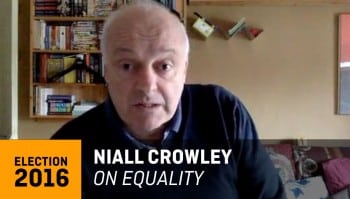
    Less than 30% of the writers in Village are women. And only 30% of the articles submitted for publication come from women. What’s going on? Village is politically correct and right-on. Uniquely it never, to take an example, markets magazines by putting attractive women on the cover. Village takes progressive social theory seriously. It consistently takes the most ‘liberal’ stance on abortion and reproductive rights. Most of all, and this is what determines so much of its stance, Village believes in inconvenient and prickly equality of outcome, not shiny and friendly equality of opportunity. In other words not just opening up for all, but giving the worse-off an actual leg up or a quota to compensate for the iniquities of history. This applies to women as much to any group. The new Dáil will have only 35 women out of 158. This is a more-than-50% improvement since 2011 and the number of female candidates was up to 163 from 86 in 2011 when it yielded 22 women out of 166 (up from 3 in 1973 and 22 in 2002 and 2007). Nationally, the average number of first-preference votes per man was 4,205. For women, it was 3,260. Village has given a good bit of of space to women who want to change this, to move towards fty percent female representation in parliament. The Electoral Act 2012, amusingly promoted by Phil Hogan and opposed by Fianna Fáil, applied a gender-quota rule that parties had to have at least 30% candidates of each sex or they lose half of their state funding. All parties except Direct Democracy Ireland applied their quota. Village supports this. I support this. That’s politics. We should push for immediate progress, everywhere. History and culture are different. The Abbey Theatre got into trouble recently because only one of the ten authors chosen for its 1916 commemorative programme, Waking the Nation, was a women. Other theatres and film bodies have taken similar flak. A recent rather unconvincing evocation of the Rising, Rebellion, made efforts to portray the events of that era with women to the fore. I disagree with these approaches. As to the Abbey’s Programme, what if the women took bog-standard anti-feminist positions, would they still merit advancement in the programme? Is it that a third of the writers should usually write pro-feminist pieces or is it that the third should have written pro-feminist pieces in this instance? Should there also be a certain number of works produced that have been written authors from racial minorities, from the young and the old, from LGBT and straight? Should it be the same with the actors? What about the audience? The answer to much of this is No. And as regards history, you’re trying to record the way things were: history. You shouldn’t, and you don’t need for any political reason to, distort it. All you can do with history is acknowledge and let it inform, though never determine, your politics. For the same reason that you don’t make the ruling classes working classes or younger than they were in the interests of some perceived correctness, you don’t pretend that women were the protagonists in the Rising. Unfortunately they were not. I also disagree more generally with distorting the facts to suit the ideology. The idea underpinning politics is to resolve the facts objectively and then apply the ideology. Not the other way around unless you thing your ideology is so weak that it won’t fit certain facts. In which case change your ideology, it was wrong. When the facts don‘t suit your ideology it is time to find a new ideology, or stay quiet; and more precisely to realise you should have had a better ideology in the first place The debate on women’s rights has become unintellectualised, entrenched and sometimes underinformed. For example a recent only partly-corrected Una Mullally article in the Irish Times misreported that Fianna Fáil’s policy was to have “up to a third of its candidates women”. She ridiculed the policy even though the policy did not, and legally and logically could not have, said this. It would certainly have been nice for those of us who believe that the point of that party is only ever to adopt progressive agendas, at the very last minute, if Fianna Fáil had got it so skewed, but they had not. Between Una Mullally and her employer they could not bring themselves to correct the article properly. The reason for the politics of women’s equality is that it has been an unequal world. It was an unequal world when they (men) made God a Man, it was unequal in 1916 and it’s still unequal because women earn less, are politically less powerful and have less autonomy than men. Only a fool would deny it. Because of the legacy of thousands of years of suppression women have not written as good, or indeed nearly as many, plays as men. Women also write differently from men, largely for socio-cultural reasons but also sometimes for reasons based in their physiological natures. The point is to change that by counterbalancing. Women of today who want it and show talent should get more training in playwrighting paid for by the state and its institutions, than that available to similar men, particularly training that helps them break down prejudices and that facilitates overcoming sexist obstacles to success. An admirable recently announced initiative from the Irish Film Board is doing roughly this. Such initiatives tend to generate equality of outcome. Regrettably in the arts it will be some generations before the volume of brilliant works by women rivals the volume of brilliant works by men, created over the aeons, even controlling for the heightened relevance of contemporariness. It is different with politics which, unlike history, does not or should not, trade in the past. It is possible, indeed imperative, to push for progressive change. It is, because of the nature of the discipline, and the period in which it trades – the past, not possible to push for change of

    Loading

    Read more

  • Posted in:

    Mojocon no Mojo con

    MoJoCon – the Mobile Journalism Conference which debuted in Dublin last year – has its roots almost a decade ago, when Glen Mulcahy, then working with RTE Nuacht, began experimenting with the camera on his Nokia N93 smartphone. “Video quality was atrociously bad, photographs were tiny, 1Mb was seen as huge, it was very much in its infancy”, recalls Mulcahy, now RTE’s head of innovation. “We were experimenting with that around the time Reuters had deployed the same tools to their journalists in the UK to create content for websites”. A handful of stories was produced to an acceptable broadcast quality using the mobile devices, and Mulcahy started keeping track of other broadcasters who were doing the same.“I thought, we need to bring everyone together, talk about what we’re doing, and that was the birth of MoJoCon”. From those beginnings, and networks built up through Circom, the European Association of Regional Broadcasters, MoJoCon has evolved into a “leading international media conference focusing on mobile journalism, mobile content creation, mobile photography and new technology all in one event”. Mulcahy may be an advocate for new technology, but he doesn’t expect RTÉ reporters will be carrying smartphones and selfie sticks by the end of the decade. “People still expect a particular kind of look when they turn on the television. You can’t do sports coverage on mobile, for example – you need those broadcast cameras, powerful zoom, all those expensive things. That said, there is very interesting case study, a station in Luxembourg, Léman Bleu, uses mobile to create content for their TV news. I think they are very brave to go this early”. “You will still see cameramen, you will still see satellite trucks in five years time, not journalists with selfie sticks. There are times when mobile works, but mobile is not mature enough yet to do 100% of the work”. Where he does see openings for new technology to expand are in non— broadcast media outlets, from newspapers to independent pod-and video-casts. “There are a few case studies in the Irish Times where I was absolutely blown away by some of the stuff they were able to do. They also very cleverly decided to upskill all their press photographers who were interested in doing it into shooting video with their DSLR cameras. So you have a new aesthetic. You definitely have better, although not necessarily radically more expensive, cameras and you also have some of the journalists who responded and went out shooting stuff with their phones”. “You don’t need a broadcast-quality camera to produce content that going to be delivered (back) onto mobile phones. I’m more and more coming to the opinion that there is a mobile ecosystem where we create on the mobile phone, edit on mobile phone, and deliver to mobile phones”. New technologies, and the ability to produce programming and news quickly and cheaply, also have implications for how RTÉ covers different communities, Mulcahy believes. “In the UK, there’s been a concerted effort by the BBC over the last 12 to 18 months to try and encourage hyperlocal sites. There is a UK government initiative where you can get a modest fund to basically try and get it off the ground. So there’s more that the government here could do to encourage that level of local community content”. “This is a device that most people have in their pocket. Maybe not everyone has a top-of- the-line Android or whatever, but lots of people have smartphones that can do pretty decent video, reasonably decent video”. “There is potential to give community-group newsletters, the ones that get stuffed on A4 sheets through letterboxes, a mobile angle. We could really energise community activism at grass roots level by showing them what you can do with video on mobile”. Looking to the future, as technologies (and screens) merge, Mulcahy can see a point where RTÉ produces video and audio not just for broadcast, but for the web, and for web first. As technologies mature, there is no strict reason why, for example, a new report compiled during the mid-afternoon should have to wait until the Nine news to be seen, when it can be immediately streamed to desktop computers or phones. Gerard Cunningham

    Loading

    Read more

  • Posted in:

    Less, but still, relevant

    From the point of view of the media, one of February’s biggest stories almost got lost in the election chaos. On Friday, February 19th, one week before polling day, the newspaper circulation figures for the second half of last year were published. In one sense, the story was a bit of a non-story: newspapers continue to sell fewer and fewer copies – the roughly 40 per cent collapse of sales that we’ve seen over the last decade or so was certainly accelerated by Ireland’s economic implosion; but whatever recovery somebody out there is enjoying, it’s not bringing newspapers back into our lives – they were down a few more per cent. That should be the starting point of any discussion about how newspapers covered the general election. This may indeed have been, as several commentators such as Oliver Callan have suggested, the most sensationalist, the most biased, the most trivial newspaper coverage of an election in the history of the State. Maybe. Whatever. There can be little doubt, though, that it was the most irrelevant. You can shout all you like about how much the journalism of the Irish daily press gets read online. “We’ve got more readers than ever (now if we could only get them to pay)” is a common refrain in the shrunken corridors of the press. The fact is that most of those readers are no longer committed to getting their news and views from any given paper, but rather they dip in and out, often critically. I suspect that on the day those circulation figures were published, more people saw a social-media post full of mockery, outrage or bemusement at the Irish Independent’s latest front-page denunciation of Sinn Féin than actually paid for a physical copy of that page. Since I merely saw an image on my phone, I still have no idea what Gerry Adams was planning to do with my pension. Is there a connection between the press’s hysteria this time around and the steady withering away of its relevance? I suspect as much. Like troubled children, the less attention we pay them, the louder they scream. Election seasons have always seen journalists at their most pompous and self-important: in the better class of newspaper the consequence is an obsessive-compulsive commitment to ‘fairness’. I can remember, back in the 1990s, a team in the Irish Times newsroom dedicated to measuring (literally, like with rulers) the coverage given to each party in a general election, with various formulae to adjust for the unfortunate fact that all column inches are not created equal. Other papers, of course, take a different approach. If there’s one thing we can say for certain about, say, the Indo’s notorious treatment of this election, it’s that they got us to notice how important they are. Once you understand the desperation of the press’s attention-seeking in its much-reduced state of health, it’s easier to understand why, for example, the Regency Hotel shooting managed to displace the election from page-ones for most of a week. If there’s one thing that the press does even more self-importantly than elections, it’s crime. This has little to do with the wonderful, generous resources gifted by Denis O’Brien and Rupert Murdoch to the investigation of wrong-doing and a lot to do with the impotence of convicted criminals to use the defamation laws to protect themselves. (No reputation to protect, no case, scumbag.) The hotel shootings showed definitively that crime journalism in Ireland is RELEVANT – more so even than the gardaí, who were absent while the crime-hacks and -snappers were very much on the scene. And when it came time to segue from “Hey, remember us! We’re newspapers! We cover crime!” to “Hey… elections!”, there was the lovely little link of Sinn Féin’s position on the Special Criminal Court. It seemed remarkably difficult to get anyone to recall a principled, non-Republican reason to oppose no-jury trials. So, even short of a major definitive research project, we can pretty safely say, that compared to times past, (1) newspapers are less relevant and (2) people are more inclined to see through media bias. (Check out Dr Rory Hearne’s research with water protesters to confirm the latter point.) However, this is not the same as saying (1) the media are irrelevant and (2) media bias doesn’t matter. When RTÉ – which unlike newspapers has a statutory obligation to be fair, to which it pays often hilarious lip-service – allowed crime-hack Paul Williams on the Late Late Show to use the issue of the Special Criminal Court to denounce Sinn Féin and its voters, on the very same day that he and we learned of his shrinking circulation relevance, it was not only a disgrace, it was most probably consequential for the election outcome. With the best will in the world – and even a half-decent will is a rarity – Sinn Féin and its voters remain another country for the vast majority of the established professionals in the Irish media. On his last NewsTalk broadcast before the election moratorium, George Hook recalled covering Mary-Lou McDonald on a canvas in Cabra: he scraped the phrase “work-ing-claaaass peeeople” over his tonsils as if he were describing a particularly dangerous safari. When the diverse regional accents of the various returning officers are a source of novelty and excitement on election-count days, you know the media have got a problem of uniformity. John Bowman turned up on RTE radio before the election with what academic Dr Conor McCabe described aptly as “the most Irish middle-class statement ever”. Bowman said: “I caught the election bug back in school when I was on the number 10 bus from Ballsbridge to Belvedere College, and the bus would pass by a sign outside the offices of the Irish Times…”. The problem is not Bowman personally, of course, but the fact that his background remains highly representative of the media. That ignorance partly accounts for the strange yet popular notion that the Labour Party has something to do with

    Loading

    Read more

  • Posted in:

    Fianna Gael

    The former Taoiseach Albert Reynolds once said that an Irish General Election was a series of 41 constituency by-elections. The vagaries of our proportional representation system mean that a modern Irish election can throw up all kinds of results. The landscape of Irish politics has been thrown into even greater uncertainty by the extraordinary destruction of Fianna Fáil which lost three-quarters of its seats in 2011 (dropping from 78 to 20 TDs). Though for me FG is more conservative, all I could reply was that Fianna Fáil were a party of the entrepreneurial bourgeoisie and Fine Gael of the commercial bourgeoisie The narrative for this forthcoming general election is already well-known. Taoiseach Enda Kenny is now seeking the kind of mandate Fianna Fáil used to get in former years. The rhetoric of stability once deployed by Fianna Fáil, is now being marshalled by Fine Gael. Kenny has staked his ground with the mantra, “Keeping the Recovery Going”, while making sure to register humility about the electorate who have brought about the economic improvement. The Taoiseach is understandably playing on the anxiety of voters about the potential for economic reverse if its voting facilitates a weak coalition government comprising disparate parties of left and right with little or nothing in common. In fact 1977 was the last time an Irish party won an outright majority and Governments which lack an actual parliamentary majority have proved to be among the most successful. Lemass led without a majority in the 1960s and Haughey did so again in the 1980s. A three-party coalition led by John Bruton, with little common ideology, ran quite smoothly from 1994. It appears that both Fianna Fáil and Fine Gael actually perform best when under the watchful eye of smaller parties. Clearly there is going to be a coalition.  However, the real conundrum for the electorate is that the great probability is that Enda Kenny will be returned as Taoiseach though the likelihood of Fine Gael being back with Labour on their own is very much an outside chance. It is more likely that Renua and other independents will make up his numbers. Traditionally there has been a leader of the opposition who could put together a coalition alternative to the parties in power. A fully effective leader of the opposition has to credibly state to the electorate his (or her) chance of becoming Taoiseach. The numbers now, and since 2011, do not allow Micheál Martin to make this claim. The only way he could possible claim to having a chance of being Taoiseach after the election is if he consents to forming a government containing his own party, Sinn Féin and assorted independents or smaller parties of both left and right. A hung Dáil could throw up all sorts of permutations and there is an outside chance that there would be enough, disparate parties other than Fine Gael to form an administration. However, it seems unlikely that Micheál Martin would become Taoiseach and exclude both Fine Gael and Sinn Féin from government, thus stranding both in opposition. Indeed Martin’s decision to rule out forming a government with or containing Sinn Féin has allowed Gerry Adams to cleverly state that voting for Fianna Fáil is an irrelevance. Adams has made the argument that since Fianna Fáil  would go into power with neither Sinn Féin nor Fine Gael then it is pointless for voters to give it support. Sinn Féin is probably the only party in the political system, along with the radical parties of the left, that could, if it chose, openly claim that it is fighting the election in order not to go into power.  However, it does not appear willing to embrace this particular high-risk gambit. Nevertheless since Sinn Féin appears to be playing a longer game Fianna Fáil will have little to complain about if Sinn Féin actually does pass it out in this particular general election. Alternatively, if voters take it that there is no alternative to Fine Gael back in the saddle, they might construe this as giving them in effect ‘a free vote’. This could see the creation of a clear, Sinn Féin-led, left-wing opposition to the status quo though when faced with the challenges of being in government Sinn Féin will no doubt knuckle down, just as it has done in the North. Whatever the result it is most likely that it will be open to the leaderships of both Fine Gael and Fianna Fáil, with inevitable reticence, to form a grand coalition. This intriguing possibility has its supporters in both political parties. It is noticeable that a good many of those who serve on the Fianna Fáil front bench are privately in favour of this should the election results make it possible. On the Fine Gael side of the house figures like Simon Coveney have been explicit in not ruling this out. It would of course spell the end for both Enda Kenny and Micheál Martin. Maybe it is for this reason that the younger, more ambitious members, in both parties seem keener. There is after all much in common between the two big parties. Indeed the differences are famously elusive. The Economist magazine, in 2011, described Fine Gael as centre-right, Labour as centre-left and Fianna Fáil as nationalist, and of course two biggest parties were germinated in opposing stances during the civil war. Beyond this, Fianna Fáil’s sobriquet is ‘The Republican Party’ and it was for a while somewhat unsympathetic to the British perspective. In his history of Fianna Fáil, ‘the Party’ (1986) Dick Walsh noted that Fianna Fáil was as much a movement as a party, had always attracted as many rich people as Fine Gael and as many poor people as Labour. Donal O’Shea’s ‘80 Years of Fianna Fáil’ defines it as a “catchall party… appealing to all classes”. Walsh said its policies always defied definition and quoted De Valera as advising, “always keep you policy under your hat”. As to the difference, a French newspaper once

    Loading

    Read more