Archives

OK

Random entry RSS

Loading

  • Posted in:

    Small Business Policy – Report Card

    In its Programme for Government, no less than 25 small-business-specific commitments were identified. This recognition and focus in and of itself has been significant, and is justified, as the economic importance of small firms in Ireland cannot be overestimated. Even more problematic has been the championing of the trade-union-backed €11.50 “Living Wage” by some Government Ministers. Despite the fact it’s “not Government policy” and is “voluntary” Firms with less than 50 employees account for 44% of employees and 49% of total private -sector employees. Young and new firms in particular account for the majority of employment growth, with 106,000 net new jobs created between 2008 and 2012 by firms in existence less than 5 years (at a time when total private sector employment fell by 264,000). They make up a third of the total value of the economy and are responsible for 35% of business investment. They are crucial to regional employment, representing over 80% of the jobs in ten of our counties, for example. They play a central role in domestic-facing sectors such as construction, tourism and retail. On balance, this Government has listened to the concerns of business and has put us on a sustainable path to future growth. It is important to note that many of the opposition parties have been hugely supportive of small business policy issues and have used their influence effectively in helping us to achieve our goals. Report Card – Small Business Policy

    Loading

    Read more

  • Posted in:

    For social and economic progress and sustainable development

    As we face into a General Election it is appropriate that we consider how we could construct a fiscal policy that can deliver fiscal and financial stability and sustainable economic growth. A fiscal policy that can provide the investment required for the delivery of decent services and infrastructure and that can adapt to changing demographic pressures. The fundamental issue underpinning fiscal policy is that any decision to raise or reduce overall levels of taxation revenue or expenditure should be linked to demands on government resources. Now that Ireland is emerging from the recession there is a renewed focus on fiscal policy. It is important that we learn from the mistakes of the past and ensure that current and future policies work for the common good of all in Irish society. There has been much discussion and rumination on the fiscal policy of successive Governments in the decades leading up to the crisis, but less regarding what progressive fiscal policy might look like in the future. So…progressive fiscal policy should be able to deliver macroeconomic stability, investment, a just taxation system, strong social services and social infrastructure, good governance in terms of policy development and policy evaluation, and finally it must be sustainable in the longer term. It should incorporate demographic projections of future expenditure and revenue requirements. Ireland’s macroeconomic policy is, and will continue to be, heavily influenced by our commitments under the Fiscal Compact and the Stability and Growth Pact. However, this does not mean that there is not space for progressive fiscal policy. The Fiscal Compact introduced an expenditure benchmark but this does not mean that expenditure cannot increase above this benchmark; it simply requires that any expenditure above this benchmark be matched by the required revenue increase. This is important as Ireland will need significant levels of investment in the future if we are to address the current deficits in our infrastructure and services and they can adapt to meet the changing needs of our changing demography. Investment A programme that invested in social, economic and environmental infrastructure would contribute to growth which would in turn lower Ireland’s deficit and real-debt burden. It would also generate sustainable employment and begin to address the many infrastructural challenges we face in areas such as broadband and social housing, for example. Total investment as a percentage of GDP in Ireland was just under 17% in Ireland in 2014, the fourth lowest in the EU. Within this figure, Government investment accounts for just under 2% of GDP, the second lowest in the EU. Ireland is starting from a very low base and the present deficits in infrastructure make it clear that domestic investment is sorely needed to provide employment and improve quality of life and productivity; this would reduce short-term unemployment and increase the long-run productivity of the Irish economy. Debt It should not be overlooked that Ireland still faces substantial debt challenges despite the strong GDP growth figures for 2015. The rapid increase in our national debt, driven by the need to borrow both to replace disappearing taxation revenues and to fund emergency ‘investments’ in the failing commercial banks, has increased the ongoing annual costs associ ated with servicing the national debt. The scale of Ireland’s debt is still significant (General Government Debt stood at 97% of GDP in 2015) and we are vulnerable to international developments. If there are no additional liabilities arising from the banking sector and no further economic shocks, Ireland’s debt may be sustainable, assuming continuing low government debt yields and economic growth. However, deflation in the Eurozone could have implications for Ireland’s real debt burden if it continues. To increase debt sustainability, European authorities should also consider further changes to the status of the government bonds which were issued to replace the promissory notes including further extending the maturity and considering a lower interest rate. Future taxation needs The need for a wider tax base is a lesson painfully learnt by Ireland during recent years. A disastrous combination of a naïve housing policy, a failed regulatory system and foolish fiscal policy and economic planning caused a collapse in exchequer revenues. It is only through a determined effort to reform Ireland’s taxation system that these mistakes can be addressed and avoided in the future. Suggesting that any country’s tax take should increase normally produces negative responses. People think first of their incomes and increases in income tax, rather than more broadly of reforms to the tax base. It is important that we realise that taxation encompasses far more than just income tax, and that it is possible to reform and broaden Ireland’s tax base. There are a number of approaches available to Government. A brief (and not exhaustive) list could comprise: evaluation of tax expenditures/tax reliefs, corporation taxes, a site value tax and a financial transactions tax. The ex-ante evaluation of the costs and benefits of any proposed tax expenditure, the need to collect detailed information on each expenditure, the introduction of time limits for expenditures, the creation of an annual tax expenditures report as part of the Budget process and the regular scrutiny of this area by an Oireachtas committee should be part of all future fiscal policy. This is a simple and effective way to ensure that the expenditure in question is generating the required policy outcome and a return for the State. The issue of corporate tax contributions is principally one of fairness. From a societal perspective, it is important that corporations contribute in a reasonable and credible way to the costs of running the state in which they operate and benefit from. Introducing a minimum effective corporate tax rate of 6% would not only generate significant revenue, it would ensure a fair contribution from the corporate sector to the Irish exchequer. A recurring site value tax would be a better alternative than the current Government value- based local property tax. A site value tax would lead to more efficient land use within the structure of social, environmental and economic goals embodied

    Loading

    Read more

  • Posted in:

    Challenging the status quo with renewed vigour

    Village is now eleven years old and has been published by Ormond Quay Publications since 2008. From its foundation in 2004, Village has been one of the few local publications that systematically criticised the thrust of the direction of the economy and society. The twenty-year reigning economic orthodoxies have finally been thrown out even if policy-makers and, depressingly, many voters are playing catch-up. A leftist analysis could not be more timely as we risk repeating our past recklessnesses. Mores are changing, though short-termism and materialism remain ascendant in Ireland. Village Magazine does not dance to the ephemeral thrum of pragmatism, it stands for transcendent principles. Its motifs are equality of out-come, sustainability and accountability and because these ideas are timeless it has no intention of changing or confounding them. It promotes in its columns, as a badge in every edition makes clear, the fair distribution of resources, welfare, respect and opportunity in society by: the analysis and investigation of inequalities, unsustainable development, corruption, and the media’s role in their perpetuation; and by acute cultural analysis. In historical and international terms its analysis is mainstream radical left. For example egalitarians will favour high taxes to fund services, and will be broadly in favour of property taxes, whatever the mood of campaigners ‘on the ground’. It embraces controversy and attempts to take on the powerful and the furtive. This edition reprises many such articles: including features on Ansbacher, Donegal Planning, Denis O’Brien and the legal profession. Village aims to be ideological, investigative, news-breaking and even, without pretentiousness, culturally challenging. It assumes the best and the most of its readers. It aims to be sharp. Humour is not entirely beyond it. It blithely excludes certain pre-occupations including sport, weather, sex and road news. There is a stringent editorial filter. Neo-liberal, intolerant or ad hoc worldviews are typically relegated to the humour pages, or to well-flagged opinion pieces. But mostly Village aims to be inclusive. It is a forum for perspectives and voices not easily found elsewhere, including those of community activists, social-sector employees, environmentalists and NGOs generally. It aspires to the highest standards of journalism including hard-mindedness, risk-taking, bravery, constancy and – which is unusual in contemporary media, elegance. There is a danger of preaching to converts and Village makes a special effort not to rant or succumb to lazy prolix. We ask our contributors to address the principal arguments levied against them by their ideological and practical antagonists. And the aim certainly is not to be self-righteous or unforgiving. It will always be a battle for a magazine like Village that eschews a glossy approach and that does not champion the commercial. There is renewed energy and time for expansion of this magazine’s ambition and impact. We are aware that Village is dense but, in the era of ISIS, climate change and runaway inequality, we do not really apologise for the intensity of the information. We aim to make many of our articles evidence-rich one-stop-shops for the issues covered. We are now changing the design, that has been largely undisturbed for seven years to make it more user-friendly. This will take a number of editions to complete. The design is intended to be logical and clear; and to set off strong images. We have swapped a yellow-and-black theme for the red masthead. We include more infographics and ‘cheat sheets’, a new curved font, more use of full-page photos. We will publish more long-format articles. We hope more ads will leaven the effect of denseness. The website will be reinvigorated and its design mirror the print version’s. We will not be changing the substance or the editorial direction of the magazine. We will continue to publish articles that are issues rather than personality focused and avoid trite click bait, trivia, gossip and cheap objectifying images of semi-clad women (and men). We will market Village as “challenging” since that is important and a rarity. It will be styled Ireland’s only political and cultural magazine. We are grateful for your support over the years and welcome ideas on how we can improve. And Village wishes a Happy Christmas to all its readers!

    Loading

    Read more

  • Posted in:

    1916 values diverted

    One value of the 1916 Rising commemorations is to highlight the contrast between the aspirations of those who set out to establish an independent Irish State for the whole island of Ireland and the reality of what exists today – a partitioned country whose native language, Irish, is on the point of death as a cradle-spoken tongue, and in which the State that did come from the independence movement has been reduced to provincial or regional status in a supranational EU quasi-Federation that now makes most of our laws. The Easter Proclamation read: “We declare the right of the people of Ireland to the ownership of Ireland and to the unfettered control of Irish destinies to be sovereign and indefeasible”. “Indefeasible” means cannot be lost. That right may notionally exist still, but the reality of a sovereign Irish State in which its own Parliament and Government are the sole source of the laws prevailing in its territory has clearly been lost, as with the 27 other EU countries, through membership of the EU. Growing public awareness of this fact, in Ireland and other EU countries, is at the root of the current EU discontents. Article 29.4 of the Constitution, which was inserted by referendum in 1972 to enable Ireland to join the then European Economic Community (EEC), gives European law primacy over any countervailing Irish law. It reads: “No provision of this Constitution invalidates laws enacted, acts done or measures adopted by the State that are necessitated by the obligations of membership of the European Union, or prevents laws enacted, acts done or measures adopted by the said European Union from having the force of law in the State”. Realisation of the implications of supranational EU law being given primacy in this way over the provisions of the 1937 Irish Constitution that he had personally drafted led then President Eamon De Valera to say, somewhat poignantly, to his family on New Year’s Eve 1972, the day before this change took place: “I am the first and last President of an independent Irish Republic”. So Eamon O Cuív TD, De Valera’s grandson, who was present on that occasion, told me*. The loss of independence has gone much further since. In 1999 Ireland abolished its national currency and joined the Eurozone, thereby abandoning control of either its rate of interest or its exchange rate – the former essential for controlling credit, the latter for influencing economic competitiveness. EU Commission President Romano Prodi underlined the political significance of this when he said at the time, “The two pillars of the Nation State are the sword and the currency, and we have changed that”. The 1987 Single European Act, the 1992 Maastricht Treaty, the 1998 Amsterdam Treaty and the 2001 Nice Treaty saw further growth of EU powers and simultaneous diminution of national State powers. This culminated in the 2009 Treaty of Lisbon, which gave the EU the constitutional form of a supranational Federal State. Lisbon incorporated 99% of the provisions of the Treaty Establishing a Constitution for Europe that had been rejected by French and Dutch voters in referendums in 2005. Whereas the rejected constitutional treaty gave the EU a Federal Constitution directly, the Treaty of Lisbon did so indirectly, in the form of amendments to the existing EU treaties. Although the legal content of the two treaties was virtually the same, the French and Dutch were not allowed referendums on Lisbon. Ireland was the only EU country to be allowed that, because of the Supreme Court’s decision in the 1987 Crotty case that, as the Irish people were the repositories of State sovereignty, only they could agree to surrender it to the EU through a referendum. When Irish voters rejected ratifying Lisbon in 2008, they were made vote on exactly the same treaty the following year to deliver a different result. In the Lisbon Two referendum the constitutional amendment permitting Lisbon’s ratification differed from that in Lisbon One in that it included the sentence: “Ireland affirms its commitment to the European Union…”. Here was a supposedly independent Irish State affirming a constitutional “commitment” to a superior entity made up of other States – surely a remarkable development? Yet the Explanatory Handbook which the statutory Referendum Commission sent to all voter households, supposedly to inform them what the referendum was about, made no reference to this change. Neither, so far as I know, did anyone in the Irish media. The Lisbon Treaty replaced the existing European Community with a European Union that had full legal personality and its own constitution for the first time. It made citizens of the different Member States into real citizens of this new federal-type Union for the first time also. One can only be a citizen of a State. Before Lisbon, citizenship of the then embryonic EU was stated to “complement” national citizenship. It was an essentially notional or honorary concept. The Lisbon Treaty provided that EU citizenship should be “in addition to” one’s national citizenship, just as citizens of provincial states like California, Massachusetts, Bavaria or Brandenburg have two citizenships, for they are citizens also of their respective Federal States, the USA and Germany. Lisbon also gave explicit primacy to EU law over national law for the first time in an EU treaty. In most years nowadays arguably the majority of laws that are put through the national Parliaments of the EU Member States come from Brussels, although most people do not realise this. Eur-Lex estimates that there are currently some 134,000 EU rules, international agreements and legal acts binding on or affecting citizens across the EU. These include 1842 EU Directives, 11,547 Regulations, 18,545 Decisions, 15,023 EU Court verdicts and 62,397 international standards which the EU has signed up to and which are therefore binding on all its 28 members. If a Member States does not obey any one of these, the EU Court of Justice can impose heavy daily fines to enforce compliance. The EU Treaties prevent voters at national level, their parliaments and governments from amending or abolishing

    Loading

    Read more

  • Posted in:

    Hedgemony

    ‘Twas the night before Christmas, and the Minister for Arts, Heritage and the Gaeltacht was beavering away looking for ways to ensure that no creature was stirring. Especially not a mouse. On 23rd December last year, in the political dead of night, the Minister charged with protecting natural heritage announced a plan to make destroying it even easier for farmers. Heather Humphreys – who lives on a farm, is married to a farmer, and whose brother is the Ulster/North Leinster Regional Chairman of the Irish Farmers Association – took the regressive decision to weaken Section 40 of the Wildlife Act, which deals with the cutting of hedgerows and burning of uplands, on the basis that doing so “will help to address some of the challenges faced by those living in rural areas”. She didn’t address rural people whose challenges are that they actually like hedges and uplands. An already flimsy piece of environmental legislation and notoriously difficult to enforce, Section 40 of the Wildlife Act, 1976 and the subsequent Wildlife (Amendment) Act, 2000 ban cutting and burning between March 1st and August 31st on the well-evidenced grounds that this is the time of year when the birds – including endangered species such as curlew, yellowhammer, linnet and greenfinch – have their birdy babies. The legislation does make provisions to accommodate summer cutting for health and safety reasons (ie on dangerous stretches of road) and in “the ordinary course” of agriculture or forestry. Humphreys, however, contends that this is not, farmers are finding, enough. “I want to strike a balance here”, she said, in a press release that neglected to mention the enormous imbalance that already exists in favour of agriculture over nature. “While hedge-rows and upland areas are very important in terms of wildlife habitat, they also need to be managed in the interests of both farming and biodiversity”. That biodiversity is a prerequisite for farming seems to elude the Minister. Nevertheless, for what it’s worth, last month, for example, an international team of researchers (including Trinity College Dublin’s Yvonne Buckley) proved for the first time that biodiversity “strongly and consistently” enhances productivity. In addition, hedgerows and uplands are known to improve rainwater attenuation and filtration, mitigate flooding, harbour the species that control pests and provide important foraging for crop pollinators such as bees (a third of which are threatened in Ireland). They sequester carbon, support soil fertility, provide resilience to soil erosion and assimilate the nutrients in agricultural run-off. All that tedious old natural- balance stuff. The benefits are provided by the natural world to farmers for free, despite the fact that the environmental cost of farming remains unpaid (according to a 2015 FAO report, the unassailable Irish beef industry alone has racked up debts of at least $15bn in environmental destruction). What might not be lost on her, however, are the 15,000 citizen signatures which oppose the measures. A petition launched by Birdwatch Ireland, An Taisce, the Irish Wildlife Trust and the Hedgelaying Association of Ireland has shown that healthy uplands and hedgerows and the biodiversity they support are beloved by more people than might have been expected, and that a freshly-slaughtered one at the height of summer is something a lot of people, though perhaps no-one the Minister ever meets, don’t want to see. Nonetheless, the proposed changes will be included in the Heritage Bill 2015 on a “pilot” basis, for two years. According to the DAHG website: “Managed hedge cutting will be allowed, under strict criteria, during August to help ensure issues such as overgrown hedges affecting roads can be tackled. Power will also be given to the Minister to allow for controlled burning in certain areas around the country, to be specified by the Minister, during March, should it be necessary, for example, due to adverse weather conditions”. No detail has yet been provided on the “strict criteria” and no provisions for the effective monitoring or enforcement of these measures have been mentioned. To Humphreys and her ag-mates, hedgerows are the annoying prickly bits of brown and green between the luscious elds of monoculture through which Oscar nominees frolic in hazy late-summer sun. Like the overgrown fringes of small children, these superfluous strips of deficit require meticulous and regular trimming in order to avoid negative comment on their unkemptness. The atavistic and visceral commitment to ‘tidiness’ and post-Victorian standards of natural beauty is the exact opposite of what is needed for an environment that is robust enough to support an ever-intensifying agricultural system and resilient enough to absorb the environmental impact it produces. The ‘dog- whistle’ call from IFA Environment Chairman, Harold Kingston, for “a workable outcome” has as so often been met with a grovelling response that works for farmers only, in the short-term, if at all. Michael Smith

    Loading

    Read more

  • Posted in:

    How to save Irish

    Latin, a dead language, is taught in thousands of schools. A Latin online news bulletin gives the world’s news and carries ads. A radio station broadcasts the news weekly in Latin. Latin enthusiasts organise social gatherings. But despite all this, Latin remains a dead language. Is Irish on the way to becoming that? Most of us don’t want to speak Irish, but we like to have Irish in our lives. We cherish it, the surveys show, as a precious part of our national heritage. We are glad there are Gaelscoileanna, a Radio na Gaeltachta and a TG4; that the destinations of buses are shown in Irish as well as English, and to hear that there is a news-and-comment magazine in Irish on the internet. We would not like everything in Ireland to be in English only. However, it is one thing for a minority language under pressure by a dominant language to give pleasure to those who speak and write it and to comfort others by its presence in their lives. It is quite another for that language to live into the future as many of us hope it will. To do that it must at least be the spoken language of a sizeable self-renewing community as Latin, for example, is not. With the former Gaeltacht districts now completing Ireland’s shift from Irish to English, the Irish language has no such community. This fact constitutes an emergency for lovers of the Irish language; an emergency that needs to be countered by dramatic new action – not by the State which has lost interest in Irish but by the lovers of the language themselves. The most valuable achievement of the Irish language movement is that there are now several thousand men and women throughout Ireland who speak and write Irish well; that is, as correctly, and with as wide a vocabulary, as the average educated user of any other European language. Collectively, these people in their speech and writing are a national treasure because they embody the Irish language alive today. Indeed, because of their wide diversity of circumstance and occupation, they embody it more fully than any Gaeltacht ever did. The initiative that is called for is to convert this national human treasure, which embodies the Irish language as it is today, into a living ‘language bank’ that yields high interest—is self-renewing— through adding new people to its number each year. For a start, it would be a matter of establishing – insofar as now possible and with the personnel now available—the kind of community that is necessary for ensuring the continuance of Irish as a living language. The personnel available for that are those several thousand men and women who speak and write Irish well. Identify a thousand of them and obtain their consent to be jointly responsible – together with others whom they would admit to their number through an annual examination – for the survival of Irish as a spoken and written language. Have them agree on a collective name for the language community they would form; undertake to hold general and regional conventions; and choose a discreet badge that they would wear on their clothing to identify themselves to each other and to people generally. That badge would become a mark of positive distinction. The annual entrance examination for new members, which would become a big national occasion, would provide a prestigious goal for Gaelcholáistí and for the university courses in Irish. Apart from the holding of its conventions, this body of Irish-language perpetuators would carry out its remit simply by living, speaking and writing, and growing annually towards an initial complement of, say, 8000 members. The present Irish-language activities and occasions would continue undisturbed. Because the members of the language community would not be living next door to each other, they would not be a self-renewing community of the ideal kind. But it would be the best that can be done under present circumstances. The annual entry exam would give the secondary Gaelscoileanna and the university courses in Irish a concrete and prestigious goal to aim at. In time the initial goal of 8000 members might well need to be extended. It must be clear that unless this scheme or something like it is implemented, the spoken and written Irish language will enter in the coming years a period of gradual, ragged, ignominious, death, with very minority-interest programmes on radio and television recalling the real thing. Desmond Fennell Dr Desmond Fennell’s last book was ‘Third Stroke Did It: The Staggered End of European Civilisation’. www.desmondfennell.com

    Loading

    Read more

  • Posted in:

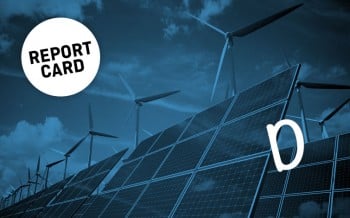
    Climate Change Policy – Report Card

    Result: D- Little real engagement on climate. Promised little but delivered even less: ‘dog ate my climate policy’ not a valid excuse. Avoided a ‘fail’ by scraping in Climate Act) The Fine Gael/Labour coalition government did manage to pull off one headline act that had eluded the previous FF/Green administration, and that was they managed to get climate legislation, of sorts, on to the statute books for the first time ever. In its 2016 Annual Report on the Programme for Government, this fact is trumpeted as burnishing the ecological credentials of an administration that has, over the last five years, shown a strong aversion to what husky-hugging UK prime minister David Cameron once memorably called “that green crap”. The reason is hardly a mystery. Both IBEC and the IFA are among the lead industry players who have lobbied tirelessly to ensure any climate actions that should emanate from the Cabinet table would be so diluted as to be worthless. And, with Fine Gael in particular basing its entire political pitch on growth-at-all-costs, nothing that looked like slowing that gallop was ever going to be entertained. IBEC and the IFA have lobbied tirelessly to ensure any climate actions tabled would be diluted “The recently enacted Climate Action and Low Carbon Development Act 2015 builds on existing efforts to decarbonise the economy and places the Government’s adaptation efforts on a legal statutory footing”, according to the Annual Report. And those “existing efforts” would be what exactly? ‘The Act provides for a National Mitigation Plan which will specify how we will achieve our objectives as well as a National Climate Change Adaptation Framework which will provide a strategic policy focus”, it goes on to say. This Mitigation Plan has been safely kicked into that distant place known only as “later in 2016” – somewhere safely beyond the shores of this election. Back in February 2011, Fine Gael and Labour jointly published their Programme for Government. Its section dealing with climate change ran to all of 95 words, including the promise to deliver a Climate Change Bill, which “will provide certainty surrounding government policy and provide a clear pathway for emissions reductions, in line with negotiated EU 2020 targets”. The section also promised legislation to give the relevant ministers temporary powers over the State’s response to what it calls “natural disasters”. This was at least prescient, given the unnatural number of weather-related disasters that have occurred in the term of the outgoing government, up to and including the severe winter flooding that – yet again – recently plunged much of the Shannon region into chaos. The last, brief, section in this 2011 document promised to “further improve energy efficiency for new buildings, with a view to moving towards zero carbon homes in the longer term. All new commercial buildings will be required to significantly reduce their carbon footprint”. By ‘further improve’, this presumably meant, at the very least, maintaining the progress of the outgoing FF/Green administration regarding energy efficiency in the building sector. How has this one measurable commitment worked out? One of the widely accepted successes of the previous government was its home-retrofit programme. In 2011, some 67,500 homes underwent an energy overhaul under the scheme. By last year, under FG/Labour, this had plummeted, to just 21,600 energy retrofits. Indeed, efforts by the atrocious outgoing Environment minister Labour’s Alan Kelly to stymie local authorities from pushing towards ‘passive house’ standards speaks volumes for the “green crap” mentality that has pervaded the Cabinet since 2011. To be fair, the writing was on the wall from the outset. Take a section in the 2011 Programme for Government under the heading ‘Peat’. First off, the incoming administration magisterially granted “an exemption for domestic turf cutting on 75 National Heritage Area sites subject to the introduction of agreed national code of environmental practices”. What, you might wonder, is the value of a bog being designated as a National Heritage Area when the government signs off on this free-for-all before even taking office? Soothingly, they went on to promise to “establish an independent mediation to resolve outstanding issues associated with turf cutting on blanket bogs”. It would be unfair to single out the private contractors and their political accomplices for sole mention in this regard. Three woefully inefficient peat-burning plants in the midlands only remain open thanks to the Public Service Obligation (PSO) levy on electricity bills siphoning some €120 million a year into these plants – that’s around €2.5 million a week in subsidies to produce the dirtiest, poorest grade and most ecologically damaging form of energy possible. In 2014, this State-supported madness exceeded the total PSO support for the production of clean electricity using renewable energy. The Climate Mitigation Plan has been safely kicked into that distant place known only as “later in 2016” Meanwhile, the government has extended the life of these monuments to parochialism and incompetence by another 15 years, which is nicely timed to coincide with 2030, by which time Bord Na Mona will have completed its decades-long assault on some of Europe’s richest ecological regions, as well as what used to be our most efficient carbon sinks. Quite where this fits with the government’s new climate legislations that “builds on existing efforts to decarbonise the economy”, it’s difficult to even begin to fathom. To understand the true objectives of the 2011 Programme for Government, it’s necessary to look elsewhere. For instance, under the section headed ‘Growing the agri-food sector’, the seeds of the agri-steamroller later known as Food Harvest 2020 are clearly set out: “Further expansion and innovation in our dairy and meat sectors will be a key priority under a reformed CAP and we will work with industry to achieve more intensive levels of production”. Note the blunt language above. Such sly euphemisms as “sustainable intensification” hadn’t yet entered the lexicon of spin – this was a straightforward declaration of expansion and intensification. Later in the same section, it mentions that Bord Bia will be given a number of marketing

    Loading

    Read more

  • Posted in:

    The life and Crimes of CJH

    There is something quaint about Conor Lenihan assessing the life of Charlie Haughey, the man who stole money from the fund for his father’s liver transplant and then fired his father as Tánaiste and Minister for Defence. Lenihan has pieced together a mixture of his own memories of the former Taoiseach and anecdotes that his father, Brian Lenihan senior, passed on to him. Because of this, the reader inevitably looks for evidence of personal bias on the part of this author and it is certainly a particular, personal work. This is a distraction because these characteristics import a significant source of new material, and new perspectives on old material. Nevertheless the media do not seem to have embraced Lenihan’s approach and strangely this book has not been reviewed in the mainstream press. The book is easy reading if patchy. Lenihan of course has a pedigree of grandson, son, brother and niece of TDs and, as a famously boisterous quidnunc he exploits it – all. Lenihan opens by admitting, nay boasting, that it is rare that an adult life is heavily influenced by an historical figure, but that his was, by Haughey. The moral compass of the book spins unpredictably. It often lionises Haughey but also assiduously maintains another Lenihan-centred narrative which actually surfaces only sporadically and peaks in intensity with the sacking of Lenihan senior and with the loss of his bid for Áras an Uachtaráin weeks later. The most poignant page in the book is the last one, the sole appendix, which reproduces the letter from Haughey requesting the resignation of Lenihan’s father. It begins “A Thánaiste, a Aire” and proceeds to threaten that if he does not resign that Haughey will request the President to terminate the appointment. An underpinning of authorial disdain is surely being implied. Lenihan reprises a lacklustre recitation of the Small Man’s biography: son of a Free Stater, Lieutenant in the FCA, North Dublin ward boss, marriage to Lemass’s daughter, reforming minister, arbiter of taste (here Lenihan is too kind). But consistent hypocrite supporting Archbishop McQuaid’s banning of Edna O’Brien’s ‘The Country Girls’. The man from TACA, the 1960s Christian Brothers’ Boy in mohair suits doing the social rounds in The Shelbourne, The Hibernian, Jammet’s, The Russell and Groome’s. So far, so well-known. Lenihan explains the realpolitik forcing Lemass to offer Haughey the Finance Ministry and Blaney the Agriculture Ministry leaving Lynch to see off Colley (59 votes to 19) and become Taoiseach. A brisk narrative on the Arms Crisis foreshadows Haughey’s first fall. Lenihan believes Lynch “knew much earlier than he insisted that weapons were to be purchased” but “backed off and decided to blame the entire fiasco on those ministers, and Captain Kelly”. Haughey, Blaney and Gibbons were “briefed at every step of the way, if not by Captain Kelly, then by the Army’s Head of Intelligence Colonel Michael Hefferon”. Still Lenihan is perplexed as to why “Lynch opted to put those involved on trial in the courts” and adds ‘my father always said that the main person pushing for a prosecution was George Colley”. Haughey’s return is well done. He enlisted Reynolds and his country and western caucus and was back as a Minister in Lynch’s government by 1975. Haughey’s pretensions rose ever greater: “Some preferred the Mercedes but Haughey felt the Jaguar cut a greater dash, with its leather seats and inlay”. Meanwhile back in the city Haughey’s constituency machinery cranked out cheques and Christmas turkeys. In summer there was a charity gymkhana (in aid of the Central Remedial Clinic!) with marquee and CJH in riding gear with Lady Valerie Goulding, silver trays and matching teapots on the lawns of Kinsealy. By 1979 he was leader of Fianna Fáil and Taoiseach. Lenihan notes (in a sentence that in fairness he appropriates from Haughey’s Wikipedia entry, that: “Within days of his becoming Taoiseach, Allied Irish Banks forgave Haughey £400,000 of a £1,000,000 debt. No reason was given for this. The Economist obituary on Haughey (24 June 2006) asserted that he had warned the bank ‘I can be a very troublesome adversary’”. Haughey’s 1980 Ard Fheis was “like a Baptist revival meeting rather than a political conference”. Then GUBU set in in 1982. Lenihan surely veers towards the unedifyingly bizarre as he reveals that a contact of his in the Tory party told him that Haughey was “the first person to compliment Mrs Thatcher on her legs” at the Anglo-Irish summit which spawned Lenihan senior typically ponderous invocation of “the totality of relationships”. Haughey’s interventionism over the liver transplant for Lenihan senior in the Mayo Clinic is narrated scrupulously with Haughey ordering Paul Kavanagh who fundraised €270,000, though “no more than €70,000 was spent”, to divert the balance to Haughey and his Charvet shirts (though Lenihan, being a Lenihan, is much too practical to care, or even mention, the fetish for haute couture). Lenihan recounts with palpable pleasure how Haughey survived the 1991 challenge from Reynolds (55 votes to 22). Haughey lived through his dissection by the Moriarty Tribunal and died of prostate cancer in 2006 before he could be prosecuted. Homely depictions of Lenihan’s mother and her friends debating the ethics and sexiness of early Haughey mingle with Lenihan’s recollection of how Brian Lenihan senior’s hopes that Fianna Fáil might not campaign against divorce were dashed by Haughey. Other anecdotal references sometimes, though not always, seem tailored to elevate the perspicacity of the author’s dad but also give the book a beguiling sense of Lenihanesque intimate authority – as when he reveals that he acted as an informal intermediary for Albert Reynolds in the early 1990s, though he was a working journalist. There is charming colour too as when for example he captures the private sides of De Valera and Lemass, or remembers a bottle of whiskey placed at Jack Lynch’s setting at a dinner in the late 1960s being consumed in the course of an evening. He reveals that his father and Ray Burke, of all people, agreed to fill out their ballot papers the same

    Loading

    Read more