The need for austerity in economies with debt overhangs like Ireland’s has not been disproved by the recent study – Constantin Gurdgiev (interloper)
by Village
The need for austerity in economies with debt overhangs like Ireland’s has not been disproved by the recent study – Constantin Gurdgiev (interloper)
by Village
Ireland needs Unions that represent the public interest: not unethical and Social-Partnered pay-day monkeys – Constantin Gurdgiev
by Village
Ireland’s cosy social partnership means we’re doomed to low growth and unserviceable debt – Constantin Gurdgiev
by Village
Bleed the rich? Ireland boasts the most progressive income tax system in the EU for single earners and the fifth most progressive for married couples – Constantin Gurdgiev
by Village
Bleed the rich? Ireland’s tax ratio of 33.9 per cent is five per cent below the EU average, leading to low-to-average public spending – Tom McDonnell
Posted in:
by Village
It failed to write down Ireland’s key private-debt overhang and so pawns our future to duopoly banks – Constantin Gurdgiev
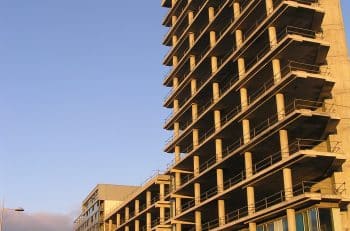
“The people who got us into this mess in the first place are not the people to get us out of it”. [David McWilliams, Irish Independent, 19 November 2008] This is the most pertinent advice from any journalist since the simmering economic crisis boiled over. In general, however, a crushing absence of credibility infuses Ireland’s newsrooms. The proverbial elephant in the room remains unfathomably neglected. Media analysis shares the blame for the current economic predicament between the central boom profiteers – what Fintan O’Toole calls “a triangular relationship between politics, development and banking”. The glaring omission is “the media” itself. The media inscribes this triangle, putting it at the virtual helm of the property boom titanic. Media and Property sectors linked Few will dispute that “the Irish media for the last 10-15 years have had a crucial economic stake in a rising property market”. For instance in July 2006 the Irish Times bought the property website MyHome.ie for €50 million and three months earlier Independent News & Media acquired PropertyNews.com, the “largest internet property site on the island of Ireland”. It is uncontroversial then to say that a deflating property bubble is bad for business. However, this relationship between media and business is not a simple one. It is inconceivable that the media, a wildly disparate group of individuals working in a variety of organisations, all with differing codes of practice and economic and ideological objectives, conceived a plan to inflate the property bubble. So if we discount collusion and mere chance, there must be something else. Symbiosis One element of this relationship that could be considered unhealthy is the seeming interdependence of journalism, government and big business. This is no more evident than in the property sector. Estate agents and developers are not only consulted as experts, they themselves file copy. Take for example the Ken MacDonald, veteran Managing Director of Hooke and MacDonald, purveyors of lower-end apartments, and long-term advocate of the relaxation of architectural standards for new homes. He was described by Sunday Independent property editor John O’Keeffe as the “Elvis of apartments and new homes” who “may not yet be able to turn water into wine – but you get the feeling it’s only a matter of time”. As late as March 2007 Mr. MacDonald was hilariously assuring Sunday Independent readers: “I am totally convinced that the market is currently in good shape and that anyone buying now will do extremely well in the years ahead … the Irish love affair with property will continue undaunted despite the knockers”. The Irish Times’ Environment Editor and development expert Frank McDonald wrote how from one month to the next he would be in Sicily to interview one of Ireland’s leading property developers and then Ibiza to attend the birthday party of architect and old friend John Meagher, at which tax exile and part-time developer Denis O’Brien made “the speech”. This cosy relationship is perhaps why developers are incessantly described as “affable”. The term is ubiquitous in the Irish Times and Irish Independent – when capturing the essence of our development Titans. So in these pages, Michael Taggart is the “affable Derryman”, Sean Dunne the “affable but tough former ordnance surveyor”, Joe Moran the “affable Kerryman”, Bernard McNamara the “affable presence in the Fianna Fáil tent” and Seán Mulryan the “affable but shrewd businessman”. The fact this cosy circle of élites exists doesn’t suggest back patting or unprofessional favour. It simply underlies the common interests and shared ideology that constrain media discourse and ultimately billowed the expanding bubble. Futureshock: Property Crash Take for instance RTE’s documentary Futureshock: Property Crash, broadcast in 2006 and presented by Richard Curran and his “Econo-Witches”, as they would later be dubbed. The programme explored the potential problems that might occur if the property market followed the boom-bust scenario of other countries – a timely and important thesis which had rarely been seriously considered in the media. Recent praise of the programme neglects to mention the media’s widespread “outrage” towards RTE’s “sensationalist shock tactics” and “lurid predictions”. The Irish Independent claimed RTE had “broadcast fear” and accused it of trying to “kill the property market”. The Irish Times suggested the programme was responsible for the “big decline in house-building”. It was “perversely irresponsible” according to the Sunday Independent’s Alan Ruddock. Clíodhna O’Donoghue reported on the “irresponsible, partly inaccurate and wholly sensationalist” programme. Marc Coleman, who now, in an absurd self-promoting ad, touts as one of the few prescient soothsayers and then the Irish Times economics correspondent, stated: “We are not on course for a property crash, unless we choose to manufacture one with irresponsible comment.” Other journalists simply found it “difficult to take too seriously”. The Broadcasting Complaints Commission however found that the programme “achieved an overall balance of argument”. Following the wave of criticism readers were comforted with fantastic predictions: “Far from an economic storm — or a property shock — Ireland’s economy is set to rock and roll into the century”. The “Pessimists” There were of course dissenters. It is certainly not the case that the Irish media was completely resistant to contrary views. They were however few and far between. In late 2006 Morgan Kelly, professor of economics at University College Dublin, writing in the Irish Times stated: “Compared with income, rents have actually fallen since 2000. The fact that rents have fallen shows conclusively that our housing boom is a bubble, pure and simple. A soft landing is not so much unlikely as contradictory”. A definitive statement from an authoritative and independent expert on the subject, yet the following month, as consumers returned from their holiday break, Arthur Beesley, the Irish Times’ Senior Business Correspondent reported that “the Irish Auctioneers and Valuers Institute (IAVI) is predicting a soft landing for the residential market in 2007.” Marc Coleman reassured potential buyers “All will be well – if politicians don’t meddle in the property market,” warning however that there would be a “gentle correction in the early year before a recovery”. And