Economy

Random entry RSS

  • Posted in:

    Debt’s dominion

    By Sinead Pentony. Is Ireland’s level of debt sustainable? The Troika drew attention to our high public debt in their final review of Ireland’s bailout programme. The first few weeks of 2014 have seen good news on Ireland’s cost of borrowing on the bond markets and the decision by Moody’s ratings agency, after all the others,  to upgrade our grading to ‘investment grade’. We also have modest, but consistent improvement across a number of key economic indicators including GDP, employment growth and unemployment, giving us reason to hope that the worst may be over.   These recent developments are leading some to think that the crisis is fading. On closer inspection, the improvements in the bond markets are not necessarily due to an improvement in the fundamentals of the Irish and Eurozone economies, and have probably been influenced by the ECB’s decision to introduce an Outright Monetary Transactions (OMT) programme in 2012. Mario Draghi’s “whatever it takes”, did the trick; investors believe the ECB could and would counter rising spread by buying up debt. So where does that leave us with the current levels of debt and more importantly, the sustainability of that debt? Chart 1 illustrates the scale of the debt we are carrying (117% of GDP in 2012) compared to other European countries (EU average, 85% of GDP in 2012). The IMF projects that our debt will have peaked in 2013 at 124% of GDP and decline to 112% by 2018. Many commentators make the case for using GNP as an economic indicator as it more accurately reflects Ireland’s economy and the large multi-national sector. Calculating our debt levels using this indicator brings our debt-to-GNP ratio up to 145% in 2012; and using this measure in Chart 1, our debt levels are the second highest in the EU and much closer to Greece’s.  Using existing GNP forecasts, our level of debt will be in the region of 150% of GNP for the next 3 years.     It is important to remember that we put €64 billion into the banks, approximately €42 billion of which was borrowed. Our current (public) debt is €205 billion, which means that over 20% of our public debt is a result of the bank bailout, where private bank losses were transferred to the taxpayer. These figures don’t include NAMA loans of just over €30 billion. It is not clear if NAMA will break even, make a profit or a loss in the future. However, the exchequer will be liable for any shortfalls in the future. The re-engineering of the IBRC (Anglo) promissory notes in February 2013 improved Ireland’s underlying general government balance by just under €1 billion, but it’s important to remember that this deal included no capital write-down but focussed instead on reducing the interest rate and extending the period of repayments from 7-8 years, to 30-40 years. Adding in private (household and corporate) debt provides a more complete picture of the true scale of the debt burden on the Irish economy. Private household debt remains very high, at almost 200% of disposable income which is just over 100% of GDP (€172 billion). Debt associated with corporate/business sector is measured through ‘non-financial corporation debts’, which are estimated to be 195% of GDP (€318 billion). While a large portion of debt is associated with multinationals and the financial services industry, it also includes SME debts. The total debt in the Irish economy is estimated at €695 billion, which is almost 420% of GDP.    This level of (public and private) debt in the Irish economy is one of the main reasons why growth is struggling to take root. Chart 2 illustrates how quickly our debt could rise even further if growth forecasts don’t materialise and the current nascent recovery experiences a ‘growth-shock’. For example, a temporary reduction in growth by two percentage points would result in our debt jumping to over 130% of GDP. Households and businesses are rightly focusing on paying down debt, which is limiting spending in the domestic economy and investment in businesses. There is also evidence of households and businesses that are in a position to borrow, not being able to access credit, which is compounding the lack of demand in the domestic economy, and further dampening growth.     Meanwhile, an ever increasing proportion of our taxes are going towards servicing the public debt at the expense of investment in infrastructure and public services such as health and education. The cost of servicing the national debt increased from €2.1 billion in 2008 to €8.1 billion in 2013 – that’s a four-fold increase in debt repayments within five years. To put the scale of the debt burden in context, the total budget for the Department of Education is €8.8 billion. It would cost just over €3 billion to introduce a universal system of early-years education and childcare; and it would cost less than €500 million to introduce free GP care for all, abolish prescription charges for medical card holders and expand community and long-term care. The evidence suggests that growth is likely to be adversely affected by high debt ratios, and continuing fiscal consolidation will undermine growth in the absence of offsetting policy stimulus. Ireland’s future potential for growth in output and employment is currently constrained by the fact that we have the lowest level of investment as a proportion of GDP in the European Union. Investment in social, human and physical capital is a key component of medium-term economic growth which is a key ingredient for making debt sustainable. The economy itself is not generating enough income to bring down debt levels without compromising investment in human and physical capital and public services. Action is required on a number of fronts to make the level of debt more sustainable and to create a virtuous cycle of growth: • At EU level, definitive action is required to break the link between banking and sovereign debt (including legacy banking debt) and measures should be put in place to write-down

    Loading

    Read more

  • Posted in:

    Good god, Google.

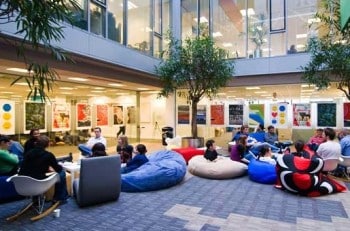
    By Ronan  Lynch. Administration and ‘process’ not innovation drive Irish operation It’s been a bad twelve months for Google. It began with the growing awareness of Google’s tax avoidance, and continued with Google being forced to deny that it participated in the PRISM spying project. It also suffers ballooning  costs and falling  ad rates. So Google doubtless welcomed the summer movie ,The Internship, which portrays Google as the world’s best workplace. Google boss Sergey Brin puts in a cameo appearance, and the Google logo is omnipresent. Forget the story – but check out the funky sleeping pods, brilliant minds at work, the working rooms that look like playgrounds, the free food, slides between floors, and the bicycles for getting around the ‘campus’.   The icon of Google as super-employer is pervasive. A recent RTE news report from Google’s Irish headquarters on Barrow Street in Dublin finds normally reticent George Lee marvelling at his surroundings on the eleventh floor. There are “pretty funky sleeping pods, cowprint rugs, beanbags and snooker tables and a whole lot more,” gushes the economics hardman. “It really is some workplace”.   Google has been in Ireland since 2003, and employs close to 3,000 workers. In 2012, it earned worldwide profits of $10.4 billion on the back of revenues of $50.2 billion. Revenue from Europe, the Middle East and Africa is channelled through Google Ireland Ltd ,and on to Google Ireland Holdings which is based in Bermuda for tax purposes. In 2011, Google paid a little over €8 million in taxes in Ireland on revenues of €12.5 billion. It’s little wonder that the company targets so much emphasis on its reputation as a great employer, but is Google the glamorous employer of popular apprehension?   Some former Google employees and contractors with significant experience at the company think not. Permanent staff are well taken care of, they say, but even many permanent staff are overqualified, overworked, and perform relatively menial tasks. In addition, entire layers of hidden contractors and temporary workers do much of the work without the benefits or opportunities accorded to permanent staff.   The area around Barrow Street is sometimes referred to as ‘Silicon Dock’, a nod to the importation of ‘Silicon Valley’ values to Ireland. Writing in the London Review of Books, Rebecca Solnit observed that “Silicon Valley has long been famous for its endless work hours, for sucking in the young. for decades of sixty or seventy-hour weeks;…and the much celebrated perks on many jobsites – nap rooms, chefs, gyms, laundry – are meant to make spending most of your life at work less hideous… The tech workers, many of them new to the region, are mostly white or Asian male nerds in their twenties and thirties”.  So how does Dublin measure up as a high-tech wonderland?   For a start, the imputation ‘high tech’ may be inaccurate. Much work in the Irish ‘high tech’ sector is actually customer service work requiring language skills. Google’s Irish operation deals mainly with advertising sales and technical services, handling Google’s business in Europe, the Middle East and Africa. One former Google employee estimates that 20 to 30% of the permanent workforce is Irish. The remaining 70% to 80% are hired abroad and re-locate to Ireland. (Google did not respond to inquiries about the make-up of its Irish workforce.)   For its permanent staff, Google generally hires people who are educated to Masters level, and for most of its employees, Google is their first job after graduation. “The pay is okay, median level for the industry, but you can make an extra 20 to 40% in bonuses”, says a former employee. “The people hired by Google are the best in their classes: alpha personalities, highly competitive and highly driven. Most people would come from an arts or business background. In Ireland, they probably hire mostly from Trinity and UCD. There’s class politics at the heart of this all. It’s very difficult for someone who doesn’t come from a middle-class background to end up working for a tech giant as they select from the top universities. Even with a great degree from one of the ITs, most multinationals won’t look at you, as they are looking for graduates of the ‘best schools’ in the country”.   After working for Facebook, US enterpreneur Jeff Hammerbacher acidly observed that “The best minds of my generation are thinking about how to make people click ads”. At the Dublin headquarters, Google’s employees learn how to use internal software systems, and then start working on dealing with incoming emails and checking ads to see if they meet internal guidelines. They also work on copywriting and editing. It’s one of the reasons that employees eventually move on if they can’t move up.   There’s a reason for all the free food and benefits beyond sheer magnanimity, says the former employee. “In principle, the working hours are from nine to six, with an unpaid lunch hour, but I was regularly going home at nine or ten at night. It’s what’s expected. If you go home at six and everyone else goes home at nine, it’s noticed”. The on-site restaurants and free food encourage workers to stay in the building. “At first it sounds brilliant. Free food! But it minimises the time away from work. On paper, you have an hour’s lunch break, but you end up grabbing something to eat and going straight back to work without leaving the building”.   A decent balance of working time and outside life is prejudiced as a result, he says. “So, you have 70% of the people coming from abroad, they don’t know anybody else here in Dublin. There is a collegial atmosphere and people share houses and flats and their whole social life revolves around Google. The culture is such that you work till late, go home, switch on your computer and check your email to communicate with your colleagues in America. It consumes your life without you realising it”.   Having worked at Google

    Loading

    Read more

  • Posted in:

    Denis to Dermot (Village imagines)

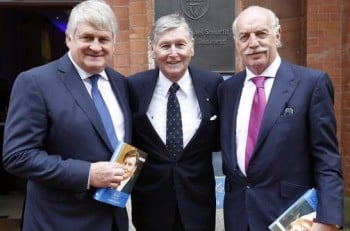
    Dear Mr Desmond, You never go to Davos.  Why’s that then? I’ve been going for more than a decade, cruising in on the old Gulfstream. I love to put myself about. I had them eating out of my hand with my clever stock tips: “I am positive about 2014, but it will not be like 2013 in terms  of S&P 500 index gains”, I told Bloomberg in one of my rare but exciting interviews. “Of course, I told them,  “politicians are the biggest hurdle facing the global economic recovery”. Now you and I both know what  I meant by that.  Give an elected member an inch and they’ll be right up your  ileum trying to get an inquiry or tribunal into you. “They are more and more worried about their re-election than  growing their economies”, is how  I put it. Meanwhile “’I’ve been investing heavily in Ireland because I believe in it”.  You and I, Sir, believers. The  green jersey. Love the new look Sunday Business Post, by the way.  Was that your  idea, the green bits on the cover?  If a man can’t show his patriotism by insisting on green bits on the cover of a newspaper, what’s this great little country come to? How’re you doing for cash? See you netted almost €180m from the sale of your stake in listed online payments and money transfer group Optimal Payments – a near eightfold return on his investment in little over four years. Personally, I’ll be getting a dividend of around $650m from Digicel in 2014. I’ll invest about $500m (€369m) in infrastructure for it in 2014.   We won’t be floating it for a while. Meanwhile we’re borrowing another more than €360 million from the capital markets to cover general company spending. See, I’m bloody determined to keep the telecommunications business outside Europe,  due to “failed” regulation. By that of course, as you well know,  I mean tribunals. Give me Burma any time.   But it didn’t stop me in early February becoming the fourth largest player in the UK radio market after buying eight stations from Global Radio in a deal worth £35million after they were forced to sell off by competition regulators following acquisition of GMG Radio. We’ll be adding  eight stations with a combined audience of 2.8 million listeners.   We’re  looking at other opportunities, including China. We have 4,000 people working for us in China in recruitment.  And not one of them’s ever been before  a tribunal.   Someone who should be in front of a tribunal is that Declan  Ganley where he gets his funding is even more  obscure  than the amount I’ve given Fine Gael down  the years.  Malicious Ganley  and his nasty little last-coming consortium are suing Esat, over the  ssecond mobile licence. It’s as if they actually believe the Moriarty report that Lowry interfered with the tender process to ensure Esat would be awarded the licence and that he accepted payments   from us. High Court – a ring of steel of course – ruled Ganley  doesn’t  have to cough  up security for costs to pursue his action since essentially he was loaded.  I’ll show  him loaded.   I’m on the verge of buying €304m worth of loans linked to Topaz and its mouth-watering 330 service stations across Ireland, as part of a big loan auction from IBRC. IBRC are great sports of course: they wrote off around €100million in debt belong to Siteserv, before I bought it for €45million even though an underbidder offered more – while I owed Anglo hundreds of millions.  Hate Anglo of course  after how they treated Seanie, my mate.   Those eejits in Broadsheet.ie, with their anti-everything smartarsery moved quickies to remove a typically begruding piece about me written by an anti-austerity protester that had been doing the rounds on social media. It suggested several allegations – which it didn’t stand up in the article – about Siteserv and Irish Water. A subsidiary of Siteserv is one of the companies that recently won contracts as part of the rollout of water meters. “It is outrageous that you should seek to impugn an investment by Mr O’Brien . . . in a struggling Irish business (Siteserv) that had the effect of saving jobs”, we thundered and they folded.       Sorry to hear about the depositions you’re giving in the  Paul Siegel defamation  case but a classic stroke getting it upgraded to federal racketeering.  According to the Irish Times your man “has admitted setting up meetdermotdesmond.com, a no longer active – deo gratias – website lampooning you”.   Fair game for you to file details of a restraining order taken out by Siegel’s former  and text messages he allegedly sent to his daughter, as well as details of alleged altercations involving Mr Siegel and his children following his recent divorce. Lovely touch Mr Desmond when this little fellow referred to his own “tenacity” to refuse to back down  to his threats and to tell him after dealing with you you’ll “know the meaning of the word tenacity”. Brilliant and right  out of the  Denis O’Brien book of witticisms.   So this whoor’s defence regarding the website is that it constitutes humour and satire, and that he had a right to publish it under the liberal free speech laws of the US. We’ve all a lot to lose if satire takes hold, Mr D.   See you in Twickenham.   Denis pic – thanks, Broadsheet

    Loading

    Read more

  • Posted in:

    Ireland’s employment problem

    By Sinead Pentony ‘Employment in construction is now just 37.5% of its June 2007 level but increased by 51,300 over the last six years in the areas of health and social work, information and communication, and education’. ‘The main policy measures aimed at increasing employment include the Action Plan for Jobs which aims to have 100,000 more people in work; the Ireland Strategic Investment Fund which is to be funded with €6.4 billion from the National Pension Reserve Fund; and JobsPlus’. As we prepare to exit the bailout and wave goodbye to the Troika in mid-December, they have highlighted three big issues that have yet to be resolved – elevated levels of unemployment, high public debt, and banks’ growing non-performing loans. I will take a closer look at the first two issues over the next two editions of Village. The Troika may be leaving Ireland but the unemployment crisis is on-going. Unfortunately, unemployment crises are nothing new to Ireland. The unemployment rate currently stands at 13.9% (200,700 people). Over the last 30 years (1982-2013) unemployment has averaged over 11%, which represents a huge loss to the economy, lost opportunities for thousands of people and enormous social costs for society. Ireland experienced one of the biggest increases in unemployment of the 34 OECD countries between 2007 and 2012, as shown in Figure One. Long-term unemployment (unemployed for over 1 year) is currently 8.1% (175,000 people), which means the long-term unemployed make up almost 60% of the total number of people who are unemployed. There are signs of improvement. The number of job losses appears to have levelled off and there has been a modest increase of 33,700 people in work over the last 12 months (June 2012 – June 2013). While this is positive, it still represents a decline of 277,400 jobs from June 2008. Ireland experienced the third largest fall in employment levels over this period, after Greece and Spain, as shown in Figure Two. The sectors most affected by the crisis are construction, industry, and administrative and support services. Employment in construction is now just 37.5% of its June 2007 level. Industry and administrative and support services have fared better, with employment levels of 79% and 73%, respectively, for the same period. In contrast, employment increased by 51,300 over the last six years in the areas of health and social work, information and communication, and education. While any improvement in the employment figures is to be welcomed, this is not at a level that is going to solve the unemployment crisis in the short term. The employment rate in Ireland currently stands at 60%, which falls far short of the EU Commission’s Europe 2020 Strategy employment target of 75%. The biggest issue is that there are not enough jobs available. Ireland adopted a mid-range 2014 employment rate target of 69-71%. This was combined with a commitment to focus policy on addressing weak labour demand; putting in place incentives and stimuli to increase employment within enterprises; addressing long-term unemployment; and improving the levels of skills and education in the working-age population. The main policy measures aimed at increasing employment include the Action Plan for Jobs which aims to have 100,000 more people in work over the life-time of the plan; the recently announced Ireland Strategic Investment Fund (ISIF) which is to be funded with €6.4 billion from the National Pension Reserve Fund; and a range of initiatives aimed at incentivising employers to take on unemployed people e.g. JobsPlus. These are important measures to boost economic growth and job creation, but many of the initiatives are relatively new, which means it will take time for the effects to be seen in the employment figures. The policies aimed at increasing growth and jobs are also not sufficient to deal with the scale of the unemployment crisis, nor are they sufficient to off-set the damage that has been done by a budgetary strategy that has taken €28 billion out of the Irish economy since 2008. Policies aimed at increasing employment are complemented by policies that support unemployed people back into work and ensuring the workforce is equipped with the skills and training required in an advanced economy. These policies, commonly referred to Active Labour Market Programmes (ALMPs), are crucial to reducing structural unemployment (an over-supply of skills in the construction sector and an undersupply in the ICT sector) and achieving a high rate of employment. Pathways to Work sets out the programme of reform. The central element of these reforms has been the establishment of Intreo. This merges employment services and benefit administration into one-stop-shops, providing a single point of contact for all employment and income supports. A key aspect of the Intreo service is its case management approach and the development of a personal progression plan, which is in line with international best practice. Unfortunately, the new Intreo service only covers new jobseekers, which means that the vast majority of unemployed people have no access to Intreo supports. While the number of caseworkers is increasing, the average caseload currently is approximately 800 jobseekers, which is very high by international standards. This raises serious questions about the quality of service that can be delivered. A person-centred approach to labour market activation also requires highly skilled case workers. There are challenges relating to the skills and training of case workers who need extensive knowledge of the social welfare system, employment opportunities, education and training, work programmes and how to provide guidance to people with a varied range of skills and qualifications. An active labour-market service that supports a move towards a high level of employment also needs to develop tailored supports for people who often find themselves at the back of the jobs queue because employers perceive them to be less productive, or because they cannot easily combine work with their other responsibilities. This includes people from ethnic minority backgrounds, those with long-term health conditions, people with disabilities, younger and older people, mothers, and people with few or no formal qualifications. The EU

    Loading

    Read more

  • Posted in:

    Strong Irish growth in 2014 will not be sustained We have catastrophic debt and structural problems Constantin Gurdgiev

    With employment rising, property prices on the mend, mortgages arrears stabilising, Exchequer returns surging and business and consumer confidence regaining pre-crisis highs, Ireland might easily be mistaken for an Asia-Pacific economic dynamo. Alas, once the official hullabaloo about the return to growth is stripped back to the bare facts, it becomes clear that Ireland is entering a new age, the Age of Great Stagnation. The reasons for this are two-fold. First, we are still facing a long-term debt crisis. No matter what statistics are pulled out of the hat, this crisis, embodied in high levels of debts carried by our households, non-financial companies and the Exchequer, is going to be with us for many years to come. Second, we are still in a structural growth crisis. Neither our own development model, heavily reliant on Foreign Direct Investment and transfer pricing by the multinationals, nor our core trading partners’ growth models, reliant on fiscal and financial repression to drag themselves out of the crisis, are sustainable in the long run. In our leaders’ dogmatic adherence to the past (a behavioural fallacy that economists call path-dependency), our official growth theory suggests that economic recovery in our major trading partners will trickle down to Ireland’s national accounts. Alas, in the longer run, a lot is amiss with this thinking. For starters, the exports-led theory of growth is simply not valid. 2000-2013, Ireland led the euro area both in growth and in recession. Since the onset of the crisis, cumulative real GDP across the euro area has contracted by 2.1 percent. In Ireland, over the same period, GDP fell by 4.7 percent as domestic drivers for the crisis overpowered external factors. As for the recovery period: unlike in the early 1990s, the improving economic fortunes abroad have not done much good for Ireland’s exports so far. Over the last four years, the volume of imports of goods in euro area countries grew by almost 15 percent. Irish exports of goods over the same period of time rose just 2.2 percent. The reason for this is structural. Tax arbitrage only works as long as there are profits to move through the Irish tax system. Once the profits dry out, arbitrage ends. The pharma sector is a good example of this dynamic. Replacing goods-driven exports with services-driven Information and Communications Technology exports is decoupling our external balances from the real economy. Worse, much of our trade balance improvements in 2009-2013 was down to a collapse in imports. This presents a serious risk. To fund our public and private liabilities, we need long-term current-account surpluses to average above 4 percent of GDP, over the next decade or so. We also need economic growth of some 3-3.5 percent in GDP and GNP. Yet, to drive real growth in the economy we need domestic investment and demand uplifts. These require an increase in imports of real capital goods for consumption. Should our exports of goods continue the pattern, any sustained improvement in the domestic economy will be associated with higher imports. A corollary to that will be a deterioration in our trade balance. This, in turn, will put pressures on our economy’s capacity to fund its overwhelming debt. And given the levels of debt we carry, the tipping point is not that far off the radar. In the first half (H1) of 2013 Ireland’s external real debt (excluding monetary authorities, banks and FDI) stood at almost USD1.32 trillion – the highest level ever recorded. Large share of this debt is down to the Multinationals. However, overall debt levels in the Irish system are still sky high. At the end of H1 2013, total real economic debt in Ireland – debt of the Irish Government, excluding Nama, Irish-resident corporates and households – stood at over EUR492 billion: down just EUR8.5 billion on absolute peak attained in H3 2012. Which brings us to the second point raised in the beginning of the article: our economic, regulatory, monetary and political dependency on the euro area. Instead of charting our own course toward sustainable long-term competitiveness, we remain attached at the hip to the euro area. The latter is now gripped by Japanese-style, long-term stagnation with no growth in new investment and consumption, and glacially slow deleveraging of its own banks and sovereigns. Financial, regulatory and fiscal repressions are now dominating euro-area agendas. All of the trade growth in the euro area today comes from the emerging and middle-income economies outside the euro bloc. And competition for this trade is heating up. Even Portugal, Greece and Spain, not to mention Italy are posting positive trade surpluses and these are projected to strengthen in 2014. Meanwhile, we remain on a slow path to entering new markets, despite having spent the better part of the last 6 years talking about the need to ‘break’ into BRICS and the emerging- and middle-income economies. In the first three quarters of 2012, Irish exports of goods to BRICS totalled EUR2.78 billion. A year later, these had dropped to EUR240 million. We are also missing the most crucial element of the growth puzzle: structural reforms. Since 2008 there has been virtually no change in the way we do business domestically, especially when it comes to the protected professions and state-controlled sectors. Legal reforms; restructuring of semi-state companies and the sectors where they play dominant roles, such as health, transport and energy; and reductions in the costs and inefficiencies in our financial services; are just a handful of areas where promised reforms have not been delivered. Instead of reducing the burden of monopolistic competition in key domestic sectors, we are increasing it. In banking, the oligopoly of three domestic players is being reinforced by exits of international banks and a lack of new entrants into the market. In line with the dearth of transformative changes in state-controlled sectors, there is little innovation in the ways the Government approaches fiscal policies. Taxes and charges are climbing, while spending continues to run ahead of pre-crisis trends. On a cumulative basis, 2008-2013

    Loading

    Read more

  • Posted in:

    Non-violence demands veganism

    By Frank Armstrong ‘The term “gatherer-hunter” is less often used although more accurate’. ‘On a moral level, all animal use is the same. It is wrong’ ‘I believe that human beings can tolerate a small amount of animal flesh in their diet but there is no NEED for it’ What prompted you to become a vegan? In the late 1970s I was active with the British Hunt Saboteurs Association and other ‘sabs’ gave me literature about other “animal issues” such as vivisection, circuses, and factory farming. Having read up about the latter issue, I did not turn to vegetarianism, as many do, but went vegan within 3 months. How has the vegan movement changed since then? There was a Vegan Society in those days but no vegan movement as such. There is currently a serious if uneven push to establish veganism as the moral baseline of the animal advocacy movement – or at least the rights-based part of it. However, in the 1980s we were all involved in single-issue campaigning and virtually no-one talked about veganism as a philosophy about violence or a campaign in its own right. How do you feel about vegetarians? From a vegan perspective, vegetarianism includes a form of animal use. Having said that, many people argue that vegetarianism is a “gateway” to veganism. Many animal advocates who were vegetarian before vegan report their regret that they were ignorant, often for many years, about how eggs and dairy are produced. It should also be remembered that veganism is more than just diet, one that is wholly plant-composed. It includes an overarching philosophy about human relations with other animals, each other, and the planet on which we live. Some feel that vegetarians and vegans are on the same journey. However, the philosophical positions of vegetarians and vegans are different: the former opposed to animal use, the latter not opposed to animal use. So they are not really saying the same things about human/non-human relations. Is there a contradiction between animal rights and animal welfare? Yes. The crude distinction can be said to be the difference between treatment and use. Essentially, animal welfare is about improving the conditions of other animals who are used for a variety of human purposes, while animal rights opposes the human use of other animals. Moreover, the property status of other animals compromises welfare initiatives on their behalf. Why should we care so much about animals when there is so much human suffering in the world? We should care about ALL the suffering in the world, and the issues are interlinked. Veganism is essentially about non-violence. A vegan world should mean less violence in terms of human/non-human relations and human-human interaction. Research data on the vegan animal-advocacy community indicates that the majority of people in it are employed as carers, teachers, doctors, etc in the service sector, rather than in the private sector, which tends to belie the stereotype that “animal people” care nothing for humanity. We can and should care about all sufferers. We have been eating meat since time immemorial. Is it natural for us to go without it? I believe that human beings can tolerate a small amount of animal flesh in their diet but there is no NEED for it. Although we may be able to tolerate a modest amount of animal flesh in our diet, there is sustained evidence that the amounts consumed in “developed” countries are damaging to human health. There is a question about whether humans are “natural” herbivores or omnivores. Dr Milton Mills argues that we are, physiologically, the former. Increasingly the term “cultural omnivorousness” is being used to describe our practice of eating animal flesh and other animal products. There is quite a lot of ideology behind such questions. For example, we tend to adhere to a picture-book image of “early Man”, armed with spears, surrounding and killing a mammoth or whatever. The term “hunter-gatherer” is used commonly, including in sociological textbooks. The term “gatherer-hunter” is less often used although, quantitatively, that would be much more accurate. A modern term used to describe early humanity is “forager”. In ideological terms, however, we prefer to think of ourselves as skilful and brave hunters, rather than more akin to scavengers. What do you say to someone who is advised by a doctor to eat meat for their health, if say, they are low in protein, iron or vitamin B12? The glib reply is “change your doctor”. Many people are deficient in B12 – it is not, however, a problem confined to the vegan part of the human population. Vitamin B12 is derived from bacteria, so plant-based sources are available. There are several long-term (30-year-plus) vegans who have never supplemented their diet with any synthetic vitamins, although the general recommendation is that they should. There are plenty of plant-based sources of both protein (vegetables, grains, beans, nuts, lentils, etc) and iron (nuts, green leafy vegetables, wholemeal bread, some fruits, etc): indeed, some claim that plant-based sources are superior to others. What should happen to the millions of domesticated animals if we give up animal husbandry? They will not exist, certainly not in the huge numbers that they do now – billions. We need to understand that humans deliberately breed these animals in order to exploit them. There is, for example, a large industry in artificial insemination here in Ireland. In a vegan world, we would stop breeding them, so there would be a phase-out period. I think a vegan society would be prepared to fund sanctuaries for the bred animals that exist at the time. However, it would have to prevent them from naturally procreating, which raises ethical questions. There is also the possibility that some domesticates may well be able to exist as free-living beings. Is it consistent for a vegan to own a cat or a dog? Assuming that the vegan in question is an adherent of animal-rights philosophy, then no. Having said that, many vegan animal advocates care for other animals. At the

    Loading

    Read more

  • Posted in:

    Loving that property tax (Oct 9)

    Taxes can serve all sorts of positive policy goals including redistribution through a tax on property, which constitutes three quarters of private wealth. by Michael Smith   Learning to love property tax requires a perspective on the purposes and types, of taxation. The purposes of taxation include financing government spending; and promotion of greater equality, reduction in the use of harmful goods and the protection of local enterprise. There are three main types of tax: on incomes, on consumption and on wealth. Particular taxes include income taxes, PRSI, consumption taxes like VAT, capital gains taxes, capital acquisition taxes, wealth taxes, property taxes, water taxes, corporation taxes, transaction taxes like stamp duty, excise duties like tobacco taxes, and pollution taxes. In Ireland there has for long been an unimaginative over-emphasis on income and consumption taxes. For example, despite the on-going high levels of unemployment, income tax in 2012 made up 42% of the total tax yield compared with 27% in 2006 at the height of the boom. This creates a problem since high rates of income tax tend to impede job creation. As a result, Budget 2013 introduced base-broadening measures which are considered to be less damaging to economic recovery and job creation than income-tax increases. This magazine believes in government spending to promote high quality of life, in the promotion of radically greater equality and in the reduction of pollution, especially greenhouse gas emissions. Taxes to those ends must be supported and we should all have a vision of where the tax burden should fall. There should be a balance of all the forms of taxes cited above, with no tax overwhelmingly pre-eminent. Capital gains and acquisition taxes, wealth taxes and pollution taxes should be far more widely deployed in a society where equality and sustainability are driving goals. All the other taxes should play strengthened roles, perhaps especially – since the abolition of domestic rates, wealth taxes. Wealth is as sure, indeed surer, an indicator of riches, as income.  As such it should be taxed scrupulously. Perhaps the primary reason for not so doing has been the ease of collection of income tax – at least from PAYE taxpayers. A property tax is an, admittedly somewhat imperfect, surrogate for a wealth tax. The main strategy to reduce the pressure on income tax in Budget 2013 was the introduction of the Local Property Tax which is expected to yield €250 million in 2013 and €500 million from 2014 onwards. €250 million is the equivalent of just a 1% increase in the standard rate of income tax. There is clearly therefore scope for increase. So when people talk about taxing wealth in this country, they are talking principally about taxing the homes that we live in. According to economist, Ronan Lyons, “In Ireland, as of 2006, deposits made up 10% of Irish wealth, equities a further 8%. Pension and investment funds – wealth holdings of unknown type but likely to be a mix of mainly equities and bonds – made up a further 11% of wealth. But it was property that was the overwhelming type of wealth in Ireland, making up 72% of all wealth. The vast bulk of this was residential property. And that picture is not likely to have changed substantially with so much of Irish equity wealth being invested in the banks, which are now all next to worthless. So when people talk about taxing wealth in this country, they are talking principally about taxing the homes that we live in. In second place comes taxing the deposits we have in the bank. Make sure to mention this to the next person who says ‘We don’t need a property tax, we need a wealth tax’”. Lyons himself argues that a property tax should take the form of a ‘land value tax’ on the unimproved component of land – encouraging owners of land to optimise its use, since they are paying tax as if they have already done so. If such a tax is linked to proper zoning and planning it can be used to steer high-quality, well-planned development, so improving quality of life. Economists note too that such a tax does not deter production, distort market mechanisms or otherwise create deadweight losses the way other taxes do. This is presumably why a commitment to such a version of the property tax was in the coalition’s programme for government. Difficulty in explaining the concept ie feeble-mindedness led to its supersession. Property taxes, such as the one now being imposed, that include the value of buildings on land are less efficient, since they are, in effect, a tax on the (desirable) investment in that property. Even so, they are less likely to affect people’s behaviour than income or employment taxes.  Almost any tax is better than income tax since that taxes the ‘good’ of work, not some ‘bad’ like underuse of land or pollution. Economists like property taxes since, in an efficient capital market the burden of property taxes is borne by owners of capital across the economy; and since capital owners tend to be richer, the tax is likely to be progressive. Furthermore property taxes are a stable source of revenue in a globalised world where firms and skilled people can easily move. They are also less prone to cyclical swings. US state and local governments have seen smaller recent declines in property taxes than in other forms of revenue, largely because the valuations on which tax assessments are based were adjusted more slowly and less dramatically than actual prices. Property taxes may even restrain housing booms by rendering it more expensive to buy homes for speculative purposes. According to publicpolicy.ie’s Jessica Worth, the following are some of the advantages of the  Local Property Tax being imposed in Ireland: *    The economic impact is expected to be relatively small since a recurrent tax on residential property is deemed much less distortionary than a tax on income or capital. *    It is a reliable, sustainable source of revenue. Revenue

    Loading

    Read more