Environment

Random entry RSS

  • Posted in:

    Greens need a wellbeing prenup.

    Quality-of-life indicators guarantee good policies and, crucially, implementation that can save Eamon Ryan from allegations of unrealism. By Michael Smith. The danger: farce When Napoleon III, nephew of the dictator Napoleon Bonaparte became dictator of France himself in 1851, Karl Marx wrote: Hegel remarks somewhere that all great world-historic facts and personages appear, so to speak, twice. He forgot to add: the first time as tragedy, the second time as farce. The problem: last marriage didn’t work out The Green Party, which was married to Fianna Fáil from 2007-2011 (and the PDs up to 2009) is in danger of entering a farcical re-marriage to Fianna Fáil and Fine Gael. If you’re marrying someone you think isn’t into you, you should get a detailed and watertight pre-nup.  Especially if you were married to them before and it didn’t work out; and they’ve been making nasty comments about you for years. Unfortunately, as they endlessly but secretively progress their formal talks not on nuptials but on a programme for government, there is no suggestion on a strategic level the Greens.  have remembered that the age-old and continuing problem with Fianna Fáil and Fine Gael and the environment is they are often happy to make promises and even to provide new measures, it is just that they do not provide for their enforcement. If the Greens do not adjust their capacity for realism there is a danger they will split. Worse, at the moment, the split on offer – between Catherine Martin,  Deputy Leader and Eamon Ryan, Leader – isn’t even on ideological grounds.  The Greens, who can often be soft-minded seem to be  teed up for a silly contest pitting the need for loyalty to a lovely fella on the one hand against the need for someone who’s a woman and not (deepdown) from Dublin 4 on the other; without particular reference to efficacy, radicalism or lessons learnt. The solution: “credible” quality of life indicators The Greens already failed to plant the ball in the open net Fianna Fáil and Fine Gael left them when those parties notably committed in their framework document for coalition of 15 April to “credible” quality of life indicators. Indicators means measurements of success. It has long been established that environmentalists best achieve both a) the full breadth of their quality of life agenda (also known as a wellbeing or sustainability agenda)  and b) its enforcement, through up to 100 of these indicators which replace GDP as the gauge of society’s success. This agenda is well recognised by the UN, OECD, EU and others. The point is that it covers a multitude including reduction of emissions and protection and enhancement of biodiversity; and a full range of other environmental and of social and economic indicators that are established progressively, rendered as targets and systematically monitored. If the targets are flouted the pre-nup kicks in dictating divorce. Environmentally you might have climate, biodiversity, balanced rural development, numbers, quality and mix of new housing etc. Socially you might have equality of income and wealth, employment rates, imprisonment rates, implementation of Sláintecare etc. Economically you might have growth, inflation, household and national debt etc. …A hundred indicators in total. What else? Official buy-in including from Finance Department Through these, enshrined in a programme for government and with buy-in from top civil servants and the Departments of Finance and the Taoiseach, the Greens should establish, and guarantee implementation of, radical policies and standards. The Greens’ current approach: following up 17 questions The letter from Eamon Ryan to the bigger parties of 23 April, following up the big parties’ framework document, did duly outline that such indicators should “shape the economic recovery”. But that suggests he sees them as secondary to the economy and there is no mention of them in the 17 questions included in the letter or, inevitably then, in the nice flexible follow-up letter from the bigger parties of 28 April. Unlike other Green parties, interestingly the Irish Greens down the years, even in their constitution, seem never to have embraced the centrality – promoted by the UN –  of sustainability and quality of life. Then again the Greens also left out biodiversity – remember we’ve lost 60% of vertebrate animals in the last fifty years and it’s supposed to be the second most important issue for them – from their questions. They’re making it up, you know. Many commentators, who know nothing about the environmental agenda, assume the Greens are big policy wonks.  Environmentalism is a bit off the track for the sort of journalists who become respected political commentators in the Irish Times and Business Post.  They don’t want to do any research about whether the Greens have good policies or indeed how they did when they were in government from 2007-11 and they don’t want to be mean to this new agenda and its sunny leadership.  So they assume the Greens are masters of policy. A recent profile of Eamon Ryan in the Business Post and another assessment by Harry McGee in the Irish Times on whether the Greens ‘played senior hurling’ in government, fall into this category. If you have a reputation  for getting up early you can sleep until noon. The Greens were no good at policy when they were in government 2007-2011 and they are not good at it now.  Of course most of the other parties are worse. The Greens’ history: underachievement I’ve been around long enough to be aware how little the Greens achieved in coalition from 2007 to 2011. We need only to look at the statistics on what sort of impression they made on the guts of their agenda. Planning If we had planning legislation that worked we wouldn’t have continued to build one in four houses one-off in the middle of the countryside and allowed  Dublin to sprawl all over Leinster when the ideal, and even the national planning strategies, required channelling development away from Dublin into other cities and rural towns.  Biodiversity and transport We did not arrest cascading

    Loading

    Read more

  • Posted in:

    GREENS CAN OWN THE NARRATIVE FOR A NEW GOVERNMENT:

    By Dr Peter Doran, Katherine Trebeck and Dr Tony Shannon. WELLBEING ECONOMY AGENDA FOR PEOPLE AND PLANET “Country marks a commons of earth and elements: a shared ecology of lands and waters”. (Richard Kearney and Sheila Gallagher, 2017) The Green Party may be lining up as relatively junior partners in the new government formation but the Atlantic wind is at their backs when it comes to owning and leading the narrative for a pioneering post-pandemic recovery that places a holistic vision of ‘wellbeing’ at the centre of a new programme for government.  In doing so, the new government will find allies in an emerging alliance of wellbeing economy leaders in New Zealand, Iceland, Scotland and beyond. These countries’ leaders have been to the forefront of the response to the pandemic and they will also pioneer transformations for mid- to long-term wellbeing economies as part of a Wellbeing Economy Government network (WEGo). We are calling on Ireland to join other leaders in the Wellbeing Economy Government (WEGo) partnership so that Ireland can collaborate in learning how to ensure its economy works for people and planet: building a new economy fit for the 21st century. We are calling for all government outcomes and budget calls to be measured against agreed wellbeing outcomes with the full participation of all ministers, departments and agencies.  New Zealand’s Prime Minister, Jacinda Ardern, has already placed intergenerational wellbeing goals at the heart of her Government’s programme. Ardern says fundamental values pursued by the New Zealand Government are empathy, care, compassion and collaborating for the common good.  In her thought-leading book ‘Doughnut Economics: 7 ways to think like a 21st Century Economist’, Kate Raworth explains:  “For over 70 years economics has been fixated on GDP, or national output, as its primary measure of progress. That fixation has been used to justify extreme inequalities of income and wealth coupled with unprecedented destruction of the living world. For the twenty-first century a far bigger goal is needed: meeting the human rights of every person within the means of our life-giving planet”. Those profound challenges that Covid-19 herald, offer an opportunity to society, to now build back a wellbeing economy instead of reverting to the same old structures: ‘building back better’ rather than returning to business as usual. Building on ‘The Great Pause’ The  new Irish government looks set to emerge during this ‘great pause’ in the global economy. The unthinkable has become the imperative. In our homes, our workplaces, and places of education we have been on an enforced retreat, a time of reflection on what is most important to us. Connections with friends, family and colleagues have never appeared more important. The hidden, under-valued and intimate economy of regard and care – exemplified by the contributions of workers in hospitals and care settings. They are our new super-heroes. Nature has taken a breather, skies have cleared of urban pollution, and climate change emissions are on their way down. Foxes are reclaiming the night streets.  Design is the first step to a new system. This applies to our economic systems just as surely as it applies to architecture, so it applies to the way in which we produce our food, our shelter and other necessities.  Our societal and ecological crises are, at root, a crisis of value. This moment of pause has brought increasing clarity to the things we value most, we now see how valuable food, health, income security, education, mobility, access to nature, social connection and public services are to us. Our fixation on other measures of value, such as the relic of GDP, does more to obfuscate than inform such vital policy decisions.  The root cause of our multiple challenges – of inequality, access to adequate shelter, universal health provision and the climate emergency – is how the economy is currently designed – in a way that does not balance the needs of people and planet and in a way that values measures such as short-term profit and GDP, rather than those broader values that are key to a decent society. These economics structures are design choices from the past – and hence can now be reconsidered and redesigned, for the future. Building Back Better The negotiations on the formation of a new government present a unique opportunity to (re)consider the policies required to ‘build back better’ so that, rather than our society remaining in service to our economy, our economy must serve us and our societal and ecological wellbeing. With international allies in other thought-leading nations shifting towards wellbeing, these negotiations present the next Irish government with a once-in-a-generation opportunity to advance society via positive disruption to the economic status quo, shifting to ‘build back better’ while easing back on the gears of an economic machine designed for another age.  We can live well and flourish with some boundaries. In fact some limits are strangely liberating.  Signatories Katherine Trebeck, Advocacy and Influencing Lead Wellbeing Economy Alliance; Co-author: The Economics of Arrival: Ideas for a Grown Up Economy; Senior Visiting Researcher University of Strathclyde | Honorary Professor University of the West of Scotland. katherine@wellbeingeconomy.org   Dr Tony Shannon, Ripple Foundation, Dublin, Ireland  tony.shannon@ripple.foundation Dr Peter Doran, School of Law, Queens University Belfast; Advisory Committee, UK What Works Centre for Wellbeing; Wellbeing Economy Alliance; Co-Convenor of Northern Ireland Roundtable on Wellbeing (with Carnegie United Kingdom Trust) (2014-2015). Author: A Political Economy of Attention: Reclaiming the Mindful Commons. p.f.doran@qub.ac.uk Reference:  Ten principles for building back better to create wellbeing economies 

    Read more

  • Posted in:

    Progressive but a little light on policy and not hard-minded enough. The Green Party again tees up its conscience with a somewhat deficient set of questions for the establishment parties.

    By Michael Smith. Green Party leader Eamon Ryan has set out a ‘Green New Deal’ and 17 questions in a six-page letter sent to Fianna Fáil and Fine Gael on Wednesday in response to their framework coalition document The 17 “questions” are: Will you commit to an average annual reduction in greenhouse gas emissions of at least 7 per cent? Will you commit to an ambitious programme of development of, and investment where necessary in, renewable energy infrastructure including off-shore wind, grid and interconnector upgrades and community energy projects? Will you commit to ending the issue of exploration licences for offshore gas exploration? Will you commit to ceasing the construction of new fossil fuel infrastructure, particularly LNG import terminals that could allow the entry of unconventional liquefied natural gas into the Irish energy mix? Will you commit to the exclusive provision of public housing, social housing and cost rental housing on public lands? Will you commit to prioritising urban renewal in line with a ‘Town Centre First’ model? Will you commit to a comprehensive deep retrofit programme as part of a programme for government? Will you commit to convening a social dialogue process representative of all key stakeholders with a view to developing of a new social contract? Will you commit to working towards ending the Direct Provision system and replacing it with a not-for-profit system based on accommodation provided through existing or new approved housing bodies? Will you commit to setting us on a clear and certain path to meeting our UN obligation to spend 0.7pc of our national income on Overseas Development Aid? Will you commit to the development of a national land use plan which will inform both the new national economic plan and the new social contract? Will you commit to rebalancing our transport infrastructure spend, dedicating at least 20pc of infrastructure expenditure in transport to cycling and walking and ensuring that other public transport infrastructure investment is allocated at least two-thirds of the remaining infrastructure budget? Will you commit to establishing a trial of Universal Basic Income (UBI) within the lifetime of the next Government? Will you commit to the revision of the existing National Development Plan so that we can meet our New Social Contract goals and climate change targets? Will you commit to a review of the State’s response to the Covid-19 pandemic, undertaken by the Oireachtas, to enable us to learn lessons for the future? Will you provide a clear and detailed analysis of how your Joint Framework Document is to be financed? Will you commit to publishing and implementing a Green Procurement Policy? The questions posit a remarkably incomplete policy agenda for a Green Party. Greater quality was clearly needed in replying to a very loose document from Fianna Fáil and Fine Gael, one which included unacknowledged surprisingly progressive but waffly and incomplete agendas for “a new social contract”, “a new green deal” and “a better quality of life for all”, at its heart. There is no mention of equality in the questions. A basic income is a small part only of any modern equality agenda. It is unclear what a new social contract, a term used in the Fianna Fáil-Fine Gael document means. There is more mention of equality in the document outside of the questions, including a reference to the social contract “addressing inequality for all our people”, but little chance other parties or commentators will treat seriously imperatives that failed to make it into the headline questions. For some time now the Greens have been promoting “social justice” rather than economic equality. That is not the established term for radical movements towards equality. It’s a quainter and more opaque notion than equality, and sometimes rooted in Catholic doctrine. There are references to equality on several lifestyle and sectoral issues such as gender and race, but, despite acceptance of the need for “anti-poverty” “development” there is no reference to redistribution of wealth and income. It’s clearly not a part of the Greens’ agenda. Five of the seventeen questions relate to climate change. Four of them are filler – details on the headline question which is about guaranteeing 7% annual emissions reductions, and which to be fair they have properly emphasised. If the 7% is agreed the four other specific issues would inevitably be part of the means to that end. Their iteration suggests the Greens lack confidence in a fuller agenda. Many other conventional imperatives appear in the body of the text but in ramshackle and unclear forms so they are unlikely to be taken up by the bigger parties in this process. This is confirmed by the fact that the Greens forgot to mention biodiversity, the demise of species – after climate the vital second pillar of a proper green agenda – in any of the 17 questions, though there is an ambitious if airy-fairy reference to it in the body of the text of the letter. On planning they are looking for something that is already in place and not working – a national land use plan. Town-centre-first is scarcely a comprehensive description of a land-use planning strategy for a party for which planning is assumed to be central. They have not suggested how they propose to develop the encouraging willingness of the civil war parties, reported as the lead story in the Business Post of 23 April, to facilitate a referendum on the Kenny Report which dealt, in 1973, with the price of building land. There was no sign the Greens see the scope for a referendum that would facilitate plan-led development as well as simply keeping prices to current-use value plus 25%. In general the Greens seem, voguishly, to be emphasising delivery of affordable housing over planning for quality housing, though there approach remains better than that of other parties on the issue. On an overweening strategic level, there is no suggestion the Greens have remembered that the age-old and continuing problem with Fianna Fáil and Fine Gael and the environment is they provide

    Read more

  • Posted in:

    Green and Red: Ecosocialism and Ireland

    Ecosocialism promises more equitable social relations and less damaging, extractive technologies; a society that serves people rather than capital. by Niall Flynn Since survival of our species is at stake, all politics today, whether explicitly or otherwise, are ecological politics. Following this premise, all elections are now climate elections.  This, again, was supposed to be Ireland’s climate election, but it has not transpired that way. Health and housing have taken precedence, with climate in the back seat in much of the discussion happening around the country, as well as in the televised leaders debates. This may be traced to the fact that, as an article in Village claimed earlier this week, Ireland just does not get the environment. In this country, policy promises are broken and legislation goes unimplemented. Raising the problem of responsibility and obligation, the article by Village’s editor defends a progressive carbon tax through which “the richest corporations should be hammered but all of us should get a price signal”. In 2019, the ESRI published a report that showed how a well-designed carbon tax does not necessarily hurt poorer parts of society, and could in fact reduce inequality. The economics of carbon pricing remain contentious for now, retaining leverage across the political spectrum. In other words, the same mechanisms can be used to different ends: for right-wing environmentalism or for a progressive and equitable environmental politics. Smith suggests it is not clear whether Ireland’s Green party is of the left, and there is certainly a question mark as to whether we have an environmentalism in Irish life and politics today that understands how political, economic and ecological crises are entangled, and that works for normal, working people. With the current election campaign in full flow, it is worth focusing more on this. Free Market at a Crossroads Environmentalism has gone mainstream, with responses coming from diverse sectors of society. It is fair to say that forces like Greta Thunberg and Extinction Rebellion, and the mass media coverage they attract, have transformed the global political scene for the better.  In Ireland, many interest groups are offering their own manifestos on what climate action and policy in Ireland should look like. Often accompanying these manifestos is a critique of mainstream environmental politics. The Greens, for example, have come under fire for regressive taxation policy and for confused infrastructure plans. Even within the party, there is a struggle for policy direction, and differences around key topics like carbon tax and reducing the national herd. At the same time as environmental awareness is rising, institutions like the OECD and World Bank still believe in economic expansion, and seek to mitigate ecological disruption through technological solutions. Cracks in the system are beginning to appear as the realisation occurs that the dominant market power defended by these global organisations is necessarily challenged by ecological awareness and actions. Free-market capitalism has arrived, in disorienting fashion, at a crossroads. Mainstream Environmentalism Lacking Environmental politics in Ireland face a strong agricultural industry and a tax-averse populace. More troubling though is the political indifference that has emerged during this campaign. Lack of political will is the intractable barrier to sincere and concerted action on this fundamental issue.  Inaction on climate crisis is simply bad economics. More-than-decade-old warnings, such as the UK Government’s 2006 Stern Review on the economics of climate change, have not been heeded. Predictions about coming economic conditions continue to worsen, and all informed commentators agree a tardy response to climate crisis will far outweigh the costs of prompt and decisive action. Despite progress like the internationally leading Fossil Fuel Divestment Bill and innovative Citizens’ Assembly recommendations on climate action, Ireland is a poor performer in addressing EU and international ecological targets. The country is ranked low – and the worst in the EU – on the Climate Change Performance Index, which states that “near-term ambition needs to be ratcheted up quickly”.  Successive governments are not doing enough on this, and continue to fudge key issues like agriculture and transport. While the current government has gone further than predecessors, it is nowhere near enough. The target of reducing carbon emissions by 2% per annum should be at least 10% for the likes of Ireland, the Science implies. Nonetheless, General Election 2020’s party manifestos broadly represent more of the same: capitalism and incremental worsening of conditions. The major parties are wedded to market solutions and an economically-driven worldview. This is not adequate to the multiplying conjunctures of ecological crises. Looking to the UK, Labour’s recent General Election manifesto was a proportionate response to ecological crisis, which built upon principles of social justice and a vision of a radical Green New Deal. With the emergence of UK Labour as a force for social and ecological justice in their recent General Election, the UK Greens lost their central identity, and thus their legitimacy as an electoral force. Notwithstanding adroit politicians like Catherine Lucas, the Greens in the UK have been consigned to a fate of making minor, tokenistic manoeuvres without the ability to effect real change in the UK’s political landscape. In Ireland, however, the Greens still have a vital role to play. Indeed, Eamon Ryan asserts a strong agenda of ecological and climate action. At the same time, however, mainstream green politics are lacking teeth. Going forward, Ryan and his Greens must forcefully articulate a more radical, progressive environmentalism. This would supplant an environmentalism aimed at tackling individual patterns of consumption, which reproduces a neoliberal mindset.  A legitimate fear surrounding this dominant form of environmentalism is that impoverished people will bear the brunt of the costs of climate action. According to Social Justice Ireland’s Election 2020 Briefing, rural Ireland – with its low rates of meaningful work, and access to services and infrastructure – is particularly at risk from regressive climate action. Under current proposals, rural areas and agricultural communities would be disproportionately impacted by low-carbon policies and the push for green jobs. Conservative environmental policies also inform a media culture through which individuals become scapegoats for broader questions

    Loading

    Read more

  • Posted in:

    Still accelerating

    But it’s time to stop living for consumption by John Gibbons One of the innate limitations of living in any given era is the innate assumption that the way things are is how they have always been, and will continue, more or less, into the foreseeable future. In a time of rapid shift, such assumptions can be fatal. Over the last seven decades or so since 1950, the world has embarked on an era known as the Great Acceleration. In this era, the solution to every problem and the very goal of human endeavour all seemed to be the pursuit of growth and with it, ever-increasing standards of material comfort. At the dawn of this new age, in 1955, economist Victor Lebow wrote a stunningly prescient article for the US Journal of Retailing. His key insight was to realise that, for the first time in human history, industrial output exceeded public demand for products. “Our enormously productive economy demands that we make consumption our way of life, that we convert the buying and use of goods into rituals, that we seek our spiritual satisfactions, our ego satisfactions, in consumption”. He added: “we need things consumed, burned up, worn out, replaced and discarded at an ever increasing pace. We need to have people eat, drink, dress, ride, live, with ever more complicated and, therefore, constantly more expensive consumption”. While presented as though it were human nature itself, consumerism is simply a clever ruse dreamed up by marketing Mad Men charged with persuading the public to buy ever more stuff. Not in their wildest fantasies could Lebow and his colleagues have truly understood what forces they were unleashing on the world, and how, decades later, this spiralling global orgy of consumption would have trashed the planet to the point where it teeters on the brink of the ecological abyss. It was never just about consumption. To justify this spree, “we erected new politics, new ideologies and new institutions predicated on continuous growth”, according to author JR McNeill. Writing in 2000, he warned: “Should this age of exuberance end, or even taper off, we will face another set of wrenching adjustments”. Now, some twenty years later, instead of heeding the ever more insistent warnings from the scientific community that critical planetary thresholds were being breached, humanity has instead doubled down, further accelerating growth, consumption, resource depletion and pollution throughout our already stressed biosphere. The recent report from the UN’s Environment Programme (UNEP) on the parlous state of carbon emissions didn’t pull any punches. “The summary findings are bleak”, it noted. ‘Countries collectively failed to stop the growth in global greenhouse gas emissions, meaning that deeper and faster cuts are now required”. The report says that emissions have gone up by 1.5% every year for the last decade. In 2018, the total reached 55 thousand million tonnes of CO2 equivalent. The UNEP report noted that this rate of emissions will deliver a catastrophic rise in global average surface temperature of some 3.2ºC by the end of the century, if not sooner. The Intergovernmental Panel on Climate Change (IPCC) late last year set out in the starkest terms the dangers of allowing global temperatures to rise by more than 1.5ºC this century (they have already risen by just over 1ºC). To have any chance of meeting these targets, emissions need to be cut across every country, every economy and every sector by an average of 7.6% per annum, every year for at least the next decade. This would have to mean sharp declines in living standards across the entire developed world. Largely non-essential sectors, from aviation to tourism would need to dramatically contract over the next decade, as would the use of private cars and the consumption of all meats, including of virtually all red meat. The reality is of course that no government on Earth is planning anything of the kind, and even if some brave politician or party were to come forward with such an extreme austerity programme, they would face sure and certain obliteration at the ballot box. The science says that countries like Ireland need to drastically decarbonise every aspect of their economies, food systems and societies as a whole, or face ruin. Yet the response of our Taoiseach has been to talk up the merits of re-usable keep cups while half-heartedly rolling out a Climate Action Plan that was designed to fail. Meanwhile, Ireland’s Chief Scientific Advisor thinks some carbon-sucking technology is going to magically appear and somehow scale up to solve the greatest crisis in human history. Magical thinking used to be something we associated with hippies, dropouts and dreamers. Now, it’s what passes for policy among the ‘serious’ people like economists, politicians and senior public officials and advisors. We may not be lions, but we are assuredly led by donkeys. John Gibbons is an environmental writer and commentator @think_or_swim

    Loading

    Read more

  • Posted in:

    Taking Liberties

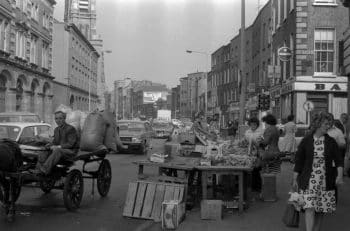
    An Bord Pleanála is anachronistically heedless to the heritage of Dublin’s most famous and vibrant working-class suburb by Kevin Duff THE LIBERTIES area is a special part of Dublin with a rich social and architectural history. Dating to the twelfth century, the area preserved its own jurisdiction although it was otherwise part of the city. Considered to maintain an authentic sense of historic and working-class Dublin to a greater extent than other parts of the city, the feeling is that great care needs to be taken in its development so as not to erase or further diminish these particular qualities. Following years of underinvestment, the area has seen an explosion of recent construction activity. While on the one hand repair of the area’s fabric is welcome, there is significant disquiet over the avalanche of new hotels, aparthotels and – in particular – student accommodation constructed in the past five years, and the parallel absence of construction and delivery of much-needed affordable housing in the area for locals or for those who wish to live in the area. As has happened in other parts of the city, the smaller artisan houses and terraces of the area have been attractive to young professionals for the past couple of decades, pushing prices up and contributing to housing shortage and unaffordability. Successful new additions to the area include the Hyatt Centric hotel on the Coombe, and the Maldron hotel, Upper Kevin Street, both of which are well-mannered and reinstate historic streetscapes in the vicinity of Saint Patrick’s Cathedral. The redevelopment currently underway of the Tivoli Theatre and adjoining carpark, on Francis Street, will provide a mixed-use scheme to include a cultural and performance space. There are plans to regenerate a 12-acre site at the Guinness Brewery as a new mixed, commercial and residential district. At Newmarket, where the market was closed and the Teeling Distillery opened, the restoration of the early-eighteenth-century house at No. 10 Mill Street as part of an adjacent new development provided a public gain in the rehabilitation of an historic building that had fallen into dereliction over two decades in Eircom’s ownership, and redevelopment of the square itself at Newmarket has commenced. Successful new additions to the area include the Hyatt Centric hotel on the Coombe, and the Maldron hotel, Upper Kevin Street, both of which are well-mannered and reinstate historic streetscapes in the vicinity of Saint Patrick’s Cathedral. The main streets of the Liberties are medieval in origin and the area is richly endowed with architecturally outstanding buildings, including Saint Catherine’s church, the former Fire Station on Thomas Street (now part of NCAD), John’s Lane church, and the Iveagh Market, Francis Street. Built in a neo-Palladian style in 1907, the regeneration of the latter is long-awaited and much concern has been expressed over the unnecessary deterioration of its fabric through a gross lack of maintenance. Owned by Dublin City Council and leased to Temple Bar publican Martin Keane, a sensitive redevelopment proposal for the complex was expected to include retention and rehabilitation of the adjacent nineteenth-century brick buildings of the former Mother Redcap’s pub and Winstanley factory on Back Lane, close to An Taisce’s headquarters where the tailors had their hall. Unfortunately a recent application provided for an eight-storey lump with facade retention only. Apart from its well known historic architectural landmarks, the Liberties, as a former industrial quarter, has an abundance of smaller-scaled buildings of interest – mills, pubs, malthouses and stores. However, poor planning decisions are routinely being made by the State appeals board, An Bord Pleanála, resulting in the needless destruction of this vital and understated component of the area’s built heritage. A recent case concerned an unlisted stone industrial building on Warrenmount Lane, off Mill Street, formerly part of a malthouse complex adjacent to the River Poddle. The building had sat for some years within a development site known as ‘the Tenters Site’ and had been identified by the conservation architects Shaffrey Associates as being of value and interest and worthy of repair and retention within the new development. An example of ‘urban vernacular’ architecture, it was envisaged that the building would form a marker or ‘gatepost’ at the western entrance to the new development. The building (or a previous building on the same footprint) is seen on the 1756 John Rocque map of Dublin forming part of a stepped street-line leading towards the early-eighteenth-century mansion Warrenmount House, a protected structure, which was later converted to a convent. The Tenters Site had been the subject of numerous planning applications for development stretching back to 2005, all of them providing for retention and integration of the stone industrial building within the new scheme. Building work finally got underway in 2016 and was largely complete when, out of the blue in March 2017, an application was made by the developer, BAM Property Ltd (of Children’s Hospital fame), to demolish the historic stone building. Demolition would extend to part of the adjacent, roofless, cement-rendered building, also visible on the Rocque map and forming part of the boundary wall with Warrenmount House. Objections were lodged by An Taisce and a local resident, citing the heritage value of the existing building and the planning precedents for its retention, but permission was nevertheless given by Dublin City Council. As a vital ‘safety valve’ within the system, An Bord Pleanála could generally be relied upon in cases like this where vulnerable built heritage was endangered, and so an appeal against the City Council’s decision was lodged by An Taisce with the aim of saving the building. The appeal arguments were straightforward: The building was characteristic of the Liberties and an example of historic stone construction and craftsmanship It provided a valuable link to and reminder of the area’s rich industrial past, and its retention would add value to the new development Its footprint was evident on maps going back to the mid-18th century It formed part of the historic laneway approach to and setting of the early-Georgian mansion, Warrenmount House, and

    Loading

    Read more

  • Posted in:

    Weather forecasts are horribly inaccurate.

    WEATHER FORECASTS were always things for older people, like manners and leaf tea. And indeed for olden days: D-Day was only possible because of some superhuman advance-weather-divining from a sage in Blacksod. Many of the ‘War’ generation seemed obsessed with the weather forecast, well beyond the point of refusing to acknowledge its shocking deviance. The weather forecast was the most tedious thing on television. Of course, in Ireland, you couldn’t make plans. Outside of sustained heat waves, no one in Ireland should plan a picnic or barbecue in advance. So you never did. I never cared. I just got on with it. Operationally, you just had to look at the sky when you got up out of your bed and assume it would last. Equally, in Ireland, there was always a good chance of grey. Like today only greyer. Beyond that it seemed pointless, and unyouthful, to speculate. But there are other decisions – a snap weekend away, a walk, dependant others to be born in mind, that may depend on an accurate weather forecast – and so with age you find yourself seeking comfort in experts. And when you pay attention you find they nearly always seem to get it wrong. It’s not that they get it wrong with hurricanes, snowstorms and heatwaves, it’s that they get it wrong – all the time – saying it’s going to shine, or rain, where you’re going to be. The first thing to notice, even before they get it wrong, is that they smother you with ambiguity, those beguiling, soothing-tongued prognosticators: ‘Sunshine and scattered showers, in the West’. ‘Partly clear becoming cloudy, with a risk of rainspells, in the afternoon’. ‘Fine becoming fair’ It means nothing. Words like ‘should’, ‘possibly’, ‘probably’, ‘may’, ‘likely’, ‘some’ and of course ‘occasional’ compound the cloudiness. Getting it wrong is the weather forecaster’s speciality. One study found that when television meteorologists in Kansas predicted that there was a 100 percent chance of rain, it didn’t rain at all a third of the time. On the evening before the worst storm to hit the UK for almost 300 years, the BBC’s well-liked Michael Fish proclaimed on the night of October 15, 1987: “Earlier on today, apparently, a woman rang the BBC and said she heard there was a hurricane on the way. Well, if you’re watching, don’t worry, there isn’t”. There was; and gales at 115mph caused utter devastation across the southern half of the country, leaving 18 people dead, 15 million trees flattened, and damage of £2bn. Though his boss, Bill Giles – the lead forecaster for the station – took the blame for the mistake in 2011, the term “Michael Fish moment” is applied to public forecasts, on any topic, which turn out to be embarrassingly wrong. On September 29, 2016 the National Hurricane Center in Miami announced that Hurricane Matthew was nothing to worry about just before it exploded into a Category 5 monster that slammed Haiti, killing over 1,000 people before moving on to wreaking 30 mortalities in the US. In Ireland, during the big freeze of January 2010, Batt O’Keeffe, as minister for education, directed all schools to close for three days, based on a Met Éireann forecast of snow and ice. A thaw immediately kicked in, and he ignominiously rescinded his decision. Documents released under freedom of information to thejournal.ie a few years ago revealed widespread anger at this carry on in Ireland. Typical letters to the Met service were: “How can Met Eireann get away with wrong forecasts so much, I am baffled? If another service provider got it wrong so much, that service provider would be long gone… Met Eireann says one thing and the sky above our heads says another”. “What a joke. From forecasting that today would be mostly sunny yesterday to now saying it will be dull and cloudy. This is not forecasting, it’s nowcasting”. Some years ago Donegal County Council decided to start up its own weather-forecast website because RTÉ was reporting the north-west as a constant wash-out when Donegal had in fact had a scorcher of a summer. However, let’s be clear: the issue of regional bias is a different problem which I don’t want to get into (because it’s ludicrous). I’m talking here just about inaccuracy. Last year dodgy councillor and hotel mogul, Donegal’s Sean McEniff, threatened to sue Met Éireann for money lost by cancelled business. He instructed his solicitors to investigate the possibility of legal action against Met Éireann over what he claimed as an inaccurate weather forecast. Sadly he died shortly after the instruction. The main problem, it seems to me, is that the weather in Ireland is made over the seas, particularly the vast Atlantic ocean but also the Irish sea, and so varies over very small distances. If you live in Germany or Colorado there’s simply less sea to go around and you can see the weather coming. We’re also precariously positioned in a zone of complex transition between warm, moist air (sometimes of tropical origin) moving northwards and colder, denser, drier air (usually of polar origin) which is moving southwards. This is the devious and manipulative ‘polar front’ that ruins so many weekends. Nevertheless it is claimed, by those concerned only with the facts, that one-day forecasts have an average accuracy within 2 degrees, and that they predict rain (or a lack thereof) correctly 82 percent of the time. That drops to 70 per cent at three days, but even the seven-day forecast has a 50 per cent chance of being accurate. The UK Met Office does a 10-day forecast but – wisely, given its reputation – has ditched its seasonal forecasting which really never amounted to much more than hubris. In April 2009 the Met Office had unwisely issued a press release about the oncoming summer – “barbecue weather”. But it was a washout. A project at the 2018 Young Scientists Exhibition tended to absolve Met Éireann: two boys from Avondale Community School concluded that: “The

    Loading

    Read more