
Environment

Random entry RSS

  • Posted in:

    Referee!

    On-side Rugby is religion for Limerick. The city mercifully did not inherit the class exclusivity associated with the sport. In the latter decades of the twentieth century Munster victories, usually over Leinster, sustained Limerick’s morale in the face of prejudice. In gratitude its City and County Council has granted permission for a rugby museum which will shoehorn a seven-storey show-stopper into a Georgian streetscape. With a rugby hero and a billionaire philanthropist tax-exile fronting the project they have the public on side. Does the new class of money and celebrity overrule our planning laws? The Players A new sports museum for Limerick, was announced in December 2016. Its applicants were Rugby World Experience Ltd set up that same year with a registered address in Lucan, Co. Dublin. It has three Directors: Chairman Paul O’Connell, Paul Foley and Sue-Ann Foley. Former Ireland, Munster and Irish Lions captain Paul O’Connell, Limerick native, basso profundo, family giant, Lidl man of squeaky cleanliness is the perfect frontman. Paul Foley is a former Limerick City Council Senior Executive Officer in the Department of Economic and Planning Development. Sue-Ann Foley is the daughter of JP McManus. Limerick’s greatest/richest son, and Chair of the JP McManus Benevolent Fund. The Coach John Patrick ‘JP’ McManus, money-trader and gambler, hails from humble beginnings but has for 30 years been resident in tax-friendly Geneva, Switzerland, while retaining a suite at the Dorchester Hotel in London. He is a doughty force in Limerick, particularly in Limerick City and County Council which even has a hall named after his most famous horse, Istabraq. His charity has funded schools, palliative care units, and every type of local sports clubs. Any criticism against a JP McManus project in Limerick is an attack on Santa Claus. It is McManus’ €10m seed funding that is making this project happen. O’Connell has said the rugby museum was a notion put to him by JP McManus during his playing days, but the idea has gained momentum since he retired. The Dashing Out-Half An unexpected dash for Rugby World Experience was the commissioning of renowned London-based, Irish-born architect Níall McLaughlin, twice shortlisted for the Royal Institute of British Architects Stirling Prize. His work includes the extension to the National History Museum London, the Carmelite Prayer room in St Teresa’s Church Dublin and college buildings in Oxford and Cambridge. Try The museum would be of scintillating contemporary design with, it is hoped, a sensitive palette of materials, mainly brick in keeping with the Georgian aesthetic. However, the architect’s report admits that “the brick selection and brickwork quality will present a challenge and it may be decided to use precast panels”. High Tackle The proposal is for a seven-storey building, 32-metres high (the architect originally intended the tower to be 36 metres in height), with a two-storey portico fronting O’Connell Street, and a two-storey block to the rear. There would be a three-storey block built over the existing Fine’s Jewellers, at the junction of O’Connell Street and Cecil Street. Inside, the development would see the existing buildings’ 1335sqm floor area increased to 2787 sqm “multi-media visitor experience, exhibition and education space”, plus retail (81sqm) and café (83sqm) at ground-floor level. The scheme is context-free: a bold attempt to subvert an aesthetic built up over centuries by breaching the established building height on Limerick’s main street, its beating heart. The design also self-consciously does not replicate the Georgian fenestration rhythm perhaps in an effort to minimise the perception of extra floors. Spear tackle The plan involves the razing of 40 and 41 O’Connell Street, and of 1 Cecil Street, a corner site on two prominent streetscapes within Newtown Pery, Limerick’s Georgian area. The Beautiful Game Lewis’ Topographical Dictionary of 1837 called Limerick’s Newtown Pery “one of the handsomest modern towns in Ireland”. The historic Georgian city is an example of ambitious eighteenth-century Italian-inspired town planning whose integrity should be respected through the retention of the characteristic continuous heights and building-frontage alignment that contributes to a quality unrivalled anywhere in the world, albeit that it has been allowed to dilapidate. Substitution The buildings that stand in the way are not protected but are listed on the National Inventory for Architectural Heritage, an indication that national government thinks they merit protection. There have been some changes to them over the second half of the twentieth century, including the cement-rendering of the façade, the replacement of an earlier shop front and the blocking up of window openings on the side elevation. These could easily be removed. The off-side rule Both sides of this site sit within an Architectural Conservation Area (ACA), protected under Section 81 of the Planning and Development Act 2000-2008 which states that an ACA is: “a place, area, group of structures or townscape, taking account of building lines and heights, that is of special architectural, historical, archaeological, artistic, cultural, scientific, social or technical interest”. ACA protections extend to the carrying out of works to the exterior of a building within the Area regardless of whether or not it’s a protected structure. The aim of designating areas is to protect their “special characteristics and distinctive features” from inappropriate actions. The ‘Statement of Character and Identification of Key Threats’ set out in Chapter 10 of the Limerick City and County Development Plan 2010-2016 notes: “This ACA constitutes the core heart of Limerick City’s Georgian Heritage within the City Centre…The streets of Newtown Pery represent a unique example of eighteenth and nineteenth-century planning in Ireland…The streets leading to The Crescent and Pery Square conform to eighteenth-century town planning, defining the streetscape by their adherence to fixed proportions and ordered harmonious symmetry. They combine to form an architectural heritage of great urbanity and considerable beauty”. This appears damning for McLaughlin’s acontextual, proportionately unfixed, asymetrical and inharmonious effort. But the ACA statement goes on: “The irregularity which emerged in relation to the treatment of heights, facades, and type of buildings combined with the rigid street pattern gives Georgian Limerick a distinct sense of place…All of these

    Loading

    Read more

  • Posted in:

    Oxymoron

    By 2040 we expect that an additional one million people will live in Ireland, an additional two-thirds of a million people will work here. An ageing population and smaller family size mean that we will need an additional half a million homes to accommodate this growth. Project Ireland 2040 purports to address this. It consists of the National Planning Framework which sets out a spatial strategy for Ireland, to accommodate in a “sustainable and balanced” fashion these significant demographic changes. It is the overall Plan from which other, more detailed plans including city and county development plans and regional strategies will take their lead. Learning from past experience, the NPF is backed up by an infrastructure investment programme, the National Development Plan. This National Development Plan sets out the significant level of investment, almost €116 billion, which will underpin the NPF and drive its implementation over the next ten years. €91 billion in Exchequer funding for public capital investment has been allocated and will be supplemented with substantial investment by commercial State Owned Enterprises. This increased level of resources is expected to move Ireland close to the top of the international league table for public investment, from a low post-crash base. In short, the State’s infrastructure investment – the money – should be guided by and follow the Plan. That is what makes Project Ireland 2040 different and a significant innovation in Irish public policy. What is not different is that it does not have teeth, particularly to stop market-driven development that is incompatible with the vision. Project Ireland 2040 is about enabling all parts of Ireland to achieve their full potential. It seeks to move away from the current, developer-led, business as usual pattern of development, to one informed by the needs and requirements of society. This means seeking to disrupt trends that have been apparent over the last fifty years and have accelerated over the past twenty. It purports to aim to ensure that rather than have excessive population growth focused on Dublin – as is the current trend – that 75% of all population growth occurs in the rest of the country.The immediate priority is to increase overall housing supply to a baseline level of 25,000 homes a year by 2020, and then a likely level of 30-35,000 annually up to 2027. 112,000 households are expected to obtain social housing over the decade. A new €2 billion Urban Regeneration and Development Fund will aim to achieve sustainable growth in Ireland’s five cities – Dublin, Cork, Limerick, Waterford and Galway – and other large urban centres, incentivising collaborative approaches to development by public and private sectors. It aims to secure at least 40% of future housing needs by building and renewing within our existing built-up areas, whether they be in the many villages and towns in need of regeneration or in our cities and larger towns where there are also huge opportunities for city and town centre regeneration. Of course the corollary of this is that an unsustainable 60% of future housing need will be met on green-field sites. It targets a level of growth in the Northern and Western, and Southern, Regions combined to at least match that projected for the East and Midland Region. It will support the future growth of Dublin as Ireland’s leading global city of scale, by better managing Ireland’s growth to ensure that more of it can be accommodated within and close to the city. It supports ambitious growth targets to enable the four cities of Cork, Limerick, Galway and Waterford to each grow by at least 50% to 2040 and to enhance their significant potential to become cities of scale. It recognises the extent to which Sligo in the North West and Athlone in the Midlands fulfil the role of regional centres. It recognises Letterkenny in the context of the North-West Gateway Initiative and Drogheda- Dundalk in the context of the Dublin- Belfast economic corridor. It seeks to strengthen our rural fabric, by reversing town/village and rural population decline, by encouraging new roles and functions for buildings, streets and sites, and supporting the sustainable growth of rural communities, to include development in rural areas. That’s one- off housing. Anyone who follows this will see that there’s not much sense of anything being ruled out, and indeed almost everything seems to be ruled in. That suggests it won’t all happen. And the determinant of what happens and what doesn’t will, as usual, be the market – which will skew to Dublin and its hinterland, and of course one-off housing whose site costs are negligible (for those lucky enough to own rural land) but which pose difficulties for sustainability: economic, social and environmental. It costs more to service far-flung housing with broadband, and everything else. One might quibble with elements of the plan. Dr Edgar Morgenroth – Professor of Economics at DCU and a primary author of the document – said that plans for the €850m motorway between Cork and Limerick would undermine the proper growth of “second tier” cities in Ireland. He rejected claims by An Taoiseach Leo Varadkar that the motorway would encourage the cities to grow faster saying it would instead lead to sprawl. He told ‘Morning Ireland’ it was important “to put the infrastructure into the cities, not between them”. “Once you put the motorway between two cities what you’re doing is getting more sprawl. So you’re undermining your own strategy”, he said. Morgenroth also said that building a new motorway undermined a commitment by government to reduce carbon emissions. The NPF will also have “statutory backing” overseen, quasi-independently, by the new Office of the Planning Regulator (OPR) – a key recommendation of the Mahon Tribunal.   Unfortunately this particulator Regulator will not regulate but rather advise others whose motivation may be political and short-termist. A regulator who does not regulate. There has been much light-free heat, led by Sinn Féin which even claimed to be seeking a legal opinion, about the failure of the government to put the NPF to a parliamentary vote but instead to include

    Loading

    Read more

  • Posted in:

    Punker

    “Things can only get better”, went the lyrics to the hit by D:Ream which became the anthem of the incoming New Labour government in 1997, fronted by the relentlessly upbeat Tony Blair. Six years later, Blair joined the US in its illegal invasion of Iraq, a move that plunged the entire Middle East into a new era of violent instability and a refugee crisis that today, some 15 years later, shows little signs of abating. Things, it turns out, can also get worse. Statistics can, however, be schooled into presenting a beguilingly different picture of the true state of the world, and the darling of global optimism, psychologist and author Steven Pinker is a skilful inquisitor of data. His scholarship seems to have caught the zeitgeist of the latest wave of techno-optimism, and his data-fuelled Panglossian creed is being enthusiastically embraced by global influencers like billionaire Bill Gates. So excited were the editors of Time magazine that in January, for the first time in its more than 90-year history, it invited Gates to be guest editor of an edition, titled ‘The Optimists’. His editorial was essentially a re-heat of Pinker’s tome, ‘Enlightenment Now’, which, Gates gushed, was his “new favorite book of all time” and “the most inspiring book I’ve ever read”. High praise indeed. Gates’ benediction no doubt helped Pinker’s tome to become a runaway bestseller. What got the Microsoft über-nerd so excited is that: “this is not some naively optimistic view; it’s backed by data”. And Pinker cites data by the chartload, much of it undoubtedly painting an accurate picture of one species doing remarkably well. Life expectancy is a case in point. In just the last 28 years, the number of children dying before their fifth birthday has halved. Women’s and LGBT rights have made remarkable, if uneven, advances in recent decades. Fewer people are living in absolute poverty. Child labour, slavery and sexual abuse have not been eradicated globally but all indicators point towards major progress for millions of people. Catastrophic famines are rarer now; more people now live in democracies (Trump’s populism notwithstanding) than in all of human history and, while there are hundreds of deadly local and regional conflicts around the world, there are, mercifully, no full-scale wars between countries. Were an 18th or 19th century European to survey the region today, they would be astonished to find that the perpetually warring great powers – France, Italy, Spain, Germany, the Netherlands and Britain – have enjoyed more than 75 years of peace, co-operation and prosperity, with just occasional insults now being hurled at one another, where until quite recently, disputes were routinely settled with bloodbaths and pogroms. So, all’s well with the world, it seems. Another contributor to the Time special edition was the estimable investor and billionaire Warren Buffett. He waxed about the astonishing economic progress that swept across the US in the 20th century. No argument there. “The game of economic miracles is in its early innings. Americans will benefit from far more and better ‘stuff’ in the future”, he opined. At this point, it’s time to take a deep breath and a sharp step backwards. How can such heavy-hitters as Pinker, Gates and Buffett have possibly discounted or ignored the ecological train-wreck hurtling ever closer towards humanity? Pinker’s book does indeed grapple – after a fashion – with environmental limits, but it’s hardly encouraging that someone who prides himself on offering numeracy as the cure for biases then launches – unprovoked – into a biased jeremiad against the “quasi-religious ideology” that is what he disparagingly terms “greenism”. For someone regarded as among the world’s great thinkers, this is dull fare indeed. Undeterred, Pinker lashes out at this “apocalyptic creed” which he finds to be “laced with misanthropy”. Quite why it was necessary for Pinker to denigrate environmentalism becomes clear as the narrative unfolds. The vehemence of his anti-environmental rhetoric is in inverse ratio to his ability to address the profound critiques of his beloved ‘progress’ posed by the findings of climate and environmental sciences. He points out – correctly – that as countries get richer, they usually clean up their own rivers and ease local pollution. The fact that rich countries simply outsource much of their dirty heavy industries and ship their wastes to the ‘developing’ world is glossed over. Climate change of course does not respect national borders; faced with the quite over-whelming evidence from the physical sciences (and he frequently claims to be an advocate for science), Pinker baulks at what he dismissively calls the “tragic” view that humanity may well destroy both industrial civilisation and itself in the process. Pinker concedes: “humanity has never faced a problem” like climate change. Rather than ponder this existential threat, he instead brandishes the magic wand of eco-modernism and waves away the gloomy ‘eco- pessimism’ he and his billionaire fan club find so objectionable. He points out that global carbon intensity has been static or declining slightly in recent years. The atmosphere is, however, indifferent to such subtle points. All that matters are the gross numbers, and these continue to climb inexorably. Science tells us we have a finite and rapidly reducing global ‘carbon budget’. The only way of avoiding irreversibly smashing through this budget in the next 10-20 years is drastic, compulsory, permanent and deeply unpleasant cuts in carbon, starting yesterday. Per capita, the greatest carbon polluters on the planet are the global elite, billionaires like Gates and fellow Microsoft founder, Paul Allen. The latter maintains three very large ocean-going yachts at all times, so that one is always fully staffed and equipped close to wherever in the world he might happen to jet. That’s an awful lot of carbon to have to forego. The eight richest billionaires control as much wealth as the world’s poorest 3.7 billion people. Imagine then how pleased Gates will have been to read Pinker’s pronouncement that staggering and increasing wealth inequality is really not that big a deal. In common with Trump, Pinker also tries to blame the media for stoking “irrational pessimism” about the state of the world. I have long argued the opposite:

    Loading

    Read more

  • Posted in:

    Wicklow Manager bouncing Bray demolition

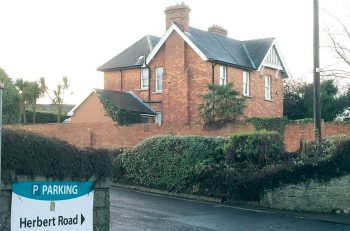
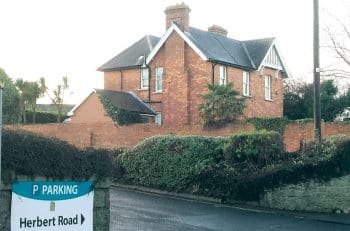
    Village last month reported that Wicklow County Council has agreed to sell a prime town-centre site in Bray to developer Paddy McKillen’s Navybrook Ltd for just €2.6m. The deal is contingent on Navybrook delivering a commercial development by the end of 2019. It is also a controversial sale that has raised questions about value for money. Most Councillors and most residents of Bray want the site developed. Known as the ‘Florentine’, it has been vacant for 20 years, but has also served meanwhile as a convenient car park with 225 spaces. A Council official in January told Wicklow County Council that the site is actually worth more as a paying car park than as a development site. “There’s not huge value in this for developers”, he claimed. But a related effect of the sale of that site to Navybrook is now proving controversial too. For it transpires that Council officials set aside a sum almost equivalent to the Florentine’s sale price to buy and demolish two large inhabited houses at Herbert Road nearby in order to extend another surface car park by up to 100 spaces. The proposed new spaces are seen by some residents as an incentive or subsidy to the purchaser of the Florentine site. The original Council budget for the extra spaces appears to have been only about 10% less than what that Navybrook has agreed to pay for the Florentine. Wicklow County Council might have insisted on any purchaser of the Florentine erecting a multi-storey with 356 car spaces, instead of the 256 now planned there. Had Wicklow County Council insisted on 100 more car spaces at the Florentine, it would still have been fewer than had been required as a condition, when planning permission was granted for the Florentine site to an earlier owner. One previous planning permission for an earlier proposed development on the Florentine site, one that included apartments, had required 417 parking spaces. Wicklow County Council acquired the site at a bargain-basement price during the recent crash. It believes that the Florentine will yield it commercial rates of up to half a million euros annually when completed. The County Council itself sought planning permission for the Florentine before selling the site to Navybrook. The inspector for An Bord Pleanála pointed out that objectors had stated that the Council was not making sufficient allowance for car parking, with provision being promised for just 256 spaces. The inspector’s report included a statement that applying car-parking standards in the, then-current, Wicklow county development plan 2010-2016 would have meant that “504 spaces would be required”. But Wicklow County Council insisted that 256 spaces were enough, and An Bord Pleanála accepted the Council’s assurances. Permission was granted last year. Just one month later the Council was engaged nearby in private negotiations to buy St Paul’s Lodge and another big house, both adjacent to the existing surface car park on Herbert Road which is an area zoned for mixed use. Local residents were not informed, but the prospective purchasers were told that Wicklow County Council wanted to buy their houses, and that the purpose for which the Council wanted them was additional parking. The owners first sought €1.5m each (as opposed to the€765,000 valuation that the Council’s own surveyor put on one of the houses last year). In the end, only the sale of St Paul’s Lodge went ahead, for €913,000 including the vendor’s legal and other costs (such as furniture removal to Spain). The Council thus acquired an Edwardian home and large garden that officials hope to clear for up to 47 hard-surface car spaces.   Bray residents (including myself ) oppose the Council’s proposal to destroy St Paul’s Lodge, on architectural and social grounds among others, pointing out that it was reportedly designed by the architect of Farmleigh House, and that destroying family homes during a housing shortage pushes up the cost of new homes for everyone. Hearing rumours of the Council’s wish to destroy part of their neighbourhood, residents tried between June and October last year to elicit information from Wicklow County Council. We were told by the Council simply that, “We are examining all aspects of parking in the town at this time”. In fact Council officials were then intent on closing the purchase of St Paul’s Lodge as quickly as possible. Council officials concluded the purchase of St Paul’s Lodge unconditionally, despite the fact that it was bought solely “in order to raze it to the ground and build a car park on the site”, as the vendor’s solicitor put it last July. It is an extraordinary fact of current law that Council officials have great freedom to spend public money on acquisitions without the approval of elected representatives. However, approval is required to demolish or dispose of a building, and the process of securing approval in such a case requires public consultation under a provision known as ‘Part 8’. But what kind of consultation? In this case Wicklow County Council ignored expressions of concern by local residents and inserted no provision in the contract of sale contingent on Council approval. The Council closed the sale without first completing the consultation concerning possible demolition. This has put Councillors under pressure to approve demolition. The house could be put back on the market. There is a strong demand for such houses in the immediate vicinity, and at least one older and bigger house nearby (in bad shape) was recently bought and substantially renovated. But the fact that officials paid above what their surveyor considered to be the house’s normal market value could leave the Council out of pocket from any resale. Residents had their request for a meeting ignored by Council management, and have been forced to take an appeal to the Office of the Information Commissioner to get some documents eventually released that reveal details. The first site notices of planned demolition were not clearly visible from the road and none at all was put on the property of St Paul’s itself. A new notice was published when

    Loading

    Read more

  • Posted in:

    Wicklow Manager bouncing Bray demolition

    Village last month reported that Wicklow County Council has agreed to sell a prime town-centre site in Bray to developer Paddy McKillen’s Navybrook Ltd for just €2.6m. The deal is contingent on Navybrook delivering a commercial development by the end of 2019.  It is also a controversial sale that has raised questions about value for money. Most Councillors and most residents of Bray want the site developed. Known as the ‘Florentine’, it has been vacant for 20 years, but has also served meanwhile as a convenient car park with 225 spaces. A Council official in January told Wicklow County Council that the site is actually worth more as a paying car park than as a development site. “There’s not huge value in this for developers”, he claimed. But a related effect of the sale of that site to Navybrook is now proving controversial too. For it transpires that Council officials set aside a sum almost equivalent to the Florentine’s sale price to buy and demolish two large inhabited houses at Herbert Road nearby in order to extend another surface car park by up to 100 spaces.  The proposed new spaces are seen by some residents as an incentive or subsidy to the purchaser of the Florentine site. The original Council budget for the extra spaces appears to have been only about 10% less than what that Navybrook has agreed to pay for the Florentine. Wicklow County Council might have insisted on any purchaser of the Florentine erecting a multi-storey with 356 car spaces, instead of the 256 now planned there. Had Wicklow County Council insisted on 100 more car spaces at the Florentine, it would still have been fewer than had been required as a condition, when planning permission was granted for the Florentine site to an earlier owner.  One previous planning permission for an earlier proposed development on the Florentine site, one that included apartments, had required 417 parking spaces. Wicklow County Council acquired the site at a bargain-basement price during the recent crash. It believes that the Florentine will yield it commercial rates of up to half a million euros annually when completed. The County Council itself sought planning permission for the Florentine before selling the site to Navybrook. The inspector for An Bord Pleanála pointed out that objectors had stated that the Council was not making sufficient allowance for car parking, with provision being promised for just 256 spaces. The inspector’s report included a statement that applying car-parking standards in the, then-current, Wicklow county development plan 2010-2016 would have meant that “504 spaces would be required”. But Wicklow County Council insisted that 256 spaces were enough, and An Bord Pleanála accepted the Council’s assurances. Permission was granted last year. Just one month later the Council was engaged nearby in private negotiations to buy St Paul’s Lodge and another big house, both adjacent to the existing surface car park on Herbert Road which is an area zoned for mixed use. Local residents were not informed, but the prospective purchasers were told that Wicklow County Council wanted to buy their houses, and that the purpose for which the Council wanted them was additional parking.  The owners first sought €1.5m each (as opposed to the €765,000 valuation that the Council’s own surveyor put on one of the houses last year). In the end, only the sale of St Paul’s Lodge went ahead, for €913,000 including the vendor’s legal and other costs (such as furniture removal to Spain). The Council thus acquired an Edwardian home and large garden that officials hope to clear for up to 47 hard-surface car spaces. Bray residents (including myself) oppose the Council’s proposal to destroy St Paul’s Lodge, on architectural and social grounds among others, pointing out that it was reportedly designed by the architect of Farmleigh House, and that destroying family homes during a housing shortage pushes up the cost of new homes for everyone. Hearing rumours of the Council’s wish to destroy part of their neighbourhood, residents tried between June and October last year to elicit information from Wicklow County Council. We were told by the Council simply that, “We are examining all aspects of parking in the town at this time”. In fact Council officials were then intent on closing the purchase of St Paul’s Lodge as quickly as possible.  Council officials concluded the purchase of St Paul’s Lodge unconditionally, despite the fact that it was bought solely “in order to raze it to the ground and build a car park on the site”, as the vendor’s solicitor put it last July. It is an extraordinary fact of current law that Council officials have great freedom to spend public money on acquisitions without the approval of elected representatives. However, approval is required to demolish or dispose of a building, and the process of securing approval in such a case requires public consultation under a provision known as ‘Part 8’. But what kind of consultation? In this case Wicklow County Council ignored expressions of concern by local residents and inserted no provision in the contract of sale contingent on Council approval. The Council closed the sale without first completing the consultation concerning possible demolition. This has put Councillors under pressure to approve demolition. The house could be put back on the market. There is a strong demand for such houses in the immediate vicinity, and at least one older and bigger house nearby (in bad shape) was recently bought and substantially renovated. But the fact that officials paid above what their surveyor considered to be the house’s normal market value could leave the Council out of pocket from any resale. Residents had their request for a meeting ignored by Council management, and have been forced to take an appeal to the Office of the Information Commissioner to get some documents eventually released that reveal details. The first site notices of planned demolition were not clearly visible from the road and none at all was put on the property of St Paul’s itself. A new notice was

    Loading

    Read more

  • Posted in:

    Eschatology, or the study of the end of times

    Eschatology, or the study of the end of times, is at least as old as the written word. The concept spans many of the world’s major religions, usually referring to some future day of judgement or reckoning. Beyond the realms of theology, eschatology as a concept is currently undergoing something of a renaissance, especially after the tempestuous and chaotic first twelve months of the Trump regime. In this time, almost everything we once took for granted about inherent stability, even inevitability, of western democracies and the robustness of our institutions has been shaken profoundly. As if to add to the sense of impending calamity, the Bulletin of the Atomic Scientists moved their famous Doomsday Clock for 2018 forward in late January– to two minutes to midnight. This is the closest it has ever been to the witching hour. The authors of the Bulletin excoriated the US government’s reckless nuclear brinksmanship, but poured special scorn on its efforts to derail international climate diplomacy. “Avowed climate denialists have been installed in top positions at the EPA and other agencies, and the administration has announced its plan to withdraw from the Paris Agreement. In its rush to dismantle rational climate and energy policy, it has ignored scientific fact and well-founded economic analyses”. The Bulletin was particularly scathing of the role played by climate deniers in stymieing action. “Despite the sophisticated disinformation campaign run by climate denialists, the unfolding consequences of an altered climate are a harrowing testament to an undeniable reality: The science linking climate change to human activity is sound. The world continues to warm as costly impacts mount, and there is evidence that overall rates of sea level-rise are accelerating – regardless of protestations to the contrary”. The toxic wave of US science denialism has swept right across the Atlantic. As previously reported in Village, last May saw the first meeting in Dublin of the self-styled Irish Climate Science Forum (ICSF) a denialist group with opaque membership and funding sources. February sees it host its fifth meeting in just 10 months, featuring a fringe Italian academic with strong ties to US neoliberal think tanks, the latest in a procession of climate contrarians to present new (thoroughly debunked) ‘findings’ to an eager audience mostly of Irish contrarians and deniers. Their agenda appears to be to hobble effective Irish government response to the existential threats posed by climate change. Their standard operating method is to cherry-pick data, float red herrings and exaggerate uncertainties in the scientific consensus often as political cover on behalf of special-interest groups, for continued inaction. Above all, groups like the ICSF are engaging in ‘post-truth’ assaults on reason itself. A recent edition of New Scientist magazine stated baldly: “There are disturbing hints that western civilization is starting to crumble”. The article quotes intriguing research from Yale university, which examined the two broad modes of human thought: 1) fast, automatic and inflexible, and 2) slower, more analytical and flexible thinking. As flexible thinkers within society solve our various problems, from transport to energy, with complex technologies, this relieves the great bulk of the population from even being aware of these problems, and so inflexible, automatic thinking ensues as the population, in a sense, dumbs down, since technologies can create the beguiling illusion that life is magically simple. One of the psychologists who developed this theory, Jonathan Cohen, suggests this may help solve one of the great puzzles regarding societies heading for catastrophe: why do they persist with their self-destructive behaviour, in the face of overwhelming evidence of future harms? “The train had left the station”, according to Cohen, and the forward-thinking, analytical types were no longer at the controls. As flexible thinkers within society solve problems with complex technologies, the population is relieved from even being aware of these problems, and so inflexible, automatic thinking and dumbing-down, ensue Separately, computer modelling carried out at the University of Maryland in 2014 examining the mechanisms that can lead to local or even global system collapse, identified two key elements. The first, unsurprisingly, is ecological strain. The panoply of chronic environmental stressors, including resource depletion, widespread pollution, ocean acidification and sea-level rise are generally well understood, at least in expert circles. What was less widely known was the systemic risk posed by economic stratification or, in plain language, the rich getting richer at everyone else’s expense. In the scenario modelled, “elites push society toward instability and eventual collapse by hoarding huge quantities of wealth and resources, and leaving little or none for commoners who vastly outnumber them yet support them with labour”, according to author Rachel Nuwer. Eventually, she argues, “the working population crashes because the portion of wealth allocated to them is not enough, followed by collapse of the elites due to the absence of labour. The inequalities we see today both within and between countries already point to such disparities”. She notes that the top 10% of global income earners are responsible for almost as much total greenhouse gas emissions as the bottom 90% combined. Here, extreme inequality and ecological stresses converge to form a toxic cocktail capable of crashing our civilisation into the dust. US academic Thomas Homer-Dixon published the influential book: ‘The Upside of Down’ in 2005. It presciently anticipated the global economic crash that occurred some three years later. The financial crisis was, he wrote, one of “five tectonic stresses which are accumulating deep beneath the surfaces of our societies”. Others include population, energy, pollution and resource exhaustion; and climate system stress. The 2008 economic crisis, along with more recent shocks, such as Brexit and the Trump election in 2016 can, according to Homer-Dixon, be seen as a series of non-linearities, or sudden and unexpected jolts to the assumed world order. These may be viewed as a random pattern of tremors presaging a truly global catastrophe, a word that derives from the Greek, meaning ‘to overturn’. To view catastrophe as imminent rather than already occurring requires a deeply anthropocentric perspective. The sequestration, plunder and simplification of the

    Loading

    Read more

  • Posted in:

    €140m to clean up one of Ireland’s 450 contaminated sites

    Silvermines, which the government spent €11m remediating in the 1990s, was back in the news in May 2017 as three cows were found dead of lead poisoning. A new inter-agency group involving the HSE, Department of Agriculture, Tipperary County Council, Environment Protection Agency, Teagasc, Irish Water, The Food Safety Authority and the Department of the Environment has since been set up again to address this new situation. It may be of little comfort to local farmers who find restrictions placed on their farms again and to local residents concerned about public health that Silvermines has had significant remediation already. At the same time as this old infamous contaminated site was rumbling again, Judge Richard Humphreys in the High Court was preparing his orders on Ireland’s largest illegal landfill at Whitestown in County Wicklow. The clean-up bill is now estimated at as high as €140m. The case, Brownfield Restoration Ltd versus Wicklow County Council, has been covered in previous issues of Village. Rachel Carson’s book ‘Silent Spring’ in 1962 is credited with drawing widespread attention to global environmental pollution. In the 1970s discovery of a toxic landfill in Love Canal near Niagara Falls in upstate New York became the impetus for the United States adopting a law called CERCLA (Comprehensive Environmental Response Compensation and Liability Act) in 1980. It created a fund to address and eliminate the threat from contaminated sites all over the United States and then attempted to recover the monies from the entities that had caused the pollution. It has become known as Superfund. The Whitestown site in County Wicklow and Judge Humphreys’ order is perhaps our Love Canal moment. Do we need to create an Irish Superfund law? Judge Humphreys in his judgment last July said “a full account of this saga would be book length” and described the activities as reminiscent of 1930s Chicago which prompted the plaintiff’s barrister to refer to the modern-day TV show ‘The Sopranos’ which prominently features gangster-related waste-management control. The Whitestown quarry is roughly the size of eight rugby fields. Up to twenty two companies were listed as having hauled waste there from all over Dublin including from hospitals. Wicklow County Council dumped there until the week of its closure. Now the 80,000 tonnes of waste rests like a giant toxic teabag mixed with a million tonnes of other soils from a botched remediation effort. This ‘teabag’ sits partially in the water table which fluctuates with the seasons by up to two metres. So rainfall and the fluctuating water table create a toxic blend called leachate. The off-gassing can be equally toxic and one investigator was overcome with fumes and hospitalised in the early days of discovery. While up to 93% of the waste (primarily roadworks materials) at the site was deposited by Wicklow County Council, the description of blood-stained hospital theatre waste strewn all over the site left many queasy. Two of the early investigators on site were Donal O’Laoire and Ronnie Russell of O’Laoire Russell & Associates Limited. O’Laoire had been hired by Wicklow County Council as consultant in 2001 to come up with a plan on remediation. Both O’Laoire and Russell, who gave evidence in the case, had also been directors of Eco-Safe Systems Limited since 1999. it was listed as one of the 22 contributors to the site. Eco-Safe specialised in hospital-waste disposal & sterilisation. Dr Russell as founder and president of the Irish Decontamination Institute in 1989 (then called the Irish Association of Sterile Services Managers) had established an important network for healthcare facilities dealing with these issues. O’Laoire and Russell had also founded an environmental management and auditing firm in the 1990s. At this time certifying the compliance with environmental laws was becoming an established area of expertise leading to the ISO 14000 standards for environmental management being set in 1996. O’Laoire has published for the UN on environmental management for developing countries particularly African countries. Russell continues to be a leading research scientist at Trinity College Dublin and recently published guideline Manuals on decontamination for Saudi Arabian healthcare professionals. He is current chair of the HSE National Decontamination Advisory Group and vice chairman of An Taisce’s Environmental Education Unit as well as representing Ireland at the UN in Geneva on disarmament issues as a technical expert on biological weapons. These are arguably two of the leading and trusted influential individuals on chemical environmental issues in the State, which makes the performance at Whitestown so disappointing. The problems created by the initial waste dumping then got exasperated by a “botched remediation” plan. The judge subsequently, in his finding of facts on the Whitestown dump, states: “Mr. O’Laoire developed a proposal which he himself correctly in evidence described as corrupt whereby he and his associates (variously described as a syndicate or consortium) would make a profit from a commercial venture designed to remediate the site… clearly he was engaged in a massive conflict of interest that was actual rather than potential”. Judge Humphreys later described how the Irish EPA placed itself in a compromising situation by being a part of the Technical Working Group on the remediation plan. The EPA was effectively being gentler to the public authority than it would be to a private operator. Wicklow County Council were hoping they would not have to remove all the contaminated soil even though they were requesting and celebrating judgments in other cases (eg case against Fenton, 2002) demanding defendants do just that at other illegal dumps. Judge Humphreys now had to assess the risk the site posed, using European and Irish guidelines as well as case-law. The Irish EPA guidelines gave him a scale to calculate risk. The 2007 Code of Practice: Environmental Risk Assessment for Unregulated Waste Disposal Sites authored primarily by Margaret Keegan, of the Office of Environmental Enforcement, ironically had Michael Boland of Wicklow County Council on its technical review committee. Boland was a key witness on the botched remediation-plan analysis. The risk model used by the EPA assigned ‘points’ to the

    Loading

    Read more