Environment

Random entry RSS

  • Posted in:

    Green on Wood

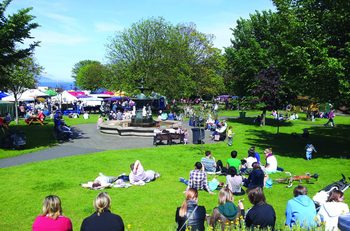
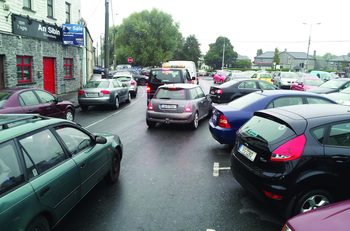
    By Ciaran Cuffe It’s Culture Night in Galway. Under a small marquee a few steps away from Eyre Square plans are being discussed for the future of Wood Quay, an historic part of the city that has become over-run by traffic and parking in recent years. Students from the School of Architecture at the University of Limerick (SAUL) have been sketching out ideas for the upgrading of this historic streetscape. Currently the area is a morass of car-parking with a sliver of a park that you’d miss if you blinked while walking past. Wood Quay was one of the earliest inhabited parts of Galway. There was once a Quay where cargo and passenger boats landed from Connemara, and a potato market took place where now there are now only cars. Wood Quay is triangular in shape with narrow footpaths and is surrounded by a mixture of two and three story shops, pubs and houses. The area feels like it was busier in years gone by. The project is being run by Rosie Webb, the Galway City architect. She is hoping that the project will open up a debate about parks and public space in the city. Local people have been invited to participate, and a handful of them turned up to add their voices to the discussion. An older man raises the problem of an increasing student population who live nearby and party loudly on Thursday nights leaving detritus of urine and vomit behind. A young Brazilian couple take their cat to the small grassed area by the lake, but complain about its lack of maintenance. Cars are everywhere, parked on footpaths, on double-yellow lines, and in the allocated spaces provided. Some of the students’ projects involve reorganising or removing part of the car parking. Local businesses voice their concerns. A local paint shop owner is worried that less parking means fewer customers, but no-one is really sure. Perhaps the city could follow the example of the Dublin City Beta projects where changes are made temporarily  and can easily be reversed. This might allow a temporary park or performance area to be installed at Wood Quay. If it doesn’t work out it can be removed, and other ideas can be considered or it can simply remain in its current state. This might help avoid the cost over-runs that occurred when the city’s Eyre Square was redesigned a few years ago. It could well turn out that a carefully designed small public park might become a catalyst for the regeneration of this historic area. However, in order for changes to be acceptable they will have to be made in partnership with the area’s residents and businesses. An important issue that comes up time and time again is the lack of management and maintenance of the public domain. These issues will have to be addressed by the Local Authority and An Garda Síochána if residents are to feel confident about the area’s future. It won’t be easy to achieve though, as Government and elected representatives are under pressure to reduce Local Property Taxes and spending wherever possible. Galway’s economy is heavily reliant on tourism. Certainly Wood Quay is underperforming, and improvements such as introducing a well maintained larger park have the potential to revolutionise the area. The conundrum in Galway is typical of the challenges facing towns and cities around Ireland. A spiral of decline has led to families living further out of town and commuting in by car. Much of the town centre is left to a transitory population of students and temporary workers who have not the clout or commitment to improve the area that they live in. More parking is then required which consumes the space that could be given to other uses such as parks, playgrounds or markets. One way of breaking this vicious circle is for Councils and citizens to come up with a vision for what improvements it might be possible to achieve in the short to medium term. The people of Wood Quay have yet to agree on the common vision for the future of their area, but the work with the Council, the area’s residents and the students from the University of Limerick appears promising. •

    Loading

    Read more

  • Posted in:

    People power parks

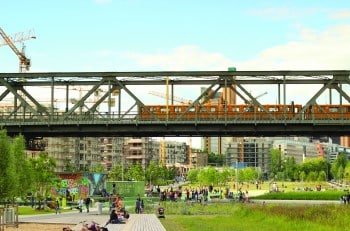
    By Jackie Bourke City parks designed in collaboration with residents have become a global phenomenon in the last decade. Re-inventing disused railway lines seems to be a feature and perhaps one of the best known example is the Highline in New York. In this instance a chunk of overhead railway which had become wild and overgrown was transformed into a mile-and-a-half long linear park following an intense campaign by local residents. In Berlin the Park at Gleisdreieck was also developed as a result of intense local campaigning – in this case following a forty year process arising from objections to the development of a motorway. It was originally the meeting point for three railway lines but as they slowly fell out of use the area fell into decline and by the mid-20th century it had deteriorated into an unsightly dumping ground. Despite this, or perhaps because of it, the area was recolonised by nature and became a source of considerable biodiversity. The potential for the park was recognised by residents who fought to maintain the space as a green lung in the midst of the city. In 2006 the city officials finally put forward plans to develop a park. Following an extensive consultation process during which proposals and criticisms from residents of Berlin were incorporated into the design, the first section of the park opened in 2011. It is now a vast wonderland of carefully planned playful features and wilderness zones which extends to some sixty-four acres. Some of the railway lines are still in use and are incorporated into the park design. A section runs overhead, but hanging out and playing underneath is encouraged by both seating and curved metal structures to hang off and swing out of. The western section of the park is like a vast meadow punctured with supersized swings for all age groups – adults included. There is a small enclosed playground with nice wooden play equipment. But a contoured soft surface area is a particular attraction where tiny kids on scooters play alongside teenagers and adults on roller blades. An ingenious series of trampolines set into the ground here adds a frisson of tension for the skaters and scooters who deftly dodge the bouncing babies. The mix of age groups and activities is a particularly appealing feature of the park. Much of the usual oppressive signage with ‘dos and don’ts’ seems absent and adult cyclists and teen skaters share the pathways with toddlers, parents pushing buggies and elderly couples out for a stroll. Heading over towards the east side of the park there is a pretty decent skateboarding facility. It seems to be well used by teenagers and older fogies alike. Just beside it is a neat little café on the ground floor of the signalling tower serving snacks and coffee. This section is also where you’ll find parent Mecca – clean toilets and nappy changing facilities. Along a path through overgrown scrubland you reach railway tracks which are still in use. First timers step across a bit gingerly, frantically looking left and right.  This leads to the east of the park which has a series of playgrounds both open and enclosed. But the highlight of this section of the park is the ‘naturerfahrungsraum’, a wild space where city children can let their imaginations run free and mess around. It is quite a unique space with no play equipment other than suggested possibilities from 10 foot long stripped down tree branches which have clearly been deliberately left lying around. Such civic initiatives are not an accident. They reflect the democratic, participative and innovative essence of this pioneering cosmopolis. After unification the magnificent Albert Speer-influenced Tempelhof airport, focus for the 1948 Berlin airlift,  became redundant and environmentalists promoted its closure. A 2008 city referendum failed to scupper this but only because the turnout was insufficient. Tempelhof which a hundred years ago was used as a park and parade ground  was reopened in 2010 as a 386-acre city park with a budget of €60 million for development up to 2017. It boasts a six-kilometre cycling, skating and jogging trail, a 2.5-hectare BBQ area, three dog-runs covering around four hectares, allotments and an enormous picnic area for all visitors. There are areas for baseball and kiting and an important habitat for several protected birds, plants and insects. The kind of magical parks that can be created when you engage the citizens of the city is quite impressive.  Closer to home, in Dublin 7, a campaign to transform the old Broadstone to Broombridge railway line has been underway for several years. Desireland, an environmental and health-care consultancy founded by Kaethe Burt-O’Dea has proposed initiating a participative planning process with residents to turn this space into a linear park called The Lifeline. If examples in other cities are anything to go by, this proposal would be of enormous benefit to the citizens of Dublin. • Jackie Bourke is an urban researcher and founder of Playtime.ie

    Loading

    Read more

  • Posted in:

    Help the Phoenix rise

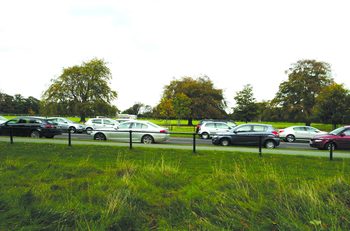
    By Ciaran Cuffe Dublin’s Phoenix Park may be the non-pareil of the nation’s parks, but it is time to rethink how it is managed. The big issue is traffic. Over ten million car journeys are made through the park every year. Astonishingly, there are no scheduled bus journeys through it. If you want to travel by public transport from the park entrance on Parkgate Street near Heuston Station to Castleknock you have to walk twenty minutes up to Blackhorse Avenue, and then take the 37 bus along the Navan Road and around to Castleknock Road. Meanwhile car after car speeds down Chesterfield Avenue through the centre of the park, ignoring the 50-kph speed limit set in the Park bylaws. Back in 2011 road resurfacing was carried out in the Park necessitating some  weekday closures. This had a notable impact in suppressing traffic demand, with up to 30% of displaced traffic not accounted for by measurements of traffic flow increases on other routes. So the lesson is clear: if you provide roads, you’ll get cars: if you don’t you won’t. The Park does at least has a Conservation Management Plan, produced in 2011, in time to mark the 350th anniversary of its opening. That Plan sets down an objective to “manage the levels of traffic within The Phoenix Park and reduce through traffic”, but it seems management are afraid to reduce the through-traffic on weekdays, and only limit traffic at weekends, when commuting traffic is at a minimum. It seems like a sensible idea for the Office of Public Works (OPW) which manages the Park to limit through-traffic all day everyday. Instead of toying with restrictions at weekends it needs to work with Dublin Bus and the City Council to provide decent bus services and promote sustainable traffic patterns. It seems so obvious that no-one charged with the public interest could oppose it for Dublin Bus to introduce an express bus through the Park, but like many good ideas, it has been  perpetually long-fingered. The OPW has limited traffic on some roads in the Park, but it should do more. It could also rethink the junction layouts that are challenging for cyclists and pedestrians to navigate. Perhaps a zebra crossing or two would be appropriate near the zoo so that parents can cross the road without taking their life into their hands. Taking car traffic out of the Park could transform it from being a fast-track commuter route into the city into being an oasis of calm in a city where large areas suffer from excess vehicle noise. It would reduce the number of injuries to deer caused by vehicles, and could restore the Park’s qualities as a place of calm and peaceful enjoyment for all Dubliners and visitors to the city. The Government is apparently lobbying UNESCO to have the Phoenix Park designated as a world heritage site. Surely the removal of some of the car traffic would boost the cause. The Phoenix Park Act of 1925 established in law its use as a public park for the general purpose of the recreation and enjoyment of the public. Perhaps a review of that legislation could allow a more sustainable approach to its future management and use. Back in 2011 Clare McGrath the Chair of the OPW stated that the Conservation Plan for the Park “aims to balance the responsibilities to protect, conserve and enhance the unique landscape, environment, ecology, wildlife, built heritage and view of The Phoenix Park” with the imperative for events, performances and activities. Reducing or eliminating through traffic would amplify this by enhancing both conservation and enjoyment. The Phoenix Park is a unique habitat. Seventy-two species of wild birds are found there, including the threatened Shoveller, Golden Plover, Black Headed Gull, and Herring Gull. It also contains several rare species of plants such as violets, grasses and wild herbs. Four-hundred deer as well as foxes, badgers, hedgehogs,  bats and rabbits make the Park their home. Surely the best way to protect and enhance this resources would be to implement an ambitious traffic plan that would decrease traffic and improve the quality of life for all. Instead of taking a cautious approach it is time for the OPW to bite the bullet and take decisive action. •

    Loading

    Read more

  • Posted in:

    Twelve steps for better parks

    By Ciaran Cuffe Parks are at the heart of our modern lives. They have crucial role to play as we grow older and as we raise our children. They help reduce stress levels, they boost tourism and yet they only receive crumbs of funding. The following recommendations can transform them. Time for new laws The Minister for the Environment must introduce twenty-first-century legislation for parks. In doing so he could embed a proper National Landscape Strategy into legislation, update the 1925 Phoenix Park Act, the 1926 Allotments Act and provide a funding framework that would mandate local authorities to provide proper standards of green space and infrastructure close to where people live. Plan with communities Some of the best examples of parks in recent years have been drawn up in partnership with local communities. Examples in cities as far apart as Berlin and Galway show that working with local communities is crucial to deliver parks that local residents can be proud of. In recent years the Heritage Council has produced valuable guidance on working in partnership with communities. Councils must now take a leaf out of their book in planning for the future of our parks. Provide new facilities Modern parks are characterised by their richness and diversity. From built-in trampolines on footpaths to cafes beside play areas, diversity is the key to attracting visitors. A growing urban and immigrant population living in apartments expect more from our parks. For many people parks are their back garden. Expectations are on the rise, and whether it be barbecue areas or basketball courts it is time for Local Authorities to think innovatively about future park facilities. Tame the traffic Increased car ownership and use is putting pressure on our parks. Instead of throwing car parks at the problem we need to use parks to tame the traffic and provide an oasis of calm in noisy cities and towns. Cars must be kept out of parks, and walking and cycling placed at the heart of transport provision. Tackle dereliction Pop-up parks can be the answer to dereliction. Granby Park on Dublin’s Dominick Street and the new North King Street Park show what can be done to brighten up spaces that are awaiting development. Local Authorities and the Office of Public Works should bend over backwards to encourage temporary uses for sites that will be built on in the longer term. Allow children to take risks Health and safety concerns have led to the creation of antiseptic spaces. Streams are fenced off and lower branches of trees are lopped to prevent tree climbing. Let’s bring back risk to our parks. Let children climb trees or paddle in a stream so that they can experience nature and learn about danger from an early age. More native species Let’s think beyond species such as London Planes, Horse Chestnuts and Limes. Irish species such as Birch, Hazels, Native Oaks and Irish Apple trees can add diversity to our streets and parks. More Willows, Mountain Ash and Holly would add seasonal variety and encourage biodiversity. Design the landscape Green spaces face competing uses from different users. Landscape Architects and other parks professionals are needed to resolve these conflicts and challenges and work with communities to meet their needs. As Aidan ffrench pointed out in last month’s issue the Netherlands employs a state landscape architect. Design competitions are required to promote excellence in future park provision. Introduce wilderness Too many municipal parks are nothing but manicured lawn. It is time to create wilderness areas in our parks that encourage bio-diversity. Such spaces can foster a greater variety of plants and animals, and provide space for children to explore. The can also reduce running costs as mowing is reduced. Grow your own Allowing people who live in the city to grow their own is a practical way of empowering communities as resilience becomes necessary in the face of environmental shocks. More allotments and community gardens need to be provided by councils in our urban centres. Working on the land brings people together, builds bonds between neighbours and provides cheap and nutritious food. Tackle climate change Green space and water bodies have a crucial role to play in tackling the challenges of a warming world. Whether it be learning from the Dutch and their policy of ‘giving space for the river’, or planting urban forests to sequester carbon, parks have a crucial role to play. New policies on Sustainable Urban Drainage Systems mandate the provision of green space soakaways for storm waters. Such ideas need to be adopted countrywide. Provide staff Only a handful of our Local Authorities have Parks Departments, and they struggle with the resources provided. Parks must be a political priority and the recruitment embargo needs to be repealed. If the political will is there, parks are imaginative pathways back to employment that improve the quality of life for all. •

    Loading

    Read more

  • Posted in:

    Fluent in effluence

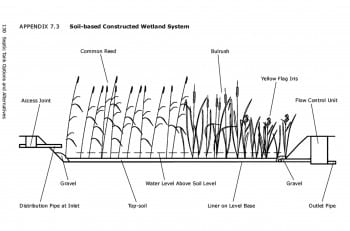
      Review by Frank Cavanagh Féidhlim Hart’s timely and  practical guide to what he concedes is an “umentionable” activity, one which he notes is ”making the news” gives a very useful overview of the problems associated with sewage treatment and effluent disposal. It is divided into handy foolproof chapters with titles like “How can I tell if my septic tank is working?” (and a subheading “is there effluent on your lawn, or neighbour’s lawn or field”!). and “if it looks ok, do I need to do anything?”. The key concept is that “the combination of a septic tank and a percolation area can be surprisingly effective at dealing with sewage if the tank is installed in such a way as to provide adequate settlement and if the percolation area has a sufficient surface area, an even distribution of effluent and a sufficiently deep layer of unsaturated subsoil of suitable percolation characteristics; i.e. percolation that is not too rapid and not too sluggish. if any element of the above is missing or inadequate, the whole system can fail and either clogs up visibly, causing problems for surface water, or can bypass the treatment process causing problems for groundwater”. While he endeavours to cover the advantages and disadvantages of various systems, the author – who declares he is “passionate about genuine environmental sustainability” – frankly admits he has “biases” towards solutions that are “natural, zero energy, recycle biomass or nutrients and/or produce a firewood crop at the end of the year”. He favours artificial wetland solutions – his “first love”: “effective wastewater treatment using no electricity, with low construction cost, eminently robust to Irish maintenance habits and providing a natural habitat to boot – what could be better?”. Stlll, he notes that: “Gravel reed beds, with their more engineered look and need for additional maintenance, nonetheless offer certain advantages over constructed wetlands in certain situations. Mechanical treatment systems likewise, have certain clear advantages on some sites, despite their greater electricity usage and maintenance requirements. Most recently, zero-discharge willow facilities have become an option in Ireland, offering a carbon-negative, zero-discharge solution for people who want to build where there is poor percolation and no surface waters to discharge to; or those who just want the firewood and the peace of mind of having no outlet pipe anywhere”. He cautions that  “your final choices will need to reflect your own values, priorities and site requirements”. It has been observed that as regards design and installation of septic tanks, the law is most notable in the flouting. Perhaps therefore an important omission in the guide is adequate reference to the legal requirements surrounding any treatment-and-disposal system. Septic tanks are subject to the requirements of the building regulations, which require them to be fit for purpose and to a host of other laws including Health and Safety, Control of Hazardous Substances, General Product Safety, Sale of Goods and Supply of Services, Consumer Protection, Water Services Act etc. It should also be noted that the homeowner is solely liable in law under the Water Services Act 2012 for the consequences of any system failure. The author makes frequent reference to the EPA Code of Practice and its limited applications. However, some Local Authorities do in fact require rigid adherence to it, regardless of appropriateness, and the fact that the EPA disclaims all responsibility for any adverse consequences of its application is remarkable. Compliance with the EPA document is not even admissible as a defence in law for environmental pollution. The guide reproduces the EPA treatment-system evaluation sheet which fails to allow analysis of comparative costings over an extended period, e.g. ten or more years. It makes no reference to the long-term maintenance costs of wetland or other systems for example. Specifically, in relation to ‘mechanical’ submerged fixed film reactor systems, the author mentions their introduction to the market in the early 1990s. Their acceptance and agreement certification were conditional on incorporation of a range of back-up ‘fail-safe’ features to ensure protection of the consumer, public health and the environment. Unfortunately these fail-safes were disregarded and dispensed with, entirely for reasons of  commercial convenience, resulting in a race to the bottom and a plague of pollution, public health and consumer issues. It is a pity the document does not include reference to these originally required fail-safes, which would have been of practical use to prospective purchasers of such systems – and have them a chance. All in all, the author deserves credit for producing a well laid-out and readable document which is a useful starting point for anyone considering the use of a system or product to deal with a wastewater problem in an environmental manner. •

    Loading

    Read more

  • Posted in:

    Anthrop-obscene

    By Frank Armstrong I interviewed environmental historian John Robert McNeill, a professor in Georgetown University, best known for his 2000 book, ‘Something New Under the Sun: An Environmental History of the 20th-Century World’, shortly after his recent lecture on global environmental history in Dublin. Chicago-based McNeill is also author of ‘Mosquito Empires: Ecology and War in the Greater Caribbean, 1620-1914’ (2010) in which he demonstrates how yellow fever and malaria attacked newcomers to the region, helping to keep the Spanish Empire Spanish, in the face of predatory rivals in the seventeenth and early eighteenth centuries; and ‘The Human Web’ (2003) co-written  with his father which shows how human webs are a key component of world history and a revealing framework of analysis (if not actually determinants). McNeill wrote in his ‘Environmental History’ about the ‘Anthropocene’ age which  he says has various definitions: “I like to see it as that time period in which human action has had deep impacts on the basic systems of the Earth. Those systems include such things as climate and biogeochemical cycles.  Notice I am not saying it is an epoch or an era – the geologists will decide on that”. He says it began only in the mid-twentieth century: “But many scientists argue for various earlier Anthropocenes, some preferring 1800, some 5,000 BCE, some even earlier.  A great deal depends on which sorts of evidence one prefers. Palaeo-ecologists often like to cite evidence of large animal extinctions in the late Pleistocene as evidence of the onset of the Anthropocene. That would be roughly 13,000 years ago and earlier.  But for me, that is not enough: one needs the multiple interventions of the last 75 years to justify the term”. The impact of human beings on planet earth are, he believes, too numerous and profound to list concisely: “I tried to take stock in ‘Something New Under the Sun’, but that exercise took more than 350 pages. However, among the more significant impacts, from the human point of view, are ongoing changes to the climate, changes to vegetation, especially the reduction in forests, acceleration of soil erosion, the reduction in infectious disease, especially waterborne disease, the advent of intense urban air pollution (and its eventual reduction in some places, including Dublin!)”. Though broadly pessimistic, he does advocate certain imperatives. These include  “changing the energy system away from fossil fuels to something else that does not entail greenhouse gas emissions on any scale; supporting formal female education as a benign way to encourage lower fertility and slower population growth; and more efficient urban design, since in the future ever more of us will live in and around cities”. One of his books confronts the subject of malaria and he does not think there is any prospect of eliminating this killer: “The etiology of malaria is devilishly complex and the plasmodia responsible for infection are capable of evolving so as to sidestep efforts to check their proliferation. The best bet is mosquito control, but it is not a very good bet because dozens of anopheles species (like mosquitoes) are competent to transmit malaria”. He considers it is hard to predict what other contagious diseases will pose a significant challenge to human beings in the future. “At the moment it is hard to ignore the outbreak of Ebola, now raging in parts of West Africa and making an appearance in Madrid and Dallas. Whether that yet counts as a significant challenge probably depends on where you sit.  Influenza is always a threat of sorts, because the virus in question mutates rapidly and could conceivably break loose once again as it did in 1918, when roughly 50 million people died of influenza.  As a category, breath-borne viruses are probably the most worrisome”. He believes our dominance confers obligations to our natural environment and other species, though he is circumspect. “Everyone has a different opinion on this matter, and mine is no wiser than the next. That said, I take the (common) view that it confers upon us the obligation of stewardship: our power means we need to take responsibility for the survival of other species (however I’d make an exception for certain mosquito species that spread human disease, even if they too are God’s creatures)”. A recent WWF report claimed that 50% of the world’s species have become extinct in the past 40 years and I ask McNeill about diversity. “In the first instance, if one accepts the notion that human power confers the responsibility of stewardship of the biosphere, then biodiversity has value in and of itself: we do not have the moral right to exterminate species.  In the second instance, biodiversity is useful for ecological stability.  When it is reduced, the probability rises of dramatic alterations of ecosystems, including ones we rely on. Third, many species are extremely valuable to us, as sources of medicines, or as pollinators for crops we depend on.  There are probably unknown species that potentially offer us unknown medicines, if they are not first driven to extinction”. I draw his attention to a Robert Goodland and Jeff Anhang Earthwatch article in 2009 claiming that animal agriculture accounted for 51% of greenhouse gas emissions but he won’t comment on its credibility since he hasn’t seen it. More generally, he accepts that human beings cannot feed themselves without fossil fuels  at least at the moment. He believes that agricultural subsidies in the US and EU are “perverse” and “most should probably go”. He could live with the consequences. He’d favour policies that make livestock farming more expensive; wasting water more expensive; intensive use of antibiotics on feedlots more expensive; intensive use of nitrogenous fertilisers more expensive. “All this would make food more expensive, which would be unpopular and is not likely to happen any time soon!”, he says circumspectly. “As a matter of human health” Mc Neill states that governments in Western countries should be encouraging widespread adoption of plant-based diets. “I’d do it by adopting policies that gradually change the prices of various

    Loading

    Read more

  • Posted in:

    Anti-fluoride bromides

    By Martin O’ Reilly In October, Dublin City Councillors voted in favour of removing fluoride from public water supplies. The motion, which was passed by 22 votes, called for the removal of fluoride and to make it a crime for anyone that attempts to add it to water supplies. Dublin is not the first city to pass such a motion: in March, Cork City Council also passed a motion requesting the Government to end treating public water supply with fluoride. Christopher O’Sullivan, the Fianna Fáil councillor who tabled the motion, said he hoped its passing will produce a “domino effect” with other county councils. Anti-fluoride groups, who are actively campaigning to end water fluoridation in Ireland, will no doubt consider these events significant victories. Many argue that fluoridation is known to cause many health problems, such as cardiovascular and neurological disease, type 1 diabetes, osteoporosis, skeletal fluorosis, chronic fatigue and depression. Others claim it causes Down’s syndrome, various cancers, Alzheimer’s, Sudden Infant Death Syndrome (SIDS), lower IQs in children, and various other conditions. Fluoride is added to water supplies since it is a very cost-effective way of preventing tooth decay and enhancing dental health – something Ireland has been doing since 1964, when it was immediately and unsuccessfully subject to Constitutional challenge. Fluoride is known to strengthen teeth and reduce dental bills, as well as decreasing the chances of fillings, and extractions. In fact, the United States Centers for Disease Control and Prevention ranked fluoridation of drinking water to prevent dental caries as ninth in its public-health achievements of the 20th century. Opponents of water fluoridation don’t always dispute the dental benefits, but they nevertheless claim the adverse health risks should be sufficient to easily outweigh them. If the various risks associate with drinking water containing fluoride are valid, then it must be the case that opponents have a strong case in calling for its removal from water supplies. On the other hand, there doesn’t really seem to be much, if indeed any, evidence to support the claim that it is associated with any of the various harmful risks mentioned above. In 2000, a review of 214 studies found that there was no clear evidence of adverse potential effects associated with water fluoridation. Although it must be said that the authors of the analysis pointed out that some of the studies were conducted in the 1940s and 50s and were of low to moderate quality. More recently, however, a report by Public Health England (March 2014) looked at rates of hip fractures, kidney stones, Down’s syndrome, cancer, and all-cause mortality and concluded that there wasn’t any evidence of harmful effects to health in fluoridated areas. In actual fact, there was some evidence to show that the rate of deaths from all recorded causes was marginally lower in fluoridated areas than non-fluoridated areas. Additionally, a major study from New Zealand, published in August, came to a similar verdict: the panel said it “is unanimous in its conclusion that there are no adverse effects of fluoride of any significance arising from fluoridation at the levels used in New Zealand”. Both of these recent studies also found evidence that fluoridation of the water improves the population’s dental health. On top of that, the respective Deans of Harvard Medical School, Harvard School of Dental Health, and Harvard School of Public Health, in a joint statement, support water fluoridation “as an effective and safe public health measure for people of all ages”. Anti-fluoride advocates, in response to this, might refer to cases of fluoride poisoning that occurred in the United States during the 1990s as a cause for concern. On that basis, though, it doesn’t necessarily follow that we ought to completely remove fluoride from water systems; instead setting a standard that requires regular tests to be carried out to ensure fluoride water levels are safe would seem like a more appropriate option. No doubt there are many studies that show that significant health problems can materialise if concentrations of fluoride are high, but the World Health Organisation recommends a guideline maximum fluoride value of 1.5 mg/litre, and the level in Ireland has been set at between 0.6-0.8 mg/litre. But since fluoride is likely to be dangerous in large quantities, wouldn’t completely avoiding it be the best option? Not necessarily, especially when we consider that nearly everything can be harmful at a high enough dose – water and vitamin C, for instance, can be lethal if consumes to excess. In many cases, we don’t prohibit things just because they can be harmful if taken in large quantities. Opponents often say that several other developed countries no longer add fluoride to their water supplies. However, in some countries, it is added to salt or other food products instead, or else the drinking water is already naturally fluoridated to the recommended levels (as is the case in France and certain parts of the United States). Some countries also have different dental-care strategies that do not require water or salt fluoridation. Unfortunately these are specific details anti-fluoride campaigners in Ireland don’t usually consider, or fail to mention. It might be argued that even if fluoride isn’t harmful, authorities still don’t have the right to add it to our public water supplies. That is to say, it cannot be morally justified for the State, or any other organisation, to interfere in the lives of individuals against their will. This, of course, is part of a much broader and complex topic. Arguably, it is permissible for authorities to add fluoride to water, since it significantly enhances the quality of the population’s oral health (yielding notable equity for those who cannot afford regular dental visits). From a utilitarian point of view, the acquired benefits, all things considered, may well take precedence over some interference with individual choice. Secondly, the motivating force of someone who would campaign, as a matter of principal, against fluoridation on the basis of individual choice, is questionable particularly when we’ve good reason to believe the general

    Loading

    Read more