
Environment

Random entry RSS

  • Posted in:

    Everywhere yet nowhere.

    KARI MARIE NORGAARD Interview by John Gibbons A few minutes into Dr Kari Marie Norgaard’s recent lecture in Trinity College, Dublin, she ran a short animation showing the steady ratcheting up of global surface temperatures over time. The clip began in 1950. By the time it had reached 2014 the globe graphic was heavily pock-marked by pink blotches. From there, it quickly ran through the remaining years using climate model projections until 2100. An intense silence fell over the lecture hall as the years advanced and the graphic melded into what looked like a global firestorm. Who knows what the end of the world will look like, but this certainly looked like the end of our world being played out in stop-motion before a stunned audience. Understated and self-effacing, Kari Norgaard is an improbable prophet of the apocalypse. Assistant professor of sociology and environmental studies at the University of Oregon, she is best known for her critically acclaimed 2011 book, ‘Living in Denial: Climate Change, Emotions and Everyday Life’. A third-generation Norwegian-American, Norgaard chose her ancestral homeland as the ideal place to carry out extensive field work on the phenomenon of how we internalise denial of the dire implications of climate change. Awareness of climate change constitutes what she calls “background noise” in most of our lives – paradoxically, it is both deeply disturbing and almost completely invisible, “it is simultaneously unimaginable and common knowledge”, she explains. Failure to grasp or address climate change is often blamed on poverty, poor quality of education, political disengagement or strong ideological opposition (as in the US). Norway suffers none of these disadvantages, yet its public has internalised denial as comprehensively as anywhere else. Knowing and not knowing, understanding and yet ignoring climate change involves us in what has been described as “the absurdity of the double life”. In her book, Norgaard tracks what she describes as socially organised denial through its multiple strands, including emotions, cultural norms and politics. What this means is that, although knowledge and information about climate change is widely available, these insights are completely disconnected from how political, social and even private lives are organised. It is, she argues, everywhere, yet nowhere. “We humans are now modifying Earth systems; these are accelerating out of control, in terms of ocean acidification, carbon dioxide build-up, sea level rise – all of these associated phenomena that come with the greenhouse effect”, Norgaard told Village in an in-depth interview: “On my way here, I flew over two very large wildfires in the state of California – the state is in extreme drought right now. While the effects of climate change are becoming ever more manifest, these are occurring unevenly and unpredictably in different parts of the world. Climate change poses a threat to our ideas of modern progress, our ideas of the good life and what’s attainable, of our fossil-fuel-driven economic systems that are organised around growth. Also, our political structures, we haven’t been able to come together and respond, and find agreement on these things. It also poses threats to people’s individual identity as ‘good’ people…when you have a really big threat and there’s no clear sense of what can be done without having huge change – people don’t, either individually or as a collective, say ‘fine, I’ll change my mind’ – it doesn’t work that way. One of the most powerful theories in psychology is of cognitive dissonance, the idea that, with climate change, everything we’ve been doing and holding in our lives is not working any more is completely in contrast not only with what we’ve been taught to believe, but also what we see in the culture around us. This is the kind of denial that is my work”. The culture in which we all operate has, she adds, “been created by dominant elites – there’s a sense of abundance (created by advertising) and ‘buy, buy, buy’ – this cultural messaging is produced by entities that are invested in the status quo…our whole idea of progress, ever since the Enlightenment, that we could use science to have a better world, that we could come together to resolve our mutual differences, while science guides us to a better future – all our ideas of modernity, that life will get better and better; that has come to an end in terms of the degree of impact that we now have on the Earth’s ecosystem, which is unravelling”. Norgaard identifies a key flaw in post-Enlightenment reasoning that placed humanity over nature, in a position of dominance rather than dependence and reverence, as was common in many pre-industrial societies. Nature was re-framed from being a powerful but largely benevolent parental figure to an undefended trove of treasures, a bottomless quarry from which we can extract an infinity of goods to satisfy our infinitely expanding needs. Scottish engineer and inventor, James Watt put it presciently when he said: “Nature can be conquered, if we can but find her weak side”. While the recent WWF ‘Living Planet’ report tracked a chilling decline in biological diversity and abundance, even its utterly shocking headline numbers seem to have failed to put a dent in public consciousness. Why? “Here in Dublin, people who are urban especially, they live in a very mediated environment – they may never have seen those particular species”. Many New Yorkers were shaken from their urban insulation two years ago when Hurricane Sandy slammed into the city, but this was exceptional. Mostly, says Norgaard, “it’s almost like we live in gated communities, and our media sources could be seen as another level of that gate. Similarly, the kinds of conversations people have around you can form a kind of gate that keeps out (unpleasant ecological) information”. She believes that, despite the best efforts of the corporatised media, the sheer number and intensity of extreme weather events sweeping the continental US is beginning to really break into standard conversation. “That filter, the one that says no one else really cares about this, it mustn’t

    Loading

    Read more

  • Posted in:

    Cardiff in Brussels.

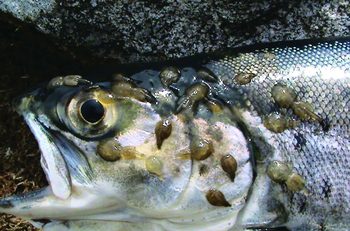
    “In conclusion, for the period up to 2013, there was an inadequate framework at EU and Member State level to translate the EU’s objectives for the sustainable development of aquaculture into reality and the measures actually taken did not provide sufficient results”. – Kevin Cardiff ‘The effectiveness of European Fisheries Fund support for aquaculture’   By Tony Lowes Surprisingly, Kevin Cardiff, the controversial Irish Government appointment to the Court of Auditors, is garnering the respect of seasoned Brussels watchers. Cardiff resigned as Secretary General of the Department of Finance and alternate governor of the World Bank, in February 2012 to take up the Brussels post. Cardiff’s elevation raised strenuous objections from those who saw his role in the disastrous 2008 bank guarantee – and an accounting error of 12.3 billion in 2012, as disqualifying him for anything other than early retirement. Ironically, his first report for the Court of Auditors addressed the fact that the level of trust and confidence in our rulers – in this case the European Union – has plummeted. Eurobarometer polls show that citizens who trust the European Union have fallen from 50% in 2004 to 31% in 2013. Cardiff’s initial report led to twitching eyebrows, given his opaque appearances in Irish inquires to date about the events of October 2008. Entitled a ‘Landscape review: Gaps, overlaps and challenges: a landscape review of EU accountability and public audit arrangements’, he calls on the Member states “to re-think public accountability and audit within the EU to improve its financial accountability towards citizens”. His second report is a damning study entitled ‘The effectiveness of European Fisheries Fund support for aquaculture’. Not surprisingly, this was hailed with silence from the Irish government, and remains unreported by the Irish Times. In spite of more than €438 million in EU funding, the aquaculture industry’s 2011 production is lower than it was ten years previously, while worldwide production has doubled. While the report did not specifically examine Ireland, the key conclusions do apply here: •Measures to support the sustainable development of aquaculture have not always been well designed and monitored at EU level •The Commission’s review of national strategic plans and operational programmes did not systematically ensure that they were designed to maximise the effectiveness of aquaculture policy •The Commission did not provide comprehensive aquaculture-related guidance on environmental matters •There were few relevant audits and evaluations by the Commission, and limited monitoring “Environmental and health risks were not considered sufficiently in funding decisions for aquaculture”, Cardiff said, calling on the Commission ”to establish guidelines for the consideration of relevant environmental facts when determining public funding”. Cardiff echoed his fellow auditor in Norway, the world’s largest producer of farmed salmon. Jørgen Kosmo’s report from 2012 had concluded: “The aquaculture industry is facing significant environmental challenges, among other things in the form of high figures for escaped fish, salmon lice and extensive losses due to disease. The extent of these and other environmental challenges is so great that it is necessary to strengthen the management of aquaculture in order to ensure environmental sustainability and the possibility of future growth in the industry”. Irish state support for salmon farms was detailed in an unpublished 2011 SalmonWatch Ireland Report which showed that more than €57 million (index-llinked) in state aid had gone to fish farms that had gone under from disease, parasites, and other biological challenges. A complaint before the Competition Commissionership at the moment records that 30% of the funding from Europe intended for indigenous small to medium enterprises was split between Bord Iascaigh Mhara – a State agency,  and Marine Harvest – the multi-national salmon-farmers which now controls 80% of Ireland’s salmon farms and last year lost €6.7 million here because of ‘biological challenges’. Rather than taking up the gauntlet that Cardiff offered to “provide comprehensive aqua culture-related guidance on environmental matters”, the Environmental Directorate who are responsible for addressing the ‘environmental challenges’, recently (19 September, 2014) closed its ‘Pilot’ and ‘Chap’ investigations into salmon-farming in Ireland. The evidence provided did not demonstrate that “the particular SACs designated for wild Atlantic salmon do not meet their conservations objectives”, that the “scientific debate is not closed”, and that in fact “there is no legal basis under EU law for requiring a general moratorium on salmon farm development”. The decision is a serious blow to the opponents of the proposed Galway Bay 15,000-tonne salmon farm and the environmental groups who had the complaint reopened after its initial closure in 2012. It is also entirely contrary to the overwhelming international scientific consensus. Ironically, on almost the same day that the Commission gave Ireland the green light for Minister Coveney’s aggressive plans to build nine super farms along the coast, a major study by ten top international scientists of more than 300 published papers on the subject left no doubt about the adverse impact of salmon-farming along our coasts. It concluded that “sea lice have negatively impacted wild sea trout stocks in salmon farming areas in Ireland, Scotland and Norway” and that the lice have “a potential significant and detrimental effect on marine survival of Atlantic salmon with potentially 12-44% fewer salmon spawning in salmon farming areas”. Come home, Kevin Cardiff, reinvented.

    Loading

    Read more

  • Posted in:

    Eurout of line on the environment.

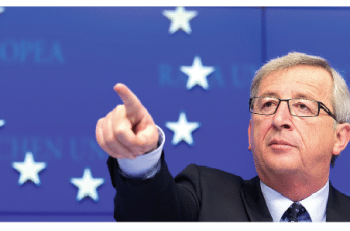
    By James Nix. A currently proposed, the EU Commission would, for the first time in more than two decades, have no dedicated environment Commissioner. Instead environment is rolled in with fisheries and maritime to make up one of what are essentially 20 sub-Commissioner roles – under Commissioner Karmenu Vella. Its role will centre on deregulation. Merging climate and energy and then putting this (sub) Commissioner under a Vice-President for Energy Union implies that climate action is considered subordinate to energy-market considerations. Legally and practically, what new Commission President Jean Claude Juncker has done is quite revolutionary. Instead of 27 Commissioners, all on a par, under one President, Juncker has appointed a ‘first’ Vice President (Dutchman Frans Timmermans), High Representative for Foreign Affairs (Italian Federica Mogherini) and five Vice-Presidents. These seven plus Juncker himself form a team of eight that arches over 20 sub-Commissioners. Each of these 20 subordinates is to report in to a given Vice President – their line manager. Critically, no legislative changes can be promoted by any sub-Commissioner without the approval of the supervising Vice President. Specifically on the environment [,] legislation “will now be the responsibility of the Vice-President for Jobs, Growth, Investment and Competitiveness, who does not have the environment mentioned in his mandate” notes the Green 10, an alliance of European environment organisations. “Since the environment is completely absent from the priority list, and no Vice-President is charged with promoting it, this means a de facto shut down of EU environmental policy-making”. With this downgrading, Juncker has decorated the stage for a serious subversion of existing EU commitments to sustainable development, resource efficiency, air quality, nature conservation, climate action – and health protection. Juncker’s changes come in spite of a Eurobarometer poll in September showing that notwithstanding the economic crisis, 95% of 28,000 citizens interviewed said that protecting the environment is important to them personally and that more should be done. The survey shows no public demand for environmental deregulation. Yet Juncker’s vision effectively scraps the 7th Environmental Action Programme, a legally binding commitment negotiated and agreed by Commission, Member States and European Parliament only a year ago. Juncker’s plan to take responsibility for relations with the European Chemicals Agency, whose job is to protect European citizens from harmful chemicals, out of the Environment portfolio, where it now lies, and add it to Enterprise shows a clear bias towards prioritising business interests over human health and the environment. Juncker has ‘disappeared’ sustainability from EU priorities – at the time as the need for sustainability, resource efficiency and the circular economy are becoming more acute. In fact none of the above are even covered at all at Vice-President level, except for one vague reference to “green growth” in the mandate of the Energy Union Commissioner. This implies a Commission that will be operating on the basis of a hopelessly outdated paradigm of economic growth without counting real costs. Vella has also been ordered by Juncker to stop the two most relevant policy packages inherited from the current Commission – the air quality package and the Circular Economy programme – to give more time for ‘assessment’. Juncker’s chopping and changing of briefs also puts citizens’ health at risk: the shift of several responsibilities on regulation of harmful chemicals from the environment and health portfolios, handing them over to the enterprise directorate of the commission is telling. Unless the Commission structure is changed, Europe is going to end up in a messy situation at next year’s global negotiations on climate emissions in Paris. It could send its Vice President for Energy Union – i.e. a representative with a portfolio that doesn’t cover climate. Or it could send the sub-Commissioner for Climate and Energy – but that would be to send someone from the junior ranks. The European Parliament is now the only backstop to prevent an agenda to weaken more than 25 years of EU environment policy without democratic debate. At a minimum the Parliament must: 1. Secure a Vice-President for Sustainability with environment explicitly in the remit. 2. Ensure what is currently titled the Vice-President for “Energy Union” is amended to reflect “Climate Action and Energy Union”.  3. Ensure the Environment portfolio is reinstated, restoring its competences and providing the Commissioner with a new mandate to respect the European Parliament’s work and implement the 7th Environment Action Programme. Furthermore the Parliament must ensure the instruction to weaken the Birds and Habitats Directives is replaced with an instruction to strongly implement nature conservation. Parliament must also hold the Commission to account in continuing to protect people’s health by strengthening, not weakening, key legislation on air quality and chemicals, and move the responsibility for biocides and pesticides back to the commission department responsible for environment.  4. Resolve potential conflicts of interest for the nominees, and notably for the Climate and Energy portfolio. Juncker’s decision to pick a Climate and Energy Commissioner with well-known links to the oil industry adds a great deal of fuel to his bonfire.   The many conflicts of Miguel Arias Canete, Commissioner designate for Climate & Energy Miguel Arias Canete, a member of Spain’s Partido Popular, was nominated to the newly-formed post of EU Climate and Energy Commissioner in mid September. During his tenure as Spain’s Minister for Agriculture, Food and the Environment from 2011 to mid 2014, Canete and his family controlled 80% of the shares in two oil companies. Yet part of Mr Canete’s environment brief in Madrid was to tackle climate change. When both oil companies secured public contracts, as they did in 2011 and 2008, Mr Canete did not include this in his declaration of interests, which was an illegal omission. After his non-declaration was exposed, Mr Canete claimed he was not aware that the oil companies had secured the contracts.In light of the size of the state contracts, and the 80% family stake, it’s a very difficult claim to sustain. Asked at the Commissioner hearing if (just after the recent share-selling) if his brother-in-law now controls both oil companies,

    Loading

    Read more

  • Posted in:

    Aarhus: State drags feet on legal costs in environmental cases.

      By Kieran Fitzpatrick. The Aarhus Convention aims to protect the environment and proclaims the public to be the best guardian of the environment. There are three strands to the convention: 1) Access to information; 2)Public participation; and 3) Access to justice to review environment-related decisions or to enforce environmental law. Ireland was the last member of the EU to ratify Aarhus and became eligible for ‘Communications’ subsequent to October 2013. This delay comes from the apparent reluctance of the Irish government to deal with the issue of prohibitive legal costs. The EU Commission prosecuted Ireland in 2007 for failing to comply with an Aarhus-related EU directive. The European Court of Justice (ECJ) ruled in 2009 that Ireland had failed to ensure that legal costs (relating to environmental legal actions) were not prohibitively expensive. Special Costs Regime – Catch 22 Ireland responded by passing legislation in 2010, the effect of which was to alter the legal-costs rules from the prevailing English Rule (losing litigant pays winner’s costs) to the American Rule (each side pays their own costs) for legal actions that relate to an EU directive implementing certain Aarhus compliance measures. Ostensibly, the special costs regime (SCR) means that a party could at least represent herself, without being threatened with a huge adverse legal costs bill, if she failed in her legal action. However, there is a Catch 22 in the SCR. To determine that a civil action falls under the ambit of the SCR, the applicant must risk an adverse legal costs award in making the application for such a declaration. This trap became stark in one case – an application by Dymphna Maher to the High Court in 2012. Judge Hedigan in refusing the application effectively said that the Catch 22 arguably “acts in such a way as to nullify the State’s efforts to comply with its obligation to ensure that costs in certain planning matters are not prohibitive”. The SCR can be scuppered if (i) the claim is frivolous or vexatious, (ii) the applicant conducts her litigation in a manner disapproved of by the court, or (iii) the applicant acts in contempt of court. The second of these conditions introduces a huge level of fear due to the lack of clarity as to how this sanction might be implemented. The third item, “contempt of court”, also introduces uncertainty, as became evident in the European Court of Human Rights (ECHR) case of The Sunday Times v UK [1979] (the Thalidomide case). The UK introduced “contempt of court” legislation in 1981 giving clarity to the various offences encompassed, but Ireland did no such thing. So Ireland’s attempt to comply with the 2009 ECJ decision against it, was to introduce a SCR with a Catch 22, plus other unpredictable adverse outcomes, any of which could leave an applicant with a life-ruinous legal bill. This hardly meets the ECJ’s demand that litigants be assured that costs are not prohibitive “with all the requisite clarity and precision”. In any event, the American Rule should not be seen as a complete solution to the problem of prohibitive legal costs for the following reasons: 1.    An applicant may not always have the wherewithal to initiate legal proceedings as a lay litigant. 2.    Many environment-related legal actions inevitably fall under the ambit of EU law, which can result in a reference to the ECJ. The rules of procedure of the ECJ require that any applicant must be represented by a lawyer before the ECJ. In these circumstances, an applicant must give consideration to the employment of a lawyer. Own Lawyer’s fees A litigant who hires a lawyer to represent her can be in a tricky position when she comes to deal with the legal bill issued by her lawyer, at the end of proceedings. If she receives a surprisingly high legal bill, she is left with two choices: (a)    Complain to the Law Society. The outcome of this process is generally not published; so it fails to comply with the demands of Aarhus that “Each Party shall …. establish a clear, transparent and consistent framework to implement the provisions of this Convention.”   or (b)    Avail of the Taxation process (or legal costs adjudication) for solicitor/own-client costs. However, this also lacks transparency and operates rules that are unfair to complainants: (i)    Unless the complainant can show that she has been overcharged by at least one sixth, she must pay the ‘costs of the hearing’. (ii)    The complainant must pay an 8% stamp duty, if she fails to prove she has been overcharged by one sixth. (iii)    There is no published database of outcomes so that a complainant is blinded as to what is a fair fee of her lawyer, and is left more vulnerable to being ensnared by the one-sixth rule. These rules illustrate the failure of government to bring in “a transparent framework” to constrain legal costs; arguably the most important demand of Aarhus. These pro-lawyer rules also violate “equality before the law” requirements as well as other human rights. Equality under law is broken on two grounds: first, a client is treated differently to a solicitor in the matter of a contractual dispute. Second, solicitors are treated differently to other professionals, such as doctors or dentists in their contractual right to be paid professional fees. Dentists, for example, don’t enjoy the deterrent effect of a “one sixth rule” plus an 8% stamp duty on their fees. Dentists cannot overcharge with any degree of impunity. The US Supreme court ruled that imposing different legal rules on one party to litigation as opposed to another party, particularly on arbitrary grounds, violates the equal-protection clause of the US Constitution (GULF v ELLIS [1897]). The “one-sixth” rule allows solicitors to overcharge clients  by about 17% with impunity (as costs of a hearing will likely be about 9% of adjudicated costs, plus 8% stamp duty), without any effective remedy – violating Article 13 ECHR in addition to Protocol 1 of the ECHR (relating to property rights). The above

    Loading

    Read more