Environment

Random entry RSS

  • Posted in:

    Dick Roche hits out

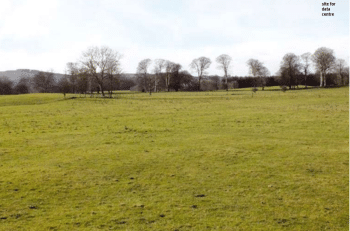
      Frank Connolly A former Fianna Fáil Minister for the Environment, Dick Roche, has accused Wicklow County Council and two other state agencies of outrageous treatment of a family which has tried to build a data centre on lands near Newtownmountkennedy in recent years. In the latest zoning and planning controversy to erupt in Wicklow, Roche has sharply criticised Wicklow County Council, the National Roads Authority( NRA) and An Bord Pleanála (ABP) over their treatment of Brian McDonagh and his brothers who obtained planning permission to build a data centre at Kilpedder, Newtown, in July 2010 but have been confronted by a series of obstacles that have prevented the proposed development. Roche’s criticisms echo concerns of other local councillors, and recent statements in the Dáil by Sinn Féin leader, Gerry Adams who has questioned the role of former environment minister, Phil Hogan, in  a number of controversies in Wicklow which, he argued, made him unsuited to be Ireland’s nominee for the European Commissionership. Village has learned that the McDonagh case and other controversial issues relating to Wicklow County Council and some of its staff and elected members have been brought to the attention of the newly appointed environment minister, Alan Kelly, who is considering whether an inquiry into planning and re-zoning, as well as the multi-million dispute surrounding illegal waste disposal, in the county, should be added to the ‘review’ underway into seven counties (including Donegal). And Junior Finance Minister Simon Harris has called for an investigation into Wicklow County Council. According to a comprehensive letter of complaint by Dick Roche to the then secretary general of the Department of the Environment, Geraldine Tallon, in July 2011, the treatment of the McDonaghs revealed “serious maladministration” on the part of Wicklow County Council and the NRA as well as a bizarre decision by ABP which the former minister asserts was “quite hard to fathom” and which was subsequently overturned by the Supreme Court. According to Roche, the McDonagh brothers purchased the 81 acre site at Kilpedder on the edge of the M11 in 2007 and lodged a planning application in January 2008 for a business park on the lands which were then zoned for business, science and technology. As their planning application was under consideration by Wicklow County Council, the McDonaghs learned that lands on the other side of the M11 from their site at Newtown were to be re-zoned for employment in a new Local Area Plan (LAP). During discussions with Council staff they also discovered that the zoning on their lands might be downgraded to agricultural use only in the draft proposals for the new LAP, rendering it commercially useless to them. During this period, Brian McDonagh and his brothers were invited to a meeting with a land agent who was acting for a prominent Dublin-based property developer and his partners, where they were offered a 50-acre parcel of land “at a knock down price of €40 million” on the opposite side of the M11 to their site. They were told that the land on offer, which was zoned for agriculture, was going to be re-zoned for industrial use in the new LAP. They were then shocked when the agent showed them a map of the new draft plan which indicated that the land which they owned was going to be de-zoned to agricultural use. Ironically, the agent making the offer was not aware that the McDonaghs owned the lands which he said were to be de-zoned. A draft contract sent to the McDonaghs also indicated that a nine-acre portion of the lands they were being offered by this private developer was owned by Wicklow County Council. When the McDonaghs asked the land agent acting for the prominent property developer what guarantee he could give that the land on offer would be re-zoned, the agent offered to set up a meeting with senior Council staff where the position would be clarified. At a hastily arranged meeting the following morning in the Druids Glen hotel in Wicklow, Tony O’Neill, Economic Development Manager of the Council, arrived with a copy of the LAP containing the County Manager’s recommendations for re-zoning. The document showed clearly that the lands on offer were to be re-zoned for employment and that the McDonagh lands were to be de-zoned. O’Neill allegedly assured the McDonaghs that it was 99.5% certain that the lands would be re-zoned by the elected members of Wicklow County Council (although they had yet to see the plans) and that the offer “represented a great investment opportunity” for them. On allegedly receiving this information, which fundamentally threatened their plans for a new business park, they immediately contacted their solicitors, Whitney Moore, who in turn wrote to the Council demanding that it “stay any further consideration of the 2008 draft LAP” until the proposed de-zoning of their lands was removed, or face injunctive legal action. After Council management initially denied that any such meeting had taken place at Druid’s Glen a member of the council who was present in the hotel and who had spoken to Brian McDonagh and O’Neill verified that the meeting had occurred. Two weeks later, the Council voted in favour of the Manager’s recommendations with the result that the McDonagh’s lands were indeed de-zoned. Following contact made by the chairman of the planning committee, Councillor Pat Vance (FF), the McDonaghs were invited to attend yet another meeting at the Ramada Hotel in Wicklow where they were asked to put forward fresh proposals for development on the lands they owned. It was at this meeting that they were informed that a proposal for a data centre on the land would be favourably considered by the council as it would not compete with plans for the land on the other side of the M11 which had just been re-zoned. Rather than lose the prospect of any development the McDonaghs withdrew their planning application for the business park and made a fresh one for a data centre on their lands which was,

    Loading

    Read more

  • Posted in:

    Parklife

      Ciaran Cuffe It’s Sunday morning in the Phoenix Park. A group of Brazilians are playing football under the shadow of the Wellington Monument. In the distance a herd of deer look on. One suspects the Duke of Ormond would be happy to know that 350 years after he purchased the lands for a royal deer-park, deer and residents happily share the space. Yet all is not well with the state of our parks. As cities increase in population development pressures threaten the future of green space. A new generation of city residents living in small apartments expect more from their parks, and cash-strapped local authorities find it difficult to meet changing expectations on shrinking budgets. The Phoenix Park itself is riven by roadways and has been described as “remorseless prairie, pitches and link-roads” with little of the sequestered charm of New York’s Central Park or London’s great parks. The Croppies Acre Park in front of Collins Barracks is currently closed to the public and was recently transferred from the Office of Public Works to Dublin City Council. The ambitious plans for a park at the Royal Canal beside the National Conference Centre in Dublin’s Docklands have not been realised. The Liffey Quays which could be a linear park from Heuston Station to Dublin Bay are choked with cars, with footpaths barely wide enough in parts for a single pedestrian. Uproar in certain quarters greeted proposals for traffic calming there. The park at Ormond Square in the north inner city has a sign banning football a few metres away from the plaque marking the birthplace of footballer Johnny Giles. Green spaces are often converted to ‘hard’ spaces as local authorities find them easier to maintain. Eyre Square and Wolfe Tone park are unfortunate manifestations of the tendancy. However, there have been notable achievements in recent years. Ringsend Nature Park is a wonderful linear park between the city and the sea on the site of a former landfill site. St Catherine’s Park in Lucan combines old woodlands and playing pitches beside the banks of the River Liffey, and it must also be one of the few Irish parks with its own Twitter account. In Dublin’s North Inner City the City Council finally landscaped a derelict site on North King Street that had been in their ownership for a quarter of a century. It now has been grassed and planted with shrubs and trees and is a model for ‘temporary use’ parks that make use of lands that face an uncertain future.  A similar approach was taken with Granby Park, a ‘pop-up’ park on Dominick Street last summer, though critics worry about the long-term legacy of temporary interventions. Nearby St Michan’s park on Green Street on the site of the site of an old jail provides a meeting place for Irish and immigrant families with a range of play facilities. The City Council has committed to reinstate the grassland integrity of Mountjoy Square. At a time when funding is scarce much can be achieved with some creative thinking. Glasnevin Cemetery and the Botanic Gardens share a common boundary and recently opened up a gate allowing visitors to walk between the two, adding civic value at a low cost. A pedestrian crossing linking the National Gallery and Merrion Square could greatly increase access to one of the great Georgian Squares. Nearby, however, Fitzwilliam Square remains under lock and key, sharing the dubious privilege along with De Vesci Gardens in Dún Laoghaire of being private squares in neighbourhoods lacking in publicly accessible green space. Little headway seems to have been made in addressing the ubiquitous challenges and opportunities of our post-war soulless suburban stretches of grass. Perhaps local councils, the Office of Public Works and indeed, crucially, Nama are not protecting and enhancing public spaces with the zeal and imagination necessary if they are to become engines for a transformation in our quality of life. The role of parks and open space in fostering biodiversity is now recognised. The “Green City Guidelines” published in 2008 by the UCD Urban Institute, Dún Laoghaire Rathdown and Fingal County Councils showed how nature and green networks can be enhanced in cities and towns, even next to high-density urban developments. They also illustrated the importance of green roofs, green walls, permeable surfaces and sustainable drainage systems in protecting and enhancing the environment. More importantly they emphasised the importance of access to nature in an urbanising world. Guardian writer George Monbiot has written of the crucial role “re-wilding” of open spaces can play, not just in fostering biodiversity but in opening up human nature and imagination. A debate is needed on the risks of promoting  wild spaces where children are exposed to the real-life risks of climbing trees and encountering strangers and of the dangers in lost spontaneity, and lost exercise in a world of burgeoning obesity of cosseting our children in carefully manicured spaces and gated playgrounds with shock-absorbing surfaces. Over the coming months in a series of articles Village will take a look at green and public spaces across the country and ask what needs to change to ensure that they are suitable for today’s needs. We will highlight the best and worst examples of the planning of open space and parks from recent years. •

    Loading

    Read more

  • Posted in:

    Parklife

    Parks are good for the environment, quality of life and human health: a series of articles will explore opportunities to expand and develop them imaginatively. By Ciarán Cuffe

    Loading

    Read more