Environment

Random entry RSS

  • Posted in:

    Save your beautiful town.

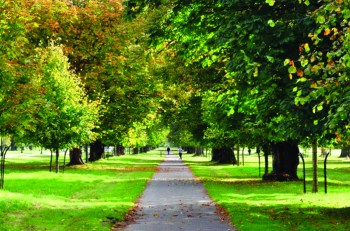
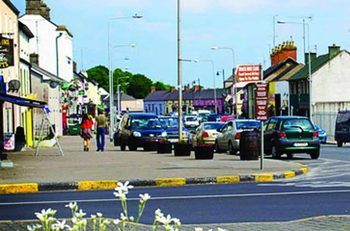
    By Hayley Farrell. Ill fares the land to hastening ills a prey, where wealth accumulates and men decay”, Oliver Goldsmith’s ‘The Deserted Village’ is a portrait of life in his native countryside, once a thriving community, but then destroyed by the effects of the industrial revolution. We hear much about Dublin in terms of parks, but when compared to rural towns Dublin has an established tradition. The main square in Rathdrum, Co Wicklow, the backdrop to the  iconic raucous pro-Treaty harangue by Michael Collins in the eponymous movie languishes – no more than a car park surrounded by derelict pubs. Many other towns, that do not typically attract tourism but rely on commerce, have turned their back to their rural setting as a result of ribbon development. The town of Longford is notably guilty of this. The wide main street, typical of a market town is crammed with cars and car parks which have hijacked most of the civic spaces, with little or no greening. Narrow footpaths and an absence of quality street furniture, planting or trees does little to encourage people out of their cars and onto the street. The town also turns its back to the rich industrial heritage it once enjoyed. The Market Square cannot become a beautiful tree lined civic space surrounding the old 1800’s Market House since it has been demolished. Approaching the town today, Shaw’s, a large retail store centred on wide spans of grey hard landscape is the focal point of the town, a prime example where owners of public space should be urged to provide greening for the community. A welcome reimagining of the town in recent years has been the opening of the Royal Canal after years of being derelict, with navigation now possible from Spencer Dock in Dublin to Clondra, and the river walk along the Camlin now offers the only direct access to public open green space from the town centre. Longford has always been a thriving town with great transport links and some fine surrounding villages. The newly restored St Mel’s Cathedral could still be the centrepiece of a heritage-sensitive landscape scheme to celebrate the re-opening after the devastating fire, an opportunity for a good quality green open space. The streetscape along the Main Street and Ballymahon Street, if enhanced with street trees, suitable street furniture and planted beds to break the depressing congestion could transform the town, with traffic Islands offering further scope for greening. There is much good practice to follow. A number of towns and villages have planted and thereby softened their streets: Tyrrellspass and Mullingar, Co. Westmeath, Abbeyleix, Co. Laois, Adare, Co. Limerick, Dungarvin, Co. Waterford, Kilkenny and Carlow towns, Killarney, Co. Kerry, Claremorris, Co. Mayo, Ashbourne and Ardee Co. Meath, Dalkey and Leixlip in County Kildare. Birr Co. Offaly recently received an Active Travel Town Grant of nearly €1m for the enhancement of Emmet Square and other sustainable travel initiatives. Athlone Civic Centre and Square received international acclaim and many awards but like many civic spaces, the soft landscape element is lacking. Although Longford still has some potential for green infusions, one town with immense potential is Moate in Westmeath, also a market town with a wide Main Street. It too has turned its back to its countryside. This town, once heaving with traffic, ‘a bottleneck’ and a through-route for commuters travelling east to west,  now endures enervation and dilapidation due to the bypass and the downturn. The reduction of traffic now offers the town the breathing space to reinvent itself through natural resources, culture and built heritage. Unlike Longford, the town has a relatively unspoilt Quaker and industrial heritage, recognised by the County  Council with a commendable architectural conservation area designation, proposals to convert the closed classical courthouse into a library and a disused railway station in the style of Dún Laoghaire station, as well as a unique esker landscape to the south rich in biodiversity, left over from glacial deposits – with a motte and bailey. A garish fast-food joint and a SuperValu fester incongruously in a car park by the old gaol and courthouse, where the main square should be – a space for markets and impromptu fun, linking public paths to the Esker landscape beyond. Council houses face Moate Castle, blocking the views to the  esker and river. Old farm outhouses and the adjoining a mill present a frustratingly avoided opportunity for a walkway and landscape enhancement. Rights of way could be co-ordinated and linked to the local towns of Kilbeggan, Clara, Tullamore, Lough Boora Sculpture Park and bogland visitor amenities and the River Shannon. Following the abolition of their councils last June, towns are being urged to form elected representative organisations to hold regular meetings with county councillors. Beleaguered but concerned citizens can make a tangible difference by highlighting and cherishing the natural and built assets of these towns and villages using ‘green’ town design guidelines such as the Design Guidlines report for Tyrellspass which deals with heritage predominantly, a nice example of public consultation before any developer-led madness bulldozes in again. • Hayley Farrell designed the scheme for a park at North Kings Street, Dublin 7.

    Loading

    Read more

  • Posted in:

    Planetary death by extractivism.

    ________________________ This Changes Everything Naomi Klein Simon & Schuster 2014 _______________________ Review by John Gibbons. I finished reading Naomi Klein’s ‘This Changes Everything’ just as a major study by the WWF confirmed that, in a mere four decades, more than half of the wild animals on Earth had been wiped out. From the time I was in primary school to today, life on Earth has been impoverished more rapidly than at any time in the last 65 million years. The calculus used to measure this is known as the Living Planet Index. It might be more accurately called the Dying Planet Index. Humanity’s relationship with almost all life on Earth can be defined as extractivist – a phrase used repeatedly by Klein, in her sweeping, angry polemic against the rapidly unfolding madness of one species run amok in the world, destroying everything in its ever-expanding path. Klein made her name in 1999 with ‘No Logo’, a withering assault on the hidden underbelly of the global brand business – the sweatshops, the crooked trade deals and the structural violence of the rich against the poor. This time, however, it’s personal. A neophyte to climate change, Klein admits to only having really tuned into it as an issue as recently as 2009. She is, however, a quick learner and in the last five years, it has gone from being fodder for her next book to occasioning her the awful realisation contained in the book’s title: climate change does indeed change everything – and truly understanding this issue inevitably changes you. “I denied climate change for longer than I care to admit. I knew it was happening, sure…but I stayed pretty hazy on the details and only skimmed most of the news stories, especially the really scary ones. I told myself the science was too complicated and that the environmentalists were dealing with it”. Having, like Klein, come from an entirely non-environmental background, and slowly, reluctantly, coming to realise the true import of climate change, I could personally relate to her initial desire to look the other way, and simply tune out this avalanche of ecological bad news, in ways that are analogous to how we humans are psychologically programmed to largely tune out the reality of human death. “Remember and then forget again. Climate change is like that; it’s hard to keep it in your head for very long. We engage in this odd form of on-again-off-again ecological amnesia for perfectly rational reasons. We deny because we fear that letting in the full reality of this crisis will change everything. And we are right”. As a society, as a civilisation, our response thus far has been about as nuanced as curling, puppy-like, into a ball and hoping it will just go away. “All we have to do is keep on denying how frightened we actually are. And then, bit by bit, we will have arrived at the place we most fear, the thing from which we have been averting our eyes”. We’ve become truly accomplished at both understanding and ignoring climate change. In the 24 years since international climate negotiations began in earnest, global CO2 emissions have risen by 61%. Crisis, what crisis? I vividly remember watching on in horror as the 2009 Copenhagen climate summit ended in bitter failure. The Irish Times was one of 55 major newspapers that, in December 2009, ran a joint editorial urging – demanding – that world leaders grasp this last ditch opportunity to avert calamity. One month later, the same paper ran an editorial complaining about the severe cold snap and wondering aloud if global warming wasn’t all just a big ol’ hoax after all. From the ashes of disaster, sprang clarity. “I have come to think of that night (in Copenhagen) as the climate movement’s coming of age: it was the moment the realisation truly sank in that no one was coming to save us”, writes Klein. After all the guff and rhetoric, this emerged from the ruins of Copenhagen: “our economic system and our planetary system are now at war. Or, more accurately, our economy is at war with many forms of life on Earth, including human life”. Klein spares some of her harshest critique for Big Green, namely those multi-million dollar US environmental organisations, specifically the Environmental Defence Fund (EDF) and the Nature Conservancy. Hilariously, it turns out that the latter actually operates its own oil wells, while the EDF regularly partners with Big Energy and helps it sell the myth that shale gas can be a ‘bridge’ to a mythological renewables-powered future. (Klein’s own rejection of nuclear energy as proven low-carbon technology is argued with little conviction and sounds more like a sop to her readership than a considered analysis.) Klein lambastes the various ingenious schemes, from emissions trading to carbon offsets, many backed by Big Green, that have given the illusion of action while achieving precisely nothing. In its early days, the unofficial slogan of the EDF was “sue the bastards”, and it and other groups enjoyed dramatic successes on a range of environmental issues. Latterly, the joke goes, the new EDF slogan is “creating markets for the bastards”. Under the leadership of business-friendly Fred Krupp, the EDF ballooned 40-fold from an annual budget of $3 million to $120 million. With the cash rolling, the emphasis for Big Green was developing industry-friendly “solutions” to the obliteration of the planet and the wrecking of our climate system (‘green growth’ is a particular favourite). Anything, in other words, as long as it didn’t fundamentally challenge the neoliberal narrative. “The refusal of so many environmentalists to consider responses to the climate crisis that would upend the economic status quo forces them to place their hopes in solutions… that are either so weak or so high-risk that entrusting them with our collective safety constitutes what can only be described as magical thinking”, Klein opines. There should be a special place in hell reserved for cuddly, lovable Virgin chief Richard Branson, who, to huge

    Loading

    Read more

  • Posted in:

    Parklife.

    By Aidan J ffrench. Parks are vital contributors to urban life. But, with notable exceptions (eg Dublin County Council’s acquisitions of demesne landscapes: Marlay, Malahide, Ardgillan etc.), provision and management of parks in Ireland is haphazard, due to inadequate policy, law and resources, and political inertia. In 2006 Minister Roche’s responses to Dáil questions from John Gormley TD [opposite page] revealed clear indifference to parks. A 2007 international congress in Dublin saw Taoiseach Ahern plámás parks managers with platitudes while his government failed to rectify legal problems raised by the 2005 fiasco in Dartmouth Square, Ranelagh. This year’s Irish Planning Institute conference heard its president announce “.. the lessons [of the boom] have been learnt”. What lessons, learnt by whom: what evidence? None was forthcoming. There’s no evidence of lessons learnt in planning for parks. International practice Experience abroad demonstrates that successful parks require innovative and progressive State support, vision and dedicated human resources. Meeting these requirements is critical if urban dwellers and tourists are to fully enjoy the proven socio-economic, health and environmental benefits of parks. But Ireland lags significantly behind progressive states (Germany, Malaysia, Scotland, USA) and cities (Berlin, Melbourne). There, parks are political priorities – Chicago’s Mayor Daly spent $500 million on Millennium Park! New York and Greenspace Scotland are exemplary in promoting parks as generators of green-collar jobs, quality of life, optimum health and social solidarity. Investing in parks – policies, law, research, guidance, projects and resources – is a national priority. Key impediments Sadly, Ireland still largely relies on an outdated 1980s model of park provision. Key impediments preventing progression to best international practice include: • a 1987 policy unfit for 21st. century needs (quality, climate change, sustainable drainage, biodiversity); • a seemingly disengaged Department of Environment (DoE); • no professional landscape expertise in DoE to champion parks. Parks are landscapes. Government, after inexcusable delays, published a Draft Landscape Policy in July – flawed and unambitious (nothing about parks) – to meet European Landscape Convention obligations. With no single government department employing any Landscape Architects or parks professionals – not Environment, Arts/Heritage or Tourism/Sport – it’s likely to flounder in civil service inertia. In Malaysia – a poorer state – national policy embraces parks: with a large, landscape department (established 1996), devoted to landscapes and parks. In the Netherlands there’s a state landscape architect! There’s increasing demand for council services, driven by expectations raised by the property tax. Former minister Hogan promised a range of services: top of the list were parks and amenities. Very few councils employ qualified staff to deliver these services and they are currently prohibited from recruiting. Resources – some facts and figures Apart from these impediments – significant in themselves – official statistics on parks are unavailable. With rare exceptions, we don’t know the locations, usefulness, quality, quantity or accessibility of urban parks. Fundamentally, the crux is that parks provision is only a discretionary service (Local Government Act 2001), not mandatory, unlike other services which are a legal imperative. Also ….. • no national laws for urban parks; • only 8 of 31 local authorities employ qualified staff; • recruitment embargo severely impacting on capacity to provide / manage parks; • few training programmes for staff; • lack of regulation impeding quality delivery: anyone can claim to be a landscape architect or park manger, so there’s no assurance of quality provision. For years, the Irish Landscape Institute has called on successive governments to regulate the profession, notably in its ‘Manifesto for Irish Landscapes’ (General Election 2007). These impediments have practical consequences: poor quality of life/public health, diminishing property values, compromised tourism benefits and a harsh environment. The Future? Dublin’s local authorities and OPW, with An Taisce, will implement a pilot Green Flags Awards Quality Assurance scheme for parks in 2015. Enlightened and demanding communities are taking independent action (eg community gardens, popup parks). And Open Space Strategies (mandatory in the UK) are being adopted . In the short term, pending more systemic advances, DoE Minister Alan Kelly could immediately introduce two practical reforms: mandatory preparation of OS Strategies and inclusion of parks standards in performance indicators for local authorities. He should also commission design competitions for new parks in regeneration areas (eg Limerick city). Relaxation of the recruitment embargo too would help.   MINISTER ROCHE’S 2006 REPLIES TO DáIL QUESTIONS FROM JOHN GORMLEY TD, ON PARKS QUESTION John Gormley,TD 201. Please indicate: • the number of local authority parks or parks and landscape services departments that are staffed with professionally qualified landscape horticulturists, landscape architects or landscape managers; • the local authorities which run such departments; and if he will make a statement on the matter. [34988/06] REPLY Dick Roche, Minister for Environment, Heritage and Local Government: The information requested on the number of local authority parks or park departments in local authorities is not available in my Department, and staffing returns received from local authorities do not contain the classification of employees referred to in the Question. It is a matter for the manager of each local authority, under section 159 of the Local Government Act 2001, to make such staffing and organizational arrangements as may be necessary for the purposes of carrying out the functions of the local authorities for which he or she is responsible. FURTHER QUESTIONS John Gormley, TD 202. Mr Gormley asked the Minister the Ministerial directives, strategies or policies, his Department has issued in relation to the planning, design and management of green spaces and parks during the current Government’s term of office; if guidelines or directives to county managers in respect of parks or open spaces matters have been issued; and if he will make a statement on the matter. [34989/06] 203. Mr Gormley asked the Minister for the Environment, Heritage and Local Government if there is a unit or permanent staff in his Department responsible for policy development for parks and green spaces. [34990/06] 204. Mr Gormley asked the Minister for the Environment, Heritage and Local Government if his Department provides specific,

    Loading

    Read more

  • Posted in:

    Things to do in fields.

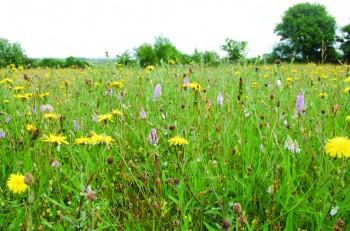
    By Shirley Clerkin. There is something innately satisfying about a good field. Maybe it is the sense of enclosure, or a golden ratio of open pasture to hedge or stone wall.  Perhaps it is the clatter of the gate as you climb up and over and the decent feeling of arrival as you land with a distancing thud on the ground. It’s the freedom too, freedom to walk and think and observe. I think my very essence or molecules like it. The name “Shirley”, from the shire, means productive or white meadow. Maybe I was destined for fields, always. There is an actual heritage to being in a field. The Céide fields in Mayo are fields of the first farmers in Ireland; hidden by blanket bog during a climatic cooling but now a heritage site and visitor attraction. Fields are the essence of farming. The enclosures domesticated animals, stopped them roaming; and the cultivation of grasses allowed grazing animals to dominate. We changed from hunting to pastoralism as Neolithic people started to clear woodlands and practice agriculture. Now, over 60% of Ireland is covered by grassland, not including the swathes of sterile golf courses, arable crops (which are of course grasses too) or groomed domestic lawns. We get a lot of our nutrition from grasses too: wheat, barley, corn and rice. Grasses are angiosperms or flowering plants. Their flowers are the little spikelets on top and they rely on wind not insects for pollination. Fond of rhizomes, grass species can spread under the soil to cover large areas.  They grow from the base not the tip, which is why they can be grazed, munched and mowed successfully. The improved grassland on which agriculture predominantly relies, is usually a monoculture of rye-grass and white clover; not the semi-natural grassland of your ‘little house on the prairie’ childhood imaginings. Predominantly grassy, these fields do away with the need for those little buzzing batteries of production, the bees and butterflies. Running downhill through a proper meadow of sweet smelling grasses and flowers with butterflies lifting up as you go is energising, and childish. I can hear the damned theme tune and see Laura Ingalls Wilder. Or you can try something less energetic. The late gardener and writer Christoper Lloyd summed it up to a tee: “Perhaps the best way of discovering the living nature of grass is to lie on it, in quite early Spring when the ground has dried.  You need nothing but the grass underneath you to discover that it has a very strong and agreeable smell, all its own”. A fox fable Torrential rain spilled unmitigated into my anorak as I walked through a field searching for access to get to a bog. It was one of those ‘adverse weather’ days with round raindrops, Old Testament in proportion and force. Out of the grey, a magnificent dog fox strolled straight across my path just two feet away, completely un-fazed by the downpour and me. He approached a stone wall, climbed up and over, and vanished through a gap. Thrilled to bits, I made off after him, less gracefully. I clambered down from the wall, eyes fixed down towards my feet to control the incessant drops running down my nose, and as time stood still beheld a field aflush with orchids, thousands and thousands of them. Fantastic Mr Fox had led me.  And was gone. The orchids were not in the field by chance. Special conditions allowed them to flourish amongst the fine grasses, black knapweed and yellow rattle. Species-rich or flower-rich meadows like these need low-nutrient conditions and the old-fashioned cutting of hay late in the season after the flowers seeds have set. Orchids are an old symbol of fertility; they have double tubers under the ground, which mature over a number of years before they flower and whose appearance explains their greek name orchis, which memorably means testicle. Known as dogs’ stones in some places, they were used to make love potions before the advent of tinder. Even Shakespeare had a go at them in Hamlet when he referred to the Early Purple Orchid as Long Purples. “Long Purples, That liberal shepherds give a grosser name, but our cold maids do dead men’s fingers call them”. The poor cold maids hoped that the love potions might result in a bit of warmth.  In Irish too, the name for Early Purple Orchid, Magairlín means testicle. The grassland Mr Fox steered me to what ecologists call a semi-natural habitat. This means that although the plant communities are natural, they need some sort of activity, like low-intensity farming or late hay-cutting to maintain them. Improved grassland is the habitat in most agricultural fields: all the same colour and strength dominated usually by one species of rye-grass boosted by high nitrogen fertilisers. These are productive agriculturally, but not for nature.  High nature value farming promotes species-rich grasslands with all the attendant productive bonuses of bees, butterflies and other insects. A real shire. The relationship between the yellow rattle and the orchids is very important. Yellow rattle is a semi-parasitic plant, and it reduces the vigour of meadow grasses by essentially sucking the life out of them. It has haustoria, minuscule root-like appendages that can absorb water and minerals from nearby grasses by locking onto their roots. All this, and it looks so innocent and sweet, with its little yellow poddy heads nodding in the breeze, named because it rattles when its seed pods dry out. Yellow rattle is a great mixer, and deals with grassy bullies effectively allowing space for other plants like the orchids. Orchids also rely on a symbiotic fungus for their early germination and development. Their tiny seeds spread on the wind but they will not germinate without this fungus, and this fungus is very susceptible to fertiliser and fungicide. So, if the species-rich grassland is fertilised it won’t take long before all these relationships wane and its tapestry composition is changed to something less interesting. The thirty native

    Loading

    Read more