General

Random entry RSS

  • Posted in:

    Media fails to report truth – success in Ireland’s handling of Coronavirus. The ICUs and graveyards will not be swamped. We’re looking at 500-1000 deaths, not 68,000; and c19,000 infections not 1.9 million – the projections were out by a factor of 100. By Michael Smith.

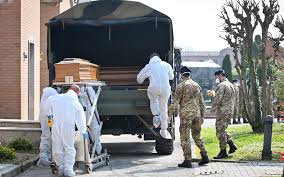
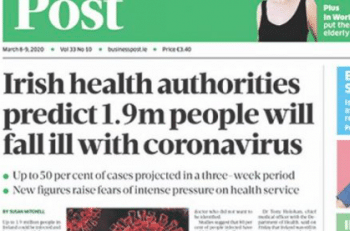
    Those who predicted swamped ICUs, scandalous shortages of equipment and overflowing morgues in Ireland were utterly wrong. If you haven’t realised that, you’re not following.  The Irish Times, Irish Independent, RTE and other media in Ireland have failed  their democratic duty to keep the public aware of the significance of the evolving pattern of Coronavirus cases in Ireland over the last three weeks. There may indeed be “the darkest days ahead” as the Taoiseach intoned, to media head-nodding,  on Easter Sunday, but there is no evidence for it. I am not saying this to be provocative but because it is the truth. There is a pattern of reported cases it is just that the media have not followed it, or conveyed what the pattern indicates as the probable outcome of at least the first wave of Coronavirus cases and deaths in Ireland. Their job was not to convey this as a certainty but as the probability, based on the curves – the data. Instead they have plied, and continue hour after hour to ply, pictures of improvised morgues, invitations to submit stories about deceased love ones, pieces about our non-existent devastating shortages of PPE and ventilators, and of rockstars still organising emergency imports of it,  and po-faced pieces about how funerals, so central of course to Irish life,  will never be the same again.  The catastrophism is compounded by the fact that many countries and in particular the two countries from which we draw most of our external news, the US and the UK, genuinely face shortages of equipment and rampant deaths. Unlike here, in these countries the media are doing their best to reflect the context of the reality of cases and deaths.  On the other hand if we remove centres of infection like greater New York, Wuhan, Lombardy and Madrid, the rates of infection and indeed of death are really quite small (73 deaths per million in Ireland).  It is also the case that in Ireland 65% of cases come from three sectors, healthcare workers in hospitals, nursing homes and residential institutions like Direct Provision centres.   The incidences of people outside particular hotspots of this type catching Covid-19 have been low. And 90% of deaths have been of people over 65 (with the median age of death 82), mostly with underlying health conditions, “comorbidities”. The limited range of the incidences have not been reflected in reportage. And that’s apart from the numbers which we’ll come to later. So why the pessimism in optimistic Ireland? Let’s start by looking at the sequence of what happened in Ireland. The Department of Health oversaw a system underprepared for a pandemic and then specifically underestimated the dangers from China – on 20 February the Chief Medical Officer Tony Holohan ineptly faced a camera and said: “We don’t expect to see anything more than individual cases occurring that we believe we’ll be well-positioned to manage within the next couple of months”.   Within a few weeks, however,  the official view had flipped the other way and by 8 March Paul Reid, CEO of the Health Service Executive (HSE) was endorsing a report in the Business Post which quoted the health authorities massively overestimating cases.   The lead story in that newspaper on that day five weeks ago predicted 1.9 million infected cases for Ireland which would have implied 68,000 deaths, since the death rate given by the WHO at the time was 3.4%.  The report did not say there “might” or “would probably” be 1.9 million cases.   Its best-selling headline on 8 March,  a date on which there had been no deaths in Ireland, was  “Irish health authorities predict 1.9m people will fall ill with coronavirus”; the subheadline was “Up to 50 per cent of cases projected in a three-week period, while the new figures raise fears of intense pressure on health service”.  The premise was that we would see 30% daily increases in cases. The smaller print of the report clarified that the prognosis depended on there being no lockdown measures.  The debate in the country seems to be premised on the 1.9 million projection, though on one level the Taoiseach has acknowledged that the 30% daily increases lasted only a few days after it was used to justify the first phase of lockdown.  There is overall a vague (accurate)  sense of a battle being won despite (inaccurate senses of) turmoil in the ICUs and, somehow, the rolling probability of an imminent surge. It is important to digest the consequences of the central countervailing fact that the daily increases in Ireland four weeks after the first salvo at a lockdown here on 15 March, when the pubs were closed, closely reflect those in China four weeks after the lockdown in China on 13 January. Crucially, if we continue to follow China within a week we will have daily increases in cases of no more than three percent and then two percent dwindling to nothing over the following couple of weeks.  There may be a subsequent rise, if we choose to reduce protections, but that is a different matter. The chart of Corona cases Ireland shows that the rate has already fallen to 8.5 percent or under for each of the last ten days, and is still reducing. It started at 30%. As a footnote, ineptly the Department of Health has excluded (as of 13 April) 2083 cases tested in Germany, though they all date from some weeks ago.  There is no advantage in including them since their exact dates remain unknown.  They do not change the pattern. As of 13 April total cases were 10,647; total deaths were 365. Over the last three weeks I have written two articles for Village following the pattern of cases in China and transposing them onto the Irish situation https://villagemagazine.ie/woo-hoo-wuhan-is-it-possible-ireland-will-be-in-the-position-china-finds-itself-in-now-in-the-first-half-of-may/ https://villagemagazine.ie/lessons-learnt-about-probable-covid-19-cases-and-deaths-in-ireland/.  I said it looked like we’d be out of the woods by the middle of May with 35,000 cases and 500-1000 deaths. As of 13 April the cases look destined to be around half that number while the deaths seem around accurate. This is despite research by Seamus Coffey in Ireland, mirroring reports from the Economist magazine about the general experience

    Loading

    Read more

  • Posted in:

    An Irishman in Rome. Conor Fitzgerald Deane’s coronavirus diary

    31 January Metaphorically, if not yet  literally, coronavirus is on everybody’s lips in John Cabot, an American university  in Rome where I teach. Most of our conversations revolve around the  autocratic might shown by the Chinese government in shutting down an entire city of 11 million people, two  and a half times the population of the Republic of Ireland, and, of course, we marvel at  that time- lapse video of the hospital going up in just 10 days. Two  Chinese tourists in Rome are hospitalised with the  Corona virus, which prompts me finally to learn the name of that huge unknown city, Wuhan. I set my students a paper on epidemics, but remain comforted that  the nationality of the tourists confirms my essentially racist belief that this is a Chinese thing.    9 February On the day my father, who embodies the concept of pre-existing condition, turns 80 in Dublin, the extent of the remarkable electoral surge  of Sinn Fein is becoming apparent. I resist the temptation to triumphalism, and explain to my colleagues here in Rome, who, being professors, are practised at feigning polite interest in others’ academic obsessions, that the victory, similar to the victory in Italia 90 when Ireland hammered  England 1-1 in Cagliari, has  more to do with health and social justice than with reunification. For the next few weeks I luxuriate in long-distance outrage at the anti-SF  machinations of Fine Gael and, especially, Fianna Fáil – the real class traitors. 21 February Two  people, not Chinese, are hospitalised in Padua, one of whom then becomes the first Italian fatality. Seventeen new cases appear in Lombardy. The  Italian government announces quarantine measures for anyone who has been infected.  22 February The region of Lombardy suffers its first coronavirus death, bringing Italian fatalities to two. There are 79 recorded infections in the country.  23 February Today is my son’s 21st birthday. He is up north in Tyrol skiing with friends. I worry slightly  about enclosed cable cars full of coughing  and snuffling  holidaymakers from northern Italy. I just hope my son won’t bring it home with him, because now, with  25 new cases in Veneto, the ghastly symptoms of the disease are being talked about. When my sleep apnoea  jolts me awake at night gasping for breath, it now takes me longer to calm myself. A third person dies in Crema (Lombardy); there are now 152 recorded infections.  My old schoolmate Eamon Ryan, whose father, Bob,  was a very kind mentor to me in the Dublin of the 1980s, is putting a brave face on the poor showing of the Greens. England hammers Ireland at Twickenham, and my interest in the  6 Nations tournament, Italy being my other team,  evaporates. Surgical masks vanish from pharmacies in Italy. 24 February Three more deaths in Lombardy, one in the beautiful hill-top town of Bergamo, from whose city walls, on a rare clear day when the mists and industrial smog of the Po Valley  have dissipated,  the  view extends all the way to Milan, which stands at the centre of what is essentially a single vast city the size of seven provinces. Only by looking for the 16th-century  bell towers and 20th-century chimney stacks  is it possible to distinguish from the  sprawling conurbation  the industrial and post-industrial  towns of Stezzano, Dalmine, Brembate, Trezzo sull’Adda and, in the distance,  Monza, Cologno Monzese, and Gorgonzola, and finally, the dim outlines of the new skyscrapers of Milan, markers of the stubborn economic survival of this part of the country in the midst of Italy’s  25-year-long economic slump.  25 February The Italian government closes schools, universities, public offices, museums and lawcourts in the regions of Emilia-Romagna, Friuli-Venezia Giulia, Lombardy, Veneto, Piedmont and Liguria. Travel outside the infected zones is prohibited. 27 February Veneto now has 111 cases, 42 of them in the tiny hamlet of Vò. Two of its inhabitants die, and over the next few days everyone there is tested. Less than 2% are positive. Cases are reported in Tuscany and  Emilia-Romagna, where the victims are reported as having returned from abroad, almost as if to emphasize the non-endemic nature of the disease.  Ireland gets its first case, a woman who travelled from Dublin to Belfast  and thus solomonically resolved the problem of which side of the border deserved the first blame.  28 February My daughter flies from Rome to Dublin to interview my father for her Master’s thesis on Irish literature. She packs a surgical mask – an extravagance, but my father is poorly, and people are beginning to look askance at Italy. Touchy about these things, I detect some cultural stereotyping in Ireland and the UK of the tactile, gesticulating  all-living-together Italians, an attitude that  my father’s late friend Edward Said would have called orientalism.  3 March Covid-19, as the infection is now being called, reaches the French-speaking region of Aosta, the last hold-out of Italy’s twenty regions. My daughter returns from Dublin, having not met my father face-to-face after all, but having stayed with my active and healthy mother (81). Rumours begin to circulate in my university that the students, most of whom are non-Italian, might take fright and start returning to their homes. My classes remain full. An Irish woman who returned from Italy becomes the second case on the island of Ireland and the first in the Republic.  4 March Owing to the impossibility of quarantining only some cities and provinces, the Italian government of Giuseppe Conte  issues an emergency decree declaring  the entire country subject to restrictions of movement, and orders  schools and universities across the entire country closed.     5 March My university calls a meeting of all professors and instructors, and tells us to prepare for remote teaching. The closure almost coincides with the spring break, which mitigates the sense of upheaval. Even so, the mood at the meeting is an odd mixture of detached amusement, disbelief, confusion  and anxiety.    6 March The Ireland v. Italy rugby international, my least favourite game of the tournament, is suspended, but Italian fans from the rugby-playing north of the country continue to  arrive in Dublin. The number of  recorded cases in Italy now exceeds 3,000, almost all in Lombardy and Veneto. The death toll is 107.  7 March  My daughter and her boyfriend along

    Read more

  • Posted in:

    A voice that hangs on detail but wants authenticity. Pól Ó Muirí reviews Colum McCann’s novel, ‘Apeirogon’.

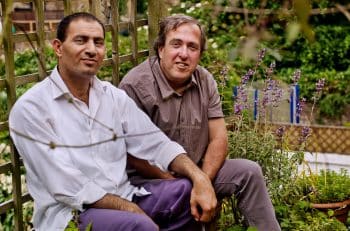
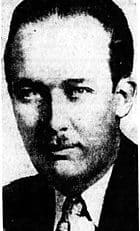
    One would have to have to be stonehearted not to have pity for any author releasing a book this year and, in particular, one which deals with the Israeli-Palestinian struggle, now bogged down in disputes as to how to handle coronavirus with justice. Events have rapidly overtaken Colum McCann’s latest novel, ‘Apeirogon’ (Bloomsbury), which he writes in his cover notes is a “hybrid novel with invention at its core, a work of storytelling which, like all storytelling, weaves together elements of speculation, memory, fact and imagination”. Note well that “fact and imagination”. Accordingly, the writer throws the reader into the lives of real people and real horror but allows himself the freedom “to shape and reshape their words and their worlds”. That is both ambitious and more than a little difficult to navigate. Then add in the question as to whether or not a Dublin writer, now resident in New York, will be able to contribute something imaginative about this area which will be better than its own writers: Amos Oz, David Grossman; Eshkol Nevo;  Sayed Kashua; Mourid Barghouti or Naguib Mahfouz, among others. It is a big challenge but one which McCann is perfectly entitled to undertake. After all, writers are imaginative beings and if he can bring something of value to the reader, and something that is believable, then let’s have it.  In an Irish context, a parallel would be with the American writer, Lionel Shriver. She spent many years in Belfast and her novella, ‘The Subletter’, is a first-class example of how an intelligent and thoughtful writer can wring something vital and illuminating out of a very fractious place that is not native to her. Still, McCann is not off to a good start with the book’s title, ‘Apeirogon: a novel’. It is unnecessarily obtuse. The book, sorry, “this epic novel”, is named for “a shape with a countably infinite number of sides”. Even after reading the explanation, many will not be sure what that is.  Yes, reviewers are supposed to know everything – they do not – but no-one, reader or reviewer, wants to think of themselves as being, well, thick. (And “countably”?) Still, this is a substantial book in pages, over 450, that “crosses centuries and continents, stitching time, art, history, nature and politics into a tapestry of friendship, love, loss and belonging”. The reader is also promised something that is “musical, muscular, delicate and soaring” which, even for a blurb, is grandiose. Taking as his starting point the violent deaths of two real young girls – one Israeli, Smadar, and one Palestinian, Abir – McCann attempts to create a narrative about the actual friendship that developed between their two grieving fathers, Rami Elhanan and Bassam Aramin (pictured), and has done so with their blessing. This then is fiction that is based on fact; a re-imagining of real death and is a profoundly unsettling undertaking for any reader. How it counts as fiction, as a novel, even a hybrid novel, is something this reader found difficult to understand. Were it a television programme, it would undoubtedly be classed as a ‘docu-drama’. In a long series of short chapters and lines, McCann charts the physical landscape of Israel and Palestine and the psychological toll it exacts on its inhabitants. “Geography here is everything”, the author reminds us as he lists various zones and their restrictions, depending on whether you are Israeli or Palestinian. While effectively describing the areas, the overall effect is quite leaden. McCann, thanks to research visits to the region, is very apt at providing detailed lists and observations but he does not manage to distil that often enough into fiction that flies.  The constant short chapters read like something from a guide book – “Five hundred million birds arc the sky over the hills of Beit Jala every year” and he iterates the flocks exhaustively. Yet the detailed knowledge never translates into something more substantial.  Worse, McCann’s habit of offering up little lines here and there jars more often than it enlightens. There are good lines in the text – “The highway is a scattershot of morning headlights” – but there are too many lonely lines that hang meaninglessly as stand-alone ‘chapters’ – “A swan can be as fatal to the pilot as a rocket-propelled grenade”; “Rami’s licence plate is yellow” or “The rim of a tightening lung” – which often give the impression of being a poor man’s aphorism after Nassim Taleb. The text is also interspersed with small photographs or illustrations, a Sebald-like gambit to provide more authenticity.  The violence of the young girls’ deaths, and their aftermath, are clinically described: “The bullet that killed Abir travelled fifteen metres through the air before it smashed into the back of her head…” and “… the splattered tablecloths, the severed torso of one of the bombers like a Greek statue-piece in the middle of the street”. It is, to be honest, a description that could have been written about many scenes in the North over the years. Abir is killed by a rubber bullet. McCann tells us were fired from M-16s and “were first tested in Northern Ireland…”. That is wrong. The rubber bullets in the North were fired from a weapon that resembled a single-barrelled, sawn-off shotgun and were solid rubber the size of a man’s fist.   (Indeed, a young girl was killed by one in the area of Belfast where this writer grew up, which underpins the fact that you do not have to go to the Middle East to find such tragedies.) No-one could fault McCann’s engagement with his subject and his honest attempts to portray a very dangerous and divided region. Regrettably, the whole things smacks of “if this, then that” sort of writing. One is not looking for McCann to take sides but just to say something, to free his inner Houellebecq. But then to do that, McCann would have to have a story to tell, his story, and a definite point of view that might offend some readers

    Read more

  • Posted in:

    How the Green party can wrestle its conscience to a draw.

    As the dinosaur parties publish their joint framework coalition document the Greens should draw up their own strong agenda for the era of Covid and climate, and pull out if it’s not agreed, and implemented. By Michael Smith. In the absence of a relevant Labour Party the Greens have become by far the biggest force in Irish politics for wrestling with their consciousnesses, though Fine Gael pretends.  The Labour party always managed to lose and the Green Party has oozed pragmatism under sunny and collaborative Eamon Ryan.  But its new intake of TDs are giving him and the establishment, many of whom voted for them, shivers of concern.  So what should they do, according to their principles? Village advocates the principles of equality of outcome, sustainability and accountability.  If the Greens are seriously radical they are principles that should recommend themselves to them, if not to others, at least as we reel from a pandemic.  The Greens certainly champion sustainability but the reality is that it is not clear if the Greens are centrist or leftist, whether they emphasise freedom or equality, where they stand on fiscal redistribution. Principles do not therefore provide obvious solutions to the issue of whether the Greens should go into government with Fianna Fáil and Fine Gael, conservative parties whose greatest comfort is the status quo and therefore for whom principles are, viscerally, anathema. This all makes it difficult to divine how compatible the Greens’ ideological principles, whatever they may be, are with our even more ideologically elusive civil war parties’.   So how would you apply ideological principles like either equality, sustainability and accountability or whatever principles drive the Greens, to the current coalition paralysis? Or is it more realistic to recognise that some questions have an answer according to principles, but some do not? While the Green party thinks about that and before it takes a decision, like anyone, it needs to get its evidence together – the data it uses to take an informed decision.  The background.  As background they have to factor in climate change, the biggest issue of our time; and Coronavirus, according to many the biggest event in a generation. Speculating reasonably they also have to factor in the likelihood that GDP will not rise overall for the next two or three years because of the epidemic, both generating frugality and tending to reduce runaway climate change. They might look at the motivation of their potential partners.  They could factor in that Fianna Fáil and Fine Gael might be expected to be more environmental and stronger on health and housing than formerly because of the jolt they got from the perceived electoral desire for change.  And the doubling of that jolt by the worst epidemic in a century. The dinosaurs are also desperate to import some radicalism  so they can face an electorate that genuinely voted for change. Radicalism that will not be provided by the dodgy and monochrome Rural Independents.  There was always reason to believe that hipster Varadkar and ascetic Martin were quite open-minded on environmentalism, the agenda of our times even if their records were meagre in practice.    We might add an unpleasant tangent to the data equation. I have myself a particular beef about the Greens. Having campaigned on environmental issues for a long time including before and during their time in government, I’m acutely aware of how little they achieved in coalition from 2007 to 2011. We need only to look at the statistics on what sort of impression they made on, for example, carbon emissions, sustainable urban and rural planning, biodiversity and modal-mix between sustainable transportation and cars. And in three-and-a-half years they didn’t even pass a climate act.  When justifying their time in government they like to point to measures they introduced but most of the measures were not implemented. That’s always been the case with the environmental agenda: adding to the edifice of law or regulation, as the Greens in government certainly did,  is no good if you don’t implement it.  Frankly there is no sign of change in this.  Their manifesto was very weak – not addressing planning,  the national planning framework, architecture, quality of life, sustainability indicators; not recognising that environmentalism is all about enforcement; and not pricing any of the party’s loose agenda on health, housing and transport.  There’s a danger that the Greens are shirking going public with a coalition agenda because they are not clear enough either on their own principles or on their own agenda. There is a danger that calling for the Greens to go into coalition with policy-light Fianna Fáil and Fine Gael exposes their covered-up Achilles heel. The Greens need to be clear that if they go into government it’s not to go through the motions, to set a tone, to adjust education or judicial policy or whatever. It can only be on the basis of a certainty that they will deliver their own basic agenda. And guaranteeing that certainty would require psychological change for the party, whose agenda needs to be hard-minded, but which embraces a substantial soft-minded membership. That’s the background. So back to the principles.  Ok I admit I can’t find a decision rooted in Green ideological principles, whether the ones I have recommended or the elusive ones that actually drive the Greens in the current circumstances.   I can find the principle of efficacy. That’s an overriding one that safeguards Green ideological principles.  The Greens should not go into government with anyone unless they can guarantee their agenda by systematically monitoring it and considering pulling out every year if it is not punctiliously implemented. The principle situation is not perfect but some types of decision are still better than others or than no decision. And it’s good to pursue strategies that have a potential upside but no downside. And a good generic strategy is that If you have to take a decision that is difficult or impossible, sometimes it is wise to delay taking the  decisions until the point arises when you have to. That’s a strategy not a principle. It is better

    Loading

    Read more

  • Posted in:

    Lessons learnt about probable Covid-19 cases and deaths in Ireland

    It seems probable that applying the necessary measures, currently mandated, deaths will be contained to 500-1000 with a return to normal beginning in the middle of May. By Michael Smith. It is important to follow Government recommendations and edicts. This need not stop us trying to work out what the future probably holds if we observe those strictures and continue with the infection patterns of the last ten days and the Chinese experience. There is a pattern to cases in Ireland. The Business Post of 15 March stated the health authorities predicted increases of 30% daily leading to 1.9m infections eventually.   If that rate was prevailing we would have had 4029 cases as of 27 March. In fact we have 2121. The Taoiseach had predicted 15,000 cases by the end of March, though he has now stated that no longer pertains.   In fact now assuming continuing substantially-sub-20% increases the figure is more likely to be around 6000 at the end of March. The former HSE head, Tony O’Brien, writing in the Business Post on 22 March, stated that reducing increases to 20% daily from then would reduce the figure to 60,000 https://www.businesspost.ie/coronavirus/half-a-million-infected-people-is-the-difference-that-is-in-all-our-hands-92694699.   Since we are now averaging closer to 15% this suggests a peak at around 35,000 (not 1.9m) cases with deaths of perhaps 500-1000 (1.5%-3%), compared with annual flu deaths of 200-500 according to the HSE in Ireland. If we follow the experience in China we will probably be relaxing social restrictions from the middle of May https://villagemagazine.ie/woo-hoo-wuhan-is-it-possible-ireland-will-be-in-the-position-china-finds-itself-in-now-in-the-first-half-of-may/. This all assumes testing in Ireland is giving a fairly accurate picture and that there is no resurgence. Ed’s note: The piece was updated on 9 April just to reflect recorded cases for the period since the article was published on 28 March

    Loading

    Read more

  • Posted in:

    Woohoo, Wuhan! Is it possible Ireland will be in the position China finds itself in now, in the first half of May?

    Government projections on how long a lockdown will last hijacked by pessimism not evidence, though readers will make their own minds up as to whether Ireland’s trajectory is more like those of China, Singapore or South Korea than those of Italy and Spain. By Michael Smith. It is obligatory to preface articles about Covid-19 with a disclaimer that the author is not an epidemiologist or virologist but this article is about the derivative complex issue of how long the current pandemic may last.  In any event virology and epidemiology may not be the professional disciplines best equipped to dictate the appropriate political reactions to the findings of the science of Covid-19.  Those reactions should ultimately comprise a balance of the science with an assessment of the social, economic, environmental, cultural and even (because measures should aim to avoid a backlash) political consequences of any decisions. Nobody is expert in all of these and the role in democracies is assigned to politicians in whom there is not generally much popular confidence. Flowing from this, the role of criticising their reactions will inevitably on occasion be filled by journalists not experts.  In Ireland politicians seem to be taking decisions that properly balance all the factors.  We have, after all, become a sensible, cautious (who remembers all that change-imperative stuff from February?) body politic where even a discarded Taoiseach pretentiously deploying Churchill can sound reasonable to the point of international encomium. In the UK and the US on the other hand there is a sense that Science is not properly valued, and that the egos of their heads of government who tend to want flash solutions and downplay justifiable pessimism are interposing on the public interest. So far the high ground here has been appropriated by those who claim we have not acted fast enough.  But that is easy to say and most of what the doomers, animated formerly by China and now by horrors in Italy and Spain, recommended has been applied just a few days after they wanted it.  Towards  the end of whatever period of restrictions we face it is likely that discipline will break down as some people consider  the social, economic, environmental and cultural consequences have been disproportionate.  Delaying the imposition of draconian measures may have the effect of reducing that  breakdown later on and better equipping us to pre-empt a possible second wave. It is of course a balance. For this reason there has not until now necessarily been a moral deficit for those cautioning against closing society down as fast and as conclusively as possible in the interests of disease prevention. Of course there is a moral deficit for those who flout Science, which is to say those who offer ungrounded opinions on matters they do not understand. Or who understand, and party anyway. Normally rules would not necessarily import moral imperative but dealing with Covid-19 requires social solidarity and, at least where the advice in favour of rules seems driven by a plausible perception of the common good, it would be a breach of the fragile social contract to flout it. An ancillary challenge is to decipher the advice, and being patient with opaqueness at the edges, as with advice on pubs (until recently), restaurants, public transport, car-sharing, discreet physically-distanced socialising and much more.  For those who believe that society evokes obligations it is difficult to argue against following Irish government advice. On the other hand actually going beyond that advice, which purports to be comprehensive, seems unnecessary and – where it threatens proportionality – inadvisable.  So I would not advocate ignoring government advice. Of course nobody should exaggerate the facts and prognostications. It is unhelpful for example that during the week the Guardian negligently reported “a generation has died” in Bergamo near Milan when in fact 1959 people out of the area’s 1.2m population had died. On 15 March the front-page headline in Ireland’s Business Post was ‘Irish health authorities predict 1.9m will fall ill with coronavirus [sic: in fact the disease is Covid-19]’. Official spokespeople agreed this was accurate. In fact it is not.  It is a do-nothing prediction. The word should have been “may” not “will”. Where I demur is on the crucial area of the nexus of case-projections and how long quasi-lockdowns will probably last.  It seems to me that  – on this and this alone – policy-makers in Ireland have been hijacked by pessimism not data. It is not that they are not aware of the data and the international research it is that they are deploying it on the basis of worst-case outcomes. Such caution is desirable insofar as it is dictating life-saving policies, but it may lead to inaccurate projections of the medium-term future.  As a result they are not duly recognising two things: The consequences of the stringent measures we have now put in place and committed to putting in place soon  The lessons of the epidemiological pattern in China. The constantly and consistently iterated headline  figure of 15,000 projected cases at the end of the month, representing roughly one-third increases daily, which has been more or less registering as predicted since 16 March (though substantially less for the last three days; 906 cases, 4 deaths as of 22 March), turns out to be in the absence of the remedial measures – distancing, closures, that we have actually taken. A similar study by Imperial College London on the UK projected half a million deaths in Britain. The Imperial model’s clear message, though, was not this possible conflagration: it was how small the effects are of half-hearted strategies. Remedial measures, it accepted, would reduce the height of the epidemic’s peak by two-thirds and pushed it from May to June.  China took remedial measures.  So what happened there to the ongoing one-third increases? Just a few weeks after introduction of draconian measures cases dropped. The first case of Covid-19 was detected on 17 November in Wuhan city; the first death was on 9 January; quarantine was imposed in Wuhan and the surrounding Hubei region on 23 January. Figures leapt from around 800 then to 80,000 in mid

    Loading

    Read more

  • Posted in:

    Daddy

    Success and the Fight to save Our World. By Michael Smith. He could truly remember his Dad from the day he was actually born, though in reality he never called him Dad. He used no name. Just the man. He was uncomfortable with the relationship.  It was so one-sided. It made him uncomfortable. No reciprocity. The man had liked success more than anything. From birth they’d been in competition.  For food, attention, his mother. Yes his mother. He was very strong even as a toddler, wouldn’t take correction even when the man beat him, narrow-eyed. The man was always keen to give tough correction and  never praised him.  Never. Sometimes he felt it bad. He didn’t care, knew he was great, better than that bastard. The man told him that life was about success but never that he’d actually be a success.  The man didn’t seem to think he would be a success.  Often he saw hatred. He remembered the man only ever started conversations that were about becoming a success.  Only ever. It was all about taking out the competition before they took you out.  Trust nobody. No-body. The man succeeded despite being an outsider.   Sometimes he got into trouble at school..  He had to leave a couple of them. The teachers were, like, assholes. Finished up in a military school.  He sorta liked that. Flags and prayers.  He got involved in some frat boy stuff and was beaten once or twice.  He liked the violence and the discipline.  He mostly stole his schoolwork. His mother was soft but aloof and she was no force in his life, she had her own battles with the man.  The only thing he had in common with the man was the work, and from his earliest days he loved to go on site.  By the time he was a teenager he was driving trucks and even operating a crane.  Unbelievable, a crane! He was fabulous at it and all the boys loved him.  Loved him. To be honest there was a distance and every so often his stuff would get stolen or the phone would go off, and he’d just hear stupid laughing on the line.  It didn’t matter, they were losers who worked for the man.  They’d eventually work for him.  He wanted to be a success, they wouldn’t be any part of it.  They were rude, ridiculous and sad.  He really didn’t care, knew he was great, better than that bastard. He went to a big college and scraped through, avoiding ‘Nam somehow.  He was very smart, very excellent IQ.  Very excellent. He always knew what would be in the papers.  He knew the people who set them. Very nice people. The man died and he took over the firm.  The boys called him Mister, now. He expanded it into the city, never paid anyone where he didn’t have  to, took some big risks and made the business and its new owner famous all over the country. The company was really big. The man died. They hadn’t spoken in months and before that when they spoke it was hard. Jealousy probably. Looking for attention.  By now he had lots of girlfriends.  He was good-looking and  liked to fuck.  And they liked his money. He was worth a lot of money, tens of millions.  Maybe a hundred.  A lot. He got a reputation as a phenomenal socialite.  He expanded the firm abroad, became a national figure, got involved in the media, bought some awesome buildings but was given bad advice and had to start again.  He did it, pressured the banks, he was the only one who knew what to do, where the bodies were buried. He married a beautiful model.  Then another and a third.  Lots of kids. Four.  Five.  He treated them like the man treated him.  The eldest girl though, she was special, she had the genes.  The family all had the best genes.  People said they had the best genes. Swedish genes.  The girls were tall and blonde, like him. Beautiful. He got his own show. Incredible.  His own helicopter, own plane.  He was worth a billion, two billion, five billion.  Famous. The man was just a builder. He went into politics. He was a success, a tremendous success. He stood for the Presidency, the most famous man in America from his reality show, for his billions and for the ladies, young ladies.  Grab them by the pussy, he said he would, with his dick fully half as big as he knew it was. The funny thing was he didn’t really want to be President, never had, couldn’t see the point except as something to get his rather small hands on, but one day he’d been to a big event, and the President, a black dude, took time out to tell jokes about him.  The lowlife was telling jokes about him. The audience, all around him, they laughed at the joke, laughed at him.  He was caught on international TV, rictus as the applause of the elite rippled and rerippled around the auditorium.  On TV! These dummies didn’t like him. That damn laughter. Horrible. He paid people to tell him what people who might vote for him wanted to hear and then he simply said whatever it was. It worked. Against the odds he won the Presidency.  It was easy, show no weakness. Call people names. The blacks, the gays, the muslims. Fake news. If only the man were there to see his success. The man hadn’t really been much of a success. Overrrated. He was different.  He was self-made. Big-league. Money, power, women. Fame. The American Dream, they said. The President didn’t really know what to do with the success.  It didn’t really suit him being President.  All these people had ideas that made no sense to him, ideas, principles, policies, books: redtape stuff they made up because they envied his success, and to make him feel bad.  It was stuff the man wouldn’t have recognized and it seemed they were just using it against him.  It was like the way they ridiculed the signature gold bathrooms he put in all his great buildings. He was a perfect President making America great again, a wonderful place to do business.  Winning again. The stock market soared, he kept the American way of life alive. His Empire, in the

    Loading

    Read more