General

Random entry RSS

  • Posted in:

    Review: Hansel and Gretel charms without enchanting

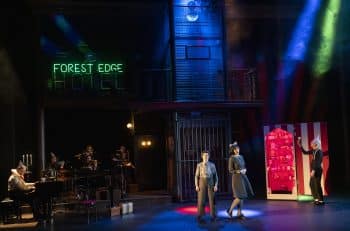
    This production by Theatre Lovett, the Irish National Opera and the Abbey Theatre is fun and artistic, but the opera’s libretto is lost in the woods By Rory O’Sullivan Engelbert Humperdinck (not that one, I’m afraid) produced the opera Hansel and Gretel from four songs he wrote to accompany a puppet show his nieces put on at home. Their mother, his sister, wrote the libretto, and it all premiered in 1893. It was conducted by no less a musician than Richard Strauss, the prelude to whose Also Sprach Zarathustra is instantly recognisable to everyone as the theme of 2001: A Space Odyssey. The opera was a hit and is now the main thing for which Humperdinck is remembered, though he had a full life besides and was an important part of the European musical scene. That said, like virtually every composer of his generation, he wrote in Wagner’s shadow. The music of Hansel and Gretel is mostly a deepening or reworking of folk-themes (e.g. ring-a-ring-a-rosey), but nearly always for Humperdinck to deepen something means to make it sound more like Wagner. The music all has a roundedness, a confidence that the instruments were made expertly by somebody and will sound good if only allowed their full range. Sometimes he makes them wild and dissonant, foreshadowing composers like Schoenberg whom he influenced. When he doesn’t know what to do – usually, in the rare moments when the music is secondary to the libretto – he backslides into Baroque primness: difficult, staccato-y stuff which is impressive in its own way but can feel like the aural equivalent of motion-sickness. In this production Carolyn Dobbin gives a commanding performance as the Witch, but everyone sings well.  The most fundamental problem with Hansel and Gretel as an opera is that, while the score is really very high-brow, the libretto can’t quite find its way up there. This translation by the British librettist David Pountney is usually successful, but the lines rhyme and occasionally they rhyme at all costs. When Gretel (Amy NÍ Fhearraigh) warns Hansel (Raphaela Mangan) against eating the candied-house they have just discovered in the woods, he says “Don’t be a tease / I eat what it sees”. The story, which everyone knows anyway, is so bare-bones that there is not much for the characters to say. ‘We are hungry’, Hansel and Gretel spend too long telling each other at the beginning; then, after they have left, their parents come out and say the same thing. That was most probably why the directors of this production, Muireann Ahern and Louis Lovett of Theatre Lovett, invested much more in the coherence of its atmosphere than its story. It is a co-production of them, the Irish National Opera and the Abbey, but it is they who add the professionalism and the know-how to make it a rewarding piece of theatre. For example, the whole set is the exterior of a dingy, run-down hotel on the edge of the story’s forest. It’s a dangerous conceit, since it involves forcing Hansel and Gretel to sing about being in a forest when they are obviously still in front of a hotel. But it creates a mood, and allows the show to take on a few themes: emotional and atmospheric arguments that challenge the audience intellectually.   For example, there is nearly an entire second play arranged around the opera, a dumb show between the scenes and set to music. It is often better than the opera itself because of its sense of atmosphere. In the Abbey’s Directors’ interview, Louis Lovett says that the show tries to “straddle the world between the fairytale and the modern”: that is, that it is all a mystery. But performers rarely understand that something can never be ‘about’ mystery, since ‘mystery’ is simply the thing you experience and never the thematic or emotional label for it. The dumb show therefore is really about exploring how it feels to encounter what you do not know, and its answer as varied as the notes of a violin.  The whole opera is supposed to be child-friendly (or as child-friendly as an opera can be) and sometimes that leads the show too easily to the blank feeling of ‘wonder,’ but more often it lets the music draw its own complex shapes, and there is an arc of reason and emotion in those. The slow-reveal at the beginning where the musicians walk out, take up and begin playing their instruments is the sort of thing that’s often-done and usually tedious. Here it isn’t: it’s absorbing, and atmospheric, livened by the performance of Raymond Keane as the silent “Night Watchman”. He arranges everything in the background with an air of supernatural mystery and some jokes. Every scene in the show is better for his being in it. But my sense is that even with all these complications, Hansel and Gretel lets everyone off too easily. The witch comes along and is effortlessly dispatched; her past victims are resurrected amid confusion; Hansel and Gretel’s parents find them, and all are suddenly a happy family. Nothing much ever feels like it is at stake in the opera, and without that its power to affect any audience is shackled. But overall, this particular production is clever and genuinely works as a piece of art. I’ll await the day Theatre Lovett decide to do Tosca.

    Read more

  • Posted in:

    Sinn Féin: not quite yet.

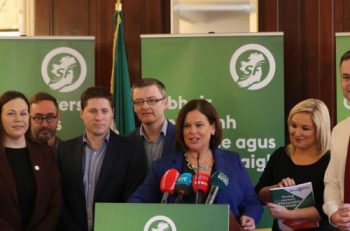
    Sinn Féin’s exciting economic and social agenda needs to be weighed against its ambivalence on violence, its cultism and its environmental weaknesses. By Michael Smith. Village believes equality of outcome, sustainability and accountability are the most important policies.  So how does, now rampant, Sinn Féin fare under these criteria? Of course Sinn Féin has been attacked for the alleged profligacy of its manifesto. For me its manifesto is an impressive piece of work and the high point of Sinn Féin’s offering. Nevertheless, economically, it uses smoke and mirrors and it is not clear by how much it would exceed the alleged fair-weather fiscal space of €11bn.   The Economy Sinn Féin plans to abolish the USC for incomes under €30,000 (costing €1.2bn)  and abolish the local property tax (costing €485m). It would increase stamp duty on commercial property and introduce a 15.75 tax rate on employers’ PRSi on salaries over €140,000. It would increase CAT from 33% to 36%.  It would impose  a 1% wealth tax (over €1m) and a 5% high-income levy.  Exciting and progressive stuff. It would spend an additional €6.5bn on house-building and €1.6bn on health over a five-year government, It would giveaway €2.4bn in tax reductions every year, and increase overall taxation by  €3.8bn annually It claims it will run a surplus every year, rising to €3.4bn by 2025, and misleadingly claims that the Department of Finance has somehow endorsed its package as a whole. This generation has been so profligate in terms of consumption and environmental degradation that it should be aiming to live more within its means and only to borrow for the benefit of the rising and future generations. To this end, Sinn Féin’s economic and social manifesto seems a proportionately radical approach. It is regrettable it is not proposing increases in capital gains tax, even on windfall land rezoning profits, and it is offensive that a republican party would not tax property, an atavistic regression to the Irish obsession with the land, ill-befitting a modern party with left aspirations.  Its proposals on REIT and IREF property vehicles are informed and appropriate.  It proposes increasing the Dividend Withholding Tax (DWT) for REITs and IREFs from 25% to 33%, applying a rate of 33% Capital Gains Tax on all property disposals by REITs and IREF and applying the full rate of commercial stamp duty on REITs and IREFs . This is targeted stuff: someone in Sinn Féin’s been talking to subversives in real estate. However, it again betrays a lack of seriousness for a socialistic party in eschewing increases on our 12.5% corporation taxes, or financial transaction taxes.   Of course the manifesto is not everything, particularly in circumstances where coalition is its only route to government.  Sinn Féin’s commitment to actually implementing a radical left agenda is unclear bearing in mind its defining preference for irredentist nationalism first over socialist ideology second, and its willingness to coalesce with Fianna Fáil or even Fine Gael.  Track Record Nor is its track record in power impressive.  Its performance at local-authority level is consistently banal.  In Northern Ireland, apparently unbeknown to Mary Lou McDonald, there seem to be more homeless per capita than in the Republic (a 2017 report from the Northern Ireland audit office, for example, said that “since 2005-06 around 20,000 households each year have presented as homeless with an average of 50% accepted as statutory homeless“; and its health service is by far the worst in the UK.  The governance Sinn Féin has provided North of the border is not distinctive or particularly leftist. Dysfunctionalities More generally Sinn Féin is cultist, over-disciplined and secretive, hitched to supportive plutocrats in the US,  and ambivalent about democracy and transparency.  Its internal elections never seem fully open.  It had a serious internal bullying problem. Its leaders lie casually about its, and the IRA’s, past.   It was certainly the case in the past that Sinn Féin leaders deferred to the IRA army council.  It is alleged, with some evidence – e.g. Máirtín O’Muilleoir’s consultations with veteran republicans as Stormont collapsed, and Mary Lou McDonald’s volte-face on a border poll – still to be the case. If it is no longer the case – and this is definitive – at the very least Sinn Féin should explain when and how the transition occurred. Many Sinn Féin leaders accept that overall the IRA campaign, which killed 1800 (out of 3500 killed in total during ‘the Troubles’ was a mistake, despite the systemic and evil provocations.  The single biggest move that might attract nay-sayers to Sinn Féin would be to apologise for its largely blind support for the inexplicably still-undisbanded IRA. As it is, it is vulnerable to the, sometimes disingenuously contrived, efforts of the media and other political parties, to highlight the litany of Sinn Féin ambivalence to IRA violence, such as the focus on its dubious role in imputing criminality to Paul Quinn who the IRA appear to have murdered, after the cease fire.   Nationalism, particularly irredentist nationalism, is a dead end and ultimately incompatible with equality which seeks to eliminate barriers, including borders, to treating people equally. In Sinn Féin’s case nationalism has taken the shape of support for violence.  It seems to me that violence, in the North, verged too often on the anti-egalitarian.  If you support shooting someone you are in effect saying not alone are they not equal, or somehow worth less, you are saying they are worth nothing.  That was a bad start for an egalitarian agenda. If not sectarian, Sinn Féin is at least tribal. It is systematically scathing of Unionism and it is anti-British.   Whatever about the vicious lies told casually about Paul Quinn, Mary Lou McDonald took the opportunity to march behind an “England get out of Ireland” banner at last year’s New York St Patrick’s day and stated that Slab Murphy, convicted on overwhelming charges of tax evasion, was “a good Republican”. Sinn Féin is still the party of anti-Black-and-Tan-bandwagonning and the late-night Tiocfaidh.   Its efforts to reach out to Unionists in the North rarely seem tailored to actually appeal to sceptical Protestants. Even in the South it is divisive. Sinn Féin’s campaign rhetoric has not

    Loading

    Read more

  • Posted in:

    The PBP/Solidarity explainer: from Campaigns to Revolution

    Ireland’s Trotskyist left and its structured campaigning, issue by issue, until the people overthrow capitalism. By Oisín Vince Coulter. On 10 March 2016, Richard Boyd Barrett was defeated by 111 votes to 9 in the election of the Taoiseach during the first sitting of the 32nd Dáil. Ruth Coppinger had nominated him with the Connolly quote: “The day has passed for patching up the capitalist system. It must go”.  In retrospect, almost four years later, that defeat may well have been the high water mark, both for Boyd Barrett personally and the Trotskyist left of which he is a part. The left was then riding high on the wave of the Right2Water campaign, the country’s largest mass movement in a generation. The 2016 general election returned 6 Trotskyist TDs, 3 from People Before Profit (PBP) and 3 from the Anti-Austerity Alliance (now Solidarity). With Labour and the Greens both sidelined after their respective disastrous coalitions, the Trotskyist left hoped to carve out a space for their particular brand of anti-capitalist politics.  They had little interest in working with Sinn Féin to do so, putting Boyd Barrett forward against Gerry Adams for Taoiseach despite some co-operation in the Right2Change electoral vehicle and during the Right2Water campaign. The potential for Trotskyism to burgeon into a permanent and dominant fixture of the Irish left seemed real. But current polling for this election does not look good for the Trotskyist left. Many of the social movements that they have poured their energy into over the last three years have failed to take off, from housing to healthcare, even though the issues are as relevant as ever. Their progress has stalled, and unless circumstances change they are facing into a decade of decline and growing political irrelevance.  The 2016 election result had come after a decade and a half of victories and defeats that saw them go from total marginality to having a widely acknowledged and outsized influence on national politics. After involvement in the anti-war movement and Shell to Sea, the Celtic Tiger years ended with the only Trotskyist national representative in the form of Joe Higgins losing his seat in the 2007 General Election. However, since then both what are now the Socialist Party/Solidarity and what are now the Socialist Workers Party/People Before Profit have grown to have a few hundred active members between them: councillors, TDs and MLAs in the north – not to mention significant roles in most of the major issue-based campaigns of the last decade. History and Background Some history is needed in order to get a grip on who PBP and Solidarity are. First, they have never been the same party. Trotskyism is rightfully infamous for unending fractious splits, but the two largest Irish Trotskyist parties descend from quite different intellectual traditions, namely two British Trotskyist parties: the International Socialists (IS) and the Militant Tendency (Militant). Both are ‘Trotskyist’ in the sense that they are communists in the tradition of Leon Trotsky, a key leader in Russia’s October revolution. Trotsky ended up the main rival of Joseph Stalin, and was eventually driven into exile by him and assassinated in Mexico on his orders.  The Socialist Workers Movement was launched in Ireland in 1971 by supporters of the British International Socialist  and was later renamed as the Socialist Workers Party (SWP) – the name of their British sister party, and one they are often still known as. They rebranded again recently as the Socialist Workers Network, and run in elections as People Before Profit (PBP).  The Militant Tendency in Ireland, like its British counterpart, existed within the Labour Party here until the late 1980s when numerous expulsions of their members drove them out. They were known as Militant Labour until 1996 when they adopted their current name of the Socialist Party. They used to run in elections as the Anti-Austerity Alliance, but recently rebranded to Solidarity.  There are a number of ideological differences between the SWP and Militant traditions in Ireland. Historically there were disagreements on the best way to organise politically, the nature of the Soviet Union, and various other theoretical questions. In terms of current political differences the biggest is the ‘national question’. The SWP has always been more sympathetic to republicanism and the belief that Northern Ireland is an ‘imperial holdover’. The Militant in Ireland and the UK, on the other hand, have always been hostile to what they regard as ‘crude nationalism’, generally trying to avoid engagement with the issue by focusing on their professed goal of uniting “all workers” regardless of culture and national identification in the pursuit of socialism. There are also differences on issues like sex work, with People Before Profit arguably taking a more ‘sex positive’ position. The relationship between the ‘Party’ and other political forces, among many continued theoretical and strategic differences that 99% of the population would find impenetrable, continues to divide them.  Both parties owe their success to a quirk of history as much as anything else. Ireland never had a mass communist party in the European tradition, like that of Spain or France. The closest thing to that and the most successful far-left party of the last fifty years was the Workers’ Party, which peaked in the 1980s and collapsed along with the Soviet Union in the early 1990s. However, in most of Europe, the dominant political force to the left of social democracy emerged from the remains of their traditional communist parties. When the Workers’ Party split, the resulting group – Democratic Left – ended up merging with the Labour party rather than becoming akin to Die Linke in Germany. This left a space open to Labour’s left in Ireland, and the two Trotskyist parties fought hard and with some success to fill it.  Strategy, Success and Failure To quote Trotsky, “The task of the Communist Party is to lead the proletarian revolution”. The Trotskyist left in Ireland consider themselves revolutionaries seeking to overthrow capitalism. If you know this, and have some knowledge of their strategy

    Loading

    Read more

  • Posted in:

    Socialism, not barbarism.

    Nuclear power, the future of our planet and how to handle differences on the left. By Éilis Ryan. Rather than a facade of unity pasted over our differences, what is required is a structure which enables differences to co-habit within an organised, disciplined and, yes, united Party. Somewhere on the road into Cork City, where I grew up, is a sign declaring you are entering ‘Cork City, a Nuclear-Free Zone’.  The sign went up in the early 1980s, a few years before I was born. As a child in a house full of left-wing politics, I associated the sign with a people’s victory – the little people winning against the might of brutal factory owners.  The people’s campaign behind that sign, of course, originated in the huge festivals of opposition to the establishment of a nuclear power plant at Carnsore Point in the late 1970s and early 1980s. In a country where victories for the left are hard to number, the victory for anti-nuclear campaigners at Carnsore Point, in the popular imagination, is precious.  Along with the bulk of the environmental movement since the 1970s in Ireland, there have always been members of the Workers’ Party opposed to nuclear power. And yet for many, inside and outside the Workers’ Party, it has become increasingly evident that that position, from an environmental perspective, was flawed, and must be amended.  Beyond the ‘tyranny of structurelessness’  The socialist left is often accused of dogmatism in sloganeering. It is an accusation which should be heard out – because politics based on slogans and tradition, rather than clear-headed analysis, would never allow us to admit we were wrong, or to change our views to reflect changing contexts. This ability to analyse changing contexts, all the time mindful of class structures, is the foundation of Marxism – not dogma. And is precisely what is needed for the left to embrace nuclear energy today.  The Workers’ Party operates on the principle of democratic centralism. Though often used as a slur to dismiss socialists as authoritarian, fundamentally democratic centralism simply means that the party has a clearly set out structure of elected bodies, from local branches up to the party’s leadership body, the Ard Comhairle, and clear rules as to how the leadership body is elected, and how any major policy or strategy changes.  It is highly organised, democratically accountable, and has a clear hierarchy. But it is this very clarity which, far from dampening down the views of ordinary members, allows for real democratic decision-making – and so allows views to change over time, as necessary. Far from being a mere rubber-stamping operation, this structure enables debate on issues where there are, quite regularly, real differences between party members.  Planet before pastoralism – the struggle to build an environmentalism of science, in Ireland  Nuclear power represents one such issue. Within the Party today, there is a variety of views, ranging from total opposition to nuclear energy to those who embrace it, with many in between who believe that, at a minimum, there is no credible evidence not to include it as one of the menu of energy options which we must examine carefully to save our planet from existence.  To mediate these differences, the Workers’ Party’s most recent Ard Fheis voted to hold a public consultation with members and branches on the issue of nuclear energy.  Ireland’s energy future is  important not only because of climate change. For those of us on the left, who wish to carve out a future distinct from the interests of (predominantly) American foreign policy and capital, it is crucial that we have sovereignty over our energy. Given the presence of uranium in Ireland, examining the possibilities of how it might contribute to our future energy needs is only sensible. And given Ireland’s very small energy requirements, it’s highly likely that uranium might become a lucrative export for a new state company, and sustain large number of jobs in prospecting, mining, processing and fuel fabrication. And it would save Ireland on the cost of importing, oil and free it from the vagaries of the international oil market.   With nuclear as a baseload power, and wind power to top it up, Ireland could be completely self sufficient and even be a consistent exporter of power abroad. Even more importantly, it could do so without releasing almost any CO2 in the process of power generation! In terms of safety, the reality is that studies consistently show nuclear to be the safest energy source after hydro-electric power. Although renewable sources such as wind and solar power do not have the sort of mega-disasters seen with oil or nuclear, they do require far more raw materials, and manpower for installation and maintenance; and cumulatively they result in far more deaths per unit of energy. And, as with all technology, with sufficient investment, it will be possible to reduce the disasters which have historically occurred even further. Meanwhile, the Simpsons-style image of nuclear waste as enormous barrels of green goo bears minimal relation to reality. The waste from a typical household’s lifetime energy consumption would be approximately 2kg – a tiny and, as a result, highly manageable, amount of material.  Regardless of our squeamishness about nuclear energy, the reality is that, in the here and now, as climate crisis engulfs us, no other technology exists which can more safely move us away from fossil fuels.   Indeed we have a concrete example of this fact. In Germany, a decision was taken to transition from both nuclear and coal to renewable energy, which resulted in the closure of the country’s nuclear plants and the investment, to date, of €200 billion in renewable energy. However there has been no reduction in the country’s carbon emissions (over their lifetime, both wind and solar produce significantly more CO2 than nuclear power) and, instead, a new coal-burning plant is on track to open in 2020 because of the enormous shortfall in energy usage. By contrast France, which generates 70% of its energy from nuclear, has

    Loading

    Read more

  • Posted in:

    Micheál Martin, evasive and misleading, in 2020

    Answers, provided by a spokesperson for Fianna Fáil,  to the questions posed by Village to Micheál Martin, about his relationship with developers Owen O’Callaghan and John Fleming, are evasive and misleading. By Frank Connolly. The Fianna Fáil leader, Micheál Martin, sounds more like a man under pressure than one who looks most likely to be the next Taoiseach. During the seven-way TV leadership debates and in other interviews, Martin has been on the defensive across a range of policy issues and apparently obsessed with the political threat posed by Sinn Féin. He has desperately sought to distance himself from the “ghosts of Fianna Fáil” past and his decade-long participation in the Bertie Ahern-led governments that destroyed the economy and damaged the fundamentals of Irish society.   His utterances on health, housing, childcare and pensions, among other matters, sound hollow and unconvincing given that he was at the heart of the decision-making which contributed to the inequities which have beset these vital areas of public provision for so long. During RTÉ interviews with Sean O’Rourke on Wednesday (29th January) and Bryan Dobson on Friday (31st January), Micheál Martin stumbled into another potential minefield when he was asked about the close ties his party has enjoyed with builders and developers in the past and whether he could keep his distance in the future. In reality, the financial crash ensured that a lot of distance was put between his party and the builders when many of them went bust or into the bad bank of NAMA which was created by the last Fianna Fáil government in 2009. It was set up to bail out the distressed banks but despite all assurances to the contrary, the agency has also bailed out many of the developers that previously populated the party’s Galway tent in the ‘boomier’ times.  The legacy of that relationship continues to haunt the party and while Martin avoided much of the damage suffered by his former colleagues who came under deeper tribunal scrutiny his responses to difficult questions on the subject have not always been convincing.   The past relationship with property developers, speculators and landlords also touches on a core issue relating to Fianna Fáil’s ability or will to tackle the housing crisis. Martin has called for much-needed major investment by local authorities and the State in the construction of public and affordable housing to meet the current emergency. But it is Fianna Fáil-led governments since the 1980s that have divested local authorities of the resources and remit to build decent social and affordable homes and handed responsibility to the private developers and builders.  The gap in provision for those struggling with rents was filled by the obscene subsidies to private landlords facilitated under the Housing Assistance Programme. After the crisis Fine Gael-led governments transferred vast amounts of public assets and property to heavily-tax-incentivised global funds, including through the NAMA process.  In its election policy on housing, Fianna Fáil’s proposals to give one Euro for every three saved by first-time buyers would encourage builders to hike the house prices as happened with similar policies in the past. The party’s plan to reduce levies on developers would inevitably be pocketed rather than contribute to lower costs for home-buyers, if previous experience is anything to go by.   The corrupt relationship between Fianna Fáil and other politicians and the “builders” was ruthlessly exposed at the Planning and Payments Tribunal (also known as both the ‘Flood’ and the ‘Mahon’ tribunal) which was established in late 1997 following revelations concerning Ray Burke. It concluded with a deeply damning report in 2012, having exposed an extraordinary litany of illicit payments to politicians since the late 1980s. Micheál Martin was drawn into its remit when the tribunal examined payments made by Cork developer, Owen O’Callaghan, to various TDs, councillors and others from 1988 to the late 1990s.  O’Callaghan was accused by his former and reluctant business partner, Tom Gilmartin, of bribing a large number of national and local politicians, with the help of lobbyist Frank Dunlop, spending upwards of £1.8 million in the corruption process. The remit of the tribunal was restricted to Dublin and did not extend to those who were abusing the zoning and planning regulations across the rest of the country. Martin, who served as a councillor and then TD in Cork, was brought into the Flood tribunal because he received political donations from O’Callaghan. The first donation of £1000 was made to Martin around June 1989 during the general election after which he was elected a TD for Cork South-Central for the first time.  Scrutiny by the tribunal of the intent of all donations to Fianna Fáil during that election was intense. This was also the election campaign during which then justice minister, Ray Burke, received large payments from developers totalling some £80,000 which directly led to the establishment of the Flood tribunal eight years later. In June 1989, environment minister, Pádraig Flynn took a £50,000 donation to Fianna Fáil from Gilmartin and lodged it to his own bank account.    Martin told the tribunal that he cashed the £1000 cheque he received from O’Callaghan in 1989 and spent it on his election expenses. During the local election campaign in 1991, Martin received a further donation of £5000 from O’Callaghan through the developer’s company Riga Ltd. In his testimony to the tribunal, Martin said that the generous donation (equivalent to more than €10,000 today) was “not for me alone” but also “for the party’s expenditure in the ward”. He was unable to provide full receipts for the spending. At that time, politicians were not required to issue receipts for such contributions or to register political donations.  What was unusual in regard to the payment was that the cheque was lodged to his wife’s bank account in Dublin. In his written statement to the tribunal, Martin explained that: “With regards to the donation of £5000 made on or about June 1991, £3,500 was lodged to my wife, Mary’s AIB account, Baggot Street on 4th July, 1991…..the balance of £1,500 was cashed and applied for

    Loading

    Read more

  • Posted in:

    Left government needed.

    The danger is that votes to break the cycle of Fianna Fáil and Fine Gael will be used to keep the merry-go-round spinning. By Paul Murphy. This is a change election. A majority of people are now indicating support for parties other than Fine Gael and Fianna Fáil. Is it any wonder? With crises in housing, health, childcare, education, additional needs and disability services, on top of completely inadequate action on climate change, it’s no surprise that people are fed up with parties that serve the rich while we struggle to get by. A brief look at the history of politics in the Irish state is enough to confirm that no substantial political change will come about from FG or FF in government. That is widely understood in working-class communities, where the overwhelming desire of people is to kick both of those parties out. Having been responsible, together with Labour and the Greens, for the bank bailout and brutal austerity which followed, people want them gone.  The Sinn Féin surge, as well as the Green wave taking place in a different part of the electorate, are reflections of that wish for change. The tragedy of Irish politics is that on many occasions in the past, that wish for change has been betrayed by Labour and the Greens. Votes to break the cycle of Fianna Fáil and Fine Gael were used to keep the merry-go-round spinning. There is a real danger of this being repeated in this election. RISE and People Before Profit have issued numerous calls on Sinn Féin to rule out coalition with Fianna Fáil or Fine Gael. Unfortunately, Mary Lou McDonald’s answer was clear – she refused to do it and spoke about the necessity to be prepared to go into government. While a Fianna Fáil and Sinn Féin government would not be a direct repeat of Labour or the Greens in government, the same fundamental process would be at play. Fianna Fáil representing the capitalist class in this country would block the change that Sinn Féin voters are hoping for. For example, there is no way that Fianna Fáil would agree to a rent freeze that is the minimum necessary to give renters a break. Such a freeze would hit the bottom line of the one in three Fianna Fáil TDs who are landlords, and more importantly the big landlords whose class interests they represent. Even at this late stage, if Mary Lou McDonald came out clearly and said she won’t be voting for Varadkar or Martin or any candidate from FF or FG for Taoiseach and that she wants to lead an alternative government, this dynamic in the election against FF and FG could be further strengthened. Sinn Féin doesn’t have to look to coalition with the right-wing parties to form a government. The forces outside Fianna Fáil and Fine Gael could continue to grow in the final week of the campaign and have a potential majority in the Dail.  In those circumstances, what should the socialist left do? In the first place, we should vote against the formation of any government involving FF or FG. We should then use our votes in the Dail to allow an alternative government to come to power. Then we should vote consistently in the interests of working-class people. Outside the Dail, we should seek to help build the biggest possible people power movements to demand the radical change we need, including separation of church and state, the repeal of the Industrial Relations Act, and the abolition of Direct Provision. Should the socialist left join such a government? That depends on what policies that government would implement. If it is to be a government that accepts the right of big polluters to maximise their profits, of corporate landlords to maximise their rent and employers to minimise the wages they pay, and only attempts a better redistribution of the crumbs, then that government will ultimately betray its promises, and we should not participate. Instead, the kind of left government with socialist policies that we would participate in is one that would challenge the rule of the 1% in this state and open the door to fundamental socialist change. Essential red lines would include; a commitment to take on the big landlords and developers by eliminating the housing list within three years and cutting rents including through nationalisation of the big corporate landlords and introducing a new model of public housing accessible to all; to commence the building of a single-tier properly resourced National Health Service by taking private hospitals into public ownership and incorporating them into the public health service; and to cut net carbon emissions by 10% a year, which would require public ownership of the big polluters. Regardless of the outcome of the elections, recent years have shown that change can be won when people take the streets in their tens of thousands to demand it. The water charges movement remains an important reference point for large sections of the population who experienced a sense of their own power. Repeal and 12 weeks on request were also not delivered from on high by a liberal government, but driven from below. The emerging global climate movement, including the school students strikes and Extinction Rebellion, can demonstrate the same pattern. It is no accident that the socialist left was to the fore in all of these movements. Our vision for socialist change is based on the desire of working people for a better, fairer and just world, and our ability to bring that about through collective mass action.  We used our platforms in the Dáil and the media to advocate for the strategy and tactics that were necessary to win – for example spreading the idea of mass non-payment, which was crucial to defeat the water charges. Outside the Dáil, our resources were used to build these movements and organise in communities. Inside the Dáil, Solidarity-People Before Profit has punched far above its weight. We have proposed and passed crucial legislation

    Loading

    Read more

  • Posted in:

    Can you create a Government?

    By Oisín Vince Coulter Use our simulator to see if you can build a majority government out of various potential results in the 2020 General Election. You choose which parties to put into coalition, and see if you can reach the magic number of 80. Previous seat numbers are from 2016 General Election, not taking into account by-elections, resignations and defections. Potential Outcomes All polling has inherent flaws – you are only imperfectly capturing the opinions of some people at a particular given moment in time. Even more than that, Irish election polling runs especially foul of our multiple seat constituency proportional representation, single transferable vote (PR-STV) system. This means elections in a given constituency don’t necessarily reflect the ‘national’ prevailing mood. That said, one can discern roughly how well different parties are doing relative to each other.  All polls so far point to Fianna Fáil emerging as the largest party, a Sinn Féin surge, Fine Gael faltering in their campaign, Labour potentially remaining stagnant or seeing small gains and the Greens seeing a solid increase in their vote and seat share. Smaller parties and independents are even more difficult to model for, as their support can be within the margin of error (plus or minus three percent, generally) of a national poll and yet is localised enough to deliver candidates into the Dail.  Average This result is based on the RTÉ ‘poll of polls’ from Monday, 27th Jan 2020 written by Prof. Michael Marsh of Trinity College Dublin. As he notes: “All three [polls] agreed in suggesting a decline in Fine Gael support, leaving it clearly behind Fianna Fáil, and an upsurge in support for Sinn Féin.” This result is simply an average of the opinion polls conducted so far. Republican Rising Taking into account the growth in Sinn Féin’s polling numbers over the weekend, we could be facing their electoral breakthrough and potentially entrance into government. This result is closest to last night’s RedC Poll (Sat 1st Feb), and has both the smaller parties of the center and left seeing moderate gains or remaining stagnant, and Fine Gael’s support declining substantially. As Sinn Féin aren’t running as many candidates as Fianna Fáil and Fine Gael, both parties are likely to outperform their national vote in seat numbers. This result would change the dynamic of Irish politics forever. Left Swing This result has Sinn Féin and the Greens see substantial gains, Labour and the Social Democrats small gains and PBP/Solidarity maintain three of their six seats. The parties of the left would need to meet or outperform their polling, and would be a very bruising election for the civil war parties. It is close enough to Fianna Fáil’s preferred result, as it would allow them to form a government with Labour, the Greens, some independents and the Social Democrats. If that was the government then Fine Gael, like Fianna Fáil after the 2011 election, would find themselves fighting Sinn Féin to be the main party of opposition. Civil War Dominance A relatively conservative result with most voters sticking by the two traditional parties.  This result would potentially involve a lower voter turnout, and would end in an outcome similar to the last election. It would require voters who had swung to Sinn Féin during the first half of the election to swing back or not vote, possibly as a result of focused campaigning by Fianna Fáil and Fine Gael that drew attention to the party’s past. Voters for other parties would also have avoided transferring to Sinn Féin, and the center left would see lower gains or remain stagnant.  Green Wave Predicted by many during last year’s local-election count, the “Green Wave” has since lost much of its momentum. This result could come after a sudden upswell during the last week of campaigning; the environment would need to be far higher on the campaign-agenda than it has been so far. It would put the Greens in a strong position to dictate terms to whoever wishes to form a government with them. It would also be begin a seachange of climate policy in Ireland, and could see other parties taking the environmental policy far more seriously into the future. Fine Gael Washout Despite the high economic numbers, Fine Gael’s campaign has been pretty miserable so far because of their repeat-gaffes and terrible record on health and housing. A further fall in popularity could lead to this outcome, which would see voters punish the party at the polls and end the longest period of Fine Gael government in Ireland’s history. It would also most likely result in a coup within the party against Leo Varadkar. There is little in this outcome which is not to like. Revolution This result would completely alter the Irish political landscape. It would force Fianna Fáil and Fine Gael together into opposition, and would be the first time in Ireland’s history that its Taoiseach did not come from one of those two parties. While it is clear from the campaign so far that there is appetite for change in the country, breaking the cycle of civil war politics would require that to grow even further, and solidify substantially in the next week.

    Loading

    Read more