General

Random entry RSS

  • Posted in:

    Who is afraid of Richard Kerr?

    Malicious and unfair assaults on the credibility of Richard Kerr, the Kincora whistleblower, are nothing new. The most concerted effort to undermine him so far was one perpetrated by sinister individuals posing as journalists who attempted to get him to join forces with the now notorious conman Carl Beech. This occurred when Beech was featuring prominently in the mainstream British media as ‘Nick’ and was holding himself out as a victim of VIP child sex abuse when he was nothing of the sort. Beech was later exposed as a liar and a fraud. Richard realised from the outset that Beech was a complete fraud and refused to have anything to do with him. Village has argued that Beech was a plant all along who was constructed from day one to be exposed as a fraud and taint genuine victims of VIP sex abuse. Village’s analysis can be found at: Does ‘Nick’s’ conviction mean Jimmy Savile and Ted Heath are innocent? Yes, if you work for the British tabloid press. By Joseph de Búrca Another dirty trick is to assert that Richard has made a claim when he hasn’t. Judge Anthony Hart was tripped up repeatedly by his reliance on press reports containing errors. Hart relied upon articles about Richard which appeared on the Internet. Some of them had misreported what Kerr had said. As a judge, Hart should have known better than to have relied upon hearsay and dross from the internet in his egregious and woeful 2017 report on Kincora. Worse again, Hart himself conjured an allegation out of thin air that Kerr had claimed that he had been abused by Sir Maurice Oldfield, the former head of MI6. Kerr never made such an allegation. The supreme irony is that Hart claimed elsewhere in his report that Richard had not in fact made any allegation about Oldfield abusing him. Bizarrely, one of ‘Nick/Beech’s’ allegations was that he too had been abused by Maurice Oldfield. Kerr decided that he was not going to have anything to do with Judge Hart after some tentative engagement with the clown. In light of the multiple errors Hart made in his lamentable report, Kerr has been vindicated. A third line of attack is to claim that Richard must be making up stories after he releases new information. Why? Well, because he had not made the disclosure previously. This presupposes that all interviews that Kerr has ever given were intended to be comprehensive biographical accounts of his entire life. Suffice it to say Kerr has not attempted to provide anyone with a full biographical account of his life. It would probably take a book containing 100,000 words to describe it in a way that would do justice to it. Another factor in all of this is trust. As Richard is at pains to explain to anyone who talks to him, a severe symptom of his post-abuse syndrome is a lack of trust in people. This is a symptom common to most abuse survivors. Hence, it should be apparent to any intelligent journalist, writer or researcher who has conducted even the most elementary preparation for an interview with a sex abuse survivor that trust must be built up over time. One figure in the UK with an overblown view of his own importance has attacked Richard simply because he was not given chapter and verse on his life when he established some tentative contact with him. Fear is also a factor in hesitating about making certain disclosures. Richard encountered brutes like John McKeague, a sadistic Red Hand Commando/UVF terrorist, not to mention the fact that he he has been beaten up by RUC and English police officers to shut him up about what he knew about Kincora. McKeague was a vicious serial killer who enjoyed torturing Catholics in UVF ‘romper rooms’. Yet another factor is the suppression of traumatic memories. Irish legislation makes a specific exception for victims of sex abuse who wish to take a legal action later in life. The normal time limits do not apply to sex abuse victims where they are found to have been labouring under a psychological disability which prevented them taking litigation at an earlier stage in their life. Time only begins to run when they emerge from such a psychological disability. This legislation was based on advice furnished to the Irish government by psychologists and experts in the field of sex abuse trauma. There is similar legislation in other jurisdictions. There are many stories yet to come from Richard including one involving a cabinet minister in Margaret Thatcher’s government. In addition, Richard has yet to name the well-known TV star who abused him in London in the 1970s. The individual in question is still very much in the spotlight. Indeed, he has appeared all over the British media in the last number of days. See: How the Anglo-Irish Vice Ring Trafficked Boys from Belfast to MPs and a TV star in Britain Richard has also been subject to intimidation. He was sent a letter purporting to be from the Ulster Freedom Fighters (i.e. the Ulster Defence Association) which Village magazine has published. Most assuredly, it was not sent by the UFF, rather by individuals with a vested interest in convincing the public that the Anglo-Irish Vice Ring never existed. The threatening letter can be read in full at Careless about Kerr Bearing all of the foregoing in mind, a new video has just appeared on the Internet which features some photographic material provided to the producers of it by Richard. Unfortunately, a number of errors have crept into the video. Since a clown cast from the same mould as Judge Hart could yet be appointed to look at Richard’s case at some stage in the future, it is important to nail these errors before they take root. In fairness to the producers of the video, some important issues have been raised in it with which Richard Kerr takes no issue and indeed are based on revelations which

    Loading

    Read more

  • Posted in:

    The reason MI5 gave Putin a free hand to meddle with Brexit.

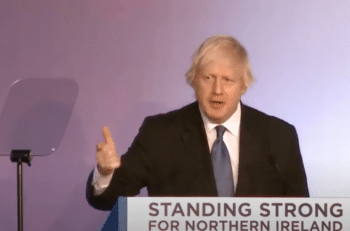
    A report from the Intelligence and Security Committee (ICI) about Russian interference with British democracy has just been released. ‘In brief’, it declares:  “Russian influence in the UK is ‘the new normal’, and there are a lot of Russians with very close links to Putin who are well integrated into the UK business and social scene, and accepted because of their wealth”. Worse still:  “This level of integration… means that any measures now being taken by the government are not preventative but rather constitute damage limitation”. Significantly, the report reveals that the various intelligence and security ‘Agencies’ which include MI5, the UK’s internal intelligence service, felt the issue of Russian interference in British politics was too much of a “hot potato” to investigate. According to the report, the spies: “appeared determined to distance themselves from any suggestion that they might have a prominent role in relation to the democratic process itself, noting the caution which had to be applied in relation to intrusive powers in the context of democratic process.” The ‘Agencies’ then attempted to suggest that other government departments were responsible. According to the report they: “informed us that the Department for Digital, Culture, Media and Sport (DCMS) holds primary responsibility for disinformation campaigns, and that the Electoral Commission has responsibility for the overall security of democratic processes.” (Paragraph 31 page 18) This led to MI5 and the others to take “their eye off the ball”. In addition, they were allegedly too absorbed by monitoring Islamic militants to do anything about the threat from Moscow. There is a lot more – a hell of a lot more – to this than meets the eye. MI5 has actually perpetrated crimes against Britain which were far worse than anything the ICI report or the UK media is now placing at the feet of the Russians. Infamously, MI5 officers like Peter Wright tried to topple the Labour government of Harold Wilson. Moreover, MI5, MI6 and a little known – and now defunct – black propaganda department called the Information Research Department (IRD), spent decades meddling with British, European and Irish political affairs. See Her Majesty’s Smearmeisters: how MI5 and MI6 vilified Haughey, Hume and Paisley See also Licence to deceive.http://deceive Books have been written about the MI5 plots against Wilson. A useful summary of it can be found at https://www.theguardian.com/commentisfree/2006/mar/15/comment.labour1 MI5 and to a lesser extent MI6 had to stomach years of harsh criticism in the 1980s as a result of ‘Spycatcher’, the book written by Peter Wright, a senior former MI5 officer, and revelations of Colin Wallace, a psychological operations officer with the British Army in Northern Ireland. Both of these men exposed intelligence agency treachery against the British government. Put simply, MI5’s treacherous history has made it reluctant to do its job in the present era in case it might put a foot wrong and attract criticism that it is following in Peter Wright’s cloven footsteps. Put simply, MI5’s treacherous history has made it reluctant to do its job in the present era in case it might put a foot wrong and attract criticism that it is following in Peter Wright’s cloven footsteps. If the Russians swung the Brexit vote, it would mean that the UK left the EU due – in part – to MI5 fears about it shameful past. But did the Russians actually swing the Brexit vote? It is certainly a possibility in circumstances where the Brexit victory was achieved by a whisker. Predictably, Boris Johnson rejects the notion. “Remainers have seized on this report to try to give the impression that the Russian interference was somehow responsible for Brexit. The people of this country didn’t vote to leave the EU because of pressure from Russia or Russian interference,” Johnson said. “They voted because they wanted to take back control of our money, of our trade policy, of our laws.” It is probably better to let the contentious issue of the victory for Brexit in the context of Russian interference as an issue for debate and focus instead on something more concrete: the failure of MI5 to even attempt to prevent it. Dame Stella Rimmington, a former director-general of MI5, is typical of those who have created this mess. Rather than face up to MI5’s perfidious past, condemn it and then consign it to the history books, she has denied all wrongdoing. But then Rimmington, now a successful spy fiction author, is a dab hand at transforming fact into fiction – whether at a conscious or sub-conscious level is best left to the experts. More specifically, she asserts that no one in MI5 ever lifted a finger to thwart the Labour PM Harold Wilson. This, despite the fact back that no less a figure than Lord John Hunt, the mighty and all-powerful Cabinet Secretary, 1973-79, acknowledged that it had indeed happened. In August 1996 Hunt told a Channel 4 documentary that, “There is no doubt at all that a few, a very few, malcontents in MI5, people who should not have been there in the first place, a lot of them like Peter Wright who were right-wing, malicious and had serious personal grudges, gave vent to these and spread damaging malicious stories about that Labour government.” See also Dial MI5 for Murder There are other lamentable reasons for MI5’s failure to protect British democracy during Brexit. MI5 is meant to devote all of its energies to legitimate purposes such as the protection of Britain from terrorism, hostile cyber punks (in tandem with the technoboffins at GCHQ) and other malefactors. Instead, MI5 has diverted some of its precious energy on reprehensible and entirely wasteful endeavours. MI5 routinely opens the post of whistle blowers like Fred Holroyd, a former military intelligence officer. Holroyd exposed a litany of MI5 dirty tricks in Ireland in the 1980s such as the control by MI5 of the loyalist gang which murdered hundreds of people including the 33 slaughtered during the Dublin and Monaghan bomb massacres in 1974. To date, MI5 interferes with

    Loading

    Read more

  • Posted in:

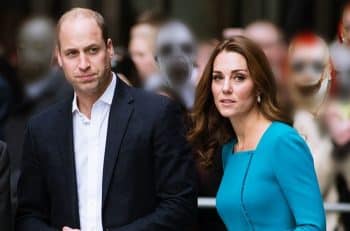
    Judge a (future) king by his courtiers: Prince William and the Duchess of Cambridge, pawns in the cover-up of a transatlantic paedophile network.

    By Joseph de Burca.   Prince William, the Duchess of Cambridge and other senior Royals continue to retain a sinister cabal of deeply corrupt officials in their employment at Buckingham Palace. These officials bartered access to William and Kate as a bribe to ABC TV in the US in return for the concealment of a child abuse network involving Prince Andrew which was run by Jeffrey Epstein and Ghislaine Maxwell. In the worst case scenario the ABC scandal threatens to recast the popular Royal couple as hypocritical, cynical and uncaring, not to mention accessories after the fact to the criminal concealment of child rape. The best case scenario for them is that they are dupes with little or no control over their own lives. Amy Robach, the ABC TV News anchor, interviewed Virginia Roberts in 2015, three years before the Jeffrey Epstein scandal (Phase 2) erupted. Robach was not allowed to broadcast anything Roberts revealed to her by her superiors at ABC. Roberts had been flown by ABC from Colorado to New York City with her family all of whom were put up at the Ritz-Carlton hotel. She was then interviewed by Robach and her colleague Jim Hill about Epstein. In late August 2019 Robach was captured by a live microphone in her TV studio describing her disappointment to colleagues. A recording of this off-air moment leaked. On it she can be heard complaining: “I’ve had this interview with Virginia Roberts…we would not put it on the air. First of all, I was told ‘who’s Jeffrey Epstein.’ Then the Palace found out that we had her whole allegations about Prince Andrew and threatened us a million different ways… [Roberts] told me everything. She had pictures, she had everything. It was unbelievable what we had. Clinton, we had everything.” Robach continued: “One of the reasons an interview with Roberts was not broadcast was because, “We were so afraid we wouldn’t be able to interview Kate and Will, so I think that had also quashed the story.” After Robach’s outpouring was broadcast online by the Project Veritas website, an ABC ‘source’ claimed that the company had “never stopped investigating the story” and that: “A lot of broadcasters can probably empathize. We do have to run everything past standards and practices and there are times when interviews can’t air. We needed time to corroborate details, and we were unable to verify a lot of Virginia’s claims.” There cannot be a village idiot anywhere on the planet who believes this drivel from ABC. The company did not let one of the most important stories of this century slip through its fingers because it was unable to back it up. Absolutely nothing changed over the next three years when the story finally broke. The claims made by Roberts have since been corroborated by a number of witnesses. Roberts knew a great number of them. She even set up an organisation to support them long before the scandal erupted whereby there was a cohort of available witnesses with corroborative stories, documentation and photographs. As the world now knows, Prince Andrew has been shamed and pushed out of the Royal spotlight, Jeffrey Epstein has died in suspicious circumstances in his New York prison cell while Ghislaine Maxwell is facing a criminal trial. The ABC top brass is simply lying when they claim they ever had any intention of letting their journalists pursue the story in any shape, form or manner. ABC’s excuse simply does not hold water. There is something deeply sinister about this scandal. Robach was undoubtedly telling the truth when she raised the prospect of a boycott of ABC by Buckingham Palace. Nonetheless, while the top brass at ABC may be hard boiled and ruthless, it is difficult to believe they would allow children be raped indefinitely just to secure a few minutes of footage with the Royal couple. So why did ABC really protect Epstein? Robach issued a statement after the ABC leak was broadcast online which was less strident than her off-the-cuff outburst in the TV studio. It is reproduced in full below. You can make your own minds up whether it feels authentic or reeks of coercive pressure from above. It is difficult to believe that Prince William and the Duchess of Cambridge were consulted in advance about the threats which were made in “a million different ways” to ABC. Yet, unless they are helpless pawns hermetically sealed from what is going on around them at Buckingham Palace, they surely know by now about the threats issued by their courtiers. Surely they have at least one friend who has alerted them to what Robach let slip in the ABC TV studio. Assuming this is so, they cannot be happy that media access to them was bartered to protect a child abuse network, even if it was not the sole or decisive factor in the cover-up at ABC TV. Despite the Royal couple’s presumed discomfort, no one at Buckingham Palace has been dismissed nor disciplined. The threats from the Palace enabled Epstein and his associates to groom, traffic and abuse young girls for a further three years. Not a single Royal correspondent has asked the future King to confirm that he was unaware of the threats made by his courtiers back in 2015. Nor is anyone asking him {i} when he became aware of the ABC suppression scandal; {ii} what he has been told by the staff at Buckingham Palace about it; {iii} what he believes to be the truth of the affair and {iv} what, if anything, he is doing about it. Most remiss of all, no one is asking him if he has demanded sight of the ABC file kept by his courtiers. There must be a string of emails and memos. One suspects Robach has copies so it would be a brave pursuivant at the Palace who would destroy them. The couple, viewed as a royal breath of fresh air, are clearly hard working and have helped bring some

    Loading

    Read more

  • Posted in:

    The UK’s constitutional ‘crisis’ over the Union, rights, minorities, the judicial role and European law is dangerous for Northern Ireland.

    The Conservative Party’s view of the role of the judiciary in politics won’t work in Northern Ireland.  By Christopher Stanley. This piece looks at the dangers for Northern Ireland of ‘Cummings-Type’ tampering with the British Constitutional settement. For readers of Village Magazine it is offered as a supplement to my recent post, Contempt in the Rose Garden, on the travels and travails of British Prime Minister Boris Johnson’s eminence grise Dominic Cummings. it is written in response to a paper by Richard Elkins: “Protecting the Constitution: How and why Parliament should limit judicial power” (Policy Exchange Protecting the Constitution, 2 December 2019) which focuses too much on Britain.  In general for Britain read England. This distinction has become particularly acute during the current pandemic crisis.  The UK’s devolved administrations reacted in different ways to the control of Covid-19.  This post is offered as a warning to those elsewhere – in Dublin for example – who may be curious about the recent proposals from London to reform the unwritten constitution and to review how Executive authority-power is exercised. It is a view from that ‘Narrow Ground’ described by Sir Walter Scott in 1825. “I never saw a richer country, or, to speak my mind, a finer people; the worst of them is the bitter and envenomed dislike which they have to each other. Their factions have been so long envenomed, and they have such narrow ground to do their battle in, that they are like people fighting with daggers in a hogshead”.  The narrow ground in Northern Ireland is unfortunate but forced on it.         [I] Conservative Manifesto The problem originated with the Conservative Manifesto published before the recent General Election in the UK which stated: “After Brexit we also need to look at the broader aspects of our constitution: the relationship between the Government, Parliament and the courts; the functioning of the Royal Prerogative; the role of the House of Lords; and access to justice for ordinary people”.  “We will update the Human Rights Act and administrative law to ensure that there is a proper balance between the rights of individuals, our vital National Security and effective government. We will ensure that judicial review is available to protect the rights of the individuals against an overbearing  state while ensuring that it is not abused to conduct politics by another means or to create needless delays” (Conservative Manifesto 2019 page 48). The Queen’s Speech 1, which gives sovereign expression to the Conservative Party Manifesto and therefore a democratic mandate to govern, states:  “My Government will take steps to protect the integrity of democracy and the electoral system in the United Kingdom”. In the accompanying Background Briefing Notes, the Cabinet Office  expatiates on this statement: “Examine the broader aspects of the constitution in depth and develop proposals to restore trust in our institutions and in how our democracy operates. Careful consideration is needed on the composition and focus of the Commission” Queen’s Speech 2. In 2020 Manifesto Commitments are unusually important.  This is because many of them are likely to find their way into the Queen’s Speech and from there into action. The current UK government has a majority in Parliament of 80 seats. This constitutes what Lord Hailsham described in 1976 as an Elective Dictatorship. Julian Petley recently commented:  “At a time when the powers of Parliament are under severe threat from government, it might not seem an opportune moment to recall Hailsham’s lecture, but the crucial point to bear in mind is that his phrase refers to the fact that Parliament’s legislative programme is determined by the government, whose bills virtually always pass in the Commons thanks to the majoritarian, first-past-the-post electoral system and the imposition by the whips of party discipline on the governing party’s majority. Thus there is a strong tendency towards executive dominance, and this is compounded by the constitutional inability of the Lords ultimately to block government initiatives. We are closer than ever to Hailsham’s Elective Dictatorship” (30 September 2019). [ii] The mood is majoritarian Policy Exchange is ‘the UK’s leading think-tank’. Richard Elkins is Head of the Policy Exchange Judicial Power Project and Professor of Law and Constitutional Government in the University of Oxford. His paper ‘Protecting the Constitution: How and why Parliament should limit judicial power’ has a foreword by former Conservative Home Secretary and Leader of the Oppositon Lord [Michael] Howard of Lympne CH QC in which he offers his own insight into the British constitution by way of a question:  “Who should make the law by which we are ruled? Should it be elected, accountable politicians, answerable to their constituents and vulnerable to summary dismissal at elections or by unaccountable, unelected judges, who cannot be removed?”. This is a politician’s question in that it points to the questioner’s own answer. Lord Howard then posits a further ‘drain’ on democracy as he sees because not only is law apparently being made by judges, but these judges are applying and making the law from the perspective of the European Court of Human Rights (ECtHR) at Strasbourg through judgments which apply the European Convention on Human Rights (ECHR) and its abstract jurisprudence (obviously infected by pernicious Continental legal systems) as opposed to the pragmatic Common Law.  [iii] That majoritarianism pays little attention to Ireland Fog in Channel – Continent Cut Off. Irish Sea nowhere to be seen.  Policy Exchange is a (Neo-Conservative) Think-Tank. It is part of The Stockholm Network(‘The Stockholm-Network.org is the leading pan-European think tank and market oriented network’). Policy Exchange therefore articulates and promulgates an ideological position which underscores a political mandate. Who Funds You? The English constitutional settlement is an unwritten set of conventions, principles and practices forming  an ideological construct balancing competing interests. As a constitution that is unwritten, save for the Bill of Rights 1688, there are both implicit and explicit consitutional conventions – for example the contested sovereignty of Parliament.  Note: most European countries are republics, the UK is a monarchy. While European states have citizens, the UK has subjects.  The UK’s constitutional ‘strength’, as commentators such as Dicey noted, is that the system is flexible and can accommodate change. This

    Read more

  • Posted in:

    Trump’s mentor: another sociopathic paedophile child-trafficker in the mix; from Roy Cohn to Epstein and Maxwell.

    By David Burke. Introduction. Law-enforcement agencies on both sides of the Atlantic have been – and continue to be – adverse to making inquiries into VIP child sex-abuse. This has been the position for decades. Donald Trump’s mentor, Roy Cohn, was a paedophile who abused boys on both sides of the Atlantic, including one from Kincora Boys’ Home, Richard Kerr, whom he selected in Belfast and had taken to him in Venice for sexual abuse. The mere fact of the trip to Venice demolishes the findings of a series of official inquiries  into the Kincora scandal. The cover-up continue to this day. Richard Kerr had been prepared to supply all of the information in this article – including the photographs and financial records – to the Independent Inquiry into Child Sexual Abuse (IICSA) in London but it was not interested. There is a common thread between the Kerr case, Cohn’s activities and, in more recent times, those of Prince Andrew, Jeffrey Epstein and Ghislaine Maxwell: a disturbing refusal by British and American authorities to investigate their cases properly. Cohn may have been part of a sexual blackmail network with Mafia and intelligence links which was later managed by Epstein and Maxwell. Cohn was so corrupt that he was eventually disbarred from practice as a lawyer after which Trump dumped him. He died from AIDS in 1986. Trump then let Epstein and Maxwell into his life. In the US, the FBI has covered-up for an ‘intelligence’ agency for whom Epstein and Maxwell ran ‘honey traps’. Their victims should brace themselves for another round of betrayal by the FBI which has acted deplorably thus far. Ghislaine Maxwell may be thrown to the wolves but the intelligence agencies involved in the scandal will escape justice. In August 2019 the Metropolitian Police in London anounced that it was not going to investigate Prince Andrew for having had sex with a minor. A spokesperson for the Met announced that it had investigated allegations he had “had sex with Virginia Roberts Giuffre aged 17 in Ghislaine Maxwell’s bathroom” in London and confirmed that while they had received “an allegation of non-recent trafficking for sexual exploitation” that “no further action is being taken”. It is doubtful Met officers even spoke to Prince Andrew or Ghislaine Maxwell. As far as they are concerned, the matter is “closed”. Meanwhile, the mainstream media continues to ignore the fact that the notorious paedophile and friend of the Royal Family, Lord Greville Janner, introduced a teenage male prostitute to Prince Andrew. Roy Cohn was a cheating, corrupt, tax-dodging, cocaine-snorting New York lawyer linked to the Mafia who persecuted homosexuals. He acted for Donald Trump and was the driving force behind Trump’s book, ‘The Art of the Deal’ which was published in 1987 shortly after Cohn died. With the election of Trump as US President, Cohn’s primary historical significance is that he imbued the younger Trump with his ruthless, amoral and deceitful approach to life. Cohn was a paedophile with connections to the Anglo-Irish Vice Ring in London. The link to it may have come through a Texan living in London called Fred Ferguson who was also a paedophile or Dr Morris Fraser, a Northern Ireland psychiatrist who was a key figure in the network. In any event, in 1977 he and Ferguson were able to gain access to a boy from Northern Ireland through the network. The boy was part of a group of 14-year-old boys who had been residents of Williamson House in Belfast until they were transferred to Kincora Boys’ Home in 1975. Up to this point, Kincora had mainly catered for 16-18-year-olds. Some, if not all, of the Williamson boys had been subjected to horrific abuse, violence and intimidation by one of the staff at the home, Eric Witchell and his associates from outside of it, so much so they had become fearful and compliant child-sex puppets. Witchell now lives in London. The Independent Inquiry into Child Sex Abuse (IICSA) in London has shown no interest in making any form of contact with him despite his key role in the Anglo-Irish vice ring, a paedophile network that – as this story will demonstrate – overlapped with abuse rings in the US. Village magazine has published an 80,000-word online book entitled ‘The Anglo-Irish Vice Ring’ which outlines the history of the Irish branch of this egregious paedophile underworld as well as its connections to, and exploitation by, MI6 (attached to Britain’s Foreign and Commonwealth Office) and MI5 (attached to Britain’s Home Office). https://villagemagazine.ie/https-villagemagazine-ie-anglo-irish-vice-ring-online-book/ The abuse of the children at Williamson House, Kincora and elsewhere in Northern Ireland, was carried out with the knowledge and connivance of both MI5 and MI6. At the time of the transfer of the boys from Williamson House to Kincora, MI5 was the dominant UK intelligence service operating in Northern Ireland. It was commanded by Director-General Sir Michael Hanley. His key officer on the ground in Northern Ireland was Ian Cameron who was mooted in the media as a contender for the position of Director-General of MI5 in the late 1980s. Cameron might well have ascended to the post but for the Kincora scandal which erupted in 1980, and a fear that MPs such as the redoubtable Ken Livingstone might have raised the issue in the House of Commons. It is deeply disturbing that Livingstone was booed and jeered by Tory MPs when he raised this type of matter in the Commons. One of the boys transferred to Kincora will be familiar to Village readers, Richard Kerr. He was transferred in August 1975. The other boys were:     − ‘F’, who is still alive;     − ‘B’, who later shot himself;       − ‘S’;      − Steven Waring, who had not been in Williamson House, joined a few months later. He committed suicide in November 1977. He had been abused by Lord Louis Mountbatten the previous August; (See the online book for further details.)   − Another young boy, ‘D’, would be consigned to the hell of this existence

    Loading

    Read more

  • Posted in:

    THE BATTLE FOR ST MATTHEW’S, JUNE 1970: THE UNPUBLISHED PAMPHLET. The British Army left the area defenceless; someone had to step in.

    Introduction by Kieran Glennon. In the immediate aftermath of the violence that erupted in Belfast in August 1969, Citizens’ Defence Committees (CDCs) were formed in many nationalist areas; barricades were hastily erected and patrols of vigilantes armed with clubs were organised to ensure that loyalist mobs, the B Specials and the RUC were all kept at bay. Within days, a co-ordinating group was established to link the individual CDCs, the Central Citizens’ Defence Committee (CCDC); its first chairman was Jim Sullivan, who was also Adjutant of the IRA’s Belfast Brigade. Jim Sullivan, Adjutant of Belfast IRA and first chairman of Central Citizens’ Defence Committee (CCDC) By early 1970 Sullivan had been deposed and replaced as chairman by Tom Conaty, a fruit and vegetable merchant from west Belfast. Conaty’s closest ally on the CCDC was Canon Pádraig Murphy, the administrator of St Peter’s Cathedral in the Lower Falls. Paddy Devlin MP had remained the CCDC’s secretary since its inception. Fifty years ago this month at the end of June 1970 the Provisional IRA made their first appearance on the streets of Belfast, in conjunction with armed members of the local CDC, in what came to be known as the Battle of St Matthew’s. In Ballymacarrett in the east of the city, more commonly known today as the Short Strand, three people were killed in the worst night of violence since August 1969. At that time, Tom Henry – a nom de plume – was self-employed as a researcher and was commissioned by Conaty and Murphy to write a history of St Matthew’s church for the diocese of Down and Connor. Also at that time, Conaty and Murphy were welcome at Army HQ Lisburn as representing the Bishop of Down and Connor, Doctor William Philbin. Canon Padraig Murphy and Major General Tony Dyball Henry was given access to parish records at St Matthew’s as well as written statements from witnesses who were present there during that night. However, despite their central involvement in the battle, Henry did not knowingly interview any members of the IRA or their local auxiliaries. Fearful of the police scrutiny that would inevitably follow the pamphlet’s publication, he took the view that what he didn’t know couldn’t be got out of him, even under torture. So, while there is one reference in his text to “armed defenders”, the initials “IRA” are not mentioned. Henry completed his pamphlet in April 1971 and concluded that on the night the British Army had failed to honour written agreements given to the Ballymacarrett CDC for the defence of the area if attacked. In view of this conclusion, he believed the pamphlet would not be well received. This conclusion did not suit Conaty and Murphy. At the time, they were trying to position the CCDC as the spokesmen for moderate nationalists; their efforts to develop a close relationship with Army HQ in Lisburn would receive a frosty response if they were to publish an account of the debacle that was critical of the Army. Tom Conaty, Chairman of the CCDC: commissioned the pamphlet but its conclusions would have threatened his relationship with British Army HQ, Lisburn. I have known Tom Henry for many years and know him to be a man of impeccable integrity: he was not about to change his conclusion to suit the positions of Conaty and Murphy. A copy of the manuscript was shown to Henry Kelly, then northern correspondent of the Irish Times whose opinion, as he informed Henry, was that the pamphlet would never see the light of day. That remark turned out to be prophetic. It is notable that while the confrontation became known as the Battle of St Matthew’s, Henry entitled his pamphlet the “Battle for St Matthew’s”; the distinction is subtle, but probably reflects more closely what happened on the night. Historian Andrew Boyd had a copy of the manuscript and donated it to the Linen Hall Library in Belfast, considering it to be an important historical document. Although it was referenced in the book Belfast and Derry in Revolt, by Simon Prince and Geoffrey Warner, the full text has never before been published. Included as a prologue, as they form an essential foundation for Henry’s conclusion, are the verbatim texts of the documents supplied by the Army to the Ballymacarrett CDC in September 1969; also included are excerpts from written responses to the Army and RUC by the CDC and their legal advisor. Taken together, these constitute the “Joint Military and Police Security Plan for Ballymacarrett.” Like the pamphlet itself, they have never previously been published. The early chapters of the pamphlet provide context for the events of June 1970. Chapter 3 outlines previous attacks made on St Matthew’s in the course of the pogrom of 1920-22. Chapter 4 recounts the opposition to the planned building of a Catholic church elsewhere in east Belfast in the 1930s, illustrating that sectarian hatred was directed, not just at St Matthew’s in particular, but at Catholic churches in general. Chapter 5 details correspondence between the Bishop of Down and Connor, William Philbin, and the chairman of the Sirocco Works at Bridge End, near St Matthew’s, concerning the extent of religious discrimination in employment at the firm – overturning such discrimination was one of the key objectives of the Civil Rights movement, to which unionism took such violent exception. What happened during the Battle for St Matthew’s undoubtedly flowed from what had happened before – but what ultimately transpired was not inevitable. Kieran Glennon is the author of From Pogrom to Civil War, Tom Glennon and the Belfast IRA. Although he is not from the area, two of his great grandparents were married in St Matthew’s. In 1920, his grandfather, as a member of the IRA, did picket duty at the church to protect it from sectarian attack. Prologue: September 1969 On 12th September 1969, the Ballymacarrett Citizens’ Defence Committee (CDC) met with the British Army and RUC to discuss security in the area; the next day,

    Loading

    Read more

  • Posted in:

    Vote Yes and then have overdue debate.

    Agreeing the Programme for Government has forced a defining debate on the Green Party but it is best left to the leadership contest. By Peter Doran. The Comhaontas Glas/Green Party’s internal debate on the Programme for Government will be a defining moment for both party and the country. We are at tipping points for the earth and for our country, one that converges with the long-awaited end of civil war politics. A new page in our history is unfolding as Fianna Fáil and Fine Gael concede what many of us have known for a generation: they have always needed each other, for their differences were always more contrived than real. They have defined themselves only in relation to their civil war shadows. So a new narrative of transition is about to emerge and the Greens can be authors because they are more than a political party, they are participants in the world’s most powerful critical ‘social‘ movement. I underline ‘social’ because the modern movement for climate and ecological justice is about root-and-branch system change, embracing economic, societal and cultural shifts – personally, locally and globally.   Last weekend, the voice of a new generation of climate justice activists, Greta Thunberg, who can take a large part of the credit for the boost to the Green Party’s recent membership intake and success in the recent General Election, made a remarkable intervention. Thunberg told us that the rise and rise of the Black Lives Matter protests has shown that society has reached a tipping point where injustice cannot be ignored. She told the BBC, “It feels like we have passed some kind of social tipping point where people are starting to realise that we cannot keep looking away from these things. We cannot keep sweeping these things under the carpet, these injustices”. This is also the worldview of the emergent radical wing of the Green Party, especially among the younger global citizens who are connected to a vision of global justice, are embedded in an organic movement demanding a new world beyond the enclosures of the Western consuming elites and their preoccupations with mass distraction,  and who know from their history that Ireland’s liberation must have an ecological dimension. ‘The radical caucus of the Green Party, much of which has rallied behind Neasa Hourigan TD’s opposition to the PFG, heralds the decisive entry of ecology into the history of Ireland’s post-colonial narrative’ The radical caucus of the Green Party, much of which has rallied behind Neasa Hourigan TD’s opposition to the PFG, heralds the decisive entry of ecology into the history of Ireland’s post-colonial narrative. Young activists know their history, they know that their island has been used as a petri dish for capitalist and colonial adventures, as a template for economic dispossession, plantation and enclosure that would reach beyond these shores to the Americas. The frontier of England’s colonial expansion was once Ireland’s forest, swamp and bog but did not end here. From the plantations in the 16th century to neoliberal austerity in the 21st, our Atlantic home has been a laboratory for economic and ecological regimes that have sought to colonise our moral imagination. From the foundation of the State, successive political regimes have obscured the ways in which our colonisation was also a form of eco-colonisation by the forces of capital, private property and hyper-individualism. Our political masters pursued a contemporary colonisation of our commons, celebrating and raising the figure of the ‘developer’ as the new sovereign, unquestioned, heroic and scandalously empowered to conflate greed and private profit with national interest. Faux performances of opposition by the civil war parties, in harness with a reactionary church and media, could cope with early environmentalism that was little more than a middle-class cultural aesthetic that has sought only to hold the disenchantment of modernity at arms-length. Thunberg and radicalised young greens in Ireland – within and beyond the Green Party – are embedded in an organic movement that harks back to the vision of Die Gruenen [German Green Party] founder and friend of Ireland, Petra Kelly. She understood that green parties are “anti-party parties”: parties that can only be true to their core vision by working tirelessly within and beyond the corridors of power. It is in the nature of political parties and power to compromise to the point that people and are ideas risk co-option by the very forces they seek to resist. Indeed this is the art of capital! Moreover, no contemporary struggle for climate and ecological justice can be reduced to environmental demands and legislation. The ecological emergency is a ‘sign of the times’, a call to arms for a system change that is defined by the intersections of demands for social, gender, racial, economic and cultural transformation. These linked struggles are the elements of the “great transition” celebrates in contemporary literature and movements that seeks to move beyond capitalist modernity in the image of the privileged West. And, in the words of James Baldwin, let us remember that “whiteness is a metaphor for power.” These systemic and intersectional understandings of the climate and ecological emergencies – are novel for the Irish Green Party, which has sometimes lacked an organic link to the political, economic and colonial history of the island. This has been reflected in an absence of a distinctive Irish cultural or political ecology, with the exception of occasional glimpses of such a project in the works of John Feehan, John O’Donohue and John Moriarty. The debate about the Programme for Government within and around the Green Party and the wider movement for a socio-ecological transformation of Irish society has been forced to the surface by the imminent decision on entry into government. This was, perhaps, inevitable given the salutary lessons of the 2007-2011 government mandate, when Green Party TDs lost all of their seats in return for modest gains while in government during a cyclical crisis of capitalist financialisation. The urgency of the debate, however, has led to a conflation of arguments that are essentially ideological (and unapologetically led by

    Read more