General

Random entry RSS

  • Posted in:

    The life and Crimes of CJH

    There is something quaint about Conor Lenihan assessing the life of Charlie Haughey, the man who stole money from the fund for his father’s liver transplant and then fired his father as Tánaiste and Minister for Defence. Lenihan has pieced together a mixture of his own memories of the former Taoiseach and anecdotes that his father, Brian Lenihan senior, passed on to him. Because of this, the reader inevitably looks for evidence of personal bias on the part of this author and it is certainly a particular, personal work. This is a distraction because these characteristics import a significant source of new material, and new perspectives on old material. Nevertheless the media do not seem to have embraced Lenihan’s approach and strangely this book has not been reviewed in the mainstream press. The book is easy reading if patchy. Lenihan of course has a pedigree of grandson, son, brother and niece of TDs and, as a famously boisterous quidnunc he exploits it – all. Lenihan opens by admitting, nay boasting, that it is rare that an adult life is heavily influenced by an historical figure, but that his was, by Haughey. The moral compass of the book spins unpredictably. It often lionises Haughey but also assiduously maintains another Lenihan-centred narrative which actually surfaces only sporadically and peaks in intensity with the sacking of Lenihan senior and with the loss of his bid for Áras an Uachtaráin weeks later. The most poignant page in the book is the last one, the sole appendix, which reproduces the letter from Haughey requesting the resignation of Lenihan’s father. It begins “A Thánaiste, a Aire” and proceeds to threaten that if he does not resign that Haughey will request the President to terminate the appointment. An underpinning of authorial disdain is surely being implied. Lenihan reprises a lacklustre recitation of the Small Man’s biography: son of a Free Stater, Lieutenant in the FCA, North Dublin ward boss, marriage to Lemass’s daughter, reforming minister, arbiter of taste (here Lenihan is too kind). But consistent hypocrite supporting Archbishop McQuaid’s banning of Edna O’Brien’s ‘The Country Girls’. The man from TACA, the 1960s Christian Brothers’ Boy in mohair suits doing the social rounds in The Shelbourne, The Hibernian, Jammet’s, The Russell and Groome’s. So far, so well-known. Lenihan explains the realpolitik forcing Lemass to offer Haughey the Finance Ministry and Blaney the Agriculture Ministry leaving Lynch to see off Colley (59 votes to 19) and become Taoiseach. A brisk narrative on the Arms Crisis foreshadows Haughey’s first fall. Lenihan believes Lynch “knew much earlier than he insisted that weapons were to be purchased” but “backed off and decided to blame the entire fiasco on those ministers, and Captain Kelly”. Haughey, Blaney and Gibbons were “briefed at every step of the way, if not by Captain Kelly, then by the Army’s Head of Intelligence Colonel Michael Hefferon”. Still Lenihan is perplexed as to why “Lynch opted to put those involved on trial in the courts” and adds ‘my father always said that the main person pushing for a prosecution was George Colley”. Haughey’s return is well done. He enlisted Reynolds and his country and western caucus and was back as a Minister in Lynch’s government by 1975. Haughey’s pretensions rose ever greater: “Some preferred the Mercedes but Haughey felt the Jaguar cut a greater dash, with its leather seats and inlay”. Meanwhile back in the city Haughey’s constituency machinery cranked out cheques and Christmas turkeys. In summer there was a charity gymkhana (in aid of the Central Remedial Clinic!) with marquee and CJH in riding gear with Lady Valerie Goulding, silver trays and matching teapots on the lawns of Kinsealy. By 1979 he was leader of Fianna Fáil and Taoiseach. Lenihan notes (in a sentence that in fairness he appropriates from Haughey’s Wikipedia entry, that: “Within days of his becoming Taoiseach, Allied Irish Banks forgave Haughey £400,000 of a £1,000,000 debt. No reason was given for this. The Economist obituary on Haughey (24 June 2006) asserted that he had warned the bank ‘I can be a very troublesome adversary’”. Haughey’s 1980 Ard Fheis was “like a Baptist revival meeting rather than a political conference”. Then GUBU set in in 1982. Lenihan surely veers towards the unedifyingly bizarre as he reveals that a contact of his in the Tory party told him that Haughey was “the first person to compliment Mrs Thatcher on her legs” at the Anglo-Irish summit which spawned Lenihan senior typically ponderous invocation of “the totality of relationships”. Haughey’s interventionism over the liver transplant for Lenihan senior in the Mayo Clinic is narrated scrupulously with Haughey ordering Paul Kavanagh who fundraised €270,000, though “no more than €70,000 was spent”, to divert the balance to Haughey and his Charvet shirts (though Lenihan, being a Lenihan, is much too practical to care, or even mention, the fetish for haute couture). Lenihan recounts with palpable pleasure how Haughey survived the 1991 challenge from Reynolds (55 votes to 22). Haughey lived through his dissection by the Moriarty Tribunal and died of prostate cancer in 2006 before he could be prosecuted. Homely depictions of Lenihan’s mother and her friends debating the ethics and sexiness of early Haughey mingle with Lenihan’s recollection of how Brian Lenihan senior’s hopes that Fianna Fáil might not campaign against divorce were dashed by Haughey. Other anecdotal references sometimes, though not always, seem tailored to elevate the perspicacity of the author’s dad but also give the book a beguiling sense of Lenihanesque intimate authority – as when he reveals that he acted as an informal intermediary for Albert Reynolds in the early 1990s, though he was a working journalist. There is charming colour too as when for example he captures the private sides of De Valera and Lemass, or remembers a bottle of whiskey placed at Jack Lynch’s setting at a dinner in the late 1960s being consumed in the course of an evening. He reveals that his father and Ray Burke, of all people, agreed to fill out their ballot papers the same

    Loading

    Read more

  • Posted in:

    Education – Report Card

    Result: B- Significant achievements eclipsed somewhat by failures in high-profile areas The Programme for Government 2011-2016 set out a range of quite challenging targets in Education. In essence it sought to re-shape provision in a number of key areas while at the same time ensuring continuity with the core strengths of the system. This was always going to be a difficult balance and, as was to be expected, the record is a mixed one. At the most basic level – that of investment in education – the record is quite good. Promises made to maintain funding for the core system, to prioritise building and to keep key metrics such as staffing, pupil teacher ratios and other key areas such as ICT infrastructure were for the most part kept. Another exception to this has been the Higher Education sector which has seen budgets reduced across all areas and a failure to meaningfully address the thorny issue of student contributions. This latter point has been particularly contentious. While the Programme for Government and its annual reviews are silent on fees the failure to address the issue of who pays for Higher Education has been marked. Current students face a controversial ‘Registration’ fee which stands at €3,000 (around half the cost to the state of providing a college place), after being increased by €250 in successive Budgets despite pre- election commitments to freeze it at 2011 levels. The recent ‘Cassells Report’ proposes loan repayments for college tuition, which would be paid back over 15 years at €25/week, once a student is earning a certain level of income. Irrespective of the final balance between student contributions and State funding arrived at there is an urgent need to find a resourcing model that works for a sector that is under increasing pressure. At a broader systems level, the Programme recognised the need for significant change. The ‘PISA shock’ resulting from our precipitous decline in the 2009 tracking surveys in key areas such as literacy and numeracy was an ideal opportunity to radically to reform how we teach these core competencies. As a result the significantly improved performance in the PISA 2012 would seem to suggest that the national strategy for literacy and numeracy has had a significant impact. School accountability structures were also quietly revolutionised, and a robust data-gathering process at school and national levels developed, something that will have a long-term impact far beyond the life of this government. Teacher education also underwent a radical reform in this period. Course content was changed, programme lengths were increased and the number of providers reduced through processes such as the DCU ‘Incorporation’ programme. There were a number of areas of policy overreach that have resulted in significant setbacks. Two of these – reform of the junior cycle and reform of school patronage structures – have followed a remarkably similar trajectory. Both witnessed confident assertions by Ministers about the need for policy reform followed by processes that saw the ‘great and the good’ support change. Significant resistance was met in both cases and despite pressure applied a combination of strong local knowledge and skillful national campaigns have resulted in the original proposals being significantly watered down. At the time of writing, junior cycle reform is stuck in a limbo, supported by one Teacher Union and rejected by a second. Reform of school patronage has been glacially slow but there are signs of alternative approaches emerging that will perhaps address issues of ethos and culture from an equality and procedural perspective. Issues also remain concerning the casualisation of education careers across all levels of the system and the significant hollowing out of middle-management structures in schools. This latter point has resulted in increased pressure on school principals and a perception of initiative overload. At the other end of the scale differential pay scales for new teachers is a cause of real resentment and pressure on Unions to demonstrate relevance has increased. In a general sense the Programme for Education Government was quite successful in Education, meeting most of its targets and putting in place structures that have the potential to have a significant medium-term impact. This is no mean feat given the popular attitude to education in Ireland – while many might complain in the abstract, most are happy enough with their particular encounters with the system. This combination makes it difficult for any set of policy proposals to address both the abstract desire for change and the innate conservatism of end-users. This policy programme probably did as well as could be expected given the straitened economic circumstances. Report Card – Education

    Loading

    Read more

  • Posted in:

    Are you content, or angry?

    Will the 2016 election bury the idea that the left-right divide is the key one in politics? For most of the 20th century choices facing voters in Europe were to go for parties that said they’d tax more and spend the fruits on public services (the left) or those who would provide fewer public services and aim to take less in tax (the right). What we might consider the centre has shifted about a bit. From the 1950s to the 1970s most, even the right, agreed to tax and spend more. From the 1980s the centre shifted right. All this time most parties were identifiable on this left-right dimension. Voters too could usually identify themselves on this scale. If you were working class you tended to vote left, if you were middle class you tended to vote right. Sometimes the middle classes who worked in the public sector would vote left, and sometimes the left was too left or the right too right for their ‘natural’ group to support it fully. Then there was a convergence on the right, and so in the UK the Labour Party became New Labour, and essentially became a right-wing party. In Ireland wily Fianna Fáil’s shifting policies offer a good barometer of which direction the ‘centre’ is going. In the last decade, particularly since the Great Recession in 2008, left and right have become less meaningful as an explanation of what divides the parties. While Bernie Sanders and Donald Trump appear to have little in common, they are both appealing to voters concerned about the same crisis. Those voters are demographically very similar (white and working class). While Trump and Sanders interpret the crisis in different ways – one a crisis of capitalism, the other a crisis of border control among other things – they agree in many ways. They both rail against a corrupt political and business elite, they both claim to represent the ordinary worker, they agree on protectionism in trade. More than anything they are both angry. They represent the frustrated in life. It is this emotion that may be the main denominator in elections. Rather than left-right, parties can be distinguished by whether they are angry at the establishment or are part of it. If we look at the rise of UKIP we can see that the party’s support comes at the expense of what Labour might have thought its core supporters – the working class. Labour was (and perhaps still is) seen as a part of the metropolitan elite. The party divide in Ireland was always hard to understand. There wasn’t a strong left-right divide, but it was Fianna Fáil’s genius that it could simultaneously portray itself as a party of the ordinary man AND be the main party of government. Bertie Ahern used to talk about the government as if it were some third party, not the organisation he was leading. In this election Fianna Fáil still likes to portray itself as the party of the worker, painting Fine Gael as a party of the rich. But it’s not angry. It’s a part of the establishment. Labour is trying to sound as if it represents the frustrated. Its ‘Standing up for Ireland’ slogan is designed to pit it on the side of the ordinary against some elite, but it is not plausible, having campaigned to deliver Labour’s way not Frankfurt’s way in 2011. It has for some time been a party that gets much of it support from the middle classes. And Fine Gael is happily appealing to those in Irish society who are content. The other side are the frustrated: people who feel unfulfilled and unable to do anything about it. It’s a toss-up whether the parties representing them will be on the left or right, but in Ireland they tend to be on the left. Shane Ross and his alliance of independents position themselves as anti-establishment rather than obviously left or right. Renua will attract some of the angry on the right, who perhaps see Ireland as being ruled by a liberal elite. Sinn Féin pitches based on the premise that there is a cartel of bankers and politicians who rule Ireland for their own interests, a proposition shared by the alphabet soup parties on the left. This is made more plausible by the banking crisis. Sinn Féin talks of a two-tier recovery “that benefits [the government] and their friends at the top, not the majority of hard-working, fair-minded Irish citizens”. These are sentiments that one could hear a Le Pen, a Trump or UKIP venting as readily as an Alexis Tsipras or Pablo Iglesias. The main difference distinguishing left and right internationally, which no Irish parties have focussed on, is immigration. It’s to Sinn Féin’s credit that it never used immigration, especially given it is a populist nationalist party. Many young working class men hold views that make them ripe for anti-immigrant politics but Sinn Féin’s nationalism (and Ireland’s history of emigration) makes it dif cult to be an anti-immigrant party. But parties can’t be anti-establishment forever. What happens when the parties representing the frustrated get into power? They usually disappoint. Eoin O’Malley Eoin O’Malley is the director of the MSc. in Public Policy at Dublin City University

    Loading

    Read more

  • Posted in:

    Let’s despatch the Eighth

    One morning recently I woke up to abusive tweets. “What is it with lesbians hating unborn babies?? Please explain!”. “Why so many lesbians pushing abortion when they should never really need one??!!!”. As a long-time feminist campaigner and Convenor of the Coalition to Repeal the Eighth Amendment, vulgar interactions from anti-choice supporters are inescapable. I’m too long in the activist tooth to let them bother me (much), but this latest batch does make me wonder. Why is “lesbian” used as a term of abuse, and what has it got to do with “hating” babies, or women, or men, or indeed anything else? I’d like to tweet back (but I don’t): “Look here, you with the vituperative tweet finger, I’m a feminist, lesbian, radical Irish grannie (of two, so far), and I’m pro-choice because I believe in equality, in human rights, in justice, and in a world where all women, everywhere, including my daughter and my granddaughter, have the right to make decisions for ourselves about our bodies and our reproductive lives. It’s a national issue, it’s global and it’s also very personal. So there!”. The Coalition to Repeal the Eighth Amendment was set up in recognition of evident and popular demand for change. Our members include trade unions, pro-choice and feminist groups, human-rights organisations and many other NGOs and groups. The next year or so will be vitally important in advancing this issue. It has become a real election issue. If political soundings are to be believed, we can expect a “national conversation” after the election in the form of a Citizens’ Convention, followed by a referendum. It is hard to exaggerate the ‘chilling’ impact of the Eighth Amendment on women, on doctors in preventing them from working in the best interests of their patients, and on our society as a whole. What does it say about respect for women and our capacity to make our own decisions about our lives? What does it say about respect for human rights principles? Successive Governments have ignored robust criticism of the Eight Amendment from UN and other international human rights bodies. Even as I write, there’s a woman setting off from Sligo or Kerry or Wexford or Dublin on that dismal journey to the UK for an abortion she can’t obtain here with the support of her partner, her family, her friends, her GP. There’s another woman getting off the plane on her lonely trek back, and another desperately trying to find the money or the vital travel documents, or whatever else she needs to go abroad for an abortion. Every day, at least ten women are forced to go through this exhausting and demeaning process because the law and the health services fail to provide for women’s full reproductive needs and rights. We have no idea how many more women are in tears and desperate because they don’t have the resources of money, travel papers, childcare, time off work, good enough health and capacity, or whatever it is they would need to be able to make the journey. We predicted the direct and dangerous implications of the Eighth Amendment for women when it was introduced into the Constitution in 1983. We have learned with terrible sadness and anger of women dying. We have had to bear unwilling witness to innumerable personal tragedies dragged through the Courts and exposed in the media. As women, the Eighth Amendment ensures that our human rights are consistently breached during pregnancy by making a dangerous, unworkable distinction between our lives and our health. It denies us life-saving treatment such as chemotherapy. It forces us to remain pregnant against our will, even in cases of rape, incest and where a fatal foetal abnormality has been diagnosed. The Eighth Amendment puts our health at risk, denying us options even when the outcomes are clearly long-term and debilitating. It discriminates against poor and marginalised women and all those who cannot travel abroad for an abortion. Disgracefully, it criminalises women for the ‘procurement’ of an abortion, including women who obtain the abortion pill, the safest and most straightforward means of abortion. It criminalises medical professionals who assist women to do so. It places punitively strict parameters around the crucial information that reproductive health services can provide. It’s clear that the Eighth Amendment no longer reflects public opinion, with poll after poll showing strong support for its repeal. While we certainly don’t underestimate the amount of work to be done, our members are committed to the battle ahead. With public support we will campaign vigorously for repeal of the Eighth Amendment. In 2016, we don’t think that’s too much to ask. Do you? Ailbhe Smyth Ailbhe Smyth is Convenor of the Coalition to Repeal the Eighth Amendment

    Loading

    Read more

  • Posted in:

    UN scrutinises Children’s rights

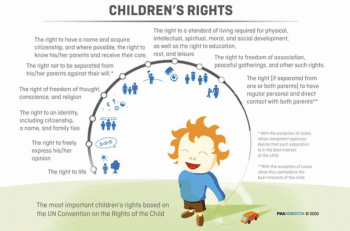
    For the first time in a decade, the Irish government defended its record on children’s rights before the United Nations in Geneva, on 14th January 2016. Poverty and homelessness, the rights of children in direct provision, the rights of Traveller and Roma Children and education issues were dominant themes, raised from different perspectives. The UN Committee on the Rights of the Child also asked about the incorporation of children’s rights into Irish law, the duty to hear children in legal proceedings, complaints and monitoring mechanisms, and the child’s right to identity in the context of surrogacy. Child protection was an important focal point throughout the discussions and the UN Committee members asked a range of questions about the extent of services and supports available to protect children from harm and to support families. Children’s rights in healthcare – obesity, smoking, alcohol and mental health – were queried. The rights of children with disabilities and in alternative care, in detention and in the immigration system were all scrutinised. The hearing was part of the process of monitoring implementation of the Convention on the Rights of the Child, a treaty binding on Ireland since 1992. The government delegation was led by Minister for Children and Youth Affairs, Dr James Reilly, TD. It was a measure of the political importance of the process that the Minister was accompanied by a large delegation of civil servants and officials from all major government departments. The hearing is an important opportunity to put pressure on Government in a public, international forum. For many of the non-governmental organisations present like the Children’s Rights Alliance, – and for the Ombudsman for Children – this is the culmination of a decade of advocacy. The Irish Human Rights and Equality Commission participates in all UN treaty-monitoring hearings. The Convention on the Rights of the Child is a particularly wide-ranging treaty, making both its implementation and its monitoring challenging. Mainstream issues of education and health sit alongside the concerns of children who are especially vulnerable or whose rights are breached by their particular circumstances. Guidelines ensure that all matters of importance are covered in the six-hour dialogue with the Government delegation. The hearing is a probing, constructive dialogue, rather than an adversarial process. The Government delegation is obliged to provide information in almost immediate response to detailed questioning from the Committee members. Answers demonstrated that the Government delegation was well prepared and few questions threw them off guard. Responses were generally succinct and direct although the Committee regularly interrupted if answers were too long-winded or off-point, creating genuine accountability. Civil society representatives were able to clarify any issues with the responses given by Government. They were able to point out that the status of the School Admissions Bill 2015, presented by Government, was at best uncertain, for example. When the Committee asked about the legislative amendments required to address the issue of school discrimination to protect school ethos, the Government’s commitment to change the Equal Status Act was welcomed, if with some surprise. The Committee’s rapporteurs were clearly well informed and able to convey with authority their understanding of the Irish context. Their probing questions sought clarity about the true state of child poverty, questioned why children in direct provision could complain to the Committee on the Rights of the Child but not to the Ombudsman for Children and wondered why many of the Government’s policies in this area remained on the shelf, and why law reform takes so long. A contrasting style emerged between some civil servants and the Minister, who on occasion brought humility and humanity to issues like child poverty and homelessness. Overall, with the many advances made on constitutional reform, the cabinet-level Ministry, family-law reform and the removal of children from adult prison, the Government can be satisfied that it avoided the worst criticism. At the same time, there is little doubt that the impact of austerity on children and the particular suffering of very vulnerable children will loom large when the Committee completes its analysis of Ireland’s children’s rights record. For those who work with and for children, the Committee’s Concluding Observations will provide a blueprint for children’s rights advocacy and activism in the years to come. Given the impact that such Concluding Observations have had on Ireland’s children’s rights record to date, this is clearly where children’s rights advocacy can make a difference. Ursula Kilkelly Ursula Kilkelly is Professor of Law in the School of Law, University College Cork.

    Loading

    Read more

  • Posted in:

    Revive Sex Offences Bill

    The Criminal Law (Sexual Offences) Bill 2015 had passed through the Seanad and was before the Dáil. However, unfortunately the Bill will not be passed through the Dáil before the 2016 General Election. It is now vital to ensure that it is restored to the Dáil at the same stage it had reached very early in the term of the incoming government. The Bill represented groundbreaking reform of sexual-offences law. The Bill contains welcome changes to criminal-evidence rules in sex-offence cases, for example by setting out precise criteria restricting disclosure of victims’ counselling records to the defence, a practice which currently causes great distress for victims. Other important changes protect child witnesses from being cross-examined in person by defendants in sex offence trials; and prevent judges and barristers from wearing wigs and gowns when a child witness is giving evidence in such trials. The sections that have received most attention are those dealing with prostitution law. These sections would criminalise the purchaser of sexual services (the client), while decriminalising the seller (the person engaged in prostitution). This change is based on a law introduced in Sweden in 1999. It would radically reform our deeply awed prostitution law, under which both prostitutes and clients are criminalised. By criminalising buyers of sex, it will pave the way for an approach to regulating prostitution that recognises the lived reality of those in prostitution, and that genuinely seeks to tackle sexual exploitation of women. Current Irish law focuses on prohibiting the visible manifestation of prostitution through criminalising offences of ‘loitering’ and ‘soliciting’. While these offences are gender-neutral, most prosecutions in practice are brought against women, who will typically be convicted of ‘soliciting’ and ordered to pay a ne (which many will go back to prostitution to pay). This model clearly has not succeeded in reducing the numbers of those engaged in prostitution; or in addressing the real exploitation experienced by many of these women. The Oireachtas Joint Committee on Justice, Defence and Equality recently conducted a review of prostitution law in recognition of the problems with our current law. We received 800 written submissions, 80% of which favoured the Swedish approach. These submissions were drawn from a broad cross-section of civil society, including trade unions, frontline medical workers, service providers and those working with migrant women. We heard evidence from Sweden that their law has been effective in reducing prostitution levels, and has had a positive normative effect on social attitudes to sexuality. The Committee also held a series of public hearings, with input from those both for and against the Swedish approach, and from those directly engaged in prostitution. We heard that women enter prostitution in Ireland at a young age, many under 18. Many people are trafficked into prostitution and the vast majority are subject to control by a third party, or pimped. The report of the Committee, published in 2013, concluded that prostitution is widely available across Ireland. It is highly organised, highly profitable, highly exploitative and largely controlled by organised crime interests. That is the actual reality of prostitution. Current Irish law has failed to tackle this. We unanimously recommended a radical change with the adoption of the Swedish approach to criminalise only the client, the purchaser of sex. This Swedish law is based on a view of prostitution as inherently exploitative, amounting to gender-based exploitation. Laws based on this approach have already been introduced in other countries, including Canada, Norway, Iceland and most recently Northern Ireland. The changes we recommended were supported by a wide range of organisations, including the Immigrant Council of Ireland, the National Women’s Council and the Turn Off the Red Light campaign. Ultimately, they were adopted by the Government and included in the 2015 Bill. The Bill was debated at length in the Seanad over December and January. The campaign for this Bill must now continue into the next Dáil. Its offer of important changes to sex-offences law generally, its provisions to decriminalise those engaged in selling sex and to criminalise those purchasing sex, and its promise to tackle sexual exploitation, particularly of children and those engaged in prostitution must be defended and realised without delay. Ivana Bacik

    Loading

    Read more