General

Random entry RSS

  • Posted in:

    Rape Disgrace

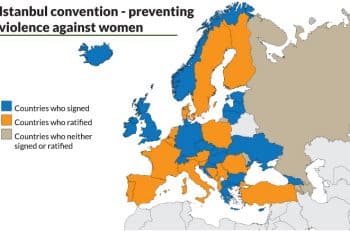
    We’re living in a “rape culture”, even though the term seems to annoy some people. So let’s just say we’re living in a culture in which rape is routinely trivialised, where victims are frequently blamed for its occurrence and their testimony is denied and ridiculed, and where the onus is placed on them to prevent rape from happening. Just under a third of female respondents to a recent survey among Trinity College Dublin students said they had experienced unwanted physical contact while at Trinity. A quarter of female students had been sexually assaulted, or had a “non-consensual sexual experience”. The Dublin Rape Crisis Centre (DRCC) has recorded a shocking increase of 36% in the number of victims of rape and sexual assault to the Sexual Assault Treatment Unit in the Rotunda Hospital in Dublin in 2015. Ellen O’Malley-Dunlop, CEO of DRCC, said: “The 36% increase in the number of victims accompanied to the Sexual Assault Treatment Unit in Dublin, for 2015 in comparison with 2014, is very concerning. We have yet to analyse these figures as to why there has been such an increase”. Surprisingly, 24% of callers were male and there has been a steady year-on-year increase in males using the Helpline since 2008 when the gure was 14%. There was an increase of 30% in first-time callers to the National 24-Hour Helpline in 2014 (the latest year for which statistics are available), compared with 2013 figures. Calls relating to adult rape showed an increase of 14% compared with 2013 figures. There was an increase of 71% in crisis appointments for recent rape and sexual assault delivered by therapists in 2014, compared with 2013 figures. Our statistics on sexual crime are shocking. It is now thirteen years since publication of the Sexual Abuse and Violence in Ireland Report (SAVI) detailing the prevalence of sexual violence in relation to age and gender for over 3,000 adults, it remains a very distressing document. So with a general election looming what’s to be done? Ratification of the Istanbul Convention would generate change. The convention deals with prevention, requiring us to put in place measures to challenge the gender stereotypes, roles and attitudes that promote this culture of violence against women. It obliges us to ensure that the Garda respond immediately to calls for assistance and that all victims have access to special protection measures during investigation and judicial proceedings. The convention crucially deals with protection, ensuring that the needs and safety of survivors are placed at the heart of all measures. It demands the setting up of specialised support services that provide medical assistance as well as psychological and legal counselling to survivors and their children. The convention also stipulates the number of refuges that are needed to adequately respond to women, that of one refuge place per 10,000 of population – we’re well behind this target right now. The Istanbul Convention provides the framework for structural and personal reforms and provides a mechanism to hold the Government to account. We need stronger legislation. Domestic violence should be a crime of itself, accompanied by appropriate sanctions that match the seriousness of the act. Within the proposed sexual-offences legislation, a definition of consent should be included. Consent should be freely given – an enthusiastic, clearly communicated and ongoing Yes. Right now one in ten victims of sexual crime in Ireland reports that crime. Of that one in ten, only 7% lead to a conviction. We urgently need sanctions that are effective, consistent, proportionate and dissuasive. The appallingly high attrition rates within our criminal justice system and send out a message to women that if they report a crime justice will be done. We must provide a supportive environment for women to continue through the system and seek justice. Setting up the new Garda unit – The Human Protective Services Bureau – was a great move but it requires increased personnel and financial resources to target domestic and sexual violence. Specialist units in each Garda Division should now be established to address domestic and sexual violence ,and ongoing training is required at all levels to develop an expertise within the force that both supports the victim and pursues perpetrators to arrest and conviction. We will only seriously address this issue when we shift the focus from women, from asking what did she do, why was she there at that time, why did she stay, and place the focus on men who perpetrate these crimes. We must break the malicious disbelief, victim-blaming and perpetrator-excusal that surrounds rape. We must restore funding to the organisations that help victims. We must shatter this culture of rape. Lorraine Courtney

    Loading

    Read more

  • Posted in:

    Maybe Equality

    The Government would be happy to go to the polls wrapped in the mantle of a ‘Yes Equality’ Government. The Government delivered on the marriage equality referendum. We had the referendum to beat all referendums and same sex couples can now get married, their relationships affirmed as equal. This was a remarkable achievement. Eamon Gilmore called it “the civil rights issue of this generation”. However, is it enough for Fine Gael and Labour to don the mantle of a ‘Yes Equality’ Government in search of a vote? Aodhán O’Riordáin, Minister of State at the Department of Justice and Equality, tried to keep the feeling warm. A month after the referendum he declared the report of the working group on direct provision for asylum-seekers, set up by his Department, as another “Yes Equality moment”. This sorely diminished the mantle and, indeed, any correlative right to don the mantle. The recommendations of this report were far from any ideal for equality and human rights. The report essentially permitted continuation of this inhumane direct provision system for receiving and accommodating asylum-seekers. Only those asylum-seekers serving five years or more in the system were to be released. The mantle has since been further sullied as even the limited recommendations have not been implemented. Direct Provision is not the only serious human rights violation that this Government has countenanced. RTE’s Prime Time exposed the gross abuse of people with disabilities living in Áras Attracta. Political disapproval owed yet action was absent. The Government ignored the 2011 Congregated Settings Report that recommended that “people with disabilities living in congregated settings move to community settings within seven years”. It ignored the costed submission of the HSE, made in 2015, seeking some €250m to implement the report. Whenever it came to money, this Government evinced little interest in donning the ‘Yes Equality’ mantle. The treatment of the Traveller community reflected a rejection of equality and human rights by the Government. There was an extraordinary disinvestment in the Traveller community. The education budget specifically allocated to Travellers was reduced by 87% and the accommodation budget by 85%. This happened despite significant educational inequality for Travellers and the scandalous, often dangerous, living conditions they continue to endure. The tragedy of ten lives lost in the fire on the temporary Traveller halting site in Carrick-mines was not unpredictable. Even tragedy, however, failed to secure any reinvestment in the Traveller community. People with disability fared badly. Their prospects for independent living receded. The Mobility Allowance and the Motorised Transport Grant for people with disabilities were cut. The Minister for Health and Children axed these schemes in 2013 because criteria governing the schemes were found to be in breach of the Equal Status Act in a case heard by the Equality Tribunal in 2008. The Minister did not have to axe the scheme. He promised the issues would be resolved quickly but some people with disabilities remain on the schemes found to be discriminatory and no new scheme has been provided for the many others now precluded from access to these vital supports. The schemes were central to participation in society and to ensuring people do not become trapped in their own homes. Lone parents didn’t fine it was a ‘Yes Equality’ Government. Changes to the One Parent Family Payment caused stress and hardship for many families, that are much more likely to experience poverty and social exclusion than others. 63% of them experienced enforced deprivation in 2013. The Government effectively ended access to the One Parent Family Payment in 2015 for lone parents whose youngest child is seven or over. The financial losses for working lone parents are so significant that they are likely to give up part-time employment. Trans people, on the other hand, did get some of the ‘Yes Equality’ treatment. Legislation secured legal recognition for them in the gender with which they identified. This was on foot of legal action taken by Lydia Foy to assert her rights. The legislation, despite its failure to respond adequately to young Trans people, compares well with the most progressive approaches to the rights of Trans people at a European level. The legislation to ensure 30% of all candidates of each party in national elections are women is progressive. There was a touch of the ‘Yes Equality’ about this. It did not cost money but it is clear that it is causing some significant pain in male bastions. The same commitment did not extend to private-sector boardrooms, despite proposals from the European Commission for a 40% quota of the under-represented gender on corporate boards. And that ‘Yes Equality’ feeling drained away with the failure so far to address women’s reproductive rights by repealing the iniquitous Eight Amendment to the Constitution that has put women’s lives and health at risk. This Government did inject some of the resources cut by the previous Government from the budgets of the Equality Authority and the Irish Human Rights Commission back into the equality and human rights infrastructure. Nothing, however, is ever straightforward when it comes to this Government and equality and human rights. The additional resources were only made available to a new, merged body, the Irish Human Rights and Equality Commission. It seems this potential ‘Yes Equality’ moment was actually more about sweeping equality under the human rights rug. Equality and human rights re ect two very different traditions. Equality is focused on achieving outcomes of equality for the different groups that make up society. Human rights are about minimum standards to be enjoyed by all individuals in society. In merging the two traditions there is much talk of the logic of equality being a human right. When equality is limited to being a human right it is confined to formal equality. Formal equality is only about equal treatment and non-discrimination. Not about outcomes. A merger of the Equality Authority and the Irish Human Rights Commission, based on such an understanding of the relationship between human rights and equality, diminishes any capacity for or drive towards the more substantive forms of equality that so many groups in our society aspire to and

    Loading

    Read more

  • Posted in:

    Accountability and Transparency – Report Card

    Result: C B+ on transparency; D on accountability. Not quite the democratic revolution we’d been promised. Political reform was high on the agenda of all political parties in 2011. In the heat of the worst economic crisis in the history of the state it was apparent to all that failings in our political structures were at least partially to blame. In the opening line of its 2011 Programme for Government the new coalition government wrote boldly of a “democratic revolution”. A series of political reforms was promised, particularly in the two most pressing areas: accountability and transparency: accountability in the sense of giving the Dáil in particular more of a hold over future governments; transparency in terms of opening government up to closer scrutiny. The scorecard on these two streams of reforms is pretty mixed overall. The good news is that many of the objectives (and a few additional ones) were met on the transparency agenda. The three main planks of an ‘open government’ agenda – freedom of information reinstatement; whistleblowers legislation, and a register of lobbyists – were all implemented, and there were more widespread initiatives to spread an open government agenda across government and the public service. Much praise for all of this goes directly to Brendan Howlin who showed, more than any other minister in this government, true reforming zeal. There were also initiatives emanating from the Department of the Environment, most notably those aimed at opening up party finance to closer scrutiny: however, as the annual reports of the Standards in Public Office Commission reveal a lot more work still needs to be done in this quarter. The lack of any serious intent to establish an Electoral Commission was a major implementation failure. The government’s record on accountability reforms was nothing short of dismal. A series of pretty irrelevant changes was introduced (cutting pay, reducing the number of TDs, Friday sittings, and so on), but reforms that would actually make a difference to the balance of power between the Dáil and the government were few. About the only reform of any significance was the introduction of a pre-legislative stage, giving committees greater potential to introduce amendments to bills. What clearly made the difference in this instance was the lack of a minister whose portfolio included Dáil reform. In 2011 we had the weakest parliament in Europe. Five years later – and despite the government having the largest parliamentary majority in the history of the state and cross-party consensus in favour of true Dáil reform – we are left with what is still the weakest parliament in Europe. Overall, the record is not good. The perennial Irish problem of prevarication continues apace. Distracted politicians (who all too easily take their eye off the ball of longer term objectives) combined with the dead hand of civil service mandarins (whose life mission is to preserve the status quo) have won the day again. While the government may have scored well (B+) on transparency, it receives a pretty dismal D on accountability, dragging down its average rating on political reform to a C – not quite the democratic revolution we’d been promised. Report Card – Accountability Report Card – Transparency Extras not in the 2011 Programme for Government The Public Sector Standards Bill is at an advanced stage and should be ready for completion in the next Dáil. This introduces a new Public Sector Standards Commission, whose remit is to provide a statutory framework governing disclosure of interests and other ethical obligations for public officials. Ireland became a full member in 2014 of the Open Government Partnership, an international initiative designed to promote an open government agenda. Among other measures this has seen the establishment of an Open Data Platform.

    Loading

    Read more

  • Posted in:

    Villager February 2016

    Electi On Right, Villager thinks there’ll be a hung Dáil. Fine Gael and Fianna Fáil will struggle to work out whether they should coalesce, risking their exposure as ideological charlatans and the long-term growth of Sinn Féin. Another election within a year. The prognosis is tentative since around here there is no worse crime than a discredited prediction. Quite a bit at stake In which spirit… so Bernie Sanders and Donald Trump come out punching from New Hampshire and it’s cockle-warming to see the Bush and Clinton dynasties with their inequality-indulgent ideas formed a generation ago, in serious trouble, even if it does signal the return of the Angry White Man, and his supporters. Sanders’ agenda, of course, has obvious appeal in the right-on Village while Trump is dangerous in an old-fashioned FASCIST way. Assuming for the sake of mischief a Sanders-Trump election-off, for Villager the victor can regrettably (and terminally) only be Trump. Sanders is too ugly and Trump too rich for any other upshot. So what happens then? The only force in global volatility that is more unhinged than Trump is Islamic State whose principal religio-geo-strategic goal is dooms-day precipitated by a battle in Syrian city of Dabiq, near Aleppo. It is here, the Prophet reportedly said, that the armies of Rome (ie the West) will set up their camp. The armies of Islam will meet them, and Dabiq will be Rome’s Waterloo. After its battle in Dabiq the caliphate, already in 2016 nicely ensconced under Abu Bakr al-Baghdadi, will expand and sack Istanbul. An anti-Messiah will come and kill a vast number of the caliphate’s ghters, until just 5,000 remain, cornered in Jerusalem. Then Jesus (Jesus!) – the second-most-revered prophet in Islam – will return to Earth, whack the anti-Messiah, and lead the Muslims to victory. After a series of domestic putsches and foreign-policy cataclysms Villager foresees an insurgent Trump, toupée to the sun on a white charger leading the Crusaders into battle at Dabiq. He will lose but be revealed as the Anti-Messiah before final wipe-out at Jerusalem. It is not clear whether the Donald will consider the big new status recompense for the loserism. Jesus and Mohammed will together sort out the souls and the Bushes’ and Clintons’ Wall Street millions will be useless to them. Hello you Former Anglo CEO, David Drumm, is to wing his way back from breaking rocks in a Federal penitentiary, with Fintan O’Toole’s misplaced endorsement for a man incarcerated in the lucre-lionising country to which he has fled, blowing up a tail wind. Drumm has announced that he hopes to wear a tag rather than go to prison here. Villager has an idea. How about wewear the tag and he gives us back the money? Valentine wishes The words ”My heart is, and always will be, yours” from ‘Sense And Sensibility’ have been voted the most romantic line from romantic literature, film and TV drama. They are uttered by Edward Ferrars to Elinor Dashwood in director Ang Lee’s 1995 screen version of Jane Austen’s classic novel with Emma Thompson’s Oscar-winning screenplay,. It was the top choice of 2,000 inane British women who were polled for the cliché-blind TV channel ‘Drama’. Villager resolves to try it out on Mrs Villager. The scene in the 1997 epic ‘Titanic’ where a frozen, fearful and (Villager was happy to note) doomed Jack, played by Leonardo DiCaprio, tells his effervescent Rose played by Kate Winslet, ”promise me you’ll survive” (inevitably) came third. Bliss and the insolvent luxury-car company ‘Former Model’ Glenda Gilson opened up to ‘VIP’ in a February cover photoshoot about her life a year since marrying ‘Rob McNaughton’. The cover (Villager claims never to get beyond it) gushes: “After 18 months of wedded bliss the gorgeous star of Xposé reveals that staying in is her new going out”. Admittedly the former vainquese of bearded developer Johnny Ronan has a lot to stay in from. Gilson mystifyingly fails to mention that during her blissful year she was barred from acting as a company director for five years. Glenda and her brother Damien were in charge of Gilson Motor Company Ltd until 2011 when it was wound up by the High Court for failing to pay €141,937 to the Revenue. Judge Paul Gilligan said Glenda was “deceived” by her sibling in the “improper way he ran the affairs of the business” which traded in high value vehicles and operated a car parking and valeting service at Sir John Rogerson’s Quay. Some of the money is owed to Ronan, who has – in other news – expressed the view that NAMA operates on the spiffing principle of Arbeit Macht Frei. you get the Tsar you deserve Ronan and his former business partner in Treasury Holdings, Richard Barrett, are back in business and back in the media, as if they had never cavorted malignly around boomtown threatening all-comers (Barrett once said he “had his foot on the throat” of poor Chicago-nurtured Garrett Kelleher) and in the end cost us all a packet. Barrett was even allowed to drawlingly pontificate on the Marian Finucane radio programme, about his vision for social housing something he has in the past been very reluctant to provide in Treasury schemes. He told Marian, always agog at a bit of developer vim, “There is an enormous humanitarian crisis of epic proportions which is causing a great deal of human suffering. It is proportionally much larger than the Syrian refugee crisis” with up to 300,000 people on the housing list. Barrett also tells a provocative anecdote of a local authority renting “a house at €8000 a month on one of Dublin’s two best roads to house a homeless mother with four children, costing the state a fortune”. But, intriguingly, he has the answer: “I have formed a series of investment companies, (in Housing, Social Housing, Health Care, Renewable Energy) [all, for some reason, called Bartra]. We will build these facilities renting them to the Irish Government”. He sees it as a sort of “social

    Loading

    Read more

  • Posted in:

    Election 2016

    In 2011 we wrote in this space, “You would think from our recent history of some of the most notoriously bad governance on the planet, that we would have learnt that our political classes need to be replaced. In fact, this election time we see no new ideas”. Sadly democracy in Ireland needs an overhaul every bit as much now as it did in 2011. Village is disappointed at the quality of politics, across the range. It’s easily diagnosed: Fine Gael is open to regressive policies and cronyism. However, at least on its own terms it deserves credit because it has consistently stuck to its agenda of (unimaginative) economic orthodoxy and because Enda Kenny has proved relatively competent, in the face of scepticism, including from this magazine. In 2011, we stated, “ Perhaps it is a unique merit of Fine Gael that if it is elected with a mandate, this time it may actually govern as it has campaigned. The electorate will be able to assess whether what it voted for was what it wanted”. This edition of Village explores at length the extent to which the coalition government delivered on its Programme for Government. It’s a fair test and it shows that, beyond promoting economic stability, the Government has been a disappointment. Labour certainly does not have the Fine Gael appeal of consistency. It never does what its manifestos promise. Worse, a number of its senior TDs have allowed themselves to appear smug and ideologically jaded or even, in Alan Kelly’s case, dangerous. Because of the elasticity of its conscience Labour has long attracted the wrong type of representatives. Fianna Fáil is tainted by its reckless past and the incoherence of its platform. It believes serving the people, parish and business in equal measure is viable. It has learnt little beyond the need to regulate the banks. Sinn Féin’s commitment to a Left agenda is unclear bearing in mind its defining preference for irredentist nationalism over ideology, its centrist pragmatism in the North and its willingness to coalesce with Fianna Fáil. Its performance at local-authority level is not impressive or particularly leftist. It is cultist, and ambivalent about democracy and transparency, and its leaders lie casually about its, and particularly its leader Gerry Adams’, past. Renua seems like a somehow unendearing chip off Fine Gael’s Christian Democratic block, with a penchant for propriety. The Independent Alliance (dubbed Shane Féin) is utterly incoherent of policy and membership. If ex-stockbroker Mr Ross and turfcutter Michael Fitzmaurice ever breathed an atom of the same political air, Village cannot imagine where it was. Village has a weakness for the Social Democrats, whose mild platform is essentially the same as Labour’s, though strangely more pro-business, but whose small membership is more prepossessing. Its antipathy to water taxes is expedient but regrettable. The radical Left offers the huge appeal of integrity and seriousness but its opposition to property taxes is inexcusable, and its focus on opposition to the loathed water taxes rather than a broader anti-inequality platform, including opposition to the iniquities of Nama, corruption and the resurrection of the developer classes has diverted its revolutionary ideology. The Green Party’s policies are often radical, and its agenda mature, but it is not hard-minded and it achieved so little in the last government that it is difficult to be enthusiastic. To the extent that we have not afforded space in this edition of Village to the policies and protagonists of most of these parties, it is because they simply don’t offer enough to justify it. Village believes equality of outcome, sustainability and accountability are the most important policies; and it is difficult to be optimistic about their immediate Irish prospects. Laboured machinations over the fiscal space are ephemeral, though most of the other media address little else. Reflecting the need for a vision of society as well as economy this edition focuses on the coalition’s delivery across a number of departments that promote equality, sustainability and accountability, though we do have articles by Constantin Gurdgiev, Michelle Murphy and Sinead Pentony on the iniquitous handling of the fragile economy. We consider Education, Health, Social Welfare, Environment including climate change, Small Firms policy, and Accountability. These departments make life worth living. We systematically assess whether they achieved the goals set by the Government for each of them when it took office. In the end the conclusion is that they have underperformed. And so therefore has the unimaginative, regressive and stolid Government behind them. Against this backdrop, we would again not presume to advise readers where to direct their votes. However, we can say the non-ideological, non-visionary parties of the pragmatic centre hold little appeal, even when mitigated by somewhat more thoughtful ones. A coalition of the parties of the Left, radical Left and the Greens would, as always, best promote Village’s agenda, if no doubt imperfectly.

    Loading

    Read more

  • Posted in:

    Enda Kenny: not so lite now

    Enda Kenny has defied those detractors who have claimed for many years that he is not up to the job of leading the country. Or has he? His supporters claim that he has brought the country, and the economy, from the brink of complete meltdown to steady recovery and is now set to be the first Fine Gael leader to claim the title of Taoiseach in successive elections. Others say that timing and luck have played a huge part in his belated success after more than 40 years in the Dáil and that victory in this month’s poll is by no means certain. Kenny never forgets his friends even when the going gets tough Over the past five years, Kenny has displayed many of the characteristics that marked the career of his long-term adversary, Bertie Ahern, including the ability to shake off, or at least postpone, controversies that would have caused terminal damage to other party leaders. His claim to have secured a significant debt write-down from his EU partners in June 2012 proved to be untrue. His siding with the ECB and the Bundesbank against the struggling Greek people who put the radical leftists of Syriza into power was self-serving and opportunist and arguably undermined any prospect of Ireland getting some early relief on its enormous legacy of banking debt. His instruction to the Secretary General of the Department of Justice, Brian Purcell, to make a late-night visit to the Garda Commissioner, Martin Callinan, leading to the resignation of both senior public servants and of his own long -time supporter, Alan Shatter, in mid-2014, is all a fog of obfuscation. Similarly, the manner in which the Commission of Inquiry he announced to examine the purchase of Siteserv by long-time party supporter, Denis O’Brien, and other IBRC sales in mid-2015, was allowed to run into the sand due to its restricted powers and inadequate terms of reference bears all the finger prints of his senior handlers. His outrageous and inaccurate remarks from Davos to Madrid to Paris on Ireland’s crisis and his government’s role in recovery have confirmed that he has not lost the habit of appearing the clown, unintentionally, at the most unexpected moments. Enda Kenny also merits opprobrium for his broken promise to fix the health system, the failure to deal with a deepening housing crisis and the widening of the income divide between the richest and most vulnerable during these past few years. Yet the stars, and international factors, including a strong dollar and sterling, unpredicted multi-national tax payments and the dramatic oil-price collapse have combined to see Kenny emerge as the architect of the fastest-growing economy in Europe and the cheerful bestower of a fistful of promises to simultaneously cut taxes, improve public services and recruit thousands of nurses, teachers and gardaí. Kenny has luck on his side. He was fortunate to lose the leadership contest against Michael Noonan after John Bruton lost the 1997 general election to Ahern and before the 2002 poll when the Fine Gael vote imploded. Kenny survived with his lowest ever first preference vote in Mayo and Noonan resigned. The Mayo TD took over the party in June 2002 after a battle with Richard Bruton. Kenny was helped by transfers from his soon-to-be key ally, Phil Hogan, in the run-off and after the elimination of Jim Mitchell. He faced into the 2007 general election as the blitz of his bizarre financial arrangements threatened to take out Ahern but failed to convince voters that he could do better than Fianna Fáil in managing a faltering economy. Once again, luck was on Kenny’s side as Brian Cowen replaced Ahern a year later and was engulfed by the banking and property collapse. In 2011, after two failed heaves against him, the Fine Gael leader hauled his party to an historic victory and into government with a resurgent Labour Party, after the Fianna Fáil/Green administration collapsed in acrimony and the people gave it an unprecedented battering in the February election. He merits opprobrium for his broken promise to fix the health system, the failure to deal with a deepening housing crisis and the widening of the income divide between the richest and most vulnerable during these past few years There is no doubt that he has rid himself of the ‘Bertie lite’ tag that dogged him for years, although his closest aides still do not trust him enough to let him out on his own too often. Kenny maintains a quirky, hail-fellow-well-met style that makes him seem like a country bumpkin but disguises a more ruthless political streak and shrewdness.. In mid-2014, Kenny publicly distanced his party from its key strategist, and his close friend, Frank Flannery who was embroiled in a financial scandal which erupted after details emerged of enormous salaries and other payments involving the Rehab charity and its senior executives. Flannery who had left the charity some years previously was still being well paid by Rehab for consultancy work which involved lobbying his colleagues in Fine Gael. He had a pass for Leinster House and free parking which the public was informed was being removed. It was a humiliating experience for the suave PR man and no doubt difficult for Kenny. A few weeks later the pair sat down for lunch in Dobbins restaurant near the Dáil along with another old friend and party elder, the late Bill O’ Herlihy. Kenny expressed a degree of regret that Flannery had been shafted and was sorry that he had to withdraw his valuable Dáil pass. “Don’t worry about that, Enda”, replied Flannery, or words to that effect, as he pulled the pass from his jacket pocket, to laughter all round. Kenny never forgets his friends even when the going gets tough. Kenny was gifted a Dáil seat for Mayo west in November 1975 after the premature death of his father, Henry, from cancer. The young teacher was a newly appointed principal at Knockrooskey primary school near Westport and followed in his father’s footballing

    Loading

    Read more

  • Posted in:

    Why we shouldn’t care about university rankings

    University rankings are released every winter. It gives the media a few free stories. One or two universities go up the rankings, and one or two go down. University presidents rush out to the media to congratulate themselves and their staff on the hard work and innovation that led to the rise, how they are doing more with less etc. The stories write themselves. Alternatively the presidents remark gravely that the fall is the inevitable by-product of unsustainable funding cuts, and if the government doesn’t intervene it will only get worse. Of course if either were true we’d expect to see trends. The universities of hard work and innovation should be improving consistently, and the funding losers dropping. In fact we see that Irish universities are not moving in any particular direction. There’s a dramatic fall in some rankings: the Times Higher; but a hardly noticeable one in the QS one. In the Shanghai ranking Irish universities have improved. Surely if a change in performance is dramatic and real all rankings should pick it up? This gets us to the problems with these rankings. First is using rank at all. Rankings are inherently unstable. The rank a university comes in can change dramatically even if the performance of the university hasn’t changed that much. Think of the rank of someone in a marathon with 1000 runners. The top 10 runners will be spaced apart, the first and the tenth runner could have quite different performances. And these will be quite a way from the 100th runner. But we usually see that after a while bunching happens. The 100th runner and the 200th runner might not be that far apart, but the rank indicates a big difference. In the main middle bunch, between the 250th and 750th runners, small differences in performance will yield huge differences in rank order.   Students might be better off with mediocre researchers who are fantastic teachers   What are these scores based on? The different university rankings (there are about seven of them) use a variety of components to measure university performance, but they tend to rely heavily on one: university reputation. It accounts for between a third and a half of the score in each of the different rankings. Reputation is often based on some real differences, but it means that big, famous universities are scored higher because, well because we’ve heard of them. If you’re asked what is the best university in the world, some names come to mind, and these are the names that come out on top. Are they the best? They’re probably close to the best, but our assessment is based on nothing more than name recognition. This is a bit like using opinion polls far out from an election. Well known candidates perform best in these because voters have heard of them. After a campaign, in the real election, these advantages are reduced and the less well-known candidates perform better than expected. One ranking, Shanghai, rejects these repetitional criteria. But it replaces it with possibly more obscure criteria. It looks at the number of students and staff who won a Nobel Prize. These prizes aren’t plentiful, so most universities in the world will score zero. But do they really measure anything a student would want to know? That Samuel Beckett went to Trinity and then won a Nobel Prize is as much a matter of luck (for Trinity) as anything else. Does it reflect the contemporary student experience? Research output and citations measure less obscure things. Research is a core university activity, and it can be measured pretty reliably. A journal article that is published and relied on for further research makes some difference. But it is not clear that it makes a great deal of difference to the student experience. They should be getting taught by genuine experts in the field, which is good. But does it mean they are taught well? The busy researcher may be less engaged with teaching pesky undergraduates, who eat into research time or, more likely, the time they can spend chasing grant income. And teaching itself is remarkably difficult to measure. So the ranks rely on the staff-to-student ratios. We know that good teaching relies on interaction, and it’s easier to be interactive with small groups. But it’s also possible to be mind-numbingly boring in small groups. Students, and these are the core source of funding for Irish universities, might be better off with mediocre researchers who are fantastic teachers, who give them hands on experience doing whatever it is they are there to learn. There are few German universities in the top 100 of any rankings, but no one thinks German graduates deficient. One of the reasons there are so few German successes there is because research is often done in independent institutes, but it’s also because Germans spread resources so as not to create a few small elite universities that teach few students, but to make all universities pretty good. The path some are suggesting of ‘picking winners’ to create at least one Irish elite university by targeting resources may not be such a good idea.   The UCC president Michael Murphy rather clumsily instructed staff to ask academics they knew to think of UCC when assessing reputation   A further criterion used by most rankings is the internationalisation of the institution. Universities with a large number of foreign staff and students are given a higher score. But measures of internationalisation tend to favour small, open countries. Ireland is one of the most globalised countries in the world mainly because it is one of the smaller developed countries in the world. A small number of foreign students make a big impact here. We also benefit from speaking English, so it’s easier to move here. I’m not sure this reflects anything meaningful in the performance of our universities. Measuring university performance is difficult. The existing rankings capture something. If Harvard is in the top ten in all rankings, it is

    Loading

    Read more