Intelligence, Security and Covert Action

Random entry RSS

  • Posted in:

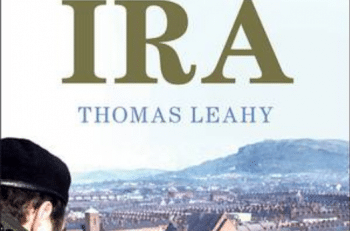
    Nobody Won: debunking the myth the Provisionals were brought to their knees by British spies. Margaret Urwin reviews ‘The Intelligence War Against the IRA’ by Thomas Leahy.

    By Margaret Urwin. In ‘The Intelligence War against the IRA’, Thomas Leahy, Senior Lecturer in Politics in Cardiff University, challenges the growing dominant narrative that the IRA was brought to the negotiating table in the 1990s because they had been ‘brought to their knees’ by British intelligence. Since the outing of State agents, Stakeknife and Denis Donaldson in particular, in the early 2000s, many academics, historians and commentators have concluded that the IRA campaign ended in defeat because it was fatally compromised by agents and informers. Existing books and articles, while not studying the intelligence war in any significant detail, yet conclude that British intelligence was vital in forcing the IRA into peace. Leahy meticulously, painstakingly and, indeed, convincingly, debunks that conclusion.  Leahy meticulously, painstakingly and, indeed, convincingly, debunks that conclusion.  The book is the first to evaluate fully the impact of British intelligence agents, SAS and other operations against the Provisional IRA. From the wealth of material examined in Irish and UK archives, interviews and memoirs, Leahy argues that British intelligence did not force the IRA into surrender and that political factors were crucial in delivering peace. He suggests that, in fact, particular intelligence operations may have, rather, increased IRA support in its heartlands because of anger against the British State. It is one of the first studies of the conflict that researches what happened by region. It examines British intelligence and security strategy impact on IRA urban units in Belfast and Derry but also rural units in south Armagh, north and mid-Armagh, Fermanagh, south Derry, north Down, south Down and Tyrone. The IRA campaign in England is also considered in detail. Leahy concludes that a previous major focus on the IRA in Belfast has overlooked crucial aspects of the overall picture of what happened and why during the conflict and the regional factors affecting it. A range of republicans (both pro-peace-process and dissentient) have been interviewed, as well as British security personnel; also memoirs from all sides of the conflict including self-confessed IRA informers and intelligence handlers have been accessed. Of particular value is the extensive use of the relatively new sources of personal papers of Brendan Duddy (intermediary between the IRA and the British at critical times during the course of the conflict), Ruairi Ó Brádaigh and Daithí Ó Conaill, which provide crucial behind-the-scenes insights. Both British and Irish Government policy towards republicans is reviewed. Leahy suggests that, from 1969 to 1972; 1973-74 and 1976-90, the British State sought to contain IRA violence at ‘an acceptable level’. Evidence is provided to show that that this policy failed. After the breakdown of the 1975 ceasefire, from 1976, in particular, policies were enacted to marginalise the IRA, e.g., the abolition of ‘Special Category Status’ and the introduction of ‘criminalisation and Ulsterisation’. The intention was ‘to isolate republicans from political settlements whilst eroding the IRA’s armed capacity to a point where they no longer had any influence on Northern Irish politics’. After Roy Mason was appointed as Secretary of State for Northern Ireland, he told Prime Minister Callaghan in January 1977 that there was no intention of engaging in further talks with Sinn Féin and he ended all contact with intermediary Brendan Duddy. As part of the strategy of marginalising republicans, from my own research I am aware that, also in 1977, the British made vigorous efforts to prove a link between Sinn Féin and the IRA  so that Sinn Féin, which had been a legal organisation since May 1974, could be re-proscribed. A lengthy intelligence operation involving surveillance, searches of Sinn Féin offices, seizures of documents and interviews with suspects were carried out for more than a year. However, when the investigation was complete and a report produced in October 1978, the result showed the evidence did not support the view that the IRA and Sinn Féin were inextricably linked and so Sinn Féin could not be re-proscribed. The book presents original evidence suggesting that republican leaders were seeking talks towards a political settlement in the early 1980s, as Sinn Féin’s electoral mandate was increasing. This was, however, ignored as the British Government tried to negotiate a ‘moderate’ peace settlement with the SDLP and the UUP. The book presents original evidence suggesting that republican leaders were seeking talks towards a political settlement in the early 1980s, as Sinn Féin’s electoral mandate was increasing. This was, however, ignored as the British Government tried to negotiate a ‘moderate’ peace settlement with the SDLP and the UUP. This initiative failed due to persistent IRA activity, Sinn Féin’s electoral mandate in Northern Ireland and, by 1990, both the Irish Government and the SDLP were anxious to include Sinn Féin in peace talks. The importance of the rural IRA to the overall campaign is emphasised. South Armagh, in particular, was the strongest unit and, with significant support from the local community, was almost impenetrable. The community had been incensed by the building of watch-towers and constant helicopter flights.  Its position of strength enabled it to carry out operations in England in the late 1980s and 1990s. If the IRA was heavily infiltrated it would not have been possible to carry out a litany of spectacular bombings in England – Brighton (1985); the Royal Marine School of Music (1989); a booby-trap bomb under a car killing Ian Gow MP (1990); the firing of mortars into the back garden of 10 Downing Street (1991); the bombing of the Baltic Exchange (1992) and the NatWest Tower at Bishopsgate (1993); the firing of mortars onto runways at Heathrow Airport (1994) and, after the breakdown of the ceasefire in 1996, the Docklands and Manchester City bombings. Leahy agrees with Jonathan Powell that talking to all sides involved in the conflict was necessary in order to deliver peace. Sinn Féin’s electoral support was too sizeable to be ignored in a political settlement. He suggests that, ultimately, it was the political mandate and persistent conflict that led all sides to negotiate and to accept a peace settlement. Nobody ‘won’. It

    Loading

    Read more

  • Posted in:

    The McGurk’s Bar cover-up. Heath’s Faustian pact. How a British prime minister covered up a UVF massacre in the hope of acquiring Unionist votes to enable the UK join the European Economic Community, the forerunner of the EU.

    Tory PM Edward Heath concealed the identity of a paramilitary organisation which perpetrated a massacre in Belfast in 1971. He did so in the hope of acquiring the votes he needed to win a majority in the House of Commons to enable the UK to join the EEC, the forerunner of the EU. What he did has remained the best kept and murkiest secret of the EEC-EU-BREXIT saga of the last 50 years. A string of declassified documents have now emerged which, when read together, expose what Heath, the British Army, propaganda operatives and the RUC Special Branch did. The documents are about to be presented to the new British Cabinet Secretary, Simon Case. By David Burke. INTRODUCTION. Ted Heath’s role in the cover-up of the McGurk’s Bar bomb atrocity of 4 December 1971 is the best kept dirty secret of the EEC-EU-UK-Brexit saga of the last 50 years. It would have remained under wraps indefinitely but for the determination of the historian, author and McGurk’s bomb campaigner Ciarán MacAirt. Irrefutable documentary proof of the Heath-McGurk’s scandal is about to reach the Whitehall desk of Simon Case, the former GCHQ spook and Northern Ireland Office official who is now Cabinet Secretary to Boris Johnson’s government. Case was a key figure in the British Establishment conspiracy which refused to order a judicial inquiry into the murder of the lawyer Patrick Finucane two weeks ago. Everyone in Whitehall – including Case – knows that MI5-FRU and RUC agents in the UDA murdered Finucane with ‘cabinet level’ approval. If Case was unhappy with this, he did not resign or protest publicly (nor even discreetly to a friendly journalist). The Finucane decision was an affront to decency, democracy and a direction from the UK’s Supreme Court. Case has surely learnt by now that a key aspect of his job is to cover up for a certain type of murder carried out during the Troubles. He is now about to be put to the test again. On this occasion it will involve his approach to the massacre of 15 decent and honest people:  the innocent victims of The McGurk Bar bomb massacre of 4 December 1971 in Belfast. HEATH’s FAUSTIAN PACT In December 1971 the UK’s prime minister, Edward Heath, was working to secure Britain’s entry to the EEC, the forerunner of the EU. He needed all the votes he could attract to get his legislation over the line in Westminster. One group with the potential to help was the Official Unionist Party. It was led by Brian Faulkner, the Prime Minister of Northern Ireland. The Unionists held eight key votes in the Commons in London. Faulkner had just taken over from James Chichester-Clark as prime minster of NI on 23 March 1971 on the basis he was the Unionist hard man who would defeat the IRA. As minister for home affairs during the IRA’s Border Campaign, 1956 – 1962, he had introduced internment, something Unionists credited with defeating the IRA on that occasion. It has never been a secret that there was a price to pay to keep Faulkner happy: Heath was to re-introduce internment. Although Faulkner was prime minister of NI, he still needed Heath and his army to make it happen. Crucially, Faulkner wanted internment for the IRA only. This meant – and Faulkner knew full well – that the UVF, Red Hand Commando and the UDA would to be left alone to bomb, kidnap, torture and murder Catholics. Heath’s cabinet had sought a balanced internment with the IRA and loyalist groups being swept up at the same time. They also wanted guns held by rifle clubs called in. The overwhelming majority of these weapons were in Unionist hands. A third requirement was a ban on parades. None of this was acceptable to Faulkner who went as far as to suggest there was no evidence of Loyalist terrorism and that the guns held by the members of rifle clubs were not a security threat. A ban on parades, he argued, could not be enforced. Heath caved in on all three issues., save that there was to be a six month ban on parades. An overview of UVF terrorist actions – including those of the 1960s and the period 1970 – 1971, can be found at: https://en.m.wikipedia.org/wiki/Timeline_of_Ulster_Volunteer_Force_actions Despite the murders and bombings perpetrated by the UVF and Red Hand Commando, when internment was introduced in August 1971, Loyalist paramilitaries were not swept up by the Army. Instead, they were let go about their gruesome activities. Heath was a man with a ruthless edge perfectly capable of bending the rules to get what he wanted. As a junior minister in the Foreign Office, he had been involved in machinations that led to the murder of the democratically elected prime minister of the Congo, Patrice Lumumba. An official at the Foreign Office – Howard Smith – had started the murder ball rolling by suggesting that MI6 assassinate Lumumba. In his private life Heath was just as selfish. In August 2015 the Wiltshire Police launched ‘Operation Conifer’ into allegations that he had been a paedophile. In 2017 the force announced that grounds existed to suspect him of child abuse. As a matter of law, the force was not entitled to reach any conclusions about the potential guilt of Heath and it did not. The furthest it could go was to state that if Heath were alive, he would have faced further questioning about the accusations levelled against him. Mindful of this, the force revealed that Heath would have faced questions under criminal caution relating to: One incident of rape of a male 16; Three incidents of indecent assault on a male under; Four indecent assaults on a male under 14; Two indecent assaults on a male over 16. The investigation spanned the period 1956-92. None of these incidents took place while Heath was PM, 1970-74. See also Carl Beech and the ‘Useful idiots’ at the BBC. The inco6mpetence of the BBC has now made it

    Loading

    Read more

  • Posted in:

    SMITHWICK’s SECRET WITNESS

    By Deirdre Younge. The Smithwick Tribunal concealed its relationship with Freddie Scappaticci whom it treated as a credible source of information while the Kenova Inquiry is investigating him for multiple murders. The Smithwick Tribunal found Garda collusion in murder of RUC officers, but couldn’t name the colluder.  This was partly because it allowed a motley band of FRU operatives, informants and agents  like the serial ‘intelligence nuisance’ Fulton and elusive thug Scappaticci endlessly to mislead it on who the colluder was so that, when MI5 conduit Drew Harris gave definitive evidence to the contrary, the Tribunal was forced to give what the authorities, North, South and in the UK wanted: a false finding of collusion that was impossible for anyone, particularly an unnamed colluder, to challenge. Since this article was written the Public Prosecution Service of Northern Ireland has decided not to press charges relating to perjury against three people – two public officials and another, believed to be Freddie Scappaticci, on foot of files submitted by Operation Kenova.  The present DPP N.I Stephen Herron, appears to have accepted that Scappaticci was entitled to rely on the ‘defence of necessity’ in May, 2003 when he took a judicial review against Jane Kennedy, a Minister in the Northern Ireland Office. Scappaticci had asked the Minister to deny allegations in the media that he was the agent called ‘Steaknife’ or ‘Stakeknife’ which she refused to do on the grounds that it was standard policy to give a  ‘neither confirm nor deny’ (NCND) response to  questions related to National Security. The Minister’s decision was upheld in August 2003 when Scappaticci’s application for Judicial Review was dismissed.  An official in the Public Prosecution Service in 2006, reviewing Scappaticci’s sworn statements of 2003 on foot of complaints received, accepted that Scappaticci had committed perjury but that he was justified in claiming that he was not the agent ‘Steaknife’ or ‘Stakeknife’ in the circumstances, as to do otherwise would have put his life in danger – the ‘defence of necessity’. That decision was itself reviewed in 2018 by the then DPP Barra McGrory with the consequences explained below. The latest decision by the DPP Stephen Herron therefore, accepts Scappaticci’s defence.   Freddie Scappaticci, the British spy who came to Dublin to testify. Chief Constable Jon Boutcher, from Bedfordshire Police, is leading operation Kenova whose independent team is investigating a range of activities surrounding an elusive individual intriguingly codenamed Stakeknife, or Steaknife. Kenova detectives arrested and interviewed the British Army agent Freddie Scappaticci, a 72-year-old Belfast man, in early 2018. He is widely suspected of being that individual. A member of the Belfast IRA from the early 1970s, he was recruited as an agent for the Army’s Intelligence Corps in the mid to late 1970s. He moved to British Army intelligence Force Research Unit (FRU) in Northern Ireland which secretly penetrated terrorist organisations in 1982 with his then handler, Major David Moyles, who instructed him and channelled his information.  Scappaticci was observed operating around Dundalk and the Border region North and South from around 1982 until 1990. He is believed to have attempted to take over a unit run by another IRA man in Louth in the early 1980s. He was also described as the co-ordinator of its North-South operations. Later he was second in command to JJ Magee in the Internal Security Unit which conducted IRA interrogations along the border. He is linked to at least 20 murders.  But he fell out with the IRA, and in with MI5 and its emanations which paid him £80.000 a year. Serious allegations have emerged to the effect that, to protect his cover, the British government allowed up to 40 people to be killed via the IRA’s Internal Security Unit or ‘Nutting Squad’ which he led.  It appears Kenova is pursuing several perjury cases against Scappatacci for denying he is Stakeknife or Steaknife.  Some are sceptical whether he will be held to account as it has, for example, been alleged he retains tapes of his dealings with his handlers. A number of individuals connected to the Stakeknife scandal, and keen for an accounting, have claimed perjury is the easiest way to ensure the alleged spy will appear in a court of law. According to Henry McDonald in the Guardian, “The whistleblower who first publicly identified Stakeknife as Scappaticci, the former Force Research Unit soldier Ian Hurst, has described the perjury route as a ‘slam dunk’ if Boutcher and his detectives decide to prosecute on that front”. The focus of this article is on how such an eminently unreliable persona was allowed to elaborately subvert the naïve and misdirected Smithwick Tribunal that reported in the Republic in 2013. One gauge of the unreliability is perhaps that in court in 2019 counsel for Britain’s Ministry of Defence revealed the total number of lawsuits against the alleged spy. Tony McGleenan QC said: “There are 31 claims. Some have taken the form of correspondence [but] 24 writ actions have been issued. All of these name the second defendant (Scappaticci)”. Scappaticci had been outed as the alleged agent Stakeknife or Steaknife at the time of the Stevens Inquiry in London in 2003. The outing is credited to his sometime associate Peter Keeley aka Kevin Fulton. But it is also attributed to a former Sergeant in the Army Intelligence Corps and FRU, Ian Hurst aka Martin Ingram. Scappaticci was also the subject of allegations in relation to the Tom Oliver murder in County Louth in the book ‘Stakenife’ published in 2003 by Journalist Greg Harkin and Ian Hurst under his pseudonym Martin Ingram. That’s three different lineups alleging the identity. Keeley and Hurst are egregiously shadowy figures who were to feature in the Smithwick Tribunal and whose allegations led to Scappaticci being afforded unlikely credence and indeed getting legal representation there.  Members or agents of British Army Intelligence  were to play a huge role in the Smithwick Tribunal which investigated whether there was collusion between the Garda in Dundalk and the IRA killers of two RUC officers, Chief Superintendent Harry Breen  and Superintendent Bob Buchanan, who were shot dead

    Loading

    Read more

  • Posted in:

    Carl Beech and the ‘Useful idiots’ at the BBC. The incompetence of the BBC has now made it a pawn in the cover-up of VIP sex abuse. The darkest forces in MI5 and MI6 are the true beneficiaries of its ineptitude.

    By Joseph de Burca. Introduction. The documentary on the liar and fraud Carl Beech raises the most serious questions about the competence of the BBC which broadcasted it on 24 August. For years Beech masqueraded as the survivor of a VIP sex-abuse ring that allegedly engaged in the rape, torture and murder of children. During his charade, Beech enjoyed the attention of the mainstream British media and a now defunct website called Exaro. Meanwhile, the reporters who gave Beech acres of publicity ignored the existence of genuine victims of sex abuse. Some even misreported what they said. The BBC documentary on Beech did not reveal a single new fact of any relevance and was a pointless exercise from a journalistic point of view. All it has done is cast doubt on the credibility of genuine victims of sex abuse such as Richard Kerr. Instead of devoting its massive resources to a meaningful inquiry into the issue of actual VIP sex abuse, the BBC has now produced two documentaries on Beech. Village magazine has produced an online book which describes the role of MI5 and MI6 in the exploitation of children in Ireland and Britain in the 1970s and 1980s for those who would like to look beyond the output of the BBC and the Murdoch press. It begins at The Anglo-Irish Vice Ring. Chapters 1 – 3. One question about Beech was raised repeatedly during the BBC documentary, namely why did he lie? Yet, having raised this extremely important question, it did not provide anything resembling an answer. Instead, it offered speculation and bewilderment. Significantly, none of the speculation touched upon the possibility that Beech was a player – and a well-paid one at that –  in a plot by a cabal determined to convince the public that VIP sex abuse was nothing more than a figment of his imagination. Once he had achieved his goal, it was his plan to start a new life in Sweden with his financial rewards. The media had not published a single picture of his face and had only referred to him as ‘Nick’. Then he was thrown to the wolves by his erstwhile colleagues, discredited and sent to prison. Now, even if he were to reveal that he was part of a plot to discredit claims of VIP child sex abuse, his credibility has crumbled and no one will ever believe a word of what he has to say. If this is actually what has happened or close to it, the BBC has served the cabal’s purposes admirably. Intelligence services have a term for people who advance the agenda of those they oppose without realising they are being manipulated: they are called “useful idiots”. 1. THE USEFUL IDIOTS AT THE BBC Last year the more excitable elements of the British media went into something of a frenzy after the conviction of Beech by a Newcastle jury. Beech, a former NHS manager then aged 51, was convicted for perverting the course of justice, i.e. telling the police a pack of lies. He was sentenced to 18 years imprisonment. Beech’s deceit related to the existence of an alleged murderous  VIP paedophile ring based around Westminster involving Jimmy Savile, the former British prime minister Ted Heath (1970-74), and others. Beech’s allegations prompted a £2million Scotland Yard inquiry. Beech claimed he was a survivor of an “establishment group” which including politicians, military figures and spies. Absurdly, he claimed the group kidnapped, raped, tortured and murdered  boys in the 1970s and 1980s. This had triggered an ill-fated police probe that ended without a single arrest being made. The BBC broadcast did not attempt to answer any of the questions which Village  magazine and other publications raised last year. It did not even ask: Who funded Beech’s lavish expenditure in Sweden; Why did the police treat Beech as a credible witness when it was obvious he was a liar; Who was the “high-level” figure who told the police not to look at Beech’s laptop computer for two years, something that permitted him to engage in the crime of watching child pornography during that time period. 2. WHO FUNDED BEECH’S EXPENDITURE IN SWEDEN? Beech planned to make a new life for himself under an assumed identity in Sweden. He was in the process of arranging this while his lies were unravelling and he was facing a slew of criminal charges in Britain.  He purchased a riverside property in the village of Overkalix near the Artic Circle in the name of Stephen Anderson. Yet, the BBC did not bother to ask: Did he have a passport in the name of Stephen Anderson? Did he have fraudulent legal documents in the name of Anderson? If so, how did he acquire them? Did he get them from MI5, MI6 or another government agency? What documents did he use in the purchase the house in Sweden? The BBC did not raise the issue of his funds apart from mentioning that he had received the sum of £22,000 in compensation for his alleged abuse. That sum, however, could not possibly have funded his lavish lifestyle. The BBC did not make that important fact clear. Even if the BBC lacked the wit to raise the mystery surrounding Beech’s wealth on its own volition, the issue was already in the public domain. The Daily Telegraph reported last year as follows: “Seemingly flush with cash [in Overkalix], Beech, who was given £22,000 from the Criminal Injuries Compensation Authority in the wake of his claims of abuse, did not hesitate to pay 450 Krona (£38) for a haircut, £84 for a tin of paint, or £1,350 to fix the air conditioning in his car”. The Sun reported how the house cost £17,000 and that Beech planned to buy a “large house across the road plus several cabins by the riverside, including a luxury villa”. A local plumber called Patrik Elemalm has revealed how he installed a new bathroom and renovated the pipework for £4,500.  According to Par Andersson, the budget for the villa was £85,000. The BBC also

    Loading

    Read more

  • Posted in:

    Tune into BBC 2 tonight. From Jimmy Savile to Carl Beech, the BBC’s lamentable coverage of VIP sex abuse.

    By Joseph de Burca. The BBC has a lamentable record insofar as VIP sex abuse is concerned. It allowed Jimmy Savile prey on children for decades while countless officials knew what he was like. Johnny Lydon (aka ‘Johnny Rotten’ of the Sex Pistols) was shut down when he tried to expose Savile. If Lydon – a complete outsider –  knew he was a child molester, it is not hard to imagine how many people inside the BBC also were aware. Why the BBC really covered up for Savile is still a matter for conjecture. The most likely answers are deference to the British Establishment and the malign influence of British Intelligence, especially MI5 which is attached to the Home Office. Savile was a friend of the Royal Family, Margaret Thatcher and other VIPs. Savile was also part of the various overlapping VIP abuse rings which were being exploited by Britain’s intelligence services for various nefarious reasons. The BBC continues to turn a blind eye to evidence of VIP sex abuse. Grotesquely, it enjoys a reputation for quite the opposite, especially in light of its tepid interview of Prince Andrew late last year, saved only by Andrew hanging himself through his hubris. During that interview, Prince Andrew was not asked about his friendship with Lord Greville Janner and Alan Kerr, a teenage male prostitute that Janner had introduced to him at a performance of the Prince and the Pauper in the 1980s. See The Prince, the pauper and the paedophile peer: the dangerous questions the BBC failed to ask. BBC 2 is about to broadcast a documentary on Carl Beech (9.30 tonight). Beech is the conman once known only as ‘Nick’, who has somehow managed to convince the British public that VIP sex abuse was a figment of his imagination. People who have defended the reputation of former British Prime Minister Ted Heath have claimed that the conviction of Beech last year for his lies was a vindication of their position. This is illogical. Logically, if Heath is to be deemed innocent of child abuse simply because Beech included him as part of his litany of lies, Jimmy Savile must be innocent too as he was also included in Beech’s output. The case against Heath was made by the Wiltshire Police after a very thorough investigation. Its commendable report can be found online.See also Does ‘Nick’s’ conviction mean Jimmy Savile and Ted Heath are innocent? Yes, if you work for the British tabloid press. By Joseph de Búrca Last year,  Village  magazine examined Beech’s background and put forward the case that he is a lot more than a mere fantasist. On the contrary, he appears to have been either used or exploited or employed by a cabal which is determined to convince the British public that VIP sex abuse did not take place. There are very serious questions to be answered about the large sums of money which Beech acquired. The acid test will be to see if the BBC documentary asks questions about:  Beech’s motives (was he is a paedophile himself, and part of the cabal which wished to protect VIP paedophiles) the motives of the police officers who afforded Beech credibility (when all the evidence pointed against Beech having any);  the source of Beech’s income (which was sufficient to purchase a house in Scandinavia where he planned to flee) Meanwhile, the Independent Inquiry into Child Sexual Abuse (IICSA) has turned out to be a monumental failure. One of the many reasons for its failure has been its point-blank refusal to interview a string of living witnesses who could have provided it with evidence of VIP sex abuse. Combined, it would appear that the cabal behind Beech, the BBC and the IICSA have persuaded – and will continue to persuade –  the British public that VIP sex abuse did not exist. The former Tory MP Harvey Proctor may feature on the BBC documentary. Beech alleged that Proctor had been involved in child murder. That was a lie. Proctor never murdered anyone. He did, however, exploit teenage rent boys. He was convicted for this in the 1980s. If he is interviewed by the BBC, will Proctor provide a full account of his dealings with teenage male prostitutes, or simply focus on his reaction to Beech’s false murder allegation? Will Proctor provide details about: The rent boys he abused? Will he be asked if he paid rent boys on other occasions? Will he name other MPs who exploited them? Will he explain what steps – if any – he took to ensure that the rent boys he exploited had not been groomed and abused in orphanages or care homes earlier in their lives? Will he be asked why he thought the rent boys let him and others abuse them if not on account of poverty? Will he name the restaurant where he took one particular now high profile teenager from Northern Ireland for a meal and describe the full nature and background to his contact with this individual? Will he be asked about his views on the exploitation of impoverished and disadvantaged teenage prostitutes by adults? A balanced documentary would address these isssues as well as the motive behind Beech’s campaign of lies. The purpose of the documentary should be to strip away the lies and refocus on VIP sex abuse. The main beneficiary of Beech’s campaign of lies was MI5 and MI6. The BBC and MI5 and MI6 have a long fraternal history. The BBC was used by the various branches of British Intelligence during World War II in its operational activities. While it is difficult – if not impossible – to take issue with the use of the BBC during World War II as a propaganda tool to help suppress the Nazis, it should be noted that the deep symbiosis between the two organisations remained in place during the Cold War and beyond. MI5 was permitted to vet all employees at the BBC until at least the 1980s. The

    Loading

    Read more

  • Posted in:

    Traduced (updated version): John Hume was the victim of a campaign of character assassination perpetrated by the British Secret Service, MI6, and was placed under MI5 surveillance in Dublin with the assistance of the Gardaí.

    By David Burke. UPDATE: See also Just declassified UK memo on John Hume reveals interest of PM John Major’s top civil servants in “possible press stories regarding John Hume’s private life”. John Hume was the victim of a campaign of character assassination in the early 1970s perpetrated by British spies. It was spearheaded by an individual called Hugh Mooney, a graduate of Trinity College Dublin, who once worked as a sub-editor for the Irish Times. Mooney belonged to the ‘Special Editorial Unit’ (SEU) of the Information Research Department (IRD). It was responsible for the production of black propaganda. Mooney’s boss was the IRD’s Special Operations Adviser, Hans Welser, a veteran of the WW2 Political Warfare Executive. The IRD was part of the Foreign Office and worked closely with the British Secret Service, MI6, which is also attached to the Foreign Office. The IRD operated from a building in London called Riverbank House. Although Mooney worked at Army HQ Northern Ireland under the cover title of ‘Information Adviser to the GOC’, official documents show that in 1972 he was reporting to the Director and Co-ordinator of Intelligence (DCI) at Stormont – not to the GOC. This means that his activities were known about at a very high level. Prior to his attack on Hume, Mooney had worked in Bermuda where his colonial and racist side had come to the fore, a story for another day. Mooney and his associates sought to depict John Hume: as part of a communist conspiracy to turn Ireland into Europe’s Cuba; as a supporter of the IRA; as a fundraiser for the IRA; as a thief who stole charitable donations; as a man for whom a warrant had been issued for his arrest in 1972. There may have been other smears which have not yet been detected. Unintentionally, Her Majesty’s spies and their colleagues in the British Army also made his task of achieving peace extraordinarily difficult at key moments in his career, such as those of Bloody Sunday in January 1972 in his native Derry. Rogue elements inside MI5 also plotted with the Ulster Workers’ Council (UWC) to tear down the 1974 Power-Sharing Executive of which Hume was minister for commerce. This left Hume without a reliable source of income for a number of years and could have forced him to abandon politics for a job outside of it. Throughout his career he was placed under surveillance, something that was tantamount to treating him as a subversive. In the 1980s the Gardai in the Republic of Ireland helped MI5 bug some of his conversations. A house where his deputy leader, Seamus Mallon, stayed in 1983 was also bugged by the Gardai. In the 1990s MI5 opposed his discussions with Gerry Adams. Hume was a towering political figure of immense courage, foresight and integrity. Boris Johnson has paid him a lavish tribute, praising his “strong sense of social justice” and saying that without him “there would have been no Belfast or Good Friday Agreement”. Despite Johnson’s fine words, the Tories did their best to stand in Hume’s way during the 1970s, 80s and 90s. In fact it is not an exaggeration to say that they made his life hell. HEATH IN THE 1970s: Ted Heath served as Tory prime minister, 1970-1974. He sent his black propaganda operatives to Ireland to conduct dirty trick campaigns in the early 1970s. It was they who ran the smear campaign against Hume. Ironically, it is Heath’s legacy which is in now in tatters while Hume’s has never soared higher. Heath’s reputation was destroyed by a report published by the Wiltshire Police in 2017 about his abuse of boys, one as young as 14. THATCHER IN THE 1980s: Margaret Thatcher, Tory PM, 1979-90, let MI5 (attached to the Home Office) spy on Hume in gross violation of his human rights. Some of this surveillance was carried out in the Burlington Hotel in the Republic of Ireland with the assistance of the Republic’s special branch. The first steps of the peace process were taken in the middle of Thatcher’s premiership in 1986 when a back channel was opened between Gerry Adams and Charles Haughey via Fr. Alex Reid. Haughey ‘s Northern Ireland adviser Martin Mansergh was a pivotal figure in the process. Thatcher’s battery of spies do not appear to have had any inkling of what was afoot. Had Thatcher discovered this development, it is – to put it mildly – likely she would have denounced it. The Haughey-Adams process was so secret that even John Hume did not know about it when he entered the process later and expressed disbelief when he finally discovered this fact. MAJOR IN THE 1990s: Thatcher’s successor at 10 Downing Street, John Major, PM 1990-97, was not supportive of the next phase of the process which became known as ‘Hume-Adams’. In 1993 and 1994 key elements of the press in the Republic denounced Hume’s dialogue with Adams, in particular Conor Cruise O’Brien who wrote for Ireland’s Sunday Independent. O’Brien was close to a number of dubious intelligence figures such as Dame Daphne Park, a self-confessed MI6 dirty tricks expert and David Astor, one of MI6’s most important assets in the media. O’Brien knew them through the British-Irish Association (BIA) which Astor had helped set up in the 1970s, and which Park co-chaired in the 1980s. It was Astor who appointed O’Brien as editor of The Observer. Haughey considered the BIA a British Intelligence front and forbade Fianna Fail figures (such as Brian Lenihan) from attending it. How much O’Brien was influenced by his friends in the British Establishment is an imponderable. Major, who had an exceptionally close relationship with his spymasters, was not supportive of what Hume, Adams and Dublin were trying to achieve either. Eventually, Bill Clinton had to intervene to twist Major’s arm and move the process forward. Still, MI5 tried to derail it. Haughey’s successor as taoiseach, Albert Reynolds, 1992-94, became so concerned about the hostility of MI5 that he told Major

    Loading

    Read more