It will be over data protection not economic reporting.
by admin
It will be over data protection not economic reporting.
Posted in:
by admin
Slightly less elite-centred than Marian Finucane: fewer lawyers, economists and politicians; fewer women and more scientists
Posted in:
by admin
The imperative for honest, responsive, investigative, collaborative, value-adding gatekeeping journalism
by Village
By Gerard Ryle. I was at a global conference in Rio late last year listening to Glenn Greenwald declare journalism in a “golden age”. Greenwald is the reporter credited with breaking the Edward Snowden story. He said the profession’s largest institutions are experiencing tough times because of the changing way people consume news. This was not something to be sad about – rather we should be happy about it. “The media institutions are failing and it’s a great thing to celebrate”, he said. Journalism isn’t dying. It’s thriving and just going to other places.” At the same conference, the day before, David Leigh also declared that journalism was in a new “golden age”. Leigh is the recently retired investigations editor of The Guardian newspaper, the paper that first carried the Snowden stories. Leigh’s argument was this. It is a golden age because investigative journalists are coming together in new forms of collaborations using fresh technology. And this dynamic is producing unprecedented levels of transparency and impact. “We are in the age of collaboration”, Leigh said. The Guardian has been involved in three of the biggest such investigative projects in the last three years. Leigh cited the Wikileaks collaboration that released hundreds of thousands of secret US diplomatic cables; the most recent Snowden disclosures of secret data collection by the US National Security Agency; and a story that I was involved with that broke worldwide in April 2013 that has since become known as Offshore Leaks. Once upon a time in Australia a man came along who claimed to have invented a magic pill. You put this pill in your motor vehicle and suddenly your fuel lasted 20 per cent longer. What’s more, the pill managed to eliminate all of the toxic emissions. The Australian Trade Commission wanted to believe so badly it had an entire section of its website devoted to the success of this company. The company got nearly €300,000 in taxpayer grants for sales that had never been made.It had no factories; it had no trucks – in fact, it had no actual product for sale at all. But it had penetrated deeply into Australia’s elite. Many of them secretly held shares in the company and they too thought they were going to be rich. So when I exposed all this as a fraud I spent my time defending the lawsuits, attacks in the Australian senate and I went through the despair and doubt that all investigative reporters are put through when powerful people don’t want something made public. This firm had been sending the money it was getting from selling shares to the British Virgin Islands and to other tax havens and then bringing the money back to Australia, as if it were sales of the magic pill. As long as new investors could be found, and the price of the shares continued to rise, the game went on. It continued for nearly 18 months even after I exposed it as a fraud, until finally the company stopped paying the lawyers who were suing me. By then I realised that I was staring at something much bigger – a secret universe that allowed this kind of thing to happen. And my pill company was only a small part of it. After I wrote the book about the magic pill, a mysterious package arrived in the mail. It was a computer hard-drive – the kind you can buy in any store. But this one was packed with a hoard of documents – the biggest stockpile of inside information about the offshore tax haven system ever obtained by a journalist. We are talking 2.5 million secret records. The total size of the files, if you were to measure it in gigabytes, was more than 160 times larger than the U.S. State Department documents given to Wikileaks. There were 120,000 clients from all over the world, from nearly 170 different countries. There were Americans … Russians … Irish. But this presented me with a dilemma: I had spent most of my career as an investigative reporter. We fiercely protect our secrets, at times even from our editors because we know that the minute they hear what we are working on they want it right away. To be frank, when we find a good story we also like to keep the glory for ourselves – but it’s funny how life sometimes throws up opportunities in batches. A few months after I got the hard drive in the mail, I got an email from my old professor at the University of Michigan. He was on a board that ran an outfit called the International Consortium of Investigative Journalists. This is a non-profit organisation headquartered in Washington DC that oversees some of the best investigative journalists in the world.It brings them together to work on cross border projects. He told me they were looking for somebody new to run the network – how did I fancy living in Washington for a few years? And the data I had was a total mess and extremely hard to read. It contained nearly 30 years of records taken from people who set up offshore accounts for clients. Going, sometimes four deep, into each of these folders I found emails, random PDFs with passport and home addresses, and spreadsheets with the names of thousands of clients. I began doing what many other reporters would do after me. I began looking for big names. But the story I was looking at was not about big names. The real value of what I had was an unprecedented look into a secret world. The same secret world I had a glimpse of when I was researching the magic pill. This is a world whose very product is secrecy. That’s what it sells. And this anonymity allows some individuals and corporations to gain tax advantages not available to average people. It allows frauds like the magic pill company. It can also pit economies and entire nations against one another. You just have to
Posted in:
by Village
By Ronan Lynch. One of the best in-jokes among editors this year is that “desktop is the new print”. Four years ago, news websites had zero visitors arriving via mobile devices. This year, the Financial Times noted that almost two out of three visitors to its website came via mobile devices, and news websites expect mobile users to account for four in five online readers in two years time. What’s driving all of this change? Step forward, the Circle. Sorry, Google. Although not a news platform, Google is driving a staggering rate of change in the news business as the company captures more and more of the advertising revenue from print and online news media. This change is being driven by the widespread adoption of smartphones and the increasing amounts of time we spend on our mobile phones and tablets. A survey by US website emarketer shows that in 2013, adults spent an average of two hours and twelve minutes on mobile devices (such as smartphones and tablets) and the same time on desktops or laptops. By the end of 2014, Emarketer estimates that adults will spend just under three hours each day on their mobile devices, with laptop and desktop usage dropping to close to two hours. Accordingly, mobile ad spending is set to increase 83% from 2013 to 2014, passing out radio, newspaper and magazine spending, and settling into third place behind television and desktop spending. Currently, advertisers spend twice as much on desktop advertising as on mobile, but that’s also set to change, with mobile revenue set to outpace desktop by 2016. So, who ends up pocketing all of this advertising revenue? The five most-visited Irish websites are google.ie, google.com, facebook.com, Google-owned youtube.com, and wikipedia. In the US, Google takes around 11% of online ad revenue, followed by Facebook at 4%, and much of Google’s advertising revenue distribution goes to Facebook. This year, Google will take more than one-third of its revenue from mobile advertising, and that could increase to 66% within two years. It’s not just that we’re spending more time on mobile devices. To their delight, advertisers are discovering that mobile devices, in the words of tech website pando.com, are turning us into “advertising hungry, nonstop retail monsters”. A report by advertising agency Criteo found that users are far more likely to click on mobile ads than on desktop ads. On iPhones and iPads, we’re 55% more likely to click on an ad, while Android (by Google) users are 90% more likely to click through, and 85% of the world’s smartphones running on Google’s Android operating system. There’s a mind-boggling cycle of information at work here. Our mobile devices are feeding great amounts of data back to Google about our habits and movements, enabling the company to deliver targeted and location-based advertising; with Apple devices, it’s possible to minimise the data fed back about location, but Android doesn’t offer such opt-outs. Yes, it seems that nothing makes us happier than shopping online with our mobiles. We’ve wised up to banner ads, whose click-through rates were once more than 50%, but which have plummeted now to less than .1%, forcing advertisers to look for other ways to attract our attention. Enter ‘native advertising’, the online equivalent of newspaper pages discreetly marked out as ‘commercial features’. The New York Times executive Meredith Levien notes that its readers now spend as much time on branded content as on news stories. Time CEO Joe Ripp is elevating ‘native advertising’ to a new level, announcing in July that his editors would now report to the advertising executives. There has traditionally been a wall between editorial and advertising for ethical reasons, to prevent advertisers from directly influencing editorial matters. Brands are increasingly hiring journalists to create content for their native advertising divisions. In recent years, we’ve seen the consequences of this blurring of the lines between editorial and advertising, and it hasn’t generally served us well. The division between editorial and advertising in newspapers is most slight in the property and motors sections of newspapers, where all cars are good, and all properties are interesting when they’re not exclusive. Vast revenues accrued to newspapers from property advertising during the mid-2000s, and although newspaper insiders knew that the property advertising bubble indicated a market at its peak, they largely failed to flag the crash. When Sunday Business Post property writer Carol Tallon suggested in July that buyers would be wise to wait a few years for an increase in the housing supply, it felt like a very edgy and radical thing for a property writer to say, though in fairness, the paper did need someone to counterbalance the recent if temporary elevation to go-to opinion writer Jim ‘soft-landing’ Power. •
Posted in:
by Village
Slow News takes those stories that get lost and gives them the attention they deserve.
by Village
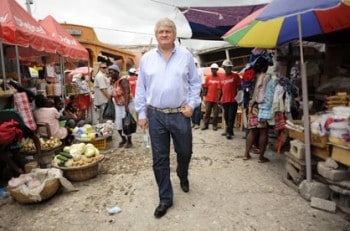
Denis O’Brien Dear Dermot, INM gobshites. Badly run with no internet strategy. My mini-Afghanistan, basically. Bloody Sir Anthony blew up the group. Everyone loves him, bloody poetry-reading patrician. Daddy always told him “it’s easy to win but it’s hard to lose”. Triumph and disaster, that sort of thing. But check-mate to Denis O’Brien, as Business Plus put it. Get used to it, has-bean. So all in all I thought you went off the rails saying he was a role model. Actually, in fairness, you said he was a “role model for myself” (myself, a good word for underscoring the size of an ego) so we knew that you weren’t exactly putting yourself down. And when you said he was “one of the outstanding businessmen of several generations”, I think everyone knew the space you were creating. You and I, sir. Number One in Ireland and – whatever you are (869, Forbes, I seem to recall!). “Mr Denis O’Brien – Apology”. It even smelled good. Though not sure there wasn’t something funny going on. Not a newspaper man so can’t be sure but seemed they could have been apologising for the correction, not the bloody mistake. Group editor, Stephen Rae, no better man, stopped the print presses after he was tipped off by a senior journalist that that woman had written that in practice I control the newspaper. I mean what would she, merely the editor of the flagship title, know about that anyway. Campbell Spray did what he was told, one in the centre of the beady eye for Anne Harris. The Phoenix claimed she’d agreed severance terms and would leave, after a one-year truce with myself, in October but yar wan was unfortunately right: “the whole story is a lie”. Still the whole thing reflects so well on me. Honour and Nous. In April last year INM got our banks to write off €138m of an overall debt of €422m, in exchange for a small shareholding. Huzzah. Dermot and Desmond, d’Artagnan and Aramis. Grizzly bears of commerce. They can add that to my €230m acquisition of the Siteserv Group where IBRC, now in liquidation, wrote off €110m of the €150m it was owed and my move on the Topaz Group earlier this year which involved the same fellas writing off slightly more than half of the €304m they were owed. My purchase of three major Irish businesses over the past two years involved total bank write-offs of more than €300m: €300m, Dr Desmond. Congrats btw on the D Econ and good to see the Nordies remembered Drico the same day. Yours is from Queen’s, mine from UCD. Mere baubles but handy for defusing that middle-of-the-night sense of well tribunalisation. Sometimes you make me swoon. Our people need us and you just can’t stop the wisdom of the ages flowing from great businessmen: “Life is not about the things that you leave. Life is about the experience that you leave and the example that you set. Money is replaceable, honour is not”, you said at Queen’s. Fair play. But like the pro you are you made it clear you haven’t gone all SIPTU. As to austerity I can only agree with your key insight that “the Government has done a great job and I wouldn’t dare to advise them”. Noted what you said about beany’s philanthropy. As I always say if you don’t do something decent in a country where you make a substantial profit you’re a gobshite. Clinton. Never forget mother Protestant do-gooder. Frontline Defenders. FAI. Green Jersey. My people. 910k annually. Not too much mind you. Digicel subscribers in Haiti, the poorest country in the Western Hemisphere, pay $120 for our service. Out of an average per capita income of $800. Not a bloody ATM. Hard edge. Green Jersey. Digicel having barney with internet telephony companies, like Viber and some regulators, in the Carribean. Trying to get fees out of them for providing voice call services using our data network and had to block some of them when they didn’t play ball. Gobshites. And flogged 17 percent of Digicel’s Burmese business to the gobdaws who won the mobile licence there. Shoulda done what we did in Ireland, of course. Talking of defunct billionaires and philanthropy, planning to give Bernard McNamara, just emerging from bankruptcy in the UK, the contract for the construction of that new office block on the southeast corner of St Stephen’s Green, the site of the former Canada House. Think of the loyalty I’ll get from the old fox. New tactic, bag the old geysers when they’re down and suck them in: doing it for Cowen; did it for Seanie Fitz, and now Bernard. Loyalty. It’s the only thing. Green Jersey. Busy. Recruitment firm China HR, owned by me and Leslie (he got a quarter), has announced a €30m investment programme. We’re the largest Irish-owned employer in China with 2,600 staff in 26 cities across China. Former head of asset management at the National Asset Management Agency, John Mulcahy – whom I know from Mount Juliet, has just begun advising me on the overseas property empire. Most of my stuff is in Portugal and the Caribbean. Revenue Commissioners have failed to stop my appeal of their finding that a tax return 14 years ago was insufficient due to the bit relating to my exchange of shares in Esat Telecom being completed in a negligent manner. I can now proceed with a case arguing the Circuit Court should fully hear my appeal. High Court, ring of steel of course. Got my hands on the company that publishes ‘Buy and Sell’, Buzreel, after a bids process conducted through the Supreme Court. And dumped €4.7m worth of Aer Lingus shares. No idea what O’Leary doing there: Tony Ryan always preferred Denis. But enough of me. Congrats in order for snaffling another million shares in Mountain Province Diamonds (MPD), boosting your stake up to an impressive 22.3 per cent – for about €3.5m. MPD owns almost half of the world’s