• Posted in:

    Irish Times doesn’t necessarily correct mistakes. By Michael Smith

    It is essential in a democracy that the press reports the facts, distinguishes facts from opinions and corrects errors. The Irish Times styles itself the newspaper of reference. It used to call itself the newspaper of record but no longer can. It no longer aims to correct all the errors it prints. This article is perhaps challengingly over-detailed but it’s in an effort to make the above case, by describing my own experiences over the last few weeks, and years. I believe the case is representative. In the August-Sept edition of Village I made a mistake in saying Green Concillor, Mark Dearey, voted for a rezoning in Louth in 2007. Elsewhere in the article unconscionable activity involving other people and withdrawal of an appeal for a large payment is described. Mr Dearey feels the taint embraced him, I think not. He is suing for defamation but that is not the point here. At issue is a court report in the IT (8 October), by Ray Managh, on the defamation case Dearey is taking in the Circuit Court case against Village which was interesting, if certainly neither fair nor accurate. Indeed I feel it may be defamatory of me and so unfair and inaccurate, particularly as to the case I made, as to leave the truth of the proceedings hidden. First, it reported that the article I wrote is in fact defamatory, even though this is the issue to be determined by the court. This seems like it could be tritely damaging/defamatory of me and of Village in what purported to be a report of a court proceeding in a serious newspaper which “above all else commits itself to accuracy”. The court report stated: “Mr Mohan, who appeared with James McCullough, had also sought an order directing the defendants to publish a correction comparable to the false and defamatory material about Mr Dearey in the August-September edition of Village”. Grammatically, putting “the” in front of a word or phrase denominates it as being real. If an order is sought for anything counterfactual the reporter must use quotes or “allegedly”. That’s elementary to defamation and elementary to (court) reporting. Second, Mr Dearey is not seeking damages, as the Irish Times’ subheading prominently but inaccurately stated, but rather a declaration of defamation under a relatively new procedure designed for cases where a publisher fails or refuses to make an apology. This apparent basic mistake implies Ormond Quay Publishing Ltd and I may be open to enforced payments on a scale entirely different to what is in fact possible. Third, the article was not, as the Times reported, “about” Mr Dearey who is mentioned once in passing (in a seven-word sentence in a 1400-word article), but about large payments to third-party appellants to withdraw appeals they’d made to An Bord Pleanála. Fourth, the article was not a “corruption special”. There was a corruption special within the magazine which embraced three articles, not including the allegedly defamatory one. Fifth, the Irish Times reported it as fact that the article “had alleged criminal conduct and misfeasance in public office against a large number of individuals mentioned”. In fact nowhere in the Village article is there such an “allegation against anyone, least of all the councillors who voted for the material contravention. Sixth, contrary to the report, Judge Linnane did not in fact ask if Ormond Quay Publishing Ltd was impecunious. I stated it was, in a successful effort to get the judge to include costs as an issue in discussions she was encouraging between me and the plaintiff’s lawyers. And seventh, Ray Managh misreported what I said about that company. I stated it operated on a shoestring, not that it was on a shoestring. The latter version, repeated in a caption elsewhere in the article, seems to impute fragility rather than frugality and has the effect of damaging the financial standing of the magazine. More generally, though the report refers to the entirety of the case for the plaintiff, it fails to report the essence of my case, stated succinctly and in unvarying terms on a number of occasions. I told the court my case was procedural and substantive. The report ignores this. The procedural point made is that s28 of the 2009 Defamation Act does not apply in cases, as here, where an apology has been offered (indeed given). The substantive point made is that the comment is not defamatory – that the article describes unusual events surrounding the withdrawal of appeals to An Bord Pleanála at a cost of nearly €1 million, events that involve a difference process and different actors from the process – material contravention – about which the article made a mistake concerning Mr Dearey. Reflecting the Irish Times’ lack of interest in the seven mistakes it made in the Dearey report, matters whose seriousness should have been arresting, it failed to print or acknowledge a letter concerning some of them that I sent for publication. Inevitably then the ferret-like Phoenix magazine picked up the thrust of the Irish Times article, without calling for my view on it. This is not the first time I have been the object of grand-scale misreporting of my involvement in important and serious judicial or quasi-judicial proceedings, by the Irish Times, in reports that purported to be definitive and factual. In 2006 the Irish Times unfairly misreported my evidence to the Mahon Tribunal, and in 2011 and 2012 it serially misreported my evidence and then the decision of the Standards in Public Office Commission, concerning a successful complaint I had taken against Councillor Oisín Quinn. In the report of one of only three decisions in eleven years that went against someone in public office the Irish Times misreported the central facts, made eight errors and chose to ventilate the views of the Councillor, even though SIPO had decided against those views. The Irish Times misreported the matter three times through its political correspondents but did publish one reasonable effort by Tim O’Brien, the day

    Loading

    Read more

  • Posted in:

    Information drip

    “Governments treat the information in their possession as a resource, to be doled out in amounts as they see fit, either copious flows or mean little trickles. I noted that ultimately, it is the Government that controls the tap” – Emily O’Reilly, Irish Information Commissioner 2003-13 In a serious blow to Freedom of Information in Ireland, the newly appointed Information Commissioner and Ombudsman Peter Tyndall has withdrawn his predecessor’s appeal against a High Court judgment that the constitutional right to cabinet confidentiality can not be superseded by rights under EU. Under EU law, no emission to the environment can be exempted from the access to information legislation for any reason – not “commercial sensitivity” or “internal communications” or even “cabinet confidentially”. Requests for information often fall to many such exemptions. But if the information concerns “emissions to the environment”, that information must be released. Nevertheless in 2008 when Emily O’Reilly overturned the government’s decision not to release a cabinet minute relating to greenhouse gas emissions the Government took her to the High Court, which ruled in June 2010 that the Constitution trumped EU law. O’Reilly appealed to the Supreme Court, where the decision – described by one expert as “questionable in EU law” – could be debated at the highest level and if necessary referred to the European Court of Justice for its views. Scheduled to be heard this year, this prospect has been dashed by the new Commissioner’s withdrawal. Strangely but “strongly” of the view that the appeal would not succeed, the Commissioner admitted that he was aware the case raised issues “which went beyond the single question of access to the single document sought”. He was, however “cognisant of the severe financial constraints within which this office is obliged to operate”. His office also admits that the current Government is increasingly unhappy with its separate agencies fighting in public. It is to be hoped that more fibre is on display on April 7, when the Supreme Court is due to hear the Government’s appeal against O’Reilly’s ruling that NAMA is a public authority subject to Access to Information legislation, in a case brought by Gavin Sheridan. As Welsh Ombudsman, Peter Tyndall, a Trinity graduate and ex head of the Welsh Arts Council, spoke widely and wrote a number of articles emphasising the importance of extending the Ombudsman’s remit to public-service delivery by private-sector organisations “since the distinction in delivery…becomes increasingly blurred”. Public outcry may have led to the inclusion of Irish Water but the FoI Act continues to exclude 37 public bodies – from the largest landowners, Coillte and Bord na Móna – through An Post, Tourism Ireland, the Food Safety Promotion Board, the bus companies, the airport, harbour and port authorities, and the National Lottery. Even so, with a large number of bodies now coming under FoI under the new legislation, the delays that were characterised as “unacceptable” in the last Annual Report are now threatening to bring the whole system to a standstill. Only 18% of the cases dealt with under FoI were decided within the legal timeframe in 2012. No matter how right you are, justice delayed can be justice denied. There was some anger in the Information Commissioner’s office when the first Aarhus Convention National Implementation Report was released last month by Phil Hogan’s Department of the Environment. It breezily dismissed any concerns of chronic under-funding by saying that the Information Commissioner was entitled to seek any necessary funds from the Minister for Public Expenditure and Reform. The Ombudsman had made repeated such requests – and 5 new staff have been appointed to address the new legislation – but while the case closure rate is going up, the number of cases is rising faster. Nor has the Aarhus Convention proved to be the white knight that many had hoped. Designed by NGOs under the auspices of the United Nations – led by Irishman Jeremy Waites – the convention promised better access to information, participation, and justice. Ireland delayed many years in implementing Aarhus and its implementation was in the end immediately starved of funding. Information is often also delayed, not actively disseminated (on websites) and not provided in formats that are most useful to those who need to use the environmental information. Furthermore, UCC’s Dr Aine Ryall drew attention to a submission to Hogan’s Aarhus Report made by the Department of Justice: “In cases where the court does not deliver a considered, written judgment the decision of the court is recorded in a court order which is available only to the parties to the case”. She pointed out that many court decisions are in fact delivered ex tempore and that this was usually true when it came to the awarding of costs – a crucial element of the Aarhus convention. “It follows from this unambiguous statement”, Ryall wrote, “that ex tempore court decisions, where there is no written judgment, are not publicly accessible. This state of affairs is a clear breach of the express requirement in Article 9(4) that court decisions in Aarhus cases must be publicly accessible”. The Convention promised access to justice at a cost that is “not prohibitive” but we are denied the right to see how this has been addressed by the courts. Emily O’Reilly did much to advance Ireland’s tortuous journey towards transparency. Will her successor have the bottle to do the same? Tony Lowes

    Loading

    Read more

  • Posted in:

    Panti support

    On 12 January, Brendan O’Connor’s ‘Saturday Night Show’ featured a performance by drag queen Panti Bliss, followed by an interview with her alter ego, Rory O’Neill. During the conversation, O’Connor reflected that things were a lot better now than they were in the bad old days. O’Neill gave a considered answer to the question, reflecting on everything from the benefits of the intimacy of Irish society (everyone knows everyone, and it’s not so easy to be bigoted about someone you know) to the sometimes subtle nature of homophobia (it’s not just people getting beaten up in the streets). In fact, O’Neill noted, the only place where it was “okay to be really mean and horrible to gays” was online, or in a newspaper column. Then O’Connor asked unwisely, as it turns out, “Who are they?”. O’Neill answered, the audience applauded, and the interview moved on. Within days, in response to legal letters, RTÉ removed the segment from the RTÉ Player. Broadsheet.ie, which had posted the clip online, also took it down after being contacted by RTÉ (they later reinstated it). O’Neill revealed that he too had received legal correspondence. Broadsheet.ie, TheJournal.ie and Krank.ie reported on the removal of the clip from the Player. The next day the Irish Independent reported that John Waters had complained to RTÉ. The Mayo News picked up the story too (O’Neill is from Ballinrobe), and that was about it. Noel Whelan and Una Mullally wrote opinion pieces in the Irish Times from different perspectives, but there was little other reporting in the mainstream press. Meanwhile, bloggers went nuts, poring over everything from the nature of defamation and the defences available if sued, to the definition of homophobia, to previous statements from those who had complained, to the silence of mainstream media, particularly given such elements as the fact that one of those who complained to RTÉ. John Waters, was also a member of the Broadcasting Authority of Ireland at the time. (Waters resigned from the BAI ten days after the broadcast.) The following weekend, Brendan O’Connor apologised for any “distress” caused by comments made by “a guest”, no doubt to the puzzlement of many viewers who were not following the story online. But the story that hardly anyone old media was reporting refused to die. Blogs proliferated and were shared online, journalists were tackled on twitter about why they weren’t covering the story. Then the Iona Institute announced that RTÉ were paying damages. Audrey Carville raised the issue at the beginning of RTÉ’s ‘Late Debate’, leading to an exchange between Breda O’Brien and Colm O’Gorman. The dam finally broke in the dying days of January. Questions were raised in the Dáil and Seanad by Catherine Murphy, Claire Daly, Averil Power and a vituperative David Norris. Pat Rabbitte sent out a press release saying it “would be a matter of serious concern if recourse to our defamation laws was to have a chilling effect on the conduct of public debate”. Panti appeared on stage after ‘The Risen People’ at the Abbey. An Oireachtas backlash complained of the vilification of David Quinn. Editors might have been wary of reporting a story about an alleged defamation, for fear of attracting litigation themselves, but they could report what a minister said, and what was said in the Oireachtas. And RTÉ provided a further platform hosting a follow-up debate on the ‘Saturday Night Show’. The debate format, and the “terms and conditions” imposed, attracted their own criticism, but at least the story was being reported now. And with all that being discussed, the newspapers also reported on the sums that RTÉ had made in payments (€85,000). The old media were off – sort of. RTÉ attracted a lot of heat online for their actions (over 800 complaints about the apology), but the truth is, it could have been anyone. The responses in various editorials and opinion pieces made it clear that the threat of defamation silences the commercial press too. RTÉ estimated that over 2,000 people attended a protest over the affair on Sunday 2 February. In contrast, the reactionary Reform Alliance conference attracted 1,400, after weeks of front pages and endless hyperbole on television and radio. We talk a lot about national debates in this country. But free speech is the essence of debate. The Panti Bliss saga shows Ireland still hasn’t worked out the appropriate paremeters for rigorous debate. It shows the tin ear of newspapers and broadcast media, which failed to register the level of support for Panti – next to no-one sided with the Ionas. It shows the power of social media to colonise stories that old media cannot (or will not) cover. And a bravery which the old media seem tellingly to have forgotten. Gerard Cunningham

    Loading

    Read more

  • Posted in:

    Tensions rise as media standards fall

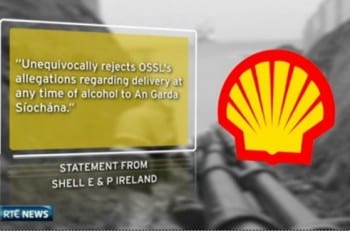
    Media need to look to the facts, not ideology Richard O’Domhnaill Tensions between the local community and the Shell-led gas consortium in north-west Mayo have considerably deepened following the sinking of the shellfish boat owned by Pat ‘the Chief’ O’Donnell in mid June. The sinking of his boat and the arrest of his son, Jonathan, as they exercised their historic rights to fish in Broadhaven Bay have removed a key obstacle in the company’s attempts to lay a pipeline from Glengad to the Corrib gas field. Last summer, close observers of the controversy surrounding the proposed high pressure gas pipeline and terminal at Bellanaboy suspected that the withdrawal of the massive pipe-laying vessel, the Solitaire, was primarily influenced by a fear on Shell’s part that O’Donnell might be successful in a High Court application to protect his historic fishing rights. Shell to Sea activist, Maura Harrington, was for a number of days also on hunger strike in protest at the presence of the ship in Irish waters before the sudden departure of the Solitaire last year although the company claimed that the pipe laying exercise was suspended due to technical problems. Many suspected that a court decision in favour of O’Donnell’s right to fish was a key consideration by Shell executives who feared that such a development could further delay by years an already seriously troubled project. Now with the forced removal of the O’Donnell’s from the water, however temporarily, and relatively mild weather conditions over the coming weeks Shell is hoping that the pipes close to shoreline can be laid without too much further disruption by opponents of the project. Pat O’Donnell and his son Jonathan have been arrested on a number of occasions and another of their boats seized since the shellfish boat Iona Isle was sunk on 11th June off Erris Head. There has yet to be a decision by An Bord Pleanála following its recent oral hearings into Shell’s renewed application for a revised pipe line route during which significant health and safety issues, similar to those raised over the previously unacceptable route, were raised by a number of interested parties. (see Michael McGaughan article page?). There has been some media speculation, fuelled by Shell advisors and spin doctors, that Pat O’Donnell may have sunk his own boat, and his livelihood, in the early hours of 11th June in order to gain sympathy for his position and of many others who want the proposed pipe line and terminal moved to a location where it does not threaten the health and safety of local people or the environment. This notion is rejected by O’Donnell and his crew member in the lengthy and detailed interview with Miriam Cotton which is reported in these pages. Both men are adamant that the boat was sunk when four armed and masked men with Eastern European accents boarded the trawler and held them at gun point while releasing water into the vessel. Similar allegations of attempted media manipulation by those opposed to Shell’s activities were made against local farmer, Willie Corduff, when he complained that he was beaten, again by masked men, after he emerged from under a truck where he was protesting against what he and others saw as Shell’s attempts to illegally fence off from the public an area at the Glengad landfall. In the early hours of April 23rd Corduff claimed that he was attacked and beaten around the head and body at the Glengad site by men wielding batons or heavy rubber instruments and subsequently hospitalised. Among the commentators to question the veracity of Corduff’s account was Peter Murtagh who suggested in The Irish Times that the former member of the Rossport 5 – who was jailed for ninety days in 2005 – was making it all up. Murtagh claimed that Corduff had not provided him with his hospital records which might substantiate his injury claims. The respected IT editorial executive did not record the fact that obtaining hospital records is not something that can be achieved within the deadline demands of a newspaper but can sometimes take weeks, as Village has learned. Witnesses including professional journalists who saw Corduff in hospital testified to his bruised condition as did a photograph published in The Irish Times on the day after the attack and s other photos published subsequently in Village magazine. The hospital and ambulance service records obtained and paid for by Willie and Mary Corduff and furnished to Village are consistent with his account of how he sustained injuries which left him in Mayo General Hospital in Castlebar for twenty-four hours. The diagnosis prepared by Mr Osama Elfaedy, the registrar to consultant surgeon Kevin Barry and sent to Corduff’s GP, Dr Brendan Molloy in Belmullet, records that Corduff suffered from bruising and had been kicked all over the body during an alleged assault at Glengad. Willie Corduff was suffering from kicks, headaches, nausea and vomiting upon his admission on 23 April. It also records that he had suffered a possible loss of consciousness. The hospital carried out a CT scan and X Rays on Corduff’s spine, chest and ankle where the bruising and pain were most pronounced. He also complained of pains to his legs and thigh. He was treated with pain reliefs and analgesia and advised to rest before his release from hospital on 24th April. Ambulance records note that Corduff complained of pains around his head and body when he was collected at Glengad and that he may have lost consciousness after he said he was beaten by masked security guards. In early July, Amnesty International reported that Shell and other oil producers in the Niger delta in Nigeria were responsible for serious environmental pollution along the routes of its pipelines in the West African country. Communities had been ravaged by leaks and explosions devastating farmland and ruining the environment and the health and safety of local people over many years. Amnesty accepted that there had also been a campaign by militants against the

    Loading

    Read more

  • Posted in:

    Chipping at David: Some radio techniques can’t be taught… though some can

    by Brendan Balfe     I was having dinner with Peggy Lee.  I had just interviewed her in the bedroom of her home in Hollywood and she had kindly invited me to stay, she resting on the bed after a recent fall and me sitting beside her in a chair, quietly thrilled. A butler brought in tortillas and scotch.  As one of the great song stylists of the twentieth century, Peggy was a sophisticated woman with an impressive knowledge of the arts and a large library of books lining the walls of her bedroom.  She had been reading about Michelangelo and when the conversation turned to his most famous sculpture, she made a telling observation:  “Imagine seeing David in that block of marble”.   It was a phrase which I borrowed some years later when I began training and coaching prospective radio presenters and producers.  Rather than impose a style, the better approach is to chip away at the bits that aren’t David and allow him to come alive, so that an authentic personality emerges, relieved of the irritants and bad habits that compel the audience to move the dial.   It was akin to the technique I encountered in the mid-Sixties, when I was being trained as a continuity announcer for Radio Éireann, based then in the old studios in the GPO.  Denis Meehan was in charge of the Announcers Section, aided by his deputy Brigid Kilfeather and his Chief Announcer, Terry Wogan, who spent his time subtly contradicting what Brigid had said the previous evening. ‘Speech Tunes entail delivering a script in a sing-song manner that bears no resemblance to the meaning of the words’ Terry was much influenced by Denis, a witty and kindly man, who encouraged us to sound like ourselves, rather than try to sound like ‘the man on the wireless’.  On the training course, he picked us up on pronunciation errors, in Irish and English, and gave such sage advice as, for example, when confronted with an unfamiliar name and unsure which syllables to emphasise, equal stress on all syllables gets you out of trouble.   Denis favoured an informal style, serious on occasion, but natural in approach. His philosophy encapsulated the essence of public service broadcasting – to make what is good, popular and what is popular, good. He was adamant that the national station should show respect for the audience, by treating them as intelligent. “They may be ignorant”, he said, “that is, lacking certain information, but they are not stupid”.  It’s a mantra that has underpinned my broadcasting:  ‘Assume they are Bright’.   Denis reserved much of his spleen for Speech Tunes. These are bad habits that infest the airwaves even now, on radio and television.  They characteristically entail delivering a script in a sing-song manner that bears no resemblance to the meaning of the words. It includes pauses in. The middle of the sentence.  And ends in a downward descent to the full stop at. The end of the sentence.  A Speech Tune rings false, is tiring to listen to and can be cured only if the speaker concentrates on the meaning of the text.   Denis also reminded us that, even though there are thousands listening, they are listening in ones. The days of communities clustered around a radio set are long gone, as are entire families watching the same TV set, so an intimate style by the presenter works best.   Eventually, there is an audition. A Radio Éireann executive told me of his way of deciding on one presenter, rather than another: “Nice people come across as nice people”, he said, “and bastards come across as bastards – and there’s damn all you can do about it”. There is truth in that.     So, it is possible that, having chipped away the bits of marble that aren’t David, we are left with a figure that is less than beautiful.  You know the kind of broadcasters  I mean-  the smug ones, the dull  ones,  the ones that regard  programmes as an opportunity to show off their knowledge, the ones who refuse to adopt even the most basic pronunciation guidelines, (‘Nooz’, anyone?).   Training and coaching can release what was inherently already there. But it can’t teach talent. It may teach you to read music, but it can’t teach you to be Peggy Lee.  

    Loading

    Read more

  • Posted in:

    Alexander Cockburn by Harry Browne

    The ‘non-contrarian’ who died last year, was the Irish-produced journalist with the best prose   Time to fess up, here. Some of us used to be quite fond of John Waters. We even had evidence to back up our feelings: In Dublin, under his editorship in the 1980s, was a pretty good, sharp index of the urban zeitgeist. Some of us still envy him. What combination of his ability and Geraldine Kennedy’s cackhandedness a decade ago managed to render him undroppable as a newspaper columnist? For years he has represented viewpoints that are at least as unpopular among the general population as those of, say, the far left, but various editors seem convinced that he should be permitted to carry on. Fair play to him, it must be a knack. It’s worth asking, though, what it is about the Waters form of authoritarian populism that fits it within the norms of an elite that ostensibly rejects his views. (I realise it’s hard to squeeze resistance to parking regulation, for which Waters has now done two hours of hard time in Wheatfield, under the heading “authoritarian”, but the man is not entirely inflexible.) Compare that success, for what it’s worth, with the professional fate of another man who like Waters was often wrongly labelled “contrarian”, probably the finest journalistic writer, as measured in sheer quality of prose, that Ireland produced over the last half-century or so, the late Alexander Cockburn. The comparison is prompted by the recent publication of ‘A Colossal Wreck’, the final collection of writings by Cockburn, who passed away at 71 last year. Ireland produced him all right, but it shared the task, not least with his father, the great British journalist Claud Cockburn, and with his equally brilliant mother Patricia, formerly Arbuthnot and of Anglo-Irish stock. Alexander had probably already mentally transcended Ireland by the time in the late 1950s, as a teenager home from school in Scotland, he was writing unsigned humorous leaders for the Irish Times. (The obituary in the Irish Times itself managed to mangle the chronology.) He lived for the last four decades of his life in the US. His first collection, ‘Corruptions of Empire’ (1988), was selected from a wide range of renowned and well-paying publications where Cockburn plied his trade in the 1970s and 1980s, plugged right into Washington and New York society, though withering in his assessment of it. ‘A Colossal Wreck’, on the other hand, finds him, no less hilarious, erudite and insightful, on the outer fringes of US life, at least as defined by mainstream-media success. This may have been a professional disaster – no more fat paycheques from glossy magazines and the Wall Street Journal – but the collection shows it to have been a political and literary boon. Living, for most of the period covered in ‘A Colossal Wreck’, deep in the beyonder portions of the back of beyonds in northern California, and driving around America in barely road-worthy but dearly beloved old cars, Cockburn shows a connection with the unfashionable lives of “ordinary” Americans that would be unimaginable in most successful journalists. He didn’t, despite the distance, grow entirely indifferent to the concerns of DC and Manhattan. In fact he mocked them and their elite opinion-formers more mercilessly than ever. In this passage, for example, he could be talking about the Anglo tapes and the eternal, diversionary search in any given scandal for a “smoking gun”: “… committee rooms on Capitol Hill and Sunday talk shows were filled with people holding up guns with smoke pouring from the barrel telling one another solemnly that no, the appearance of smoke and the stench of recently detonated cordite notwithstanding, this was not yet the absolute, conclusive smoking gun”. Sometimes hard to pigeonhole politically – Cockburn happily met some libertarians and paleoconservatives on what was for him the most valued common ground of anti-imperialism, for example – he differed from the vast majority of journalists, and probably sealed his career fate, with an unfailing mistrust of power and authority. He was the loyal son of the father who coined the oft-quoted, and more-oft-ignored, dictum: “Never believe anything until it is officially denied”. Alexander perhaps never came up with a one-liner quite as good as that, but ‘A Colossal Wreck’ is packed with passages that are irresistible for quoting aloud to whoever will hear you. The fact that for his last 20 years the mainstream media no longer wanted to hear him makes those insights feel all the more vital.

    Loading

    Read more