
Politics

Random entry RSS

  • Posted in:

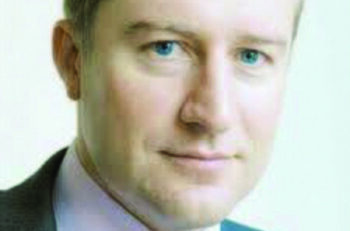
    Eamon Gilmore (2008): Finally atop the Labour Party triangle? (profile 2008)

    By Michael Smith. Eamon Gilmore needs to continue showing us his edge. “Triangulate: to move in the direction of a point by partly moving away from it”. For years the Irish Labour Party in general and its now leader, Eamon Gilmore in particular, have – characteristically – triangulated. They criticise a measure but pull their punches in part, lest they risk alienating someone or being seen as too radical. Or maybe because the Irish Labour Party, its leadership and much of its membership, after a period of radicalism thirty years ago, is now conservative by temperament. Gilmore won’t criticise the central substance of a measure; he’ll criticise its timing, its presentation, its costing, he’ll say it didn’t go far enough or something else needed to be done first. This won’t just be an add-on to his assessment, it will be his sound-byte. If Eamon Gilmore was breaking it off with you he’d say it wasn’t about you it was about him. Indeed that’s exactly what he’s been telling the unions. Speaking to the party’s youth conference about the link between Labour and the Unions, for Gilmore “It was not about the Labour Party’s view of the trade unions”. But rather, “the question is: where do the trade unions’ members see themselves in relation to the Labour Party?”. Gilmore would characteristically deny there is a problem with policies that indirectly have the effect of favouring the rich by saying he never sees such people. On a recent Questions and Answers programme, for example, he got around a question about whether he was in favour of allowing Tony O’Reilly a free medical card by saying he never saw millionaires at the doctor’s. It’s his instinct: caution outside his key passions. It allows him always to appear solid and competent and not to frighten the horses; and the pedantry even suggests erudition. But politics isn’t really about politicians. Or even primarily about competence. Gilmore needs to unlearn many of his key strategies. The question for Gilmore’s Labour Party is: Is there any beef? The policies Income Tax Labour’s 2007 Manifesto says “Labour will enhance the incomes of hard working families who have suffered from the “rip off” experience by delivering … a 2-point cut in the standard rate of tax from 20 per cent to 18 per cent”. This is directly culled from US and British populist thinking pitched at middle earners rather than the most needy in society. CGT and Corporation Tax Labour’s 2007 Manifesto which remains policy says “we recognise the need to maintain incentives for work, and to maintain Ireland’s attractiveness as a location for mobile investment and skilled labour. Accordingly we will: Maintain the existing rates of Corporation Tax. Maintain the existing rates of Capital Gains Tax”. In fact there is no reason not to increase Corporation Tax marginally to pay for services. It is also a blatant non-sequitur to imply that CGT is an incentive to work. This is definitive evidence of the Labour Party’s failure of nerve and radicalism. Universal Benefits Gilmore favours universal – i.e. non-means-tested – entitlements even against a background where the country cannot afford to give such “rights” to the richest. He seems, perhaps unwittingly, to be pandering to the middle-class base and brains of his party. Means-testing for Medical cards – including for over-seventies – and requiring university fees for those on high incomes are egalitarian policies (though in the case of the over-seventies it may be disproportionate to withdraw entitlements they have come to depend on). Applying typical Gilmore logic he says universal provision of services and benefits ensures those on middle and higher incomes have a stake in maintaining high standards of public services. In fact it is more notable they get a benefit than that they get a stake. Environment Triangulation was the key to Gilmore’s approach as Labour Party Environment spokesperson until 2007. For example Gilmore said the Protection of the Environment Bill 2003 which required householders, as polluters, to pay for the waste they generated and car-sellers to take responsibility for ”end-of-life” vehicles would “come to haunt” the Government when householders, the motor trade and local communities came to realise its impact. There was certainly a problem with the Bill which undemocratically allowed County Managers to override elected councilors, but the costs of taking care of the environment were inevitable and he should not, as environment spokesperson, have been arguing against them on blatantly populist grounds. Carbon Tax. Gilmore advocated reform of vehicle registration taxes (VRT) to encourage people to buy smaller cars, but Labour ruled out and continues to rule out introducing a carbon tax. Such taxation would damage Ireland’s competitiveness, Gilmore said. Liberal Social Agenda Gilmore has notably failed clearly to champion the classic “liberal” social positions that once galvanised his supporters. Abortion Gilmore does not feel the need to promote the party position which is to legislate for the X case. He told Hot Press, “I’m pro-choice. If abortion wasn’t as available in the UK then it would be much more on our agenda than it is now. Situations where the life of a mother is at risk, where a foetus is not viable, and, in particular, the issue of rape – those areas need to be looked at”. As he admits, it is not really on their agenda. Gay Marriage He is not pushing for a referendum for gay marriage, though typically he recently disdained the greens as having been “sold a pup” by FF in not getting commitments to hold one. He said of the Labour Party’s Civil Unions Bill, “To the extent that it stops short of changing the definition of marriage in the Irish constitution … some would argue that we have chosen the wrong approach… [but] our bill will lay the foundation to enable us to win the argument if or when there is a referendum on the issue”. Secular State. Gilmore doesn’t see the Angelus as an issue of secularity but as one of taste. He told

    Loading

    Read more

  • Posted in:

    Everybody’s wrong except City Hall

    SIPOC and the High Court find against Dublin City Council mayor Oisín Quinn on his ethical breaches In 2011 Councillor Oisín Quinn – senior counsel; nephew of Education Minister, Ruairí, son of tycoon, Lochlann; and now Dublin’s mayor – threatened to sue Village and even drafted the apology for us! This was after we published a relatively benign article in the magazine about his promotion of high-rise in Dublin City. In  the course of lengthy correspondence, and meetings, with Quinn’s solicitor it became clear to us that the case to answer was his not ours.  Quinn proposed, and voted on, resolutions that substantially affected his valuable property interest in an office block on Mount St, an area where established heights are up for grabs – where several other dismal 1970s blocks like the Quinn block have recently been rebuilt at increased heights.  He proposed “Dublin2 minus the Georgian Squares” should be open to a height of six office storeys which is the equivalent of nine residential storeys. This is a dramatic increase on the four-storey Georgian height of Dublin. He also successfully supported mid-rise buildings up to 50m in nine areas of the city and buildings over 50m in four locations of the inner city.  His proposal and vote seemed improper to Independent Councillor Cieran Perry and Village editor Michael Smith though Quinn and several tiers of officials in the Council led by then Manager John Tierney seemed to think it okay to declare an interest, and then nonsensically to go on to vote on proposals that might increase the interest’s value. The Standards in Public Office Commission (SIPOC) confirmed Quinn had  breached the ethics acts in four ways, though they were concededly minor and “inadvertent”. In late January the High Court upheld that SIPOC decision as “eminently reasonable”.  We do not see what a Labour councillor was doing promoting high-rise (as opposed to high density) for the human-scale Dublin centre in the teeth of so much opposition from his constituents. Interestingly, during the SIPO hearing it was clear that the most important submissions, as far as Councillor Quinn was concerned, of the hundreds that he received mostly from the public, were relatively professional submissions made by the Chamber of Commerce, KPMG and a planning consultant. He chose not to refer to the massive opposition from the communities the Labour Party purports to represent. Judge John Hedigan in the High Court ruled forcefully against both the City Council and its mayor. He noted that, during the case,  Quinn had introduced evidence from a council planning officer seeking to demonstrate he was no more likely to benefit from an amending of building heights after the city plan was changed than before but, apart from the “doubtful relevance” of this evidence, it was not open to the court to consider it as the case was a judicial review of the commission’s decision and not an appeal. The commission found Quinn’s interest in the property was not so remote that it cannot be reasonably regarded as likely to influence his vote, the judge said.  The City Council had consistently purported to be exercised by the danger of paralysis, “that so many councillors would have to disclose and withdraw because of the wide effect of SIPOC’s determination that the Council would be unable to perform its functions”. The judge slaughtered this argument: “No evidence has been adduced to support this proposition…the evidence supports the opposite conclusion”. He noted that only two of even councillor Quinn’s motions could be (and were) challenged and that in the making of eight other local authority development plans recently not a single councillor had felt obliged to declare and withdraw.  The City Council seems not to have digested these central facts. Indeed, the new City Manager, Owen Keegan, unprofessionally told the Council in early February “any councillor who asks my advice or the law agent’s advice in the future – you’re on your own”.  Furthermore, the Judge ruled “reasonably regarded” refers to perception rather than objective reality and it was “classically a matter of judgment” as to whether it was so. The commission was an expert tribunal. In making its finding against Councillor Quinn, it was “hard to imagine” a body more qualified than the commission.  It would have been preferable if the judge had looked more closely at the decision rather than the decision-making body and also if he had addressed the issue of why the reasons given by SIPOC were so paltry, but his judgment is unassailable. The judge also found the Council had no legal standing to bring the court action as it was not a party to the commission’s inquiry and raised serious doubts as to Quinn’s own standing to take the case but decided somewhat unpersuasively that since so much effort had gone into the case he might as well decide it anyway.  At the time of hearing, in the eleven years since the instigation of SIPOC this was one of only three decisions that went against someone in  public office, albeit for a minor infringement.   The issue arises as to why City Management led by John Tierney, now controversially fronting Irish Water, took the expensive High Court case, for which they had no standing, why they seem bent on an irresponsible Supreme Court appeal, and why they seem to have underwritten Councillor Quinn’s involvement – as well as why they were indulgent of ethical delinquencies and indeed why they are facilitating high-rise when Dubliners do not want it. •

    Loading

    Read more