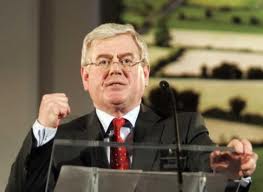

Programme-renegotiation not enough as even finger-wagging becomes parody – John Gormley
by Village
Programme-renegotiation not enough as even finger-wagging becomes parody – John Gormley
by Village
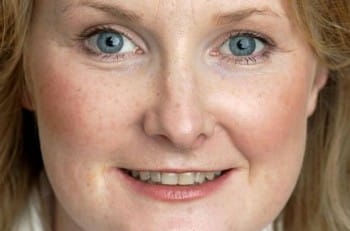
Mary Fitzpatrick interviewed by Michael Smith Councillor Mary Fitzpatrick, 44, was born and raised on the Navan Road in Dublin’s North Inner City, one of four children of Tom Fitzpatrick, a doctor and dentist who became a Fianna Fáil TD, She went to St Dominick’s in Cabra and to UCD where she studied politics and then Italian and German which she thought might get her a job. She emigrated in the eighties, she worked in France, Italy and the US after getting a Green Card. She worked in international sales for a subsidiary of the Associated Press By 1992 she was selling broadband capacity to the Chicago Board of Trade and others, first in the US and then back in Dublin until 2006, serving the whole of Europe. She says the key to sales is “know your product and sell its strengths”. She now lives in Glasnevin with her husband Seán and three children. Her first election was the locals in 2003/4 and she has served as councillor – always in opposition since then, currently as Fianna Fáil’s Council leader. She is most famous for being shafted by Bertie Ahern in a mutually unedifying tit-for-tat of leaflet drops which in the end secured election for his unprepossessing buddy, Cyprian Brady, ahead of her in the 2007 General Election. Brady got elected on Ahern’s transfers though he’d secured an excruciatingly small number of first preferences. Throughout the interview she is engaging, good-humoured, balanced and disconcertingly charming with an infectious laugh. She had been interested in politics from her childhood, working on her father’s campaigns and got involved with Fianna Fáil “To make a contribution for my community”. She considers herself “a centrist politician, republican, democratic republican politician, my motivation I suppose is equality and equality of opportunity”. I ask if she is open to equality of outcome – to in effect compensate some people in circumstances where people get off to such a difficult start that it’s difficult for them to explore the opportunity she emphasises. She says education is the key, ensuring people have a decent start in life, a decent home. If we could get those two things right, we would be making huge strides towards equality”. Would she describe herself as a socialist like her Nemesis Ahern? “I think in its narrowest and strictest definition it’s a failed political philosophy and it just doesn’t really exist here”. She thinks the Socialist Party are not really serious about socialism. Unusually her hero is Abraham Lincoln: “he really battled through and made real changes, and had personal courage”. Anyone else, anyone in Ireland? |”Not particularly”. What class would she describe herself as? “I don’t”. Does she think that Fianna Fáil has been of service to the country? “Yes absolutely. I think the value of Fianna Fáil hasn’t been what it should be and we need to do better and we’re all committed to doing that, but I think if you look at the entirety of Fianna Fail’s service to the country, absolutely we’ve been of service. But we need to restore value to the brand”. Okay, how would she assess the last Fianna Fail/Green Government? “I can’t answer that question because…Can I come back to it? Later she comes back with “challenged”. Kind. As to what she thinks of Ahern and Cowen, and Martin: “Bertie was your quintessential campaigning politician. Cowen I didn’t know well. I’ve met him a handful of times and he struck me as a very patriotic individual. Micheál Martin, a politician with real determination and real vision to see Ireland recover”. How would she describe his vision in a word? “Ambitious”. How many times has she met Bertie Ahern, and Micheál Martin, roughly (I don’t have a clear picture)? “Well, I must have met Bertie a good number of times; I can’t say. Micheál a good number of times as well, I don’t meet him on a daily basis”. Does she believe Bertie Ahern’s evidence to the Mahon Tribunal – on the digouts for example? “Do I have to answer that question, I don’t want to”. Who owns Bertie’s former constituency den, St Luke’s? “Talk to the General Secretary, Seán Dorgan, he’s the person dealing with it. I don’t use it, but my understanding is the ownership of the property was transferred to Fianna Fáil Headquarters”. Ever met Denis O’Brien? It’s a querulous No. Just asking. . Just what sort of bank guarantee does she think was appropriate? “I don’t think they’d any option and obviously we’ve to await the outcome of a properly independent banking enquiry”. I note there have been a number of reports : “There was a number of reports, but there needs to be an independent one or we’re never going to learn from those mistakes”. Could they not have curtailed it in terms of time or left out unsecured bondholders? “I don’t think any of us know if that was even an option for them”. The current Government. Does she think the government is improving the efficacy of the civil service and the semi-states? “My biggest experience is what they’re doing with water services and in that respect absolutely not. What we’ve had is a situation where they have taken some of our staff, our property tax – €100 million in Dublin, they’ve spent it on consultants to create an organisation that is accountable to nobody and there is no improvement in the quality of the water service”. They shouldn’t start taxing water until they’ve sorted out the problems”. She’s not too keen to say how they should pay for the improvements necessary to get up to those standards. ”Maybe they should have implemented real efficiencies”. “I’m not opposed to environmental charges including water charges – or indeed to property taxes – per se”. She accepts the principle of a local tax to be spent on local services. But “That is not what is happening. Phil Hogan made a public statement to encourage everybody to pay their property tax –
by Village
As he announces his intention to retire, we reprint an interview with the strongest voice on Ireland’s radical left. Michael Smith interviews Joe Higgins about a new electoral force on the left I meet Joe Higgins over tea and a brownie, on a grim afternoon in December in Dublin City Centre. He doesn’t want to talk about his background – people are sick of it – he wants to talk about the United Left Alliance. When pushed he claims not to know what forged his politics: he just had a view – rather than any particular experience – of unfair structures and he saw socialism as a way of running society with justice and equality. I ask him what role he sees for the market in all this and he says none – at least for the international markets and the markets in commodities. He’d nationalise the commanding heights. He’d nationalise – and leave nationalised – the banks. And he’d nationalise other major infrastructure and major industries. He’d re-nationalise Eircom and Team Aer Lingus. I suggest that many people wouldn’t know what else he’d like to see nationalised and ask him to explain. He wouldn’t “prescribe that enterprises of a certain size would be nationalised. You’d start with the obvious candidates and then leave it up to democracy – workfloor democracy, participatory democracy, community democracy – to a proper debate as to how best to serve the needs of society”. He wouldn’t nationalise every “corner shop, bed and breakfast or chip shop”. The position is the same as he held in Militant Labour twenty years ago before he was expelled. “I’m a Trotskyist”. He’s always been a Trotskyist, though he draws also from Marx, Engels, Rosa Luxemburg and James Connolly – and times change so thinking evolves. It’s different from the totalitarian approach in former Eastern Europe. Stalinists in the Soviet Union jailed democratic socialists of Higgins’ tradition. I ask him what he thinks of the agenda of equality, sustainability, transparency that Village generally promotes. He wouldn’t disagree with them but you can’t have those agendas in a capitalist society. So what’s his own agenda and that of his socialist party? His agenda would be not to pay a penny to the speculators and gamblers. He’d say goodbye to the IMF as the expression of global capitalism with a history of wreaking social havoc across the world and of acting as shock troops to facilitate multinationals. He’d default, not pay the bond-holders and while he won’t directly say he’d leave the Euro he’d prefer an arrangement that was less of a straitjacket, that allowed devaluation He’d like to see democratic control of the banks, infrastructure and major industries. Then he’d extend that Europe-wide. He’d promote investment in major infrastructure, including health and education, to provide jobs and enhance quality of life. He’d nationalise natural resources along the lines of what the ESB and Bord na Móna did years ago. Alternative energy is a priority. He’d like to see more unity of the working class in a non-sectarian way in Northern Ireland. . As to a United Ireland, democratic socialism would see sectarianism dissipate and the border cease to be an issue. The environment and climate change figure as priorities. Much of his agenda is impossible while capitalist structures remain in place but he’s determined democratic socialism would achieve nearly all the progressive views we discuss. At a local government level he was a robust opponent of developer-led rezonings and for thirty years he’s been lobbying for the Kenny Report which would penally tax the fruits of taxation and allow local authorities to buy development land without paying a premium price. Again it’s down to the process: “as long ago as the 1960s, when the developers bought Fianna Fáil, the problem wasn’t so much corruption as the clout they wielded over the process” of local government and rezoning. On the EU, he believes the European Commission is hypocritical about the European model which is dominated by corporate power including lobbyists. He’s particularly concerned with their trade agenda and is on the EU trade committee. Still he’s open to European solidarity on the basis of democratic socialism. The main thing is to work out a workers’ society where this agenda prevails. He doesn’t see scope for taxation for environmental or quality-of -life enhancing purposes. Taxing petrol or waste or water is a crude mechanism. He prefers regulation rather than taxation to environmental ends. You provide public transport, you insist on recycling, you stop waste of water. Perhaps inevitably for someone whose agenda is so solidly social he has little interest in harnessing economic mechanisms to environmental ends. But he is passionate about the environment and has innovative ideas – dual-flush toilets, reuse of rainwater and the like. He has firm ideas about the current party-political line-up. A vibrant, left alternative in the next parliament will be opposed and dominated by FG and Labour, with a disillusioned FF in opposition. He notes in the context that Labour has certain progressive principles and yet will sacrifice them in the inevitable coalition, while carrying out the programme of the IMF. I ask him about some of the forces on the left: Labour, he says, like the Social Democratic and Labour parties all over Europe has bought into market capitalism. Blair is the prototype, “out-Thatchering Thatcher and going in to Iraq”. Their colleagues in Greece are carrying out the IMF agenda and in Portugal and Spain are implementing vicious cuts. When he first started out in the Labour Party it was very different The Trade Unions are mostly in retreat. There’s no decisive leadership though he has some time for the Unite union. The rank and file needs to take back control. Too many of them do deals with government and are on wages like those of the top bankers. The Greens were never on the left and he told John Gormley so a long time ago. This is because they could never say if
by Village
By Éibhir Mulqueen. The news that bouffant New York billionaire Donald Trump has taken over the troubled Doonbeg Golf Links in West Clare, apparently for a snap-up price of €15 million, has been greeted with mixed feelings in Ireland. His second golf links in Europe adds to a 15-course empire that extends from California to Dubai. The world-recognised Trump name and brash management style is a fresh ingredient to a diverse mix: the golfers who love links courses and Doonbeg’s potential, locals keen to see a hard-won local employer stay in situ, a group of farmers with exclusive access to a right of way, conservationists concerned about a unique sand-dune system, wind-farm developers who want to build in the area, surfers who won legal access to the adjacent beach, and a near-microscopic snail called Vertigo Angustior that has a habit of either making a mad nuisance of itself or underscoring environmental diversity in salt marsh and dune systems, depending on your point of view. As an unlikely ambassador for conservation, it is unfortunate for Vertigo that it has often found itself pitted against developer interests. Bertie Ahern famously indulged in some rare alliteration when blaming cost overruns on motorway projects on “swans, snails and people hanging out of trees”. Trump too has been dismissive of this particular snail, stating it is found all over the world and that it was originally believed it was endemic to Doonbeg. The first part of the statement is pretty true; the second not so much. According to the International Union for Conservation of Nature (IUCN) Red List of Threatened Species, the snail is found in 33, mostly European, countries but is classed as ‘Near Threatened’. In Ireland, its once-estimated 21 wetland habitats have been reduced in number over the past decade. Trump, however unwillingly, assumes the mantle of protector of the dunes and of the snail, in line with the original planning permission for the 2002 development and links design by Greg Norman. He is now looking for a redesign and may incorporate some of the dunes in the course, which some golfers find confusing to negotiate without a caddy. “Even a poor caddy is worth it to get you around with minimal frustration”, goes one Tripadvisor comment. Caddies in fact are a big part of the summer employment at the links, forming around 50 of up to 280 staff working in the hotel and golfing facilities. After the nearby Moneypoint power station, it is the biggest employer in an economically marginalised area where, within living memory, shoes were swapped between family members on Sundays. The Doonbeg links as a business came out badly from the property bust – a receiver was appointed following a €20 million pre-tax loss in 2012 – but it has managed to capitalise on its footfall. It has an annual turnover of over €11 million, with some 30 weddings a year adding to the golfing and hotel lettings income. Model Glenda Gilson has added her name for the forthcoming season to the tally of celebrities settling on the resort for their wedding receptions, Unlike Trump’s other recent foray into Europe – the purchase of lands and subsequent development of a links course in controversial circumstances in Aberdeenshire – Doonbeg started as a community initiative when members of the local community development association approached Shannon Development to market the dunes system as a golf course. Back in the pre-Celtic Tiger years, they viewed it as a way of keeping some of the young people in the area and reversing decades of emigration. Twelve years after the links came to pass, this has been proven to be true even if plenty of young people have decamped abroad. What is popularly known about Trump in recent times has been garnered through his appearances with his friend and ex-CNN presenter, Piers Morgan, his brief foray into US electoral politics in 2012 -when he considered seeking the Republican nomination, and his ignominious baiting of Barack Obama to get him to produce his long-form birth certificate (which he did). But Trump has been on the US scene for a long time. He has been doing property deals since the late sixties. He built his place of residence, Trump Tower, on Fifth Avenue, in 1983, the Central Park ice rink shortly afterwards, and was parodied as the epitome of propertied wealth in the 1991 novel, ‘American Psycho’. He overcame bankruptcy in the nineties and today has a string of residential, hotel and golf properties all with the Trump signature name – and a net worth of $3.9 billion, according to Forbes. More pertinent to Doonbeg is the controversy in Scotland, his ancestral home on his mother’s side, over his development of a links in Aberdeenshire, his first foothold in Europe. A BBC documentary, You’ve Been Trumped, chronicles the works on the environmentally protected site and his tussle with local residents who objected to his presence. A blog on Doonbeg Community Development Ltd’s website warns of what is often perceived as an overbearing style of intrusion. “The jobs are great but beware of the cost and be prepared”. At the moment, Trump must bear the extra costs. Coastal erosion due to storms has nibbled at the edge of the 450 acre-site, and fencing laid to protect the dune system from the encroaching Atlantic has been swept away. The operators have had tussles with Clare County Council and the National Parks and Wildlife Service, on how to work out the next moves. “I cannot say everybody always agrees but we did not agree before Trump either”, says managing director of the resort Joe Russell. “We have lengthy meetings and agendas are lengthy”. The local community has welcomed the latest development and the investment it entails even if there are some fears that the Doonbeg name is being lost to the Trump name. The new name for the resort is Trump International Golf Links and Hotel Ireland. “There is a need for a function room at the
Posted in:
by admin
JobPath, local and community development and Local Employment Services go out to tender, but workers are fighting back. By David Connolly
Posted in:
by admin
The Technological Universities Bill is motivated by the pursuit, by our excellent Institutes of Technology, of spiffier names. By Peter MacMenamin
Posted in:
by admin
How might public policy reflect the claims of all social sciences to ‘Truth About How Things Work’. Sadhbh O’Neill replies to the debate between Constantin Gurdgiev and Michael Smith (Village Feb-March)