
Politics

Random entry RSS

  • Posted in:

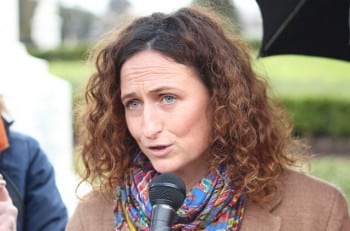
    Dublin MEP candidates. 7. Lynn Boylan (Sinn Féin).

    Lynn Boylan interviewed by Niall Crowley. Lynn Boylan is a member of the Sinn Féin Ard Comhairle and has been an active Sinn Féin member of the party for eight years. She has worked with Ballymun Global Action Plan as a community programme co-ordinator, running courses for people making the transition from the blocks of flats to houses. She contested the 2007 general election and the 2009 local election in South Kerry. Before she moved to Dublin, she coordinated voluntary camps to remove invasive rhododendron species from Killarney National Park in working for Groundwork, an environmental organisation affiliated to the Irish Wildlife Trust which was set up to protect important Irish habitats. She notes “my background as an ecologist makes the environment an obvious choice for me”. The environment is, alongside employment and workers’ rights and social equality, one of her priorities if elected as an MEP. In 2010 she was appointed chairperson of the Safefood Advisory Board one of the Good Friday Agreement All Ireland bodies, which promotes cooperation over nutrition and food safety. Unsurprisingly, she takes a critical perspective on what is going on at European Union level. She suggests, “Currently the European Union is in crisis, not just an economic crisis but also a social and a political crisis”. “Since Jose Manuel Barroso became President of the European Commission we have seen a neo-liberal agenda that puts the interests of the single market before the interests of the people. This agenda has received broad support from both the European Council and the European Parliament”. “The recession”, she says ,“ has highlighted the flaws of the European institutions when the response, backed up by the Member States, was to socialise the cost of the crisis. Banks were put before the people”. She believes that “many MEPs choose to form part of the cosy consensus when they get to Brussels rather than holding the European Commission and European Council to account”. She refers to the need for MEPs “to be more transparent about any dealings they may have with lobbyists” and points out that “Sinn Féin supports the ‘Full EU Lobby Transparency Now’ campaign”. She points to a “democratic deficit” that flows from the “design and operation of the EU institutions”. “Real reform of the institutions is required to address the democratic deficit”, she says and “that means reducing the power of unelected bodies, increasing transparency, and, crucially, increasing the role of elected institutions”. “Sinn Féin will campaign to reign in the European Commission and return powers to the Member States. We will also campaign to make the European Council more transparent and more accountable to both the European Parliament and Member State parliaments”. Boylan highlights that “Sinn Fein believe in a European Union of equal sovereign states that co-operate on social and economic development”. She says that the party “believes another Europe is possible, one that is more democratic and people-centred, a European Union that promotes workers’ rights and public services”. “Sinn Féin’s agenda for the European Union”, she points out, “is one that puts social equality at the heart of all its decisions” and “we want an end to the failed policies of austerity and a definitive breaking of the link between sovereign debt and banking debt”. She highlights that “The European Union has, in the past, been very important in requiring Member States to protect their environment, but Ireland has one of the worst track records in this area. As an MEP I would campaign to see stronger environmental legislation, particularly on issues such as GMOs and pesticides which can pose significant threats to biodiversity”. “In terms of climate change” she adds “it is crucial that Europe takes a trans-national approach and I will continue the good work that Martina Anderson (Sinn Féin MEP in the North) and her predecessor, Bairbre De Brún, have done in demanding legally binding targets on curbing greenhouse gas emissions, opposing fracking, and looking for a real shift from reliance on carbon fuels to renewable energy sources”. She is concerned that “since the start of the crisis the European Commission, with the strong influence of big business, has led the charge in the call for cuts to wages and working conditions for low- and middle-income earners. Many profitable companies have used the recession as an opportunity to drive down wages. The gap between high income earners and everyone else has widened. In Ireland we now have the fourth highest gap in the OECD”. “As an MEP, I will campaign for decent work with living wages and an end to zero hour contracts. I would also campaign for the introduction of a social progress clause into EU Treaties to ensure that fundamental rights and collective agreements on pay and conditions take precedence over the freedom of the markets”. “Social Europe”, according to Boylan, “has always been more of a rhetorical promise than an actual reality. Some EU Member States have strong records in building socially and economically equal societies. Others, including Ireland, have not even tried. However for more than a decade the policy direction of the EU, driven by both the European Council and the European Commission actively undermined the many social gains secured by the struggles of ordinary people at both a Member State and an EU level”. She points to the example of the Lisbon Treaty. “Changes to the operation of the internal market or international trade which focused on increased liberalisation were strong and binding. Changes dealing with social Europe were vague and rhetorical”. She sees the Lisbon Treaty and the associated referenda in Ireland as one source of another malaise. “Turnout in European elections has been declining across Europe and currently stands at 46% down from 67% in 1979. Trust in EU institutions is at an all time low and 66% of people across the EU feel that their voice does not count according to the Eurobarometer. It is hardly any wonder when we look at the disdain shown for Irish democracy in our EU referendum

    Loading

    Read more

  • Posted in:

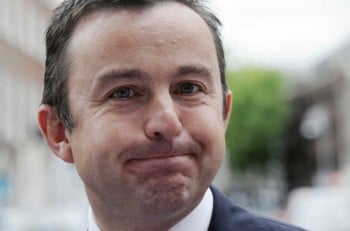
    Dublin MEP candidates. 5. Emer Costello (Labour)

    Emer Costello MEP interviewed by Niall Crowley Collaborative, optimistic, garrulous but careful ‘It has to be about people – about more and better jobs, about equality, and combating poverty and social exclusion, about climate change and sustainable development, and about tackling discrimination’ ‘I won the support of the MEPs for my call for the European Council to make good on the June 2012 commitments in relation to Ireland’s legacy bank debt.’ Emer Costello MEP represents the Labour Party as a member of the Socialist and Democrats Group in the European Parliament. She was a member of Dublin City Council from 2003 until 2012 at which point she replaced Prionsias De Rossa in the European Parliament. She served as Lord Mayor of Dublin in 2009/2010. She is conscious of the need to “work to ensure more coordination between the national decision-making structures at Government and Oireachtas level and at EU level in relation to current and upcoming European laws and programmes”. Garrulous but careful, she sees the European Parliament as the guardian of the citizen at European level. “The role of an MEP is firstly and fundamentally to represent the citizen. The European Commission promotes Europe’s “general interest”, the European Council is where the Member States’ governments meet, but the task of an MEP is to ensure that the citizen’s interests are fully taken into account at European level”. She emphasises a European Union that is about markets and people, noting the importance of Europe since “approximately 60% of everything that we produce is exported to other Member States, supporting hundreds of thousands of jobs”. She stresses that “Europe has to be more than just an internal market, a place to do business. It has to be about people – about more and better jobs, about combating poverty and social exclusion, about climate change and sustainable development, and about tackling discrimination in all its forms and promoting equality”. She identifies the role of the European Union as a source of funding as relevant in her commitment to “work to ensure that we access EU funding that maximises job creation. To that end I will work specifically with small and medium businesses to help ensure their access to funding”. Costello is optimistic: “Ireland’s recovery is now heading in the right direction”, but is equally clear that challenges remain for the European Union. “Europe can and must do more to prioritise sustainable growth and jobs, and raising living standards”. She is particularly critical of the role of the Troika. “An even deeper democratic deficit has opened up at European level with the Troika. The Troika’s actions in Ireland and other Programme Countries were not decided or approved by the European Parliament. The European Parliament’s recent report of its inquiry into the role and operation of the Troika in Ireland and the other Programme Countries was extremely critical of this democratic deficit. It recommended the abolition of the Troika and its replacement with a European Monetary Fund that would support Member States in difficulties entirely in accordance with the Treaties and fully accountable to national and European parliamentarians”. She points to a personal success within this inquiry. “I won the support of the MEPs for my call for the European Council to make good on the June 2012 commitments in relation to Ireland’s legacy bank debt. This was the first time the European Parliament has explicitly supported Ireland’s campaign”. Politics is important in ensuring the European Union “lives up to its core values and aims”. She points out “Social Europe is ‘gone off’ the European agenda simply because those who lead Europe at present are not keen on Social Europe. The last time the European Commission was led by someone from the left was with Jacques Delors, almost twenty years ago. Europe’s centre right parties – the EPP, Liberals and Conservatives – form a majority within the European Commission, the European Council and the European Parliament”. She is not defeatist about Social Europe despite this situation. “This is not to say that progress cannot be made on Social Europe. This can be done by building cross-party alliances within and between the institutions on individual issues. I managed to do this by working with the Social Affairs Commissioner, Laszlo Andor (who came from Labour’s political family), with Greens, Christian Democrats, Liberals and others in the European Parliament on the new anti-poverty programme, the Fund for the European Aid to the Most Deprived. By building a broad majority of over 500 MEPs, we succeeded in overcoming the blocking minority within the European Council, to increase the proposed budget for this programme from 2.5 billion Euro to 3.5 billion Euro and to put a much greater emphasis on implementing this programme in partnership with anti-poverty NGOs on the ground”. “I think that the role of national parliaments in European matters can and should be improved, including in Ireland where the Oireachtas has yet to get to grips with its enhanced role in European decision-making. Too few European proposals are being properly scrutinized, if at all, by the Oireachtas. This needs to be improved”. She offers a broad programme of political priorities in seeking election. “My top priority is to get Europe to do more to promote employment, particularly for young people. I want to see the European Youth Guarantee implemented in full so that young people are not lost to a future of long-term unemployment or emigration. I also want to see Europe adopt a similar European Up-Skilling Guarantee for people aged over 30 who are long-term unemployed, who may have left school early, or who need training”. She emphasises, however, that “the best way Europe can help to create employment is by prioritising sustainable growth. Labour’s political group in the Parliament, the Socialists and Democrats, has prepared plans showing how a €200 billion European ‘Green New Deal’ of investments in energy, transport and telecoms would create at least 3.4 million jobs across the European Union within three years, and move Europe towards its climate change

    Loading

    Read more

  • Posted in:

    Dublin MEP candidates. 4. Brid Smith (People before Profit Alliance)

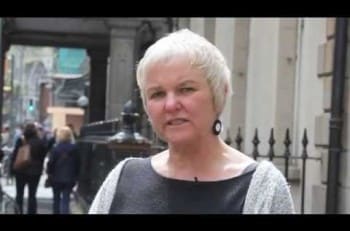
    Brid Smith interviewed by Michael Smith Background Brid Smith grew up in Nutgrove, Rathfarnham, and went to school there and in St Anne’s Milltown where she was a couple of years above Miriam O’Callaghan. She went on to Rathmines Tech, to study journalism but dropped out. She then worked for five years for the Corporation’s library service in Ballyfermot, getting sacked for refusing to pass a picket line. After a fuss she got her job back in another library but couldn’t stick it and went travelling around Germany. In the early 1980s she was on the National Committee of the Hunger Strike campaign. She was the first female shop steward in Dublin Bus and remains an activist in the union, Unite. She supported the campaign for abortion rights after the X Case and was to the fore in the early-1990s anti-bin-tax campaign, for which she was jailed. With Richard Boyd Barrett she fronted the Irish Anti-War Movement which protested against the Iraq war. She has supported the Shell to Sea campaign and works with the Traveller Community. In 2009 she was elected to represent Ballyfermot/Drimnagh on Dublin City Council where she has played a leading role in Campaigns against the Household Charge and the Property Tax. She is engaging, honest, very warm, funny and sometimes, unusually for a politician, attractively hesitant and self-doubting. What was her introduction to politics? “My parents were Republicans and they helped provide shelter to people who were either in need or on the run. Martin Forsyth [a 19-year-old IRA activist who was shot dead by undercover RUC officers in Belfast in 1971] stayed with us the night before he died. It was shockingly real to have met a lovely young guy and then he goes home and he’s killed by the RUC”. Does she think the IRA campaign was justifiable? “At the time I thought it was justifiable and was outraged by the repression of both the British and the Irish States. If you’re looking for me to say that it was morally just to kill 3,000 people, on one side or morally just to kill 2,500 on the other, I’m not going to consider it in those terms”. So, why did you join the SWP rather than Sinn Féin? “My Dad founded a Sinn Féin Cumann and I joined it for a while. I was involved in the National H-block Committee with Bernadette Devlin and Gerry Adams. That’s when I first met the SWP (the SWM at the time) – people like Éamon McCann were very supportive of Bobby Sands, yet critical of the armed struggle, of nationalism and republicanism. I debated and learned a lot from Sinn Féin, but I was convinced in the end that actually armed struggle won’t deliver socialism”. Her political philosophy is “socialist, I believe in revolution, not violent revolution but people power like the Arab Spring and the mass movements we’ve seen in Spain and Greece”. Vision So, how important is equality? “Very. Otherwise why would you be motivated?”. Does she mean equality of opportunity or of outcome? “Yes, I think people are entitled to equal rights. I think real rights are fundamental to equality – equal access to health and education, housing, legal protection”. In practical terms she says she’s “just secured the motion for travellers to have recognition as an ethnic minority in the city council. In an ideal world I think everybody should have the same income and the same wealth, but it’s not something that you would just sort of legislate for”. Why wouldn’t you?” Because people wouldn’t accept it. I would like them to accept it because they have learnt that it maximises happiness. Revolution would hopefully lead to the establishment of absolute equality”. So, she wouldn’t describe herself as a Trotskyist? “I don’t use that term, but I don’t say, ‘Yeuch, how dare you’. I’m not a communist. I call myself a socialist or revolutionist; and a Marxist more frequently a Trotskyist. So it’s not particularly modern as in 21st Century, but it’s modern as in the history of the human race”. Does she think the most meaningful division is between workers and the rest of the population or between people of different levels of wealth and income? “I think the main division is between those who control wealth and those who don’t”. Is it not a problem with more than 1% – going down to 10% and 20% and 30%? “There is a tiny elite at the top that control everything, global corporations, policy and Government, EU policy”. She says she hates the free market: “I think it’s a terrible idea because I don’t think it fulfils the needs of the planet or the human race that lives on it”. Does she have heroes? “Bernadette Devlin. James Connolly. Jim Larkin”. “What class would she describe herself as? “Working class”. Tell me about the evolution of the Socialist Workers Party, People Before Profit and the United Left Alliance? “In 2005, arising from the anti-war, Shell to Sea and anti-bin-tax campaigns we formed People Before Profit. That was an important lever on the Socialist Party and the Tipperary Workers and Unemployed Action Group, because it at least has worked very well together”. “It wasn’t pitched to the Greens, Sinn Féin and the Labour Party mainly because of their willingness to go into coalition with the right. We were all delighted when the United Left Alliance was formed, but it imploded. Unfortunately it didn’t really operate as the United Left Alliance outside of the Dáil structure”. Politics So who’s standing for the United Left Alliance now? “We (People Before Profit) are still part of it. Clare Daly, Joan Collins and Richard Boyd Barrett are the three TDs who are still in it. Joe Higgins and Seamus Healy pulled out. Separately, Clare Daly left the Socialist Party and Joan Collins left People Before Profit. Those two joined together to create new party called the ‘United Left’ so, it’s getting a bit nutty”. Do you

    Loading

    Read more

  • Posted in:

    Dublin MEP candidates. 1. Eamon Ryan (Green)

    Eamon Ryan interviewed by Michael Smith Background I meet Eamon Ryan in the restaurant under the Village Office. He is early. As usual he is metrosexually thoughtful, wry, good-natured and very well-informed, though he is strangely unapologetic and rarely truly philosophical. He recently celebrated his fiftieth birthday with an enormous party reflecting his widespread personal popularity. Growing up in Dundrum and Dartry, he did a commerce degree in UCD and finished up teaching on its marketing course. He played a bit of rugby, joining this interviewer on many occasions in an untypically progressive second row for UCD elevenths. Like a lot of people he emigrated in the eighties; he came back and was unemployed, exploring a hippyish side which we have both strategically forgotten. He set up Irish Cycling Safaris (the name itself a marketing triumph). He chaired the Dublin Cycling Campaign. He became a Dublin City Councillor, a TD, and then a Minister. The last few years he has been working in London on climate affairs for E3G, an environmental not-for-profit and in the Institute of International and European Affairs (IIEA) on digital and energy policy. He works three days a week unpaid for the Greens. Contrary to his (serially inaccurate) Wikipedia entry – environmentalists can be vindictive – his pension is €40,000, split between Dáil and Ministerial; severance pay he’ll get back to me about. As he said he would, he’s effectively using it to pay for his work for the Green Party. I recall that in a previous interview in this magazine he had said he had a libertarian orientation. He tells me his political philosophy was set when he was 15. He did a course in ecology in Gonzaga College, instead of the inter cert, which evoked the inter-connectedness of the world, social and physical/environmental, that everyone’s security is a function of everyone else’s. He’s a Green Christian social democrat. He’s a radical AND a conservative, probably. Christ was radical. Protecting things for the next generation isn’t conservative. Equality isn’t an overarching concern, though he’d prefer a slightly more balanced society. He doesn’t have any less interest in equality than anyone else. Green Party If he is elected to the European Parliament he’ll serve the full five years as it‘s not a launching pad for the Dáil. He’ll stay leader of the Greens if elected, though it will be reviewed after the election. The party is recovering and rebuilding: people see the need for a Green party. Membership has declined from 2000 to 8-900. If the German and Belgian experience is replicated it may take ten years before they are ready to serve in government again. Greens in Government He considers the biggest three achievements of the Greens in government would be: if we’ve avoided complete financial collapse, that would be the most important issue; being a major part of the energy transition, not just here but in Europe – influencing climate and renewables directives; and thirdly (and somewhat elusively) certain things they did in government to develop the internet. The biggest three failures were the first budget after they went into government when they didn’t identify the risk of the crash quickly enough; the loss of public confidence in the government was a failing on their part.; and… he falters and I suggest we can come back to it. “Being within two weeks of getting a Dublin Lord Mayor”. He thinks current Minister Hogan’s heart isn’t in the mayor project – having no position ten weeks before the plebiscite, because Hogan prefers the current Tammany Hall system and the new system of regional authorites – where all the big decisions will be taken – will almost guarantee that Fine Gael is one of the two members who serve on it. Since he left government he’s done a lot of work on climate gatherings and the lesson is to stop preaching, to get the farming community on board as they know more than we do about. I suggest the future is not about getting public support since the climate can’t wait, and he says “not the entire country but a good 30 or 30%”. And focusing on stag hunting alienated rural Ireland. I suggest climate change and planning might be regrets. Also the fact they only implemented the half of the Kenny report that penalised speculation, not the one that allowed local authorities to buy land at agricultural prices and zone it for development, so promoting plan-led rather than owner/developer-led planning. As to emissions they went down in the Greens time, though they’re up in the last year under the new government. I suggest this was due to the economy not policy. He says the retrofit in buildings, energy, renewables development all contributed. We’ve massively decarbonised industrial production over the last twenty years. According to the Breakthrough Institute, Ireland and Sweden are rare examples of this. There’s no advantage in selling ourselves short as it’s unfair, unnecessarily demoralises and worst underplays the exemplary value of at least some of our practices. There are two things the Greens get away with that I’m keen to pin him on. First, I ask if he has evidence the Greens genuinely called the unsustainability of the boom. Before they went into government in 2007 he and Dan Boyle went into the Bankers Federation with the sole purpose of drawing its attention to its overexposure to commercial loans. That’s something they should trumpet. He said the same to AIB whose CEO told him he didn’t understand that what AIB lacked was “risk opportunities”. I say that the need for a bank guarantee is often fudged and that the problem was not with the principle but the detail. Obviously he’s reflected on this: “without doubt junior subordinated debt shouldn’t have been included (even thought here wasn’t that much of it) and you’d prefer not to include senior debt and maybe that the guarantee should only have been about future deposits, though it was indeed limited to two years”. He notes the

    Loading

    Read more

  • Posted in:

    How Ireland got the CRC and exclusive private hospitals The long evolution of our impersonal, centrally-organised, eccentrically-run, consultant-deferential, selfish, non-rights-based regimes for poverty and then health

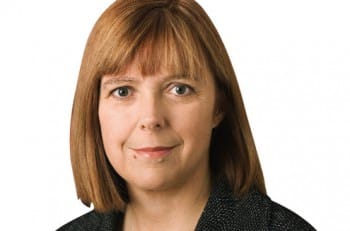
      By Caroline Hurley. Former CRC board members Poor laws come from Poor Laws. The English Poor Laws date from the fourteenth century and, though regularly modified, were not fully repealed until 1967.  They mark the beginning of the impersonal, centrally-organised approach to deprivation carried forward to health that is still characteristic, in England – and in Ireland, where universal state-funded healthcare never acquired ascendancy. Their effects have been far-reaching, though they were more imitated than implemented in Ireland until the 1830s. Charitable institutions, such as leper houses, established in the Middle Ages, had closed along with Henry VIII’s dissolution of monasteries. Little heed was paid to encouragement of local charity until Edward imposed Sunday alms collections from 1551, on pain of the bishop’s admonishment. This “moral suasion” produced such lacklustre results that an act was passed to fine shirkers in the courts. A paupers’ register came with the establishment of an official poor fund; housing was addressed later. Work was arranged for unoccupied adults and children of improvident parents. Relief was supplied to the lame, impotent, blind, and those unable to work. The Undeserving Poor, otherwise known as idle or sturdy beggars, considered able but unwilling to work, were to be whipped through the streets until they repented and mended their ways. As workhouses were operated voluntarily, local enforcement was haphazard. In 1572, a poor tax to assist the deserving poor was made compulsory. In 1597, every district had to install an Overseer of the Poor,  with the task of calculating and setting the poor rate required to provide for the district’s poor, of collecting and dispensing the rate, and of supervising the parish poor house. The Poor Law passed by an Elizabethan Parliament in 1601 bound together into one legal document these measures. The New Poor Law of 1834 introduced the new administrative unit of the Poor Law ‘Union’ in order to enforce a rigorously and centrally-enforced standard system based around the workhouse. Many commentators agreed that the most significant repercussion of this new philanthropy was how the poor came to be dehumanised, and regarded as inferior and, therefore, the proper object of punishment and control. Suspicion of fault and responsibility replaced the Christian outlook of tolerance and personal charity towards accidents of fortune. Riots didn’t prevent these attitudes hardening, as ideologies associated with moral philosophy were exchanged for those of political economy – that the right response to hunger was labour and not easy alms. Malthus especially blamed poverty on the Poor Laws themselves, as Wilde did, though their conclusions differed. Others faulted factors such as higher prices, and resource and industry declines, for piling misery on misery. Diverse reform proposals never ceased. Still, this nationwide system did form a welfare safety-net throughout England and Wales. Expenditure on poverty relief, at least until the 1830s, exceeded that of other European countries where the norm was informal assistance and charity, often in the form of domiciliary help bestowed by voluntary agencies and civic-minded visitors, overseen by inspectors of relief. The marked failure of voluntary aid in England directly influenced the mandatory nature of poor laws there – the lack of resources required indoor relief in workhouses to prevent imposture and the avoidance of large numbers of professional staff. Constructing and maintaining workhouses devoured money that might otherwise have been available for individual hand-outs. In contrast, in Ireland a quasi-feudal system based on landowner patronage of deferential tenants had held sway.  Tacked  on to this  – with the occupying UK government’s civil initiatives – were medieval mores. Up through the eighteenth and nineteenth centuries, nearly all Irish people were of small-tenant-farmer stock, subsisting on large estates mainly owned by English or Anglo-Irish landlords who’d been granted property after armed conquest. Landowners ideally doubled as magistrates or justices of the peace to adjudicate on local issues, act as welfare buffers for the community, represent tenants in parliament and provide education for their children. However, antagonism – sustained due to religious difference and a hangover of bitter disenfranchisement about land confiscated from tenants’ ancestors – fed a vicious circle of absenteeism and mismanagement. In reality, large landowners rarely rented directly to any of the many small tenants inhabiting the land they received, but would let large areas to middlemen. Several further sublettings down to the smallest unit meant that many transactions went undocumented with little or no right of tenure. Low-paid duty-work for the landlord prevented tenants from tilling their own plots properly which, along with exorbitant rents, left Irish cottagers in more desperate need of subsidisation than any other Europeans. Central government responded to a rash of agrarian revolt in mid-1780s Ireland by trying to compel landlords to do their duty. Formal structuring of policing, schooling and judicial procedures was instigated, although land-owning magistrates still preferred invoking the Insurrections Acts. Catholics eschewed Protestant-run education, preferring illegal hedge-school classes. Crippling poverty was universally identified as the fundamental Irish problem. After the first Irish workhouse opened, in Belfast in 1756, seven further urban ‘houses of industry’ appeared as if inspired by the single motive to institutionalise away the misery. Poverty as a result of sickness drew more sympathy than the other way round. Following legislation, thirty-nine county infirmaries and dispensaries were opened around Ireland between 1765 and 1841, each staffed by a qualified surgeon. The hands-off approach of hoping local magistrates would deal with outbreaks of famine and fever left already disadvantaged areas even worse off. The timid, advisory General Board of Health set up in 1820, eventually geared into action after the cholera epidemic of 1832 that claimed 19,000 lives, and framed the Government’s more interventionist response to the crisis. Despite evidence of the failure of the Poor Laws in England, the pressure to do something, other than dispatch ineffectual medical experts, led to the enactment of Irish poor laws. Swift appointments of regimental commissioners and the erections of workhouses soon left relief distribution to unsalaried local guardians. The associated rate-levying was pounced on as a possible workable model for

    Loading

    Read more

  • Posted in:

    The madness of repeating Partnership failure Hogan Working Group’s neat PPNs replicate stagnant social partnership model, locally

    By Niall Crowley. You would not immediately associate Phil Hogan, Minister for Environment, Community and Local Government, with an interest in participatory democracy. However, last September he did set up a “Working Group on Citizen Engagement” as part of the voguish and typically bumptious ‘Putting People First – The Action Programme for Effective Local Government’. The Working Group is to make recommendations for “more extensive and diverse input by citizens into the decision making process at local government level”. There is a contradiction in asking a national working group to make recommendations for local citizen engagement. You would expect some form of citizen engagement over the recommendations. The Working Group does contain people with a strong track record in the community and voluntary sector and is chaired by Sean Healy of Social Justice Ireland. However, it does not reflect the diversity of citizens. There are only two women in the group of eight, no minority ethnic people, no people with disabilities and no young people. Village has seen a near final draft of the report of the Working Group. Its centrepiece is “a new framework for public engagement and participation, to be called ‘The Public Participation Network (PPN)’” in each local authority area. The PPN would be made up of voluntary, social inclusion and environmental organisations in the local authority area that are registered with the PPN. Each PPN will develop “a vision for the well-being of this and future generations”. It will facilitate “networking, communication, and the sharing of information” between organisations, “facilitate the election of participants from the environmental, social inclusion and voluntary sectors onto city/county decision making bodies” and “encourage and enable public participation in local decision making and planning of services”. PPNs are neat and participatory. However, neat and participatory never really work when it comes to democracy. Participation cannot be neat if it is real. We already have Community and Voluntary Forums in local authority areas. These were established by the City and County Development Boards to ensure the voice of the community and voluntary sector is represented in the development of the county or city. There is no review of this largely negative experience and the structures now proposed merely replicate these Forums. The huge diversity of groups in the Community and Voluntary Forums often squeezed out some voices, especially those of smaller and unpopular minorities. The draft report does state that the PPN should “support the inclusion of social excluded groups” but does not say how this is to be achieved. Local authorities’ unreceptiveness to input from Community and Voluntary Forums made for a deeply frustrating experience for many organisations. The draft report does identify this issue but makes no recommendations to address it. The PPN is essentially a social partnership model. Social partnership at national level has withered due to political aversion. It did yield gains for community and voluntary sector organisations in its early years. However, later it merely facilitated evolution of most of these organisations into expert lobbyists divorced from their original constituencies. Social partnership did not serve the types of transformative change needed. Recreating sterile models at local level is unlikely to enhance our democracy. Current political alienation calls for more invention and innovation. repeating Partnership failure Hogan Working Group’s neat PPNs replicate stagnant social partnership model, locally By Niall Crowley ‘The “Action Programme for Effective Local Government” suggests processes for citizen engagement including participatory budgeting, petition-related rights, plebiscites and town/area meetings’ You would not immediately associate Phil Hogan, Minister for Environment, Community and Local Government, with an interest in participatory democracy. However, last September he did set up a “Working Group on Citizen Engagement” as part of the voguish and typically bumptious ‘Putting People First – The Action Programme for Effective Local Government’. The Working Group is to make recommendations for “more extensive and diverse input by citizens into the decision making process at local government level”. There is a contradiction in asking a national working group to make recommendations for local citizen engagement. You would expect some form of citizen engagement over the recommendations. The Working Group does contain people with a strong track record in the community and voluntary sector and is chaired by Sean Healy of Social Justice Ireland. However, it does not reflect the diversity of citizens. There are only two women in the group of eight, no minority ethnic people, no people with disabilities and no young people. Village has seen a near final draft of the report of the Working Group. Its centrepiece is “a new framework for public engagement and participation, to be called ‘The Public Participation Network (PPN)’” in each local authority area. The PPN would be made up of voluntary, social inclusion and environmental organisations in the local authority area that are registered with the PPN. Each PPN will develop “a vision for the well-being of this and future generations”. It will facilitate “networking, communication, and the sharing of information” between organisations, “facilitate the election of participants from the environmental, social inclusion and voluntary sectors onto city/county decision making bodies” and “encourage and enable public participation in local decision making and planning of services”. PPNs are neat and participatory. However, neat and participatory never really work when it comes to democracy. Participation cannot be neat if it is real. We already have Community and Voluntary Forums in local authority areas. These were established by the City and County Development Boards to ensure the voice of the community and voluntary sector is represented in the development of the county or city. There is no review of this largely negative experience and the structures now proposed merely replicate these Forums. The huge diversity of groups in the Community and Voluntary Forums often squeezed out some voices, especially those of smaller and unpopular minorities. The draft report does state that the PPN should “support the inclusion of social excluded groups” but does not say how this is to be achieved. Local authorities’ unreceptiveness to input from Community and Voluntary Forums made

    Loading

    Read more