Politics

Random entry RSS

  • Posted in:

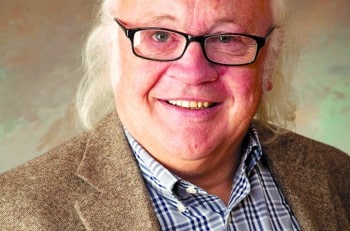
    Inspiration, Intellectuals & Iconoclasts on the Internet: Interview with Colum McCaffery

    By Ronan Lynch Follow Ronan Lynch on Twitter In an online profile, Colum McCaffery describes himself as “Lecturer, researcher, contrarian”, but his contrarian side is professional and in person he’s witty and agreeable. “Contrarian is something that other people call me”, he says. Born and reared in Inchicore in Dublin,  McCaffery trained as a technician and he worked for RTÉ, mostly in the engineering division, for 30 years. During that time he studied political communication and broadcasting and earned his PhD at UCD where he then taught Political Communication for 20 years. A socialist and Labour party member, he’s now retired but he still teaches adult education classes – and he’s a regular blogger. Colum, what inspired you to start blogging? I was encouraging my students to get out and participate and get involved in public debates, and one of them said to me, ‘Well, why don’t you do it yourself?’ So I started a blog. For a while it was the most ignored blog on earth but about two years ago, people began to mention to me something that they had read on the blog. The blogosphere is old hat now; these days it’s all about social media. But you can put the link from your blog on your Facebook site and it will attract some readers. You write about the impact of the Internet on political communication. It’s conventional wisdom that the Internet has increased the amount of information available to interested people but you dispute that view. With the arrival of the Internet, my course on political communication was becoming much more about citizenship. I talk about the average citizen having a think about things, and having information, and coming to judgment of an issue. But when we talk about information, going back to John Stuart Mill, we are not talking about bits of information, because information includes all the relevant arguments, in other words committed arguments on this side and this side and this side. Also, we’re not just talking about balancing one argument against the other, because there might be five arguments. The best way to look at it is that if you go into court, the defence has the same facts as the prosecution. Facts of themselves are not enough. What sways the jury is the arguments, the use of the facts. Yet people increasingly just don’t want to be bothered with all of that stuff. The technology of the past century, including the Internet, is facilitating closing down challenge and argument. When you talk of people ‘not being bothered’, you’re referring to these models of liberal and republican citizenship? [At this point, Colum hands me a book by Robert Hutton titled ‘Romps, Tots and Boffins’ and invites me to read a quote from the opening pages, by Evelyn Waugh: “News is what a chap who doesn’t care much about anything wants to read. It’s only news until he’s read it. After that it’s dead.”] That’s liberal citizenship: ‘I really don’t care. I want you to amuse me, to give me stuff to gossip about. But if there’s something that really threatens the way I live this life, that threatens my having a nice house and a nice car, then what I want you to do is ring the alarm bell.’ Now,  there is a totally different view of what it means to be a citizen, going back to Pericles in ancient Greece. Pericles said: “We do not say that a man who takes no interest in politics minds his own business. We say he has no business here at all.” Then you have the republican citizen who wants what I call the full spectrum service. This person wants to talk to his mates about everything that is going on. He wants to be part of a political opinion that means something. In your blogs you refer to the need for citizens to involve themselves in public controversies, but what do you mean by public controversy? A recent public controversy is the junior doctors’ dispute. I went all over the place, online, trying to find out about it. Is it about scheduling or money? Will rescheduling bring in a requirement for lots of new doctors, in which case the problem won’t be solvable in the near future? I couldn’t get to the bottom of it. I asked on Facebook if someone would please explain the dispute to me. One guy  explained that it was to do with the handover from one shift to the next, and that you need someone that continues all the way through. If you don’t have this, then it means bringing the consultants in more regularly, and they are opposed to that. Now, I didn’t find that explanation anywhere in the media. My point is that if, as a citizen, I want to decide which side I’m on, it is virtually impossible using today’s media to work this out. So what do you see as the role of the media in public controversies? Well, it’s no use telling me that there’s a whole pile of information on any particular controversy available on the web if I have to search to find it. You can’t expect the average interested person to do that. They need to have the important controversies plonked in front of them: here’s all the issues, here’s what you should be thinking about today. Journalists are the people that have the access to all the information and they have the time and it’s their job to sort that out so that I, who haven’t got the time, will know what this debate is about. So despite the increase in the availability of information through the Internet, the manner of presentation of that information is limiting? Well, have you ever bought anything on Amazon? When you buy something like a book, Amazon comes back with ‘Stuff recommended for you’. So what they have done is they have looked at the things that you have bought in the past,

    Loading

    Read more

  • Posted in:

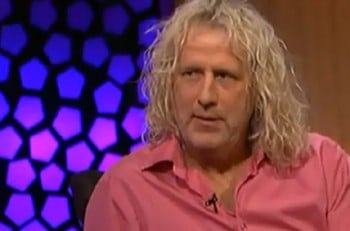
    Mick Wallace TD: Ombudsman’s Roma inquiry likely to be too narrow to precipitate Garda cultural change (26 October 2013)

    GSOC should be involved   The Government response to the removal of the two Roma children from their families this week can only be described as short-sighted, defensive and, sadly, entirely predictable in view of the State’s long-held policy of ethnicity denial and cultural assimilation towards Traveller and Roma peoples. The Minister for Justice’s initial response on Wenesday of this week to yet another Garda controversy (albeit with HSE involvement in this instance) was to order another internal report of Gardai by Gardai about possible Garda misconduct in their exercise of emergency powers under Section 12 of the Child Care Act 1991.  This approach does not comply with constitutional standards of fairness and natural justice, and represents a clear breach of the rule against bias, No-one should be a Judge in his Own Cause.  It would appear from the facts available, that the Gardai made decisions about child welfare based on tabloid journalism, ethnic categorisation, and an unrelated case in Greece – rather than a rational consideration of  independent evidence and application of the principles of reasonableness and proportionality.  There appears to have been an overly simplistic reaction by the Gardai/HSE to the raging media frenzy, which – as law enforcement and health professionals – they should have been immune to.  Of course we should really be armed with the full facts before making such assertions but given the defensive response of the Government and the ‘blue wall of silence’ that has frustrated previous investigations of An Garda Siochana, this certainly appears unlikely. Although the Minister did publish a version of Assistant Commissioner O Mahony’s internal report in the penalty points controversy (but only after the Government Press Office had completed some clever massaging of the statistics in the executive summary and without publishing the appendices which contained the supporting documentary evidence for the report’s conclusions), on this occasion the Minister has already confirmed that he will not publish any part of the forthcoming Garda report.  In order to impart a sheen of legitimacy to the proceedings, he then confirmed on Thursday in the Dail that he had now decided to pass it to the Ombudsman for Children – along with the HSE report – so that she may then conduct a report of those reports. The Ombudsman for Children’s own press statement on Thursday informed us that she had decided of her own volition to investigate – on a preliminary basis – the actions of the HSE only; and indeed any examination of the conduct of the Garda Siochana is specifically excluded from her remit.  After this decision, the Minister for Justice contacted the Ombudsman for Children to raise the possibility of an “expanded role” and on Friday 25th October the Minister announced in his third statement of the week, that he has now confirmed to the Ombudsman for Children his intention to appoint her under Section 42 of the Criminal Justice Act 2007 to carry out a full inquiry on the matter, to include an examination of the role of the Gardai.  Although Section 42(10) permits the Minister to publish the Ombudsman’s report, the Minister has not confirmed yet whether he intends to do so. While we await confirmation of the terms of reference of the inquiry which should be published in the Minister’s Order of appointment under Section 42, it would appear that the terms of reference will be just wide enough to satisfy public opinion but too narrow to allow for a proper examination of Garda powers and procedures, the functioning of the Ethnic Liaison Officer system, the force’s relationship with the media, and the incidence of racial profiling within the Garda Siochana – an examination that could precipitate real cultural change within the Gardai. In any event the Minister has already declared that he has “no doubt that the Gardai acted in this instance in good faith in the intervention that took place” in contrast to his earlier admission that the “international backdrop” of the case in Greece may have had “some undue influence in the decisions that were made”. It is curious to note that the Minister bypassed the Garda Siochana Ombudsman Commission entirely in his response to the week’s events.   In the particular circumstances, a joint investigation would seem the most appropriate route, combining GSOC’s experience and knowledge of Garda procedures with the Ombudsman for Children’s experience and knowledge of child welfare procedures. Under Section 106 of the Garda Act 2005, the Minister could consider exercising his power to request GSOC to examine the practice, policies and procedures of the Garda Siochana in such instances.  Unfortunately GSOC’s hands are tied unless Minister Shatter specifically requests such an investigation, a glaring gap in GSOC’s statutory powers which has been recently flagged by M. Seggayaka, the UN Special Rapporteur in March of this year. Although the Ombudsman for Children’s commitment to “conduct an independent impartial investigation from first principles” certainly brings  with it some hope of a transparent process with worthwhile conclusions, she may encounter serious difficulties investigating the Garda Siochana,  an impenetrable body that has consistently met any such efforts with impressive resistance. Given GSOC’s experience in dealing with the difficulties and delays when seeking information from the Gardai – which led in May to an unprecedented public airing of their frustrations – it would seem that their involvement could be of considerable assistance to the Ombudsman for Children.  It would also allow access to the Pulse system through the  seconded Gardai who perform this function within GSOC. Although GSOC, again of their own volition, have demanded a copy of the internal Garda report, the only possible investigation GSOC can subsequently initiate – without any official request from the Minister – is of an individual Garda’s conduct under the very restrictive terms of Section 102.  In any event our GSOC, unlike its Northern counterpart, cannot impose sanctions on any individual Garda, nor award any compensation.  Nor of course can the Ombudsman for Children. In light of the wider issues raised by this particular case,

    Loading

    Read more

  • Posted in:

    Gurdgiev on Healthcare. Jokers burning money

    Public sector not reforming or cutting – as taxes rise Health service inflation second highest in EU   ‘spending on health has shrunk by just 128 million euro over the last two years’.   ‘Between December 2005 and mid-2012, cumulative Irish consumer price inflation (CPI)  was 9.5%. Health CPI was 21.4%’   With an early Budget looming, the circus of  ‘austerity is overbaked’ politics has rolled into town. The Labour and the FG backbenchers are out in force trying desperately to salvage what little popular support they still might command on the streets. Not to be ever outdone, Fianna Fail, freshly again converted to the Church of Socialistas has been unleashing torrents of social consciousness. Things are getting so hot on the backlash speaking circuit that Siptu was able to net even Jack O’Connor a gig. Their star performer was last seen thundering at the MacGill Summer School a potent brew of outlandishly misinformed comparisons of European and American policies for dealing with the Great Recession and calls on for an end to ‘human-rights-violating’ austerity.   The problem is that, once you come down from the highs of this Keynesian Lollapalooza, you’re still in Ireland where the Government continues to run an insolvent state with spending less than revenue and where society needs bigger and more effective expenditures. The fiscal mess we are in has nothing to do with the lack of economic growth and everything to do with the policy institutions that the current Government inherited from the decades of political clientelism presided over by its predecessors.   Let us look at some numbers.   In the first six months (H1) of 2013, the Irish State’s current expenditure was 27.12 billion euro, just  352 million euro shy of the level in H1 of 2012, and 3.2 billion euro more than we spent in H1 of 2011. Meanwhile, tax revenues rose from 15.3 billion euro in H1 2011 to  17.6 billion euro in H1 this year. Crunching  ‘austerity’ based on ‘savage cuts’, five years in, still looks more like a tax squeeze and slippery spending re-allocation from one programme to another.   Meanwhile, Department of Health spending is now running at 6.539 billion for H1 2013, down on EUR 6.754 billion for H1 2011 – a whopping reduction of EUR215 million. Remember too that 2011-2012 increases in the cost of beds charged to the private insurers (ie to ordinary insurance patients) have more than offset the above reductions in spending. Net current (ex-capital) spending on health has shrunk by just 128 million euro over the last two years.  Register that, dear Village reader.   The Department of Health is a great example to consider when dealing with the failure of our reforms. It is the quintessential ‘frontline’ service, of the type we all are willing to pay for. Yet, it is also a symbolic dividing line between the poor (allegedly having no access to the services) and the rich (allegedly all those who hold health insurance and as ‘private’ patients clog public wards). Healthcare was also the epicentre of endless rounds of reforms over decades, including the decades of rapid economic growth. And it is one of the two largest departments, with a budget only slightly smaller than the 6.545 billion euro spent in H1 2013 by the Department of Social Protection.   For all this spending, 35% of Irish households have to purchase private insurance to obtain any meaningful level of health services. For those who think insurance a luxury, the Irish Government is considering making health insurance obligatory.   Meanwhile, basic healthcare is shambolic. While emergencies get reasonably decent attention, Ireland ranks at or below the European average in treatment of most chronic diseases, before we control for differences in population demographics. Our primary care and access to specialist consultants is pathetic – apart from hospital emergency rooms  and intensive care units. Despite the fastest rise in healthcare expenditure per capita 1997-2007 in the entire EU27, according to the EU itself, Irish increases have made only “a modest contribution to [improved mortality], substantially less than one third of the total, and possibly only a few percentage points”.   In reality, of course, Irish healthcare is run for the benefit of Irish healthcare staff. The 2005-2007 pay bill for the HSE stood at an average 50.7% of the entire HSE non-capital budget. In 2009 it was 50.1%. In 2010, Irish salaries (excluding other income) for medical specialists were the highest in the EU, with the second highest paid (in the Netherlands) coming at a discount of roughly 25% on  their Irish counterparts. These salaries were not inclusive of Irish specialists’ earnings from private patients.   According to the EU’s 2012 assessment, 33% of Irish people find access to hospitals unaffordable (the 8th highest in the EU) and the same percentage find access to a GP to be out of their financial reach (the 4th highest in the EU), while 53% claim that they cannot afford medical or surgical specialists (the 8th highest in the EU).   This is hardly surprising. Between December 2005 and mid-2012, cumulative Irish consumer price inflation (CPI)  was 9.5%. Health CPI over the same period was 21.4% – more than double the rate of overall inflation. Of  EU15 states, Ireland and Holland were the only states where health costs rose faster than general inflation in the last 7 years. 2005-2011 inflation ran at 47.3% in hospital services (state-controlled charges), followed by 28.6% for dental services , 23.5 % for out-patient services and 21.3% for doctors’ fees. This inflation added to the already high cost base of 2005.   Extraordinarily, from 2005 through mid-2012 Ireland had the lowest rate of inflation in the EU15, while our health services inflation was the second highest after the Netherlands.   Austerity, it seems, has been a boom-time for healthcare costs. Or put differently, while the rest of the world defines efficiency-improving reforms as changes in delivery of services that reduce the cost of services while maintaining or improving, in Ireland

    Loading

    Read more