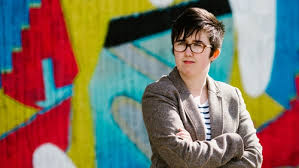
Chris Moore

Random entry RSS

  • Posted in:

    Kincora, an Orwellian child abuse nightmare at the BBC. By David Burke.

    Introduction. Chris Moore, formerly a reporter with  BBC NI, was among a small group of – genuinely – courageous journalists who put their lives and careers at risk by reporting the hard truth about the Kincora child abuse scandal when it first erupted in the 1980s. He has never stopped. Moore has posted a story on Ed Moloney’s ‘Broken Elbow’ website. It blows the lid on the attempts by MI5, the RUC and management at the BBC, to suppress vitally important facts about the scandal. 1. A ‘honey trap’ baited with children. Put simply MI6, MI5 and the RUC special branch ran Kincora and other homes as ‘honey traps’ to ensnare and blackmail Unionist politicians and paramilitaries who abused children. Kincora is arguably the worst scandal of the entire Troubles. Children were abused for decades at a variety of care homes and Portora Royal College. The abuse was organised by Stormont civil servants and politicians (such as Joss Cardwell MP) as well as by figures at the level of local authority, and by court officials (such as Ken Lamour). Joe Mains, the Warden of Kincora, was close to Loyalist terrorists such as John McKeague. William McGrath, was placed in the home as ‘housefather’ in June of 1971 – most likely by Sir Maurice Oldfield of MI6. McGrath was close to Paisley, the UVF and UDA. He was also an arms smuggler and commander of Tara, yet another paramilitary group. Mains and McGrath trafficked the boys to Loyalist terrorists and politicians. MI5 recorded sex sessions at the Park Avenue hotel in Belfast and elsewhere. The RUC special branch protected these operations. Loyalist killers were recruited via blackmail to murder on behalf of MI5. Politicians were compromised. VIPs such as Lord Mountbatten and other VIPs such as James Molyneaux MP, enjoyed access to a steady supply of vulnerable children. Hence, we have: child abuse, blackmail, the subversion of democracy, perversion of the course of justice, state sponsorship of terrorism, gunrunning, State malfeasance and murder, all rolled up into one compond of evil. After the scandal erupted, more crimes took place: police cover-ups, attacks on the freedom of the press, interference with the charter of the BBC, the intimidation of witnesses, perjury on an industrial scale at various inquiries, the misleading of Parliament, the forgery of documents and murder (McKeague was assassinated by British agents inside the INLA). This is why the Kincora scandal will not go away. This is why files on Kincora are to be locked away for decades yet. Kincora was so evil, the British state will never be able to admit the truth. It is simply too embarrasing. It would destroy Britain’s reputation around the globe if it came clean, even now. The British Royal family and the Conservative Party would sustain considerable reputational damage. Moore’s article, however, shines a considerable amount of light on the sordid Kincora cover-up. 2. An honest cop in the RUC. A particularly shocking passage in Moore’s article describes the role of ‘David’, an officer of the RUC, who discovered what was going on at the home five years before the Irish Independent finally brought the scandal to light. ‘David’ was quite clearly a diligent and honourable cop. If only there had been more like him in the RUC, a lot of children would have escaped the clutches of the Kincora paedophiles. Instead, the RUC was dominated by indisputably evil men who let the child abuse continue, and then covered-up the State’s role in this shameful scandal. 3. The Police Ombudsman of Northern Ireland In September 2022 the Police Ombudsman of Northern Ireland published a report which confirmed that the RUC knew about the abuse at Kincora yet failed to halt it. The excuse put forward for the RUC’s failure to intervene was that they were over stretched. Moore demolishes that myth. David had done all the work. Moore describes how: David’s inquiries led him to Kincora.  He began to watch Kincora.  He built up a profile of people coming and going at Kincora who had no legitimate business in going into the building.  He told me he took photographs of individuals; captured car registrations and identified the owners. Among those he says he positively identified were Justices of the Peace; two police officers; businessmen and two Englishmen who were officials from the Northern Ireland Office based at Stormont. The Kincora scandal is one of the darkest stains on the reputation of the RUC. ‘David’ is the only RUC figure to emerge from it thus far with his honour intact. 4. MI5’s Ministry of Truth. The machinations at the BBC to destroy Moore’s relationship with ‘David’ were nothing less than Orwellian. Moore describes how: David said he had been hauled over the coals because one of my superiors in the BBC had allegedly informed an Asst. Chief Constable that David was my source and had identified him by name. Wow! Really? If David was correct, in my first ever investigative story I had been betrayed by someone within my place of work and who had also betrayed the principle of source protection adopted by journalists. I learned a painful lesson about trust. I thought I knew who had given up my source but never confronted that individual. Just learned an important message about trust! Understandably David severed all communication with me.   With his disappearance from my life went all the material he had gathered and which he said he might hand over to me someday as it was obviously extremely relevant to Kincora.  So if the aim was to kill off any prospect of a Kincora story emerging, it was now gone.  Dead in the water, as they say.  Somehow someone had managed to close down this potentially harmful information about Kincora.” 5. Moles at the Beeb. MI5 ran a secret office at the BBC in London from where it exerted a malign influence over the corporation. Moore’s revelations indicate it had a firm grip over key decision makers in BBC NI too. The assistant D-G of the BBC in the 1980s, Alan Protheroe, had links to the intelligence services, as did others.  The corporation employed many ex-Ministry of

    Loading

    Read more

  • Posted in:

    JAMES MOLYNEAUX AND THE  KINCORA  SCANDAL

      UPDATE: Sir Jeffrey Donaldson is the new leader of the DUP. One of his mentors was James Molyneaux MP. Donaldson succeeded him as MP for Lagan Valley after Molyneaux retired in 1997. On 19 December 2019 Village exposed Molyneaux’s involvement with the Anglo-Irish Vice Ring. On his website Donaldson has stated that: “My involvement with the Ulster Unionist Party grew as I worked alongside two of the greatest names in Unionism in the 20th century. Between 1982 and 1984 [Enoch Powell and James Molyneaux]. .. In 1985 I was elected aged 22 to the Northern Ireland Assembly, with the distinction of being the youngest person to win a seat at Stormont with the majority of some 15,000 votes. Throughout this period I also served as the Personal Assistant to the then leader of the UUP, the Rt. Honourable James Molyneux MP. In 1988 I was elected Honorary Secretary of the Ulster Unionist Council and in 2000 I was elected Vice President of the Council. My responsibilities included overseeing the UUP Bureau in Washington DC. A regular visitor to the United States, I often accompanying leaders James Molyneaux and his successor David Trimble on delegations that included several meetings with former President Clinton and Vice President Al Gore and subsequently with President Bush.” The December 2019 profile of Molyneaux commences here:  James Molyneaux MP was one of the most significant figures in Unionist politics during the Troubles. He was first elected as a Westminster MP in 1970 for the then dominant Ulster Unionist Party (UUP) and served as its leader 1979-1995. He was also an Orangeman and a member of the Monday Club, a right-wing pressure group which was associated with the Tory Party. According to Robin Bryans, the well-informed Kincora Boy’s Home whistle-blower, Molyneaux was part of the paedophile gang which preyed on vulnerable boys in care in Northern Ireland. MI5 did not hand over its files on Molyneaux to the Hart Inquiry which reported in 2017. Equally disappointing is the fact that the Independent Inquiry into Child Sexual Abuse (IICSA) in London is not looking for MI5’s files on Molyneaux. It has shown no interest in him nor in other MPs and VIPs who abused boys as part of an Anglo-Irish Vice Ring. Richard Kerr, a resident at Kincora, was trafficked from Belfast to London in the 1970s aged 16 to be abused by an MP who was a friend of Molyneaux.  1.  ‘KINCORA AND PORTORA BOYS’ SCHOOLS WERE USED AS HOMOSEXUAL BROTHELS BY MANY PROMINENT FIGURES, INCLUDING LORD MOUNTBATTEN [AND] JAMES MOLYNEAUX.’ Robin Bryans tried to expose Molyneaux’s links to Kincora while he was still Leader of the UUP but without success. Bryans, however, did manage to expose Sir Anthony Blunt, the Surveyor of the Queen’s Pictures, who had been a KGB mole while he served inside MI5. Byrans knew Blunt well from his frequent visits to Ulster where Blunt seized opportunities to abuse underage boys. Bryans tried to expose Molyneaux in a letter he wrote on 3 November, 1989, which also made reference to Blunt’s treachery. This was six years before Molyneaux would step down as Leader of the UUP. The relevant extract reads as follows: “Although Margaret Thatcher showed loyalty to those who had eased her path, by fair means or foul, to office, her forthrightness and inexperience enraged many. While (Sir Anthony) Blunt had a cosy relationship with the security services (based on his knowledge of incriminating political and sexual leanings among the Royal family), Thatcher showed herself to be unsympathetic to this delicate quid pro quo. She unbalanced the status quo by admitting that Blunt had been a Soviet agent [in the House of Commons in 1979]. This betrayal (as Blunt saw it) risked letting all sorts of other skeletons out of the cupboard. Not the least of these was the long-standing arrangement whereby Kincora and Portora Boys’ Schools were used as homosexual brothels by many prominent figures, including Lord Mountbatten, James Molyneaux, Leslie Mackie and Blunt’s coterie of highly placed friends. Blunt, however, kept his mouth shut, and Thatcher learned her lesson well. The establishment knows best”. 2. MOLYNEAUX’S MENTOR WAS SIR KNOX CUNNINGHAM WHO DESCRIBED HIM A ‘PRETTY LITTLE THING’ Molyneaux was the political protégé of the child rapist, Sir Knox Cunningham QC, MP. Cunningham was a senior Unionist MP at Westminster who rose to become Prime Minister Harold MacMillan’s Parliamentary Private Secretary, 1959-63, and as such was present at the deliberations of Macmillan’s cabinet. Macmillan recalled Cunningham fondly in his memoirs and awarded him a baronetcy in his resignation honours. Molyneaux acted as Cunningham’s election agent and succeeded to his seat in 1970 when the older man retired. According to Robin Bryans, Cunningham once described the young Molyneux as ‘a pretty little thing’. Cunningham was also a senior member of the Anglo-Irish Vice Ring of which the infamous Kincora Boys’ Home was a part. Richard Kerr, a former resident at Kincora has revealed that Cunningham was an abuser of Kincora boys. A memorandum prepared by Colin Wallace a PSYOPS officer at British Army HQ Lisburn in the 1970s stated that Cunningham was ‘closely associated’ with William McGrath, the brutal child rapist and Housefather at Kincora and was ‘aware of his activities’. Cunningham became involved in the World Alliance of Young Men’s Christian Association (YMCA) in 1947 and became Chairman of its National Council two years later, something which put him in charge of the YMCA in Ireland, Wales and England. Cunningham took boys from Kincora to the YMCA in England. His Wikipedia entry suggests that he became involved with the YMCA because of his “religious faith” but it is more likely he wanted to gain access to young men. Much of his interaction with the YMCA boys involved the sport of boxing. According to Bryans, he took Kincora boys to the YMCA in England. According to Bryans, Cunningham ‘always liked to appear as the great Queen’s Counsel who knew more than anybody about everybody, especially those in my books

    Loading

    Read more

  • Posted in:

    Maurice The Mole? The Provisional IRA knew Sir Maurice Oldfield, Chief of MI6, was a homosexual. Did the Soviets know too?

    Forty years ago this month Margaret Thatcher sent Sir Maurice Oldfield, the former Chief of MI6, to Belfast to co-ordinate the activities of the various branches of British Intelligence in Ireland. Within a few weeks MI5 was reporting to Downing Street that he was a homosexual and an inquiry was launched to see if he had been blackmailed by the Soviets or any of Britain’s other enemies. He was soon given a clean bill of health. Kieran Conway, the former Provisional IRA Director of Intelligence in the 1970s, has confirmed to Village   that the Provos knew Oldfield was gay. What, if anything, did the Soviet intelligence apparatus, the KGB, know about Oldfield’s homosexuality? More significantly, if the KGB found out, what did they do with the information? The answer is nothing despite the fact it could have destroyed him.  Such inaction makes no sense as Oldfield was reputed to have been a highly effective opponent of the KGB. The notorious MI6 traitor Kim Philby described him as an officer of “high quality” and “formidable” in his memoirs.  In 2017 the Hart Report into child sex abuse published details of an MI6 document which revealed a “small collection of papers in file three which relate to the relationship [Oldfield] had with the Head of the Kincora Boys’ Home (KBH) in Belfast”. The “Head” of Kincora was “Warden” Joseph Mains who abused teenage boys at Kincora and elsewhere. Joseph Mains, according to MI6 records he had a “relationship” and  a “friendship” with Oldfield. PART 1: OLDFIELD AS A SECURITY RISK A DANGEROUS ATTRACTION TO YOUNG MALES Oldfield was in fact attracted to young males. The KGB could have ascertained this through routine surveillance or from its spies inside MI6 such as Kim Philby and George Blake who would have been on the lookout for blackmail material on their colleagues. There is, of course, a world of difference between being a homosexual and being attracted to underage males. However, back in the unenlightened 1970s and 1980s, few in politics would have  acknowledged this important distinction.  Incredible as it now seems, the mainstream print media routinely referred to the Kincora scandal as a “homosexual” one when it was nothing of the sort. In the dark days of the 1970s and 1980s those who ran British Intelligence definitely viewed a homosexual in the ranks as a security risk. Hence, when Margaret Thatcher was told about Oldfield’s sexuality, his security clearance was withdrawn while an inquiry was carried out to see if he had been compromised by the Soviets. It determined that he hadn’t. However, inquiries into the loyalty of Kim Philby, another senior MI6 officer,  had failed to expose evidence of his true allegiance to the Soviet Union. Furthermore, MI5 and MI6 had let at least Anthony Blunt, Guy Burgess, Donald MacClean, John Cairncross, George Blake – all Soviet agents – run amok inside Britain’s intelligence community for decades. HER MAJESTY’S SPYMASTER  Who was Maurice Oldfield and what was he capable of? When ‘The Troubles’ erupted, Oldfield was Deputy Chief of MI6. He assumed control of Irish affairs because his Chief, Sir John Rennie, did not share the same experience as he in the dark arts of the secret world. Rennie, who had been a surprise appointment as Chief of MI6, had a diplomatic and propaganda background whereas Oldfield had participated in deception campaigns during WW2; fought terrorism in Palestine after it; monitored the flow of weapons and money to the communist guerrillas fighting the British in Malaya in the 1950s. And, if all this wasn’t enough to square up to the IRA, he had a good idea of what it took to run a paramilitary campaign due to his knowledge of MI6’s guerrilla campaign against Albania, something that happened in the 1950s during his stint as deputy chief of MI6’s counter espionage directorate, R5. The Albanian campaign was a disaster. Most observers believe it was betrayed from the inside. Oldfield was a tubby little man who waddled when he walked, often dressed badly and was allegedly afflicted with occasional psoriasis. He has become more famous than most of his contemporaries, probably because Alec Guinness drew on his bespectacled appearance for his celebrated portrayal of George Smiley for the BBC’s production of John Le Carre’s Tinker Tailor Soldier Spy. The glamour of the association with Le Carrie has eclipsed the true nature of Oldfield’s character When Rennie retired prematurely in 1973 after a drug smuggling scandal in Hong Kong involving his son, Oldfield finally secured the top spot he had coveted for so long. Once in the driving seat, he steered MI6 until his retirement in early 1978 under an appropriately misleading title, ‘Head of the Foreign and Commonwealth Office, Research Department’. Under Oldfield, MI6 HQ continued to be what it had always been: a haven for criminals and the sort of place where a visitor would have been well advised to wipe his or her shoes on the way out of the building. Oldfield’s retirement as MI6 Chief was not to prove the death of his career: he re-emerged from his crypt to become Ulster Security Co-ordinator at the behest of Margaret Thatcher in 1979. By then too many intelligence cooks had congregated in NI and were spoiling the spy broth. Oldfield was asked to knock heads and streamline their work. While he was in Northern Ireland MI5 discovered he was gay. An MI5 report submitted to Cabinet Secretary, Sir Robert Armstrong, on 31 March 1980 revealed that on 28 March Oldfield had after “some preliminaries” admitted he “had first been introduced to homosexuality at university and he admitted having engaged in homosexual practices, intermittently, up till the time of his acceptance of his Northern Ireland appointment. His relationships were, for the most part, with restaurant waiters and the like: he had none, he said, with (MI6) staff or agents”. In other words, Oldfield admitted that he had engaged in homosexual activity throughout his career as an MI6 officer with random individuals. A copy of

    Loading

    Read more

  • Posted in:

    Lyra McKee to expose Kincora-driven murder. By Joseph de Burca

    Lyra McKee’s book on the assassination of Robert Bradford MP is to be released within a matter of weeks. The book will explore the deeply sinister  links between the slaying of Bradford and the Kincora Boys Home scandal. Village readers will be familiar with the scandal on account of the  reports we have been publishing about it since 2017. While we await the publication of the book, readers are invited to scour our archive to view our revelations about  Kincora. The archives of Ed Moloney’s ‘Broken Elbow’ blog are also well worth a visit. Moloney was crucial in breaking a series of revelations about Kincora in the 1980s and has never lost interest in the scandal. A recent entry in his blog concerns the death of Valerie Shaw who tried to end the suffering of the children at Kincora by telling Ian Paisley about it. Paisley did nothing for the boys and lied about his knowledge of Kincora to his last breath. The work of the late Liam Clarke in the Belfast Telegraph provides further insights and is readily available online. Further details about Kincora can be found in the following books: Who Framed Colin Wallace by Paul Foot The Kincora Scandal by Chris Moore Also of note is Martin Dillon. He is the author of a series of books which are worth their weight in gold for anyone who wants to learn about what really happened in the shadows during the Troubles including Kincora. His book, The Dirty War, is essential reading. Village will be posting further short articles on the ramifications of Lyra McKee’s book, ‘Angels with Blue Faces’  over the next few weeks.

    Loading

    Read more