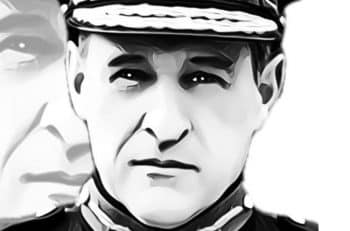
Frank Kitson

Random entry RSS

  • Posted in:

    Twitter, Censorship and the mass murderer David Cleary (Soldier F). By David Burke.

    The musician Feargal McCann has followed the saga revolving around the mass murderer David Cleary. McCann’s father Joe, was shot  by paratroopers in 1972, only ten weeks after Bloody Sunday. Cleary, better known as ‘Soldier F’, was one of those responsible for the Bloody Sunday massacre of innocent unarmed civilians. Cleary shot Patrick Doherty while he was lying on the ground crawling away from him. The bullet tore up the man’s spine. As he lay crying out in pain, Barney McGuigan, stepped forward with a white handkerchief looking to help him. Cleary dropped to one knee, aimed his rifle and shot McGuigan in the head. Cleary was named in the House of Commons by the leader of the SDLP, Colum Eastwood, last year. This circumvented a ban on naming him which had been issued by a court in Belfast. Last week Cleary was named by Peadar Tóibín in the Dail. The ban does not apply in the Republic of Ireland. Village reported Deputy Tobin’s speech later that night.  Feargal McCann read the story and transmitted a tweet about it. Twitter has now locked McCann’s account. In addition, it is stipulating that by deleting the tweet, McCann acknowledges that he ‘violated’ Twitter rules. Twitter might point out that there is a court order in place which prohibits the naming of Cleary, albeit one that only applies in the UK. No doubt, Twitter might argue further that since tweets are international, McCann’s transmission could have been read inside the UK, and hence they had no choice but to shut the musician’s account down. The consequences of such an argument could be far-reaching. If, for example, a Russian Court bans any coverage of Pussy Riot or other dissidents, will Twitter enforce any such ban? And what about Kim Jong-un? If he or a North Korean court banned the naming of the assassins of his half-brother, Kim Jong-nam,  would Twitter lock the account of a person in Ireland who named the killers? Or is Twitter merely going to enforce injunctions about a mass murderer like Cleary who shot innocent Irish people? The pages of Village are open to Twitter to respond. Eamon de Valera invented the concept of the ’empty formula’ to get around having to take an oath of allegiance to the Crown in 1927. Those suspended or locked down by Twitter might draw inspiration from this to get around Twitter’s censorship of their accounts for naming Cleary. It could be called ‘Empty Twitter formula’. OTHER STORIES ABOUT BLOODY SUNDAY, THE BALLYMURPHY MASSACRE, BRIGADIER FRANK KITSON AND COLONEL DEREK WILFORD ON THIS WEBSITE: David Cleary, mass murderer, aka Soldier F, named in Ireland’s parliament. Bloody Sunday: Brigadier Frank Kitson and MI5 denounced in Dail Eireann   The covert plan to smash the IRA in Derry on Bloody Sunday by David Burke Soldier F’s Bloody Sunday secrets. David Cleary knows enough to blackmail the British government. Learning to kill Colin Wallace: Bloody Sunday, a very personal perspective Lying like a trooper. Internment, murder and vilification. Did Brigadier Kitson instigate the Ballymurphy massacre smear campaign? Where was Soldier F and his ‘gallant’ death squad during it? Another bloody mess. Frank Kitson’s contribution to the wars in Afghanistan and Iraq. 300,000 have died in Afghanistan since 1979. Lying like a trooper. Internment, murder and vilification. Did Brigadier Kitson instigate the Ballymurphy massacre smear campaign? Where was Soldier F and his ‘gallant’ death squad during it? A Foul Unfinished Business. The shortcomings of, and plots against, Saville’s Bloody Sunday Inquiry. Kitson’s Private Army: the thugs, killers and racists who terrorised Belfast and Derry. Soldier F was one of their number. Soldier F and Brigadier Kitson’s elite ‘EFGH’ death squad: a murderous dirty-tricks pattern is emerging which links Ballymurphy with Bloody Sunday. A second soldier involved in both events was ‘mentioned in despatches’ at the behest of Kitson for his alleged bravery in the face of the enemy. Mentioned in Despatches. Brigadier Kitson and Soldier F were honoured in the London Gazette for their gallantry in the face of the enemy during the internment swoops of August 1971. Soldier F, the heartless Bloody Sunday killer, is named. Mission accomplished. The unscrupulous judge who covered-up the Bloody Sunday murders. Soldier F and other paratroopers have been protected by the British State for five decades. None of them now face prosecution. This perversion of justice began with the connivance of the Lord Chief Justice of England and Wales, John Widgery, a former British Army brigadier, Freemason and oath-breaker. Counterinsurgency war criminals, liars and cowards: Kitson and Wilford, the brigadier and colonel who led the soldiers who perpetrated the Ballymurphy Massacre. Brigadier Kitson’s motive for murdering unarmed civilians in Ballymurphy. The McGurk’s Bar cover-up. Heath’s Faustian pact. How a British prime minister covered up a UVF massacre in the hope of acquiring Unionist votes to enable the UK join the European Economic Community, the forerunner of the EU.

    Loading

    Read more

  • Posted in:

    David Cleary, mass murderer, aka Soldier F, named in Ireland's parliament. How will Twitter respond?

    Deputy Peadar Tóibín, leader of Aontú, referred to Soldier F by his real name, David James Cleary, in  Dáil Éireann, the Irish parliament, yesterday (9 February). Cleary was a cruel, cynical and clinical killer. He shot Patrick Doherty in the buttock on Bloody Sunday while he was on the ground crawling away from him. The bullet tore up his spine. As Doherty lay crying out in pain, his life draining away from him, Barney McGuigan, an exceptionally brave and humane man, stepped forward with a white handkerchief looking to help Doherty. Cleary dropped to one knee, aimed his rifle and shot McGuigan in the head. A UK injunction prohibiting the naming of Cleary does not apply in the Republic of Ireland.  The Cathaoirleach of the Dáil had no difficulty with Deputy Tóibín’s contribution. Village magazine named Cleary last year in a series of articles about the Ballymurphy massacre and Bloody Sunday. Twitter suspended our account after a tweet we issued named the soldier. Other accounts were suspended too, including one belonging to the brother of one of those murdered on Bloody Sunday. In a move that is the very definition of perversity, the PSNI are threatening to prosecute him. One can imagine the international outcry that will ensue if the force pursues a prosecution. The Irish contingent in the US Congress will be incandescent. There will be an anger that will unify Dáil Éireann as one if they dare proceed.  The fact that Cleary has been named by Deputy Tóibín under Dáil privilege has been tweeted and retweeted by a number of people living in the Republic of Ireland. Cleary’s name is now permanently available on the website of the Oireachtas. It will be interesting to see how Twitter responds this time around. A TikToc with a recent photo of the former 1 Para lance corporal is in circulation. Yet another recent colour photograph has been transmitted on Twitter (the publication of this picture did not lead to a suspension of the relevant, presumably as it went under the Twitter radar.)  Deputy Tóibín’s contribution was made as part of a question he put to the Taoiseach. Micheál Martin had no difficulty with the fact Cleary was named. Deputy Tóibín’s question was as follows: Ten days ago the Taoiseach laid a wreath at the Bloody Sunday Memorial in Derry. At the time and since then the Taoiseach has indicated the families of those who were lost, who were murdered, on Bloody Sunday need to find justice. We are looking at the likelihood that there is going to be an amnesty. If there is an amnesty in the North of Ireland, it means there is no rule of law and that the perpetrators will get away with murder. I attended the 50th anniversary of the Ballymurphy massacre, and speaker after speaker got up on the trailer that day and said the British Government quite simply wants to get away with murder. That is what is happening here. Over recent debates in which I have participated, I have made an effort to name every single victim of the Bloody Sunday massacre, the Ballymurphy massacre, the Springhill massacre, the murders that were researched in Operation Greenwich and those today in the Ombudsman’s report. Is it not shocking that we know the names of the people who lost their lives, the people who were murdered, but we do not know the names of the people who perpetrated those murders. Most people, for example, would not know Lance Corporal David James Cleary, better known as Soldier F, who is accused of murdering civilians on Bloody Sunday. Most people would not know the alphabet of British Army perpetrators of murder. We need to ensure people know their names. The Taoiseach has recounted what has happened, but I am asking him what steps will he take to ensure those names are known throughout the country for the murders they have committed. The Taoiseach responded as follows: In the first instance, I have told the Deputy what we are doing. I do not agree with the amnesty at all and I do not take it as a likelihood. The Irish Government has entered into discussions with the British Government and all of the parties in Northern Ireland in respect of the proposals that emanated from the British Government last year. We have made it very clear we do not accept any unilateral actions in respect of legacy that would represent a breach of the Good Friday Agreement and subsequent agreements. OTHER STORIES ABOUT BLOODY SUNDAY, THE BALLYMURPHY MASSACRE, BRIGADIER FRANK KITSON AND COLONEL DEREK WILFORD ON THIS WEBSITE: Bloody Sunday: Brigadier Frank Kitson and MI5 denounced in Dail Eireann   The covert plan to smash the IRA in Derry on Bloody Sunday by David Burke Soldier F’s Bloody Sunday secrets. David Cleary knows enough to blackmail the British government. Learning to kill Colin Wallace: Bloody Sunday, a very personal perspective Lying like a trooper. Internment, murder and vilification. Did Brigadier Kitson instigate the Ballymurphy massacre smear campaign? Where was Soldier F and his ‘gallant’ death squad during it? Another bloody mess. Frank Kitson’s contribution to the wars in Afghanistan and Iraq. 300,000 have died in Afghanistan since 1979. Lying like a trooper. Internment, murder and vilification. Did Brigadier Kitson instigate the Ballymurphy massacre smear campaign? Where was Soldier F and his ‘gallant’ death squad during it? A Foul Unfinished Business. The shortcomings of, and plots against, Saville’s Bloody Sunday Inquiry. Kitson’s Private Army: the thugs, killers and racists who terrorised Belfast and Derry. Soldier F was one of their number. Soldier F and Brigadier Kitson’s elite ‘EFGH’ death squad: a murderous dirty-tricks pattern is emerging which links Ballymurphy with Bloody Sunday. A second soldier involved in both events was ‘mentioned in despatches’ at the behest of Kitson for his alleged bravery in the face of the enemy. Mentioned in Despatches. Brigadier Kitson and Soldier F were honoured in the London Gazette for their gallantry in the face of the enemy

    Loading

    Read more

  • Posted in:

    Bloody Sunday: Brigadier Frank Kitson and MI5 denounced in Dail Eireann

    This brings me to the appalling and unilateral decision by the British Government to bring forward legislation to prohibit future prosecutions of military veterans and ex-paramilitaries for crimes related to the Troubles and to impose a statute of limitations on Troubles-era prosecutions. Deputy Sean Haughey tonight denounced the activities of General Sir Frank Kitson in Dail Eireann.  The full text of his speech is set out below: The 50th anniversary of Bloody Sunday was marked on 30 January last. As we know, a march for civil rights in Northern Ireland took place in Derry that day. The participants marched for basic civil rights and equality, to be treated equally in a society where the minority were seen as second-class citizens by the government. The first battalion of the British army’s parachute regiment opened fire on innocent civilians, killing 13 people on the day. This followed the killing of other innocent victims by the parachute regiment in Ballymurphy the previous August. These events cast a long shadow over politics in Northern Ireland and this remains evident to the present day. The hastily established Widgery inquiry found the soldiers had started firing only after they had come under attack, among other adverse findings. This was deeply offensive to the families of those killed or injured, but it demonstrates what the establishment in a so-called democratic state can do, if so minded, to arrive at a false and predetermined outcome. The barrister David Burke, in his book published last year entitled Kitson’s Irish War: Mastermind of the Dirty War in Ireland, outlines how Bloody Sunday and other killings of innocent civilians in Northern Ireland by British soldiers were part of a ruthless, dirty war that commenced in 1970, when brigadier Frank Kitson, a counterinsurgency veteran, was sent to Northern Ireland. Burke further outlines how Kitson organised a clandestine war against nationalists and ignored loyalist paramilitaries. How shocking is that? The families of those who were murdered have campaigned for justice ever since. They have three basic demands, namely, a rejection of the Widgery report, an official acknowledgment of the victims’ innocence and the prosecution of the soldiers involved on the day. They campaign tirelessly and have to date been successful in achieving two of their three objectives. The then British Prime Minister Tony Blair established the Saville inquiry in 1998. It totally exonerated the victims and placed the blame firmly on the British army. Subsequently, the then British Prime Minister David Cameron issued a state apology and expressed his deep sorrow for what had happened. As we all know, however, the prosecution of the soldiers has, unfortunately, run into difficulty. The Public Prosecution Service for Northern Ireland announced in 2019 that only one soldier, Soldier F, would be prosecuted, but this was dropped and the matter is now before the courts. This brings me to the appalling and unilateral decision by the British Government to bring forward legislation to prohibit future prosecutions of military veterans and ex-paramilitaries for crimes related to the Troubles and to impose a statute of limitations on Troubles-era prosecutions. This has been widely condemned, rightly so. It was condemned by the Taoiseach in Derry at the weekend, when he said the soldiers involved should face prosecution. It has been condemned by the political parties in Northern Ireland, by victims groups and their families, by several international human rights organisations, including the Council of Europe’s commissioner for human rights and the United Nations special rapporteur, by Michael Posner, US Assistant Secretary of State, and by the Committee on the Administration of Justice in Northern Ireland – the list goes on. This move essentially overturns a crucial part of the 2014 Stormont House Agreement, which was agreed by the British and Irish Governments and the political parties in Northern Ireland. For example, a commitment was given to establish an independent historical investigations unit as part of this agreement. In July of last year, talks were initiated between the parties in Northern Ireland and all of the relevant stakeholders on dealing with the legacy of the past and implementing the provisions of the Stormont House Agreement. These talks should be ongoing and the Irish Government must continue to make known to the British Government its total opposition to these proposals. I would also like to raise another issue in this context. A range of rights-based commitments have been made in Northern Ireland, starting with the Good Friday Agreement and right up to New Decade, New Approach. This is not happening fully. For example, there has been a failure to progress a bill of rights in Northern Ireland. These objectives would give human rights protections to the people of Northern Ireland. In New Decade, New Approach, a commitment was given to establish an ad hoc committee on a bill of rights in Stormont but this has run into difficulty. Various proposals in this area are being obstructed in the Executive and the Assembly, using different veto mechanisms. This is very regrettable. What all of this clearly indicates is that we need full implementation of all aspects of the Good Friday Agreement and subsequent agreements. All of us need to work at that – the British and Irish Governments, the parties in Northern Ireland and Ministers and parliamentarians in these islands, using the bodies established under the Good Friday Agreement, and civic society. We must rededicate ourselves to implementing all of the provisions of the Good Friday Agreement. The role of MI5 was raised by Deputy Patrick Costello of the Green Party We can talk about the Cory inquiry’s hard drives being seized by MI5 and arson at the Stevens inquiry – all these deliberate attempts to cover up the truth.. His contribution in full was as follows: One of the recurring themes when we talk about the legacy issues is the responsibility of the British Government to act. It does have a responsibility and I will get to it in a minute. However, we also have a responsibility here in Dublin. We are co-guarantors of

    Loading

    Read more

  • Posted in:

    The covert plan to smash the IRA in Derry on Bloody Sunday by David Burke

    Introduction. The 50th anniversary of the Bloody Sunday massacre falls next month. The official position of the British Government is based on the 2010 report of Lord Saville of Newdigate, i.e., that a group of paratroopers engaged in the massacre of thirteen innocent people in Derry with a fourteenth dying later, for no reason. Unfortunately, Saville ignored or discounted much evidence that indicates that the soldiers were acting on orders. He paid scant attention to the crucial role played by a deceitful agent run by Military Intelligence and MI5 called ‘Observer B’. He was unduly harsh on Byron Lewis, a paratrooper who blew the whistle on his colleagues. The two companies of paratroopers of 1 Para that went to Derry on Bloody Sunday were meant to be on the same mission, following the same orders. Yet, they behaved as if they were on different operations. The orders followed by Support Company, also known as ‘Kitson’s Private Army’, indicates that a secret mission was assigned to them, or some designated number of them. The ‘Kitson’ referred to here  was Brigadier Frank Kitson, the counter-insurgency specialist who ran Belfast and its environs. 1. Chain of Command The senior British officers present in Derry on Bloody Sunday and mentioned in this article in order of their seniority were: General Robert Ford, Commander Land Forces Northern Ireland. Brigadier Patrick MacLellan of 8 Brigade, which ran Derry. Colonel Derek Wilford, who commanded 1 Para. Major Edward Loden who commanded Support Company of 1 Para. No criticism is made of Brigadier MacLellan in this article. If there was a hidden plan that unfolded on Bloody Sunday, it was conceived and executed behind his back. 2. General Ford foists 1 Para on Brigadier MacLellan In the run up to Bloody Sunday, the Brigadier of 8 Brigade in Derry, Patrick MacLellan, was ordered by his immediate superior, General Robert Ford, to make preparations to prevent a Northern Ireland Civil Rights Association (NICRA) march from reaching the Guildhall in Derry on 30 January 1972. Ford was based at HQNI at Lisburn. MacLellan was lent troops from 1 Para to assist him on Bloody Sunday, or so he was led to believe. 1 Para was based at Palace Barracks, Hollywood, outside Belfast. They normally conducted their operations in that city. 3. ‘Corking the bottle’ Ostensibly, the plan for 30 January was to prevent the NICRA march from reaching the Guildhall and, if appropriate, arrest likely rioters. The rioters were to be caught by putting “a cork in the bottle”, as Captain (later General Sir) Michael Jackson of 1 Para has described it. This meant encircling and trapping the rioters before arresting them. This operation was to take place at the end of William Street. Please look at the map which accompanies this article. The rioters were to be captured between Barrier 14 (shaded yellow) and the junction of Little James Street and William Street. The Support Company troops who were meant to be behind Barrier 12 (shaded red) could have swung around from Little James Street (red arrow) and blocked an escape route back along William Street or up Rossville Street. The peaceful NICRA marchers followed the line shaded in purple from William Street to Rossville Street. A group of rioters did present on the day. 4. Two Companies which were meant to – but didn’t – perform the same task Two different companies from 1 Para were sent to Derry on Bloody Sunday:  C Company and Support Company. In theory, they fell under the temporary command of Brig. MacLellan. (Their brigadier in Belfast was Brigadier Frank Kitson). Although both groups were allegedly assigned the same task by their commander, Col Wilford, Support Company behaved in a completely different manner to C Company. C Company was put behind Barrier 14. Support Company was sent to a yard at a Presbyterian Church on Great James  Street which was much further away from the area where the rioting was expected to take place. 5. Differences in preparation and deployment There were a number of differences in the deployment of the two companies  [C company and Support Company], which include the following: Location of Forming Up Points (FUPs) Use of rifles instead of batons; Application of war paint; Use of vehicles; Discharge of shots. {i} Location of Forming Up Points (FUPs) C Company’s FUP was behind Barrier 14 which is shown on the map that accompanies this article. This makes sense in terms of MacLellan’s plan. They were well positioned to block the march should an attempt have been made to break through to the Guildhall. It also left them strategically placed to rush forward and encircle any potential rioters. Support Company would have been well advised to have formed up as close to the junction between William Street and Little James Street as possible. Barrier 12 should have been moved up much closer to the junction. They should have been behind it in light clothes ready to swing around to ‘cork the bottle’. The two companies could have infiltrated the side roads as well and thereby blocked any attempts to escape through them. Yet, Support Company – based at the churchyard – were not within running distance from the likely rioters whom the army termed the ‘DYH’ [the Derry Young Hooligans]. There was little chance that Support Company could ‘cork the bottle’ from a starting point at the Presbyterian Church on Great James Street. The rioters would have seen soldiers running at them from Little James Street in plenty of time to make an escape by sprinting up Rossville Street. The deployment of Support Company at the church was guaranteed to defeat the purpose of MacLellan’s arrest plan. {ii} Primary use of rifles instead of batons; C Company wielded batons or kept their arms free to grab, wrestle and tackle the rioters when they went into action. Some may have used the butts of rifles strapped over their shoulders to strike the rioters. Crucially, they did not deploy with fingers on

    Loading

    Read more

  • Posted in:

    BBC Blackout on 50th Anniversary of the McGurk’s Bar Massacre?

      By Ciaran MacAirt. Family campaigners on legacy cases in the north of Ireland learn not to be precious about media coverage, especially when the British state is involved in the murders and subsequent cover-ups. On any other occasion, there are many reasons why a media outlet will not cover a story. In the fast-moving environment of the media, they may run out of time to report it or may miss it altogether. The outlet may not even consider it news, or it could be bumped by another article. If an article does not appear, it may even just be down to human error or misjudgement; on our part, it could be poor timing or media management. We all make mistakes. Last week, for example, our families were busy media-managing new evidence, a protest against police withholding evidence, and the build-up to the 50th anniversary of the McGurk’s Bar Massacre. 15 civilians including 2 children were murdered in the no-warning Loyalist bomb attack on 4th December 1971. Our families’ grief was compounded because the British state and its media blamed our loved ones for the bombing, so before we buried our loved ones, the British state buried the truth. Our Campaign for Truth began the moment the bomb exploded as first we had to prove the innocence of the victims. Since then, mostly through our own legacy archive research, we proved that the British armed forces knew that McGurk’s Bar was attacked, but instead colluded to blame the victims to suit the British state’s own narrow, sectarian, political agenda. In general, the British media followed suit and published the lies. Our Campaign for Truth began the moment the bomb exploded as first we had to prove the innocence of the victims. Since then, mostly through our own legacy archive research, we proved that the British armed forces knew that McGurk’s Bar was attacked, but instead colluded to blame the victims to suit the British state’s own narrow, sectarian, political agenda. In general, the British media followed suit and published the lies. Fast forward nearly half a century and the week before the 50th anniversary. We had a lot to tell the public in the run-up to Saturday 4th December and we launched our new website especially. We used a mix of web content, social media and press release. PR to the media specifically included: A complaint to the Parliamentary and Health Service Ombudsman in London against the Cabinet Office and its failure to investigate new evidence we found – the first complaint of its kind in a legacy case we believe [link] New archival evidence recorded by the British armed forces within minutes which was completely at odds with the lies told to the press by the British armed forces about McGurk’s Bar [link] A protest two days before the anniversary at the Policing Board against the Police Service Northern Ireland’s deliberate withholding of evidence relating to police collusion with the British Army in creating the McGurk’s Bar lies and blaming our loved ones. We even named a key architect of this secret agreement as we have archival proof – it is the infamous General Sir Frank Kitson, former Commander-in-Chief, UK Land Forces and Aide-de-Camp of the British Queen [link] The subsequent snub by the Chief Constable at the Policing Board of our families two days before the 50th anniversary of the atrocity [link]   Now, we were conscious that this was a lot of information for the press and public to manage but the families wanted me to press ahead and release. Each press release staggered throughout the week highlighted the fact that the week led to the 50th anniversary of the McGurk’s Bar Massacre. All of our other key local media outlets, including UTV, Belfast Telegraph/Sunday Life, Irish News and North Belfast News picked up on these press releases during the week, as did the Morning Star and The Canary in Britain and the Irish Times and Village Magazine in the capital. All of our other key local media outlets, including UTV, Belfast Telegraph/Sunday Life, Irish News and North Belfast News picked up on these press releases during the week, as did the Morning Star and The Canary in Britain and the Irish Times and Village Magazine in the capital. I spent most of Friday – the eve of the 50th anniversary – engaging with these outlets in time for the following day. I did not submit another press release on the day as we did not want to snowstorm the outlets and we had already drawn attention to the anniversary throughout the week. Nevertheless, nowhere on BBC NI News was the 50th anniversary marked in the week before, on the day or thereafter. I believe one of the religious ministers marked it during his Thought for the Day on Radio 4 which was very welcome, but to the best of my knowledge, nowhere on BBC Northern Ireland TV, Radio or Web was the 50th anniversary of the murder of 15 civilians marked in any way. I believe that we are diminished by the death of every victim and our loved ones are no more special than another family’s loved one, but the McGurk’s Bar Massacre is notable [unfortunately] if only for its ferocity and the death toll in a single bombing – 15 souls including 2 children. Another 16 could have perished but survived. The McGurk’s Bar Massacre remains the greatest loss of civilian life in any single murderous attack in Belfast since the Nazi Blitz in 1941. The McGurk’s Bar Massacre remains the greatest loss of civilian life in any single murderous attack in Belfast since the Nazi Blitz in 1941. The families’ Campaign for Truth is very much live and driven in the most part by the our own intensive legacy archive research which has been missed or buried by historical police investigators, academics, lawyers, and journalists over the last half century. So, history, death toll, human interest, notable anniversary could make for interesting

    Loading

    Read more

  • Posted in:

    A loathsome dirty trick. 4 December was the 50th anniversary of the infamous bombing of McGurk's Bar. The families have made a complaint to Parliamentary Ombudsman Against the Cabinet Office. By David Burke.

    Saturday the 4th of December was the 50th anniversary of the infamous bombing of McGurk’s bar in Belfast by the UVF.  15 people were killed in the massacre. The bomb reduced the building to rubble. The attack was the most devastating atrocity suffered by Belfast since the bombing of the city during the Second World War. Brigadier Frank Kitson, the counterinsurgency specialist in charge of Belfast, knew that the bar had been attacked by Loyalist paramilitaries, yet participated in a black propaganda operation to blame the atrocity on the occupants of the premises. He and others  portrayed the explosion as an IRA own goal, i.e. that McGurk’s was an IRA pub and the bomb had been left there for collection by Republican terrorists, but had gone off prematurely. This was a lie. Kitson is alive. He has never been asked why he covered up for the actions of the Loyalist murder gang. Kitson is alive. He has never been asked why he covered up for the actions of the Loyalist murder gang. Kitson’s lies were used by Tory politicians to mislead the House of Commons. The record has never been corrected. The British government is refusing to investigate what really happened. The most likely explanation for the deception is that it was designed to avoid calls for the internment of Loyalist terror groups. At the time Ted Heath and NI PM Brian Faulkner had decided not to intern the UDA, UVF and Red Hand Commando. Furthermore, Brigadier Kitson had entered into a conspiracy with Tommy Herron of the UDA’s Inner Council. It amounted to nothing less than an agreement for mass murder. Herron ran the UDA’s assassination squads in Belfast. They killed Catholics whether they were connected to the IRA or not. Herron was aided by Kitson’s allies in the RUC. Some of these RUC men were stationed at Mountpottinger RUC station in Belfast. They supplied murder weapons to Herron’s killers. This was how British State collusion with Loyalist murder gangs began in Northern Ireland. Herron maintained contact with Kitson through a Captain Bundy. Bundy later ran the notorious UDA killer and sadist, Albert ‘Ginger’ Baker’. His codename was ‘Broccoli’. Herron, Baker and others participated in the ghastly ‘Romper Room’ kidnap, torture and murder programme of Catholics they abducted on the streets of Belfast. If the truth about the UVF’s responsibility for the McGurk bombing had surfaced, Kitson’s strategy of collusion with the UDA would have been severely jeopardised while still in its infancy. Members of both organisations might have been rendered subject to internment. Instead, Kitson chose to vilify the innocent victims of the bombing as patrons of an IRA meeting place. Ciarán MacAirt is the grandson of two of the McGurk’s Bar victims. His grandmother, Kathleen Irvine was one of the fifteen civilians killed; his grandfather, John Irvine, was badly injured but survived. He has written a book which exposes the scandal in forensic detail. He has also produced an addendum which can be read here: The McGurk’s Bar Bombing Post-Script: https://mcgurksbar.com/wp-content/uploads/2020/10/McGurks-Bar-Post-Script-Final-Redux.pdf See also, the McGurk’s Bar Bombing and the Plot to Deceive Two Parliaments https://mcgurksbar.com/wp-content/uploads/2020/12/The-McGurks-Bar-Bombing-and-the-Plot-to-Deceive-Two-Parliaments-Report-Redux.pdf The scandal ranks among the most repellent dirty tricks of the Troubles and is part of a pattern of criminal wrongdoing perpetrated by Kitson that can be discerned in the Ballymurphy and Bloody Sunday massacre outrages. The scandal ranks among the most repellent dirty tricks of the Troubles and is part of a pattern of criminal wrongdoing perpetrated by Kitson that can be discerned in the Ballymurphy and Bloody Sunday massacre outrages. Yesterday, the Chief Constable of the PSNI refused to talk to a delegation representing the relatives of the families who mounted a dignified protest outside his office. The families of those killed and injured are still trying to find out the full truth about what happened to their relatives. Last month they made a complaint to the Parliamentary and Health Service Ombudsman (PHSO) in London against the British Cabinet Office. As far as the families are aware, this is the first complaint of its kind to the PHSO regarding a conflict legacy case and the Cabinet Office. The complaint concerns: The Cabinet Office’s decision not to investigate a serious complaint regarding a high-level, coordinated and sustained plot by senior members of the Civil Service, British Army and RUC to deceive both Stormont and Westminster governments about the true circumstances of the McGurk’s Bar Massacre; The Cabinet Office’s handling of the original complaint which was first raised in December 2020. The original complaint to the Cabinet Office on 11th December 2020 also included a request to the Cabinet Secretary, Simon Case, for an investigation following the publication of a report by Ciarán MacAirt. See pages 24-25 of The McGurk’s Bar Bombing and the Plot to Deceive Two Parliaments. The report also includes new evidence from secret British military and governmental archives proving that there was a high-level, coordinated and sustained plot to deceive both Parliaments at Stormont and Westminster. The plot and disinformation involved both Prime Ministers, Brian Faulkner and Edward Heath; the General Officer Commanding Lt. General Sir Harry Tuzo; Brigadier Frank Kitson; RUC Chief Constable Graham Shillington and his head of Special Branch; and leading Civil Servants across a number of government departments. The disinformation included blaming the victims of the McGurk’s Bar Massacre for the bombing following a secret agreement between the British Army and RUC hours after the explosion, and before all victims had even been identified; and burying evidence which proved that the British Army and RUC knew that the victims were innocent, and the bar had been attacked. Colum Eastwood MP, leader of the SDLP, counter-signed and submitted the complaint to the PHSO on behalf of the families on Wednesday 4 November 2021. Ciarán MacAirt has said: After undue delay, the Cabinet Office denied us access to an investigation despite new evidence of a high-level, coordinated and sustained plot by public servants and Government Departments to mislead Stormont and Westminster about the McGurk’s Bar Massacre,

    Loading

    Read more

  • Kitson

    Posted in:

    Frank Kitson, Collusion and the McGurk’s Bar Cover-Up. By Ciarán MacAirt.

    Saturday 4 December is the 50th anniversary of the McGurk’s Bar Massacre which, in 1971, was the greatest loss of civilian life in any single murderous attack in Ireland since the Nazi Blitz in 1941. 15 civilians including two children perished in the atrocity when Loyalist extremists planted a no-warning bomb in the hallway of McGurk’s Bar, a family-run pub in north Belfast. The McGurk family lived above their bar. In a split second, Patrick McGurk lost his wife, his only daughter, his brother-in-law, his livelihood and his home. He and his sons thankfully escaped, albeit injured. I am a grandson of two of the McGurk’s Bar Massacre victims. My grandmother, Kathleen Irvine, was one of the 15 civilians murdered. My grandfather, John, was badly injured but survived. Like the other survivors, he shouldered the physical and mental scars of that night every day until he died 22 years later. He had night terrors and his frightened family sometimes found him pushing the rubble away from himself as he slept or clawing at his mouth as if it had filled with pulverised mortar once again. An eight-year-old paperboy called Joseph McClory saw the bomber plant the bomb in the hallway and light its fuse. The man ran to a waiting car which then drove off, leaving the young boy behind. Joseph saw a local man about to turn the corner and go into the pub, but he shouted to him, “Mister, don’t go into that bar. There’s a bomb there.” The eight-year-old saved the man’s life and gave the Royal Ulster Constabulary a detailed statement regarding the attack on the bar and the escape of the bombers. The local man told the police that Joseph had indeed warned him and the bar exploded in seconds after that. Nevertheless, before we buried our loved ones, the British state buried the truth. Nevertheless, before we buried our loved ones, the British state buried the truth. Within hours and before all of the victims had been identified, police, the British Army and government officials briefed the press that the explosion was the result of an Irish Republican Army “own-goal”, to use their heinous language. Instead of trying to bring the pro-state mass murderers to justice, the British state instead blamed the bombing on the innocent civilians in the bar. Their only crime? The victims and survivors were Irish Catholics, and they were living and dying in a rotten, sectarian Orange state. Proof that the ‘Irish Question’ could not be solved by military and legal means alone came early in the conflict but was not heeded for another generation. Far from quelling what the British portrayed as localised unrest, the introduction of internment on the 9th August 1971 plunged the north of Ireland into an all-enveloping spiral of violence, destruction and death. The story of its failure is told in the death toll in the months prior to and following its introduction. Ten people (four British soldiers, four civilians and two Republican Volunteers) died in the four months leading up to internment. One hundred and twenty eight died in its four-month aftermath (sixty nine civilians and fifty nine combatants – thirteen Republican Volunteers and forty six British army, RUC, UDR and Loyalist personnel). Before Internment was introduced in August 1971, the British authorities had urged the Northern Ireland Prime Minister Brian Faulkner to include alleged Protestant extremists in the initial lifts. It could then be argued that the Special Powers were not designed to be directed solely against the Catholic community. Faulkner refused as he knew that he would not have the support of his party or the RUC. Instead, the British authorities formalized an “Arrest Policy for Protestants” (discovered by Pat Finucane Centre) which meant that no Protestants were interned until 1973 even though they had murdered well over a hundred civilians by then. Therefore, if it was admitted to the public that pro-state Loyalists had perpetrated the McGurk’s Bar Massacre on the 4th December 1971, the Northern Ireland government’s assertion to Whitehall that they were “no serious threat” would be completely untenable. As it was, internment without trial remained directed against the Irish Catholic community alone for another 14 months over the bloodiest year of the conflict. Even after that, alleged Protestant extremists only made up 5% of internees even though the Protestant community was around twice the size of the Irish Catholic community in the statelet. As Village Magazine examined (https://villagemagazine.ie/a-pact-sworn-by-devils-how-a-british-prime-minister-sold-his-soul-to-acquire-votes-to-enable-the-uk-to-join-the-european-economic-community-the-forerunner-of-the-eu/), Edward Heath and the Northern Ireland Prime Minister are in the frame for a sordid Faustian pact which bartered the maintenance of the highly discriminatory internment policy, Unionist votes in favour of the European Economic Community, and the cover-up of the McGurk’s Bar Massacre. So devastating and all-enveloping was this cover-up, that the victims and survivors of the McGurk’s Bar Massacre were blamed for the attack and their families are still fighting for scraps of truth and justice from the British table half a century later. The Loyalists who murdered them murdered many, many more civilians in the years afterwards although only one served any time whatsoever for the murders. The police had detailed information on them all from a covert human intelligence source relating to the bombing. The British state had much to bury, though. The British state had much to bury, though. We know from secret documents that it undermined Joseph McClory who saw the bomb being planted and the bombers escape. The McClory family received death threats afterwards. The British authorities ignored the witness testimony of the man he saved and all of the civilians who survived the bombing although they buried corroborating information from a witness at the bomb site the following day. The British state even ignored a public claim by Loyalists that its members blew up McGurk’s Bar. We now know too that the police and British Army had information relating to a suspect car within a minute of the explosion. It found and finger-printed what secret police records called the “car used in

    Loading

    Read more

  • Posted in:

    Soldier F’s Bloody Sunday secrets. David Cleary knows enough to blackmail the British government.

    By David Burke, author of ‘Kitson’s Irish War: Mastermind of the Dirty War in Ireland’. 1. Kitson’s Private Army. Lance Corporal David Cleary was a member of the elite Support Company of the 1st Parachute Regiment which was commanded by Colonel Derek Wilford. Wilford reported upwards to Brigadier Frank Kitson. All were assigned to 39 Brigade area which operated in Belfast and its environs. Support Company of 1 Para was known as ‘Kitson’s Private Army’ and was infamous for its brutal behaviour in Belfast. Kitson reported upwards to General Ford at British Army HQNI at Thiepval Barracks, Lisburn. Lance Corporal Cleary was ‘gazetted’ or  ‘mentioned in dispatches’ for his “gallant” behaviour during the internment swoops of August 1971. Cleary could not have received that minor honour without the full support of his superiors. Clearly, he was one of the more important soldiers in Kitson’s Private Army. 2. Kitson’s Private Army is sent ‘on loan’ to Derry. Brigadier Patrick MacLellan of 8 Brigade in Derry also reported to General Ford. 1 Para was sent on loan to Brigadier MacLellan to assist him block a NICRA march from reaching the centre of Derry city on 30 January 1972. The troops of 1 Para were merely meant to man a few barriers and be on standby to conduct a possible snatch and arrest operation if rioting by youths got out of hand. On the afternoon of 30 January 1972, Cleary perpetrated his infamous murder spree. There are a number of indications that his behaviour was part of a ruthless counter-insurgency strategy formulated in Belfast behind the back of 8 Brigade. The plan was  to wipe out the IRA in the Bogside and Creggan and put an end to the ‘no-go’ area that had become known around the world as “Free Derry”. The official British narrative is that of Lord Saville. His inquiry concluded in 2010 that Cleary and his colleagues span out of control at the same time, disobeyed orders in unison and murdered unarmed civilians as a pack for some utterly inexplicable reason. 3. Military Intelligence and MI5. A clue as to what happened on Bloody Sunday can be gleaned from the fact British military intelligence and MI5 were in receipt of information that 40 Republican gunmen were going to be present in the vicinity of the Rossville Flats (shown on the map below). The information, however, was fallacious. What is crucial to appreciate is that the spy’s handlers believed the information was true. On Bloody Sunday the troops of Support Company raced up Rossville Street in a convoy of military personnel carriers (‘pigs’) which fanned out into an attack formation as if to confront a salvo of bullets from IRA gunmen. Instead, they encountered the harmless occupants of a nearby barricade and then proceeded to murder them before killing other unarmed civilians in the vicinity. The overwhelming majority of their victime were male and young. Typical, IRA volunteers were young men. Cleary was one of the most violent of the killers. He shot a number of people in the back. One of them was lying on the ground. He aimed at his anus so the bullet would travel up and demolish his spine. He blew apart the skull of another man who was walking towards a fallen victim while waving a piece of cloth. 4. Secret Orders. Aside from two or three Official IRA members who fired a few shots on Bloody Sunday, there were no armed and active Republicans in the Bogside. The Official IRA discharges did not spark the massacre. The Provisional IRA did not take up any arms at all that day. Support Company ended up murdering unarmed civilians, none of whom presented them with any danger. Shortly before the massacre,  Cleary (Soldier F) received a visit from his commander, Colonel Derek Wilford at the yard which the company was using as its temporary HQ beside a church. As Cleary let slip in a statement he made nearly 50 years ago to the Widgery tribunal, the visit was an ‘unusual’ development. For the avoidance of any doubt the word he – Cleary – used in that statement was ‘unusual’. Cleary and his Widgery tribunal minders must have included the reference to Wilford’s visit in the statement as there were multiple witnesses to it. Furthermore, Wilford was scheduled to testify at the Widgery tribunal where he was likely to describe his movements anyway. Cleary, however, did not reveal what orders Wilford gave him during their discussion. Soldier G, another of the  Bloody Sunday killers, was present for the meeting. Wilford probably gave them orders – or confirmed  earlier instructions  – to open fire as soon as they got out of their ‘pig’ at the 40 IRA gunmen the dubious intelligence source has said would be waiting for them. 5. C Company, the fig leaf for the assassins of Support Company. Wilford had taken C Company and Support Company to Derry. The soldiers of C Company dressed in the type of outfits they wore when arresting rioters in Belfast. Their clothing was light. They were unencumbered by equipment. All of this enabled them to run at speed to catch fleeing rioters. They formed up behind Barrier 14 (which can be seen on the left of the illustration with this article). MacLellan’s plan was to divert the NICRA march around the corner between William Street and Rossville Street up towards the Rossville Flats. Officially, C Company was under the command of Brigadier MacLellan of Derry’s 8 Brigade for the day. He had instructed all of the troops of 1 Para to remain on foot and confine their actions to the vicinity of William Street where the rioting was expected to take place. Unlike Support Company which disregarded most of MacLellan’s orders, C Company paid them some heed. 6. General Ford. Bloody Sunday would not have happened if C Company and Support Company had not been ordered into action. MacLellan had not wanted to release them but was told so to

    Loading

    Read more

  • Posted in:

    Learning to Kill, an exclusive extract from the new book on General Sir Frank Kitson, mastermind of the Dirty War in Ireland.

    Kitson’s first overseas assignment was to Germany in 1946 with the rank of second lieutenant. He remained there for seven years. He found plenty of sport to occupy his spare time such as racing horses in Rhine Army competitions, trout fishing and ‘many wonderful opportunities for shooting … and by shooting I don’t mean plugging holes in targets’, he wrote.’ Playing bridge and attending the opera also helped to pass the time. By 13 September 1949, he had found his vocation and was appointed as an intelligence officer at the HQ of the Armoured Brigade in Germany. Half a world away, in October 1952, the Kenya Land and Freedom Army (KLFA) launched a rebellion against the white European colonist-settlers in their homeland. The British army and the local Kenya Regiment resisted them. The latter included British colonists, local auxiliary militia and some pro-British Kenyans. Later, MI5 was deployed to help suppress the rebellion. The KLFA, also known as the Mau-Mau, consisted of rebel tribesmen from the Kikuyu, Meru, Embu and other Kenyan communities. In July 1953, Kitson was transferred to Kenya ‘to do a job connected with Intelligence’. After seven years, he was glad to be leaving Germany. He was twenty-six. The Mau-Mau rebellion was inspired by a desire on the part of the Kikuyu and other Kenyans to reclaim by armed insurrection land taken from them by the British. Kitson, however, seemed to think that opposition to Britain was inspired in large part through the intercession of witchcraft. He had a rose-tinted view of Britain’s presence in the country: During the half century in which the British had ruled Kenya they had dispelled the fears which had formerly come from raiders, slavers and disease, but the fear of magic was still a powerful force. As I sat at home reading about the witch-doctors and their ways, I too felt that fear, flickering faintly across the four thousand miles which separated me from the Kikuyu. He did not see the Kikuyu as civilised people. Instead, he described how they: relied mainly on magic and therein lay the greatest of all the horrors which beset them. Most witch-doctors were not malign in the sense of wishing harm to their clients. On the contrary, they doubtless did their best. On the other hand they sat in the middle of a web of superstition which bound the whole tribe in thrall to an unseen world of spirits, omens, curses and blood. At this time in his life, Kitson kept a Bible by his bedside. A clue as to the type of Christian he was can be gauged by the fact that on his first Sunday in Nairobi he attended a service in the local Anglican cathedral and wrote later: ‘I sat next to an African woman who had bad halitosis and I was surprised to find that there was no segregation of races into separate parts of the building’. The British campaign against the Mau-Mau was merciless. In 1953, Gen. George Erskine, commander-in-chief of British armed forces in Kenya reported to the secretary of state for war, Anthony Head, that in the early days there had been a ‘great deal of indiscriminate shooting by the Army and Police’ and he was ‘quite certain’ that prisoners had been: beaten to extract information. It is a short step from beating to torture, and I am now sure, although it has taken me some time to realise it, that torture was a feature of many police posts. The method of deployment of the Army in the early days in small detachments working closely with the police … had evil results. … I very much hope it will not be necessary for [Her Majesty’s government] to send out any independent enquiry. If they did so they would have to investigate everything from the beginning of the Emergency and I think the revelation would be shattering. What were these ‘evil results’, the revelation of which would have been ‘shattering’? In Cruel Britannia, A Secret History of Torture, Ian Cobain summarises some of the atrocities in Kenya: Men were whipped, clubbed, subjected to electric shocks, mauled by dogs and chained to vehicles before being dragged around. Some were castrated. The same instruments used to crush testicles were used to remove fingers. It was far from uncommon for men to be beaten to death. Women were sexually violated with bottles, rodents and hot eggs. This all took place against a background of curfews, intern­ment and capital punishment. Over 1,200 Kenyans died dangling at the end of a noose. One of the torture victims was Hussein Onyango Obama who had served with the British army during the Second World War in Burma. When released after six months in detention, he was emaciated, suffering from a lice infestation of his hair and had difficulty walking. He died in 1979. His wife informed journalists that he had told her that the British had ‘sometimes squeezed [his] testicles with parallel metallic rods’. They had also ‘pierced his nails and buttocks with a sharp pin, with his hands and legs tied together with his face facing   down’. Hussein Onyango Obama was the grandfather of Barak Obama. One British officer quoted by David Anderson in ‘Histories of the Hanged’ revealed just how brutal the campaign became. He described how a police officer was interviewing three suspects: … one of them, a tall coal-black bastard, kept grinning at me, real insolent. I slapped him hard, but he kept on grinning at me, so I kicked him in the balls as hard as I could … when he finally got up on his feet he grinned at me again and I snapped. I really did. I stuck my revolver right in his grinning mouth … and I pulled the trigger. His brains went all over the side of the police station. The other two [suspects] were standing there looking blank … so I shot them both … when the sub-inspector drove up, I told him the [suspects]

    Loading

    Read more