Ireland

Random entry RSS

  • Posted in:

    50 years since 1968

    Not a week has gone by in 2018 Ireland without several street demonstrations, especially about abortion and the housing crisis. In France, protesting is part of the vernacular. Riots are common: just look at 1789 and 1968. Ireland and France share a reputation for feistiness. A comparison between Irish and French demonstrations could be instructive. “What do we want? Public housing! When do we want it? Now!”. More than 10,000 people are currently home- less in Ireland. The demonstration I attended, organised by the National Homeless and Housing Coalition, on 7 April was good-natured: festive and serene. People played and sang music as they marched. The Garda seemed engaged and smiled while overseeing the demonstration: a safe protest. It appeared the crowd was representative of the general population, as perhaps you might want. It started at the Garden of Remembrance and ended in front of the Custom House in Dublin in light rain, as cheerful as the weather allowed. Its effectiveness was its mainstream attendance; there was no danger here. It would, I reflected, be different: more fractious, less representative, angrier – in France. Ireland fights for Human Rights At the moment Ireland is in arms over: abortion, education, sex education, health, animal welfare, drugs. But I have the sense that some of these campaigns are not mainstream, even as protests. Certainly the Water Protests were successful, albeit the underlying political message (no new taxes?) and symbolic value were not too clear. Abortion is a long-standing divisive issue in Ireland, symbolising the hegemony and, later, decline of the Catholic Church. Protests date back to 1983 when an unwise blanket prohibition was approved in a referendum. In May there will be a rerun. There are many events, debates and demonstrations on both sides, with pro-choice as fashionable politically as pro-life must have been a generation ago. The demonstration I attended in April was ‘pro-choice’- for ‘Equality, Freedom and Choice’, organised by Rosa. The rally was jubilant and confident, almost over-confident. The Daddy of all modern Irish marches is the PAYE protests from 1979-1980. Around 700,000 Dubliners marched against the stifling ‘Pay As You Earn’ tax. The BBC called it “the largest peaceful protest in post-war Europe”. But I sense things have changed since then. There is no longer an Ireland the sense that the regime is fundamentally at odds with its electorate. Perhaps it’s because the country now mostly complies with international norms or is fast moving in that direction; perhaps it’s because the country is simply much wealthier and has never been so confident. In 2003, Irish anti-war protesters organised a demonstration for peace in Iraq. The British and Americans had invaded Iraq. 100,000 walked on the streets of Dublin. It was a thoroughly internationalist protest. In 2006, a violent demonstration took place in Dublin’s O’Connell Street. For some reason Northern Unionists wanted to organise a ‘Love Ulster’ Parade to honour the victims of the IRA. A counter demonstration materialised and a riot started. Several Molotov cocktails were thrown and cars were burnt. A total amount of 14 persons were wounded and 41 arrested by Garda. Locals put the intense violence down to the alien influence of recalcitrant Northerners: it didn’t symptomise a new riot mentality. These kinds of demonstrations are pretty rare in Ireland compared to in France, where there are wide-ranging politically-driven strikes and demonstrations every year. Governments can fall as a result of demonstration culture in France. If France had had an international bailout that was forcibly inflicted on the population; if France had had the iniquities of Nama bailing out the richest failed developers there would have been strikes and riots. A country’s protest mentality varies from generation to generation. We’ll put down the Irish monster meetings and boycotts of the nineteenth century as the fruits of a different era. Where a country is colonised and not run for the benefit of the majority – or a significant minority – wideranging subversion is to be expected. In Ireland it culminated in the Easter Rising in 1916 and the War of Independence 1919-21. In the North of course discrimination against Catholics fuelled a later whirlwind. In the Bogside riots of 1969, eight people were killed, a majority Catholic, and over 150 homes destroyed; and the IRA campaign resulted in 1696 deaths. But, though important, this all speaks little to the modern-day Republic of Ireland.   France, protest pioneer French demonstrations have been well-known and lethal since at least the 18th century with a sustained and celebrated (though not of course by Edmund Burke) historic riot: the French Revolution, facilitating a declaration of the rights of man and changing forever the notion of the political establishment. In the twenty-first century, protests are still an important political phenomenon. France has been a global leader in dissent. The rockstar of street opposition was May 1968 when strikes and demonstrations led by students and workers and the occupation of universities and factories across France brought the entire economy of France to its knees and political leaders feared civil war or revolution. The moribund government itself ceased to function for a while after President Charles de Gaulle secretly fled France for a few hours in Germany. ‘68 changed France’s democracy: the super-annuated President De Gaulle resigned, the Assemblée Nationale was dissolved, and government committees were formed to restructure secondary schooling, universities, the film industry, the theatre and the news media. The Grenelle Accord gave better conditions for the unemployed, a 35% increase in the minimum wage and a fourth week of paid leave for those in employment. Mentalities started to change too with a sexual revolution from the young. Mixed schools became more common. 1968 sundered a post-War France of austerity, conservatism and asceticism. Nevertheless the movement succeeded “as a social revolution, not as a political one”. President of the Republic (2007-12) Nicolas Sarkozy famously denounced May 1968 as the source of contemporary France’s problems. The student revolts against bourgeois society introduced a “relativism”, he argued, that undermined national identity, the spirit of

    Loading

    Read more

  • Posted in:

    The appeal of Repeal

    There have been many turning points and defining moments as the debate over repealing the Eighth Amendment has unfolded over recent weeks. Some of these have been the powerful stories of individual women or groups of women; others have been the remarkable statements of specific organisations and yet others have been the unexpected campaigning experiences on the ground. Not least of these turning points has been the remarkable fund-raising campaign launched by Together for Yes just two weeks ago. It had a target of €50,000 initially but quickly increased to €100,000, €250,000,€300,000, €450,000 and surpassed €500,000 in the space of just ten days. But what moved even veteran campaigners were the heart-breaking stories and compelling responses of many of the almost 15,000 thousands who contributed. And for some, who made the decision to contribute despite being hardly in any position to afford to, they were matched in turn by other women and men welcoming the chance to make a public statement and many other thousands who contributed in silence. It was truly amazing the way you could see, feel and watch the secrecy that still thrives in Ireland as many who contributed asked to be anonymous, but were glad that they had found a way to make their statement within a society that silences and renders invisible their actual experiences as women in this country. Other defining moments have been the courageous statements by some organisations that have refused to have their stories manipulated in the interests of those who want to deny women access to health services in their own country and to reproductive justice for all women in Ireland – including migrant women, adoptees and women with disabilities. I would highlight in particular the statements of Downs Syndrome Ireland (DSI), Migrants and Ethnic-Minorities for Reproductive Justice (MERJ), Adoption Rights Alliance (ARA) and Inclusion Ireland (II). Without the timely intervention of Downs Syndrome Ireland (DSI) appealing against the exploitative use of images of children with Downs Syndrome, such images would have been far more pervasive. DSI has been joined by Inclusion Ireland making visible the often hidden experiences of women with disabilities, too many of whom have been denied the right to have a child or who have experienced disrespect and marginalisation within the maternity services in Ireland. It has been the persistent campaigning and activism of MERJ that has ensured that the rights and experiences of migrants and ethnic minorities have been kept in the forefront of the campaign for Repeal: “We often hear about Irish women who are forced to travel to England to access abortion. But what about the stories of the people who can’t travel to access healthcare due to legal status, lack of money, lack of childcare, disability, etc? Migrants and ethnic-minorities face enormous barriers to accessing abortion and maternity services and are disproportionately affected by the 8th amendment. Let’s remember Savita Halapanavar, Ms. Y and the countless others”. Another critical turning point and special moment in this Together for Yes Campaign has to be the very powerful and unstinting voice rarely heard in the mainstream debate on reproductive justice. The Adoption Rights Alliance (ARA) puts forward its compelling case for Repeal in the strongest possible terms. “For our organisation, the Eighth Amendment represents the latest incarnation of the control that was exerted over the thousands of women and girls who were forced to relinquish their children for adoption and who were incarcerated in Mother and Baby Homes, Magdalene Laundries and other institutions. Since 1983, all pregnant women in Ireland have been denied the right to choose whether to proceed with a pregnancy, just as adopted people’s natural mothers were denied any choice. ARA is opposed in the strongest possible terms to the notion that adoption represents a viable alternative to abortion. We firmly recognise the right of a woman to choose not to pro- ceed with a pregnancy. Adoption should only ever be utilised in situations where a child genuinely needs a home, and not as a mechanism whereby women and girls are forced to carry to term and then relinquish the child to a closed, secret system”. Individual voices have also brought new and unexpected emotional experiences to the urgent Repeal cause – in the last few days the story recounted by Chris Fitzpatrick, Obstetrician and Gynaecologist has caught the imagination of many. “I am a doctor. I am supposed to look after people. The woman sitting in front of me is crying. She has had a scan. Her baby’s brain has not developed. The baby will not survive. The woman is 20 weeks pregnant. Her partner has his arm around her. Her mother and father are on their way. Some of her in-laws too. I go over the options. It’s too early to make any decisions. Emotions are too raw. The midwife is very kind to them. We go through everything again the next day. The woman says she cannot go through the rest of the pregnancy. She is too upset. She is wringing her hands in anguish. I cannot help her. She will have to go to England. She and her partner will have to make their own arrangements. Of course, I’ll see her back afterwards. She has our number. She will have to talk to the doctors in England about how to bring the baby home. She wants to bury her baby with her grandparents. The woman is still crying. I offer her a tissue. I have a ticket for the hospital car park. They won’t have to pay on the way out. Inadequate gestures. Cold comfort. There is nothing more I can do. Doctors in another country will look after her. Everyone tells us how important communication between doctors is. I don’t lift a phone. I don’t write a letter. My hands are tied. As they leave, they thank me. I wonder: for what? I close the door of my office. I can hear the woman crying on the corridor.” (Chris Fitzpatrick, consultant obstetrician and gynaecologist (and former

    Loading

    Read more

  • Posted in:

    Pervasive effects of precarious work

    Employment in Ireland is often spoken about in terms of the economic recovery and falling unemployment rates. However, the real issue that needs to be addressed is job quality and the types of jobs that are being created. There has been increasing recognition that for many workers in Ireland and Europe employment has become insecure, with temporary and casual work increasing. The FEPS-TASC Report, ‘Living with uncertainty: the social implications of precarious work’, sets out to map precarious work in Ireland, and the impact this type of work has on precarious workers’ lives. This research involved 40 in-depth interviews with men and women living in Ireland, aged between 18 and 40, who work or had worked in temporary employment, were employed on a part-time basis with irregular hours and/or were hired on a self-employed basis. There are many definitions of precarious work, as no agreed definition exists. However, for the purpose of this report, we are focusing on employment that is contractually insecure, which includes part-time with variable numbers of highly skilled people are now being locked into insecure employment. A number of sectors of the Irish labour market have a disproportionate share of precarious work. Eight sectors scored higher than the national average. Transportation had high levels of solo self-employment, human health was characterised by a high level of part-time work, and education had a high level of temporary work. The remaining sectors (construction, wholesale and retail, accommodation and administration and support) had two or more dimensions of precarious work at relatively high levels. “Other NACE sectors”, which include occupations such as hairdressers, sports facilities workers and artists, scored high on all three dimensions. To understand the effects of precarious work, we need to look at life outside of the workplace, like the house-hold situation and access to social supports and services. We need to examine the consequences of precarious work for quality of life because, even though the basis of contractually precarious work might be similar in different countries, the experiences differ as a consequence of the availability of public services and state subsidies – for example, universal healthcare or child-care. The following are our main findings in the report. Precarious workers did not choose to be precarious First, the report found that none of our participants chose to be in temporary and “part-time with variable hour” employment. Much of solo self-employment was also not entered by choice but interviewees were forced into this arrangement as a condition for their employment. Importantly, we discovered that many people are unaware that they are working precariously; there are many workers who are working without a contract, or who assume a rolling contract to mean permanency. This finding points to the need for employers to be up-front about contractual status. Precarious workers cannot afford to be sick The report found that precarious working conditions can have a negative effect on physical and mental health. On top of that, the majority of participants cannot afford to be ill. The burden of expense is felt in two ways: through no paid sick leave, and as well as the expenses of paying to see a GP and for medication, tests and follow-up appointments. This lack of support can result in having to make hard decisions such as whether to first buy food, or pay bills or rent. Medical cards and GP cards are means-tested and most precarious workers do not fit the eligibility criteria to obtain them even though they are not able to afford primary care services. Precarious workers have difficulty finding stable housing The housing crisis in Ireland affects families and individuals with very different backgrounds. However, the difficulties that people in non-standard employment encounter are even more pronounced, as they lack economic stability. Precarious workers are not left with any other choice but to rent, or if the option was available to them, to live in the family home. With tightening mortgage regulations, (which followed the economic crash), and soaring property prices, people working in non-standard employment are unlikely to be approved by any lending bank. At the same time, renting in the private market has become prohibitively expensive in the last number of years. This has resulted in bouts of ‘hidden homelessness’ for many of our participants, situations during which they have nowhere to live and are forced to sleep on friends’ couches or stay with their parents. Precarious workers postpone having families It emerged from our interviews that having children was often challenging for precarious workers. While some decided to have children regardless, the majority of our participants continued to postpone childbearing. Postponement of childrearing amongst precarious workers is often not a choice based on individual preference. Instead, while precarious workers want to have children, their financial insecurity, directly related to their contractual insecurity, prevents them from becoming parents. For those who already had children, maternity leave and childcare are the most important issues that they face. It became clear through the interviews that maternity leave is challenging for women in precarious employment, especially for those who are on temporary contracts. First of all, the contract may be shorter than the actual leave. Likewise, for those who were on temporary contracts, maternity leave is a possible obstacle for the continuity of their employment. Formal childcare is too expensive for participants who have insecure incomes and thus alternative arrangements are often necessary. In the most extreme cases, one of the parents has no other choice but to quit their job. Such a decision is usually not based on traditional gender roles, but on employment status. Based on the interviews, precarious work does not appear conducive to having a family. Precarious work leads to insecure lives Contract insecurity and wage unpredictability lead to workplace insecurity and create insecure and unpredictable lives. The lack of independence that precarious work entails often creates a situation in which many people must live with their parents and thus are unable to develop independent lives. Public benefits and support services, such as state access to free primary care services, accommodation,

    Loading

    Read more

  • Posted in:

    Island of Tyreland

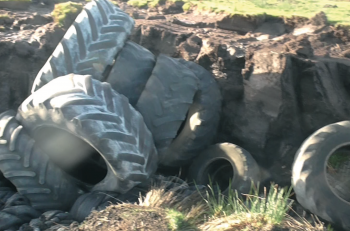
    Carndonagh is an area of outstanding natural beauty that nestles in the shadow of the Grinlieve Mountain, only eight kilometres from the designated Natura 2000 sites, Trawbreaga Bay Spa and the North Innishowen Coast. Safeguarded by the 1992 Habitats Directive both these ecological wonders are home to protected animal species and diverse wetlands. Outwardly this area seems idyllic and well-protected; however, on 4 December 2011 Sunday Life newspaper exposed Meenyollan, Carndonagh, as the location of a vast illegal tyre dump fed by KF Tyres, Corody Road, Derry (top right). The landowner, Michael McLaughlin, was also claimed to be complicit in the dumping. Nearly ten million tyres had been buried, unregulated, in the period 2008-2011 alone. At least one for everyone in the audience. It has made Carndonagh Europe’s largest illegal tyre dump. Following the Sunday Life exposé in 2011, Donegal County Council promised robust enforcement including an extensive cleanup operation. KF Tyres should have been made responsible in whole or in part for the cleanup operation Donegal County Council promised. However, seven years on, there is still clear evidence of tyres being illegally buried at this location and there is little evidence of a cleanup. The pristine fields, underpinned by tyres which leach into the meandering water table, contrast starkly with the surrounding boglands and call to mind previous violations and unseen toxicity (bottom right). Although it is difficult to find out the exact composition of a tyre, and there are lots of different types most of them include synthetic carcinogens, solvents and heavy metals, for example. KF Tyres and Michael McLaughlin escaped prosecution and in fact subsequently applied for and were granted a range of permits and planning permissions by both Donegal County Council and the Northern Ireland Environment Agency (NIEA) allowing them to legally operate at the same site. These incongruous decisions, some of which were granted in breach of the legally-man-dated sequence, reduced the promised enforcement to no more than knuckle raps. After an abortive attempt by planning consultant Jim Harley to get McLaughlin’s development deemed “exempt” from planning permission, an unlikely new wheeze was to tout it as land reclamation with secondary drainage benefit. Yet still the terms of the new permits permissions have been flouted. Photographic evidence clearly shows that illegal dumping is still going on at the site. In 2018 KF Tyres and Michael McLaughlin are still controversially involved on this site, while Donegal County Council behaves as if it is unaware of this. In 2015, Planning Permission was obtained for the use of 8448 tyres in 105 bales (80 tyres per bale) over a five- year period, suggesting even what Donegal County Council considers reasonable has been overwhelmed by illegal dumping on a much greater – indeed unconscionable – scale.   The photographic evidence (left) shows that neither McLaughlin nor KF Tyres appear to be compliant with the terms of the planning permission, which demands that the tyres that are used be baled, not loose (left, bottom right); nor do they seem to care. Moreover, Donegal County Council evidently does not appear to know what is going on. For example, after the Sunday Life article in 2011, Donegal County Council promised an investigation and robust enforcement. However, in January 2012, mere weeks after the article, Donegal County Council granted McLaughlin a five-year Waste Management Facility permit (WMP) (top right). Why? No planning permission had been granted though one is mandatory before a WMP can be issued. Without the requisite planning permission all tyres taken to Cardonagh around that time continued to be transported and dumped illegally. Jim Harley, formerly of Harley Planning Consultants, has figured in strong criticisms levelled against the Donegal County Council planning department when he worked there a decade ago. These are currently being reviewed by a senior counsel on behalf of the Department of Housing, Planning and Local Government. Harley acted as a planning consultant for McLaughlin when he was granted planning permission in November 2015. There was one condition: that he apply for a WMP. But there was an existing WMP that had been issued illegally. It was illegal precisely because it should not have been issued before planning permission was granted. The Sunday Life article stated in 2011 that KF Tyres had a WCP (waste carriers permit) with Donegal County Council to collect “end of life tyres” but it had no permission to bury tyres at Carndonagh. It is yet another anomaly that KF Tyres obtained a valid Waste Carriers Licence for the South in 2011 but no planning permission or commensurate licence for the site it operated from in Derry. It is strange that Donegal County Council neglected to contact the NIEA about KF Tyres in 2011. The NIEA went on to grant Ken Ferguson a WMP (bottom right) allegedly oblivious to the illegal dumping. This information would have been immeasurably beneficial in averting the current situation. Donegal County Council should have been monitoring the site, verifying the number of tyres being buried both by KF Tyres and McLaughlin. No assessment appears to have been made, north or south of the border, of how many Trans Frontier shipments (TFS) and what tonnage of tyres, KF Tyres declared to the NIEA it had transported between 2012 and 2015.   It is not clear how many physical border and site inspections were made by Donegal County Council and the NIEA during this period. As stated both the WMPs (previous page) were granted under Appendix II of the EU Waste Frame Directive 2008/98EC: recovery operations. R10-Land Treatment resulting in benefit to agriculture or ecological improvement; R13 – storage of waste pending (right). Amazingly there is no reference to waste tyres or indeed anything like rubber within this directive, nor to the burial of solid waste in any form. Land reclamation using tyres is deemed dangerous and illegal in Northern Ireland , but not in the Republic – yet both countries are bound by the same European Directives. Given the toxicity of tyres and the stringent legislation on their

    Loading

    Read more

  • Posted in:

    Sinn Féin alone

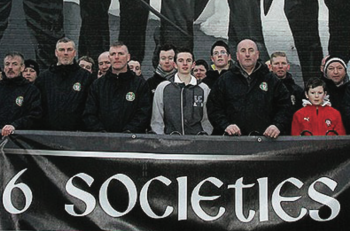
    Republicanism is fragmenting. That was  seen on Easter Sunday, when at least eight Republican groups held commemorations on Belfast’s Falls Road. At protests in the North, it is common for various ‘dissident’ groups to have more presence that mainstream Sinn Féin. That party has a much smaller activist base than a decade ago. Paradoxically, as that base has shrunk, the vote has increased. The exodus of members has not affected the vote. That was seen most starkly in last year’s assembly election for North Antrim. A councillor and 17 other activists resigned in protest when the party forced assembly Member Dáithí McKay to resign. Monica Digney, an able and respected former councillor, and one of those who had resigned, stood as an Independent. Sinn Féin’s vote increased by just under 3%. Digney polled just 435, lagging behind the Green Party. That is a stark version of trends across the north. A few years ago, even Sinn Féin strategists believed the vote had plateaued, and might even fall back. In last year’s Westminster election, Sinn Féin took 29.4% of the vote. That was a 4.8% increase in a year. The terminal decline of the SDlP has been hastened. Sinn Féin took the SDlP’s two perceived strongholds: South Down and, of greater importance, Derry. That is not to deny the importance of the exodus. There is a disillusionment with Sinn Féin. An Easter statement from Óglaigh na hÉireann prisoners sums up the dissidents’ problems: “It’s clear that presently the revolutionary Republican community appear to be facing challenging times and lack strategic direction in response to these events”. The largest single non-Sinn Féin grouping are the 1916 societies. There have spread out of their initial base in East Tyrone across the North, and into the South. They have a sizeable membership, mostly of an older generation, but they also have a small but significant membership from the post-IRA generation. They are an excellent symptom of how widespread the malaise in Republicanism is. They have engaged in some co-ordinated activity, such as calling for an all-Ireland Referendum on unity. However, their main activity is commemorations. This is the only activity on which all non-Sinn Féin Republicans can agree. They certainly cannot on a central debate for Republicans: whether or not there should be an armed campaign. Most are opposed. some, mostly from the anti-armed-campaign cohort, are becoming involved in community issues as individuals or through different organisations. There is no issue about which ‘dissidents’ can coalesce. In 1969-70, the Republican movement split into ‘official’ and ‘Provisional’ wings. (The ‘Provisionals’ became today’s Sinn Féin, while the remnants of the ‘officials’ are the Workers Party). The ‘Provisionals’ derived from the anger of many young Catholics, and a belief that the IRA had spent too much time on left-wing politics rather than preparing to defend catholic areas. This time, there is no single big issue to divide Republicans. There is a generalised unhappiness at Sinn Féin’s acceptance of Stormont and the PSNI. In some cases, unhappiness has spilled over into demoralisation. Some in Sinn Féin dismiss ‘dissidents’ as criminals. That is not to say there are not criminals using dissident groups as a cover; and others who, their war over, have turned to criminality but it is not the central case. The dissident groups are fragmented. The new IRA and the continuity IRA are continuing their campaign, while Óglaigh na hÉireann has called a ceasefire. All armed groups are riddled by infiltration by security-force agents. However, they have found a certain niche in carrying out punishment attacks. These grew by 60% between 2013 and last year. They are popular among a significant layer of the population in Catholic working-class areas. Part of the reason is the traditional hostility between the catholic minority and the police in the Northern state. Part is also that punishment attacks offer ‘quick x’ justice, without the necessity to take the time taken by a formal court system. Police seem willing to let punishment attacks continue, as long as the victims are perceived ‘hoods’. Vigilantism, though, is not a basis for building organisations that will be a serious alternative to Sinn Féin in Catholic areas. Sinn Féin could probably benefit from a bit of coherent opposition from people whose political premises, at least viscerally, it identifies with. Anton McCabe

    Loading

    Read more

  • Posted in:

    Paschal Donohoe: Minister for Finance, Public Expenditure and Reform

    I interview the charming, chatty and firm Minister for Finance in the Department of Finance on a bright Wednesday in late April. He has just benefited from a profile in the Irish Times which of course likes his supposed toughness, especially when public-sector-pay talks loom, and which quotes a senior Fianna Fáiler praising him as “the cleverest man in the room” (even when Varadkar is in it). It also notes that despite his “Hello, Everybody” manner, “Business and interest groups that come into contact with him leave impressed with his knowledge and command of his brief. These are the traits that other politicians note and envy”. Donohoe is, then, an Irish Times sort of guy. Arranging the interview was straightforward, and his handlers, particularly Deb Sweeney, efficient and unstuffy. He gave me more time than had been allocated, and a book, ‘The Value of Everything, Making and Taking in the Global Economy’ by Mariana Mazzucato (2018), as I was leaving. He was still engaging about his favourite works of literature as I was in the end ushered down a corridor and out into the sunlight. Mazzucato, in her book, claims that many advanced western countries, in particular the US and Britain, now confuse those who create value for those who extract it or destroy it, leading to impoverished and unhappy societies, soaring inequality and declining growth. I conclude the gift was well-judged. On his Political Philosophy… “My political philosophy is a politics of the very strong centre. I look at the opportunities and chances that I’ve had in life by virtue of the school that I went to and the upbringing that I’ve had. I believe that should be available to everybody in our country. I believe that, in order to make that happen, we need to have an open society and a diverse economy. I want to see an Ireland that is inclusive, that can welcome people and make them feel at home, and I strongly believe in a mixed economy. I believe we need both strong governments and strong markets and I think either on its own cannot achieve what citizens need”. On his Economic Philosophy… “My economic philosophy then springs from that. I believe in a resilient and mixed economy. I believe that markets can do some things well and I believe government can do many things well. If you look at the kinds of new economies that are being developed and the new challenges that are developing, we can only respond to them if both the State and markets play their role. We have seen, to the great cost of our citizens in particular, what can happen if markets become unbridled; and we have seen at other times in history what can happen if the State is expected to do everything; and I don’t believe either work. I believe the global balance needs further shifting at the moment – in favour of the State. I believe that we get the balance about right here in Ireland but I believe that we are going to need to continue to support supranational organisations like the European Union, like the WTO, like the OECD, to help nation states respond back to new challenges like artificial intelligence and to the de-globalisation agenda that is now beginning to develop. I believe very strongly in equality of opportunity but I’m very conscious at the moment that that credo is being challenged by developments within the market economy – if we keep on encouraging our citizens to believe they have equality of opportunity and then, generation by generation, that equality of opportunity is not realised, it poses very serious questions for citizens regarding how they feel about the State. Because if, from generation to generation, that opportunity is not realised or even offered the prospect of citizens either blaming themselves or the system and the State for not offering that agenda poses really grave challenges for how we organise our liberal democracies. I unfortunately believe some of those risks are beginning to materialise elsewhere at the moment”. On equality of outcome… “I think equality of outcome is something that is very, very difficult to achieve because I think it runs against the grain of initiative and individuality that I ultimately believe has a very important role to play in our society as well”. As to whether equality of opportunity is desirable… “I think equality of opportunity is more desirable than equality of outcome and certainly in the policies I try to follow and implement in the two jobs I do at the moment it is about trying to realise opportunity. But I’m conscious of the fact that an equality of opportunity agenda doesn’t speak to, or doesn’t help, citizens who are at the margins of our society; and for those citizens a more interventionist approach is necessary on behalf of the State I should say”. As to whether equality of opportunity can be unfair to the extent that people’s capacity for grasping opportunity is sometimes determined by luck and not entirely a product of effort or initiative… “And this is why I accompany my support of equality of opportunity with a strong support for the necessary role for an enabling and strong State. The difficulty that the equality of opportunity agenda has is when it runs into the chance of birth or runs into intergenerational inequality, and this is why I believe we need an active and enabling State alongside regulated and flourishing markets. I would be supporting the interventions that we have at the moment. I do not think that the agenda of positive discrimination is one that can command ongoing support here in Ireland and so this is why I support the State playing a more active role in the management of land, why I support for example property taxes. It’s why I support a a progressive tax code. Because without having those things in place you can’t offer the support that is needed to deliver the funding for an active State”. On difference in emphasis from Michael Noonan’s… “As

    Loading

    Read more

  • Posted in:

    Ireland, Italy and the Disclosures Tribunal

    Leonardo Sciascia was an Italian political journalist, an elected radical member of parliament and the most prominent anti-mafia critic. All of this features in his famous detective novels which are in fact anti-detective novels or works of political observation. Coupled with his masterly analysis of the assassination by the Red Brigade of the Christian Democrat conciliator and former Prime Minister Aldo Moro they amount to a sustained critique of Italian and Sicilian political and cultural life. They reflect the complex interstices of corruption and collusion between extreme-right-wing Catholicism, organised crime and the shadowy self-protection syndicates of big business, politics, a malevolent state bureaucracy and crime. His books show the lethal effects of innuendo, smoke, mirrors and sighs, the nefarious rumour mill, shadows. Sciascia was a specialist in the mafia and he demonstrated how they kill and destroy. First they isolate, disempower and then denigrate. They in effect demonise their prey. And those who seek to investigate them, such as Judge Giovanni Falcone, who act on principle are destroyed in the process. This is exquisitely detailed in ‘Equal Danger’, his best book. In Sciascia’s fiction, it is the detective, not the murderer, who is isolated and suspected. Ironically in the end Sciascia attacked the crusading judges as putting civil rights at stake in an article, when he was dying, that irredeemably punctured his reputation, by attacking Falcone as a celebrity judge. This is deeply relevant to Ireland. Our mafia are our corrupt politicians, bankers and lawyers and the toxic relationship of our shadow state of governance between the police and the justice department. Those who challenge corruption or blow the whistle are reputationally destroyed, personally attacked, framed, driven to self-destruction or simply disposed of. Ireland is Italy and “equal danger” a cautionary text. The smearing of the state knows no boundaries and frequent collusion with Tulsa a criminal conspiracy maintained by many lawyers who should be disbarred. Another Sciascia theme, particularly evident in his most famous text, ‘The day of the Owl’ is the Sicilian trait of anomie or indifference. A shrug of the shoulders. It is what it is. Life moves on. Principle, justice and the truth are a waste of time. In controlled societies such as Ireland and Italy Sciascia’s books show the lethal effects of innuendo, smoke, mirrors and sighs, the nefarious rumour mill, shadows, in Italy trivialisation amounts to a resigned admission that the victims of crime had it coming to them in some obscure way. It betrays a desire for yourself not to go the same way. Being principled in an unprincipled society is very difficult. We know more than 10 black sacks of shredding left the office of the Commissioner under the supervision of a superintendent who has given evidence twice already to the Tribunal. The phone of the two past heads of national intelligence, Callinan and Ms. O’Sullivan are gone…vanished, destroyed. Yet no issue of the destruction of crucial evidence seems to be of concern to the Tribunal. It was the husband of the former Commissioner O’Sullivan who was appointed to take charge of the investigation into Superintendent Taylor. The phone of the Superintendent was taken but that crucial evidence too is lost. It seems to be simply a matter of no consequence. A judge whose orientation in private practice was prosecutorial and who, on the bench, has been somewhat indulgent of changes to evidential exclusionary rules to the advantage of fact-gathering gardaí, risks steering a Tribunal away from the glaringly obvious criminality of the highest level of the Department of Justice and the police. Moreover Maurice McCabe is represented at the Tribunal by former Minister for Justice Michael McDowell SC, a long-time and visceral political defender of the police and law and order. If I were McCabe I would contemplate refreshing my legal representation and wonder how the now ascendant narrative is that a cock-up rather than obvious state criminality smeared him. He should dwell on whether it was in fact appropriate for him to concede that the evidence established that the inclusion of the false allegation against him of rape in the 2013 Tusla report “was some form of cut and paste error”, and that the error was not the result of any deliberate action or ill will. And he should consider how the damning evidence of the press secretary Dave Taylor was not addressed first, as the Tribunal’s first module, as dictated by the terms of reference; and how the sequence of modules was altered so the less clearcut Tusla model was heard first. Instead the Tribunal opened with an arbitrarily selected series of smokescreen narratives implying a cock-up by Tulsa, and culpability for outlying zealot Callinan perhaps. Noel Waters, former Secretary General of the Department of Justice, has suffered from amnesia. In his evidence to the Tribunal he declared he could not remember, on nearly 50 occasions. Most damningly, he spoke to Nóirín O’Sullivan at a crucial moment during the O’Higgins Commission which in 2015 was looking at allegations of poor policing in Cavan/ Monaghan made by Sergeant McCabe, phone records indicate. However, neither Waters nor O’Sullivan can remember the 14-minute call on May 15, 2015. The crucial moment was when O’Sullivan’s lawyers were asked by the commission to confirm that they had been instructed to attack Sergeant McCabe’s motivation, and the commission adjourned briefly so that she could be contacted. The Tribunal had previously heard that O’Sullivan “sought time to speak to the Department of Justice” before confirming her original instructions. The Department has maintained neither it nor then Minister for Justice Frances Fitzgerald had prior knowledge of, or input into, the legal strategy. Waters said he could not remember the call, and insisted the Department had played no role in the strategy. When it was put to him by Tribunal counsel, Diarmaid McGuinness SC, that it was reasonable to assume he and O’Sullivan discussed what was occurring at O’Higgins that day, Waters replied: “I have to say in response that I have no recollection of that at all”.

    Loading

    Read more

  • Posted in:

    Ourland

    The return of the Irish economy is not an accident. The fact there were no riots when in collapsed in 2008 in a sea of imploded vested interests was no happenstance. The fact this country has divided power since its instigation between Fianna Fáil and Fine Gael wasn’t just luck. The repetition of the failures of the national spatial strategy in the National Planning Framework was predestined. The failure of any party to take on the rights of property and make them subject to the common good isn’t a random thing, it’s determined. This country isn’t Germany which went through industrialisation, Nazification and deNazification, and learnt that politics and the common good is a serious business. Nor are we like the US which takes itself so seriously that it can elect a politician on an America First platform, elect someone who’s utterly wrong about everything. Or the UK which tossed a reputation forged over a millennium for empirical pragmatism into the fires of Brexit because it had a serious gripe with Institutional Europe (and Johnny foreigner). Ireland lost half of its people in the famine five generations ago. There is a strong folk memory of apocalypse which imbues a national fear that workaday issues aren’t important, that politics doesn’t really matter, that anything good is transient, that there’s no point planting a tree, a flower. We also suffer from the residual malaise of the colonised. For 700 years decisions were taken not in the common good but in the interest of an alien political entity. Service for the government and its establishment was not service for the common good. This country is sceptical about the motivations of its politicians, and its politicians do not see their roles as ethical or principled. This can generate corruption. We also suffer from the overhang of over a millennium of pious religious adherence though arguably we are overcoming that fast, almost – though not quite – too fast. Ireland is not a serious country like Germany. Yes we’re big on the GDP that every country wants. Certainly, we can do capitalism if you ask us too, but it’s only because that’s a doctrine that depends on an independent competitive detachment. You don’t have to buy in to anything particular to practise capitalism. We’re good at giving international commerce and its IT companies and vulture funds what they want: from planning permissions to an utterly unethical system of corporate taxation. You never hear anyone in public life talk of morality or ethics, you rarely hear mention of the public interest or the common good. Or philosophy: we’re sort of middlebrow. It is taken for granted that the combined private interests of all somehow amounts to the public interest. It is assumed the needs of the present outweigh concerns for the future. We don’t have a language for ugliness even though we forge it everywhere. We don’t care about planning, we couldn’t give a fiddlers for the environment. We’re the worst climate-change offenders in Europe, one of the few EU countries to miss its 2020 emission reduction targets under the EU effort-sharing decision, the worst per person in Europe. We love to litter. We’ve filled the countryside with unsustainable houses, allowed Dublin to leapfrog into much of Leinster. We’re going continue doing it. It would be draconian to tell anyone they can’t actually build somewhere. Climate, the environment and planning are at the sharp edge of our psychological weaknesses. We understand when someone fleeces the public purse – sure we’d do it ourselves. Even the parties of the left can’t bring themselves to support a property tax. For that would impinge on “the family home”. Does Richard Boyd Barrett not realise that that phrase betrays a millennium of weakness? Strangely we never hear that other assets shouldn’t be taxed – that stocks and shares shouldn’t be taxed because they’re “the family portfolio” but mention the family home in Ireland and a ‘Land League’ and a host of people who don’t realise they’re not leftists will come running to your aid, in your home or in the courts, even if you’re looking to remain in a gilded mansion, even if you have three homes. Charlie Haughey, Bertie Ahern, Enda Kenny, have been replaced with shiny new faces – Leo, the Simons, Eoghan. These tyros may have had radical, progressive or interesting ideas before they got into politics but it’s not an accident that they get beaten out of them by the time they stand for election, for the party. They’ll toe the party line, not the thinktank line on everything from housing to the drugs crisis to healthcare. They bought into Fine Gael (it might as well have been Fianna Fáil) atavistically. Sit on a bus in England or the US and the quality of the conversation overheard (‘innit?’, ‘So I’m Like’) shocks and bores. Not here. You’ll never meet a complete moron in Ireland. The left may not yield a property-tax agenda but then again the right hasn’t managed to muster much of an anti-immigration or even privatisation agenda. Most Irish people have lots of common sense, a fairly global outlook, a sense of humour and a cultural hinterland of some sort. Ireland isn’t serious enough to keep its quality of life as high as that in countries where the common good is the transcendent driver. But then again it’s not serious enough to say no to gay marriage – sure everyone likes someone who’s gay. Or serious enough to elect a Fascist or a tub-thumper. Ireland is a peculiar place. It’s not the worst place. But its history holds it back, and will for generations to come.

    Loading

    Read more

  • Posted in:

    Oxymoron

    By 2040 we expect that an additional one million people will live in Ireland, an additional two-thirds of a million people will work here. An ageing population and smaller family size mean that we will need an additional half a million homes to accommodate this growth. Project Ireland 2040 purports to address this. It consists of the National Planning Framework which sets out a spatial strategy for Ireland, to accommodate in a “sustainable and balanced” fashion these significant demographic changes. It is the overall Plan from which other, more detailed plans including city and county development plans and regional strategies will take their lead. Learning from past experience, the NPF is backed up by an infrastructure investment programme, the National Development Plan. This National Development Plan sets out the significant level of investment, almost €116 billion, which will underpin the NPF and drive its implementation over the next ten years. €91 billion in Exchequer funding for public capital investment has been allocated and will be supplemented with substantial investment by commercial State Owned Enterprises. This increased level of resources is expected to move Ireland close to the top of the international league table for public investment, from a low post-crash base. In short, the State’s infrastructure investment – the money – should be guided by and follow the Plan. That is what makes Project Ireland 2040 different and a significant innovation in Irish public policy. What is not different is that it does not have teeth, particularly to stop market-driven development that is incompatible with the vision. Project Ireland 2040 is about enabling all parts of Ireland to achieve their full potential. It seeks to move away from the current, developer-led, business as usual pattern of development, to one informed by the needs and requirements of society. This means seeking to disrupt trends that have been apparent over the last fifty years and have accelerated over the past twenty. It purports to aim to ensure that rather than have excessive population growth focused on Dublin – as is the current trend – that 75% of all population growth occurs in the rest of the country.The immediate priority is to increase overall housing supply to a baseline level of 25,000 homes a year by 2020, and then a likely level of 30-35,000 annually up to 2027. 112,000 households are expected to obtain social housing over the decade. A new €2 billion Urban Regeneration and Development Fund will aim to achieve sustainable growth in Ireland’s five cities – Dublin, Cork, Limerick, Waterford and Galway – and other large urban centres, incentivising collaborative approaches to development by public and private sectors. It aims to secure at least 40% of future housing needs by building and renewing within our existing built-up areas, whether they be in the many villages and towns in need of regeneration or in our cities and larger towns where there are also huge opportunities for city and town centre regeneration. Of course the corollary of this is that an unsustainable 60% of future housing need will be met on green-field sites. It targets a level of growth in the Northern and Western, and Southern, Regions combined to at least match that projected for the East and Midland Region. It will support the future growth of Dublin as Ireland’s leading global city of scale, by better managing Ireland’s growth to ensure that more of it can be accommodated within and close to the city. It supports ambitious growth targets to enable the four cities of Cork, Limerick, Galway and Waterford to each grow by at least 50% to 2040 and to enhance their significant potential to become cities of scale. It recognises the extent to which Sligo in the North West and Athlone in the Midlands fulfil the role of regional centres. It recognises Letterkenny in the context of the North-West Gateway Initiative and Drogheda- Dundalk in the context of the Dublin- Belfast economic corridor. It seeks to strengthen our rural fabric, by reversing town/village and rural population decline, by encouraging new roles and functions for buildings, streets and sites, and supporting the sustainable growth of rural communities, to include development in rural areas. That’s one- off housing. Anyone who follows this will see that there’s not much sense of anything being ruled out, and indeed almost everything seems to be ruled in. That suggests it won’t all happen. And the determinant of what happens and what doesn’t will, as usual, be the market – which will skew to Dublin and its hinterland, and of course one-off housing whose site costs are negligible (for those lucky enough to own rural land) but which pose difficulties for sustainability: economic, social and environmental. It costs more to service far-flung housing with broadband, and everything else. One might quibble with elements of the plan. Dr Edgar Morgenroth – Professor of Economics at DCU and a primary author of the document – said that plans for the €850m motorway between Cork and Limerick would undermine the proper growth of “second tier” cities in Ireland. He rejected claims by An Taoiseach Leo Varadkar that the motorway would encourage the cities to grow faster saying it would instead lead to sprawl. He told ‘Morning Ireland’ it was important “to put the infrastructure into the cities, not between them”. “Once you put the motorway between two cities what you’re doing is getting more sprawl. So you’re undermining your own strategy”, he said. Morgenroth also said that building a new motorway undermined a commitment by government to reduce carbon emissions. The NPF will also have “statutory backing” overseen, quasi-independently, by the new Office of the Planning Regulator (OPR) – a key recommendation of the Mahon Tribunal.   Unfortunately this particulator Regulator will not regulate but rather advise others whose motivation may be political and short-termist. A regulator who does not regulate. There has been much light-free heat, led by Sinn Féin which even claimed to be seeking a legal opinion, about the failure of the government to put the NPF to a parliamentary vote but instead to include

    Loading

    Read more