Ireland

Random entry RSS

  • Posted in:

    Uber persists in lobbying for entry into Irish taxi market

    New documents show how Uber is using the transportation struggles faced by disabled people to its own advantage By Conor O’Carroll Uber is pushing to enter the Irish market and is using the recent changes to taxi licence rules and fewer new taxi drivers to present themselves as a suitable solution. Documents released to Village Magazine under Freedom of Information (FOI) legislation show how representatives from Uber, including General Manager for Uber Ireland, Kieran Harte, presented the company as “a solution to the taxi crisis” in a meeting in late June of this year with John McDonald, a policy advisor at the Department of Transport. In June last year, then-Tánaiste, Leo Varadkar TD, suggested that Uber and Lyft could be allowed access to the Irish market to help with taxi shortages No meeting minutes were provided to the FOI request, leaving no record of what was specifically discussed, but presentation slides provided by Uber were released. They show Uber’s attempt to highlight the decline in taxi supply over the previous decade. While there has been a consistent decline since 2013, the numbers exiting the taxi market are far from dramatic. The largest drop occurred around the time of the pandemic when the need for taxis was substantially reduced. Since then, numbers have begun to recover, with an upward trajectory evident over the last number of years. Uber attributes this “decline” to the requirement for all newly licensed taxis to be wheelchair accessible. They show that the percentage of wheelchair-accessible taxis of total licenses has reached 20% as of May 2023, equating to just over 3,400 wheelchair-accessible vehicles. The presentation continues, however, by suggesting that the rise in accessible taxis will not continue due to the limited availability of suitable vehicles available for drivers to purchase. They also point to the ageing demographic of drivers, with the vast majority aged over 50. This claim is rebutted somewhat by the announcement in April by the National Transport Authority (NTA) that this year’s Wheelchair Accessible Vehicle grant scheme has increased funding to €3 million following “a high level of interest”. It is unclear what solution Uber is offering. Ride-sharing apps, such as Uber, rely on their drivers providing their own vehicles and so Uber drivers will face the exact same obstacles in sourcing and financing their Uber cars as new taxi drivers do. Thus, the only way that Uber could possibly add capacity to the public hire/taxi market is by allowing its drivers to use vehicles that are not wheelchair accessible. Nonetheless, Uber persists, arguing that the current policy will lead to less reliability for wheelchair users as they compete with more people for fewer taxis is supported only by anecdotal evidence, using a selection of complaints sourced from social media. Uber’s solution to this issue is predicable; address the supply imbalance by opening up the Irish market to private ride-share apps. An email sent to McDonald after the meeting suggests that this proposal has received some attention, with McDonald supposedly engaging with officials at the Department of Transport and NTA. The result of this engagement is, as yet, unknown, however, it is clear that Uber has not yet given up on its relentless efforts to force its way into the Irish taxi market following its ban in 2017. In June last year, then-Tánaiste, Leo Varadkar TD, suggested that Uber and Lyft could be allowed access to the Irish market to help with taxi shortages. This undoubtedly provided some hope to Uber that their request would be listened to by those in the halls of Leinster House. The trove of leaked company records known as the Uber Files released a month prior to this announcement by Varadkar, highlighted the intense lobbying campaign undertaken by Uber in the lead-up to the 2016 General Election. They show how the company believed they had influenced a Fine Gael manifesto commitment from then-leader Enda Kenny, to embrace a “sharing economy”, placing Ireland at the forefront of digital innovation. This Fine Gael commitment was short-lived, however, as officials at the NTA ruled that Uber’s business model was not suitable for Ireland’s economy. With all the issues arising from the gig economy in Ireland over the past number of years, as reported in this magazine, the NTA’s decision to refuse Uber an exemption from the regulated taxi industry, allowing it to operate as it sees fit, has stood the test of time. Even as Uber continues to lobby for a position in the taxi market, Village believes a better solution to the taxi “crisis” would be to invest in accessible, reliable and green public transport for all, reducing the strain on the industry and leaving accessible options available for those that require them most.

    Loading

    Read more

  • Posted in:

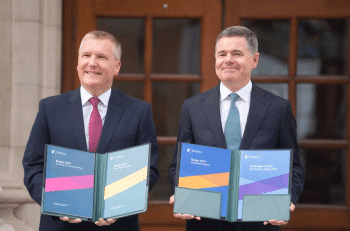
    Landlords the big winners from Budget 2024

    McGrath’s first budget delivered significant tax breaks for landlords, a risky move with elections looming By Conor O’Carroll After much speculation, Fianna Fáil TD and Minister for Finance, Michael McGrath, delivered his first budget on Tuesday, ahead of what could be a hugely significant year for Irish politics. Local and European elections are already scheduled for next June, and the prospect of an early general election looms large on the horizon, meaning this may be the only chance McGrath gets to impress voters. However, while a raft of temporary measures to tackle the cost-of-living crisis were introduced or extended, it was landlords who are probably the happiest with today’s budget, with large tax breaks provided. Tax on rental income up to €3,000 is to be “disregarded at the standard rate”, equating to a roughly €600 tax break. Should the landlord remain in the market for four years, the rate will increase up to €4,000 in 2025 and €5,000 in 2026 and 2027, bringing the value of the tax break to landlords up to €1,000. Leaving the market will see any tax relief recouped. It’s possible that the tax breaks provided to landlords will also have a knock-on effect on housing prices This comes on top of the income tax cuts which saw the reduction of USC and an increase in the cut-off for the standard rate of tax. The rationale behind this cheque to landlords is to incentivise their continued presence in the rental market and prevent the mass exodus that has been muted in the media. However, the numbers behind this exodus don’t stack up. While the number of registered landlords with the Residential Tenancies Board (RTB) has been dwindling for many years, the most recent Census results show that the number of landlords has grown by 7% since 2016. The discrepancy between the Census and RTB data is over 50,000, suggesting that landlords aren’t leaving the rental market at all and many are instead not registering with the RTB. Speaking before the Oireachtas Committee on Housing today, Dr Michael Byrne, an Assistant Professor at the School of Social Policy in UCD, said the lack of concrete data makes it difficult to assess how many landlords are fleeing the market, as has been suggested. For renters, on the other hand, an increase to the Rent Tax Credit from €500 to €750 will be welcomed, provided it isn’t eaten into by subsequent rent increases. The latest RTB Rent Index for Q1 2023 shows that nationally, the average rent in newly registered tenancies was €1,544 per month, a year-on-year increase of 8.9%. Relief of €62.50 a month isn’t going to make much difference to those forking out over €18,500 a year just to put a roof over their heads. There was also no increase in capital spending on housing, however, with an underspend of €1 billion intended for social and affordable housing between 2020 and 2022, money doesn’t seem to be the issue causing housing targets to be missed. For prospective buyers, the Help-to-Buy scheme has been extended through to the end of 2025, though with property prices increasing by 1.5% in the past 12 months to July, affordability remains a significant issue. It’s possible that the tax breaks provided to landlords will also have a knock-on effect on housing prices. Writing for RTÉ Brainstorm last September, Dr Bryne says that “tax breaks for landlords might seem an obvious way to increase supply of rental properties, but it can also increase demand for housing”, leaving those in the rental market seeking to escape in competition with landlords seeking to invest. Elsewhere in the budget, the allocation to the Department of Health has been reduced by just under €1 billion, following an overspend of similar amounts this year. However, last year’s figure included €2.6 billion in disability services, which has since become the responsibility of the Department of Children. In his interview with Village (October – November issue) prior to the budget, McGrath said that he was “brassed off” at budgetary overrun and stressed the importance of improving results at the Department. Much of this year’s health budget is being used to maintain current levels of services. However, with almost 550 patients waiting on trolleys today according to the INMO, ballooning waiting lists for appointments and diagnoses, maintaining current levels is far from satisfactory. Other budgetary headlines announced today include further energy credits, a significant jump in the minimum wage to €12.70 and tax relief on mortgage interest up to €1,250 per property. There was no word on the rumoured RTÉ bailout, though if TV license receipts continue to fall, this may come later in the year. An increase to the Rent Tax Credit from €500 to €750 will be welcomed, provided it isn’t eaten into by subsequent rent increases Despite some much-needed measures to blunt the impact of the cost-of-living squeeze, McGrath’s budget seems measured and controlled as opposed to lavish. The coup for landlords will certainly provide fuel for the government’s detractors and the lack of change in housing policy will put the Department of Housing under significant pressure to deliver. With elections on the horizon, this may be the last chance they get.

    Loading

    Read more

  • Posted in:

    Unannounced special advisers push total salaries towards €6 million

    By Conor O’Carroll The Department of Education has confirmed to Village Magazine that three as-yet-unannounced special advisers are employed at the department. Áine Doyle and Eoin Murphy are employed as special advisers to Minister of Education, Norma Foley TD, while Diane O’Gorman is employed as a special adviser to Minister of State, Josepha Madigan TD, a department spokesperson said. None of these appointments have been publicly notified in Iris Oifigiúil, or through the release of the statutory instrument confirming their appointment. They also don’t appear on the government’s list of special advisers. No explanation was given for why the advisers, which are required to be officially reappointed following the rotation of Taoiseach last December, have not been made public yet. Another special adviser appointed in April has also yet to see any official announcement. Eoin Delaney, special adviser to the Minister of State at the Department of Foreign Affairs, Seán Fleming TD, was appointed on April 10th and given a salary of almost €75,000. Despite the lack of public announcement, Delaney appears to have begun advising, accompanying Fleming on a visit to Killeshin National School in Laois a few days after he was appointed. A spokesperson for the Department of Foreign Affairs said, “Mr Delaney’s appointment has progressed through the standard process as required by [Section 11(1) of the Public Service Management Act (1997) and the Ministerial Appointments for the 33rd Dáil guidelines]”. “The order for his appointment has been finalised and will now proceed for official approval and publication”, they continued. Last month, following the announcement of Taoiseach Leo Varadkar’s eighth special adviser, Village reported that a substantial delay often exists between appointment and official announcement. This trend continued recently, when two more announcements were made, confirming special advisers for Minister for Further and Higher Education, Simon Harris TD and Minister of State at the Department of Finance, Jennifer Carroll MacNeill TD.  Official notice of these appointments was provided, however, in the case of the Department of Further and Higher Education, no statutory instrument (and name of the appointee) has followed. Over six weeks have elapsed since the official notice in the July 28th edition of Iris Oifigiúil. No explanation was given for this delay by a department spokesperson, stating that “it is expected that the relevant Statutory Instrument will be finalised shortly”. As for the Department of Finance, the statutory instrument was released, showing that Stephen Foley, Jennifer Carroll MacNeill’s new adviser, was appointed on 13 March 2023 and announced 151 days later. A spokesperson for the Department of Finance said that “there was an administrative oversight within the Department of Finance HR” that led to the delay. They claimed that “HR was not aware a separate statutory instrument was required for the specific individual to be named”. These new appointments, along with those from the Department of Education, bring the total number of special advisers to 60. It is also unknown how much the new appointees will earn, though the current average salary for special advisers stands at over €100,000. Following queries made by Village Magazine in July as to why three special advisers – Patrick Cluskey, Fiach Kelly, and Jim D’Arcy – had not been added to the official government list, a spokesperson committed to updating the list to reflect the uncovered appointments. At the time of writing, however, the list has still not been updated and is now also missing a further six special adviser appointments. The salaries of these nine appointments are likely to push the total cost towards €6 million annually, though the true figure won’t be revealed until the government updates their list. The current rules surrounding special advisers stipulate that Ministers, other than the Taoiseach, Tánaiste and party leaders, may not appoint more than two special advisers. The appointment of Simon Harris’ new adviser brings every government minister to the maximum of two special advisers. The rules also state that Ministers of State may only appoint one special adviser, though appointing two is permitted provided that they regularly attend meetings of the Government. Just two Ministers of State, Hildegarde Naughton TD (Department of the Taoiseach – Chief Whip) and Pippa Hackett TD (Department of Agriculture) have appointed two special advisers, with ten others settling for just one.

    Loading

    Read more

  • Posted in:

    “The thought of being homeless again is terrifying, it gives me nightmares”: Students struggle for college accommodation

    By Ava Liange After two consecutive years of COVID-19, online learning and postponed exams, the housing crisis is once again the main obstacle that prevents students from pursuing their studies. With the start of the new academic year just around the corner, it is becoming increasingly challenging for students to find accommodation near universities. Many are confronted with the choice of commuting several hours a day to access their course, paying extortionate rent for on-campus accommodation, or turning to unregulated ‘digs’ accommodation. Faced with these choices, sacrifices on affordability and living conditions are often made. “We’ve had to deal with mould and rodents”, Jamie Clarke, an Atlantic Technological University (ATU) student, explained to Village Magazine. “[Our landlord] said he’d paint the house with anti-mould paint and call in an exterminator, but they never came back to check in and it didn’t work so we had to deal with it ourselves”. The housing crisis has become a great source of anxiety for students “Every summer it’s like a déjà vu all over again as we wonder just how much worse matters can get”, says Molly Greenough, President of the Students’ Union at University College Dublin (UCD), following the release of their latest Accommodation Report. According to the new figures, around two-thirds of students pay up to €750 a month for student accommodation, considerably higher than a national average of €469 cited in a recent Higher Education Authority study. “The acute shortage of beds is starting to have a seriously worrying impact on the pursuit of education”, continued Greenough, with the report highlighting how many students are forced into the private rental market where they pay market rates and compete with working professionals. Due to inflationary pressures on the rental market and a lack of options for on-campus accommodation, more and more students are drawn to ‘digs’, where students rent a room in a house where the landlord lives. While often times cheaper than the alternative, these arrangements leave the students with very few rights. ‘Digs’ don’t fall under the remit of the Residential Tenancies Board meaning there are no minimum physical standards that the property must comply with and the restrictions on rent increases for other private rented accommodation do not apply. Students have reported being denied access to facilities or certain areas of the house, landlords invading their privacy by entering their room unannounced or when they aren’t there, and being hit with unnotified rent increases. One student living in ‘digs’ last year described the experience as being treated like a burden rather than a person, while others said they felt “infantilised”. The impact of this search for accommodation can be draining on students’ mental health. “There’s just a period of time when you’re searching for a house, and you’re losing time you could use doing assignments”, says Jamie. “It definitely affects your energy levels and how you’re able to focus on things”, he continues. On top of affecting their studies, the housing crisis has become a source of anxiety for students. “The thought of being homeless again is terrifying”, says Brigid MacBrough, another student from ATU, “it gives me nightmares”. Students who have to commute spend a large amount of time and money each day and find themselves exposed to anxiety as well, “The last year of college I tried to find accommodation, but I couldn’t so I had to commute for three hours a day”, says Dawid Blasevac, a former student. “I hated it, that on top of stressing about finishing the course and the stress of finding a job after. I did feel incredibly garbage after each day”. Many students are forced into the private rental market where they pay market rates and compete with working professionals There seems little sign of improvement either, according to Aiobhe O’Brien, Welfare Officer at the University College of Cork. This crisis is a burden “for students at any given year”, she explains. “It is becoming an increasing problem because nothing is changing, it’s getting worse on the number of rooms but also on how much they’re charging per room…there are so many scams, landlords say they’re out of the country and just ask for the money”. The lack of options leaves some students wondering whether they would be better served going abroad to study. Brigid is one student who has concerns about continuing with her studies. While thinking of doing a master’s in Dublin she “considered going abroad because the cost of living as a whole would still be cheaper”. With the housing crisis having reached a point where students have to choose whether they want to move abroad to pursue their studies or do so in Ireland at an excruciating price, it’s clear that something has to change soon before Ireland loses another generation of young people to emigration.

    Loading

    Read more

  • Posted in:

    Environmental Protection: More Than A Good Idea?

    Caroline Hurley argues that the EPA can and should be doing more to protect Ireland’s vital environment and biodiversity. Situated between the North Atlantic’s main storm tracks, Ireland has always been vulnerable to the weather. In the Royal Irish Academy’s 2020 collection of essays on Climate and Irish Society from prehistoric times, John Sweeney, a Professor of Geography at Maynooth University, explains that while the country was historically a prisoner of climate, struggling to ensure sufficient food, fodder and fuel, the relationship is now reversed. Irish society has lagged in confronting climate change but is now waking up with better monitoring, more public awareness, activism, and international agreements. Environmental protection makes multiple demands. As natural ecosystems degraded during the twentieth century, international climate bodies such as The Intergovernmental Panel on Climate Change were established. Five years later, the Irish Environmental Protection Agency (EPA) was founded in 1993, following the enactment of the EPA Act 1992 and the completion of the first national environmental impact assessment. What Does the EPA Do? According to its website, the EPA commits to delivering good environmental outcomes, based on the best knowledge, regulation, and advocacy. It conducts R&D, issues licences, and is the national body for environment enforcement, strategic review, and water management. As an EPA staff member explained: “We provide knowledge through targeted and timely environmental data, information and assessment to inform decision-making. And, we work with others to advocate for a clean, productive and well-protected environment”. The EPA measures the quality of air, drinking and wastewater, freshwater and seawater, and shares guidance on radiation, noise, climate change and the circular economy. In terms of services and regulated activities, the EPA’s wide remit includes authorising activities impacting the environment or human health. “We carry out monitoring of the quality of our air, our freshwater, groundwater and marine waterbodies and our use of natural resources. Through our research and development programme, we are generating the knowledge and expertise needed to protect and manage Ireland’s environment”. The dearth of environmental representatives, including EPA members, on key State Boards significantly reduces the chance of changing the business-as-usual narrative However, these assurances were challenged by Gerry McGovern in a two-part report on mining published by Hot Press last April, revealing that 28% of the Republic’s total land area is currently cleared for mining prospecting. McGovern states that “A normal member of the public, stressed out with enough worries, will instinctively assume that if the EPA thinks it’s good for the environment, or doesn’t object to it, then everything must be ok…those illusions were badly shaken by almost everyone I spoke to who is opposed to new mining licences being handed out in Ireland”. In 2018, Village highlighted contamination of the Silvermines area and called for a Superfund to clean up 450 polluted sites around the country. After talking to people affected by pollution of land, air and water, particularly in Tipperary and Limerick, McGovern warns of the hazards of light-touch regulation: “The primary role of the EPA is to support government policy. And government policy is to encourage and facilitate mining. As a result, the EPA ends up in the curious – and many would say contradictory – position of having to defend mining activities and interests”. The EPA claims to be a technical rather than political body. Although nominally independent, it derives funding from both government and industry licensing fees. Largely, for now, the EPA generates information for others making decisions, rarely taking preventive or protective action yet, despite its mission statement. If EPA resources are being mobilised for goals besides and perhaps antithetical to environmental protection, the problem of decarbonisation logjams makes more sense. Despite the organisation’s expert teams qualified to be watchdogs and leaders, restrictions mean it may be left to precarious independent researchers to expose truths and demand change. Meanwhile, silent policy affords cover to get rich quick merchants who have no quibbles about inflicting long-lasting environmental ruin. Limits of the EPA The dearth of environmental representatives, including EPA members, on key State Boards, such as Teagasc and the IFA, significantly reduces the chance of changing the business-as-usual narrative. Given the crisis unfolding before us, every policy and decision made across the public-private spectrum should be subject to environmental impact analysis. Conflicting considerations of consequences for wildlife are illustrated by the ESB’s plans for hydroelectricity, and laying of astroturf pitches around Dublin. While the EPA can assess toxicity levels and air quality, for example, it is limited in uncovering the potential health implications of its assessments: “Any research, studies or investigations into the risk or health implications associated with exposure…is a public health matter and so it would be dealt with by public health officials or researchers in this area, which is not within the remit of our organisation”. The problems continue underwater too. Earth scarring by mining on land is more visible than the rapidly spreading technology of sea mining. This industry is already inflicting environmental damage. Interfering with water routes interferes with biodiversity. Offshore wind farms are not exempt from negative impacts on ocean life either. According to a 2019 OECD report on pharmaceutical residues in freshwater: “Laboratory and field tests show traces of oral contraceptives causing the feminisation of fish and amphibians, and residues of psychiatric drugs altering fish behaviour…[and] antimicrobial resistance”. A 2022 paper for the Society of Environmental Toxicology and Chemistry Journal reinforces these points: “Overall, the results show that API (active pharmaceutical ingredients) pollution is a global problem that is likely negatively affecting the health of the world’s rivers. To meet the United Nations’ Sustainable Development Goals, work is urgently needed to tackle the problem and bring concentrations down to an acceptable level”.  Crayfish studies illustrate biodiversity imbalances caused. Levels of carcinogenic chemicals in drinking water are raising concerns too. Researchers have discovered microscopic plastic particles in the fats and lungs of two-thirds of the marine mammals in a study of ocean microplastics. Challenges mutate and multiply. The Environment of the Future? With transnational corporations outgrowing countries, the structural governance

    Loading

    Read more

  • Posted in:

    Councillor’s son found double-dipping in rental market

    By Conor O’Carroll The son of a Sligo County Councillor and former Cathaoirleach has been found advertising a property on Daft.ie to students during the week and to tourists on Airbnb during the weekend. James Clarke, son of Independent Councillor Michael Clarke, advertised the property last week on both sites before quickly removing the listings as it began to attract interest online. The advertisement features one room with three bunk beds and another with two bunk beds, with two further rooms with double beds bringing the total capacity to between 12-14 students. For €400 each per month, the students would be required to vacate the house at 12pm every Friday to make way for the Airbnb bookings, before being permitted to return to the property at 4pm on Sundays. Village confirmed that the property did not have planning permission by geo-locating the property from images online and cross-referencing with Sligo County Council’s planning files. This property is just one of Clarke’s, with a further two properties listed on Airbnb in Sligo. One of these, which he “co-hosts” with his mother, Siobhan Fallon, has been converted from Fallon’s hairdressing salon. The property has been split into three separate listings on Airbnb, with guests able to book the upstairs apartment, the downstairs apartment, or the entire property. At the end of last year, Fallon received retention planning permission for a change of use to short-term letting despite falling within the rent pressure zone. Sligo County Council has ultimate responsibility for planning permission and decides each application on a case-by-case basis. However, official government guidance to local authorities on providing short-term letting planning permission states that “the planning authority will consider whether the property is situated within a rent pressure zone, an area experiencing high rent inflation and whether there is a sufficient supply of rental properties available for longer-term rental in the area”. It continues, “in areas of high housing demand it is unlikely that permission would be granted”. At the time of writing, there are just two properties available to rent in Sligo Town on Daft.ie, compared to over 60 on Airbnb. Sligo County Council did not respond to a request for comment. Clarke’s other property, another apartment in Sligo Town, is also available on Airbnb. No short-term letting planning permission is available for the address provided on Sligo County Council’s website. Clarke also did not respond to a request for comment and all his properties have since been removed from Airbnb.

    Loading

    Read more

  • Posted in:

    Questions remain over Kathryn Thomas’ car brand connections despite Rose success

    By Conor O’Carroll At the midway point of the Rose of Tralee competition, the decision to break tradition and appoint Kathryn Thomas as co-host alongside Dáithí Ó Sé looks to be a success. Taking turns interviewing each Rose, Thomas and Ó Sé eased through the first night without any gaffs or wayward comments and facilitated open discussions of autism and the additional challenges the competition brings for those with ADHD. Thomas’ calm performance has prompted some to suggest her name for the now-vacant RTÉ Radio One show previously occupied by Ryan Tubridy. Much like Tubridy, however, Thomas has a close relationship with many car brands, leaving the door open to suggestions of editorial influence over the prominent radio show. There was some surprise when Thomas, also a Noel Kelly Management client, was announced as co-host of this year’s Rose of Tralee following her poorly timed announcement of her latest brand deal with Peugeot. In her Instagram post, released on the same day as RTÉ revealed Ryan Tubridy’s top-up payments, Thomas is pictured standing next to a new Peugeot 408, valued at between €40,000 to €53,000. This also wasn’t the first time the presenter of RTÉ’s ‘Operation Transformation’, formerly of ‘Rapid’ and ‘No Frontiers’ has received cars from manufacturers, having previously held lucrative brand ambassadorships with Audi and Land Rover Jaguar. Her relationship with Audi dates back to at least 2012 when she promoted the brand across social media and attended its sponsored events and showroom openings. In return for this, she received a convertible Audi A5, a car she described as her favourite accessory and praised for its Alcantara seats. After her stint with Audi, Thomas moved up to a more luxurious brand, partnering with Land Rover. As part of this partnership, Thomas received a Range Rover Evoque Plug-in Hybrid and later took part in a controversial greenwashing campaign that was criticised by the Advertising Standards Authority for Ireland (ASAI). In a now-deleted sponsored advertorial published by the Irish Times in 2021, Thomas promoted the SUV for its sustainability and zero emissions when driving in electric mode. The advertisement was part of a series of articles that drew criticism from the ASAI for not producing evidence that driving a Land Rover SUV would lead to a more sustainable lifestyle. RTÉ did not respond to questions asking whether Thomas had received permission from RTÉ management to enter into these brand partnerships. However, they did state that “RTÉ is expediting the establishment of its Register of Interests for staff and contractors, in consultation with the TUG [Trade Union Group]. The terms of reference for the register are being developed. In addition, Acting Deputy DG Adrian Lynch has written to all relevant line managers in RTÉ seeking clarification on any potential breaches of RTÉ’s journalism and content guidelines and meetings are underway”. Noel Kelly Management did not respond to a request for comment on Thomas’ behalf. The Rose of Tralee itself is intertwined with car brand sponsorship, with the website prominently featuring a competition to win a 232 Kia Ceed GT Line. Perhaps then it’s little wonder that Kathryn Thomas is very comfortable presenting it.

    Loading

    Read more

  • Posted in:

    Intransigent militarist or republican icon? Conor Lenihan reviews ‘Liam Lynch: To Declare a Republic’ by Gerard Shannon.

    Liam Lynch, a republican martyr-ic0n, is the subject of a timely new biography in this, the hundredth anniversary of the ending of Ireland’s civil war. Lynch’s first biography by Florrie O’Donoghue is lyrical and incisive, being the work of a friend and comrade. Gerard Shannon, with wider access to archival material, has revealed the complexity of Lynch and is not bound to declamation as perhaps are his colleague fighters. Nevertheless in this new bookLynch’s heroism and commitment are not under question.  Lynch, though a strong militarist, was not an extremist in spite of the fact that he is cherished as such by romantic nationalists. The irony is that Lynch only took over as Chief of Staff of the anti-treaty IRA when hardliners like Rory O’Connor and Liam Mellows had been executed. His military leadership and political acumen has been severely criticised, but Lynch was dealt a bad hand of cards. Lynch was at his best as a local commander, something he himself recognised when offered a promotion to a senior position in the GHQ Staff of the IRA – by rightly refusing it. He got on well with both Collins and Mulcahy but knew his limitations. It was Lynch’s military mindset, as well as that of others, and the execution of anti-treaty fighters that spiralled the conflict into a bitter dispute of recrimination and tit-for-tat atrocities His leadership in the War of Independence was spectacular. The highlights include a raid for arms on Fermoy barracks and the high-profile kidnap of General Lucas at the height of the disturbances in 1920. Lucas paid the rare compliment to Lynch and his men on his release stating he had been “treated as a gentleman by gentlemen”. The propaganda value to the IRA was enormous and greatly resented by Lucas’ superiors. The picture of Lynch that emerges throughout is one of deep asceticism, ruthlessness and a military disregard for civil authority. Similar to other IRA men like Todd Andrews, he saw the actions of Sinn Féin and the Dáil as “ancillary” to the military campaign and taking the fight to the enemy. Lynch was a strong advocate of reprisal and the simple but effective strategy of burning the big homes of the Anglo-Irish unionists when the humble shops and cottages of his own were destroyed by the British military.  It was Lynch’s military mindset, as well as others, and the execution of anti-treaty fighters that spiralled the conflict into a bitter dispute of recrimination and tit-for-tat atrocities. Luminaries like Collins, Brugha, Harry Boland and Lynch made the ultimate sacrifice. The bitterness engendered left a long legacy in the country’s political system. None of this can be laid at Lynch’s door. In fact, it was British insistence on implementation of the letter of the treaty and the suppression of the Four Courts garrison that drove the sides apart. Intemperate language from De Valera escalated the debate at the beginning but, for the most part, he was marginal in the civil war campaign, his advice largely ignored while the army types retained control.  The death of Lynch allowed De Valera to wind down the conflict through his ally and proxy Frank Aiken who issued the IRA order to “dump” arms. This was only done when it became clear that the Free State government was not going to offer peace terms.  Viewed from the current day distance the whole episode looks like pointless and prolonged violence, despite the efforts by Florrie O’Donoghue and IRA Commander Tom Barry to broker peace. It seems a miracle, even today, that the British did not re-enter the country and impose order. That they didn’t is testimony to the guerilla fighters like Lynch and Barry who inflicted brutal blows on their British adversaries.  The lesson from the life of Lynch is the perils of setting off a violent conflict where there is no clear political imperative and where due political authority is not in charge. Thankfully this was a lesson learnt by Martin McGuinness and Gerry Adams in their own efforts to reach both a ceasefire in IRA activity and a workable settlement. The parallels between Michael Collins and Martin McGuinness are striking. Both were militarists who were prepared to reach a settlement that fell far short of their strategic goals or ideal. Both saw the deals they signed as transitionary in character rather than a final settlement. McGuinness and the later Sinn Féin leadership had time and scope to ensure that they did not fall foul of a republican backlash from within their own ranks.  The picture of Lynch that emerges throughout is one of deep asceticism, ruthlessness and a military disregard for civil authority Collins and Lynch were fighting a much more potent enemy – a British Empire still at its military and diplomatic height. The electoral mandate given to Collins proved decisive from a moral perspective during the civil war. Martin McGuinness benefitted from an extreme war weariness on the British side and a catastrophic shrinkage of British influence on the world stage.  If ever there is proof that peace is always better than war, the tragedy and circumstances of the Irish Civil War is a glaring example. If the commemorations and ceremonies on the centenary seem subdued and without satisfaction there is good reason for it. It was a nadir in Irish history. Conor Lenihan is a former Fianna Fáil Minister

    Loading

    Read more

  • Posted in:

    Varadkar appoints eighth special adviser days before Dáil recess

    By Conor O’Carroll The Government has announced the appointment of a new special adviser to the Taoiseach, Leo Varadkar, just days before the Dáil adjourned until mid-September for the summer break. The appointment order is dated 11 July and was included in the 14 July edition of Iris Oifigiúil – Ireland’s official public record – however, it is only today that it has been confirmed as Jim D’Arcy. He will join the nine special advisers currently employed by the Department of An Taoiseach – seven by the Taoiseach and two by Chief Whip and Fine Gael TD Hildegarde Naughton. Ordinarily, the number of special advisers a Minister can have is limited to two, though this rule does not apply to the Taoiseach, Tánaiste or leader of any political party. As a result, An Tánaiste, Micheál Martin, has five special advisers, while Eamon Ryan has eight – two of which are employed on a job-share basis. The appointment of special advisers requires Government approval and the order confirming their appointment is published as a statutory instrument. The appointment order states that D’Arcy’s role has been effective from 16 January 2023, meaning 191 days have elapsed since his appointment and the release of the statutory instrument. This is the longest delay in announcement for the current crop of special advisers, but this practice isn’t unusual. Following the rotation of the Taoiseach in December last year, Ministers were required to re-appoint their special advisers. Analysis of each statutory instrument released since then shows that on average 94 days elapse between appointment and public notification. Noel Byrne’s appointment as special adviser to Fianna Fáil TD and Minister of State Anne Rabbitte on 21 December 2022 was signed by the Taoiseach on 4 May 2023, 66 days after he had left the post on 28 February. In total, fifteen of the 55 appointments were not officially announced until over 100 days after their start date as listed on the order. A further 23 announcements came more than 90 days after the appointment. The shortest gap between appointment and the statutory instrument being signed was 38 days, when Fiona Campbell was appointed as special adviser to Fine Gael TD and Minister for State Neale Richmond. Just ten appointment orders were signed within 60 days of the position being filled. A spokesperson for the Department of the Taoiseach stated “it is common for there to be a delay between the effective date of appointment and the making of the Order given the practicalities involved”. No response was offered when clarity was sought as to what these practicalities entailed. Further discrepancies arise when these statutory instruments are compared to the list of special advisers published by the government. The appointment order of Patrick Cluskey and Fiach Kelly as special advisers to the Taoiseach was signed on 16 May 2023 – 151 days after their appointment – but neither official appears in the list of special advisers published by the government. Responding to a parliamentary question submitted by Independent TD Violet-Anne Wynne earlier this month, Minister for Justice Helen McEntee confirmed that both were employed at the Department of Justice as her special advisers. The spokesperson for the Department of the Taoiseach continued, “The addition of the two advisers to the Department of the Taoiseach was a temporary measure due to the arrangements for maternity leave for Minister McEntee. The omission of the names of the two advisers from the list published by the Department of Public Expenditure, NDP Delivery & Reform was an oversight and the list will be updated in due course”. Despite the list purporting to be accurate as of 11 July, Jim D’Arcy too is not on the list, at the time of writing. The total salaries of those employed by the various Ministers and Ministers of State comes to just over €5 million, though this figure does not include Patrick Cluskey, Fiach Kelly or the Taoiseach’s latest appointment. It also does not include any incremental increases earned over time or the 2% pay rise received by civil servants as part of the 2023 public sector pay increase applied from March 2023. The salaries range from €51,679 (as part of a job share arrangement) to €195,137, though the two highest earners – Deirdre Gillane (€195,137) and Brian Murphy (€185,350) – have voluntarily returned an unknown amount of their salary. Alan Ahearne, special adviser to An Tánaiste Micheál Martin, does not receive any salary as he is on part-time secondment from NUIG. Of the 50 special advisers to receive a salary, 35 earn in excess of €100,000. It is as yet unclear how much the Taoiseach’s latest appointment will earn.

    Loading

    Read more