Ireland

Random entry RSS

  • Posted in:

    Beating the rich at their own game

    Leinster Rugby has just completed a historic European Cup and Pro 14 double, becoming the first Celtic League team to do so in the same season. This comes on the back of Ireland completing a Grand Slam as part of a third Six Nations win in the last five years. It is a golden era for Irish Rugby, and especially for Leinster. With a blend of top Irish internationals, young locals coming through the Schools system, quality foreign imports and a talented coaching staff, the future remains encouragingly bright for the province. Leinster’s unique provincial production lIne Leinster is the only team in a major professional sport to have a home-grown production line systematically providing so many top quality players. Every year more and more talented young players break into the Leinster team. This season will be remembered for the brilliance of James Ryan, the power of Andrew Porter and the electric shimmying of Jordan Larmour. The year before, Joey Carbery was the one setting the fans on fire. Before him it was Garry Ringrose, whose performance levels for club and country are taken for granted though he is only 23. Leinster complements this youthful exuberance and quality by bringing in a handful of foreign imports who become leaders by example and finesse the overall culture of the province. Examples of tone-setting foreign imports are Felipe Contepomi, (2003-9) Rocky Elsom in 2009, Brad Thorn in 2012 and Isa Nacewa, just retired, who was ever present for all four of Leinster’s Heineken/Champions Cup final wins. By winning this season’s European Cup, Leinster join Toulouse as the second club to have won the cup four times, in Leinster’s case achieved over just nine years. It has to be mentioned that another foreign import has had a massive impact – Senior Coach Stuart Lancaster. The former English National team Head Coach has been praised for helping elevate Leinster to its dominance. The only other professional sports team that plays at the highest level and has a home-grown system with an ambition to rival Leinster’s is Athletic Bilbao – in soccer. Athletic Bilbao has an unwritten rule that it will only sign players who were born in the Basque Country, or who learned their football skills at a Basque club. In a sport that is increasingly ruled by extortionate transfer fees, this unwritten rule seems to be working, as Athletic Bilbao are one of just three teams to have never been relegated from the top flight of Spanish football, the other two are Real Madrid and Barcelona. The Irish and English Systems compared Leinster’s success can be attributed to a decision by the Irish Rugby Football Union in the mid 1990s. When Rugby Union decided to turn professional in 1995, the IRFU was faced with a choice – to either fund provincial teams themselves or allow the existing rugby clubs to remain the top tier of Irish Rugby, run by owners and boards that the IRFU would not have much control over. There were calls to enter existing rugby clubs such as Shannon and Garryowen, something that would have created a number of “super clubs”. Instead, in a masterstroke, the IRFU decided to use the provincial structure to create four professional teams for European and domestic competitions. The top Irish players sign “central contracts” with the IRFU, meaning that the IRFU coaches can dictate when these players play for their provinces; how many minutes they play; and when they must take rest periods during the year. This contrasts with the current set up of the English clubs which have impatient and wealthy owners funding them, and therefore do not emphasise resting of their top players. Aviva Premiership clubs are financially reliant on qualifying for European competitions, and set an unsurprising premium on avoiding relegation. Nowhere is the distinction in the treatment of top players more evident than in the number of games played by two of the stars of the 2017 British and Irish Lions tour. England forward Maro Itoje started eight out of Saracens first nine matches this season after playing 34 games the season before. He is only 23, but even a young man has found it tough to perform at the level he could while having to play so many games. Leinster playmaker Johnny Sexton, on the other hand, was gradually introduced back into the Leinster team following the Lions tour to New Zealand. By the time he was eased back into Leinster at the start of the season, Itoje had played five games. This month, Ireland face a summer series consisting of three test matches away to Australia. England will be travelling to South Africa for a three-test series. Following this series, top Irish players like Sexton, Conor Murray and Captain Rory Best will probably be given the month of September off, before being caressed back into club rugby in October. A top English player, like Itoje or his club mate Owen Farrell, will be needed by their team and therefore their studs can be expected to be tearing up the pitch throughout every minute of Saracens’ September and October games. The Turnabout There was a period between 2013 and 2016 when Irish rugby suffered at the hands of big-budget teams from France and England. From 2013 to 2017 Irish Rugby had no finalist in any of the European Cup finals, as the richly financed Toulon won three trophies in a row from 2013-2015. It took a while for the Irish provincial system to generate sustained success. Ulster won the Heineken Cup in 1999 but Irish fans had to wait until the mid-Noughties to see another success, with Munster winning in 2006 and 2008. Leinster took this success to a new level with wins in 2009, 2011 and 2012. This meant Irish teams won five out of the seven finals from 2006 to 2012. With the present success, it seems like the Irish system has now been constructed to last for many years to come. An eye to the future: will

    Loading

    Read more

  • Posted in:

    Bailer: hefty, grooving, hardcore-inflected modern metal

    Since emerging from nowhere in 2014, Lee-side four-piece Bailer have been working constantly: an unstaunched torrent of gigs, tours and festival/ all-dayer appearances have been punctuated with steady releases of singles and extended players, charting the development of the band’s hefty, grooving, hardcore-inflected strain of modern metal. The most recent of these extended players, a self-titled affair released via Sligo-based Distroy Records, has seen them finally begin to break down some of the media barriers that have traditionally thwarted Irish artists in the UK and continental Europe. Guitarist Chris Harte has been seeing the difference in recent months. “Yeah, the songs have been pushed by bigger metal outlets. We’ve been thrilled with the response so far, and it feels great”. Part of the touring for the record included an excursion to Russia for two weeks in February. A daunting task for any band just because of the weather, the trip presented logistical and political difficulties too. “About this time last year, an offer came to us to tour there for two weeks. We’ve seen so many of our favourite bands go there in the past, and their shows always looked wild. We wanted to do the same, so we took the chance and it was a crazy experience. The shows were incredible, and the culture was totally different”. Heading to a new country to play tunes for the first time is always a big deal for a band, and, day-to-day, Harte and company were pleasantly surprised by the reaction they met from a metal audience that hasn’t necessarily been treated well by touring bookers in recent years. “The crowds seemed to love high-energy, heavy music, and we certainly didn’t hold back on the performances after travelling all that way. People were queuing up for photos every night, and you could see how much it meant to them. We made sure to connect with as many people as possible online. Lots of them have been following us ever since.” The experience of dealing with music fans at the other side of a social and political divide was especially poignant for the band. Gig-goers and supporters of heavy music attending the band’s tour regularly asked them to take the message home that objections to Vladimir Putin’s rule and actions in recent years are shared by people on the ground in Russia. “That was pretty surreal on a humane level, those were some of the most powerful memories we took away from the tour. In a way, it was what we expected, since we were heading over to play underground hardcore shows, but it really stuck with us. I think it’s easy to see that people these days, from all over the world, are seriously dissatisfied with their governments and it’s no different in Russia. Western media would have us all believe they are a scary people who hate our guts, but it’s total bulls**t. Look at America’s government right now for god’s sake, politics are f**ked wherever you go”. Upon arrival back home, Bailer found themselves on the cusp of cult recognition in the UK, with enthusiastic reviews and features in youth-oriented print magazines such as Kerrang! and Metal Hammer. “For us, it felt great to be in them, even if only for the fact that we used to buy them all the time as teenagers, and we found out about so many bands that shaped our tastes in music through those mags. We’re working on getting over there for some good shows later this year to follow up on the exposure. Hopefully that’s just the start of it, now”. The industry is currently dealing with the extended transition from paid downloads to subscription streaming services, which have overtaken physical CD and vinyl sales in the past year in many markets. Having taken their own management in-house, the band is using its knowledge of merchandising to help other artists with artwork and visual identity. Enter Absurd Merch, the band’s joint venture with their label. “Since becoming a member of the Distroy Records family Alex, who runs the label, had been chatting to me a lot about his aspirations to start up a merch brand, operating within the metal and hardcore community. There is a big increase in the scene here in Ireland and around the world right now, and there are a lot of bands doing well. We set it up to help out bands working hard and looking to tour at home and abroad. It’s looking good already and we have lots of plans in the pipeline”. Bailer tour Ireland this summer, including appearing at Townlands Carnival in Macroom (July 20th) and Knockanstockan Festival in County Wicklow (July 27th). Mike McGrath-Bryan

    Loading

    Read more

  • Posted in:

    Shame us, Séamus (or at least say something genuine)

    When I was a young man, I managed various used and rare book stores for a company based in Washington DC. As part of this book ‘empire’, we leased a large warehouse across the Potomac River in Arlington, VA. It comprised several cavernous rooms. In one of these rooms stood a veritable Everest of books. Further, the entire heap comprised a single title – undustjacketed, misbound and/or damaged US editions of Seamus Heaney’s Poems 1965-1975. Ironically, close by squatted a larger mound of equally misshapen copies of a later printing of the Complete Poems of Robert Frost. To recoup some of his loss, an unscrupulous binder, rather than honouring his contract and pulping the volumes, had sold them to us for a price that would importune a covert cash payment. Kevin Kiely’s bluntly titled, Seamus Heaney and the Great Poetry Hoax, (Areopagitica Publishing, 2018), opens with a comparative appraisal of these two milk bucket obsessed northern agrarians, Frost and Heaney. Kiely focuses on Heaney but neither poet is to his taste. He finds Heaney’s incessant reliance on rural themes disingenuous and out of touch. Certainly, Kiely has a point. What else but nostalgia and bathos could steer anointment and garlanding of the award-winning poet by ensconced academics, wealthy potentates and entertainers who writes lyrics which extol the virtues of peat and cow shit? As Kiely so admirably and doggedly points out, as a consequence, there is nothing honest in Heaney’s work. I think we can agree that Ezra Pound, though for the most part a fine judge of poetry, was a spotty judge of character. Though he called his birthplace of Hailey, Idaho, half savage Pound initially misconstrued Robert Frost’s New England Yankee ‘plain speak’, an intrinsic characteristic of Frost’s work, as providing some sort of spare, down-on-the-farm expression of the American ethos when in reality it was just a faux homespun ‘higher hokum’. Yet I and, in his lukewarm assessment of Frost, Kiely would agree that the folksy American’s snake oil and illusory tales are more genuine than Heaney’s. This even though Frost was little more than a gentleman farmer and Heaney was, at least at one time, a genuine farm boy. If, as Kiely states, and I concur, Frost’s fancies ring truer than Heaney’s what does that say about Heaney’s oeuvre generally? In Heaney’s infinitely tired reprises of farm life – the damp, the smells, the stoic heroism, the sentimentality – one hears faintly the same sort of bombast one gets from America’s ‘Good Gray Poet’, Walt Whitman, who most certainly lived in a country that never existed and never will. If it’s not naïvete, both Whitman’s and Heaney’s approaches manifest sheer cunning. Kiely is correct and, given Heaney’s stature, courageous to tilt at Heaney’s legacy. Whitman was constrained sexually by the very culture he bloviated about. Thus his product was a cry for acceptance which he somehow thought he could gain by pandering to the existing order. And to a frightening degree, it worked – for all the wrong, nationalistic, jingoistic reasons. As Kiely does, let’s assess one of Heaney’s most famous lines from one of his most read and ‘beloved’ poems, Digging. Heaney writes: “Between my finger and my thumb The squat pen rests. I’ll dig with it”. The poem has about it a lassitude as though Heaney himself had grown tired of his subject matter. He opens with a wholly inept and personally disingenuous image which compares two wholly different utile appendages, a pen and a spade — reworking Bulwer-Lytton’s famous quote of pens/swords. Then, after a 22-line instructional on how to use a spade, he resorts to the murky bathos of comparing his pen to that shovel. Kiely, by now frustrated with Heaney’s metaphorical fuzziness, queries “how much earth can you dig with a pen”? But it’s worse. At first, though still painfully sentimental, the shovel-incised blocks of bog, of dead (yet organic) matter, serve the living by providing heat and fertiliser. But what is the bog? History? Tradition? Heaney’s mind may have done some digging. But his pen can only record the process. Within reason and art, the pen does not do the digging. And Heaney is no André Breton, no surrealist, as Kiely points out, so the mental image flounders and flops. Kiely trounces Heaney’s stances on Irish history, international politics, Nobel, institutional pandering and how these factors influenced his poetry. Kiely demonstrates that to avoid the convulsions Ireland faced, especially from 1968 to 1988, Heaney, more often than was tolerable, wrote nostalgia about farm life or buried his poems’ relevance in a miasma of prehistory. Heaney’s stance reminds one of Yeats’ position on Northern Ireland before the Easter Rising. Though Yeats continued to generally support non-violent solutions, he was shattered by the brutal treatment at the hands of the British inflicted on the Irish nationalists as evidenced in his superb poem Easter, 1916. However, Yeats solution of a non-violent literary rebellion with nostalgic Celtic roots reminiscent of Heaney’s bathos, smacks of wishful thinking. As is well known, the far more pragmatic James Joyce would dub Yeats’ and Lady Gregory’s Celtic Twilight the ‘Cultic Twallette’ in his masterpiece, Finnegans Wake. Further, as an individual living the bloody hypocrisy of American foreign policy, I’m certain that palling around with a war criminal like Bill Clinton, as Heaney did, does not speak well of one’s character. And, Seamus, the same went for the Nobel, which the poet Ed Dorn referred to as the Dynamite Prize. The Nobel was in recent years given to yet another American mass murderer and apologist for the very Wall Street that bankrupted Ireland, Barack Obama. And there is some foul whiff that our current golden-domed Baboon-in-Chief should be foisted with Stockholm’s much tarnished award. Kiely also points up another insidious influence on Healey’s ascendance from ‘the Land of the Fee and the Home of the Knave’ — literary critics Harold Bloom and Helen Vendler. It’s bad enough that across the pond, these two old literary fossils have erred so much toward the ‘I’ centered, solipsistic lyric that our current poetic product has all the

    Loading

    Read more

  • Posted in:

    BAIance under threat

    The well-worn phrase “it’s all over bar the shouting” couldn’t be more apt with regard to the Referendum which repealed the eighth amendment to the constitution (article 40.3.3). The referendum is all over, the shouting has begun and it is going to continue for some time. So far the shouting has been confined to a small number of very conservative Catholics on the one hand and people whose fury at the Catholic Church knows no bounds on the other. These relatively small numbers will grow. When clinics to provide abortion eventually open they will be picketed by conservatives and the pickets in turn will probably be picketed by left-wing groups. This has been the experience in the United States but at least in Ireland we can be reasonably confident that neither side will be armed. It is important that Ireland studies the American experience not only in order to learn from it but also because there is little doubt that US activists were involved in the referendum, largely on the NO side, but possibly in smaller numbers in supporting the winners. That the US is ultra-sensitive to foreigners intervening in its own electoral events added a touch of irony and paradox to the procedure. The decisions by Facebook to ban advertising from outside Ireland and by Google to ban all advertising highlighted the total absence of regulation not only of social media in general but also of the online activities of mainline broadcast media. Here’s an example of what is possible in a referendum or general election. The Broadcasting Authority of Ireland lays down the guidelines for election and referendum coverage and these include a moratorium on broadcasts from 2.00pm onwards on the day before the vote. So let’s take the case of a fictitious broadcaster called Radio Populism or RP for short. Its talk show is drawing a large listenership as 2.00pm approaches. One of the speakers says he is about to reveal some devastating information concerning corruption and bribery by his opponents. Just as he starts to make his statement the clock strikes 2.00pm. If the broadcast continues then RP will be in breach of the guidelines and get itself into trouble with the BAI. The presenter, however, makes an announcement saying that the discussion will be brought to an end on air but will continue as a podcast on the station’s website. RP, therefore, will move from the highly-regulated sphere of traditional broadcasting to the unregulated territory of the internet. Once that switch from one medium to another has been made the moratorium will not be broken because the BAI has no authority over internet podcasts and the only things that can deflect the speaker from accusing his opponents of bribery and corruption are the Courts of Justice and the law of the land in the form of the Defamation Act of 2009. The year 2009 was a busy one for legislation for it also saw the arrival of the Broadcasting Act under which the BAI was set up and the regulation of broadcasting in Ireland was brought up to date. Since then there has been an exponential growth in internet media, social and otherwise. What was up-to-date in 2009 is now outdated to almost prehistoric levels in 2018. One thing that has happened according to successive surveys is that a large majority o the younger cohort of the population listens to radio and watches TV over the internet rather than by traditional broadcast means. In our hypothetical case above while older listeners might have made a dash from radio to laptop to stay with the programme their younger fellow citizens would probably have used the unregulated internet to access the broadcast from the start. In years to come, therefore, the BAI could find itself with nothing to regulate. There are a number of options. The Act could be allowed to stagnate and we could be off on a Limbaugh-dance to US style Shock-Jock podcast radio where the concept of balance and impartiality of any sort would simply not apply. There are plenty of people with right-wing views who would welcome such a situation and who have enough money to exploit its political and social advantages. On the other hand a new Broadcasting Act could be introduced in an attempt to bring broadcasting regulation particularly in the area of coverage of the democratic process into line with today’s reality. The first necessity in any new legislation should be a re-organisation of the BAI itself. It is staffed by a highly professional group of public servants whose expertise made an extremely positive impression on me during my membership of the Authority’s board. Apart from the most publicised activity of dealing with complaints against broadcasters the BAI gives financial assistance to broadcasters under its Sound and Vision scheme and this has led to the production of very-high-standard programming especially from smaller independent companies with limited funds of their own. But the set-up imposed on the BAI by the 2009 Act has led to a highly-complicated situation which has been described, with reasonable accuracy, from within as a “three-headed monster”. The three heads are as follows: 1) The Authority which is essentially the board of directors of the BAI and set the strategic direction of the organisation. 2) The Contract Awards Statutory Committee that does exactly what it says on the tin. It awards licence contracts to broadcasters. 3) The Compliance Committee is another statutory body and it monitors broadcasters for compliance with broadcasting regulations such as impartiality. It also investigates complaints against broadcasters and publishes its decisions. But it’s even more complicated than that. As might be expected in any public or private company, decisions of the Contract Awards Committee are put to the board of the Authority for ratification. The Authority is, after all, the board of directors. The Compliance Committee’s decisions, on the other hand, are not ratified by the board. In effect therefore the Compliance Committee is an independent body with some membership links to the Authority itself (it includes two Authority members and two members of the

    Loading

    Read more

  • Posted in:

    Embargo

    The lacklustre prose might have tipped you off that all of the above items are from press releases, and so lack the sharpness good newspaper prose should have after subediting. But it’s not just PR-speak that distinguishes these news items. Each one was subject to a news embargo. News embargoes are not unknown in Ireland, and are usually honoured. Sometimes, they are even lifesaving. A few years ago, to pick one example, the Garda press office issued an alert to journalists about an “incident” where a man had barricaded himself inside a house. The brief notice asked journalists to respect a blackout in reporting the incident until it was resolved. Sometimes, based on their assessment of a crisis situation, Garda authorities will ask journalists to cover an event as much as possible, for example as a way of communicating directly with someone who may be listening to a radio. And sometimes, they ask for silence, to avoid inflaming a situation. The barricading incident was resolved without tragedy, and the stand-off was then reported by the press. There’s no way to tell if the embargo helped or not, but it was observed by every journalist who learned about the case. There’s no legal basis for a press-embargo system. It’s just something that evolved over the years. One of the compromises entailed is implied by press releases labelled “check against delivery”. The text of a speech, usually from a Minister or party leader, is leaked in advance to journalists to help them over the pressure of impending deadlines, but on the understanding that the journalist will listen to the speech in case the minister changes what he says at the last minute. Often of course, what the minister says in an off-the-cuff or unrehearsed remark departing from the script is the most newsworthy event of the night. Such a system made sense when print was the dominant news medium, and it took up to eight hours to get a news report from one end of the country to another. When a government or news website can upload the same speech in seconds, and then promote it through social media directly to citizens, the embargo makes less sense. On the (to be honest, not that frequent) occasions when the script contains urgent and newsworthy information, there is no reason why the planned script a Minister is going to deliver should not be reported. And if the actual delivery changes, then that too is news to report. A press embargo should be rare, and only invoked in the public interest. The barricading incident described earlier is an illustration. But instead, it is abused more often than respected. Some embargoed stories, such as an increase or reduction in homeless numbers, are of immediate interest. Many, quite frankly, are not. In addition to numerous speeches by ministers and TDs, among the recent embargo requests I’ve received were the launch of a new website and app by a government agency, tractor testing regulations, the opening of a courthouse, and a speech about the cost of Garda overtime. All worthy and worth reporting in the public interest, but few of immediate interest to the public, and certainly not meriting the spurious importance attached by the word “embargo”. Most of the embargoes in my inbox expire either at midnight, or at 4.30PM. In other words, they are blatant attempts to influence news coverage, hoping to feature prominently on morning newspaper front pages, Morning Ireland, or evening drivetime news broadcasts. What should be a rare occurrence, urging media restraint in the public interest, has instead become a way for press officers to manipulate news cycles. It is time for journalists to ignore embargoes. Gerard Cunningham

    Loading

    Read more

  • Posted in:

    Oldies get it wrong again

    You should stop reading right now. Pay no attention to pretty much every columnist of my generation. We got it wrong. Opinion polls are only as good as the people who interpret them, and we all filter our interpretations though our experience. I first voted in 1983, on the Eighth Amendment, which was approved by two-thirds of those who showed up to vote. Three years later, similar numbers turned out to reject a proposal to allow divorce in Ireland, and seemingly put an end to Garret FitzGerald’s grandly named Constitutional Crusade. It’s worth noting how referendums were back then. In the first 50 years of Bunreacht na hÉireann, we only got up to ten amendments. Since then, in large part thanks to Ray Crotty’s court challenge to the Single European Act, referendums have become almost an annual event, as much a part of the Irish calendar as the Munster Hurling Final or the Christmas Late Late Toy Show. There have been just under 50 referendum votes over the eighty years of the present Constitution. The X Case led to three further referendums on abortion in 1992. There were no good choices on offer, and the voters made the best of a bad deal, accepting votes to allow the right obtain information on abortion and to travel abroad, but rejecting an attempt to row back on the Supreme Court decision on suicide as a threat to life. A decade later, Bertie Ahern’s Fianna Fáil led government tried again, with the twenty-fifth amendment. Again, the government tried to reverse the suicide ruling from the X Case. Voters rejected it narrowly. In the interim, divorce had been introduced by the slimmest of margins in 1995. In each of these referendums, the same faces and voices popped up again and again, rehashing the same arguments. And weirdly, those voices were also raised in the regular referendums on the EU, as the Union expanded and evolved, requiring votes on new Treaties. But generals lose wars by preparing for the last battle they fought, and the tactics that worked in the 1980s have lost their edge. Despite the fear and damnation promised in 2015, Ireland said Yes to marriage equality in 2015. That should have been a warning klaxon that the country had changed. Yet three years later, the same tactics were deployed in the campaign to ‘Save the Eighth’. The old voices at Lolek Ltd, a private company trading under the registered business name “Iona Institute”, and the no longer quite so youthful Youth Defence, misread the country. Maybe the old guard thought that abortion was a harder sell for the reformers than marriage equality. The Repeal movement knew that the marriage campaign was won by thousands of coming-out stories, but conservatives thought that shame would keep women quiet. It didn’t work. Women told their stories, and the people listened. The quiet anger that had been bubbling since a few hundred people gathered quietly outside Leinster House the day after news broke of Savita Halappanavar’s death had not gone away. The No side misread their internal polls, and thought there was a soft Yes vote they could turn to a No. But while the electorate might differ over how abortion might work after the Eighth was gone, they were clear on one thing, the Eighth had to go. Soft support for abortion did not translate into soft support for Repeal. And so we come to this column, and all the columns like it. If generals make the mistake of fighting the last war, journalists make the mistake of reporting the last campaign. Journalists my age, who lived through the referendums in 2002, and 1995, and 1992, and even 1986 and 1983, remember when it was a hard slog. Against all of that, it was easy to write off marriage equality as a one-off fluke. But Ireland has changed. Michael Noonan was a government minister in 1983. Enda Kenny was elected in 1975. The Taoiseach who succeeded Enda wasn’t even born when he first entered the Dáil. Health minister Simon Harris wasn’t born when the Eighth amendment was passed. Invisibly, without the political correspondents and old heads noticing, a new generation took power. The Leinster House lobbies proved to be the greatest echo chamber of them all. Newspapers spoke about how online bot armies would sway votes and distort debate, while activists built “Repeal Shield” to silence abusive trolls (16,000 (mostly US-based) had been blocked at the time of going to press). Analysts derided a distributed movement without clear leaders, because they’ve been looking at astroturf for so long they’ve forgotten what genuine grassroots activism looks like. The grey-haired commentators are left wondering how they missed a revolution. The answer is simple. We got old. The kids have got this now. And I think the country is in good hands. Gerard Cunningham

    Loading

    Read more

  • Posted in:

    Illiberal liberalism

    College campuses around the world are renowned as centres of free thinking, individuality, and acceptance of those from all walks of life. And they are; as long as you think the right way that is. In recent years, it has become more and more normalised for people to be silenced because their opinions are seen as unpopular. In the lead-up to the abortion referendum debates raged across the nation, with students being particularly vocal, perhaps because they had little internal opposition. Although most, if not all, universities have pro-life societies, their Student Unions hold a pro-choice stance. In my experience many students feel demonised by the authoritarian view of the majority and are unable to express their opinions freely for fear of vituperation from other students. The impeachment of Katie Ascough, the former UCD Student Union president in late October 2017 is a notable example of the backlash some pro-life students face. Ascough made the decision to remove information concerning access to abortion from the SU’s magazine ‘winging it’, claiming she was acting on legal advice due to the strict laws surrounding the publication of such material and information. The decision led to the reprinting of the student magazine at an estimated cost of 8,000, a figure which her antagonists claimed was far higher than any potential fine that would have been incurred from the printing of the original material. Ascough was further criticised for making a decision that was not in line with her Student Union’s pro-choice mandate, which had been formally voted in by the student body the previous November. The grounds on which Ascough were impeached were somewhat questionable, however. She did, after all, act in accordance with the law, and technically did not actively withhold the information as it was readily available from other sources. What she did do was express a hugely unpopular opinion which was met with immediate ridicule and condemnation from fellow members of the Student Union and the student body. Posters and pamphlets were spread around campus with pictures of the original copy of ‘winging it’ containing the pricing information of obtaining an abortion and information on where to obtain abortion pills online, accompanied by pictures of President Katie Ascough’s campaign manifesto. Would the reaction have been the same if she had come out with a pro-choice guide? Perhaps not. My own experience as a student in DCU has had similar if less extreme overtones. It is almost automatically assumed that you are pro-choice; it is what is expected of you from other students. Certainly, the Student Union encouraged students via social media, not only to vote Yes in the referendum but to take part in pro-choice events which were happening throughout the year and particularly coming up to the referendum itself. DCU’s Student Union is not an outlier here, as almost every student union in the country supported the pro-choice movement. I was not the only student who saw a problem with this lack of representation for pro-life students. An organisation called Students for Fair Representation, led by a small band of DCU students, petitioned for the DCU Student Union to take a neutral stance on the abortion debate, stating in a Facebook post: “College is a time when we make up our minds on important social and political issues – like the abortion issue. But why does our Students’ Union – our voice – only pick one side of such a controversial issue to represent us and invest our welfare money in?”. From my experience, the conversations being had on campus were dominated by pro-choice opinions and this was easy to see from social media. I can’t even begin to count how many of my friends on Facebook put the Yes filter on their profile pictures. It is perfectly natural for members of the Student Union to support a movement they feel strongly about, after all, they are only human. But I feel it is also important to feel supported by the Union which claims to represent the interests of all students. It is imperative, if you have been elected, to represent those who have elected you rather than your own politics. Membership of a student union is not optional. They should be slow to take stances that even political parties, membership of which is very clearly optional, see as issues of conscience. Liberalism has several guises but the one that is subversive of those who are perceived as less liberal is unattractive, especially where the zeal of the Liberals seems to be in inverse relation to the complexity of the issue. The tainted legacy of the long-intolerant Catholic Church may be that it has left us a society of intolerant liberals, most dramatically our young people. Dearbhla Gormley

    Loading

    Read more

  • Posted in:

    Politics instead of vision

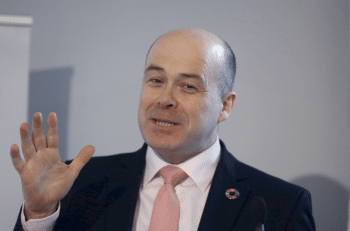
    Denis Naughten (45) was born in Drum, County Roscommon, site of the Meehambee Dolmen, a portal tomb estimated to be 5,500 years old, and educated at St Aloysius College, Athlone which closed last year, University College Dublin and University College Cork, where he did a PhD in Food Microbiology (impressively focused on extracellular polysaccharide – complex carbohydrates – production in lactic acid bacteria). Just as DeV was said to be one of only three people in the world who understood Relativity, Naughtenites allege he is driven by the scientific approach. He is married to Mary Tiernan and they have four children. In the New Year of 2017, Naughten was nearly killed while cycling with his wife along a road between Roscommon town and Fuerty when struck by a car, sustaining back injuries. Naughten’s father, Liam, was a Fine Gael TD (1982- 1987) and was Cathaoirleach of Seanad Eireann from 1995 to late 1996. Young Denis succeeded him following his tragic early death aged 52 in a car crash, at a by-election to Seanad Éireann in 1997 , making him the youngest ever senator. He has the ever-important keen interest in all sports and has played Gaelic football with Clann na nGael GAA club and held both county and provincial athletic titles with Moore AC. He was elected for the Longford–Roscommon constituency in the 1997 general election, aged just 24, and re-elected in 2002 when he and Simon Coveney were initially touted as the ace young guns who might replace the jaded Michael Noonan – before Big and wily Phil Hogan moved in to clear the path for Enda Kenny – with preferment promised. Within his first few weeks in the Dáil, he duly became Fine Gael Spokesperson on Youth Affairs, School Transport and Adult Education. This appears to be his level. He was re-elected at the 2007 general election for the new constituency of Roscommon–South Leitrim. In June 2010, he unwisely supported Richard Bruton’s leadership challenge to Enda Kenny, after he had been promised the deputy leadership in a Bruton shadow cabinet. Following Kenny’s victory in a motion of confidence, Naughten was not re-appointed to the front bench and there was bad blood between him and Kenny, perhaps partly because Kenny and Liam Naughten had been close. In October 2010, he was appointed as party Deputy Spokesperson on Health. He was a member of the Governing Council of the Association of European Parliamentarians with Africa which aims to strengthen parliamentary democracy in Africa and keep Africa high on the political agenda in Europe. He prevailed again at the 2011 general election. He voted against the Government in a motion to reverse cuts at Roscommon Hospital and lost the party whip. This parochial issue was the making of him; defined him. His party and constituency colleague Frank Feighan voted with the Government on the controversial issue, despite intense pressure from angry locals. The Government won the vote. On 13 September 2013, he and six other expellees formed the Reform Alliance, described as a “loose alliance” rather than a political party or “loose cannons”. The now largely forgotten grouping included TDs Lucinda Creighton, Billy Timmins, Terence Flanagan, and Peter Mathews as well as Senators Paul Bradford and Fidelma Healy-Eames who lost the whip over an abortion vote. In the run-up to the 2016 General Election Naughten told the Connacht Tribune he would be willing to prop-up a minority Government after the general election – as long as it maintained and invested in Portiuncula Hospital Ballinasloe and Roscommon Hospital, and local health services. He seems to draw his political tempo from his service on Roscommon County Council and the Western Health Board from January 1997 to October 2003. Any more profound political philosophy or vision of the common good has never crossed his lips. Naughten is really a rural populist, the Big Man, with a veneer of scientificism. His website is propelled by slogans like ‘Putting People First” and promises to “Get More Jobs to Cross The Shannon” and “Ensure That Every Child Leaving Primary School Can Read and Write”. Naughten was re-elected in 2016 and the numbers catapulted him to a ministry. The ambitious and crafty Naughten emerged as Minister for Communications, Climate Action and Environment in Enda Kenny’s Fine Gael/Independent minority government after two months of negotiation following the 2016 general election. He styles himself an Independent and has long dumped both Lucinda Creighton’s Reform Alliance and Shane Ross’s Independent Alliance. A year into his second government, Enda Kenny was asked if he would accept Minister Naughten back into Fine Gael. He said that was a matter for Naughten, and that he was doing a good job as an Independent Minister. He said: “How am I getting on with Denis Naughten? Great”. With Enda Kenny gone his rehabilitation is complete. So… time to see if the quiet man with the scientific bent is any good – playing, as they say, senior hurling. COMMUNICATIONS He has little interest in the communications brief, as it is of little value to his constituency. He has been almost invisible as minister for data protection – for Google and Facebook. The underpowered Data Protection Commissioner serves under the aegis of his department from an unimpressive office in Portarlington. Ireland took Facebook’s word for it that very few of the 87 million people compromised by Cambridge Analytica were Irish. He has, however, pushed for wider availability for high-speed broadband. Partly because viability has been undermined by Ireland’s unique fetish for one-off housing, Eir (successor to Eircom) pulled out of the bidding for the National Broadband Plan. Naughten was notably unable to get Eir, which owns much of the national phone infrastructure, to bid for the least attractive – farthest flung – next tranche of business, after it had delivered the most lucrative tranche to 300,000 houses in denser communities. Naughten may have been so reluctant to accept the logic of densifiying rural communities, anathema to his electorate, that he was blinded to its economic downsides. HIS MOST INFAMOUS OUTING IN HIS MEDIA

    Loading

    Read more

  • Posted in:

    ISIS in Ireland and France

    Not a season has passed since 2015 without a terrorist attack from ISIS or Al-Qaeda in France. Interventions in the Middle East, perceived discrimination against Arabs including ghettoisation and stringent or doctrinaire secularisation are the primary reasons for the attacks, though many have also been random, typically ‘franchised’ retrospectively from ISIS. Ireland is no model of racial tolerance and has not been generous in accepting refugees from conflicts in the Middle-East, including Syria. 1400 members of the Irish Defence Forces operate in Syria, Lebanon and Morocco on Peace Support Operations with the UN. Although Ireland has not participated in the war against terrorism in the Middle East, it is not impossible that one day it would suffer an attack. It is believed there are around 150 radicalised Muslims living in Ireland and that there are terrorists supporting ISIS financially from Ireland. For example, an electrician in his twenties named Hassan Bal was arrested in Waterford after confessing he had financed ISIS. He gave 400 in October 2015 in a city in Bosnia-Herzegovina to Stevo Maksimovic who was apparently supporting the terrorist group. Bal was jailed for 20 years. Last year, two men from Morocco and Algeria were arrested in Dublin suspected of assisting the financing of ISIS but the Garda didn’t have enough evidence to jail them and they were later released. It is understood the Garda Special Detective Unit was conducting several surveillance operations on people suspected of supporting terrorism in Ireland. Also in 2017, Humza Ali – a bricklayer from Birmingham – tried to travel to Syria via a Dublin-Istanbul flight. Turkey refused him entry. He went back to England where he had been before he had travelled to Ireland by boat and ferry. The man and one of his accomplices, Ali Akbar Zeb, had been sharing photos and videos on WhatsApp to promote the terrorist group. It is believed they were training for an attack. Last year, an Irish woman named ‘Sister Aaliya’, from Limerick who had become radicalised to Islam, claimed she had heard ISIS terrorists talking about running a 2.8m fund from Dublin. The men linked to this financing were planning a terrorist attack in the capital. Assistant Garda Commissioner Michael O’Sullivan revealed last month that the Garda has been ordered to use barriers on busy streets like Grafton Street in Dublin. He claimed to be worried about people coming back to Ireland after having travelled to Syria or Iraq in support of ISIS. Security specialist Dr Tom Clonan thinks terrorist attacks are possible in Ireland. He told Village that, according to the International Centre for the Study of Radicalisation in London, there were “40 Irish passport-holders who have gone to engage in jihad in the Middle-East”. The reason why Islamists do not attack on the soil of Ireland, he says, is because Muslims are integrated in this society. The Defence Forces are ready to deploy 500 soldiers if terrorists attack. However, civilians inevitably get killed before any police intervention. Even though France has long been on high alert, there are continuing fatalities. The state of Emergency declared there following the November 2015 Paris attacks only expired, after five extensions, in November 2017. In Ireland the state of emergency only expired after peace in Northern Ireland in 1995, and the Emergency Powers Act still allows internment, the juryless Special Criminal Court and draconian provisions for detention. However these are measures frmo a different era and with a different focus. It is believed our information technology and architecture; and our security and intelligence systems are over 20 years out of date. Two years ago, the association of Garda Sergeants said the Garda was not equipped or trained to deal with the terror threat here. The best way to avoid terrorism, according to Tom Clonan, is to stop interfering and bombing the Middle-East. “Muslims have been treated so badly since the invasions of Afghanistan and Iraq and the war in Syria. It is a major cause of radicalisation because people are suffering.” ISIS attacks are sadly frequent in France, the European focus for ISIS. 11 terrorist attacks, starting with Charlie Hebdo, have been committed since 2015 alone – resulting in 245 dead. 17 attacks have failed and 50 were foiled. 9 cases out of 11 targeted French police. Certainly Ireland has not been affected by terrorist attacks. However, the truth is that nobody knows the percentage chance that situation might change. After the murder of an Irish tourist in Tunisia three years ago, Tom Clonan thinks Ireland should have raised its terror threat level from Moderate to Substantial, the level before Severe and Critical. The 2017 Stockholm attack shows neutrality and non-interventionism are not definitive shields against attack, even if Ireland were not facilitating US troop and ordnance movements through Shannon. Clonan changed his mind after Stockholm: “Now terrorist attacks in Ireland are a distinct possibility”. Marianne Lecach

    Loading

    Read more