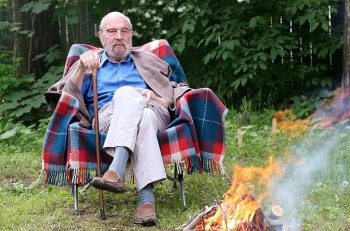
Sir Maurice Oldfield

Random entry RSS

  • Posted in:

    Scappaticci, MI5 and the murder of a Westminster MP. The stench of death associated with the Kincora scandal is heady. By David Burke

    The stench of death associated with the Kincora child sex abuse scandal is heady. It includes the murder of a Westminster MP by an MI5 agent inside the IRA. The murderous agent was Alfredo ‘Freddie’ Scappaticci. The victim was Robert Bradford, a member of the Ulster Unionist Party and the Vanguard Progressive Unionist Party. He represented Belfast South. The death of Scappaticci earlier this year shut the door on the last realistic opportunity to solve Bradford’s murder.  Operation Kenova, which has been probing the Scappaticci scandal for seven years, and has cost approximately €40,000,000, is unlikely now to establish what took place. The killing was linked to the cover-up of the Kincora Boys’ Home scandal. There are other murders which are associated with Kincora. One of the most significant Loyalist terrorists of the period 1968-82, was John McKeague, a paedophile. He knew all about Kincora. McKeague was murdered by British agents when he threatened to spill the beans on the scandal. William McGrath, who was the ‘housefather’ at Kincora, was a British agent. He was involved in the clandestine importation of arms for Loyalist terrorists, including his own paramilitary organisation, Tara. Many people were shot dead due to the arms smuggling efforts of British agents inside Loyalist paramilitary circles such as McGrath. The cascade of death connected to Kincora did not end with murder. Sex-abuse victims committed suicide. One Kincora boy took his life after being violated by Lord Louis Mountbatten. Rishi Sunak’s proposed legacy legislation, if passed, will help conceal the full extent of State-Loyalist collusion, some of which was linked to McGrath. 1. Honey Trap MI5 and MI6 ran a ‘honey trap’ operation at Kincora Boys Home, a residence in Belfast for boys, aged 14 years and upwards, in the 1970s. Residents were trafficked to Loyalist politicians and paramilitaries, as well as VIPs, for sexual abuse. Some were molested at the home, others at hotels such as the Europa, Girton Lodge and Park Avenue in Belfast, as well as the Queen’s Court in Bangor. ‘Kompromat’ or dirt was collected about politicians and paramilitaries. Some were blackmailed into working for the intelligence services. The British Establishment applied a double coat of whitewash over Kincora in an attempt to cover up the full extent of this scandal decades ago. A lot – but not all of it – has been peeled away by survivors, whistleblowers and obstinate truth-seekers. 2. Driven to suicide Eric Witchell is a paedophile. He now lives in London. In the 1970s he ran Williamson House in Belfast where he preyed on pre-pubescent boys and young teenagers. He and his accomplices drove at least three of them to commit suicide; another two to attempt it. A select few were transferred to Kincora when they reached 14. Witchell was not interviewed by any of the various inquiries into Kincora. Stephen Waring, one of the residents of Kincora, ran away from the home in November 1977, a few months after being abused by Lord Mountbatten at Classsiebawn, County Sligo. Waring made it as far as Liverpool where he was captured and put on the Ulster Monarch car ferry destined for Belfast. He never made it home. Apparently, he jumped overboard to his death. His body was never found. The Garda have retained the security logs which record the visitors to Classsiebawn in 1977  but have declined to disclose them to me and Andrew Lownie, Mountbatten’s biographer. They undoubtedly record the arrival of Joe Mains, the Warden of Kincora, in a vehicle with boys, including Waring, who was seated in the rear. I am frankly aghast that the Irish government – which could intervene – has no interest in helping the survivors of sex abuse committed in Sligo by ordering Garda Commissioner Drew Harris to release the security logs. 3. A dismembered child’s body in the Lagan Brian McDermott, aged 10, disappeared from Ormeau Park on 3 September 1973. Part of his dismembered and charred body was found in a sack in the River Lagan a week later. The RUC discovered evidence that he was abducted and murdered by Alan Campbell, a founding member of the DUP. Campbell was also in Tara, a Loyalist paramilitary organisation, and was a friend of the paedophiles who ran Kincora. Colin Wallace, who worked at the British Army’s HQ at Lisburn, has told Village that the British Army, which had an interest in Tara, was alerted by the RUC that they were about to arrest Campbell. Then, suddenly, the police were ordered to stand down. Only the Northern Ireland Office (NIO) possessed that sort of authority. The security apparatus of the NIO was run by MI5 and Ministry of Defence officials. The manoeuvre ensured that the Kincora ‘honey trap’ operation did not unravel at that time. Significantly, Campbell was a British agent. Authors Jack Holland and Henry McDonald, referred to him as the ‘Demon Preacher’ in their books, describing him as an obvious British agent. Campbell and his cabal are suspects in the abduction of four other Belfast boys whose bodies were never recovered: Jonathan Aven, age 14, who disappeared on 20 September 1969; David Leckey, aged 12, who went missing on 25 September 1969; Thomas Spence, age 11, and John Rogers, aged 13, who both vanished on 26 November 1974. Had the RUC been permitted to arrest Campbell, it is probable that young Spence and Rogers would still be alive today. The BBC commissioned a documentary about the disappearance of these boys. It was completed in 2021 and entitled, ‘The Lost Boys of Belfast’. It was intended to be broadcast in May 2021 but was pulled by management. It is not certain if it will ever be aired. It uncovered evidence of MI5 involvement in the protection of Campbell and the Kincora cabal. RUC officers went on record in front of the cameras. Campbell was not interviewed by any of the various inquiries into Kincora. 4. The gunrunning operations of the ‘housefather’ of Kincora, William McGrath Colin ‘Jay’ Wyatt, joined Tara following the

    Loading

    Read more

  • Posted in:

    MI6 traitor George Blake has died. The KGB’s penetration of British Intelligence may have gone far deeper than the public has ever been told. It may still be deeply compromised by Russia.

    By David Burke. George Blake has just died aged 98 at his dacha outside Moscow where Putin’s overseas intelligence service, the SVR, was protecting him from Covid-19. Blake was held in high esteem by the Russians. Putin has said that the “memory of this legendary person will be preserved forever in our hearts”. Putin awarded him a medal in 2007. Blake was arrested in London in 1961 and sentenced to 42 years imprisonment but escaped from Wormwood Scrubs in 1966 with the aid of Sean Bourke from Limerick. He then spent two months in London before making his way to East Germany. The story of his escape and the time he spent in hiding in London is astonishing. Blake may have been helped by Soviet agents inside the British Establishment. The Director-General of MI5, Roger Hollis, 1956-65, was believed by many to be one such agent. He retired the year before Blake made his escape, something which gave him four years to help the KGB prepare a plan to break Blake free. Roger Hollis, another traitor? Roger Hollis was investigated on an official basis on a number of occasions by MI5 and MI6 officers for treachery. The evidence against him was compelling. At the very least, if he was not a traitor, there must have been another very senior mole inside MI5. Outside MI5, Christine Keeler was adamant that he was a traitor. Keeler was at the centre of the Profumo spy scandal involving Stephen Ward. Keeler revealed that Hollis and Ward were part of a spy circle involving a confirmed MI5 traitor Sir Anthony Blunt. Further details can be found here: Keeler Concealer: the British Establishment’s severe embarrassment at the depth of the Soviet Union’s penetration of MI5 and MI6. If Hollis was indeed a traitor, he would have installed other agents inside MI5 to keep the red flag flying behind closed doors after he left. One possibility is that it was these who could have helped move Blake from London to East Germany in 1966. One thing is clear: it is inconceivable that the KGB would have let Blake rot in jail for 42 years if there was any chance to spring him. At the very least, his severe sentence was a deterrent to all of its agents and potential recruits in Britain. If Hollis was a traitor, it is obvious that the KGB would have relied heavily on him to help them plan Blake’s escape. Even if one allows that Blake’s escape from the confines of his goal in London was something he and the Irishman Bourke achieved on their own, there is still the difficult question of how he managed to hide in London for two months and then made it to East Germany. According to the official narrative, we are meant to believe that he had no help from MI5 traitors or the KGB, merely two CND activists, Michael Randle and Pat Pottle, who took him across Europe in a camper van. The allegations of Patrick Meehan The only evidence that MI5 – or a faction within it – wanted Blake to escape emanates from the late Patrick Meehan, a criminal from Scotland. He produced a book in 1989, ‘Framed by MI5’, in which he claimed that in 1963 he was approached by a man he dubbed ‘Hector’ to spring a ‘spy’ in an English prison. The man portrayed himself as a Soviet sympathiser but Meehan reckoned he was an MI5 officer. ‘Hector’ had known that Meehan had briefly been a member of the Communist Party in 1950. Nothing of substance emerged from the approach but it alerted Meehan to the possibility MI5 was prepared to stage an escape. Whether ‘Hector’ was a KGB officer who knew about Meehan’s communist past or an MI5 officer with the same knowledge, what is important is that Meehan concluded he was from MI5. After Blake escaped, he began to talk about this and circulated the theory that MI5 had wanted to spring Blake. Meehan was not involved in any way in the later 1966 escapade involving Sean Bourke. For his part, Blake has always maintained that Bourke acted without any outside help. The implications of Meehan’s Book Let’s give Meehan the benefit of the doubt and see where it takes us. For a start, this involves accepting that ‘Hector’, was indeed from MI5 and therefore acting on the orders of D-G Roger Hollis. This scenario raises one question MI5 should be made to answer: why did they never ask Meehan to help them in any sort of an inquiry into the mysterious ‘Hector’, the man who knew of Meehan’s communist past and wanted to recruit him to spring a ‘spy’ in an English prison. Meehan wrote the book in revenge for being framed for the murder of Rachael Ross in Ayr, Scotland in 1969. Although innocent, he was convicted but received a Royal pardon in 1976 after years in prison. He also received £40,000 in compensation after a campaign by the likes of Ludovic Kennedy. This, however, was not enough to assuage his anger and he had his revenge – as he saw it – by producing his book in 1989 while the Peter Wright ‘Spycatcher’ book storm was still raging. It was an expansion of an earlier book he had written in 1978 called ‘Innocent Villain’ (Pan books Limited 1978). Meehan’s conviction had been secured by ‘rigging’ an identification parade, the planting of evidence and the committing of perjury at his trial by high-ranking detectives. According to Meehan, “In the conspiracy to frame me high-ranking detectives, acting on the instructions of MI5, found it necessary to suppress evidence that would have led to the arrest of the two men who did in fact commit the Ayr murder; namely, William McGuinness and Ian Waddle. Framing me for the murder was an exercise calculated to put me out of circulation.” Waddle admitted his guilt. McGuinness was murdered in Glasgow. Meehan’s pardon was followed by a report by Lord

    Loading

    Read more

  • Posted in:

    Obit(ch)uary [Updated]: RUC Special Branch and MI5’s friend in the media passes away. Journalist who cast doubt on the truth about the Kincora Boys’ Home scandal has died. He once described the brutal abuse at it as ‘homosexual high-jinks’.

    The legacy of Chris Ryder, the former Sunday Times (ST) journalist who passed away last Friday, is not one to be proud of: he was one of a number of journalists who helped MI5 and the RUC’s Special Branch cover up the rape of children who had fallen into the grip of a paedophile gang that revolved around Kincora Boys’ Home. Some of them were as young as 10-years of age. He did not understand that there was a difference between a person being a homosexual and a paedophile. He once described the abuse of children at Kincora as ‘homosexual high-jinks’. One of the abusers at Kincora was William McGrath. McGrath once described his sexual preference for ten-year-old boys. He was a prolific rapist. His victims did not think they were participating in ‘high-jinks’ rather excruciatingly painful rape and humiliation, something that destroyed their lives. Some of the victims of the Kincora rape gang later committed suicide. Ryder’s negligence also nearly led to the death of a British agent in the IRA called Louis Hammond in 1973. The Hammond fiasco appears to have acted as a catalyst which led to Ryder becoming one of MI5’s many assets in the Irish media. By 1977 he was sending the following type of reports on his colleagues in the media to British Army HQ at Lisburn where MI5 had a station. THE JOURNALIST DOTH PROTEST TOO MUCH Ryder became a frequent visitor to the private dining (and drinking) area at the RUC’s Knocknagoney HQ where he rubbed shoulders with his friends in the RUC Special Branch and MI5. When Ryder appeared at the Smithwick Tribunal he denied suggestions that he had worked for MI5. “That is what people of a Republican disposition have said against me – I did not know a soul in MI5.” He also said that at “one point a person did approach me but I was not interested.” Even if we are to take this denial at face value, it still raises the question: why did MI5 think he might work for them? Surely the person who made the ‘approach’ to him would have been from MI5 or a similar organisation such as MI6? It was hardly someone from the NI Roads Authority. Readers can make up their own minds if they believe Ryder never met anyone from MI5. RYDER AND THE BRITISH-IRISH ASSOCIATION Ryder was also a regular guest at the British-Irish Association (BIA) which was heavily infiltrated by MI5. Former Taoiseach Charles Haughey forbade his ministers from attending the BIA in the 1980s on the basis it was an MI5 front. Surely Ryder met many British intelligence officers and assets at it such as Dame Daphne Park (senior MI6 officer) and David Astor (MI6 media asset)? RYDER AND HAMMOND Ryder’s path crossed with that of Louis Hammond in 1973 courtesy of British Intelligence. On May 13 1972 the British Army arrested Hammond, a Royal Irish Ranger deserter, at a barricade in the Slievegallion area of Andersonstown, West Belfast. Hammond had been born in 1954 and had grown up in Andersonstown. Having joined the Army in 1970 , he had disappeared after a visit home in 1972. He opted to become a Military Reaction Force (MRF) spy instead of facing charges for desertion and IRA membership. The MRF had been set up by Brigadier Frank Kitson before he left NI in 1972. It was based at Palace Barracks, Holywood. It ran a network of informers and agents who identified IRA members who were then sought out by MRF assassination units. After two other MRF agents, Seamus Wright and Kevin McKee, were lifted by the IRA (and later ‘disappeared’), Hammond was spirited to Liverpool. That should have been the end of his entanglement with the intelligence services. However, the Psychological Operations [PSYOPS] unit at British Army HQ in Lisburn was engaged in an operation to sow dissent inside the Provisional IRA by planting stories that certain IRA members were embezzling the proceeds of robberies. A document was prepared which was made to look like it had been written by a senior IRA member being held in Long Kesh. The plan was to pretend it had been intercepted by the security forces. It was addressed to the IRA’s Belfast Commander, Seamus Twomey, and named IRA members who had allegedly misappropriated funds. It would not appear that Ryder was an asset of Her Majesty at this stage as an elaborate ruse was mounted to convince him that the Long Kesh forgery was genuine. The forgery was passed to Ryder who alerted The Sunday Times in London.  The ST delegated Ryder and Paul Eddy, another journalist, to investigate the story. The teenage Hammond was now brought back into play.  He was ordered to contact Ryder and reveal he had been the Intelligence Officer of the Provisional IRA’s E Company in Riverdale and was prepared to sell him information about IRA embezzlement.  To Ryder, it appeared that Hammond was corroborating what was in the Long Kesh document. Ryder published an article in the ST which quoted an unnamed “former Intelligence Officer from E Company” as the paper’s source. The IRA quickly realised it was Hammond and ascertained that he was back in Belfast. He was lured to a house in the Markets district and interrogated for three days after which he was shot three times in the head and once in the stomach. Yet he somehow managed to survive albeit partially paralysed and blind in one eye. Ryder and the ST were clearly negligent in revealing that their information had come from a “former Intelligence Officer from E Company”. Following the publication of the story, the IRA considered killing Ryder. Ed Moloney has revealed on his Broken Elbow blog that they were talked out of this by a journalist – still alive and therefore unnamed – who advised them this would backfire on them by alienating the media. THE SPOOKS MOVE RYDER TO MANCHESTER The intelligence services decided not to take any

    Loading

    Read more

  • Posted in:

    Traduced (updated version): John Hume was the victim of a campaign of character assassination perpetrated by the British Secret Service, MI6, and was placed under MI5 surveillance in Dublin with the assistance of the Gardaí.

    By David Burke. UPDATE: See also Just declassified UK memo on John Hume reveals interest of PM John Major’s top civil servants in “possible press stories regarding John Hume’s private life”. John Hume was the victim of a campaign of character assassination in the early 1970s perpetrated by British spies. It was spearheaded by an individual called Hugh Mooney, a graduate of Trinity College Dublin, who once worked as a sub-editor for the Irish Times. Mooney belonged to the ‘Special Editorial Unit’ (SEU) of the Information Research Department (IRD). It was responsible for the production of black propaganda. Mooney’s boss was the IRD’s Special Operations Adviser, Hans Welser, a veteran of the WW2 Political Warfare Executive. The IRD was part of the Foreign Office and worked closely with the British Secret Service, MI6, which is also attached to the Foreign Office. The IRD operated from a building in London called Riverbank House. Although Mooney worked at Army HQ Northern Ireland under the cover title of ‘Information Adviser to the GOC’, official documents show that in 1972 he was reporting to the Director and Co-ordinator of Intelligence (DCI) at Stormont – not to the GOC. This means that his activities were known about at a very high level. Prior to his attack on Hume, Mooney had worked in Bermuda where his colonial and racist side had come to the fore, a story for another day. Mooney and his associates sought to depict John Hume: as part of a communist conspiracy to turn Ireland into Europe’s Cuba; as a supporter of the IRA; as a fundraiser for the IRA; as a thief who stole charitable donations; as a man for whom a warrant had been issued for his arrest in 1972. There may have been other smears which have not yet been detected. Unintentionally, Her Majesty’s spies and their colleagues in the British Army also made his task of achieving peace extraordinarily difficult at key moments in his career, such as those of Bloody Sunday in January 1972 in his native Derry. Rogue elements inside MI5 also plotted with the Ulster Workers’ Council (UWC) to tear down the 1974 Power-Sharing Executive of which Hume was minister for commerce. This left Hume without a reliable source of income for a number of years and could have forced him to abandon politics for a job outside of it. Throughout his career he was placed under surveillance, something that was tantamount to treating him as a subversive. In the 1980s the Gardai in the Republic of Ireland helped MI5 bug some of his conversations. A house where his deputy leader, Seamus Mallon, stayed in 1983 was also bugged by the Gardai. In the 1990s MI5 opposed his discussions with Gerry Adams. Hume was a towering political figure of immense courage, foresight and integrity. Boris Johnson has paid him a lavish tribute, praising his “strong sense of social justice” and saying that without him “there would have been no Belfast or Good Friday Agreement”. Despite Johnson’s fine words, the Tories did their best to stand in Hume’s way during the 1970s, 80s and 90s. In fact it is not an exaggeration to say that they made his life hell. HEATH IN THE 1970s: Ted Heath served as Tory prime minister, 1970-1974. He sent his black propaganda operatives to Ireland to conduct dirty trick campaigns in the early 1970s. It was they who ran the smear campaign against Hume. Ironically, it is Heath’s legacy which is in now in tatters while Hume’s has never soared higher. Heath’s reputation was destroyed by a report published by the Wiltshire Police in 2017 about his abuse of boys, one as young as 14. THATCHER IN THE 1980s: Margaret Thatcher, Tory PM, 1979-90, let MI5 (attached to the Home Office) spy on Hume in gross violation of his human rights. Some of this surveillance was carried out in the Burlington Hotel in the Republic of Ireland with the assistance of the Republic’s special branch. The first steps of the peace process were taken in the middle of Thatcher’s premiership in 1986 when a back channel was opened between Gerry Adams and Charles Haughey via Fr. Alex Reid. Haughey ‘s Northern Ireland adviser Martin Mansergh was a pivotal figure in the process. Thatcher’s battery of spies do not appear to have had any inkling of what was afoot. Had Thatcher discovered this development, it is – to put it mildly – likely she would have denounced it. The Haughey-Adams process was so secret that even John Hume did not know about it when he entered the process later and expressed disbelief when he finally discovered this fact. MAJOR IN THE 1990s: Thatcher’s successor at 10 Downing Street, John Major, PM 1990-97, was not supportive of the next phase of the process which became known as ‘Hume-Adams’. In 1993 and 1994 key elements of the press in the Republic denounced Hume’s dialogue with Adams, in particular Conor Cruise O’Brien who wrote for Ireland’s Sunday Independent. O’Brien was close to a number of dubious intelligence figures such as Dame Daphne Park, a self-confessed MI6 dirty tricks expert and David Astor, one of MI6’s most important assets in the media. O’Brien knew them through the British-Irish Association (BIA) which Astor had helped set up in the 1970s, and which Park co-chaired in the 1980s. It was Astor who appointed O’Brien as editor of The Observer. Haughey considered the BIA a British Intelligence front and forbade Fianna Fail figures (such as Brian Lenihan) from attending it. How much O’Brien was influenced by his friends in the British Establishment is an imponderable. Major, who had an exceptionally close relationship with his spymasters, was not supportive of what Hume, Adams and Dublin were trying to achieve either. Eventually, Bill Clinton had to intervene to twist Major’s arm and move the process forward. Still, MI5 tried to derail it. Haughey’s successor as taoiseach, Albert Reynolds, 1992-94, became so concerned about the hostility of MI5 that he told Major

    Loading

    Read more

  • Posted in:

    Keeler Concealer: the British Establishment’s severe embarrassment at the depth of the Soviet Union’s penetration of MI5 and MI6.

    By David Burke The BBC’s lavish Christine Keeler drama concealed her claim that the Director-General of MI5 was a Soviet mole and ignored what she knew about the infidelities of Prince Philip. The real story is one of treachery, depravity, judicial corruption and the sexual abuse of children by VIPs such as Lord Mountbatten. The six-part BBC drama, ‘The Trial of Christine Keeler’,  has just come to an end. It was meant to be an accurate and comprehenisve portrayal of the notorious Profumo Affair during which a teenager, Christine Keeler, slept with Captain Eugene Ivanov, a Russian naval attaché at the Soviet Embassy in London, while also having a relationship with the much older John Profumo, the high-flying Conservative MP who was Secretary of State for War. Profumo, who met Keeler in July 1961, dramatically denied a relationship with her in the House of Commons but later admitted he had lied and, in June 1963, resigned in disgrace. Stephen Ward, the artist and society osteopath who had introduced Keeler to Profumo, was subsequently put on trial for living off the immoral earnings of prostitutes. He took an overdose of medication before the jury returned a verdict against him and died shortly thereafter. He was found guilty on two charges. 1. THE WIMPOLE MEWS SPY RING. The puzzle that lies at the heart of the BBC’s production is that it ignored the most significant claim Keeler made about the affair: that Sir Roger Hollis was a Soviet mole who was part of a network consisting of Stephen Ward and Sir Anthony Blunt. Hollis served as the Director-General of MI5, 1956 – 1965. Blunt was a KGB mole who penetrated MI5 during WW2. Keeler made the claim in her book, Secrets and Lies (2001). Keeler says she told Lord Denning about D-G Hollis in 1963 while the latter was carrying out his controversial inquiry into the affair and that he made notes of what she said. Hence, there is one straightforward way to resolve the question of D-G Hollis’ loyalty: declassify Denning’s files. Clearly, Keeler could not have known that D-G Hollis was a suspected Soviet mole until the 1980s when this allegation emerged into the public domain, except from her observation of him at Ward’s residence at Wimpole Mews where she had lived with Ward for a while. She said she was witness to a string of meetings between D-G Hollis and Ward at the address. There is a way to resolve the question of D-G Hollis’ loyalty: declassify Denning’s files. 2. THE TRUE DEPTH OF THE KGB’S PENETRATION OF MI5 AND MI6 MAY BE UNFATHOMABLE. Anthony Blunt joined MI5 at the start of WW2 and supplied the Soviets with classified and sensitive secrets throughout the conflict. The perceived wisdom is that he cut all links with Moscow after he retired from MI5 after the war ended and became the Surveyor of the King’s Pictures at Buckingham Palace. Keeler’s revelations, however, indicate that he was still an active Soviet agent as late as the early 1960s. Blunt eventually confessed his role as a Soviet agent and hence there is no doubt about his duplicity. If D-G Hollis was yet another traitor, it means that he had over a decade to plant and promote fellow conspirators up the ranks and turn a blind eye to Soviet operations directed against Britain and her colonies. (MI5 is responsible for the security of UK and her colonies; MI6 spies on foreign soil.) The British media has been obsessed with the hunt for the so-called ‘Fifth Man’ inside the Cambridge Spy Ring for decades. For many years D-G Hollis was viewed as a serious candidate for that perch. The Cambridge Ring consisted of Kim Philby, Guy Burgess, Blunt and Donald Maclean. British commentators now generally agree that a man called John Cairncross was the Fifth Man. Yet, there is no logical reason to believe there were only five high level traitors inside the Establishment or that Cambridge was the only campus visited by Soviet talent scouts. If Keeler’s revelations about D-G Hollis are reliable, there is a strong possibility that MI5 was nothing less than a burgeoning nest of traitors. Indeed, D-G Hollis was only one of an array of suspects. A slew of books have been published which make out cases against a variety of suspects including the man D-G Hollis appointed as his deputy, Graham Mitchell. Another senior MI5 officer, Guy Liddell, was also put under the microscope as was Lord Victor Rothschild who served in MI5 during WW2. There is no logical reason to believe there were only five high level traitors inside the Establishment or that Cambridge was the only campus visited by Soviet talent scouts. 3. AND THEN THERE WERE THE BLACKMAIL TARGETS Aside from ideologically motivated traitors, the KGB used blackmail to recruit reluctant informants. Incredible as it may seem, the FBI suspected Lord Mountbatten – who held a senior position in the Admiralty and had access to NATO secrets – was a traitor and monitored his private life. They learnt that he was a paedophile with a ‘lust for boys’. The Provisional IRA, who monitored and attempted to assassinate Sir Maurice Oldfield of MI6 in the mid-1970s, learnt he was a homosexual. If they knew, is it likely the KGB did not? In 2016 MI6 told the Hart Inquiry in Northern Ireland that Oldfield had a ‘relationship’ with the man who ran the notorious Kincora Boys’ Home in Belfast where sex abuse was rampant. If the Soviets knew even a fraction of this, why did they not destroy his career by exposing him? Instead, did they coerce him into spilling MI6 secrets? MI5 carried out an investigation into the possibility he had been blackmailed in 1980 and concluded he had not. Was Oldfield’s reputed successor as Deputy Chief of MI6, Sir Peter Hayman, another of their blackmail targets? Hayman was a notorious paedophile with a conviction for gross indecency in a public lavatory. One of his victims was

    Loading

    Read more

  • Posted in:

    Maurice The Mole? The Provisional IRA knew Sir Maurice Oldfield, Chief of MI6, was a homosexual. Did the Soviets know too?

    Forty years ago this month Margaret Thatcher sent Sir Maurice Oldfield, the former Chief of MI6, to Belfast to co-ordinate the activities of the various branches of British Intelligence in Ireland. Within a few weeks MI5 was reporting to Downing Street that he was a homosexual and an inquiry was launched to see if he had been blackmailed by the Soviets or any of Britain’s other enemies. He was soon given a clean bill of health. Kieran Conway, the former Provisional IRA Director of Intelligence in the 1970s, has confirmed to Village   that the Provos knew Oldfield was gay. What, if anything, did the Soviet intelligence apparatus, the KGB, know about Oldfield’s homosexuality? More significantly, if the KGB found out, what did they do with the information? The answer is nothing despite the fact it could have destroyed him.  Such inaction makes no sense as Oldfield was reputed to have been a highly effective opponent of the KGB. The notorious MI6 traitor Kim Philby described him as an officer of “high quality” and “formidable” in his memoirs.  In 2017 the Hart Report into child sex abuse published details of an MI6 document which revealed a “small collection of papers in file three which relate to the relationship [Oldfield] had with the Head of the Kincora Boys’ Home (KBH) in Belfast”. The “Head” of Kincora was “Warden” Joseph Mains who abused teenage boys at Kincora and elsewhere. Joseph Mains, according to MI6 records he had a “relationship” and  a “friendship” with Oldfield. PART 1: OLDFIELD AS A SECURITY RISK A DANGEROUS ATTRACTION TO YOUNG MALES Oldfield was in fact attracted to young males. The KGB could have ascertained this through routine surveillance or from its spies inside MI6 such as Kim Philby and George Blake who would have been on the lookout for blackmail material on their colleagues. There is, of course, a world of difference between being a homosexual and being attracted to underage males. However, back in the unenlightened 1970s and 1980s, few in politics would have  acknowledged this important distinction.  Incredible as it now seems, the mainstream print media routinely referred to the Kincora scandal as a “homosexual” one when it was nothing of the sort. In the dark days of the 1970s and 1980s those who ran British Intelligence definitely viewed a homosexual in the ranks as a security risk. Hence, when Margaret Thatcher was told about Oldfield’s sexuality, his security clearance was withdrawn while an inquiry was carried out to see if he had been compromised by the Soviets. It determined that he hadn’t. However, inquiries into the loyalty of Kim Philby, another senior MI6 officer,  had failed to expose evidence of his true allegiance to the Soviet Union. Furthermore, MI5 and MI6 had let at least Anthony Blunt, Guy Burgess, Donald MacClean, John Cairncross, George Blake – all Soviet agents – run amok inside Britain’s intelligence community for decades. HER MAJESTY’S SPYMASTER  Who was Maurice Oldfield and what was he capable of? When ‘The Troubles’ erupted, Oldfield was Deputy Chief of MI6. He assumed control of Irish affairs because his Chief, Sir John Rennie, did not share the same experience as he in the dark arts of the secret world. Rennie, who had been a surprise appointment as Chief of MI6, had a diplomatic and propaganda background whereas Oldfield had participated in deception campaigns during WW2; fought terrorism in Palestine after it; monitored the flow of weapons and money to the communist guerrillas fighting the British in Malaya in the 1950s. And, if all this wasn’t enough to square up to the IRA, he had a good idea of what it took to run a paramilitary campaign due to his knowledge of MI6’s guerrilla campaign against Albania, something that happened in the 1950s during his stint as deputy chief of MI6’s counter espionage directorate, R5. The Albanian campaign was a disaster. Most observers believe it was betrayed from the inside. Oldfield was a tubby little man who waddled when he walked, often dressed badly and was allegedly afflicted with occasional psoriasis. He has become more famous than most of his contemporaries, probably because Alec Guinness drew on his bespectacled appearance for his celebrated portrayal of George Smiley for the BBC’s production of John Le Carre’s Tinker Tailor Soldier Spy. The glamour of the association with Le Carrie has eclipsed the true nature of Oldfield’s character When Rennie retired prematurely in 1973 after a drug smuggling scandal in Hong Kong involving his son, Oldfield finally secured the top spot he had coveted for so long. Once in the driving seat, he steered MI6 until his retirement in early 1978 under an appropriately misleading title, ‘Head of the Foreign and Commonwealth Office, Research Department’. Under Oldfield, MI6 HQ continued to be what it had always been: a haven for criminals and the sort of place where a visitor would have been well advised to wipe his or her shoes on the way out of the building. Oldfield’s retirement as MI6 Chief was not to prove the death of his career: he re-emerged from his crypt to become Ulster Security Co-ordinator at the behest of Margaret Thatcher in 1979. By then too many intelligence cooks had congregated in NI and were spoiling the spy broth. Oldfield was asked to knock heads and streamline their work. While he was in Northern Ireland MI5 discovered he was gay. An MI5 report submitted to Cabinet Secretary, Sir Robert Armstrong, on 31 March 1980 revealed that on 28 March Oldfield had after “some preliminaries” admitted he “had first been introduced to homosexuality at university and he admitted having engaged in homosexual practices, intermittently, up till the time of his acceptance of his Northern Ireland appointment. His relationships were, for the most part, with restaurant waiters and the like: he had none, he said, with (MI6) staff or agents”. In other words, Oldfield admitted that he had engaged in homosexual activity throughout his career as an MI6 officer with random individuals. A copy of

    Loading

    Read more

  • Posted in:

    John Imrie, MI5’s Flasher-General

    Village has learnt that John L.L. Imrie, formerly of MI5 and the Northern Ireland Office (NIO), died last summer without a whisper of his passing reaching the ears of the press. Imrie had the unique distinction of being the only British official ever linked to the Kincora Boys’ Home sex abuse scandal by name in the press during his lifetime. Imrie had served as an Assistant Secretary at the NIO in the early 1970s while the sexual abuse of boys at a number of homes in Northern Ireland including Kincora was rampant. Imrie did not provide evidence to the Hart Inquiry in 2016. Judge Hart, whose 2017 report is littered with factual inaccuracies, determined that MI5 had known nothing about the Kincora scandal until it was exposed by the media in January 1980. Imrie was one of many who – had he told the truth – could have put Hart straight. Privates on parade at victoria station Imrie was a convicted sex pest. In 1979 he went ‘cottaging’ in London, that is to say, looking for sex with random strangers in gentlemen’s lavatories. He was arrested at the gents at Victoria Station when, after an attempt to attract a sexual partner by displaying his genitals, he was charged with indecent exposure. The last thing MI5 needed in 1979 was a sordid scandal involving an MI5 officer who had served in Belfast. At this time the Kincora scandal was bubbling under the surface ready to erupt across National headlines. Howard Smith was D-G of MI5. He appreciated the full potential of the scandal because he had served as intelligence supremo in NI in the early 1970s when Imrie had been stationed in Belfast and the Kincora ‘honey trap’ operation was up and running. Two social workers had already provided details of the scandal to Peter McKenna of the Irish Independent. They had learnt about it from Richard Kerr, a resident at Kincora for whom they were responsible. Hence, Establishment pressure was exerted to drop the charges against Imrie for his performance at Victoria Station. The endeavour failed, proving yet again that MI5 is not always top dog when confronted by honest police officers and lawyers. Indeed, only last year we witnessed another example of this when the incorruptible Chief Constable of Wiltshire, Michael Veale, his Assistant Chief Constable Paul Mills, and their Operation Confier team reported that former British PM Edward Heath was a paedophile. (See Village October 2017.) The fact that Imrie was a figure whom Whitehall wanted to protect became public knowledge thanks to Private Eye magazine. On 17 August 1979 it reported that: “Up until the trial strong pressure was brought to bear by a variety of authorities to drop the charges in the national interest”. Ken Livingstone noticed a discrepancy in the way Imrie had been treated compared to the mauling Sir Maurice Oldfield had received after the exposure of his sexual predilections in 1980 Imrie was brought before the Magistrates’ Court at 70 Horseferry road, London, (now the City of Westminster Magistrates Court) where he pleaded not guilty to the charges preferred against him and submitted a preposterous defence maintaining that he had been caught short with a weak bladder and, fearing disastrous consequences on the train he intended to take at 11.10 to Sydneyham – which had no toilet – he had been compelled to display him- self to the gentlemen in the vicinity of the urinals. The presiding magistrate – another honourable individual who was prepared to do his job without fear or favour – concluded Imrie was lying since he had been arrested at 11.25, i.e. 15 minutes after the bladder-bursting train had departed. Imrie was convicted, conditionally discharged and ordered to pay £50 costs. Imrie was not the only senior intelligence officer arrested for misbehaviour in a public lavatory in London during this era. In 1984 Sir Peter Hayman, the reputed Deputy Chief of MI6, was also arrested for gross indecency, and convicted. Hayman was an abuser of Richard Kerr, details of which will be revealed in a later edition of Village. Sir Anthony Blunt and Guy Burgess, another pair of paedophiles from the ranks of both MI5 and the Anglo-Irish Vice Ring, were also members in good standing of MI5’s cottaging circuit. Imrie’s conviction did not deflect the upward trajectory of his career. After Kincora was exposed in January 1980, the RUC set out to track down the child molesters involved, or at least some honest officers in the RUC tried to do so before they were stifled. At least they managed to question Imrie before the vice grip of the cover-up took a hold. Against this background, it is hardly unfair to ask if Imrie was a pederast (i.e. an abuser of teenage males), if not an outright paedophile himself. Why else would the RUC have made inquiries about him? The answers to these questions may be found lurking in the pages of Imrie’s personnel file which gathers dust somewhere in the vaults of MI5. During the 1970s the RUC Special Branch officers who helped Joseph Mains, the Warden of Kincora, run the operation on the ground, are rumoured to have maintained a secret library of files as insurance in case anyone ever tried to prosecute them for trafficking the children involved to their abusers. The RUC Special Branch library may still be in existence and, if so, undoubtedly has bulging files on Imrie and others such as Peter England, also formerly of the NIO. The Independent Inquiry Into Child Sexual Abuse in London still has an opportunity to demand sight of Imrie’s personnel file and that of england but time is running out fast. a career shrouded in mystery Inevitably, a cloud of mystery hangs over Imrie’s career. A little speculation must be forgiven. Despite claims to the contrary, he probably never worked for the Ministry of Defence (MoD). References to him in the Civil Service Yearbooks during the 1980s as an MoD employee were probably nothing more than a cover

    Loading

    Read more

  • Posted in:

    How the Anglo-Irish Vice Ring Trafficked Boys from Belfast to MPs and a TV star in Britain

    In 2017 Village published a series of articles highlighting allegations of British Establishment complicity in child abuse in Ireland, particularly the crucially flawed Hart Report which was published in Northern Ireland (NI) a year ago. Judge Hart was tripped up by false evidence fed to him by MI5, MI6 and others for their own devious reasons. The problems manifest in his report make it an imperative that all of the activities of the Anglo-Irish Vice Ring (A-IVR) be re-investigated by the London-based Independent Inquiry into Child Sexual Abuse (IICSA) which enjoys far greater powers of witness compulsion than Hart did. First, the IICSA should look afresh at the Kincora scandal on account of its multiple links to Westminster figures such as Sir Cyril Smith MP and Sir Peter Hayman of MI6, both of whom abused Richard Kerr, a former Kincora resident. Another former MP who is still alive abused Kerr while he was still at Kincora. He too should be included in these inquiries. In addition, the IICSA should examine the territory which Hart did not explore and call witnesses who were either overlooked or refused to co-operate with him. The trouble with the files Last month, Britain’s National Archive stated that it was withholding a file on Kincora from publication. We believe this vindicates our criticisms of the Hart Report. Hart was given solemn assurances by the UK intelligence, security and political communities that they would provide him with all the relevant files on Kincora for his work. It now appears that this one was not disclosed to him. If indeed it wasn’t, what is in it that is so sensitive that it was withheld from Hart? If, however, it was furnished to Hart, what influence did it have on his deliberations? Since we do not know what is in the file, these questions cannot be answered. In the absence of clarity, Village believes it is far more likely that the file was withheld in its entirety from the Hart Inquiry. In addition to the criticism Village published during the last year, we can now add that Hart missed the significance of some important information which was furnished to him. He was supplied with a copy of an interview with Hugh Mooney, a former ‘Information Adviser’ to the General Officer in Command of the British Army in NI which was published in The Sunday Correspondent. In it Mooney stated unambiguously that Colin Wallace, who worked at the British Army’s HQ at Lisburn as a PSYOPS officer, had told him about the abuse at Kincora. ‘I do know he mentioned it. He was dropping it in and feeling his way. He kept pushing it. But I could never understand why. I thought it was totally irrelevant to our concerns. I did get the feeling he was pushing this’. Hugh Mooney left NI in December 1973. Hence, Colin Wallace must have told him about the scandal before that date i.e. seven years before Hart concluded that the British Army knew about the abuse. This was also two years before Richard Kerr entered Kincora. Hugh Mooney did not appear at the Hart Inquiry. At page 88 of his report Hart stated that, ‘We are satisfied that it was not until 1980 [after the media exposed the Kincora scandal] that MI5, SIS, the MoD and the RUC Special Branch became aware that [William] McGrath [of Kincora] had been sexually abusing residents of Kincora when that became a public allegation”. Unfortunately, Hart made this finding despite knowing that the Ministry of Defence (MoD) had destroyed all the PSYOPS files at Army HQ in Lisburn in 1981, or at least alleged that it had. Colin Wallace is clear in his memory that a number of the missing files concerned McGrath, his paramilitary organisation Tara and Kincora.   The IICSA will begin its probe into VIP abuse next month The IICSA was established in 2015 by Theresa May in her then capacity as UK Home Secretary. She pointedly refused to include Kincora within the remit of the IICSA despite being requested so to do by former Kincora victims. The IICSA came into being as a response to a plague of child-abuse cases linked to VIPs and the British Establishment, including that of Jimmy Saville. Since the instigation of the IICSA, an array of independent campaigning websites has pursued the story tenaciously while the mainstream UK media has largely steered away from any meaningful coverage of it. Its focus has, instead, been on reports about personnel changes on the staff of the IICSA. Meanwhile, elements of the pro-Establishment press, especially the Daily Telegraph and Daily Mail have seized a number of opportunities to undermine claims about elite complicity in the abuse. They have been supported by a handful of Tory Party grandees who have spoken out on radio and TV. Next month the IICSA will finally begin its probe of allegations about Westminster and VIP abuse; at least that is what is intended. On the basis of past performance, the Telegraph, Mail and their allies in the Tory Party will seize upon a series of stories which Village has long argued are nothing more than fictitious and entirely malicious plants designed to distract attention from the truth; worse still, designed to bring credible witnesses into disrepute by tainting them all with the same absurdist brush. A purported ‘witness’ known only as ‘Nick’ has, for example, poisoned the waters of credibility with absurd claims about sadistic murders – some with preposterous and laughable Occult overtones. ‘Nick’ was wheeled out by pro-Establishment commentators to undermine the findings of the Wiltshire Police last year that the late Edward Heath had abused young boys. We can expect to hear a lot more about ‘Nick’ & Co., in the coming months from the Telegraph, Mail and multifarious Tory grandees. Irrespective of what the IICSA ultimately determines, Village believes that much of the truth has already entered the public domain and there is no reason for this process to cease. The rest

    Loading

    Read more