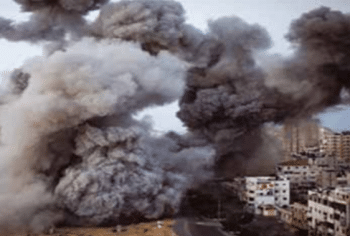
By David Burke. 1. Where was the ‘EFGH’ Unit of Support Company of 1 Para during the Ballymurphy Massacre? Next week marks the 50th anniversary of the introduction of internment. It began on 9 August 1971. By the 11th, ten people had been murdered by paratroopers in Ballymurphy. Earlier this year, the coroner who oversaw the inquest for the victims of the Ballymurphy massacre confirmed that none of them had been involved in violence . Put simply, they were killed in cold blood by soldiers of the Parachute Regiment and others working alongside them. One of the victims was a mother who was shot in the head while out looking for her children. It has also emerged that Lance Corporal David James Cleary – better known as Soldier F – was involved in activity deemed “gallantry” by his superiors on 9-11 August. He was ‘mentioned in despatches’ as a result. Those in command of Cleary included Major Edward Loden, Colonel Derek Wilford and Brigadier Frank Kitson. At a minimum, this means Cleary was involved in some sort of military action, probably an operation involving the discharge of his weapon. Bearing in mind the appalling murders he perpetrated in Derry the following January, it is legitimate to ask what he and others in the Support Company of the 1st Parachute Regiment (1 Para) were doing during the various shootings, incidents that are collectively referred to as the Ballymurphy massacre? During the Ballymurphy massacre innocent unarmed civilians were shot dead. They posed no threat to the paratroopers. Some were shot in the back. None had paramilitary connections. This is exactly the type of murderous behaviour in which Cleary engaged when he went to Derry a few months later. The conduct of the paratroopers in Ballymurphy was callous. Joan Connolly was forty years old. She was shot at 7:15 p.m. on 9 August while she scoured the streets for her children. She came across another victim, Noel Phillips, who was lying on the ground. She went to help him. The first bullet threw her to the ground. According to witnesses, after she was hit, she managed to get up again only to be struck by a second round, this one penetrating her head. She had eight children ranging between three and twenty-two. When she was found, half of her skull was missing. Bullets had also penetrated her shoulder, hand and thigh. Her children were taken to Waterford in the Republic of Ireland. They missed her funeral which they saw reported on the television. The victims of the massacre were vilified as rioters and paramilitaries. Cleary was not the only paratrooper ‘mentioned in despatches’ for gallantry in Belfast during 9-11 August who subsequently went to Derry on Bloody Sunday. 2. Support Company Death Squads. 1 and 2 Para had various ‘companies’ including those called ‘support companies’. In normal warfare they carried mortars and provided ‘support’ for the actions of their colleagues. Clearly, there was no need for mortars and the like in Belfast or Derry. Soldiers attached to 1 Para were deployed in Belfast during the August 1971 internment sweeps. 2 Para was also active. It is clear that Support Company of 2 Para was involved in some of the murders in Ballymurphy. Did paratroopers from 2 Para’s Support Company ever transfer to 1 Para or visa versa? If Cleary and the likes of soldiers E, G and H (as they were designated at the Bloody Sunday tribunals) did not transfer from 2 Para to 1 Para, it means that ruthless and callous murderers were assigned to both support companies. Overall, it is probable that Kitson assigned his most ruthless paratroopers to the various support companies under his command, the men willing to shoot unarmed civilians if so ordered. The fact that harmless people were shot in the back, head and whilst crawling along the ground in both Ballymurphy and the Bogside cannot have happened out of the blue. Cleary and his comrades must have been dehumanised and conditioned to do this. That process may have begun in places such as Kenya, Malaya and Aden where the locals were seen as vermin by the troops. If Kitson and his commanders did not order, permit or somehow encourage these elite troops to murder civilians on the street during the Ballymurphy massacre; and they proceeded to do so on their own volition, why did those in command not stop their murderous escapades? Why did the top brass allow them to continue to serve in the ranks? Kitson in particular was a stickler for discipline. One did not step out of line on his watch. Instead, Cleary and his ilk went to the Bogside and Bloody Sunday took place. The Support Company killers active during the Ballymurphy massacre were probably acting on orders from their superiors to provoke the IRA in the hope they would engage in open street fighting with them. The usual tactic of the IRA was to snipe at troops from the shadows and disappear. In addition, the terror unleashed by Kitson’s paratroopers has all the appearance of a punishment administered to the general Nationalist community for harbouring – as Kitson perceived it – the Official and Provisional IRA in their midst. The latter motive was in line with the sinister – albeit orthodox – counterinsurgency methodology of the time. Indeed, Kitson outlined the tactic in his book, ‘Low Intensity Operations’ (1971). See Brigadier Kitson’s motive for murdering unarmed civilians in Ballymurphy. 3. Brigadier Kitson’s direct personal involvement in the vilification of civilians killed by his troops in Belfast. An equally important question is: who instigated the vilification process of the Ballymurphy murder victims? The overwhelming odds are that it was Brigadier Frank Kitson. Simon Winchester, then a young Guardian journalist, has revealed how Kitson manipulated the media. In a Guardian article in May 2001 he described how, after shooting incidents in Belfast, he would often call Kitson who was his “principal contact at army headquarters”. Frank and I liked each