Progressivism reverts to regressivism, but mainly inertia


Ireland's political and cultural magazine

Progressivism reverts to regressivism, but mainly inertia
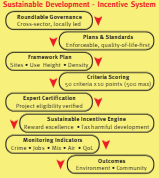
There is friction in Cabinet between Minister for Finance, Paschal Donohoe who is generally reassuringly sceptical of new tax expenditures for developers and prefers targeted, time-limited or “activation” taxes; Fianna Fáil can’t help itself from championing subsidies/reliefs alongside state delivery.Meanwhile VAT on apartments is to be cut to 9% and the Help to Buy scheme extended. It’s all utterly unradical in the fact of a recognised crisis of quantity and an untold crisis of quality.
Government will tweak
income-tax bands again
in October, but don’t
expect pole-dancing and
it will quietly take a little
back is PRSI

warm but steely politician with a cultural hinterland and proud of her big family and Council-estate roots; a Republican who’s not backing down on Hamas, equality, the environment or anything else
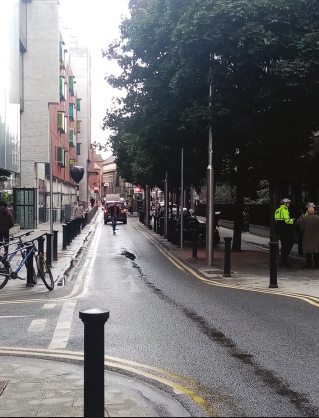
Dublin City Council must not sell out the public domain of a vulnerable community off St Stephen’s Green to facilitate RCSI branding, but defer to elected representatives and finally assert the public interest
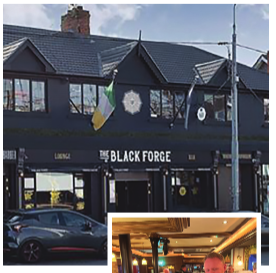
Immigrant-student employees at Conor McGregor’s pub speak out about dubious legality of their employment and being allowed to work more than 20 hours in term time
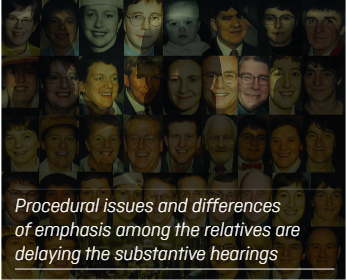
Procedural issues and differences
of emphasis among the relatives are
delaying the substantive hearings
Nobody cares about SIPO, least of all RTÉ and the Irish Times, as evidenced by coverage of its hearings, especially the recent one finding FF’s Meath Cathaoirleach, Tommy Reilly, attended meetings that yielded his son a €3.7m book profit.
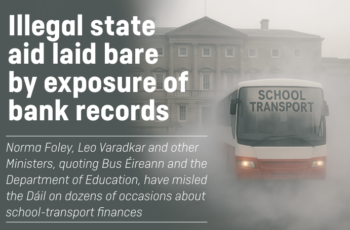
Norma Foley, Leo Varadkar and other Ministers, quoting Bus Éireann and the Department of Education, have misled the Dáil on dozens of occasions about school-transport finances

Back then to the lonely editorial in Village’s last edition which generated some hostility
Posted in:
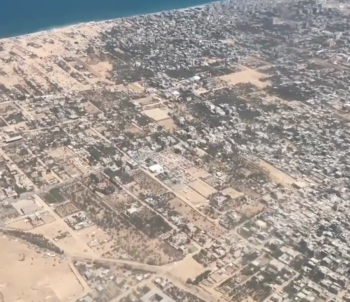
Resilience among the rubble By Eman Abu Zayed On the night of October 6 2023, I laid out my clothes for university like I always did neatly folded on the chair next to my bed. I packed my bag with books, charged my phone, and set my alarm for 6:30 a.m. Earlier that day, I had been laughing with my friends on campus. We talked about our classes, shared silly jokes, and promised to catch up again the next morning. Nothing felt unusual. It was just another ordinary day. But I didn’t wake up to the sound of my alarm. I woke up to the sound of rockets. By morning, everything had changed and my life would never be the same again By morning, everything had changed and my life would never be the same again. From the very first moment, I felt like the life I knew had ended. Suddenly, there was no water, no electricity, and no signal. It was like we had been thrown back hundreds of years, living in complete darkness. The borders were shut, the phone lines were dead, and we had no way to check on our families or friends. Sometimes we’d hear the bombing loud, close but we couldn’t tell where it had hit. We only knew it was too close. The airstrikes were terrifying in a way we had never experienced before. The ground shook beneath us, and everything felt black and silent. No news, no voices, no safety. I was sitting at my neighbour’s house, with my friend Dima, when the tanks started shelling the upper floors of the building we lived in. The entire tower shook, and I ran toward our apartment, desperately trying to find my family, terrified something might have happened to them. We all gathered in one room my aunt, my cousins, and the rest of us trying to shield ourselves from the explosions, holding our breaths with every blast. But the shelling didn’t stop. The upper floors were hit again, and we had no choice but to flee into the street. What we saw outside felt like the Day of Judgment. People were running in every direction, screaming, crying, chaos everywhere. Smoke filled the air. Tanks were closing in on the neighbourhood, and bullets were flying from every side. It was one of the most terrifying days of my life. We whispered the shahada dozens of times in a single minute. We walked for what felt like over a thousand meters, and the sound of shelling still echoed behind us. My father was pushing my grandmother in her wheelchair, and I was holding my little brother’s hand tightly as we ran through the street, not knowing where we were going or where we could possibly be safe. Eventually, we found a house nearby that belonged to relatives. We took shelter there. More than sixteen of us crowded into a single room. There was no privacy, no comfort but we had no choice. This was now our reality. The shelling grew closer and closer, and the bullets from Israeli quadcopters began hitting the walls of the house we were staying in. That’s when we made the decision to flee again this time to a tent in Rafah, in what they called the “humanitarian zones”. I had only ever seen tents in movies or read about them in camping stories. I never imagined one would become my home even temporarily. But we had no other choice. We gathered whatever belongings we could carry and headed to Rafah. There, we began setting up tents. The sun was blazing, the air unbearably hot, and there was no water. Still, we tried to finish building the tent before nightfall, just so we could have somewhere to sleep. That night, twenty-eight of us slept in a single tent. We were still trying to adapt to life in the tent, telling ourselves it was temporary, holding on to any sense of routine or stability. Then came the devastating news: our home had been bombed. But when I say “our home was bombed”, I don’t just mean the walls came down. Everything was gone. Not only was our house destroyed, but so was my father’s goldsmith workshop it was on the ground floor. That news hit us like a punch to the chest. We broke down in tears, unable to believe it, hoping somehow it was a mistake. How could the house I had lived in for twenty-two years disappear in the blink of an eye? How could my room, the memories, the laughter, the photos on the walls, and my childhood bed be gone? Everything was lost the house, the workshop, and a piece of my heart with them. Then came the news that shattered my heart completely: Rama had been killed. Rama wasn’t just anyone she was my closest friend at university, my favourite person, the one who knew me better than anyone else. We shared everything: lectures, long talks between classes, our fears, and our dreams. Losing her felt like losing a part of myself. At the time, there was no communication. I had no idea what was happening in the north. My friend Rawaan sent me a message telling me that Rama was gone, but I didn’t receive it until two days later because the network was down and sending messages was nearly impossible. I couldn’t believe it. I cried and screamed, unable to grasp the loss. I never got the chance to say goodbye. Rama was one of the few who refused to evacuate. She chose to stay in the north enduring hunger, bombing, and humiliation but she stood her ground. She stood… and then she was killed, along with her sister Ruba, who used to share her room, her nights, and her laughter. Even in death, they weren’t separated they were buried together in the same grave. I never got to see her. I never even got to hear her voice. This war has taken everything from

Nailing the institutional culprits, ignored by Ireland’s deficient media By Irvin Muchnick In Ireland’s public square, I now ask yet again: “Why was Gibney living in Florida and who sponsored his Green Card?” The long-elusive goal of a second prosecution of at least some of George Gibney’s countless alleged sexual abuses of young swimmers now seems imminent. The next stage is whether the media in Ireland deign to take the story deeper. Custom and practice suggest the prognosis is not promising. Mark Horgan’s podcast Where Is George Gibney? did succeed in notching Gibney. Unfortunately, a lot of important stuff has been either left on the cutting-room floor or ignored entirely. Taoiseach Micheál Martin’s remarks that it was this series that got this over the top spiked decades of advocacy by, among others, swimming star Gary O’Toole and journalists Johnny Watterson and Justine McCarthy. ‘Prime Time’ had questioned Gibney in a California car-park as long ago as 2006 As a result of Horgan’s 2020 series, which was broadcast by the BBC and Second Captains, fresh faces came forward to gardaí, grounding an indictment drawn up by the Director of Public Prosecutions for 78 counts of sexual assault and one of attempted rape. In October of last year the Irish embassy in Washington, D.C., submitted an extradition request. And on 1 July this year, the one-time Olympic swimming coach was fitted for handcuffs and return, more than 30 years after his first prosecution got scuttled by now-discredited statute-of-limitations case-law. For the survivors of the newly alleged incidents, there is palpable relief. A trial will also be hygienic for the entire community of Gibney victims – some of them now dead, of whom at least one was by suicide. As the grimly cynical maxim goes, no well-connected predator meets his match without the emergence of “a live boy or a dead girl.” One live boy, Chalkie White, was a root whistleblower whose testimony now reaches back to events more than a half century ago. Almost incredibly, and in an illustration of the depraved reach of the republic of Gibneystan, another accuser of serial molestation was White’s sister Loraine Kennedy – alleging abuse when she was nine years old. I had the privilege of dining with that grand lady, in Dublin months before her 2019 death from cancer. Generally I prefer the term “predator” to “paedophile” which often gets appropriated by homophobes. But sometimes the shoe fits snugly. In my 2016-17 Freedom of Information Act case over whether Gibney’s privacy rights were outweighed by the public’s interest in cracking open his American immigration file, US federal judge Charles R Breyer delivered the defining analysis. “I have to assume”, Breyer said, “that if somebody has been charged with the types of offences that Mr Gibney has been charged with, the United States, absent other circumstances, would not grant a visa. We’re not a refuge for paedophiles”. Breyer’s utterance from the bench, in combination with the most basic artificial intelligence mashup via Google, will probably tell you more about where the Gibney narrative needs to turn in 2026 than the entirety of the mainstream Irish coverage of scandalously delayed — and so justice-denying — court proceedings. More than a decade ago, the headline over my first blog post on this sordid subject posed basic questions that remain not only unanswered but also unexplored, in both Ireland and the US. On the Irish side, this is sadly characteristic of the national style in the agonising space of historical abuse in high places. A victory lap by the Irish Times crowd always seems to replace the incommodious task of shining the klieg light of accountability on sports overseers, law enforcement and governments. In Ireland’s public square, I now ask yet again: “Why [Was] George Gibney – No. 1 At-Large Paedophile in Global Sports – Living in Florida? And Who Sponsored His Green Card?”. The BBC, Irish Times and RTÉ avoid contemplating the larger lessons and squash offshoot stories. They do not foster the investigative journalism that would generate challenging lessons In the generous interpretation, the podcast’s confinement by the parameters of its brand of storytelling precluded such a deep dive. In the less generous interpretation, the terms of engagement for underwriter BBC – like those of the Irish Times, RTÉ and many other institutions with the resources to do better – annul contemplation of how hard cases make for larger lessons. They squash offshoot stories by atomising and sentimentalising core narratives. They do not foster the investigative journalism that could render our takeaways less domesticated, more explicit and more challenging. ***** To date, the defunct alternative site Broadsheet.ie (whose archives, happily, can still be accessed), starting in 2016, and Village, starting with my piece here in 2022, remain the only Irish outlets that have shared with news consumers certain relevant facts surrounding the determining official lapse in the Gibney saga. That would be the 1994 three-justice Supreme Court technical ruling which effectively scuttled Gibney’s 27-count indictment. One of the judges was Susan Denham, later, of course, the Chief Justice. She is the sister of Patrick Gageby, who was Gibney’s barrister. Not until 2019 were Ireland’s judicial ethics guidelines reformed to say that judges should not consider cases involving close relatives. To a foreign journalist, the principle is intuitive with a capital I. It is a gloss on a Latin formulation: nemo judex in causa sua, or “no one shall be a judge in their own cause”. Yet a number of my Irish friends demur. They have tried to impress upon me that, in a country of only 5 million, where many members of the elite legal stratum inevitably know each other and some are even related, it is not so nefarious that this rule of thumb is, or until recently was, fungible. On that point, you can colour me sceptical. They further point to the protocol that barristers cannot choose the clients on whose behalf they act, if the work is within their area of expertise. In

By Frank Connolly a 35-acre site at Liscarton was purchased for €500,000 in 2016 and placed on the market for €4.2m a year later, after rezoning A public inquiry by the Standards in Public Office Commission (SIPO) (13 and 16 June) into the conduct of former Meath County Council Chairperson and Fianna Fáil councillor Tommy Reilly has exposed a system of institutional laxity, media laziness and ethical failure that stretches far beyond the boundaries of Liscarton, near Navan. At the centre of the controversy is a 35-acre site, purchased for €500,000 in 2016 and placed on the market for €4.2 million a year later after the lands were re-zoned from agricultural to light industrial use in July 2017. Planning permission for development was granted in June 2018 by a Council in which Reilly played a key role. In 2017, the National Transport Authority questioned the rationale of developing enterprise activities at a location so far from Navan town centre with few or no public transport services to the site stating: “The new employment zoning at Liscarton is inappropriate as it is contrary to the planning principles set out in Section 7.1.2 of the Transport Strategy”. Two of Reilly’s sons, Ciarán and Tomás, are directors of the company that owns the land. Planning permission was granted in 2018 by Meath County Council in which Reilly played a key role. Two of his sons are directors of the company that owns the land The complaint that brought the case to the attention of SIPO was not made by a political rival, insider, or whistleblower. It was submitted in March 2022 by Village’s editor, Michael Smith, documenting alleged breaches of the Local Government Act and the Lobbying Act, among other laws, primarily on the back of this article by me: https://villagemagazine.ie/meath-council-investigates-potential-conflict-of-interest-in-major-land-re-zoning/. The article revealed how Tommy Reilly attended a number of meetings where the re-zoning of the lands at Liscarton was discussed by members and officials of MCC from 2016 was present at a pre-planning meeting with his son Ciaran and participated at meeting when zoning was approved in July 2017. He withdrew from the meeting but did not disclose the reason for his potential conflict of interest. The NTA questioned the rationale of developing enterprise activities at a location so far from Navan with few public transport services The complaint to SIPO by Smith alleged, inter alia, that “S 4.5 of the Code of Conduct under the 2001 Act also notes that “The 2001 Local Government Act also provides that where a councillor has actual knowledge that a matter is going to arise at a meeting at which s/he will not be present, but if s/he were, a disclosure would be necessary, then in advance of the meeting s/he must make such disclosure in writing to the Ethics Registrar. This provision was breached by Councillor Reilly, as he confirmed to Village that he knew about Ciaran Reilly’s interest when he met him in his son’s shop and canteen in advance of the re-zoning in July 2017. From the beginning, the institutional response has been marked by deflection, minimisation and delay. The SIPO hearing itself was postponed twice, including once following a request by Reilly just before the last local elections. When it finally proceeded in June 2025, media and others were given just four days’ notice, effectively suppressing public awareness. On the first day of the hearing, SIPO unilaterally dropped some of the most serious allegations – including breaches of the Lobbying Act, without consulting the complainant. Smith said “there can be little in life as unrewarding as making a complaint to SIPO”. He said the misery of involving himself in the process was “compounded by the fact that nobody in the media reports accurately what is going on, less still what is at stake”. Reilly, who served on Meath County Council from 1996 until he lost his seat in 2024, portrayed himself as a victim. He told the Commission on Monday, 16th June, that he had been “tortured” for six years, lost his livelihood, and was attacked on social media by what he called a “certain group of political people”. For the first time in 63 years, he claimed, he was asked not to canvass during an election. Reilly stepped down as a candidate for Fianna Fáil in a 2005 Dáil by-election following a controversy involving a land purchase with Frank Dunlop in 1997. At that time, he said he had been the subject of a witch-hunt by sections of the media. In his testimony, Reilly insisted he only learned of his son Ciaran’s interest in the land in early July 2017when his son asked him how he would go about making submissions on the development.. He had asked his son “for what?” and Ciaran had told him he had bought land at Liscarton. Mr Reilly senior said he had been shouting about the “cow plot” at Liscarton for years because he wanted it to be put to community use. There had been so many small businesses in Navan operating from the backs of houses and that had become unsafe. He said he replied to his son that he could have nothing to do with the land and to proceed without him. He had taken no action at that stage but when the date of the meeting came he spoke to an official who told him he did not have to leave the council meeting on 19th July 2017 because he had no financial or other interest in that land at Liscarton. That unnamed official was not held to account for that advice. But he admitted he did not specify the nature of the conflict and failed to update his declaration of interests. “I find it all very confusing”, he said, adding: “My son was involved. I knew that much. Was that not enough?”. The media seemed not to be too concerned whether it was or wasn’t, even though a €3.7m paper profit was in play. The facts suggest it

I now live in Leatherhead, the beginning and end of H.G. Wells’s prophetic War of the Worlds (1898). Wells summoned a Martian invasion of sleepy Essex in a parable of complacency. In my last substantial contribution to Village, I charted the rise of the far right as a response to the collapse of the neoliberal consensus, the resurgence of racialised myth, and deepening inequality. I warned then that we risked sleepwalking into the abyss. We have sleepwalked into regional wars, economic fragmentation, and environmental crisis. As Arundhati Roy said of ghost capitalism, Gaia herself groans—and she would know, given India’s ravaged ecologies. This essay explores sleepwalking—personal, political, and historical—as a diagnosis of our current condition. Through literature, philosophy, and geopolitics, I argue that the true threat is not the tyrant at the gate but the passivity that lets him in. This essay explores sleepwalking—personal, political, and historical—as a diagnosis of our current condition. Through literature, philosophy, and geopolitics, I argue that the true threat is not the tyrant at the gate but the passivity that lets him in. I. The Metaphor of Sleepwalking Sleepwalking is more than a medical condition. In law and psychiatry, it signifies diminished responsibility—a mind severed from agency. Politically, it evokes inertia: societies dulled by distraction, habituated to fear, or soothed by routine. Huxley’s ‘Brave New World’ (1932) conjures the archetype: a society pacified by pleasure, drugs, and distraction. Bernard Marx, the reluctant dissident, seeks exile in Iceland not to escape, but to think and feel freely. His yearning mirrors our own—our need to disconnect from systems that numb rather than enlighten. II. History repeats: the sleepwalkers of 1914 I must apologise for the unoriginality of my metaphor. Libraries groan with unread volumes for more than a century with the title ‘Sleepwalkers’. I can think of at least six. Christopher Clark’s ‘The Sleepwalkers’ (2014) shows how no one intended World War I — yet all contributed. A chain of miscalculations, rivalries, and hubris led Europe to catastrophe. The parallel with today’s world — in Ukraine, Gaza, Taiwan—is chilling. Escalation becomes default; complexity is erased by binary narratives. Putin’s war, for instance, partly reflects fear of losing the Ukrainian breadbasket—a theme explored by Bulgakov with prophetic clarity. Again, the characters in his ‘The White Guard’ sleepwalk through crisis, trying to cling to a disappearing order. In a nuclear and AI-driven world, the next miscalculation might not lead to trench warfare but instant annihilation. The challenge: to manage crisis without triggering it. As ‘The Fog of War’ (2003) reminded us through Robert McNamara, overreaction is often as dangerous as passivity. III. Ethical decay and the return of brutalism In Hermann Broch’s The Sleepwalkers (1931–32), German society slides into fascism not through dramatic rupture but moral erosion. His character Bertrand, a hollow opportunist, is not exceptional —he is simply what his era produces. So too today. The collapse of ethical boundaries—”profit before people,” governance by algorithm—makes authoritarianism seem rational. Michael Haneke’s ‘The White Ribbon’ (2009) portrays how a brutalised generation becomes ripe for tyranny. Our brutality is digital, but just as dehumanising. Influencers and disinformation merchants understand this. Populism thrives by limiting choice, shaping identities, and feeding fear. There Is No Alternative—TINA—has returned in darker form. IV. Scientific progress, spiritual drift Arthur Koestler’s ‘The Sleepwalkers’ (1959) chronicles Western cosmology’s evolution. The title is double-edged: science has often advanced through intuition, not reason. Today’s technologies—AI, surveillance capitalism, genetic engineering—mirror that ambivalence. They offer promise, but also unprecedented risk. Public discourse has failed to keep up, retreating from ethics, abandoning responsibility. Koestler feared a world where science was severed from values. Jürgen Habermas warns us still: rationality without morality is not progress but peril. V. The modern orcs and their enablers Trump, Putin, Modi, Meloni, Orbán—these figures attract rightful attention. But more dangerous are the enablers: the centrists, bureaucrats, and technocrats who normalise cruelty in the name of order. Broch’s Haguenau, the polished businessman who enables the system, is today’s bureaucrat overseeing deportations or austerity. Karl Kraus, in his 1933 return to publishing with ‘The Third Walpurgis Night’, wrote ascetically: “Of Hitler, I have nothing to say.” His scorn was reserved for Goebbels—and the collaborators. The erosion of norms usually comes not from jackbooted fascists, but, dear reader, from moderates who remain silent. VI. Media collapse and the end of dialogue The digital sphere has obliterated what Habermas called the “ideal speech situation” In place of deliberation, we get outrage, echo chambers, AI-generated philosophy and algorithmic control. Dialogue has become noise. Conspiracy replaces complexity; truth becomes optional. Richard Kearney’s Touch (2021) reminds us what we’ve lost: our interpersonal reality, our shared space. Without shared meaning, politics collapses. We don’t just disagree—we live in different realities. VII. Resisting the drift Yet resistance is possible. Primo Levi, from the inferno of Auschwitz, insisted even small acts matter. Sonny Jacobs who died last week, wrongly imprisoned, spoke of “hope against hope”. Village published my eulogy. Resistance begins with speech, thought, doubt. It requires civic imagination, solidarity, and ethical clarity. We must reject both technocratic fatalism and populist illusion. We must relearn how to disagree. VIII. The need for a new Rationality What we need is not less reason, but better reason—one that includes morality, embraces complexity, and reclaims imagination. In ‘the Structure of Scientific Revolutions ‘(1962), Thomas Kuhn showed that science does not progress through steady, cumulative knowledge, but through paradigm shifts—The shift is now as we face ecological entropy, psychological dystopia digital dehumanisation, and accelerating authoritarianism. These cannot be met with 20th-century ideologies applied by a sleepy elite. We must cultivate wakefulness — not just awareness, but responsibility. To wake is to choose. What we choose now will echo long after us. There is no need for a discarding of reason — we need its moral and intellectual rebirth. A scroll of honour: a call to Enlightenment As Trump seeks to dismantle Harvard, California, due process, the rule of law — and others dismantle democratic norms — let us name those who
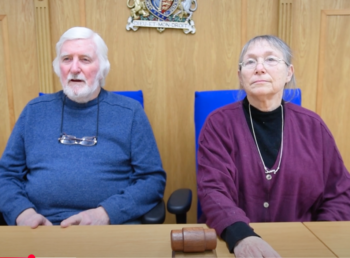
Sonia ‘Sunny’ Jacobs, a beacon of resilience and a tireless advocate for justice reform, passed away at the age of seventy-six in a tragic house fire in Glenmacmurrin, County Galway, Ireland, today June 3, 2025. Also perishing in the blaze was Kevin Kelly, her carer. Her partner Peter Pringle, who I also knew, died in 2023. Born in New York in 1949, Sunny’s life took a harrowing turn in 1976 when she, her partner Jesse Tafero, and their two young children were involved in a fatal incident at a Florida rest stop. A Florida Highway Patrol trooper and a Canadian police officer were killed, leading to Sunny and Jesse’s wrongful convictions for murder. Despite another man, Walter Rhodes, later confessing to the crime, Sunny spent 17 years in prison, including five years on death row in solitary confinement. She was exonerated in 1992, two years after Jesse was executed. Sunny worked closely with the Innocence Project which I founded in Ireland and Europe, and with related organisations across the globe. Despite her increasing immobility she was a forceful presence anywhere she went and very obviously a sunflower child. It was like meeting Gaia, at Woodstock. She was the sotto voce poster girl of the Innocence Project always shunning the limelight even when documentaries were made about her. Her partner Peter Pringle was more bullish. He had been himself one of the last people to be sentenced to death in Ireland before capital punishment was abolished in 1990. His conviction for the murder of two gardaí was quashed in 1995 after he had served 15 years in prison. In her memoir, ‘Stolen Time’, Sunny recounted her experiences with searing clarity. Reflecting on her time in solitary confinement, she wrote: “In a world of one, I am alone, more alone than I have ever been in my life. Locked up in a box within a box where no one can enter, and I cannot leave. I am to await my death.” But even in the depths of despair, she found a spiritual freedom no prison could take. “Hopelessness just did not appeal to me… they can keep me here but what goes on within the confines of these walls is mine to create. They cannot imprison my soul!”. After her release, Sunny dedicated her life to advocating against the death penalty and supporting exonerees. In 1998, she met Peter Pringle, an Irish man who had also been sentenced to death. Their shared experience forged a deep bond, and they married in 2012. Together, they founded The Sunny Centre, a sanctuary for exonerees to heal and rebuild their lives. She participated in public education campaigns, mentored exonerees, and pushed for reforms to prevent future miscarriages of justice. Her story became emblematic at one level of the Innocence Project’s mission. As she once said, “Justice should be about truth. The truth set me free — and now I try to help others find their freedom too”. Sadly, I believe the Innocence Project has long since lost much of its moral bearing. Sunny became a sought-after speaker, sharing her journey of injustice and redemption around the world. Even after Peter’s death in January 2023, she continued their mission with fierce determination. Sunny’s passion for justice led to the creation of the foundation that bears here name, The Sunny Center, a non-profit organisation dedicated to helping those who have endured wrongful conviction Sunny is survived by her two children, who were separated from her during her incarceration. Her life stands as a testament to the human capacity for resilience, forgiveness, and the relentless pursuit of truth. In her own words: “I had a choice to believe either in hope or hopelessness. And so, I chose to believe in hope rather than hopelessness. That one instant changed everything for me.” She was a wonderful gentle spirit: a child of a more spiritual and finer age. Devoid of malice and hatred. I do not know what happened, but I am very glad that we in Ireland gave her a refuge of comfort and even joy in her last years.
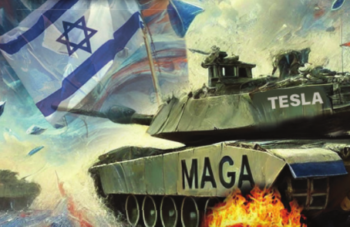
David Burke names MI6 agents within Garda and DoJ during TroublesFrank Connolly on misreporting of Project Eagle Commission report

Posted in:
T’S BEEN a long four months since our last publication. Some of that is because it’s not clear what the future is for a magazine like Village.
Posted in:
News Miscellany
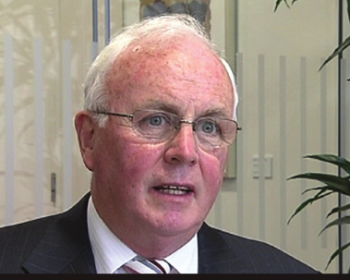
Project Eagle Commission hampered by ongoing criminal proceedings into Coulter and Cushnahan in Northern Ireland, as they, along with Brown Rudnick solicitors, Peter Robinson, and Sammy Wilson, refused to co-operate; and it refused to consider written submissions from John Miskelly.
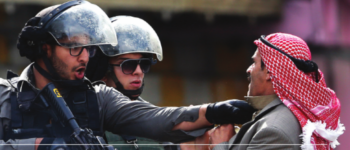
Occupied Territories Bill promised in Programme for Government not even on legislative programme for current Dáil