Anton McCabe

  • Posted in:

    Much remains murky about the deadliest bombing of the Troubles, but it is clear it could have been prevented if two warnings had been heeded

    IN MID-MARCH, following civil actions, the suspects for the 1998 Omagh bombing, which perpetrated the worst loss of life of the whole Northern Ireland troubles were bankrupted, one of them on his deatbbed. Focus was on the murderers not the victims or the security forces. However, there are still questions about prior knowledge the security forces had, and the way in which they investigated the bomb. Former Police Ombudsman Nuala O’Loan said, on the eve of the 20th Anniversary: “My view now is that it could have been prevented”. She met heavy criticism, but her contention is well-founded. It has been established that the security forces received two warnings. An unknown man rang detectives in Omagh on August 4. The conversation lasted 10 minutes. He told them the Continuity IRA was to attack police in Omagh on August 15. AK47 rifles and two rocket launchers were to be moved over the Border to a house outside Omagh a few days beforehand. The caller named three men and a family as being involved. After the bombing, the Real IRA claimed responsibility. However, members of the Continuity IRA were involved. At least one Donegal-based member had scouted Omagh, along with David Rupert, an American working for the FBI and British intelligence who had infiltrated the Continuity IRA. Some Continuity members are believed to have been involved in moving the bomb. Three days before the bombing, informer Peter Keeley told his police handler that a bomb was being made in the North Louth-South Armagh area, and would be sent North. Keeley, who uses the name ‘Kevin Fulton’, was an agent working for both police and one of the branches of military intelligence. He had successively infiltrated the Official IRA, the (Provisional) IRA, and the Real IRA. Keeley met a friend and Real IRA member Patrick Joseph ‘Mooch’ Blair near Dundalk. Blair was manufacturing explosives. These were for what turned into the Omagh bomb. Police deployment on August 15 1998 has never been fully explained. According to evidence given at the inquest into the victims, there were no police on duty in Omagh town centre when the bomb was driven in at approximately 2.20pm. At the time, two three-man patrols were out in cars. When the bomb warning was given, one was in a housing estate on the north side of the town. The other was attending an incident in the countryside. There were seven police on duty in the town’s police station. An eighth was on guard duty in the sangar outside. A ninth officer has given evidence he was on duty in the Omagh area, but did not specify where. At the time, an additional 25-member Divisional Mobile Support Unit carried out mobile patrols of the Omagh area. Its members patrolled in uniform, but driving civilian cars. On the day of the bombing, 15 were on leave. The remaining 10, with some other officers, were given responsibilities to police a nationalist parade in Kilkeel, Co Down. Kilkeel is one of the furthest points from Omagh in the North, almost 72 miles away. When the bomb warning was received, these police were in Land Rovers in the yard of Omagh police station. At the time the bomb was planted, the traffic warden who dealt with that part of the town centre was on his lunch break. The bomb car was parked on a single yellow line, where parking was forbidden: though the prohibition was regularly ignored. The particular traffic warden was known for his efficiency. After the bombing, the fact of knowledge about the August 4 call was not conveyed to police investigators until O’Loan discovered it when drawing up her scathing report three years after the bombing. None of those named in this call were questioned afterwards. At least two were unaware they had been named until I spoke to them in 2002. There is no evidence any had any involvement with the bomb. However, whoever made the call had knowledge of some sort of attack in Omagh, and wanted to implicate them. With too many questions unanswered, some relatives are now calling for a public inquiry. However, the British government has rejected further public inquiries. The best opportunity left to advance the truth is a civil action being taken by the late Laurence Rush, whose wife was killed in the bombing. His family is continuing the action against the Chief Constable and Secretary of State, for failing to prevent and to properly investigate, the bombing. Omagh was the worst atrocity of the Troubles, killing 29 and wounding 220.

    Loading

    Read more

  • Posted in:

    It won’t happen or will be reversed, so at least it’s comedy not tragedy

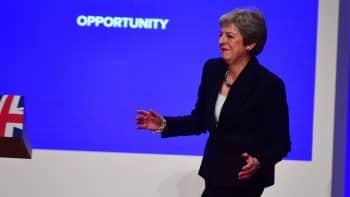
    THE TRUTH is that the world is laughing at the UK’s discomfiture over Brexit. The world will be mildly discommoded by whatever happens but it be will be amply compensated by the comedy of the UK’s stupidity made possible by ignorance of history and economics. For a long time much of the world really didn’t laugh at Britain – now it can, and does. The role of Ireland in frustrating Brexit is particularly gratifying. According to the BBC, “what alarms so many Tories is that after centuries of troubled Anglo-Irish relations it is the smaller of the two islands which appears to be exercising greater power for the first time”. Good, that’s justice. I’m relishing the Brexit difficulty that the English in particular are enduring after 850 years where Ireland was colonised, demonised, ridiculed or relegated to an afterthought, by its bigger neighbour. I can live with the temporary economic hit that we may take because latterly we’ve been doing fine, at least economically, anyway. Brexit also boosts our morale, making our own tawdry politics look relatively good – at least we don’t look nasty any more and this time it is not we who are in a parallel universe. I’m pleased with the irony that it’s an ex colony that’s inflicting the constitutional compromise on the UK: it might help English nationalists understand that if you inflict epochal constitutional prejudice on the neighbours there’s a price to be paid in dysfunctionality. Culturally, the UK has offered so much: in particular to literature, the popular arts especially music, and to humour. From the 1960s, until recently, Britain led the world in humour based on self-awareness, self-criticism, open-mindedness and irony. Yet Brexit is treated as a humourless parody, its protagonists hapless and led by a frumpy and now-abject PM. When “strong and stable” Theresa May says “I’m a bloody difficult woman”, “I stand ready to finish the job”, or “I’ll give everything I’ve got” we recoil because she is so incompetent and, because she is po-faced, frankly we revel in her humiliations. When she dances like an insect, when she takes off across Europe begging shivering atavistic geopolitical rivals to unravel the deal she’s just agreed, and failing to understand that a backstop cannot be time-limited and that the EU won’t budge from it, when she gets locked in her car or the conference scenery collapses around her, I’m afraid the world does laugh. Some might say that Britain taught us to. It was the master of subversive comedy: and specifically targeted cravenness, hypocrisy and class hangups. There was a time when Britain would have seen – not just that Brexit is bad but that it is funny. Mrs May is as uncharismatic as David Brent, her Ministers as principle-free as Jim Hacker or Hugh Abbot. Rees-Mogg recalls the Upper Class Twits from Monty Python, and Boris Johnson represents the swivel-eyed First World General Sir Anthony Cecil Hogmanay Melchett from Black Adder. A swathe of British society seems to have taken its lead from Mind Your Language and Dad’s Army. But Britain’s consolation is that its come-uppance is comedy not – whatever Angela Merkel said – tragedy as, while there may well be anagnorisis and catharsis, there is likely to be a happy ending to Brexit. This is because first the concept of Brexit is largely based on false premises and because second its upshot is so bad that politics will inevitably, however long it takes, reverse it. The counterfactuality of the Brexit arguments derives principally from failure to understand that the loathed constraints on national self-rule are imposed by globalism not the EU. The UK has been anomalously unlucky that its ruling classes don’t seem to understand that the Big Idea of the EU is the economic benefits of trade which dwarf simple structural fund payouts, that they believe that the EU is conspiring against the UK and that the current deal is one-sided when it is not, that they fantasise that European industry depends on its UK trade and that EU membership removes £350m weekly from the National Health Service, that they obsess over the obligation to pay £39bn, as if it were not simply due – a long-term vouched bill. And the UK has been anomalously unlucky in its leaders: witless mediocrities masquerading as Winston Churchills, lionised in the Express and Telegraph; indulged even by the BBC. There is time for the misrepresentations to be forensically nailed and for the mediocrities to be replaced by politicians who are up to the imperatives of our times. All who in any way wish the UK well can take comfort in the general rule of history: countries tend to find equilibrium pursuing solutions that make them better off. The reasons for the Brexit mistake are complex. England has a delinquent education system which fails to teach enough people, including its leaders, history or economics. These disciplines which feature as standard in the curricula of schools in every other country in Europe teach that the EU has helped avoid war in Europe for the first generation in 150 years, and that the customs union and single market have increased wealth through exploitations of comparative advantages and trade, not primarily through transfers of structural funds. The lethal ignorance of these truths when combined with a widespread residual sense of British exceptionalism, by which most mean English superiority, lit a UK anti-EU fire that would largely burn the UK itself. The upside here is that if an ignoble reconciliation with the EU extinguishes the fire it might also liquidate the arsonists too. England needs to find a home at its political centre for its cleverest and most imaginative, moral and outward looking people. But there is a problem with the Little English. They’ve been educated for simplicity. They are suckers for homespun superannuated guff about getting on your bike and the University of Life and for aphorisms like “We have had enough of experts” and “Brexit means Brexit”. The bulk of English people

    Loading

    Read more

  • Posted in:

    The usual US oil adventurism would face almost universal opposition, though many oppose President Maduro

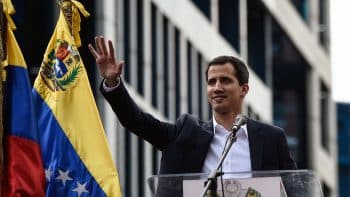
    ON FEBRUARY 26th Mick Wallace and I attended a rally addressed by Venezuela’s President Nicolas Maduro. It closed an International People’s Assembly which had taken place in Caracas that week, with over 450 community and trade union delegates from all over the world. Fresh from the Government’s defeat of Opposition attempts to break through the border with Colombia to deliver ‘humanitarian aid’, on February 23rd, Maduro showed that, when the debris of a truck burnt out on the Colombian side was examined, the humanitarian aid contained little of what Venezuelans need. This follows in the worst traditions of interventionism in the affairs of South America but was hardly surprising when the supposed value of the ‘aid’ was $20m, an amount less than the estimated daily $30m loss to the Venezuelan economy as a result of the sanctions started by Obama and intensified by Trump. He talked of a recent vox pop carried out in Spain where nobody knew the President of Portugal or France, but everyone knew the President of Venezuela. He joked that as his ancestors came from Spain and he has a right to Spanish citizenship he was thinking of contesting the upcoming Spanish elections due to the unpopularity of the Government there! And Maduro has a point. The EU countries that lined up to recognise the US-anointed puppet Juan Guido have some neck and would do better to pay attention to the unpopularity of their own Governments rather than facilitate the latest coup effort in Venezuela. During our week-long stay in Caracas we talked to many people… some supported the Government, some didn’t. Some called themselves Chavistas but didn’t like Maduro. Some said they couldn’t care less about the government but would not allow the country’s sovereignty to be undermined. We found that many people don’t like Maduro, but they like the opposition less! You’d struggle to find anyone who supports Juan Guido. It is very clear that he does not have the backing of even the right-wing opposition and will never come to power In Venezuela unless as a US dictator. That Simon Conveney telephoned him to tell him he had the support of Ireland, without any basis in Venezuelan or international law, is truly shocking. His Popular Will party is the smallest of the opposition groups, has largely abandoned normal politics, boycotted the recent elections, instead attempting to organise external intervention and a ratcheting up of the sanctions that have been deemed “crimes against humanity” by UN Special Rapporteur Alfred de Zayas. Certainly there is no doubt about it, life is very difficult for many Venezuelans. Three years ago you could live comfortably on $100 a month. People in modest jobs would have the latest mobile phones. Now the shortage of dollars and hyperinflation has seen the value of the Bolívar fall from around 730 to the dollar in January to 3,300 now. Access to cash is restricted, with Venezuelans only able to withdraw 500-1500 Bolívars (half a dollar) from ATM machines. Average wages have fallen to about $10 a month. People manage by supplementing their income in other ways. Electricity, water, public transport and a lot of accommodation is free. You can fill your car with petrol for less than 10 cents. The Caracas underground was once the jewel of South America and while it has not expanded as planned it still carries over three million people a day on a very efficient system. Despite the low oil production, millions of poorer families continue to receive a monthly box of essential provisions and a top-up on their salary. The government housing missions have built 2.5 million social housing units since 2015 and continue to build. Maybe the Irish Government could learn a few lessons. We were there for the carnival. Hundreds of thousands flocked to the festivals, pageants alive with palpitating music or went to the beach, festooned in balloons. It suggested a population totally relaxed and a million miles from the western presentation of a country under the grip of dictatorship. Moreover, this was in the city centre and barrio districts. in the affluent East Caracas with its gated communities, shaded SUVs and jeeps, designer shops and exclusive restaurants a certain luxury still prevails. That said, it can be difficult to get medicines and queues for subsidised food are not uncommon. Children told us of teachers leaving because they can’t make ends meet, and higher wages are being offered to them in Colombia. We saw families leaving at the airport. Primarily these people are quitting because the economy is being strangled. Some blame the government, some don’t, and most certainly are very aware of South American history and will not support external interventionism. They are aware that recent electricity shut-downs are at best a result of the undermining of vital infrastructure as a result of the stranglehold being put on the economy, or at worst deliberate sabotage to undermine support for the government, causing enormous hardship to citizens. Undoubtedly the problems in Venezuela have been exacerbated by the Government’s failure to break the over-reliance on oil and to develop alternative indigenous agriculture and industry. It has also failed to deal with corruption. There are many to the left of the Government who are critical of the failures to develop the communes. In many areas people are just by-passing the government, growing their own food, redeveloping ancient herbal medicine and looking after themselves. We met young men, members of the local people’s militias who train militarily and had been on the Colombian border when the skirmishes over the misnamed ‘humanitarian aid’ were organised. There are between one and two million of these forces. They will not stand by, and have clearly stated they are prepared to defend the country if the army cannot, or will not. This is a very dangerous situation. Military intervention must be avoided, but equally the sanctions are war by another means. They are strangling the economy, robbing assets rightfully belonging to the Venezuelan people, seeking to press US hands

    Loading

    Read more

  • Posted in:

    Scathing attack on government and NAMA role in creating housing emergency

    THE SCATHING criticism by a human rights working group of the United Nations of the Government’s failure to meet its obligation to deliver affordable, public housing will not surprise those experiencing the unrelenting rise in homelessness and the cost of rental accommodation. What is new in the letter written by Surya Deva, chief rapporteur of the UN Working Group on Human Rights and Transnational Corporations and Leilani Farha special rapporteur on Adequate Housing is the detailed critique of NAMA and its role in the financialisation of housing in Ireland. In a letter delivered to the Government last week, the UN investigators claimed that over 90 per cent of loans sold by NAMA have gone to international, mainly US funds. It further stated that NAMA and the introduction of Real Estate Investment Trusts (REITS) as well as the sale of non-performing loans by State controlled banks, have contributed directly to the housing and homeless emergency. “Our chief concern lies with those laws and policies which have allowed unprecedented amounts of global capital to be invested in housing as security for financial instruments that are traded on global markets, and as a means of accumulating wealth”, the letter from Deva and Farha asserts. “This expanding role and unprecedented dominance of unregulated financial markets and corporations in the housing sector is now generally referred to as the ‘financialisation of housing’ and it is having devastating consequences for tenants. Contrary to international human rights obligations, investment in housing in the Republic of Ireland has disconnected housing from its core social purpose of providing people with a place to live in with security and dignity`’. They are also critical of the failure of successive governments to build public housing, particularly since the 2008 financial crash. “Central to the Government’s recovery strategy was the introduction of austerity measures, a programme of ridding domestic banks of non-performing debt assets and increasing levels of foreign financial investment in the domestic housing and mortgage market. Sweeping cuts were introduced notably to the public housing capital construction budget – from €1.46bn in 2008 to €167m in 2014 – which was disproportionately severe. As a result, newly built social housing fell from 5,300 units in 2009 to 1,000 in 2012 and then an effective ceasing of the social house-building programme with just 476 units built in 2015. Between 2005 and 2017, the number of families on the social housing waiting list increased by 100% from 43,000 to 86,000.” However, its identification of NAMA as the key instrument for transferring public assets on a vast scale to vulture funds and effectively making people homeless is particularly stark. The letter states: “Owing to the heavy deregulation of foreign investors, and the legislative changes introduced to make Irish property markets more attractive to these investors, the sale of non-performing loans and securitised assets to foreign private financial institutions has increased exponentially. Of all assets sold by NAMA, 93% have gone to foreign investors, with 90% being sold to US private equity funds. By 2016, one third of all properties sold in Ireland were being purchased by investors.” NAMA has sold some 110 billion in loans as well as other assets worth some 124 billion since its inception including lands on which an estimated 50,000 public and affordable homes could have been built. The authors point out that “heavy private housing investment combined with the cuts in the public housing budget has been making housing in Ireland significantly unaffordable.” This is made worse, they argue, by land hoarding with investors sitting on vacant land to restrict supply and thus increase demand and value. “Private equity landlords, such as Ireland’s largest landlord, I-RES REIT, have openly discussed policies of introducing the highest rents possible in order to increase returns for shareholders. The recent report by the Department of Finance notes that these large REIT investor landlords are playing a key role in setting inflated market rents in certain areas. Private housing investment, and the related increased unaffordability and availability it has generated, has also impacted security of tenure. Property investors (and investor landlords) are known to push tenants and owners out of their homes by taking possession, evicting, or creating conditions to compel tenants to leave – such as vastly increased rents or using loopholes in rent legislation.” Hopefully, the will be passed on to Eoghan Murphy and his officials in the Department of Housing. Frank Connolly is the author of NAMA-Land (Gill Books 2017)

    Loading

    Read more

  • Posted in:

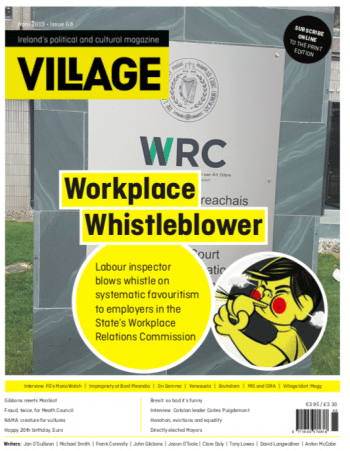
    Labour inspector blows whistle on systematic favouritism to employers in the State’s Workplace Relations Commission

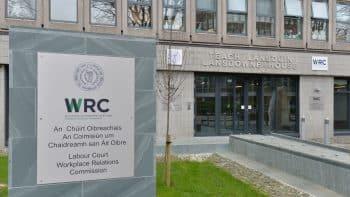
    GEORGE MCLOUGHLIN made a Protected Disclosure in 2015 – when he was employed as a labour inspector with the Department of Jobs, Enterprise and Innovation (DJEI) – concerning what he perceived to be a culture of deference to non-compliant employers in the management of the National Employment Rights Authority (NERA) (subsequently the inspection services of the Workplace Relations Commission WRC). The disclosure to Kieran Mulvey, WRC Director, his colleague Padraig Dooley, WRC Deputy, and Philip Kelly, Assistant Secretary, Department of Jobs, Enterprise and Innovation alleged: a distorted culture was generating inspections that were ineffectual; failure to identify and pursue serious breaches of basic employment rights detected at inspections; political interference in the inspection process; and deliberate and wilful misdirecting of the limited resources of the inspectorate into policing the work-permits regime to the detriment of its proper work in monitoring and pursuing employment-rights violations. The department recognised the disclosure was protected, appointed former IBEC Director Turlough O’Sullivan to carry out an independent investigation of it; and over the following six months McLoughlin provided detailed evidence to O’Sullivan to substantiate the criticisms he had made. In May 2016 he was informed by the department’s Assistant Secretary that his allegations had not been substantiated. He was not given a copy of O’Sullivan’s report and, despite several requests, the rationale by which they had arrived at this conclusion was never explained to him. In none of the cases he had referred to O’Sullivan and Kelly in support of the concerns raised was he offered any explanation to support their view that NERA/WRC management’s interventions in these cases could be presented as legitimate or consistent in any way with the proper remit of the inspectorate. In July 2017, following legal advice to the effect that he could access O’Sullivan’s report under Data Protection legislation, he finally received a redacted copy of Turlough O’Sullivan’s report. He remained unhappy at the manner in which the investigation had been conducted and in particular at the appropriateness of the department’s decision to appoint a long-standing employer representative and lobbyist to investigate allegations of a pro-employer bias in the management of a regulatory body of the State. He told Village that “the proper work of the labour inspectorate in ensuring that employers in low-pay sectors of the economy comply with the state’s most basic employment rights legislation is being deliberately undermined by a management that sees its function as facilitating some employers in circumventing the very legislation they are supposed to be enforcing thereby leaving vulnerable workers at the mercy of unscrupulous employers”. He immediately presented two commentaries on the report, detailing the inadequacies of O’Sullivan’s investigation as a new protected disclosure to then-Minister Frances Fitzgerald in July 2017 and requested that she arrange to have the concerns raised in his original disclosure properly investigated. Minister Fitzgerald’s office advised that the matter was still under consideration but he has heard nothing further from her or her successor since that time. Indeed he made a complaint to the WRC about her inaction which was not upheld and which he subsequently appealed unsuccessfully to the Labour Court. From the time that he raised these issues he was subjected to a long series of punitive actions by the management of the WRC and the department. His allegations were also reported to Minister Fitzgerald in the hope that this unfair treatment would be addressed and, where possible, rectified but, again, no action was taken by her. McLoughlin submitted a complaint to the WRC about this penalisation but it was not upheld by either the WRC or on appeal the Labour Court; he has also made a complaint about Unfair Dismissal which was not upheld by the WRC and will shortly be heard by the Labour Court. He makes the point that “the odds are stacked against me as the WRC is judge and jury in its own case and the only avenue for appeal is to the Labour Court, a sister organisation of the WRC and another organ of the same department, all appointees of the respondent Minister”. Concerns Raised in Protected Disclosure: The main concerns with the management and direction of the inspectorate that McLoughlin raised in his disclosure were as follows: (i) Inconsistencies in the Conduct of Inspections and Failure to Follow Up on Breaches Detected. During the course of O’Sullivan’s investigation McLoughlin claims he gave him instances of a number of inspections where NERA/WRC managers had either turned a blind eye to blatant breaches of employment rights that ought to have been apparent in the records inspected or failed to follow up effectively to ensure that the employer became compliant and the employees affected were appropriately compensated. “Following on my first meeting with O’Sullivan I gave him the contact details for a HR Consultant whom I had dealt with as an employer representative at a number of inspections over the years and who had raised concerns with me as to what s/he saw as glaring inconsistencies in the manner in which breaches of legislation detected at different inspections were pursued by different inspectors”. The HR consultant in question had agreed to meet O’Sullivan and provide such evidence as s/he had available to this effect on condition that his/her confidentiality and the confidentiality of the employers s/he had been representing in those cases would be respected. McLoughlin says “Mr O’Sullivan refused to interview this ‘witness’ as part of his investigation on the grounds that he would not be able to name the consultant or the businesses. In my view, in so doing he excluded evidence that was highly relevant to his investigation”. At the very least, he says, “a question has to be asked as to the appropriateness of Mr O’Sullivan’s refusal to even hear this authoritative evidence in support of my allegations, particularly when we see that elsewhere in his report he does not appear to demonstrate anything approaching the same rigour, sensitivity or objectivity in determining the credibility of the line fed to him by NERA/WRC management”. Over the

    Loading

    Read more

  • Posted in:

    Equality yes: Property Rights, Beades, Gilroy, O’Donnells, Leagues: No

    LEFT-WING MEANS favouring equality over unfettered freedom, redistribution of resources over property rights. If you’re on the left you’ll appreciate planning, taxation, minority rights and nationalisation. If you don’t maybe you’re anti-Establishment or anti-intellectual, or post-Left-and-Right or Fianna Fáil or just confused. Maybe a Trump figure or the gilets jaunes or the New Land League are for you. Ideology matters though in Ireland little is heard about ideas of any sort, much less the egalitarian ideas in the first paragraph. Being left-wing doesn’t mean you support every underdog, or rally behind the anti-establishment banner with the noisiest support whatever its colour. There is of course much ado about campaigns and that is fine. Campaigns are a good way of keeping a complacent government on its toes. However, if they are misdirected they can divert energy that might otherwise support more subversive, more long-lasting or more genuinely left-wing campaigns. There may be some short-term political gain and contrarian satisfaction. But little long-term gain for left-wing goals. Politics transcends campaigns. But it is the paucity of the gain to the Left and its policies since Ireland’s economic collapse that reveals how misdirected the post-collapse campaigns were. Village would prefer if the left had campaigned on increasing property and wealth taxes, revulsion at NAMA refloating Ireland’s dodo development community, and jailing white-collar criminals. Not against water charges, bin charges, property taxes and carbon taxes. (The polluters pay principle should be a Left-wing mantra because polluters take from the common good and the future). Championing ‘underdogs’ is not enough. Some campaigns favour underdogs who, in pursuit of right-wing goals like property speculation, generated their own demise. Some campaigns favour people who look like underdogs, often overdogs who were yesterday’s underdogs. Egalitarians should not favour capitalists – risk takers, less still those who have taken risks and lost. Village never took to Sean Quinn or to the billionaire scions of the Quinn family, wherever their woes took them. Village has no sympathy left for the mostly ungrateful builders bailed out by the State through NAMA. The insolvent NAMA brigade should have been reduced to below the average wage, and public housing; a roof over their heads. Instead they are back now with different but gargantuan portfolios bagged at knockdown prices. Certainly there is a right to housing, and homelessness is an abomination, but not a right to your particular mansion, if you gamble with it. Speculators have no moral claim to reinstatement of their lost capital. There should be no socialism of failed capitalism. In a capitalist society capitalists must pay their debts. This is all the more desirable when the State owns 75% of Permanent TSB, 71% of AIB and 14% of Bank of Ireland. All things being equal, Village’s money is on the State not the failed gamblers. It is a pity that these banks have not pursued more foreclosures on the wealthy and on second homes. It would have kept mortgage-interest rates lower. Property is a way the establishment preserves its historic privileges – a dangerous, and tedious, affliction that gets in the way of equality. After all, households in the bottom 25 per cent of income distribution spend half of their income on housing costs. Unfortunately, however, Ireland is obsessed – perhaps because it is a victim of history. The influence of famine evictions, the iniquities of having been a colony and the fact we are not ‘post-industrial’ infuse much current thinking. The common good rarely figures in the discourse. Sadly it means that property rights resonate more with most Irish people than any other rights. Fine Gael and Fianna Fáil and their supporters unite in nothing so much as their aspiration to buy a second buy-to-let. That is why we are so hostile to renting and to planning restrictions. It is why the government has just announced deferral of increases in property tax, even though gains in property values are less honourably accrued than those through labour. Even many on the Irish left see principal private residences as “family homes” not as wealth that should be taxed. Even cosmopolitan socialist Richard Boyd Barrett believes, “there is no way of tweaking the property tax that will make it fair because by its nature, it is regressive and will hit low and middle-income families”. It’s as if only income signals wealth. Meanwhile, RTÉ can’t run a feature on anything involving property from the CPOing of lands along commuter routes into Dublin to the taking of houses for the Metro to occasionally thwarted one-off-housing builders – without making an issue of the devastating hard luck of the property owner, rather than the public interest. Far worse are the angry men of the property-rights groups. Jerry Beades of the New Land League, “a buddy system” for those in legal battles with the banks, backed the O’Donnell family when they lost their 10,220sq ft Dalkey home after the family amassed debts of 171 million to Bank of Ireland. Beades himself accrued debts of almost 116m during his career as a developer. Ben Gilroy, a tin-pot anti-eviction activist, who has been involved in at least 16 High Court actions against banks, usually citing the natural law, is currently in Mountjoy for ongoing contempt of courts. Village is out of sympathy – there are too many genuinely deserving causes. Unlike say the right to life, or the right to be treated equally, property is not really a right but an entitlement, perhaps sometimes necessary for economic predictability, but in all cases subject to the common good. Time to defetishise it and those who vaunt it, especially the angriest.

    Loading

    Read more

  • Posted in:

    He socialised with Royalty and was abused by a future Lord, though his brother had revealed the key story about MI5 abuse of Kincora boys

    RECAP OF PART ONE In Part One of this story, Alan Kerr described how he was sexually abused by three men at Williamson House, a Belfast Corporation Welfare Department care home in Belfast, in the 1970s. He was only six years of age when he was first raped. One of his abusers was Eric Witchell, the Office-in-Charge of the home. Witchell was a friend of the paedophile gang which ran the infamous Kincora Boys’ Home, also in Belfast. Alan Kerr in the years after his arrival in London. Later, Alan was moved to Shore House where he was abused by another two men, one of whom may have been William McGrath, the Housefather at Kincora. Alan eventually fled from institutional care for a life on the streets of Belfast. Desperate, and in need of food and shelter, he worked for a spell at a brothel on the Lisburn Road where boys as young as 13 were made available to Belfast’s paedophile community. At the very least, the brothel enjoyed a measure of shelter from the wall of protection built around NI’s paedophile rings by the UK intelligence community. In order for the spies’ paedophile exploitation and blackmail operations to thrive in NI, it was necessary for the local paedophile population as a whole to flourish. If it wasn’t for this, Alan and many others might never have been abused. HUNGRY, ALONE AND FIGHTING THE BITING COLD Alan was abused by Billy ‘B’, a man he describes as a “toilet creeper”: “I met him out of the blue one time [in Belfast] while I was on the run from Rathgael [Training Centre]. He followed me into the toilet and smiled at me”, Alan recalls. B would prove to be one of Alan’s most prolific abusers. When Alan was 15 or 16 B took him to London via the Belfast-Liverpool car ferry in his silver BMW. At the time Alan was subject to a care order which was not due to expire until he was 21. Alan stayed in London after B headed back to Belfast because he did not want to return to Ireland but this proved no more than jumping out of the Belfast frying pan and into a London hellfire. With no support, trade or qualification, he would spend his youth as a “rent boy” at such places as Victoria Station and on the ‘Meat Rack’ at Piccadilly Circus, also known as the “Dilly”. Over time, he would get to know boys from all over Ireland who were in the same dire straits as he was. The men who abused the young teenagers referred to them as ‘chickens’; the boys called their abusers ‘punters’. Alan would never return to live in NI again. Piccadilly Circus  Victoria Train Station was an infamous hunting ground for paedophiles. “There were pubs inside the station in those days. Some of the men who went to them were only there to have sex with the boys. There was another pub nearby, the Shakespeare, which was similar. Soldiers used to go there a lot. At the weekends there would be a lot of military police outside it”. The police knew perfectly well what was going on at Victoria Station. Not long after his arrival, Alan was approached by a British Transport Police (BTP) officer who asked him who he was and then went away to make inquiries about him. When he returned, he told Alan that since he wasn’t in trouble in NI, he wasn’t going to do anything about him. Clearly, the officer had been able to make enquiries with Belfast – presumably through the communication facilities in the BTP office in the station – and must surely have discovered that Alan was still under a care order. Nonetheless, he abandoned him to a life as a rent boy. Finding somewhere to sleep was a priority for Alan, and the Victoria Station offered some shelter. “In those days, the station was open all night. It is unrecognisable now. I slept on trains that pulled into it for the night”. Sometimes he found himself drenched in so much sweat that his clothes would be wet, even in winter. Then, as the night and early morning crept in, he would begin to freeze while still damp if not actually wet. He recalls having to go to the toilets to try and warm himself up by using the hand dryer. ‘In the morning the police would come onto the trains and turf you off”. One of the visitors to the toilets at Victoria Station was John Imrie, an MI5 officer named by Ken Livingstone in the House of Commons in connection with the Kincora scandal. Imrie was arrested at the station and convicted for exposing himself. See Village March 2018. QUEER-BASHING AND SEXUAL ABUSE AT THE HANDS OF THE POLICE During his early years in London, Alan was assaulted by police officers on a number of occasions. Typically, this happened as he was being escorted towards Vine Street Police Station from the Dilly. “They would start pushing and pulling you to make it look like you were causing them trouble. They would use this as an excuse to punch you in the stomach; always in the stomach; up against the wall outside the station. They never bruised your face as you might be going up before the Bow Street magistrates”. One British Transport Police officer Alan got to know was a pederast, something that would explain how the abuse was able to thrive at the station. He developed a liking for Alan and frequently abused him, even taking him back to his flat. Some of the officer’s colleagues suspected what was afoot and attempted to persuade Alan to talk about it but he refused. The abusive officer has long since died. He operated out of the Transport Police office at Victoria Station. Alan didn’t reveal the nature of the relationship he had with this officer when he was interviewed by his colleagues because he was “afraid of the police”. THE

    Loading

    Read more

  • Posted in:

    Honohan and Equality

    THE RIGHT to Private Property and private ownership of goods tends to divide the Right from the Left. In Locke and Hobbes, it is the central human right as it has always been from a Whig-Liberal or indeed a Neo-Liberal perspective. From a Marxist perspective it is an unqualified evil and even those who accept it as a human right from a leftist perspective do so under characteristically qualified conditions. I have not noted much enthusiasm in Village magazine for property rights. Striking its inevitable balance, the Irish Constitution subjects property ownership to the common good, whatever that means. It has been much elaborated and is more progressively interpreted than is probably widely believed, by Irish courts, especially the Supreme Court. What has not been developed in Ireland is Article 45 of the constitution whose stated object is to establish social and economic rights. In this respect it has always been open as the South Africans, Canadians and others have done to establish a right to housing. In India they are defined as a basic survival right intrinsic to life and General Comments 4 (1991) and 7 (1997) of the UN Economic and Social Rights Committee – on the right to adequate housing – recognise that the human right to adequate housing, which is thus derived from the right to an adequate standard of living, is of central importance for the enjoyment of all economic, social and cultural rights. The UN Declaration of Human Rights and its Covenant on Economic and Social Right article 11 (1) requires that its 153 States parties “recognize the right of everyone to an adequate standard of living for himself and his family, including adequate food, clothing and housing”. Article 26 of the South African Constitution stipulates that the state has an obligation to build adequate housing and is prohibited from arbitrarily evicting anyone. Subsequent jurisprudence has established that before an eviction there should be meaningful consultation through arbitration and that no one should be evicted without having somewhere to go. The state also has a duty to have a housing plan and to build houses. In contrast the courts in Ireland are powerless: once processes have been undertaken for eviction or dispossession and those processes comply with the formalities then that is that. A grandmother can be jailed for contempt of court as she seeks to repossess the house from which she has been evicted. In February the Master of the Irish Court was bumped by a High Court judge out of his role in managing debt repayments as he was blocking banking repossessions and was perceived to be anti-bank. Given his role as a filter of claims always susceptible of appeal to the High Court which almost always over-ruled him, when offered the chance, there is some, not much, merit in the acid view of Judge Garrett Simons that he was giving people false hope by staving off the evil day. Perhaps that seems true from the perspective of a positivistic judge with a planning background who through his filters sees no role for the courts in interfering in social and economic justice issues centring on housing. On the other hand it would not be false hope if it yielded real solutions and radical change. Elsewhere in this edition of Village Tony Lowes explains the evolving right to a good environment in Ireland. It would not be qualitatively different in a country where homelessness is a universal preoccupation if the right to housing crystallised judicially. Ireland has witnessed an upsurge of NGOs and, depending on your perspective, busybodies, clogging up its busy courts, often as lay litigants, agitating for some measure of protection for the dispossessed. The Land League which I have represented is one and of course New Beginnings, a separate initiative before in effect it was flogged to the banks with a profit motive. On the other hand for soft liberals and leftists an overarching concern is that those who massively over-borrowed while others kept their discipline are not to be empathised with as they are part of the casino capitalism problem. Accepting the validity of the blandishments pf property speculators or professional hypocrites is Sleeping with the Enemy. Well yes and no. Firstly, a common Irish failing is to separate out the dancer from the dance. However, in the interests and fairness it is essential to depersonalise and be objective. One of the defects in populism is that it allows demagogues to showboat and scream even when they are the authors of their own downfall. Village readers will dislike populism, demagogues, the property brigade and presumably people who are the authors of their own downfall. But it does not make it unreasonable to support rights to housing – for the following reasons: 1: That the requirement constitutionally (and for example under the UN Covenant on Economic, Social and Cultural Rights) is merely to affordable housing of an appropriate scale – possibly rented – not to the freehold in a ten-bed in Killiney – even if Jerry Beades can justify it; and even those sinking in greed-generated debt are entitled to a humble abode in a just society for without it all dignity and much capacity is lost. The indisputable fact that some of the agents in property-rights activism have lost sight of this entirely should not blind us to the fact that the imperative is none the less forceful for being so limited. It should be conceded that dishonest transfers of assets and the Family Home Protection Act have created a justified sense that in its execution some people are unfairly getting to keep enormous homes when the constitutional right is, and should be, limited to modest lodging. 2. That though the goal at least for those on the left may in theory be equality, in practice we are dealing with the crooked timber of humanity and in Ireland some of the most abject are boomtown debtors, by definition still reeling after more than a decade. The right to equality does not

    Loading

    Read more

  • Posted in:

    Happy Birthday to Euro

    Throughout its 20-year history, the Euro has been depicted as a crucial element of the development of the European Union. It was supposed to strengthen the European economy, bring EU Member States closer together and increase EU citizens’ prosperity. Yet, after the economic crisis in 2008/09 experienced by the southern Member States and Ireland, the reputation of the Euro was undermined and its weaknesses brutally revealed. By Anna Jermak Love it or loathe it – what it is The Euro is the official currency of 19 of the 28 EU Member States, used by more than 339 million people, and the second-largest currency in the world (after the US dollar). It was introduced by the 1992 Maastricht Treaty as part of the Economic and Monetary Union (EMU), involving the coordination of economic and fiscal policies, a common monetary policy, and a common currency. The Euro was launched in 1999 and three years later came into circulation. Big dreams – how it all began In order to understand the reasons for the introduction of the current European currency, the Euro, one needs to go back to the 1950s, and the genesis of the European Economic Community (1957), when the European leaders first talked of the creation of the single market with free movement of trade, services, capital and persons. The common currency, together with common monetary policy and co-ordinated economic and fiscal policies, was essential for its completion. There was no space for multiple small and vulnerable currencies in the fast-developing business world – a single currency, as presented by the 1989 Delors Report, was the capstone of Europe’s single market. Indeed, one large Euro market would enhance European economic integration, stability and growth. As there was no need to exchange currencies in the Member States which adopted the euro, both consumers and traders were provided with greater confidence, opportunity and security. The adoption of the common currency also strengthened the EU’s position in the global economy. However, leaders like French President Francois Mitterrand and German Chancellor Helmut Kohl also believed that a single European currency would apply irresistible pressure for political integration. It would lead eventually to their ultimate goal: a European political federation akin to that of the United States. They saw that to function smoothly, monetary union requires a banking union – a single supervisor for all the banks and a union-wide deposit insurance scheme. Otherwise, banks overseen only by their national supervisors would be allowed to undertake cross-border lending operations irrespective of the impact on neighbouring countries. And in the absence of a union-wide deposit insurance scheme, a run on the banks in one country could infect the banking systems of others. Furthermore, to operate smoothly, a monetary union requires an integrated fiscal system, like in Australia and the US. States that give up their monetary policy to a higher authority can no longer adjust it to suit domestic conditions. They can no longer lower interest rates to encourage investment when the national economy slows. Of course, if the partners operate an integrated fiscal system, prosperous members can shift resources to depressed regions, compensating for the impossibility of interest-rate cuts. The problem is that banking and fiscal union will only be regarded as legitimate if those responsible for their operation can be held accountable for their decisions by citizens. That prompted a logic for more power for the European Parliament – and less for national legislatures. Monetary integration creates a certain logic and associated irresistible pressure for political integration. But the politics of Europe and the world since 1992 militated against political integration. Without it, the unreadiness of the EU for a common currency back in 1999 was an accident waiting to happen. Some economists did predict this. For instance, it had been predicted by economist Martin Feldsted two years before in an article in Foreign Affairs magazine: In the beginning, there would be important disagreements among the EMU member countries about the goals and methods of monetary policy. These would be exacerbated whenever the business cycle raised unemployment in a particular country or group of countries. These economic disagreements could contribute to a more general distrust among the European nations. The ugly truth The Euro duly imploded as 2008 turned into 2009 when Greece, Spain, Portugal, Cyprus, Italy and Ireland were almost destroyed economically as part of the price for being parts of the Eurozone. The impetus for the debt crisis within the Eurozone was the banking crisis in the US in 2007/2008 – 2009. It affected the global economy, and European countries were not exceptions. Greece, previously so desperate to become the twelfth member of the Eurozone, has suffered the most. Its fraudulent entry, lack of fiscal reforms and unsustainable budget deficits made its debt so large that it exceeded the size of its whole economy. As the banking systems within the Eurozone had become much larger and mightier than their host economies, the Greek government was in practice unable to rescue national banks or to pay debts without the assistance of the European Central Bank, International Monetary Fund or the EU. Austerity measures were introduced, leading to national protests, riots and anti-EU sentiment. In Ireland – the first Eurozone State that fell into recession – the crisis was aggravated by the bursting of a property bubble, which caused loan defaults. In order to rescue Irish banks which had financed properties through now precarious loans, the government took on their debts. That led to the deficit, public spending cuts and tax increases, and left the government in Dublin with no option but to join the EU and International Monetary Fund bailout programmes. The debt crisis followed a similar course in the rest of the countries, although on a smaller scale. In effect, a banking union – a single supervisor for all the banks and a union-wide deposit insurance scheme – was introduced in 2012. It prevented banks overseen only by their national supervisors from undertaking cross-border lending operations irrespective of the impact on neighbouring countries,

    Loading

    Read more

  • Posted in:

    Gemma O’Doherty has become the poster girl for Irish populism. By Michael Smith.

    In 2018 award-winning journalist Gemma O’Doherty wrote several articles for Village magazine. She was easy to work with and produced good copy. Like many contributors she generously did not charge the magazine for her work. She brought a large social-media followership with her, writing pieces on human-interest stories – on Madeleine McCann; on Sophie Toscan du Plantier; on sex abuse in Donegal and in a Dublin rugby school; and she wrote about her experience before the Charleton Tribunal, with which she was not impressed. She had given evidence about how she was removed from her position as Chief Features Writer of the Irish Independent in 2014 after she door-stepped the former Garda Commissioner about the wiping of his own penalty points. Around that time sadly her husband Peter Carvosso, a well-respected editor, who also worked for the Irish Independent, had died. It must have been a very difficult time for her. O’Doherty writes well. Some elements of the stories she submitted to Village were less definitively backed up than was ideal, though they were always scupulously researched and coherent. Her story on rugby trainer John McClean was excellent and was helpful in bringing about long-stalled charges against him for abusing boys in Terenure College. She never ventilated any sort of political view in these articles. When she ran for the Presidency on an anti-corruption ticket expressing her lack of faith in Irish media, Village felt the media should give her a hearing. There were mutterings that she was quietly anti-abortion, anti-vaccination but she denied this, particularly in interviews with online news service, Broadsheet.ie which supported her Presidency bid. She did not do well in the Presidency election – she only received one of the four requisite nominations – and was predictably snookered by the media she loathes for stating, without evidence, that journalist Veronica Guerin had been killed by “the State”. She never got a chance to air her politics or her platform. That was a pity, from all perspectives. It was after that election that her politics appears to have turned. Perhaps this was a reaction to the success of the nastiness of Peter Casey’s campaign which placed him second. She first toured the country with other anti-corruption activists giving talks, and more recently has established an ambitious new platform called Anti-Corruption Ireland with 2000 online members – a “political movement” which intends to field candidates at local, national and European elections. Village is driven by politics not personalities. It promotes equality and sustainability. Gemma O’Doherty derides the equality agenda, and believes climate action has gone too far and that wind farms are an over-subsidised scam. It is not clear how she funds herself: and she is peripatetic. Nor is it clear who she is accountable to or what she regards as her ethical parameters. She provocatively claimed that anti-racism protesters at a rally in Rooskey, Co Roscommon after an asylum centre was burnt, were not locals. A piece about this in Broadsheet was removed after legal correspondence. In early April she was cut off mid-stream by Sligo’s Ocean FM when she mentioned Mary Boyle. On the same trip to Sligo, she says Twitter shadowbanned the notice of the Anti-Corruption Ireland meeting. In mid-March a hotel in Cork cancelled a meeting she planned because she was inflaming the situation after the Christ church murders – and she has run into trouble with Youtube which closed down her channel because of her incendiary videos. She organised a small sit-in at Google, Youtube’s parent, in Dublin in protest. She loathes George Soros, an agent of global liberalism who “uses NGOs to undermine democracy”. Presumably she prefers direct democracy and its voguish manifestation, populism. She can’t get enough of the gilets jaunes. She lists an array of media and political villains: the Irish Times, RTÉ, INM, Communicorp, Virgin Media, FG, FF, Sinn Féin, Labour, the Green Party and she has a particular antipathy to the Social Democrats, People before Profit and the Anti-Austerity Alliance who, with others, she sees as ‘Cultural Marxists’. She has promoted protests outside the houses of political leaders including Bruton and Varadkar. As of now O’Doherty is promoting a God and Country agenda, though her journalism on McClean suggests she is no clericalist. She believes Ireland will become Muslim majority and questions the National Planning Framework which posits radical population targets that depend on wholesale immigration as part of an insidious globalist agenda. She dislikes secularism, highlights alleged high rape rates in Scandinavian countries linked to Muslim immigration and draws attention to violence perpetrated by Muslims in Western countries. She has no qualms retweeting people who believe Africans are inferior to Caucasians. She believes Irish people should “reclaim their Irishness”, saying “if that’s racist, great, bring it on!”. She considers the appalling Christchurch massacre was a “false flag’ operation designed to disguise the actual source of responsibility. She is in bed with conservative commentator John Waters who appears regularly on her long but rollocking podcasts. This relationship encapsulates her political trajectory. At one time she was lionised in Broadsheet.ie. a liberal website with a following that varies from libertarian to leftist but which does not embrace conservatism, the Church or John Waters who it has pilloried, characteristically and in particular for his stance on PantiBliss whose denigration of Waters as homophobic grounded a defamation payout. Now Waters and she make ideological twins and he appears regularly on her Youtube channel. In Irish terms this amounts to a 180-degree rotation. She also has an intense affiliation with someone called Amazing Polly, a Canadian version of herself who often appears on her videos, and she often retweets contrarian Katie Hopkins. Her approach is somewhat tribal and, though she is an attractive and fluid speaker, she also makes for an impressively lethal antagonist. Legal Blogger Gavin Sheridan recently ungallantly tweeted (a lot of this stuff happens in the ethereal world of social media): “If you’re still following Gemma O’Doherty after her descent into the abyss of far-right conspiracy nonsense, false narratives,

    Loading

    Read more

  • Posted in:

    Extremism has become normal

    Dump neoliberalism and build the just society optimising liberalism and equality envisaged by Rawls, Dworkin and Declan Costello by David Langwallner   In April 2015 I was asked to present a paper on ‘Towards A Just Society 2017’ to the West Cork Bar Association which, to my considerable surprise, was very well received by an audience encompassing a number of judges. I was then later that year asked to re-present it to the Irish Association of Law Teachers. After that presentation a prominent legal academic came up to me indicating how much he had enjoyed it and that I should publish it. There was then a remarkable exchange where he took me aside and said you are saying what we are all thinking but not saying to which my incredulous response was, “why not?”. The “why not” is of course in ever restricted economic times driven by a culture of compliance, keeping the head down and not rocking the boat. This craveness is now also becoming a feature of academic life which should be the last holdout for sophisticated criticism. Such clichéd (non)-motivations as not rocking the boat I hear now on a daily basis so here is my response. Torpedo the boat. We need to build a new one. This is the guts of what I said. It is an elaboration on an earlier piece in Village on the Rule of Law. (March 2016). The most important book of political philosophy since Karl Marx is John Rawls’ ‘A Theory of Justice’. The Rawlsean idea is that people are placed in an original position behind a veil of ignorance where they do not know their personal characteristics or the state of the civil society they are in but they know all about politics and economics. In the light of this veil of ignorance how would they choose a just society? Rawls suggests they would first choose the maximum number of liberties, as they would be risk averse and would not like to end up in a society where civil liberties are not adequately protected – in case of course their rights were oppressed. Second, that they would choose the difference principle, some measure of the redistribution of wealth in favour of the disadvantaged members of the community. After all as you might end up yourself poor in sub-Saharan Africa you would want some measure of social protection. This principle was the one Nozick and neo-liberals despised. Third, Rawls argues for equality of opportunity and the elimination of self-advancement based on birth, family ties or social position, a view also echoed by a modern ‘liberal egalitarian’, Ronald Dworkin. Rawls has been chastised on the left for not addressing social and economic rights – as opposed to political and civil rights. If you look at the recent text by Amartya Sen, ‘The Idea of Justice’, the fundamental critique is that Rawls posits a one-size-fits-all theory of justice and thus fails to address the reality that the achievement of a Rawlsean society is resource-dependent. Of what value is the freedom of speech when you cannot afford a meal? Sen thus contends thus we should be focused on the worst off and build a just society based on our capacities and needs. ‘Anarchy, State, Utopia’ (1974) was the most subversive reaction against ‘A Theory of Justice’. Robert Nozick suggested that redistributionist taxation that is not geared solely for the enforcement of contracts and the control of crime is akin to slavery or theft. I own my body, he argues, so I own everything my body produces and if the state takes way from me that which I produce it enslaves me or – more elegantly – “socialism forbids consenting acts between capitalist adults”. The egregious fault with his argument is of course that it does not follow that because you own your body you own everything you produce. It also allows for no understanding of the human condition other than one based on radically disaggregated and individualistic human behaviour devoid of co-operation and communitarianism. Now at the time many thought that Nozick was daft and that his ideas could not be implemented and would lead to a radically socially dislocated society. There is some suggestion that “Anarchy, State; Utopia’ was a form of intellectual joke or game perpetrated by Nozick. He was fond of conceits and subsequently wrote a further book with a radically different thesis, so perhaps he did not take what he fully said seriously. It certainly should never have been taken seriously. It tends to indulge what underpinned Margaret Thatcher’s famous phrase: “There is no such thing as society. There are individual men and women”. Thatcher was a decided fan of Friedrich Hayek who disapproved of the notion of ‘social justice’, an “empty phrase with no determinable content”. He compared the market to a game in which ‘there is no point in calling the outcome just or unjust’. He generally regarded government redistribution of income or capital as an unacceptable intrusion upon individual freedom. Thatcher once banged a copy of Hayek’s ‘Road to Serfdom’ on the table at a Conservative Research Department meeting, intoning: “This is what we believe in”. The subversive set of arguments evoked by these stormtroopers has led to a number of unpleasant social developments and neo-liberalism. It was taken up by Thatcher, Reagan and in Ireland by the PDs and led to the veneration of the free market, economic liberalisation, and in practice to the breakdown of regulatory structures to favour the interests of multinationals. The consequences have been economic collapse surging inequality, the gradual destruction of the middle classes, the privatisation and diminution in health care as a right, the lack of funding in social services, mass homelessness and evictions. A modern variant of neo-liberalism is the truly disturbing and obnoxious “Law and Economics” movement out of The University of Chicago with two highly placed judges in Easterbrook (dangling for a Supreme Court judgeship) and the truly nefarious “most cited” legal scholar in the world

    Loading

    Read more

  • Posted in:

    State land could provide 114,000 dwellings

    Both NAMA (The National Asset Management Agency) and Local Authorities have been criticised for ‘land-hoarding’, ‘sitting’ on sites particularly in Dublin and the Greater Dublin Area (GDA) and not developing land that could be used to address the current housing crisis. Despite the amount of land under their control, Minister Eoghan Murphy has recently asked the Attorney General if powers to effect Compulsory Purchase Orders (CPOs) could be upgraded to encourage those with vacant homes and land to sell quickly. The enhanced powers are part of a new strategy on vacant homes and land due to be announced by Government in June (1). The Minister’s strategy is puzzling given that the State itself has been using less than one percent of its current zoned development land-banks for housing every year. Public land potential: Local Authorities, NAMA and Government A year ago the Department of Housing pub- lished ‘the Rebuilding Ireland Land Availability Survey’ which included details of State-owned land. This report confirmed that Local Authorities own zoned residential land with capacity for 37,950 dwellings (on 1,211 hectares) and that this represented just a portion of State-owned land (2). However, based on individual returns from seven Local Authorities, the figures are much higher. Local Authorities own zoned land with capacity for 48,724 dwellings nationwide (1,317 hectares). Dublin City Council owns zoned residential land with capacity for more than 18,000 dwellings and in County Dublin there is the potential to build 29,278 dwellings. When it comes to the NAMA, the picture is similar. It currently controls the loans on enough development land to build 65,399 dwellings (1,691 hectares); in County Dublin NAMA controls land with the potential for 43,075 dwellings. (3) Nationwide the State controls development land with the capacity for 114,123 dwellings (3,008 hectares) – more than 17% of all zoned residential land by area and more than one quarter of the potential housing capacity in the country. In addition, according to the Irish Times, at least 334 sites or buildings controlled by the Government are lying idle across the State, some of them for more than 30 years. The worst offender is the Health Service Executive with 137 unused buildings or sites. The other 197 sites are shared between nine Government departments, and include Garda stations, courthouses, military barracks and customs posts. Almost half of all County Dublin residential development land is State-controlled and between NAMA and Local Authorities there is the capacity for 71,425 dwellings (1,212 hectares). These figures exclude holdings owned by the Housing Agency and other State and Semi-state bodies. In Dublin City three out of every four vacant residential zoned sites are either owned by Dublin City Council or NAMA debtors. REFERENCES  1. “Government ponders increasing compulsory purchase powers” Irish Times, 14 May 2018; https://www.irishtimes.com/news/ireland/irish-news/government-ponders-increasing-compulsory-purchase-powers-1.3185489 2.“Almost 40,000 social homes could be built by local authorities” Irish Times Nov 2017; https://www.irishtimes.com/news/social-affairs/ almost-40-000-social-homes-could-be-built-by-local-authorities-1.3301442 3. NAMA Residential Delivery Updates (December 2017): https://www.nama.ie/development-funding/nama-residential-delivery-updates/. There is a reduction of 238 hectares from end-2017. There are number of factors for the reduction, including: the land has been built on, The land has been sold, the land has been re-zoned, the debtor has repaid or refinanced their debts and their loans are no longer in NAMA. In 2017, 2,503 were completed by debtors/ receivers funded by NAMA. 7,200 since counting began in 2014. Public Housing: Demand and Supply In the four years since 2014, 7,200 new dwellings have been completed by NAMA debtors and Local Authorities built 818 social homes. In the past twelve months 17,914 new households experienced rental distress and signed-on for Housing Assistance Payment (HAP). Official figures report that Local Authorities built 780 social homes (4) and a further part-State funded 1,078 were built by not-for-profit Approved Housing Bodies (5). However, when ‘turnkey’ units purchased from the private sector from developers are removed, Local Authorities built just 394 homes last year. 11 Local Authorities including South Dublin County Council built no (zero) homes. Approved Housing Bodies (AHBs) built only 270. In contrast in 2017 10.5% of all new homes sold were purchased by AHBs or Local Authorities nationwide as social housing. One year’s supply of purpose-built social housing is meeting less than two weeks of subsidised housing demand. Last year eleven Local Authorities built no social housing, including South Dublin County Council, which has more than 7,500 on housing waiting lists. Dublin County Council built just 232 homes and have more than 40,200 on housing waiting lists. Official targets for 2018 social-housing builds and acquisitions have been increased by just 11% on last year’s levels(6) (expect less than 450 Local Authority builds this year nationwide. By the end of 2018 one in three tenancies will be in receipt of some form of State rent assistance, making up almost 1950m. At current rates of increase by 2019 this annual spend on rent assistance will increase to over 11.1bn per year. In addition to zoned residential development land, the State owns massive landbanks, significant parts of which may be suitable to be re-zoned to residential use in the longer term. Even if a large percentage of the land controlled and owned by the State is not suitable for development, there is still more than enough to build 10,000 social homes per year, a recommendation of the All Party Oireachtas Committee on Housing and Homelessness in 2016 (7). The price of local authority housing (in Dublin City) should be 1175,000 for one-bed units, 1183,000 for two-bed units and 1200,000 for three-bed units. According to Simon Coveney: “The St Michael’s estate regeneration team proposal, ‘Our Community a better way: campaign for fair rental homes’, [launched on 26 April in Buswell’s Hotel] comprised 300 homes, of which 150 of which were social and 150 were cost-rental. The State would fund the capital cost of all units at a cost of 156 million. There would be a mix of one, two and three-bedroom apartments costing on average 1175,000, 1183,000 and 1200,00, respectively. Average monthly rent on a cost-rental basis would be 1900”. REFERENCES 4. Overall social housing provision | Department of

    Loading

    Read more

  • Posted in:

    We Are Totally Facebooked

    We’re enslaved by social media which will manipulate emotions for money By Mark Kernan This year Facebook filed two very interesting patents in the US. One was for emotion recognition technology; which recognises human emotions through facial expressions and can assess what mood we are in at any given time -happy or anxious for example. This can be done either by a webcam or a phonecam. The technology is relatively straightforward. Artificially intelligent driven algorithms analyse and then decipher facial expressions. They then match the duration and intensity of the expression with a corresponding emotion. Take contempt: measured from 0 to 100, an expression of contempt can be measured by a smirking smile, a furrowed brow or a wrinkled nose. An emotion can then be extrapolated from the data linking it to dominant personality traits: open, introverted, neurotic etc. The accuracy of the match may not be perfect, but AI (Artificial Intelligence) technology is getting much better; and is already much quicker than human intelligence. Recently at Columbia university a competition was set up between human lawyers and their AI counterparts. Both read a series of non-disclosure agreements with loopholes in them. AI found 95% compared to 88% for humans. The human lawyers took 90 minutes to read them; AI took 22 seconds. More remarkably still, last year Google’s AlphaZero beat Stockfish 8 in chess. Stockfish 8 is an open-sourced chess engine with access to centuries of human chess experience. Yet AlphaZero taught itself using machine learning principles, free of human instruction, beating Stockfish 8 28 times and drawing 72 out of 100. It took AlphaZero four hours to independently teach itself chess. Four hours from blank slate to genius. A common misconception about algorithms is that they can be easily controlled. In fact they can learn, change and run themselves –a process known as deep “neural” learning. In other words, they run on self-improving feedback loops. Much of this is exciting of course: unthought of solutions to collective problems like climate change may become feasible. The social payoffs could be huge too. But AI could be nefarious. Yuval Noah Hariri, author of ‘Sapiens’ speculates that AI could become just another tool to be used by elites to consolidate their power in the twenty-first century. Rapidly evolving technology ending up in the hands of just a few mega companies, unregulated and uncontrolled, should seriously concern us all. Algorithms, as Jamie Bartlett the author of ‘The People Vs Tech’ puts it, are “the keys to the magic kingdom” of understanding deep-seated human psychology: they filter, predict, correlate, target and learn. They can also manipulate – both financially and politically. In 2017 an internal Facebook report said it could detect teenagers’ moods and emotions by their entries, though it later denied it, adding it does not, “offer tools to target people based on their emotional state”. The report was written by two Australian executives, Andy Sinn and David Fernandez. The report was written for a large bank and said that, “the company has a database of its young users – 1.9 million high schoolers, 1.5 million tertiary students and 3 million young workers”. Going one better, Affectiva, a Boston company, claims to be able to detect and decode complex emotional and cognitive data from your face, voice and physiological state using emotion recognition technology (ECT) – amassing 12 billion “emotion data points” across gender, age and ethnicity. Its founder has declared that Affectiva’s ECT can read your heart rate from a webcam without you wearing any sensors, simply by using the reflection of your face which highlights blood flow, a reflection of your blood pressure. Next time you’re listening to Newstalk’s breakfast show, dwell on that. Affectiva’s ultimate goal of course, underneath all the feel-good optimistic guff about “social connectivity”, “awesome innovation”, and worst of all “empowering” is, in its own words, to “enable media creators to optimize their content”. Profiting from decoding our emotional states, in other words. Maybe Facebook (and Google) would use this technology wisely for our benefit, however, it isn’t such a stretch to imagine how it could be used unethically too. It’s already microtargetting customised ads and messages at us depending on our state of mind and it allowed Cambridge Analytica to harvest the personal data of 87 million Facebook users to subvert democracy with Brexit and Trump. Facebook claims it wasn’t aware of this though. Well, maybe, maybe not, and it remains remarkably unaccountable given its enormous cultural and social power in modern lives. The second Facebook patent is even more interesting, or dystopian. Patented this June and under the code US20180167677 (with the abstract title of Broadcast Content View Analysis Based on Ambient Audio Recording), it illustrates a process by which secret messages – ‘ambient audio fingerprints’ embedded in TV ads, would trigger viewers’ smart technology (phone or TV) to record them while the ad was playing. Presumably to gauge the reaction to the product being advertised through, perhaps, voice biometrics (i.e. the identification and recognition of the pitch and tone of the viewer’s voice). As the patent explains in near impenetrable jargon this is done by first detecting one or more broadcasting signals (the advertisement) of a content item. Second, ambient audio of the content item is recorded, and then the audio feature is extracted “from the recorded ambient audio to generate an ambient fingerprint” before finally, “ the ambient audio fingerprint, time information of the recorded ambient audio, and an identifier of an individual associated with a client device (you and your phone or smart TV) recording the ambient audio” is sent “to an online system for determining whether there was an impression of the content by the individual”. It goes on to say that “the impression of the identified content item by the identified individual” is logged in a “data store of the online system”. “Content providers”, it notes, “have a vested interest in knowing who has listened to and/or viewed their content”. The feature described in the patent is not exhaustive: “many additional features

    Loading

    Read more

  • Posted in:

    Taking housing from scandal to right

    The law can help: starting with a referendum by David Langwallner   There are human rights to food, water, healthcare, a minimum standard of living, and housing. Despite western opposition they found their way into the International Covenant on Economic, Social and Cultural Rights (1966). They have wrongly been denied as rights in Ireland since O’Reilly v Limerick Corporation [1988]. This article is about the right to housing which is most famously recognised in The UN’s Universal Declaration of Human Rights (1948). “There can be no fairness or justice in a society in which some live in homelessness, or in the shadow of that risk, while others cannot even imagine it”, according to Jordan Flaherty [in Floodlines]. Yet the Irish State is not providing enough housing that is adequate and affordable. The problem is easily addressed. For as US educationalist Jonathan Kozol reminds us: “The cause of homelessness is lack of housing”. Clearly we need to build more houses. They should be of excellent quality, sustainable, built in accordance with a spatial strategy and using new funding models, such – for example – as have been suggested by the credit unions which seem to recognise a feasible and financially viable model which government ignores. In the boom although Ireland completed up to 20 new homes per 1,000 population – the highest rate in the EU, less than two new homes were for social housing, one of the lowest rates in the EU. More starkly, since 2008 the capital expenditure on social housing has been ruptured by successive budgets with cuts of 80% (from €1.3bn to €275m). Certainly Labour Minister Alan Kelly’s Urban Regeneration and Housing Act legislates for social housing. It requires developers to provide “up to 10%” of their housing units for social housing, though even Martin Cullen, as well as Ministers ever since, maintained the rate of “up to 20%” introduced in the 2000 Planning Act, albeit that the percentage was for “social” but also “affordable” housing. The new Act also allows the dubious retrospective application of reduced development contributions and the introduction of a vacant site levy. Elswehere the Minister promoted a reduction in apartment sizes. All in the supposed interest of increasing housing supply. Moreover, the last government failed to address problems in the rental market. The current rent supplement for a single person is €520 per month and for a couple, €750 per month, despite the fact that the cost of renting a two bedroom property in Dublin city, for example, is €1,700 per month. That government also tolerated an epidemic of evictions by banks and vulture funds that it has not adequately regulated. Instead it permitted them to engage in unfair commercial practices often in breach of both consumer protection and EU law. The non-interventionist obsession, nurtured in the voodoo logic of neo-liberalism, also drove failure to nationalise the banks permanently in the public interest – to provide public-interest lending, to secretive and apparently profoundly unstrategic deal-making in the deeply suspect NAMA and to a banking inquiry which failed, through lack of zeal, to hear key evidence; and inevitably to define the root cause of the canker. Why has NAMA not intervened to provide public infrastructure, – parks, museums and above all housing? Its website states: “As at end June 2015, NAMA had identified over 6,542 residential properties as potentially suitable for social housing. Of these, demand has been confirmed by local authorities for over 2,500 properties, of which 1,386 have been delivered for social housing use. Confirmation of demand is a matter for local authorities and is not something in which NAMA has a role”. NAMA has been interventionist in its deal-makings, why not in its public-interest interventions? In short we have become a socially dislocated nation where many of our citizens do not feel part of the society that has clearly abandoned them. The level of homelessness in Dublin city centre in particular now generates an almost surreal zombie-like feel to the streets late at night, redolent of New York in the early 1990s or the streets of Nairobi where multitudes walk the streets and fields in a non-directional and tragically aimless way. The question arises what causes such matters and what can be done. First, it is obvious that the root cause was our banking collapse responsibility for which our top lawyers, civil servants, bankers and their symbiotic plutocrats have been serially let off the hook, most recently by the feeble Banking Inquiry which toiled under a smokescreen of legal manoeuvres. It was morally correct of Pearse Doherty and Joe Higgins not to sign their names to such a charade. In my practice as a barrister I have noticed that the banks have pursued the policy of reneging on their contractual obligations to reinstate consumers to tracker mortgages after expiry of a fixed-rate period. Significant litigation in the Four Courts is now geared at understanding precisely what went on in this context. Further, banks with no interest in Ireland – Danske Bank and the Bank of Scotland – simply left the room and disposed of their assets leaving to others to hike up interest payments and/or sell the assets off to the underworld of vulture funds. The banks also bundled assets. In a particularly scandalous case now wending its ways through the courts Danske Bank refused a repayment offer of €90,000 from the consumer and then sold the house via receiver to a composite property portfolio at the bargain-basement price of €60,000. This is simply an outrage but it passed unprobed. Recent reportage suggests that the vulture funds are now gathering for mass evictions and in Tyrellstown we have witnessed a vulture fund perpetrating a mass eviction even where the residents can afford to pay their rent. As Village went to press, it seemed a new government would prioritise homeless, housing and mortgage difficulties. However, the commitment it the ‘Programme for Partnership’ between Fine Gael and Independents and in the ‘Confidence and Supply’ deal with Fianna Fáil are notably nebulous.

    Loading

    Read more

  • Posted in:

    Neoliberalism cloaked as modernity

    Ireland should brace for market worship dressed up as equality of opportunity and favouring those who get up early by David Langwallner and Ben Harper   Leo Varadkar consistently asserts that he does not believe in equality of outcome but in equality of opportunity. He sees himself as “right” or “either centre right or a higher class of liberal… some-body who believes in personal freedom, someone who believes in a political economy and in a free market as the best way to create wealth”. He wants to lead a party, and we infer a coun-try, for “people who get up early in the morning”. His highest-profile initiative came in late April, when as Minister for Social Protection he launched the fractious ‘Welfare Cheats Cheat Us All’ advertising and online campaign. It aims to encourage the reporting of suspected fraud to the Department of Social Protection anonymously. The image Varadkar, who was always going to win anyway, cultivated in his long tilt at the Fine Gael leadership is that of champion of equality of opportunity, liberalism… the right… those who get up early in the morning and aren’t part of the class responsible for welfare fraud. But above all Varadkar speaks the language of markets. However, the markets are a dead end. Neoliberalism is defined as “a modified form of liberalism tending to favour free-market capitalism” (Oxford). Like Scientology or some of the madder dogmas of religion, it is pseudo-science or bad science and it has been, as we shall see, comprehensively discredited. But this is too tart. Of course it has been discredited, but its hold on us grips our lives still, grips our incoming Taoiseach. So let us try and whisper in the world’s ears, and in the ears of the Taoiseach, why it is wrong and dangerous and pushing us to the edge. For a start there are better economic theories. John Maynard Keynes was in Saul Bellow’s phrase a man of “clairvoyant intelligence”. Keynes was prophetic in his great work ‘The Economic Consequences of the Peace’ that predicted that the dire economic conditions forced on Germany after the war would lead to its economic collapse and political upheaval throughout Europe. It resonates in our times. Keynes’ ideas fuelled recovery after recovery after the mistakes which followed 1929. Recovery was needed after the market was shown in every instance to be deficient in providing macroeconomic efficiency, let alone broader societal goals. Keynes argued that aggregate demand determines the overall level of economic activity. Inadequate aggregate demand can lead to prolonged periods of high unemployment. Keynes advocated the use of fiscal and monetary policies to mitigate the adverse effects of economic recessions and depressions. Time Magazine has said of Keynes: “his radical idea that governments should spend money they don’t have may have saved capitalism”. Keynes himself was reportedly disparaging about capitalism itself: “Capitalism is the astonishing belief that the nastiest motives of the nastiest men somehow or other work for the best results in the best of all possible worlds”. The stagflation of the 1970s with the shocks to the Keynesian system generated by oil prices opened sowed dissent. Keynes fell out of fashion with the stranglehold of unionism and welfarism and the imposition of socialist dogma. It created ‘a market’ for the work of the Chicago School and trickledown economics characterised by fetishistic privatisation, deregulation and the elimination of State subsidies. In the late 1970s much of this made superficial though never profound sense. The market may have seemed like a score counter that could be tamed for human purposes. No longer. It is the recipe for inequality leading to intolerance. After the Depression which started in 2007, Keynesianism actually underpinned some of the measures implemented in some countries – notably by Barack Obama and Gordon Brown in the US and UK. This was not the case in most of the world, particularly in Germany, which has learnt, and insisted that others learn, the wrong lesson from its own hyperinflation-driven catas-trophe – or the EU, including Ireland which was an incubator for austerity. But it is Greece that was the laboratory. When the Greeks decided the ignominy was too unfair and pointless and elected a government firmly opposed to the hopeless conditions imposed upon them they were forced into an astonishing U-turn to accept further self-destructive bailout packages. Not even the IMF thinks that Greece can comply with these terms and successfully pay back its debt, especially when coupled with crippling austerity conditions. The latest figures show Greece’s debt stands at 179 percent of its gross domestic product, or about €315 bn. Naomi Klein in her bestseller ‘The Shock Doctrine’ analyses the growth and development of Neoliberalism across the world. An economic paradigm dubbed by the author ‘disaster capitalism’. Klein particularly homes in on how these crises and others are used to justify further disaster prescriptions. She quotes Hayek’s mate Milton Friedman: “Only a crisis – actual or perceived – produces real change. When that crisis occurs, the actions that are taken depend on the ideas that are lying around. That, I believe, is our basic function: to develop alternatives to existing policies, to keep them alive and available until the politically impossible becomes politically inevitable”. This describes the Greek decade. Moreover, Neoliberalism has contributed to the world order approaching a collapse at a startling velocity. As shown by Thomas Piketty decades of inexorably widening inequality lead to economic instability and social unrest. Trump, Le Pen and Brexit are the predictable fruits. Racism, sexism, xenophobia, intolerance, antienvironmentalism and disdain for the truth are their imperatives and their currency. It isn’t hysterical to fear that the end of human civilisation is glaring us in the face while most people look away. Established parties of government in nearly all major countries have subscribed to the Neoliberal agenda and merely quibble about its implementation. A wild ballet of madness. Neoliberalism’s imprimatur for austerity has ineluctably led to social instability and fragmentation, the destruction of pension and welfare entitlements, poorer and often

    Loading

    Read more

  • Posted in:

    Morally Most Wanted

    Fantasy Indictment: Peter Sutherland for moral offences against the economy, the environment and human rights by David Langwallner and Michael Smith   Christopher Hitchens, no stranger to contrarian positions, once wrote a remarkable polemic called ‘The Trial of Henry Kissinger’ impugning Kissinger for being as guilty as any common war criminal of crimes against humanity. In evidence Hitchens proffered his inculpation in the murder of democratically-elected Chilean president Salvador Allende. After General Pinochet assumed power Kissinger told Richard Nixon that the US “didn’t do it”, but “we helped them…created the conditions as great as possible”. Hitchens also marshalled in evidence Kissinger’s sponsoring of the carpet-bombing of Cambodia, and his and Gerald Ford’s oblique tolerance, and perhaps approval, of genocide in Indonesia. At the time the book had an incendiary effect but the allegations were not immediately directed into concrete legal action. Ultimately of course Kissinger had to leave France with unseemly haste with an arrest warrant pending and return to the safe refuge of the US where he thrives as a nonagenarian staple of talk shows, the idol of Fox News and a totemic visionary of Realpolitik. Such is the shadow existence of a once lethal global potentate. But Kissinger is old news, disempowered, with the historic crimes fading over time and mercifully, absent a call from Trump, out of harm’s way. Though you never know, such is the plausibility in our unethical world of the king of statecraft. Realpolitik has moved on from such crude seventies tactics as murdering a head of state to simply disemboweling him metaphorically – as with Tsipras – with the panoply of capitalism. Moreover we have, some of us, moved on to business-craft. From the modernist, almost industrial complex of building that is UCD stands out a splendid new addition, the Sutherland school of law, a sleek new premises which “incorporates teaching and learning facilities which are purpose built to foster and support more experiential styles of learning”. This is most apparent in the Clinical Legal Education Centre which incorporates a trial room suitable for mock trials, though not of its benefactors of course. If Peter Sutherland were a building it would be this building for, though well-upholstered, it’s a little top-heavy. Why do we never name schools of law after true heroes, or at least flawed ones? The Mansfield School of law, The Sean McBride or Mary Robinson School of law? Of course international businessmen and plutocrats of all sort seek, in the dusk of lives dedicated to the pursuit of money, to have their reputations magnified for future generations. Tony O’ Reilly, by far the most elegant of the Irish philanthropists, has his sponsored buildings in Trinity and UCD, named – perhaps – after his parents. But these things are done better and with fewer strings in the US, where the culture and indeed the tax regime are more conducive: Warren Buffett and Bill Gates are charitable icons and are scrupulously divesting themselves of their assets in the common good; many US universities depend on philanthropy. Naturally the Sutherland school seems a bit more business- friendly than its fuddy-duddy anonymous predecessor: it aims to make “our teaching and learning challenging, rewarding, relevant, and critical in engaging with the challenges of law in Irish and international business, social, political and economic life”. If Goldman Sachs did law faculties it might probably do this one. It is not clear whether the minions and opinion-formers, rushing to their lectures, have been encouraged to downgrade human rights, the environment and culture as part of the process of embracing their exciting challenges. Peter Sutherland is a unique case; a pasha of world fuzzy democracy, a knight of the British realm described in the Financial Times in 2009 as “at the centre of the establishment in all its forms”, a querulous and basilisk Buddha, looking down from a great height at the mortals of the world and their fig-leaves of democracy and national sovereignty, barriers to the elevation of trade that his career has so eminently promoted. But let us construct a narrative for this man. Gonzaga, UCD and King’s Inns educated and aggressively-rugby-playing, he became Attorney General of Ireland in his 30s, after a brief and unsuccessful electoral dalliance with Fine Gael; and then was made the youngest ever EU commissioner – for Competition, in which capacity he was famously dynamic, driving competition in the airline, telecoms and energy sectors, and attracting the admiration of federalist Commission President, Jacques Delors. He chaired the Committee that produced The Sutherland Report on the completion of the Internal Market of the EEC. Only Ireland’s dreary civil-war politics deprived Sutherland of the job he coveted most when, back in 1994, the UK recommended him for the post of European Commission president. His strings to Fine Gael meant he did not enjoy the support of his own country’s government, then led by petfood Taoiseach Albert Reynolds. Tellingly, he once told the Financial Times: “I do absolutely believe in the European project. I think it’s the most noble political ideal in European history in a thousand years”. The Competition Commissionership was the first step in his championing of globalisation, internationalisation, sovereign fluidity, and the promotion of economic liberalisation. Of course Sutherland can surely speak the language of progress and ethics – and he is even, as a Good Catholic, an economic advisor to the Vatican, Consultor of the Extraordinary Section of the Administration of the Patrimony of the Apostolic See (and President of the International Catholic Migration Commission). Nevertheless his work – and even his lifestyle – bespeaks slavery to the amoral deities of capital, profligacy and greed. Globetrotting private jets, secret meetings in the Vatican or with the Bilderberg Group, carefully regulated and deliberately evasive public appearances: bread and butter for decades for this warrior for the business agenda. It is of course an ambivalent existence – grey: not a matter black and white. He is an agent of liberalisations the upshot of which he feels no obligation to take responsibility

    Loading

    Read more

  • Posted in:

    Build More Social Housing

    Local authorities built only 394 homes in 2017 by Mel Reynolds   MINISTER FOR FINANCE Paschal Donohoe set out the stall for Social Housing in Budget 2018: “I am allocating a total of €1.83bn for housing in 2018. Some 3,800 new social homes will be built next year by local authorities and approved housing bodies…1”. In fact Local Authorities are building a fraction of this figure. Gains and Losses Purpose-built new homes are an essential component of permanent social housing provision. But they are not the only component. Additional permanent stock can come from a number of sources. New and second-hand private-home purchases (acquisitions) and so-called ‘Part V’ housing – 10% of schemes acquired from or built by developers, all add to permanent stock. Official tallies also include ‘voids reclaimed’ as additional homes. These are typically short-term vacant local-authority properties brought back into stock but counted as additional homes. Leases can also count as, temporary, housing ‘solutions’, and are similarly included as additional stock. There are losses to stock to be considered. For example, just looking at new homes completed last year: Dublin City Council (DCC) completed 139 new-builds and purchased 58 ‘turnkey’ new homes from developers. However, DCC demolished 148 and sold 54 existing local authority dwellings, leaving a lower net figure2. Nevertheless, new-build social housing illustrates how the state is managing public resources and delivering new permanent stock on state land. Local Authorities own zoned land with a capacity for 48,724 dwellings nationwide yet they used just 0.8% of this state land capacity for new-builds, 394 units3. But state capacity is even greater. Nama-controlled land currently has a capacity for 65,399 dwellings. 10% Part V social housing could be provided, giving an additional 6,540 social homes.   New Builds The Department of Housing, Planning and Local Government (DHPLG) produces detailed new-build social housing data. Established as part of the ‘Rebuilding Ireland’ housing strategy in 2016, quarterly ‘Social Housing Construction Status Reports’ currently catalogue 930 projects with a ‘pipeline’ of 14,813 new homes, noting location, stage of delivery, number of units, and if units are being purchased or built by Local Authorities or Approved Housing Bodies (AHBs). These reports include two categories of new homes as ‘builds’. New-builds are purpose-built new social homes procured directly by Local Authorities and AHBs. So-called ‘turnkey’ units are new homes purchased from developers (acquisitions) and are somewhat contentious as the state is competing with private buyers in the open market. Both types are, however, additional permanent stock with security of tenure.   2017 Output In 2017 Local Authorities built 394 homes and purchased 386 ‘turnkey’ new homes from developers. AHBs built 270 new homes and purchased 654 ‘turnkey’ new home acquisitions4. Excluding purchases, there were 664 new-builds nationwide in 2017. 375 new social homes were built in the City and County of Dublin and, of this, the four Dublin Local Authorities completed just 232 new-builds. In 2017 there were 44,802 on Co Dublin housing waiting lists.   2018 Output In 2018 so far Local Authorities have built 364 social homes and purchased 123 ‘turnkey’ acquisitions from developers nationwide5. AHBs delivered 113 new-builds and purchased 200 ‘turnkey’ new homes. Excluding new home purchases, there were 477 new-build social homes in the first six months of 2018 from all sources. Dublin Local Authorities completed 145 newbuilds in six months. Local Authorities own enough vacant zoned land in Dublin to accommodate 29,377 dwellings but have used 0.5% of this capacity for new-builds so far this year.   Conclusion There were 10,694 subsidised leases in the first six months of 2018, 22 leases for every newbuild in the country6. The Department of Public Expenditure and Reform (DPER) estimate that, in areas of high demand such as Co. Dublin, a subsidised lease is twice as costly as a Local Authority new-build on state land. In 2018 more than €900m per year will be spent on subsidise private-sector social rents, homeless services and other rent assistance programmes. DPER project more than €1.7bn will be spent per year on state rent assistance by 20227. There has been little increase in new-build social housing in Co Dublin, the area with the most acute housing need. New-build social housing output will need to increase increase four-fold to achieve Budget targets.   1. Budget 2018 speech delivered in Dáil by Minister for Finance Paschal Donohoe #budget2018” Leinster Express; https://www.leinsterexpress.ie/news/news/275348/budget-2018-speech-delivered-in-dail-by-minister-paschal- donohoe-budget2018.html 2. Noac Performance Indicators Report 2017 (p13); http://noac.ie/wp-content/uploads/2018/09/NOAC Performance-Indicators-Report-2017.pdf 3. “State owns enough zoned land to build 114,000homes” Irish Times; https://www.irishtimes.com/news/social-affairs/state-owns-enough-zoned-land-to-build-114-000-homes-1.3481853.Housing: land scarcity? – Eolas Magazine; http://www.eolasmagazine.ie/housing-land-scarcity 4. Minister Murphy publishes Social Housing Construction Status Report Q4 2017 – Rebuilding Ireland; http:// rebuildingireland.ie/news/ 5. Minister Murphy publishes Social Housing Construction Status Report Q2 2018 and details of Social Housing Output for Quarter 2 2018 | Department of Housing, Planning and Local Government; https://www.housing.gov.ie/housing/social-housing/construction/minister-murphy-publishes-social-housing-constructionstatusminister-murphy-publishes-social-housing-construction-status-report-q4-2017/ 6. Housing Data: 9 Oct 2018: Written answers (Kildare-Street.com) Q534- 537 incl.; https://www.kildarestreet.com/wrans/?id=2018-10-09a.1534 7. “Spending Review 2018 Current and Capital Expenditure on Social Housing Delivery Mechanisms – Daniel O’Callaghan and Paul Kilkenny , IGEES Unit and Housing, Planning and Local Government Vote” July 2018; https://static.rasset.ie/documents/news/2018/07/19.-current-andcapital-expenditure-on-social-housing delivery.pdf

    Loading

    Read more

  • Posted in:

    From Senna to Joyce

    Exile from hypocrisy, lack of standards, formalism, begrudgery and betrayal by David Langwallner   The legendary Formula 1 driver Ayrton Senna was famous for flamboyant risk taking. His great rival Alain Prost would complain about his dangerous overtaking and bumper-to-bumper manoeuvrings. Senna was, without doubt, the greatest Formula 1 driver of all time both in terms of style and indeed achievements, even if Prost had a better win record. But of course people can become addicted to risk and risking everything all of the time is likely to prove counterproductive. As I have found to my cost, occasionally consolidation is often the wise course. Senna was also a decent and religious person, dedicated to a series of charitable causes. In the days before he died in the fatal crash in the Monaco Grand Prix he was very concerned about the state of the track in Imola. He had for years been vociferous about the need for greater safety checks in his sport. Ironically, many were introduced as a result of his death. Indeed Senna may have had a premonition of his own death. I have a similar attitude to Ireland which, as I have written previously, does not as a state conform to the rule of law. The reason for the rapid decline is crucial. The word that is truly missing in Ireland in this country is ‘standards’. We do not have any. First, our legal and medical professions are in disarray, unethical and controlled by a narrow privileged elite drawn from established Dublin families recalling what Aneurin Bevin said of Anthony Eden: “Beneath the sophistication of his appearance and manner he has all the unplumable stupidities and unawareness of his class and type”. Further, our police force and social workers – led by Tusla – are utterly unfit for purpose. I have written extensively about the police. They are trained to assume guilt, they bend and manufacture evidence to achieve outcomes, many of them though not all are criminal either by intent or negligence and the cancer of course, as recent events have demonstrated, comes from the top down. I also see the work of Catholic action groups and religious zealots over our family structures and in places our legal profession. In fact to ascend beyond Inspector or Barristerial ‘Devil’ level it is a help to be privy to the corruption. In a dissenting judgment in 2015 in DPP v JC, the late Supreme Court Justice Adrian Hardiman stated: “[T]here have been two Tribunals of Inquiry, each presided over by an eminent member of the judiciary, which have each reported in a profoundly disturbing manner, The first report of the Morris Tribunal, published in 2004… related to bogus explosive finds by gardaí in County Donegal. The report observed that Garda culture: “generally militates against open and transparent cooperation with investigations both internal and external and manifests itself in a policy of ‘don’t hang your own’”. Then there is the relationship between the police and the child-protection agencies, evoking on occasion a deeply unsettling nexus of collusion, with the enlistment of lawyers to manufacture cases and to target people they want to denigrate or destroy. I have known for several years that the Garda have used Tusla to frame innocent people for sex abuse, and indeed other things. Sergeant Maurice McCabe is only one of many who have been smeared by the textbook play of false sex allegations coming from the highest level down. I have seen this myself, personally. I now feel a growing sense of apprehension visiting Dublin, evoking Indonesia or Chile in the 1970s. I have in recent months given papers in Queen’s and also in Waterford to the Irish Association of Law Teachers, and concluded a Coroners Court case but I feel a sense of dread and foreboding when I visit Dublin similar I think to what Senna felt before Imola. It is an unsafe track. The safety standards are not there. But what do standards mean? More to the point what are they confused with? In Ireland standards are confused with other things, reflecting a fetish for appearance over reality: respectability, obsequious etiquette, formal politeness, vested reassurance, sexual abstinence (for the religiously compliant), accurate footnoting (by academics), unwise balance, cowardice and bullshit. These are Irish specialities, over-compensation for the want of seriousness, the want of standards, that have drained my patience as I left these shores for the moment at least. Form over substance, appearance over reality, the sneer on lips of ill-disguised begrudgery. An egregious example of the formalism that weighs down this country is the conservative mindset of our judges, driven by a furious imperative to uphold the state at all costs. Symptoms include their tendency to exclude evidence based on claims of ‘privilege’ or ‘locus standi’, the contrivance of constraints based on pleadings rather than the underlying substance of complaints, a systemic resolution to avoid dealing with the constitution. And the latest vogue: deference to the ‘separation of powers’ as an excuse for licensing executive overbearance. If you are presiding over a Tribunal or Inquiry take refuge in the fact the politicians will have made sure the terms of reference are skewed. Never look at the substance of an iniquitous system if you can divert those who seek justice – down a parallel procedure track. Play the man rather than the ball – after all that is what you learnt in the ‘rock. Most of this derives from our educational system at primary, secondary and college level particularly the regimes in the values-light powerhouse technical schools of UCD. Across the range, our education makes no effort to ‘draw out’ the spirit or ethic of its victims. There is little focus on structural thinking, logic, ethics or vision. Philosophy is a foreign land; values a naïve unattainable luxury. Instead we get rote learning to please the lecturer with a limited and predictable sectoral agenda, tested by pre-signalled exam questions: technocratic skills learned for material and financial ends. James Joyce’s ‘A Portrait of the Artist of a

    Loading

    Read more

  • Posted in:

    FIRE, after Grenfell

    ”Nothing to see here” approach means Ireland’s Fire Safety Task Force was wrongly comprised, only looked at buildings over 6 storeys and assessed only half of the 226 buildings identified as at risk By Orla Hegarty and Lorcan Sirr   IT WAS PURE LUCK that the March 2015 fire in Millfield Manor in Kildare didn’t kill anyone. The luck factor was that the fire happened midafternoon when many people were out at work. In less than thirty minutes, a terrace of six timber-framed houses burned down. The next year, five reports into safety failings in Irish schools confirmed that the issues are not limited to housing. In 2017, a tower of social housing in London, Grenfell Tower, caught fire. A series of technical failings, including combustible cladding, resulted in more than 72 people losing their lives. A 2018 report found that their “current system of building regulations and fire safety is not fit for purpose and that a culture change is required”. The Irish response to these events – in a country where timber-frame houses are prevalent, and where construction has fewer controls than in the UK and no independent oversight – has effectively been ‘nothing to see here’. The then Minister for the Environment, Alan Kelly, commissioned a report into the Millfield Manor fire. It was due to be published in January 2016. The report eventually saw daylight in mid-2017, but only after a round of Freedom of Information requests. When he saw the report, Alan Kelly said it was not in accordance with the terms of reference. Significantly, the report didn’t look at failings in the regulatory system; and it referred homeowners in other estates back to their own architects and engineers, the very same people who had been waiting for official guidance from the report The 24-page document that was published largely restated existing regulations and offered advice on how to prevent fires; there was no mention of concerns about timber-frame construction, or the Department’s own report in 2003 that had warned about timber-frame construction which subsequently accounted for up to 30% of homes built in the boom and which make up a substantial proportion of new estates now under construction; and nor did the report use the houses as a case study, as it was claimed it was supposed to do. Councillor Cian O’Callaghan called the report a “spectacular failure”. Last year Minister Eoghan Murphy established a Task Force to carry out a review after the Grenfell Tower tragedy, which was published in May of this year as ‘Fire Safety in Ireland’. The composition of the Task Force is worth noting. More than 80% of the Task Force who authored the report were civil or public servants with only three external members out of eighteen (one from SIPTU, one fire engineer and one architect). 45% of the membership came from the Department of Housing, Planning and Local Government itself who are responsible for fire safety regulations. Following Grenfell, the UK government established an independent expert advisory panel and this group have been reporting as the issues emerge. The terms of reference of the report pulled its punches with a very limited scope of reference. The most notable limitation was in the type of buildings that were to be examined in the report: only multiunit social housing and buildings “more than 6 storeys or more than 18m with external cladding or rainscreen systems” were to be examined (842 in total). This therefore ignored buildings up to five floors, critically excluding buildings such as schools, hospitals, shopping centres, student housing and even airports, as well as the thousands of apartments (many of timber frame construction) built during the boom where residents have been calling for a national audit of fire safety risks . In addition, the report offers reassurances about cladding, detection and alarms, without assessing the substantial risks of fire and smoke spread due to inadequate compartmentation and poor construction. In May the Fire Safety Task Force concluded “at this point the combination of contributory factors which gave rise to the Grenfell Tower tragedy do not appear to be present in buildings in Ireland”. It had identified 226 buildings where building owners were required to assess the fire safety risk because of their cladding, but there is no indication of where they are. Five hospitals have been named as the subject of a HSE investigation, although at the conclusion of the Task Force’s work fewer than half (47%) of the buildings identified as being at risk had even been technically assessed and in some cases no progress had been made because the building owner wasn’t identified. There is no duty to notify occupants of the buildings concerned. The locations are known to the local fire services in the 31 local authorities, but the Task Force compiling the report did not have this information. Indeed, finding information on fire safety is no easy task in Ireland. Each fire authority is obliged to keep at its offices a register of fire safety notices served by it and the register must be open to inspection by any person at all reasonable times. Try getting access to the register, however, and in many instances you are met with “why do you want to see it?”, “are you looking for something specific? ”and “you’ll have to make an appointment”, all of which are hardly in keeping with the spirit of a “public register”, but very much in line with the spirit of “nothing to see here”. Or maybe more accurately, “there may or may not be anything here to see, but we’re damned if we’re going to make it easy for you to find out”. Under the provisions of section 20(1) of the Fire Services Act 1981, fire authorities may issue a fire safety notice on the owner of a building if they are of the opinion the building is unsafe. Such notices can prohibit the use of the building or parts or it; direct the owner to carry out certain fire-safetyrelated works

    Loading

    Read more