Bryan Wall

  • Posted in:

    Paris trial of Ian Bailey rubber-stamped evidence dismissed by Ireland’s DPP

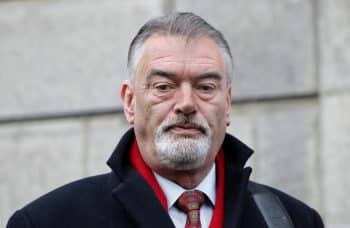
    IN A development that shocked very few people Ian Bailey was found guilty of the murder of Sophie Toscan du Plantier in a French court in May. After a four-day trial and deliberating for five hours a panel of three judges sentenced Bailey to 25 years in prison. He was also ordered to pay a total of 1225,000 in compensation, 1110,000 of which is to go to Toscan du Plantier’s family. Bailey, who has always denied his involvement in the murder of the French woman, was tried in absentia. A peculiar aspect of French law allows the authorities there to prosecute people suspected of crimes against French citizens that were carried out abroad. The French had therefore tried twice before to have him extradited to stand trial. In both cases the Irish courts ruled against his extradition, with the High Court ruling in 2017 that the demand for extradition was an “abuse of process”. Nonetheless, the French went ahead and held a trial with Bailey’s absence noted. But Bailey was not the only person absent from the trial. Irish witnesses received a letter asking them to appear at the trial only two weeks before it began. In some cases they were given as little as one week’s notice. As a result, only three witnesses gave evidence, one of whom, Helan Callanan, had a statement read out on her behalf. Callanan, one-time editor of the Sunday Tribune, wrote in her statement that Bailey had confessed to her that he murdered Toscan du Plantier in order to “to resurrect my career”. And it includes the apparent conversation between Bailey and Fuller. The DPP noted that Fuller’s statement came at a time when the gardaí’s actions were “bound to create a climate in which witnesses became suggestible”. At the time he was freelancing for, and wrote about the case for, the paper. Of the two other witnesses, Amanda Reed gave evidence on behalf of her son Malachi. As a 14-year-old he had received a lift home from Bailey on 4 February 1997, less than two months after Toscan du Plantier’s death. He claimed that Bailey said to him “I bashed her f**king brains in”. His mother related this to the French court. Back on the evening of 4 February 1997 Malachi arrived home, with no apparent concerns, having being dropped off by Bailey. The next day gardaí visited Malachi in school. There they questioned him about his journey with the journalist. And it was after he arrived home from school in an “agitated” state that he informed his mother what Bailey allegedly told him. Bill Fuller, the third witness, told the court that Bailey had confessed to him. Fuller stated that Bailey, speaking in the second person, said “It’s you who killed her”. Bailey denies that this conversation ever took place. But these evidential issues with the trial pale in comparison to the French prosecution’s dismissal of the Irish Director of Public Prosecutions (DPP) and its opinion of the murder. The DPP file about the case was leaked a number of years ago and makes for astounding reading. It contains a litany of concerns with how the murder was investigated. These embrace wide-ranging issues such as witnesses who lacked both credibility and consistency being taken at face value and members of the gardaí stonewalling the DPP itself. It’s pointed out at the start of the report that there is “No forensic evidence linking Ian Bailey to the scene”. He had volunteered blood, hair, and fingerprint samples to the gardaí. This was in spite of the fact that, as the DPP highlights, in his former profession as a crime reporter in the UK Bailey “was aware of the nature of forensic evidence” and that it could comprehensively incriminate the guilty. The trial in France introduced no new forensic evidence to link him to the scene and the murder. The evidence of Marie Farrell, the witness who initially claimed she saw Bailey walking late from the direction of Toscan du Plantier’s home on the night of her murder, was described by the DPP as being unreliable. Yet these initial statements by Farrell, which she retracted years later, were accepted by the French. As for Bailey’s apparent admissions of guilt, the DPP found that they “appear to be sarcastic responses to questions”. This includes his comments to Callanan about trying to “resurrect” his career. The DPP report also discusses the statement made by Malachi Reed. It noted that it was “abundantly clear that Malachi Reed was not upset by Ian Bailey” after the latter had dropped him home. In fact, the DPP pointed out that it was after a conversation with a garda the following day that “he became upset and turned a conversation which had not apparently up until then alarmed him into something sinister”. And then there’s the Garda’s arrest of Bailey’s partner, Jules Thomas. She was arrested for the Toscan du Plantier murder on 10 February 1997. But the arrest appeared to the DPP to be illegal. This was because it discovered she was asked no questions about her involvement in the murder. The DPP wrote that her “questioning indicates that she was arrested to obtain information which could be used against Bailey”. And given this, “her arrest and detention was unlawful”. The French ignoring of the report means that none of this was taken into consideration. It means that a trial was held using evidence that was roundly dismissed by the DPP; evidence which resulted in the DPP clearly stating in unequivocal terms that “A prosecution against Bailey is not warranted by the evidence”. Frank Buttimer, Bailey’s solicitor, is explicit in his condemnation of the French trial, or “so-called trial” as he refers to it. Although not present in France, based on the information he’s seen he says what took place there “was not in any way a trial that we in a common law jurisdiction would understand a trial to be”. He said that what actually happened was a “rubber-stamping exercise”

    Loading

    Read more

  • Posted in:

    Sunset for Ireland’s bad bank has quietly been delayed because of existing and future litigation, and the risk of pre-election scandal

    The decision by the Government to extend the remit of the National Asset Management Agency (NAMA) has clearly delighted its chairman and chief executive but it makes little or no sense to those who have followed its fortunes closely since its inception ten years ago. It may also have come as some surprise to the senior politicians and public servants who were looking forward to its imminent wind-up and the return of what is misleadingly described as a 14bn ‘surplus’ to the State. The extension of its mandate is possibly due to concerns at what new scandals may emerge from behind the secretive walls of the Treasury Building in Dublin 2 where NAMA is located. Among those who publicly suggested that NAMA would close its operations as planned by 2020 was Finance Minister, Pascal Donohoe who indicated last year that he did not envisage the agency extending its life in order to manage the largely residential property assets left on its books. In late July, Donohoe changed his tune with his announcement, barely noticed by the media, that NAMA would continue, until 2025, to manage its “residual loan portfolio, secured by residential development sites in Ireland which have significant medium-term value uplift potential”. NAMA believes that this portfolio will be worth in the region of 1300m by 2021 or less than 1% of the 131.8bn of distressed loans it had taken over, following the financial and property collapse, in 2009. Given the modest scale of this asset mountain, it seems unlikely that this is the only, or indeed the primary, reason why the agency has been given a new lease of life. One explanation may be contained in another quote from the review of NAMA’s operation for the years 2014-2018 published by the Department of Finance in the dying days of July as the politicians and media headed for the hills or sea-sides. The review also notes that NAMA will continue to manage ongoing litigation appropriately. – said NAMA, in response to the Minister’s announcement on 25 July, in what may amount to the shortest understatement of the decade. Section 227 of the review states on page 47 that: … loans with a carrying value of 1250 million could still be the subject of ongoing litigation by end-2021. The litigation will likely involve both Irish and foreign court jurisdictions and its resolution will be largely outside the control of NAMA. The review also warns of the potential risks arising from an appeal by a number of developers in Ireland of a decision by the EU Commission last year that NAMA was not in breach of EU State aid rules in relation to its residential housing programme. The prospect of not only ongoing but future litigation involving NAMA has been of major concern for much of the lifetime of the two Fine Gael-led governments in place since 2011. The controversy arising from the sale of Project Eagle when NAMA sold its entire portfolio in the North for just 11.2bn to US fund, Cerberus, in 2014 caused huge difficulties for former Minister, Michael Noonan, and Enda Kenny before they left office together in May 2017. Having resisted for over two years any independent inquiry into the circumstances surrounding the disposal of assets on a grand scale at a massive discount, and despite deeply critical reports from the C&AG and the Public Accounts Committee, Noonan reluctantly announced a Commission of Investigation into the sale as he walked out the political door. While NAMA has been less than enthusiastic about its investigation, the Commission under Judge John Cooke is due to report soon, although there was no mention of this in the recent review of the agency. The police inquiry led by the UK National Crime Agency into alleged illicit payments and off-shore accounts associated with the Project Eagle sale has not reached its conclusion four years after details of finders’ fees amounting to £15m were dramatically revealed in Leinster House by Mick Wallace TD, in July 2015. The sale which was overseen by NAMA chairman Frank Daly and chief executive, Brendan McDonagh as well as by Noonan and the former Secretary-General of the Department of Finance, John Moran, is just one of many huge disposals, amounting to some 127bn by the agency over the four years examined by this review. The purchasers were mainly global vulture funds and real-estate investment trusts and a small number of local agents who have reaped a harvest from the development and re-sale of these property assets, with negligible tax returned to the exchequer. There is every likelihood that further, and expensive, litigation will arise from these asset transfers details of which have been almost impossible to glean due to the veil of secrecy surrounding the financial dealings of NAMA and the liquidators and receivers it has engaged in its operations. With a general election approaching, it is likely that Leo Varadkar and Donohoe, who just a year ago were throwing cold water on the prospect of NAMA getting a later ‘sunset’ date may have been persuaded to keep the lid on its operations for the foreseeable future.

    Loading

    Read more

  • Posted in:

    The opportunity cost of bloated military expenditure is extraordinary

      By Greta Zarro In Ireland the total defence sector allocation, including Army pensions, will be €994 million in 2019 (around 0.291% of GDP), an increase of €47.5 million over 2018.  Target strength for the Permanent Defence Force is 9,500. Total world military expenditure rose to $1822 billion in 2018, representing an increase of 2.6 per cent from 2017, according to new data from the Stockholm International Peace Research Institute (SIPRI); and it will approach $2tr this year. At around 2.3% of GDP most countries spend ten times the percentage Ireland does. It allows Ireland to spend more on other sectors. NATO members including the UK are committed to spending 2% of GDP on defence.  Donald Trump suggests they double that figure to a little less than the percentage he says the US spends.  Nato itself says the US spends 3.5% of GDP on defence.Last year it spent $623bn and other NATO countries spent $312 billion, for a total of nearly a trillion dollars spent on defence by NATO members. China spent  €175bn, Russia $61.4bn.Worldwide there were 20.5 million people — or one out of every 330 — serving in the armed forces, according to an International Institute for Strategic Studies report, ‘The Military Balance 2009’. There were also an estimated 49.8 million reservists and seven million serving in paramilitary units. China has the biggest military with 2 million (US, 1.3 million) and 500,000 reserves (US, 865,000).   The far-reaching social and ecological impacts of war, and ongoing preparations for war, should compel us to work for non-violent conflict resolution. Despite the illusion of safety and comfort that is perpetuated by pro-war politicians selling interventionism and regime change for the sake of ‘national security’, our civil liberties, communities, and the environment are threatened every day that governments facilitate the invasion and bombing of countries abroad. In their wake, war, and preparations for war, such as the network of military bases around the world, leave permanent environmental damage to soil, water, air, and climate. The US Department of ‘Defense’ is the largest institutional consumer of oil($17bn/year) in the world, and the largest global landholder with 800 foreign military bases in 80 countries. The US military is also the third-largest polluter of US waterways, not to mention the waterways of countries it has invaded, such as Kuwait, Iraq, and Vietnam. Wars all over the world wreak havoc on the environment, including those waged by guerrilla forces, whose attempts to stay unseen encourage adversaries to destroy the forests that provide cover. Millions of hectares in Europe, North Africa, and Asia are under interdiction because of tens of millions of landmines and cluster bombs left behind by war. A 1993 US State Department report called landmines “perhaps the most toxic and widespread pollution facing mankind”. Beyond the ecological devastation that war causes, military spending drains our economy, costing the globe trillions of dollars annually that could be better spent on fixing infrastructure, ending world hunger, providing clean drinking water, transitioning to renewable energy, raising minimum wages, and so much more. According to Robert Pollin and Heidi Garrett-Peltier of the Political Economy Research Institute, investing in peacetime industries produces more jobs, and, in many cases, better-paying jobs, than would spending that money on the military. The National Priorities Project calculates that just 1 year of US military spending could pay for more than 9 million clean energy jobs, or 8 million elementary school teachers. The United Nations’ Office for Disarmament Affairs juxtaposed global military expenditure and the UN budget, for 2010: military spending was 12.7 times higher than the Official UN Development Assistance ($128bn), 604 times higher than the regular UN budgets for Peace and Security, Development, Human Rights, Humanitarian Affairs and International Law ($2.7bn), and 2508 times higher than the combined expenditures of the (UN) International Disarmament and Non-Proliferation Organizations3 ($0.65bn). The opportunity cost of bloated military expenditure is extraordinary.   According to the 2018 Global Peace Index, produced by the Institute for Economics & Peace (IEP), the global economic impact of violence is $14.76tr, 12% of global GDP. The UN estimates that the global food crisis could be solved for a price tag of $30bn a year. That amounts to 1.5% of global annual military spending. The world’s worst humanitarian crisis is currently unfolding in Yemen, which is facing the largest and fastest growing cholera outbreak ever documented, as a result of Saudi-led airstrikes that bombed water, sanitation, and other vital infrastructures. The UK has facilitated this violence by licensing over £4.7bn worth of weapons to Saudi forces. On top of being economically and environmentally disastrous, war is counterproductive; it endangers more than it protects.In early August the UN warned that a recent pause in international terrorist violence may soon end, with a new wave of attacks possible before the end of the year and according to a declassified intelligence report on the war on Iraq, “despite serious damage to the leadership of al-Qaida, the threat from Islamic extremists has spread both in numbers and in geographic reach”. In fact, research from Peace Science Digest shows that the deployment of troops and weapons exports to another country increase the chance of attacks from terrorist organisations from that country. Terrorism actually increased during the ‘war on terror’, according to the Global Terrorism Index. “The past decade has experienced the largest surge in terrorist activity in the past fifty years”. Conversely, a groundbreaking study by Erica Chenoweth and Maria Stephan illustrates that, over the period 1900-2006, non-violent civil resistance has been twice as successful in resisting tyranny and oppression and resolving conflicts as violent intervention. If the reality is that non-violence is a more effective means of achieving security than violence is, why do the countries of the world continue to collectively spend trillions annually on war? Military spending is in fact self-perpetuating, as countries stockpile weapons in an arms race against each other, fearing to be the one left ‘defenceless’. In diverting countless dollars from vital social and ecological needs, military spending exacerbates wealth inequality.  According to IGI Global, “the relationship between military expenditure and the growth rate GDP is nonlinear in the sense that at first with increase in the military expenditure the

    Loading

    Read more

  • Posted in:

    Village editorial, September: Gemma O’Doherty 2019

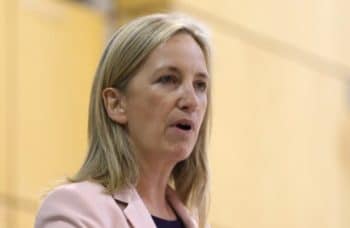
    “Racist: A person who shows or feels discrimination or prejudice against people of other races, or who believes that a particular race is superior to another” – Oxford English Dictionary GEMMA O’DOHERTY has become the it girl for Irish extremism: racism, anti-Islamism, homophobia and transphobia. Village published an article in our last edition, by the editor, establishing that there was little in common between O’Doherty and the ethos of this magazine. Since then, five months ago, she has veered further rightwards and, though ideally she should be starved of publicity, it is timely to address these further changes in a comprehensive piece, for the record, albeit in a small magazine. As is well known, O’Doherty (51) worked as a teacher and then spent twenty years as a journalist for the Irish Independent, rising to become an uncontroversial Chief Features Writer and writing some investigative pieces including most famously about the death of Fr Niall Molloy. She was fired in 2015 as a “rogue reporter” after visiting the Garda Commissioner’s house without editorial permission, to ask him about penalty points. She then took a successful Unfair Dismissals Case. Though most of the Irish media ignored it, it was embarrassing for the Irish Independent as its editor had himself had penalty points cancelled in dubious circumstances. In 2016 she independently produced a documentary about the death of toddler Mary Boyle. In late 2017 and 2018 she wrote several articles for Village magazine – on Madeleine McCann; on Sophie Toscan du Plantier; on sex abuse in Donegal and in a Dublin rugby school; and she wrote about her experience before the Charleton Tribunal, with which she was not impressed. Her cover story on rugby trainer John McClean was excellent and was helpful recently in bringing about his trial on indictment for allegedly abusing boys in Terenure College. She never ventilated any sort of political view in these articles. When last year she explicitly declared her intention to run for the Presidency on an anti-corruption ticket expressing her lack of faith in Irish media, Village felt the media should give her a  hearing. There were mutterings that she was quietly anti- abortion, anti-vaccination but there was no pattern of this in her journalism and she denied it, particularly in interviews with online news service, Broadsheet.ie, which supported her Presidency bid. Beyond this there was never any suspicion of intolerance in private conversations with writers from this magazine. There was no sign of it in an interview she gave to progressive Podcast, Echochambers, in March 2018; in a Kitty Holland article in the Irish Times in 2016: ‘Mary Boyle’s disappearance and the 40-year fob-off’; or when on 16 September 2018 Roy Greenslade wrote in the Guardian: “She has built a reputation as a freelance investigative reporter…Now, in an attempt to raise the profile of her concerns about police practices and what she perceives as a lack of press freedom within Ireland, she is attempting to stand for the presidency”. There was none in a piece by a Washington-based history professor in the Journal of 26 September 2018. And none in a TEDTalk she herself gave in August 2018. As late as during her Presidential bid she was writing to Panti Bliss stating: “I have throughout my career supported the rights of minorities in Ireland including transgender communities, gay families, Travellers, Muslims and victims of state injustice I admire your talent hugely and found your speech about our repressive society inspiring”. This admiration would not last. An editorial in the October 2018 Village did not endorse O’Doherty for the Presidential election the next month. She appeared to be standing on an attractive anti-corruption and media-sceptical agenda with no right-wing component but Village editorialised that she was “damned for an undue emphasis on a number of conspiracy theories” and endorsed Michael D Higgins. She did not do well in the Presidential election – she only received one of the four requisite nominations – and was predictably snookered by the media she loathes for stating, without evidence, that journalist Veronica Guerin had been killed by “the State”. Her politics and her platform were never tested. That was a pity, from all perspectives. She just might have been taken down earlier and more directly during the campaign. It was after that election that her politics appears to have turned. Perhaps this was a reaction to the success of the nastiness of Peter Casey’s campaign which placed him second. She first toured the country with other anti-corruption activists giving talks, and earlier this year established Anti-Corruption Ireland (ACI) with online members – a “political movement” which promotes “truth, justice and integrity in public office” and which intends to field candidates at all elections though it has not yet registered as a political party. In April 2019, O’Doherty ran in the European elections as an independent, receiving 1.85% of first preferences in Dublin, finishing 12th out of 19 candidates – a respectable position in itself but not what she would have expected given her high profile and zealous support. She got in to bed with John Waters, moaning about societal change. In Irish terms this amounted to a 180-degree ideological rotation. For example while O’Doherty had been championed by the libertarian-leaning readership of online news site, Broadsheet.ie, Waters had been vilified. She also developed an affiliation with someone called Amazing Polly, a Canadian version of herself who often appears on her videos, she has a symbiotic relationship with Justin Barrett of the National Party, ‘citizen journalist’ ‘GrandTorino/Rowan Croft’ and Jim Corr of…the Corrs, she often retweets Katie Hopkins, and latterly Donald Trump. But it is her agenda that appals. She conjures a racial apocalypse on Twitter:  On July 13 she Tweeted a video of what she said was “Illegal African migrants storm[ing] the#Pantheon in Paris. Welcome to open borders Europe. It will end in war”. She cites a counter-factual – open borders – and infers something as frightening as a future war. How  is this intended to make citizens feel about immigrants? In May she tweeted

    Loading

    Read more

  • Posted in:

    A Hashtag Full of Hate

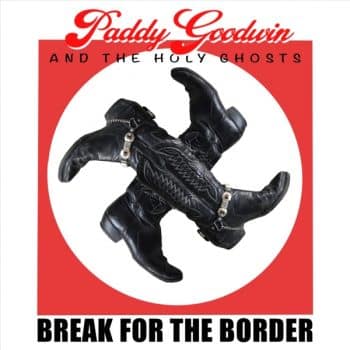
    Paddy Goodwin and the Holy Ghosts have just released the most compelling home-produced music video of the decade, Break for the Border. It’s an addictive and incendiary denunciation of the insanity that has precipitated and possessed Brexit, the hate-filled lunacy of Donald Trump’s anti-immigration platform and the bovine intransigence of the DUP, all intertwined by a common theme of the paranoia sparked by borders. Hands down best lyrics of the year. Find it at https://www.youtube.com/watch?v=nC2Wa2j_HjM  

    Loading

    Read more

  • Posted in:

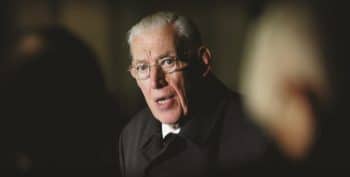
    Blackmailed? Paisley became a conspirator in the the Kincora cover-up. Had he wanted to expose it - and there is no reason to suppose that he did - his hands were tied behind his back because he was almost certainly being blackmailed by the Housefather at Kincora Boys' Home, William McGrath who knew Paisley had been involved in bombings in the late 1960s.

    This story was updated on 6 September 2019. The original content is reproduced underneath this update. UPDATE The imminent revelation by BBC NI’s Spotlight programme that Ian Paisley financed the infamous UVF Silent Valley bombing of 1969 will come as no surprise to Village  readers. While the BBC disclosure provides another piece of the jigsaw and is of enormous historical value, it doesn’t begin to scratch the surface of Paisley’s deeply disturbing partnership with the Ulster Volunteer Force (UVF) and – equally important – the Ulster Protestant Volunteers (UPV). In December 2017 Village published an article entitled “Blackmailed” which outlined Paisley’s links to the UVF/UPV bomb campaign of 1969 and showed how, as a result of it, he was compromised in his dealing with another of the conspirators, William McGrath, the notorious and brutal child rapist who was “Housefather” at Kincora Boys’ home in the 1970s. Paisley was nearly ten years younger than McGrath. He first met the sexually insatiable and lecherous pervert McGrath when he – Paisley – was 22 or 23 in 1949 through his involvement in the Unionist Association in the Shore Road area of Belfast. Paisley had moved into the locality to study at a bible college. McGrath perceived the Catholic Church as the instrument of the Antichrist and was determined to expunge it from the four corners of island of Ireland so that the Protestant community – which he believed was descended from the Tribe of Dan of Caanan, one of the Lost Tribes of Israel – could prevail. He perceived himself as a soldier in what he called the ‘battles of the Lord’. His self-anointed duty was to prevent the Pope ‘enslaving the people of God’, not just in NI but throughout Britain. Paisley came to share these bizarre views and took a step closer to his involvement with McGrath and others in the infamous 1969 bomb campaign. It is an indisputable fact that McGrath, Paisley and others such as John McKeague (another paedophile who was involved in the Kincora scandal) and Gusty Spence of the UVF instigated the violence that lit the sectarian firestorm that became the Troubles. The fact that Paisley financed the Silent Valley bombing demonstrates just how central he was to the entire affair. Paisley used to visit McGrath at Kincora long after 1973 when he had been told by Valerie Shaw that McGrath was a paedophile. One of the former residents at Kincora, James Miller, who was at Kincora between 1976 and 1978, told the Hart Inquiry on 8 June, 2016, about these visits. Miller thought it “just seemed strange that he was so friendly with Mr McGrath, you know”. [Day 210 page 75.] Yet, after the eruption of the Kincora scandal in 1980, Paisley would pretend to have difficulty even remembering who McGrath was. Readers interested in learning more about Paisley’s links to the UVF and UPV can read “Blackmailed” (see below) which first appeared in December 2017. Further details about Paisley’s support for McGrath after he was arrested by the RUC for the rape of children at Kincora can be read by visiting ‘Kincora Survivor‘ also on this website. It shows how Paisley bullied a former Kincora resident lest he might give evidence at McGrath’s trial about “Englishmen” who had abused Kincora boys. See: https://villagemagazine.ie/index.php/2017/11/kincora-survivor/ ‎ A question for historians now is to establish what role William McGrath played in {i} the formation of Ian Paisley’s bigoted, violent and hate-filled religious and political beliefs; {ii} what was the true nature of the Paisley-McGrath personal relationship; {iii} to what extent did Paisley wield his power and influence to cover-up McGrath’s brutal rape of children at Kincora and elsewhere; {iv} did McGrath implicitly or explicitly blackmail Paisley over the latter’s involvement in the UVF/UPV bomb campaign of 1969 {v} since McGrath worked for MI5 and MI6, what did those intelligence services know about Paisley’s financing of the UVF and why was neither man arrested? The source of the BBC’s forthcoming revelation about Paisley is David Hancock, a former British army officer. Hancock served as a major in NI from 1968 to 1970. He told the BBC that an RUC District Inspector in Kilkeel, Co Down, advised him that Paisley had supplied money for the bombings. Hancock is to be applauded for bringing this scandal to light. But why did the RUC not act on the information, then or later? Were MI5, MI6 and RUC Special Branch (who were all involved in running the Kincora operation ) afraid that if they acted on this information, McGrath would be exposed? McGrath, of course, was convicted in 1981. So why did no one at the Cabinet Office, NIO, MI5, MI6  or RUC – then led by Sir John Hermon –  insist that the police act on the information after his conviction? Was it because McGrath had kept his mouth shut about their collective involvement and they wanted to ensure his silence by letting sleeping dogs lie? Is there now any good reason why the PSNI should not declassify the file it inherited from the RUC on Paisley and the Silent Valley bombing? Will Andrew Parker, the incumbent Director-General of MI5 who likes to pontificate on ethics, release his organisation’s file on the Silent Valley bombing?   The original December 2017 article about Paisley is set forth below:   As the Democratic Unionist Party rises to notoriety across the UK and EU for scuppering poor Theresa May’s first effort at a deal in Brussels, it’s timely to consider a hidden side of the party’s charismatic, and always notorious, progenitor, the Reverend, Dr Ian Paisley. Last month, Village revealed that Ian Paisley, First Minister of Northern Ireland (NI), 2007-2008, had participated in the coverup of the rape and abuse of children at Kincora Boys Home. It may have been that he had been forced into doing this because John Dunlop McKeague, a sadistic Loyalist terrorist, and his confrere, William McGrath, knew some of his darkest secrets, and had blackmailed him into coming to their assistance as they faced

    Loading

    Read more

  • Posted in:

    Jason O'Toole interviews Housing Minister Eoghan Murphy

    It’s perhaps something of an understatement to say Eoghan Murphy is not exactly flavour of the month these days. Not only is he facing  public ire over the homeless crisis, but some political pundits are even going as far as to claim he has been the worst Minister for Housing, Planning and Local Government in the past 20 years. It’s also certainly not an exaggeration to describe Village magazine as one of his most vocal detractors since he took over the portfolio in the summer of 2017. But regardless of whether or not you agree or disagree with his policies, it’s a measure of the man’s character that he readily agreed to sit down for this in-depth interview while other senior politicians in the firing line wouldn’t have even bothered picking up the phone. If nothing else, he deserves credit for exuding grace under pressure. Jason O’Toole: Were you always a Fine Gael-er? Eoghan Murphy: No, I wasn’t. I don’t come from a Fine Gael family. We were interested in politics. We discussed it as a family. It wasn’t until I was 26  – and I was living and working abroad and things were starting to decline here – that I thought about coming home and getting involved in politics. I was working in policy in Vienna and I was writing speeches for the head of the organisation there. And as I thought about it, I met Enda Kenny by chance in London and he was quite influential in terms of persuading me to get involved in politics. You’re now a close confidant of Kenny’s successor, Leo Varadkar. Certainly, as we worked through the campaign planning, we developed a stronger rapport. He’s also big on honesty. If you’re honest with him, he will respond in kind. During the leadership campaign we became more personally close as you do when you’re working long hours directly with someone, but it’s difficult now with such busy jobs to find time to talk about things that aren’t work, but we try. He knows my family and there isn’t much he wouldn’t know about me. First and foremost, he’s the Taoiseach and I’m the Housing Minister, and we will step out of that relationship only on occasion. Like at Tom and Jen’s wedding recently. That was great fun, we were both just there as friends of the bride and groom and so we were able to relax a bit.       Some tabloids recently took an interest in your personal life after you were photographed at TD Tom Neville’s wedding with your date. It must be very uncomfortable to open up a paper on a Sunday morning and see speculation about your love life? I don’t pay any attention to it. My focus is on my job. When I get time to myself, which is rare, I like to spend it with friends and family, go for a run, that type of thing. Is politics like a drug for you? It’s not a drug for me, no. But it is a vocation. I didn’t expect that when I first became involved –that it would end up consuming all my time and energy. I didn’t think I could get any busier as junior Finance Minister but Housing is another level altogether. And it’s not just Housing – planning, local government, water, emergency weather management. It’s very personal for me because it’s been my daily life for more than two years now. And people don’t really make a distinction between you and your job –you just are the Housing Minister, Saturday night, Christmas Eve, whenever. That’s not a complaint. Even if people weren’t like that I don’t think it could be any other way for me. Elections and campaigns and that side of politics is different though, maybe a bit more like what you’re asking. I’m very into that. The strategy, the execution. Whenever I go places, be it Ardee or Ballina, I want to know what’s happening on the ground, how the party stands, who is up-and-coming, what’s the competition like. That’s the bloodsport side of politics and it’s kind of addictive, even though that’s not why I’m in it. Would you like to be Taoiseach some day? It would be a real honour certainly. But when I took this job I said it would likely be the most important one I would have in public life, and I believe that. That’s still my ambition. I don’t have one eye on another Department or on the leadership of my own party. I intend on fixing the crisis in housing – that’s my ambition. When will we see an election? I don’t know. I don’t think it will be until the middle of next year at the earliest. The Taoiseach’s been very clear that he doesn’t foresee the need for an election before the summer of 2020. I think Micheál Martin has almost agreed to that. Do you think a Fine Gael/Fianna Fáil  coalition could work? I think the current coalition is working very well, y’know. We’ve had to handle some difficult situations – Brexit being one, which is ongoing –and we are doing that as a minority government when many thought minority government couldn’t work. I’ve huge time for Finian McGrath and all of my independent colleagues and the contribution they make to government is significant. If in the future coalition with Fianna Fáil had to work then it would and I’d go with that, but I think everyone’s focus is very much on doing the job now, and continuing as an effective government in to next year and possibly longer. Because obviously we still have a lot of work to do and plans to see through. In the past, the so-called poisoned chalice for politicians used to be the Department of Health but it feels like it’s your Department these days. I think anyone who might come into politics and look at a Department and see it as a poisoned chalice shouldn’t be in politics.

    Loading

    Read more

  • Posted in:

    Whistleblower petitions European Parliament:Labour Inspector said Workplace Relations Commission favours employers over employees

    GEORGE MCLOUGHLIN made a Protected Disclosure in 2015 – when he was employed as a labour inspector with the Department of Jobs (DJEI) – concerning what he perceived to be a culture of deference to non-compliant employers in the management of the National Employment Rights Authority (NERA) (subsequently the inspection services of the Workplace Relations Commission). As revealed in April’s Village the disclosure to Philip Kelly, Assistant Secretary Department of DJEI; and to Kieran Mulvey and Padraig Dooley, WRC Directors, alleged matters and issues outlined below. The Department recognised the disclosure was protected, appointed former IBEC Director Turlough O’Sullivan to carry out an independent investigation of it and over the following six months McLoughlin provided detailed evidence to O’Sullivan to substantiate the criticisms he had made. In May 2016 he was informed by the Department’s Assistant Secretary that his allegations had not been substantiated. He is unhappy at the manner in which the investigation had been conducted and at the appropriateness of the Department’s decision to appoint a long-standing employer representative and lobbyist to investigate allegations of a pro-employer bias in the management of the State’s primary employment-rights regulatory body. He made the damning observation to Village that: “The proper work of the labour inspectorate in ensuring that employers in low-pay sectors of the economy comply with the state’s most basic employment rights legislation is being deliberately undermined by a management that sees its primary function as facilitating some employers in circumventing the very legislation they are supposed to be enforcing thereby leaving vulnerable workers at the mercy of unscrupulous employers”. In general the WRC told Village its fundamental role was ensuring employer compliance by affording employers in breach of the law time to comply. It takes pride in the fact that in only 5% of the cases of breaches is prosecution deemed necessary. This official forebearance seems to be at the heart of where McLoughlin feels the legislation is not being enforced. Concerns Raised in Protected Disclosure: (i) Inconsistencies in the Conduct of Inspections and Failure to Follow Up on Breaches Detected. During the course of O’Sullivan’s investigation McLoughlin claims he gave him instances of a number of inspections where NERA/WRC managers had either turned a blind eye to blatant breaches of employment rights that ought to have been apparent in the records inspected or failed to follow up effectively to ensure that the employer became compliant and the employees affected were appropriately compensated. “Following on my first meeting with O’Sullivan I gave him the contact details for a HR Consultant whom I had dealt with as an employer representative at a number of inspections over the years and who had raised concerns with me as to what s/he saw as glaring inconsistencies in the manner in which breaches of legislation detected at different inspections were pursued by different inspectors”. McLoughlin says “Mr O’Sullivan refused to interview this ‘witness’ as part of his investigation on the grounds that he would not be able to name the consultant or the businesses. In my view, in so doing he excluded evidence that was highly relevant to his investigation”. At the very least, he says, “a question has to be asked as to the appropriateness of Mr O’Sullivan’s refusal to even hear this authoritative evidence in support of my allegations, particularly when we see that elsewhere in his report he does not appear to demonstrate anything approaching the same rigour, sensitivity or objectivity in determining the credibility of the line fed to him by NERA/WRC management”. Over the course of O’Sullivan’s investigation McLoughlin says he gave him several examples of cases where breaches of the National Minimum Wage Act and Organisation of Working Time Act detected by inspectors had not been pursued on the instructions of NERA/WRC management. In January 2016 he gave him extensive documentation relating to so-called ‘Sleepover Cases’ where agencies providing overnight in-home care to elderly or unwell clients where the hourly rate of pay to the carer was below minimum wage. “Despite the clear-cut nature of the breach and the manifest exploitation of the care-providers in this rapidly expanding sector, NERA/WRC management failed to provide effective regulation in this area and used every tactic and pretext available to it to stymie and circumvent proper oversight”. In several of these cases NERA/WRC management allowed employers to use the idea of the ‘notional break’ to understate hours worked and thereby artificially increase the apparent hourly rate to a level that would appear compliant with minimum wage legislation. McLoughlin told Village that “Clear and unambiguous evidence of this practice was provided to Mr O’Sullivan but this does not appear to have featured in his discussions with NERA/WRC management and is not referenced by him anywhere in his report to the Department”. McLoughlin also gave O’Sullivan details of a Dublin-based Home Care business where the inspector had detected breaches of the National Minimum Wage Act at inspection and referred the case to NERA/WRC management for prosecution in line with agreed procedures. NERA/WRC management refused the inspector’s request for prosecution apparently on the odd basis that the employees involved were not prepared to come forward as prosecution witnesses in the NERA/WRC case against their employer. McLoughlin made the point to O’Sullivan that central to the rationale for having a labour inspectorate in the first place is that breaches of legislation detected during inspections can be pursued on the basis of the documentary and other evidence secured by the inspector during the course of the inspection and should not have to rely on vulnerable employees being put in the invidious position of having to come forward to confirm the validity of such records in sworn evidence against their employer. Here again, O’Sullivan does not address this case in his report and does not appear to have raised any concern with NERA/WRC management as to whether their decision to veto this prosecution had more to do with the fact that the business in question was owned by a cousin of then-minister Richard Bruton (and there

    Loading

    Read more

  • Posted in:

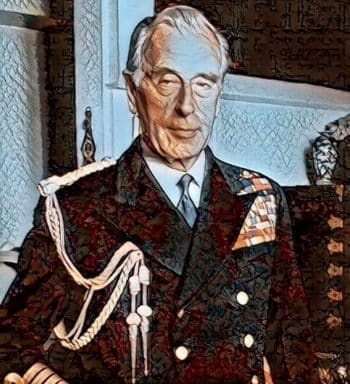
    SECOND UPDATE: Kincora boy abused by Mountbatten committed suicide months later. By David Burke.

    This article was updated on 20 December 2019 with additional information about the ongoing refusal of the Gardai to release the log of a visit by the Warden of Kincora Boys’ Home to Mountbatten’s home in the Republic of Ireland (See section 2) and further evidence of a link between Mountbatten and the abuse of boys at Portora Royal School (See section 13). It has long been rumoured in Britain that Lord Louis Mountbatten was a paedophile. A book now on sale has dug up impressive new evidence confirming what Irish sources – including the Provisional IRA – have known for decades  about his sexual predilections. So impressive is the new evidence that mainstream British media outlets such as The Mail on Sunday,   The Sunday Times  and The Sun  are covering the story. The book contains sensational new information about Kincora Boys’ Home in Belfast. Curiously, while the British media are happy to report on Mountbatten’s abuse of boys generally, the sections in the book about Kincora are being ignored. The book is called The Mountbattens: their Lives & Loves, and is written by Andrew Lownie. The author is a respected and serious historian who was once a Conservative Party Westminster election candidate. He is still friendly with many Tory MPs including one recently retired Cabinet minister. Lownie is also author of a book on Guy Burgess entitled Stalin’s Englishman which had many interesting Irish angles to it. 1. LOWNIE WAS DENIED ACCESS TO CERTAIN IRISH STATE FILES ON MOUNTBATTEN  During his research for the biography, Lownie tried to gain access to certain Irish State files including Garda files about Mountbatten only to be rebuffed.  They may contain some interesting material. A Deputy Garda Commissioner who is now dead told Village  a number of years ago that he had heard disturbing rumours about Mountbatten sexual activities before he was killed. Another Garda intelligence source says that he had heard stories that while Mountbatten had been living in India, he had had access to a 14 year old boy. If Garda Intelligence, led by Larry Wren, the Head of C3 during the 1970s, knew anything about Mountbatten’s predilections, or the presence of cars with Northern Ireland registration plates, or of teenage boys visiting his property at Classiebawn in the company of older men,  he did nothing about any of it. The Gardai had a security at Mountbatten’s estate and must have noted the registration plates of visitors. This means that the Gardai should have logs for August 1977 which noted the arrival of the car belonging to Joe Mains, the Warden of the notorious Kincora Boys’ Home because he trafficked at least two boys to Classiebawn that month. If the logs still exist, will Garda Commissioner Drew Harris (ex-RUC and ex-PSNI link man to MI5) see to it that they are released and prove once and for all that an Anglo-Irish Vice Ring ring existed and it involved Joe Mains? While the Kincora scandal was exposed in 1980, it was not until 1982 that allegations about MI5 and MI6 involvement in the affair began to appear in the press. Wren became Garda Commissioner in early 1983. He had developed exceptionally close links with British Intelligence during his tenure at C3. If the logs of cars visiting Classiebawn prove to be missing, an inquiry should be held to see if they were destroyed under Wren’s watch. For further information about Wren’s strange career at C3 please visit  https://villagemagazine.ie/index.php/2019/06/16570/ ‎ Hopefully the car registration logs still exists. Will the Independent Inquiry into Child Sexual Abuse (IICSA) in London which is probing the existence of VIP child sex abuse request Drew Harris and the Irish Government to release the relevant logs for August 1977, and indeed for all of the summers Mountbatten stayed at Classiebawn? Mountbatten’s movements were of enormous importance to the Gardai in the 1970s. Typically, the first they would hear about his pending arrival in the country was a frantic call from MI5 in London to alert them that he had boarded the Hollyhead car ferry en route to Dublin. Mountbatten’s reputation inside the Garda was that of a man who was reckless about his safety. He often gave them a security headache. On one occasion he managed to disembark before the Gardai could reach the ferry and provide him with an escort. However, on this occasion his car broke down and they rushed to his aid inland. His vehicle was towed back to Garda HQ at the Phoenix Park in Dublin where it was repaired by the fleet service department. While the repairs were taking place, Mountbatten was given a tour of the HQ which had originally been built as a Royal Irish Constabulary complex. The Gardai who dealt with him found him to have been ‘a most charming man’. 2.UPDATE: LOGS NOT MISSING BUT DISCLOSURE CONTINUES TO BE DENIED BY THE GARDAI  Since this story first appeared, the Gardai have persisted in their refusal to allow Andrew Lownie gain access to their Classiebawn car registration logs. They emailed Lownie on 7 October 2019 stating that files ‘generated during the course of a criminal investigation’ are considered confidential and hence they would not be releasing them. It is significant that they did not deny that the logs still exist. Lownie responded to this by writing back pointing out that the logs he was looking for related to August 1977, i.e. two years prior to Mountbatten’s assassination. There could have been no investigation of a ‘criminal’ nature in 1977 to an assassination that did not take place until 1979. The head of the Irish police, Garda Commissioner Drew Harris is a former RUC Special Branch officer who worked extensively with MI5. To date, he has not intervened to have the logs of Mains’ visit  in August of 1977 extracted from the main file, copied and sent to Lownie. Instead, on 7 November the Gardai reverted to Lownie saying: ‘I wish to inform you that all such security logs form part of the Garda Investigation File, and for the reasons outlined in email

    Loading

    Read more

  • Posted in:

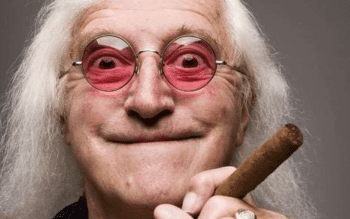
    Does ‘Nick’s’ conviction mean Jimmy Savile and Ted Heath are innocent? Yes, if you work for the British tabloid press. By Joseph de Búrca

    The more excitable elements of the British media are in something of a frenzy after the conviction by a Newcastle jury of Carl Beech, 51, a former NHS manager, for perverting the course of justice, i.e. telling the police a pack of lies. He has been sentenced to 18 years imprisonment. Beech’s deceit relates to the existence of an alleged  murderous  VIP paedophile ring based around Westminster involving Jimmy Savile, the former British prime minister Ted Heath, 1970-74, and others. Beech’s allegations prompted a £2million-pound Scotland Yard inquiry. Beech claimed he was a survivor of an “establishment group” which including politicians, military figures and spies. Absurdly, he claimed the group kidnapped, raped, tortured and murdered  boys in the 1970s and 1980s. This triggered an ill-fated probe that ended without a single arrest being made. Beech was found guilty after a ten-week trial at Newcastle Crown Court of 12 counts of perverting the course of justice and one count of fraud over a £22,000 criminal compensation pay-out he received for the alleged abuse he suffered.  ‘Nick’ also known as (aka) Carl Beech aka Stephen Anderson aka Carl Anderson aka Samuel Karlsson. That Beech would be exposed as a liar amid a blaze of publicity was predicted by Village  years ago. Village  readers will be more familiar with Carl Beech as ‘Nick’. In the past he was a figure of anonymity merely referred to as ‘Nick’ in the UK press. His real name only emerged at the trial. Beech  or someone acting in concert with him  concocted a series of grotesque lies about a VIP paedophile ring which murdered boys. An array of gullible hacks in the British media initially lapped up the claims and splashed them all over the pages of their newspapers. They have now flipped and are in a frenzy of condemnation after his conviction on 22 July 2019 for deceit. No one, we are now told, can now believe a word Nick/Beech has ever said.  Accounts of child abuse perpetrated by the likes of Ted Heath can now be dismissed as nonsense according to the former PM’s supporters because Nick made allegations about him. What next? Jimmy Savile is innocent too. Sir Cyril Smith was a paragon of virtue? Is there more to Nick the Deceiver than meets the eye, a lot more perhaps? RICHARD KERR SPOTTED ‘NICK’ AS A FRAUD FROM THE OUTSET Richard Kerr, who was a genuine victim of sex abuse, concluded Beech was a fraud years ago. When Beech made efforts to contact him, he was rebuffed by Kerr. Had Kerr fallen for Beech’s lies, he  would now probably be the victim of tabloid derision. Instead Kerr was subjected to intimidation to get him to shut up. In December 2017 Village reported that a letter purporting to come from the Ulster Freedom Fighters (UFF) had been sent to him. The UFF had nothing to do with the letter so we instead referred to the authors as the “Paedophile Protection League (PPL)”. The letter was sent to Kerr in 2016. Kerr, who lives in Dallas, Texas, was a resident at Williamson House in the early and mid-1970s, and later at Kincora (1975-77). He was abused at both homes. He was later abused in England by various highborn lowlifes, including Sir Peter Hayman, the former Deputy Chief of MI6, who infamously left paedophile material on a London bus whence it was picked up by the police; and a senior and highly influential member of Margaret Thatcher’s Cabinet. Before we turn to the so-called ‘UFF’ threatening letter, a little additional context will assist in explicating the underlying menace of it: Richard Kerr was a close friend of Steven Waring who was also a resident at Kincora. He committed suicide by plunging into the sea from the Belfast-Liverpool Monarch Ferry in 1977 rather than suffer any further abuse. Kerr has been haunted by his death ever since. Like Kerr, Waring had been taken out of Kincora and subjected to vile abuse on both sides of the Irish Sea. In November 2016 Kerr received the following anonymous letter: “DEAR RICHARD, HAVING READ AN ONLINE ARTICLE ABOUT YOU TODAY CONCERNING YOUR BEHAVIOUR IN LONDON IN 2015, A GROUP OF SURVIVORS HAVE RESEARCHED AND DISCUSSED YOUR ALLEGATIONS. IT IS OF MANY UK-BASED SURVIVORS OPINION THAT YOU ARE PLAYING A GAME AND WORKING FOR THE ABUSERS STILL. THERE ARE FIRST HAND ACCOUNTS OF YOUR BEHAVIOUR IN DOLPHIN SQUARE AND IN KINCORA INCLUDING ACCOUNTS OF YOU ACTING AS FACILITATOR FOR ABUSERS. THERE ARE ALSO ALLEGATIONS AND ACCOUNTS OF YOU ACTIVELY TRYING TO DISCREDIT OTHER SURVIVORS INCLUDING THE SUSPICION THAT YOU IN FACT KILLED STEVEN ON THE BOAT, RATHER THAN THE STORY YOU TELL OF HIM COMMITTING SUICIDE. WE DO NOT HAVE ANYONE IN TEXAS TO ACT AGAINST YOU. YOU HAVE BEEN DISCUSSED AT A VERY HIGH LEVEL AND ALTHOUGH THIS IS NOT A THREAT, AS A GROUP WE WOULD LIKE TO INFORM YOU THAT YOU ARE NO LONGER WELCOME IN THE UK OR IN NORTHERN IRELAND AND IF YOU ARE SEEN, ACTIVE SERVICE UNITS OF THE ULSTER FREEDOM FIGHTERS AND THEIR FRIENDS WILL FORCIBLY REMOVE YOU TO AN AIRPORT. YOU ARE OBVIOUSLY A SURVIVOR OF ABUSE SO BY OUR OWN CODE WE CANNOT ORDER ANYTHING MORE; HOWEVER FEELINGS ARE RUNNING SO HIGH ABOUT YOU THAT WE CANNOT GUARANTEE YOUR SAFETY AND WELLBEING IN THE UK OR NORTHERN IRELAND”. The anonymous letter was posted from south East Anglia. There is, however, little or no mystery about the identity of its true author. Richard Kerr had made a number of trips to Ireland and the UK before he received the letter. During these trips he was – as he puts it himself – “hijacked” by some very unsavoury characters whom he instinctively distrusted and to whom he decided not to provide his address in Texas. This group pretended they were interested in exposing the VIP paedophile ring but in reality wanted to find out what Kerr was going to say about it and discredit him. They

    Loading

    Read more

  • Posted in:

    If we replaced demagoguery with a reflective political process we’d get equality and sustainability

    POLITICS MATTERS. It has the potential to iron out the unfairnesses of nature and luck. We talk a lot about it. We’ve achieved a lot with it. There is an undercurrent of politics that moves irrepressibly towards respect for all – sex, sexuality, race are no longer the barriers they were recently to equal treatment. But overall it is frustrating and its returns are diminishing, particularly in terms of fairness, and the environment. This is disappointing in a world capable of great sophistication. Engineering is more effective for purpose Engineers build bridges and planes that stay where they are supposed to. They rarely make mistakes and almost always do what they are supposed to do seamlessly and flawlessly. Dangerous duds On the other hand politics brings us Trump, Putin, May, Bolsonaro, and their policies. And the visionless It would be unfair to include Varadkar in such company as he is a democrat, and sharp. However, he hardly undermines the caricature of politician self-servers who prop up the status quo. Ineptitude Sometimes it is difficult to see if politicians are useless – on some issues competing views are sustainable and you can disagree while conceding someone you disagree with at least has a point. But two topical issues yield insights into how definitively inept our politicians are: Brexit and climate change. If politicians are this bad on these issues we can see there are systemic problems. Brexit After two years of negotiations politicians in the UK have not agreed what they want from a Brexit whose complex adverse economic consequences they clearly were too ill-informed to understand. Climate change On climate change, politics has shown itself incapable of moving quickly enough to deal with what the Science and the facts have shown to be imperatives for the most important issue of our age, perhaps of all ages, one that imperils humanity. Clearly there is a range of issues where our politics abjectly fails. Political journalists It is worth emphasising that is not just politicians who sell the common good short. Globally, political journalism brings us timeservers who advance primarily the status quo and vested interests: on Brexit, on climate change, on the notable international move away from liberal democracy in several cases towards proto-Fascism. The casual regurgitators of counterfactuals. Unspoken media ‘ideologies’ Media have, mostly undeclared, biases. The New York Times is East-Coast- liberal, anti-radical and po-faced. Irish media are far from the worst though they are typically confused and incoherent. RTÉ promotes the status quo, old ideas and the reputations of the most privileged and richest. The Irish Times promotes the evolving liberalisms of the ‘South County’. The Irish Independent promotes populist conservatism and low taxes. And so on and so on. They refuse to acknowledge their ideologies, and have, and are accepted as having, no independent notion of the common good. This is no particular criticism. It is the way it is done; few are activated against it, fewer still cogently. But it doesn’t position them well to oppose the single-minded politics of the gutter that now engulfs the discourse. How to enshrine the common good: cast votes for it Politics is generally conducted in ways that are not ideologically well-defined and simple. If we are serious about eradicating the politics of the gutter – to find a definitive better way – we need to think afresh, to coalesce on some sort of a model. What if voters were allowed, or forced, to make political preferences only after suspending their material interests and their gnarled psychologies? What if everyone’s politics enshrined the common good and the public interest driven by optimisation of the potential of humanity and the planet and the facts including natural and social science? What might the conclusion be? If people were shielded from the distortions of their own material interests, capacities and psychologies they would tend to choose substantive equality, equality of position or equality of outcome. Experiments show that people cast very different votes if voting for the common good rather than voting for their own selfish interest. Democracy must factor this into its processes. Otherwise – like any experiment carried out in sub-optimal conditions – it will produce a sub-optimal result. So how are we doing? Equality We are not doing well on equality. Just 26 people own more than the 3.8 billion people who make up the poorest half of humanity. The figure fell from 61 in 2016 to 43 in 2017 to 26 last year. The World Inequality Report 2018, co-authored by Thomas Piketty, showed that between 1980 and 2016 the poorest 50% of humanity obtained 12 percent of global income growth. By contrast, the top 1% captured 27 percent. Certainly in 2015, the leaders of 193 governments promised to reduce inequality under Goal 10 of the UN’s Sustainable Development Goals. However, according to a The World Economic Forum (WEF) index the gap in income between rich and poor has risen or remained stagnant in 20 of the 29 advanced economies while poverty increased in 17. Although 84% of emerging economies registered a decline in poverty, their absolute levels of inequality remain much higher. In addition, the report states, both in advanced and emerging economies, wealth is significantly more unequally distributed than income: This problem has improved little in recent years, with wealth inequality rising in 49 countries. Income inequality has increased more rapidly in North America, China, India and Russia than anywhere else. There is a notable difference between Western Europe and the United States. “While the top 1% income share was close to 10% in both regions in 1980, it rose only slightly to 12% in 2016 in Western Europe while it shot up to 20% in the United States. Meanwhile, in the United States, the bottom 50% income share decreased from more than 20% in 1980 to 13% in 2016”. There is some received wisdom but it is not universally acknowledged, still less applied: continental Europe, the report emphasised, saw income inequality moderated by educational and wage-setting

    Loading

    Read more

  • Posted in:

    Robert Bradford MP murdered weeks before McGrath trial. By Joseph de Burca

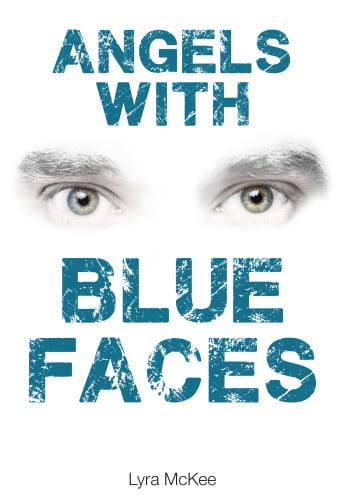
    Lyra McKee’s book ‘Angels With Blue Faces’ is the result of a five-year investigation into what Robert Bradford MP was digging into before he was murdered. It is quite possible that she uncovered one of – if not – the  most putrid British Intelligence dirty-tricks operations of the entire Troubles. If not for her, the truth about this grotesque event might have remained buried forever. Bradford, a Unionist MP,  had campaigned against child pornography. What was going on at Kincora Boys’ Home clearly appalled him. He was ideally placed to inquire into the shadowy world that lurked  behind Kincora as he was not merely a senior Unionist politician but also a British Israelite. The paedophile ring that preyed on the boys at Kincora – and other homes – included William McGrath, an Orangeman, friend of James Molyneaux MP, Ian Paisley MP, and other political figures. More importantly, McGrath was also a British Israelite. Once McGrath was arrested by the RUC’s Criminal Investigation Division, Bradford was in a pole position to pick up on the decades of gossip which had surrounded McGrath in Unionist political circles. The UVF, UDA, Red Hand Commando and other  paramilitary groups also knew of his links to British Intelligence. The UDA even had Kincora under surveillance, an easy task as it was located at a cross roads. McGrath had also dug a hole for himself by boasting of his links to Britain’s spy agencies. By late 1981 hundreds if not thousands of Loyalists knew of McGrath’s bragging. In the very early 1970s the UVF had been allied to McGrath’s paramilitary organisation Tara but had distanced themselves precisely because of McGrath’s links to Britain’s spy agencies. Publicly, they walked out as a group from a Tara meeting on the basis that McGrath was a homosexual not a British asset because they did not want to highlight the intelligence connection. (See ‘Her Majesty’s Hatchetman’ on this website for the wider story of the UDA’s knowledge of Kincora.) Bradford and thousands of others knew all of this. Would MI5 possibly have deployed its Provisional IRA agent to murder him merely because of this? Hardly. Did they do so  because as a sitting Westminster MP he could raise the issue in the House of Commons and had discovered a lot more? McGrath’s trial was set for December 1981 along with that of two other Kincora staff members. Bradford was clearly not going to interfere with a looming trial. But after it, the gloves would come off. Bradford was rubbed out a few weeks before the trial commenced. Lyra McKee’s investigation will add greatly to our knowledge of these murky events and uniquely, what Bradford was probing. Her book is now available for pre-purchase from Excalibur. —

    Loading

    Read more

  • Posted in:

    LYRA McKEE'S BOOK By Joseph de Burca.

    EXPOSING THE MOST SINISTER AND HITHERTO SUPPRESSED SCANDAL OF THE TROUBLES Lyra McKee’s book on the murder of Robert Bradford MP is to be published shortly. Copies of it can be pre-booked by visiting the  website of her publishers, Excalibur. The book is called ‘Angels with Blue Faces’. Those  interested would be well advised to pre-book it as it is sure to sell out quickly when it reaches the bookshops. Bradford was shot by an IRA unit in public in broad daylight in front of multiple witnesses. The faces of the hit squad were neither disguised nor concealed. They clearly believed they had little to fear from the RUC. They were never apprehended. One of the assassins has since been identified by a witness as a notorious British agent. Lyra McKee’s book will undoubtedly flesh all this out. The date upon which Bradford was murdered is crucial:  14 November 1981. At that time MI5 and MI6’s  involvement in the intelligence cesspit that swirled around Kincora Boys Home, Williamson House and other tortured children’s homes in NI was still a secret, at least insofar as the public was concerned. In the background the Kincora cover-up was firing on all four cylinders. The trial of three of the staff at Kincora took place the following month. MI5 and the RUC were determined to control the evidence so that it would appear that the only abuse that had taken place was that perpetrated by the staff at the home. One key RUC Kincora investigator assaulted at least one former Kincora boy, Richard Kerr. He did so in Preston, England. Kerr had been abused by politicians, paramilitaries and others. The RUC officer told Kerr to keep away from the trial in Belfast and even threatened to arrest him for engaging in homosexual acts. Pause and think about that for a moment: the boy had been abandoned by his parents; raped by an adult male at Williamson House as an 8-year-old while clutching a soft toy, and then pimped out for the next decade to Loyalist terrorists, a high profile and still popular British TV star, a number of Tory MPs among many, many others. The RUC officer who assaulted him is alive and well. He can rely on the RUC/PSNI and MI5 to safeguard him from inquiry in return for keeping their most vile secrets under wraps. (See also ‘Kincora Survivor’ and ‘How the Anglo-Irish Vice Ring Operated’ and ‘Suffer Little Children’ on this website.) The TV star has been involved in a child charity in recent years. Richard Kerr is prepared to name him and identify the address in London where he was abused by him, to the Independent Inquiry into Child Sex Abuse. So far, it does not appear interested. Also in the months in the run up to the trial, William McGrath, the  sadistic ‘Beast’ of Kincora prowled around Belfast hunting his former victims down in a vehicle driven by a group of hoods. They menaced and threatened at least one of the boys to stay silent. That victim told his story to Chris Moore who published it in his book on Kincora. The thugs were probably Tommy Lyttle’s UDA henchmen. (See ‘Her Majesty’s Hatchetman’ on this website for further details about Lyttle and MI5.) As part of the Kincora cover-up, McGrath’s friend and supporter, the Reverend  Ian Paisley descended upon the Cumberland Hotel in London to bully Richard Kerr into keeping quiet. He warned him not to tell anyone about the ‘Englishmen’ who had abused the boys he knew. (See ‘Blackmailed’ on this website.) Two Englishmen, Peter England and Robert Imrie from the Northern Ireland Office were named in the House of Commons by Ken Livingstone in respect of Kincora a few years later. (See ‘MI5’s Flasher-General’ on this website.) The RUC also forged at least one witness statement purporting to be that of an Englishman with access to files on McGrath who was stationed at Lisburn Barracks where Britain’s military and civilian services were based. Village will be reporting on this in the near future. One of the most depressing Kincora stories is that of Stephen Waring. The RUC did not need to threaten him for he had committed suicide by jumping from the Monarch Belfast-Liverpool car ferry in 1977 rather than suffer any more rape. Crucially, the RUC only interviewed boys who had been abused inside the home by the staff. Richard Kerr, the boy assaulted in Preston by the RUC officer, had been one of a smaller sub group taken to the Park Avenue Hotel, the Europa Hotel, a hotel in Bangor and other venues to be abused by paramilitaries such as John McKeague and also a senior DUP figure. Stephen Waring was also part of this group. It was a quite small one. A number of them have since died – apparently by suicide –  but at least two are  alive. The key point of this article is that by November 1981 MI5 and the RUC’s multifaceted cover-up of Kincora  was holding fast. Robert Bradford MP may have been on the verge of exposing it. Then, he was killed by the MI5-controlled hit team, the Kincora trial proceeded without exposing the MI5 dimension to the scandal. When John McKeague – the most important Loyalist terrorist of the late 1960s and early 1970s – threatened to expose what he knew shortly after the trial if he was to be arrested, he was shot dead by MI5 agents in the INLA. His death occurred in February 1982. (For more information on McKeague see ‘Profiled, The Men Who Tried to Kill Haughey’ on this website.) Joss Cardwell, the senior Unionist politician who ran Belfast’s children’s homes, committed suicide a few weeks later (or so we are led to believe) when the Kincora focus fell on him. He was a key figure in trafficking Kincora boys such as Kerr and Waring to London. It was on one such trip that the flamboyant TV star abused Kerr. The media, however, were onto the

    Loading

    Read more

  • Posted in:

    Lyra McKee’s forthcoming  book may raise questions of the State-sponsored assassination of a sitting Westminster MP by an MI5 agent inside the Provisional IRA.

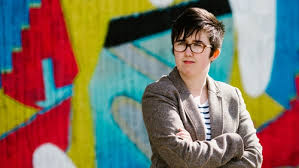
    The British Establishment transformed itself into a lightning conductor to harness the visceral anger generated by the senseless killing of Lyra McKee in Derry on 18 April. It then redirected that energy  as a debilitating shock into the heart of the New IRA. No less a figure than Britain’s PM Theresa May turned up for Lyra McKee’s funeral in Derry to highlight the disgust felt by the UK. Leo Varadkar performed the same task for the people of the Republic. Arlene Foster and Michelle O’Neill were given a dressing down from the pulpit for not getting together, before shuffling up next to each other on a pew at the funeral and a new lease of life was injected into the talks to reinstate powersharing at Stormont. The much derided Secretary of State for NI must have thought all her birthdays had come as one. Lyra’s courageous friends took up her cause and were much admired on TV screens around the world as they daubed the walls of the political offices associated with the New IRA in Derry with blood red palm prints. An anti-paramilitary slogan was sprayed across the famous Free Derry mural. ‘Not in our name. RIP Lyra’, it read. While the New IRA reeled in shock, the  PSNI and MI5 reaped a propaganda windfall they could never have dreamt of. All told, the riot on the night of 18 April not only failed to goad the Northern State into an overaction likely to alienate Nationalists in Derry as the New IRA hoped, it resulted in the latter organisation shooting itself in the foot. The fact that Lyra McKee was a LGTB campaigner hoping to marry her partner was seized upon by the mainstream media, and raised her international profile to higher levels.  The fact she came from a state where gay marriage is not permitted, generated more headlines. No one anywhere had a single bad word to say about her. Her friends have kept her LGBT flag flying. They recently appeared on Channel 4 News where they criticised the failures of the NI state to do anything to advance LGBT rights (aside from spend a miserable few hundred pounds). On a professional level McKee was deservedly lauded on all sides for her journalistic instincts.  She was described as an award-winning writer chosen  as one of Forbes 30-under-30 most promising young journalists. It couldn’t have looked better from an anti-paramilitary propaganda perspective for the Establishment until suddenly this week news of the content of her book began to leak out. While no one at Village has seen it yet, it looks very much like it is going to open a door on the clandestine links between the Robert Bradford MP murder and the Kincora child sex abuse scandal. What an irony therefore that the British Establishment is going to have to tear Lyra McKee’s reputation apart or weather the fallout from her book. It is sure to become a bestseller. Will the Tory yeomanry who came out to defend Ted Heath after the Wiltshire police exposed him as a child abuser in 2018 now form up to villify Lyra as a gullible  conspiracy theorist? The Bradford murder may yet prove to be every bit as egregious as the infamous State sponsored murder of the solicitor Patrick Finucane in February 1989. Why was Bradford really murdered? Lyra McKee’s book may be about to shine a light over British State involvement in the killing and add a gruesome new chapter to the Kincora scandal. Kincora is arguably  the most atrocious British excess of the Troubles. It is a hydra-headed monster that incorporates a multitude of crimes including decades of child abuse, blackmail, proxy terrorism and the perversion of justice. In more recent times MI5 and MI6 have lied to the Hart Inquiry (which swallowed the lies whole). Kincora is a scandal that will not go away.  Will Lyra McKee’s forthcoming  book raise uncomfortable questions of the State-sponsored assassination of a sitting Westminster MP by an MI5 agent inside the Provisional IRA? We have only weeks left to find out precisely what Lyra McKee discovered, or more precisely what she unravelled about the lines of inquiry  Bradford was probing. What was it he found out that led to his death? All of the plaudits heaped on Lyra McKee may soon turn out to be an underestimation of her talent.

    Loading

    Read more

  • Posted in:

    Lyra McKee to expose Kincora-driven murder. By Joseph de Burca

    Lyra McKee’s book on the assassination of Robert Bradford MP is to be released within a matter of weeks. The book will explore the deeply sinister  links between the slaying of Bradford and the Kincora Boys Home scandal. Village readers will be familiar with the scandal on account of the  reports we have been publishing about it since 2017. While we await the publication of the book, readers are invited to scour our archive to view our revelations about  Kincora. The archives of Ed Moloney’s ‘Broken Elbow’ blog are also well worth a visit. Moloney was crucial in breaking a series of revelations about Kincora in the 1980s and has never lost interest in the scandal. A recent entry in his blog concerns the death of Valerie Shaw who tried to end the suffering of the children at Kincora by telling Ian Paisley about it. Paisley did nothing for the boys and lied about his knowledge of Kincora to his last breath. The work of the late Liam Clarke in the Belfast Telegraph provides further insights and is readily available online. Further details about Kincora can be found in the following books: Who Framed Colin Wallace by Paul Foot The Kincora Scandal by Chris Moore Also of note is Martin Dillon. He is the author of a series of books which are worth their weight in gold for anyone who wants to learn about what really happened in the shadows during the Troubles including Kincora. His book, The Dirty War, is essential reading. Village will be posting further short articles on the ramifications of Lyra McKee’s book, ‘Angels with Blue Faces’  over the next few weeks.

    Loading

    Read more

  • Posted in:

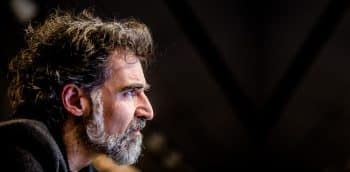
    Michael Smith interviews Olivier Peter about his client Jordi Cuixart who, though innocent, faces 17 years prison on spurious charges of rebellion and sedition

    ON FEBRUARY 12, a criminal trial of twelve Catalan independence leaders, ten of them elected representatives, commenced before the Spanish Supreme Court. Though it is dressed up as a judicial process clearly it has political motivations and implications. It is clear there are systemic problems with the Spanish legal system. Village interviewed Olivier Peter, a Geneva-based lawyer representing an activist jailed 17 months ago without bail on implausible charges of rebellion and sedition. Jordi Cuixart, a long-time activist, pacifist and human rights defender is President of Omnium Cultural which is a cultural and civil rights organisation, not funded by government, with 160,000 members. Olivier Peter is a Swiss lawyer who says he got involved when he received an invitation to visit Cuixart in prison. “We had a long discussion on political trials and the international dimension of the case, and here I am”. After the referendum on Catalan independence in 2017 Peter says Cuixart was arrested: “He was ordered before a tribunal and sent to prison without bail. 17 months later he’s still in jail”. The charges were rebellion and sedition, “for participating in a demonstration and calling people to participate in the referendum. The charge said that on October 1 2017, the day of the referendum, voters built a ‘human wall’” and threw themselves against the Spanish officials and Spanish institutions. But there was no violence from the Catalan side and numerous media outlets have published a video of Cuixart climbing on top of a car to ask demonstrators to remain peaceful. It went around the world. This violence narrative continues to be spread by the Spanish government and parts of the press. The Spanish prosecutor is seeking a 17-year jail sentence. Peter says fundamentally the Spanish court is conducting itself illegally: “Firstly, it is judging activists when the Court is only competent to try elected representatives. And even when trying elected representatives, such as Carles Puigdemont, it is only allowed to do so if there is an “external” angle, which it is contriving by looking to the role of international observers in the independence referendum. It seems willing to convict people for exercising their fundamental rights to demonstrate and protest. And it is not allowing them the right to appeal the conviction”. The Supreme Court is a “tribunal d’exception”. Peter considers that there is a problem with its composition. GRECCO, the Council of Europe’s anti-corruption monitoring body, has criticised Spain for the lack of judicial independence in the appointment of judges, in particular the appointment of judges with ties to the Partido Popular (PP), which was voted out of power last year. Some of the judges leading the case are particularly well-known for their political links. He says that “Many of its judges have been chosen because of their ideology and their links to Spanish unionist parties. As recognised by the Senate spokeperson of the Partido Popular, the Party’controls the Criminal Chamber from behind’”. There are significant procedural flaws in the running of the case. Cuixart was given only six working days to prepare the trial. The Court has contrived to hear the matter which normally would be heard in a regional court on the spurious basis that, since the events in question affect Spain as a whole, it will hear the case as it is the highest court in the land: the Supreme Court. Peter again emphasises that as a lawyer his concern is not politics or independence, it is legal propriety and human rights. “This is not about independence, it is about democracy and human rights. 41 French senators called for a political and not judiciary solution last week and we hope that more European democrats will ask Spain to respect human rights”. Several UN special rapporteurs have called on Spain to respect human rights, though perhaps the most shocking thing is the failure of the European Union and its members to express concern. Nevertheless Peter says he has “no doubt that if Catalans leaders are convicted, the European Court of Human rights would condemn Spain”. Most of the Spanish media has not covered the trial properly. As to what Spain should do now, Peter says it should “Do what Amnesty, Front Line Defenders, the World Organisation Against Torture and the overwhelming majority of Catalan society are asking: drop the charges and immediately free the prisoners”. He thinks the EU should denounce human rights violations by a Member State. Ultimately Peter says, “This is a political trial. The conviction sentence has already been written. But we keep faith in civil society and international opinion. With enough pressure, things can change”.

    Loading

    Read more

  • Posted in:

    Use of wonder material, hemp, is burgeoning but its potential is being undermined by corporate interests and antiquated legislation

    IRISH AGRICULTURAL policy over the past decade has generated unsustainable levels of dairy and beef production. The national herd is approaching 8 million in number and each cow produces 2 tonnes of harmful emissions per year. Industrial-scale farming has resulted in serious climate and national food-security issues which now must be addressed by incentivising the diversification of agricultural land-use and agricultural food production. The search for viable alternatives, capable of supporting Ireland’s rural economy, has led many farmers to consider the potentials of hemp. Hemp is a high value, cash crop with massive economic potential and it can also deliver substantial environmental benefits. George Washington and Thomas Jefferson grew hemp and the Declaration of Independence was written on hemp paper. Rudolph Diesel designed his engine to run on hemp oil. Henry Ford experimented with hemp to build car bodies. But it was as good as prohibited in the United States by the Marijuana Tax Act of 1937, until it was in effect revoked in December. Hemp is naturally resistant to most pests, precluding the need for pesticides. Its tight-spacing squeezes out weeds, so herbicides are not necessary. It produces up to four tonnes per acre per year. It also leaves a weed-free field for a following crop. Hemp thrives without chemical additives or fertilisers and requires minimal use of natural resources. When used as a break crop, hemp significantly increases the yield of rotation crops and as biomass it is a fully renewable energy resource. Hemp promotes biodiversity and ecosystem health in marine environments as well as on land. And a growing body of international research also demonstrates that commercial hemp farming has a significant positive impact on the regeneration of rural communities. Hemp absorbs more CO2 per hectare than any forest or commercial crop – it is the ideal carbon sink. Its bioremediation and soil-decontamination potential is prolific and its capacity to impact industrial carbon emissions is immense. Hemp is the most complete plant-based protein we have, it contains all nine essential amino acids and has considerable nutritional, health and medicinal properties. Outside of its enormous potential as biofuel, hemp is currently used in construction, car manufacturing, paper, food, animal-bedding, clothing, drinks, health, pharmaceutical and cosmetics industries, and there are solid indicators that it will replace other carbon intensive processing in a further range of industrial applications. Petrol-based fibreglass, for example, is more than 400% more expensive to produce than hemp-based fibreglass of superior strength and quality. Rapid advances in hemp technology are bringing production costs well below carbon-based equivalents and the industry is now the fastest growing employment provider in the US, outperforming the US tech industry by a ratio of 2:1 in 2017. The rapid growth of global hemp markets has not by and large followed sustainable development pathways and huge environmental benefits have been squandered. Global policy and regulatory reforms aimed at removing historical barriers to trade – hemp is an agricultural crop with no narcotic value but is treated as a controlled substance – have tended to militate against small, high-quality producers and to favour the growth of corporate actors in the pharmaceutical, drinks and tobacco industries. Ireland is very well suited to hemp and last year, agricultural activity in the Irish hemp sector increased by more than 200% and over the past few weeks there has been another huge increase in the number of Irish farmers enquiring about HPRA hemp-licencing procedures. Many of these are looking to diversify and view hemp as a viable alternative to carbon-intensive dairy and beef production. However, the lack of even the most rudimentary supply chain to support the growth potential is hugely concerning. Insufficient technological capabilities and over-restrictive regulatory requirements limit the Irish hemp industry’s capacity to benefit the environment. They fuel negative public perceptions and are constructive barriers to a full realisation of hemp’s environmental potential. Consequently, the Irish hemp industry is perilously underdeveloped and without state support it will not survive the attentions of global giants now poised to enter the European market. The development of new agricultural systems capable of realising Ireland’s climate transition goals must be supported by financial mechanisms to enable Irish farmers to deliver on environmental policy objectives. The hemp industry requires coordinated development of supply-chain infrastructure to enable a progressive transition toward fully integrated farming and industrial practice consistent with environmental ethics, and capable of realising climate policy objectives. Producer and processor incentives will also be needed to underpin an incubation period, until markets and supply-chains are mature enough to support market-led growth. Measures will be required to educate and inform the public and to promote European and global market penetration of Irish hemp products. It is also hugely important that the forthcoming legislation to allow for access to medical cannabis also protects the environmental, social and rural economic potentials of the Irish hemp industry. Hemp is the wonder material for our times. It needs only a fair regulatory tail wind.

    Loading

    Read more

  • Posted in:

    Hydrogen helps address the need to store volatile renewables

    WE NEED to think big and green about energy in our efforts to contain carbon emissions and mitigate climate change. Renewable energy should be generated where there is capacity (e.g. Ireland – wind, wave, tidal; Spain – thermal, Iceland – geothermal). The challenge faced by Europe and Ireland especially is how to increase the share of intermittent renewable energy – that, like wind, is not always present – to meet demand in North-West Europe. This is especially challenging when our electricity grid is at maximum capacity and where expanding grid capacity will require major capital cost. This lack of grid capacity is the biggest limiting factor in increasing renewable-energy supply in Ireland both North and South. The grid cannot take more renewables. Rural and isolated communities face unique energy issues relating to efficiency, reliability and sustainability. This is commonly due to dependency on non-local and fossil-fuel energy supply, low electricity-grid capacity and limited or no connection to wider grids. As a result these communities have higher than average carbon emissions and are more vulnerable to fluctuating fuel prices. Renewable energy sources continue to increase their share of installed capacity worldwide. In Ireland 42% of electricity should be from renewables by next year but in fact only around 30% will be. Integration of renewables, in conjunction with increased energy efficiency and other low-carbon technologies, such as carbon capture and better energy storage (batteries), constitutes the best opportunity to achieve energy sustainability. They also constitute the best option to avert the risks that conventional non-renewable sources pose to health, geopolitics, the economy and the environment. As required by their commitments to the Paris Agreement of 2015, 175 parties have created national renewable energy action plans (NREAPs). These plans involve increasing renewable energy penetration targets for the electricity, heating and cooling, and transport, sectors. These three sectors alone account for 20%, 40% and 40% respectively of total end-use energy demand worldwide. And to shift from a hydrocarbon-based economy to a renewable one, there is a need for clean sustainable energy carriers. Energy carriers allow renewable sources to supply different forms of energy demand across different sectors. Hydrogen is one of these carriers that has attracted much support from across many countries across the globe. In fact, it has the potential to become one of the main energy carriers of the future as it can be easily produced using renewable energy, stored using commercially available technologies and used throughout the entire energy system. The use of hydrogen as an energy carrier, however, has been hindered by specific challenges that need to be addressed. The Interreg North West Europe-funded project GenComm led by Belfast Metropolitan College is seeking to address the barriers preventing the greater integration of renewables into our energy matrix and to navigate a new energy pathway to energy security. GenComm (GENerating energy secure COMMunities); is a Smart Hydrogen-Integrated renewable energy, generation and storage project designed to develop a new model for exploiting generated electricity from renewable sources to provide energy security for remote communities. Every community in the NWE region (whether or not remote) consumes the big three: Power, Heat and Transportation Fuel. The GenComm project through three renewable energy pilot schemes, each producing hydrogen from a renewable source – Anaerobic Digestion, Solar and Wind – will demonstrate how hydrogen as an energy carrier can be the new energy pathway and overcome the current obstacles blocking greater utilisation of renewable energy in our energy consumption matrix. The idea is to use the excess renewable energy, transforming and storing it as a Hydrogen Gas and then using this as an energy carrier for multiple uses within the energy-demand spectrum. Hydrogen can be produced from renewable electricity through electrolysis. We can have safe, clean, reliable H2 energy storage in European communities. Learning from the experience with the plants, technical and financial models will be developed, ultimately making hydrogen a commercially viable and sustainable energy medium.

    Loading

    Read more

  • Posted in:

    An interview with exiled Catalan President Carles Puigdemont

    ON 10 January 2016, Carles Puigdemont, a journalist and the mayor since 2011 of the city of Girona, northeast of Barcelona, was sworn in as the President of Catalonia. In assuming office he made abundantly clear that his foremost priority would be arranging a poll on self-determination, characterising his approach a few months later as “Referendum or Referendum”. That is, while he hoped to be able to arrive at an agreement with the Spanish government on holding a binding vote, he would not allow its veto of the idea to stop the Catalan people from organizing such a poll on their own. In the course of 2016 and the first months of 2017, Puigdemont repeatedly approached the Spanish government about organising a mutually agreed referendum. And the Spanish government repeatedly told him that there was absolutely nothing to discuss. So he readied his government and the Catalan people for a self-administered referendum. Aware that the central government would seek to levy the charge of misuse of public funds against his administration were it to organise the event, Puigdemont left all of the logistics for the vote in the hands of self-funded civil society volunteers. When the scheduled referendum took place on October 1, 2017 it was met by massive police violence from forces under the control of the Spanish state. Despite the violence and the large-scale confiscation of ballots, the pro-independence forces won a convincing victory. While it is true that many stayed away from the polls either out of fear or principled opposition to the entire process, 43% voted, registering a resounding 92% support of independence. In looking at that turnout number it must also be remembered that a very large number of ballots (some estimates run as high as 700,000) were confiscated by police in the course of their armed raids on the polls that day. On Friday October 10, 2017, the Catalan parliament declared its intent to separate from Spain. President Puigdemont, however, immediately suspended the declaration in order to open a period of negotiation with the Spanish state. Over the next two weeks the Spanish government publicly and privately reaffirmed its belief that there was absolutely nothing to talk about and made clear, moreover, that it intended to use Article 155 of the Constitution to suspend the Catalan statute of Autonomy and place the region under full central government control. In the face of this reticence on negotiation and clear threats of further repression the Catalan Parliament met on 27 October, and reaffirmed its earlier Declaration of Independence. Within minutes of this historic event, the Spanish senate voted to impose article 155 upon the Catalan Autonomous region, illegally stretching its mandate to allow the central government to dissolve the Catalan Parliament and set a date (December 21) for new elections. Over the weekend, Puigdemont returned to his home city of Girona and then subsequently slipped over the French border, eventually resurfacing in Brussels on the following Monday evening, accompanied by six members of his cabinet. In early November, the Spanish government issued a European arrest warrant for Puigdemont and the other exiled members of his government for the crimes of rebellion, sedition and misuse of public funds. Over the course of the next several weeks the Belgian authorities reviewed the order in the light of available facts. When, at the beginning of December, word began to leak out of Brussels that they saw no basis for the alleged crimes the Spanish government swiftly retracted the order to save face. In the election, to the surprise of almost everyone, the pro-independence bloc slightly expanded the parliamentary majority that it had earned in the last poll in September 2015. As the head of the independentist list with the largest number of seats, Carles Puigdemont, living in the Brussels suburb of Waterloo, was now the president-elect of Catalonia. The Spanish government, confident its de facto control of the country’s judiciary, now sought to shackle the independentists with highly creative legal manoeuvres. In the days leading to Puigdemont’s scheduled January 30, 2018 swearing-in by teleconference— a practice against which no law exists—the Spanish Constitutional Tribunal nonetheless said publicly that they would recommend against it, and that, moreover, they might very well hold Roger Torrent, the President of the Catalan Parliament, criminally liable if he were to go on with the plan. Frightened by the “advice” provided by the high court, Torrent cancelled the investiture. Two days after the third failed attempt to swear-in the government that the Catalan people had voted for, Puigdemont was arrested while traveling in the German state of Schleswig-Holstein on the basis of a new Spanish extradition request. But just as occurred in Belgium four months earlier, German judges were unable to see any basis for extraditing Puigdemont on the charges of rebellion or sedition. With time running out on the allotted period for forming a government, Quim Torra, a close Puigdemont ally with no formal role in the previous cabinet, was sworn in as president of Catalonia on May 17, 2018. In his initial remarks in office, he made clear that a) he continued to view Carles Puigdemont as the legitimate president of Catalonia and b) that his goal was to make effective the 2017 Declaration of Independence. This interview, which has been edited for length took place in what Puigdemont has christened the “House of the Republic” in Waterloo, Belgium. It was conducted in Catalan and subsequently translated into English TH: In a time of great difficulties and tragedies, why should people in other places, such as my home country of the United States, care about the independence movement in a relatively wealthy part of Spain? CP: What is taking place in Catalonia is, in fact, the direct outgrowth of two important things that have come to us from the US. The first is the Declaration of Independence which has inspired the desire for, and the justification of, freedom in countless nations over the years. The second is the right of self-determination for all

    Loading

    Read more

  • Posted in:

    Special Advocates and the murky role of MI5 at the expense of former Republican prisoners in Northern Ireland

    I HAVE KNOWN Ciaran Collins for several years. Days before we first met at a political meeting in Dublin, Ciaran had attended the funeral of Michael Lutton in Lurgan, Co Armagh. Lutton was a member of the Continuity IRA (CIRA) who died on 1 November 2010 and received a military funeral. I had never heard the name Michael Lutton before, but Ciaran, still mesmerised by the atmosphere of the funeral kept on talking about him. It was, coincidentally, Michael Lutton’s anniversary when I met Ciaran on a chilly All Hallows 2018: I had just arrived in Belfast from Vienna. It was almost 6:30 pm when I reached Ciaran’s house on the outskirts of West Belfast, and I was looking forward to the cup of tea in his kitchen that is usually the first thing I do in Belfast. The kettle was puffing nicely when suddenly he jumps up, throws the tea in the sink and shouts: “I haven’t produced myself today”. Before I understand, Ciaran is in his car on his way to the PSNI police station. Ciaran is a former Republican prisoner. After four years in HMP Maghaberry, he was released on licence in September 2016 under strict terms. Although his sentence was over in 2017, he got handed an extra two years for “national security” reasons. Every single day since his release he has had to produce himself before 7 pm at the PSNI police station, he is not allowed to leave Northern Ireland, he has a list of ten people he shall not have any contact with, and he is not allowed to reside in the Greater Craigavon area. Ciaran is originally from Craigavon, his 72-year-old father, his relatives, and his partner with their three children aged one, six, and ten, all live there. His legal representative, Darragh Mackin of Phoenix Law in Belfast says: “Ciaran is subject to the most restrictive conditions in the constituency. He has been deprived of his liberty and forced to live in isolation away from his family”. “The Governor just came to me and said: That’s it, you are out of here”, remembers Ciaran of the day he was released from prison: “So I went to the reception desk to collect my stuff, and they told me that I could not go home. I went to my aunt in Belfast and stayed there for a while”. Ciaran is one of many former Republican prisoners with particularly harsh conditions imposed upon them. There are currently about a dozen Republican prisoners held in Roe, the separate area for Republicans in HMP Maghaberry. There are dozens who have served their sentences but face strict licence conditions. However, Ciaran’s case is different from other cases. On 7 October 2014, Megan Lindsay wrote in a letter to the Offender Management Unit HMP Maghaberry on behalf of the Northern Ireland Office (NIO) that “the PSNI has confirmed that it does not hold any information indicating that Kieran [sic] Collins is involved in terrorism or linked to a terrorist organisation, or any information which if disclosed would be damaging to national security” (emphasis in original). The only security information provided about Ciaran in a security report dated 25 June 2014 is that he took part in an “ongoing protest/issues with Dissident Republican Prisoners in Roe”. This line refers to his participation in a series of protests by Republican prisoners demanding the implementation of an agreement reached between the prisoners and the Northern Ireland Prison Service in August 2010. This on its own would not have affected his release terms. Based on this report from the NIO, Ciaran and his legal representatives expected his release in 2015. However, Ciaran was not released, and in autumn 2015 closed material procedures (CMP) were initiated. In CMP, also known as “secret courts”, the evidence is withheld from the accused and his legal team for “national security reasons”. Instead, a Special Advocate represents the accused during closed hearings. This Special Advocate is not allowed to provide any information from the closed evidence to the accused and his legal team. “I was supposed to be out the previous year”, Ciaran remembers. He only met his Special Advocate twice: “That was a guy from England. He said to me: In there, I am your eyes and your ears, you need to trust me. But I said I don’t know who you are. I never met you before’. His legal representative was told not to contact the Special Advocate. He points out that “I have never seen the full evidence against me”. As of today, Ciaran still does not know why he was not released in 2015 despite a favourable report from the NIO the previous year. He also does not know why his release on the licence was extended for another two years despite his having served his full sentence. In addition, he does not know why the evidence was withheld from him and his legal time. In other words, he is not aware of all the allegations being made. In this way, Ciaran’s legal representatives were kept in limbo, unable to defend Ciaran. hy did Ciaran get a Special Advocate appointed after a favourable report from the NIO was issued? Special Advocates are used sparsely in the UK justice system. In Northern Ireland, they are merely used for high-profile Republican and Loyalist cases. The use of a Special Advocate in the case of Ciaran indicates that his case is of particular interest to the Security Service. Ciaran was convicted of unlawful possession of a gun. On 20 September 2012, he travelled in a convoy with two other men. Both cars were stopped and searched. The statement of evidence says that the “two other men were assessed by the Security Service (MI5) to be CIRA members”. However, solely Ciaran was charged and eventually pleaded guilty to possession of a weapon in suspicious circumstances. In prison, Ciaran disassociated from his former comrades, leaving the prisoners’ support group Cabhair which supports CIRA prisoners, and became a

    Loading

    Read more