
What is needed is foundation of a new party of the conventional Left: modern, common-good-embracing, quality-of-life-monitoring, taxing, planning, developing, accounting, envisioning


Ireland's political and cultural magazine
What is needed is foundation of a new party of the conventional Left: modern, common-good-embracing, quality-of-life-monitoring, taxing, planning, developing, accounting, envisioning
As the French courts prepare to prosecute Ian Bailey in absentia, there is growing speculation that gardaí targeted him for the murder of Sophie Toscan du Plantier in order to protect the real suspect. The skies were still dark over the West Cork countryside when Martin O’Sullivan set off from his home in Goleen on […]
Village is unashamedly Leftist. Its agenda is equality of outcome, sustainability and accountability. These are all driven by the overarching goal of treating people as equals. The right labours freedom to the detriment of equality, tending to fixate on the provision of choices rather than on how in practice those choices are exercised. The non-ideological, […]
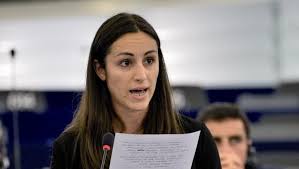
We are all in the gutter but some of us are looking at five stars Roslyn Fuller interviews Eleonora Evi, MEP for Italy’s Five Star Movement [5SM] which has been depicted as racists and fascists who want to destroy Europe Fuller: Eleonora, how did you come to be active in politics and why did […]
Posted in:
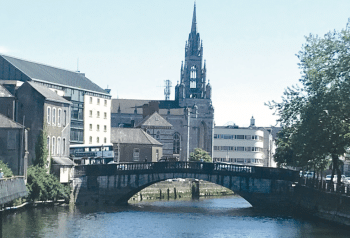
The office of Public Works (OPW, the State’s building service) proposes to construct up to 15km of flood defence walls and embankments in Cork City, including dykes, concrete walls and railings throughout the historic centre of the city. The works would be carried out under the Lower Lee (Cork City) Drainage Scheme (Flood Relief) and are an effort to […]
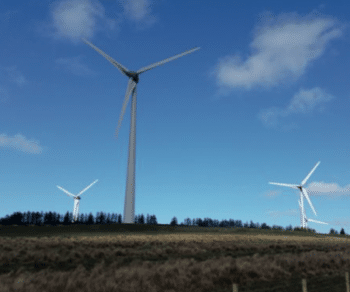
North Kerry has become the ‘renewable energy capital of Ireland’, by default rather than strategic design. This bountiful traditional farming landscape has been obliterated by an industrial landscape of wind turbines, situated in random pattern, at the behest of developers, and not the wider community. Of 411 turbines with full planning permission in Kerry, only 200 […]

Leinster Rugby has just completed a historic European Cup and Pro 14 double, becoming the first Celtic League team to do so in the same season. This comes on the back of Ireland completing a Grand Slam as part of a third Six Nations win in the last five years. It is a golden era for […]

Since emerging from nowhere in 2014, Lee-side four-piece Bailer have been working constantly: an unstaunched torrent of gigs, tours and festival/ all-dayer appearances have been punctuated with steady releases of singles and extended players, charting the development of the band’s hefty, grooving, hardcore-inflected strain of modern metal. The most recent of these extended players, a self-titled […]
When I was a young man, I managed various used and rare book stores for a company based in Washington DC. As part of this book ‘empire’, we leased a large warehouse across the Potomac River in Arlington, VA. It comprised several cavernous rooms. In one of these rooms stood a veritable Everest of books. Further, the entire […]
The well-worn phrase “it’s all over bar the shouting” couldn’t be more apt with regard to the Referendum which repealed the eighth amendment to the constitution (article 40.3.3). The referendum is all over, the shouting has begun and it is going to continue for some time. So far the shouting has been confined to a […]

The lacklustre prose might have tipped you off that all of the above items are from press releases, and so lack the sharpness good newspaper prose should have after subediting. But it’s not just PR-speak that distinguishes these news items. Each one was subject to a news embargo. News embargoes are not unknown in Ireland, […]

You should stop reading right now. Pay no attention to pretty much every columnist of my generation. We got it wrong. Opinion polls are only as good as the people who interpret them, and we all filter our interpretations though our experience. I first voted in 1983, on the Eighth Amendment, which was approved by […]
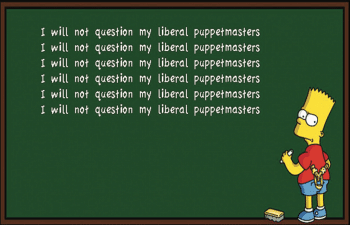
College campuses around the world are renowned as centres of free thinking, individuality, and acceptance of those from all walks of life. And they are; as long as you think the right way that is. In recent years, it has become more and more normalised for people to be silenced because their opinions are seen as […]
Posted in:
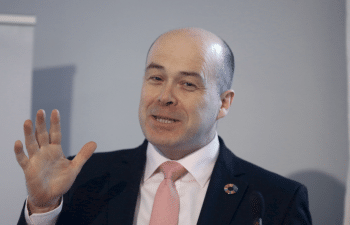
Denis Naughten (45) was born in Drum, County Roscommon, site of the Meehambee Dolmen, a portal tomb estimated to be 5,500 years old, and educated at St Aloysius College, Athlone which closed last year, University College Dublin and University College Cork, where he did a PhD in Food Microbiology (impressively focused on extracellular polysaccharide – complex […]
Posted in:
Not a season has passed since 2015 without a terrorist attack from ISIS or Al-Qaeda in France. Interventions in the Middle East, perceived discrimination against Arabs including ghettoisation and stringent or doctrinaire secularisation are the primary reasons for the attacks, though many have also been random, typically ‘franchised’ retrospectively from ISIS. Ireland is no model of […]
Posted in:
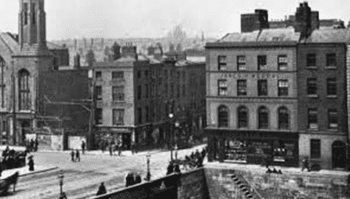
Dublin’s North City fell out of fashion after the flight of the future Duke of Leinster to Kildare St and the Act of Union. That’s more than two centuries ago and the journey back has been slow. It suffered shocking poverty over succeeding generations, the collapse of world-class mansions into tenements, dereliction, the flight of nearly […]
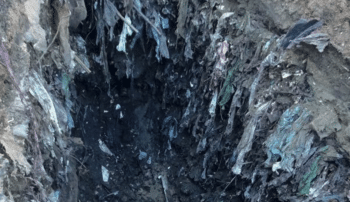
When hazardous hospital waste was found in an illegal landfill at Whitestown, Co Wicklow Irish institutions and agencies were shocked. This wasn’t the usual domestic dumper avoiding charges of €1100 a tonne or a local authority dumping old road materials. The average cost of disposing of medical waste in 1998 was €11,480 a tonne. Clearly someone […]
Posted in:
In April An Bord Pleanála surprisingly granted permission to Crekav Trading for 104 houses and 432 apartments on playing fields east of St Paul’s College on Sybil Hill Road in Raheny, despite receiving more than 1,000 objections, and a recommendation for refusal from Dublin City Council. The site was originally part of the St Anne’s estate, […]
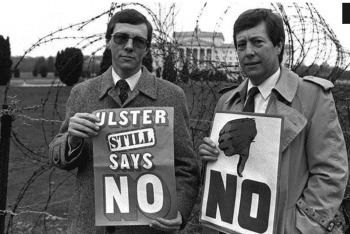
After the abortion-repeal referendum, there is momentum for change in the North, though DUP-dependent Theresa May has indicated she will not not facilitate it. It has made reluctant bed-fellows of DUP traditionalists and Catholic moral conservatives. DUP Assembly Member Jim Wells has had the DUP whip withdrawn for openly criticising the party leadership. “I’m anti-gay […]