Emma Gilleece

  • Posted in:

    Protecting ancient buildings in Ireland: a new initiative

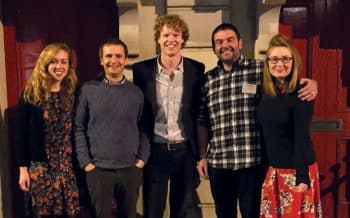
    On 8 February 2017 the inaugural meeting of SPAB Ireland (The Society for the Protection of Ancient Buildings in Ireland) took place. In the audience were the bulwarks of Irish architectural heritage; the Irish Georgian Society, the Irish Landmark Trust, An Taisce, the Dublin Civic Trust. But the demographic for SPAB were better than for any of these organisations. The first meeting in Trinity was overflowing. Its convenors are graduates who have recently completed SPAB Scholarships in the UK, with the aim of extending SPAB to Ireland. The first meeting in Trinity was overflowing. SPAB is a charity founded in 1877 by William Morris. Though best known in his lifetime as a poet and social campaigner, he posthumously became better known for his designs, particularly of textiles. It was founded in response to the highly destructive, if well-intentioned, ‘restoration’ of medieval buildings popular with many Victorian architects, exemplified in Ireland by the overdone Dublin Cathedrals. Today SPAB claims to be the largest, oldest and most technically expert national pressure group fighting to save old buildings from decay, demolition and damage. To this day the 1877 manifesto remains the basis for the Society’s work. Village spoke to Rachel Morley, Tríona Byrne and Oliver Wilson, SPAB convenors, about the future of SPAB Ireland. According to Morley, SPAB has a statutory role as adviser to local planning authorities in Britain. “We must be notified of listed building applications that involve total or partial demolition. We are also informed by those religious bodies that have an exemption from the secular system, of certain types of proposal for listed places of worship. In addition, our casework includes campaigning to protect historic buildings at risk”. That sounds like a lot of the work carried out in Ireland by An Taisce though of course An Taisce’s remit is environmental and planning-focused too, and by the Heritage Council on a narrower and professional basis. Morley says that “Ultimately, SPAB Ireland would like to become formal consultees for applications to demolish or partially demolish listed buildings and applications for any works to, say, pre 1720 buildings”. Morley claims to be a bit of an oddball. While studying Process and Chemical Engineering at UCC, “I fell in love with old buildings – the architecture, the history, the materials, the decay mechanisms and conservation and people’s relationships with old buildings. I went on to study Applied Building Conservation and Repair at TCD. As this course wound up, I desperately wanted to learn more about plaster conservation – learn practical skills. I moved to England and spent twelve months funded by the Heritage Lottery undertaking a training internship in architectural stone and plaster conservation with the Institute of Conservation. I spent several glorious years travelling across England and Europe repairing plasterwork of all periods. I am currently work with the Churches Conservation Trust and am responsible for the repair of 129 redundant Anglican churches across the southeast of England. I am endlessly fascinated and inspired by churches”. Morley got involved in SPAB in her early twenties while living on the Welsh borders. “It was beautiful, but I was lonely. I wanted to meet like-minded people and I wanted to explore the buildings that surrounded me. SPAB has several regional groups – groups of members who arrange local events, lectures and tours to ensure members throughout the country are engaged with the Society. I joined the local committee and for two years arranged these events. In 2014 I was lucky enough to be elected to the Guardians’ Committee which is responsible for upholding the ethos and traditions of the Society and plays a leading role in the Society’s listed building casework and in historic buildings policy discussions”. Wilson is an architect, originally from Donegal: “I got the conservation bug quite early, in my late teens I got involved with The Journeymen, a group of craftspeople (led by Séan Brogan) who did craft demonstrations around Donegal, Sligo and Leitrim. I did my ‘part 2’ thesis on Ramelton and after that I worked with Dedalus Architecture (Duncan McLaren), a small but principled conservation practice in Donegal. While there I got a place on the SPAB scholarship in 2015 and since that I’ve been working with Andrew Townsend Architects”. He’s passionate about conservation and outlines SPAB’s philosophy: “The idea is that a building should be allowed to age gracefully, we love when an old building looks old and see the patina of age as something which should always be retained. Take for instance an old wall that has gone bulged and wobbly and is perhaps on the brink of collapse: rather than take it down and rebuild in the new, the stonework could be stitched together and repaired it in situ, stabilising the wall whilst retaining its wobbliness and telltales of its age”. Byrne is a structural engineer working in conservation in Dublin. “In 2016, I completed the SPAB scholarship programme, which involved travelling all over the UK for nine months visiting hundreds of building conservation projects and meeting the people involved – craftspeople, contractors, professionals and anyone involved in the project in any way”. Byrne says that during her scholarship, I kept thinking about how great it would be to have something like the SPAB in Ireland. Whenever I met the other Irish SPAB members, we always spoke about it. I knew I wanted to return to Ireland after my scholarship (as long as I could find a job!), and with Eoin based in Ireland too, we decided it was a good time to try and establish SPAB in Ireland. Byrne too favours minimal intervention as a philosophy: “SPAB favours a conservationist approach – if there is nothing wrong with a building, why do anything? Often, restoration replaces the history and character of a building, as well as patina of age, with an essentially new building, ‘sanitising’ the old building in the process of restoration”. As to the future of SPAB and its relations with other worthy bodies, Morley says: “There are many great organisations

    Loading

    Read more

  • Posted in:

    The Village Interview: Pankaj Mishra

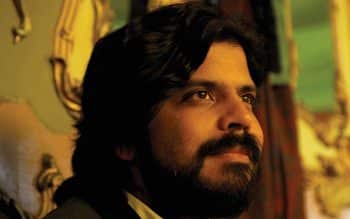
    Pankaj Mishra inhabits a perplexing position in Indian and international letters. One of India’s most exhilaratingly provocative voices, his blistering op-eds and essays in Asian journals and such “intellectual outposts of Anglo-America” as the New York Times, Time, the Guardian, Bloomberg, the Financial Times, the Wall Street Journal and the New York Review of Books (NYRoB), frequently involve lacerating moral critiques of both Indian and triumphalist Western ideologies. He has drawn an impressive array of naysayers down the years: from neo-con military historians such as Max Boot, to “neoliberal” bigwig, Jagdish Bhagwati, a WTO colleague of Peter Sutherland’s who, in a 2010 speech to the Indian Parliament, denounced Mishra’s criticisms of India’s economic liberalisation as “fiction masquerading as nonfiction”. Meanwhile, life rarely delivers such pleasure as Mishra’s demolition, over a long and remorseless 2011 essay in the London Review of Books (LRoB), of the preposterously right-wing Scottish TV historian and Harvard professor Niall Ferguson, whose enthusiastic apologia for Western imperialism, for Mishra, amounts to “moral and intellectual onanism”. Gentle in person, Mishra is a compact, boyish-looking man with a piercing gaze: his faultless courtesy framing a voice of quiet gravitas from which undulate impeccably elocuted, oft-ornate and resonant sentences. Much of this flows from the exactitude and force of his writing; his vivid, pyrotechnical style embroidering telling quotations from world writers and philosophers into propulsive passages which often ignite in the mind. Mishra diagnoses our era of resurgent bellicose nationalism as a recurrent symptom of capitalism’s dysfunction: as opportunist demagogues deflect mass disaffection onto minorities (or “Islam”); and make grand promises of “development” whilst facilitating crony capitalism. They typically present themselves as social revolutionaries promising to uproot entrenched “cosmopolitan elites” and political “insiders” who are seen, correctly, as callously unresponsive to the sufferings of their peoples. Mishra’s latest book, ‘Age of Anger’ interrogates the contradictions inherent within western liberal democracy: forged in the eighteenth-century Enlightenment as a secular, materialist, universalist civilisation based on rational self-interest, equality, ‘liberty’, and laissez-faire free market capitalism. “Even equality is a deeply problematic concept. It has its origins in Christianity, where it is conceived as equality before God. When you transfer that into a competitive commercial society, it becomes elusive, even deceptive. Really, the drama of the modern world is the collision between the promise of equality and the fact of structural inequality. This is where neoliberalism’s promise of meritocracy is an illusion. It has created a subjectivity where equality is seen as achievable, not through state intervention or socialism, but through the pursuit of prosperity. Except that prosperity creates and requires new hierarchies… “So it becomes a completely futile pursuit, accumulating all kinds of political pathologies in its wake. This is not the left view: I think the left is committed to the idea of equality through redistribution. But here we reckon without specialisation, industrialisation, all these complex processes of gradation and heirarchy which make the project of equality all the more difficult. Even in socialist states, you had massive inequality; say in Yugoslavia, what was called the ‘New Class’ ….” Meanwhile, fuelling the engines of history, Mishra identifies Nietzschean ressentiment: a corrosive, rancorous mix of powerlessness, subjugation, humiliation and hatred which can boil over into revolution or terrorism; and from Hannah Arendt’s ‘The Origins of Totalitarianism’ (which sold out on Amazon after Trump’s election), a “new terrifying negative solidarity”- a “structureless mass of furious individuals” and superfluous people, united only in loathing of the status quo. Arendt was writing about post-WWI Europe, where class collapse and economic calamity created an atomised people without social identity or emotional moorings. Now, declares Mishra, it is happening again, not just at the global margins, but “in the heartland of modernity. So you get this political insurgency, a nihilistic impulse to punish the elites, to blow up the system; and retreat into fantasies of authenticity, some imagined national community”. For Mishra, “the history of modernisation is largely one of carnage and bedlam”; of uprootedness, dislocation and alienation, as economically backward countries often take cruelly coerced shortcuts to aggressive urbanisation. “Socialist states in general have been everywhere committed to this particular vision of modernisation – whether in Eastern Europe, the Soviet Union or in Asia or in Africa – which more and more complicates the project of equality”. He reminds Westerners of our own often wartorn historical transition to modernity; mirroring the turmoil and extremism often witnessed in the developing world, especially after 1945, when emergent nations shook off colonial shackles across Asia and Africa. Thus huge recent advances in India and China are the most radical since Bismarck’s Germany: shoring up catastrophic environmental and social disruption, where just as in nineteenth and twentieth century Europe and the US, many millions are being left behind. Across Asia, he says, this threatens to create reservoirs of nihilistic rage among hundreds of millions of have-nots. Born in 1969 in Uttar Pradesh, Mishra grew up near the north-central Indian city of Jhansi, the son of a railway worker whose high-caste Brahmin family had been impoverished by post-independence land reform. With parents “decisively shaped” by “a pre-modern world of myth, religion and custom”, he can attest to “the ruptures in lived experience and historical continuity, the emotional and psychological disorientations… that have made the passage to modernity so arduous for most people”. Although born a Hindu, “Hindusim is not really a religion, it’s a way of life: there was no obligation to go to temple or engage in rituals, it was very agnostic, very relaxed”. They lived “a semi-rural life on the margins of small towns, amidst a mixed local population. I grew up assuming human diversity to be the norm. That’s why I find any suggestion that we should have a homogenous society deeply repulsive. For me, humanity is diverse”. “I grew up in an India where the collective project was important, where the phrase ‘the common good’ still had some meaning. We didn’t think of ourselves as individuals competing with each other in the marketplace. There was a particular

    Loading

    Read more

  • Posted in:

    No on and on for Noonan

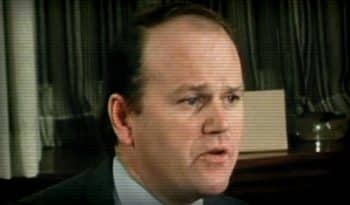
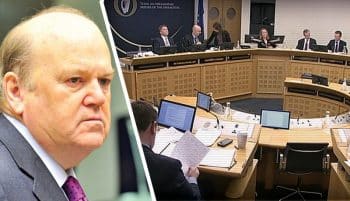
    When Enda Kenny steps down from his position as Taoiseach in the coming weeks, it comes as little surprise that finance minister, Michael Noonan, another great survivor of Irish politics, will depart with him, or not long after. The Public Accounts Committee (PAC) is believed to be critical of a decision Noonan made not to intervene in the sale of Project Eagle, in April 2014, even though he had been made aware of a £15m fixer fee arrangement connected to the sale of NAMA’s Northern Ireland property portfolio. This has done a lot of damage to his reputation. That he met with the winning bidder, Cerberus, along with department officials, on the day before the tender was awarded to the US fund, is expected to raise further questions that can only be properly dealt with by a Commission of Investigation. It is understood that Noonan has objected to what he believes is an adverse finding against him in the PAC report, but the majority of committee members are of the view that it merely states the obvious which is that the perception of a meeting between the finance minister responsible for overseeing NAMA and the executives of the company on the day before it won the lucrative tender raises uncomfortable questions. The PAC is also expected to support the thrust of the report by the Comptroller and Auditor General who concluded that the amount paid by Cerberus was over €220m less than could have been obtained, and that NAMA failed to deal with apparent conflicts of interest involving Frank Cushnahan, a member of its Northern Ireland Advisory Committee (NIAC), when they first emerged in 2012. In March 2014, the favoured bidder, PIMCO, informed NAMA executives about fee arrangements involving payments to solicitors Brown Rudnick, Belfast solicitors Tughans and Cushnahan, and its decision to withdraw its tender on the advice of its legal advisors. Noonan then had a chance to call a halt to the sale. He failed to do so. Indeed he met with executives from Cerberus, on the day before it secured the portfolio of properties across the North and in the UK for £1.24bn, far less than its original value of in excess of £4.6bn. Noonan can be expected to defend his approach, on the grounds that he did not discuss any commercially sensitive issues with the Cerberus team, and while there are no publicly available minutes of the meeting it beggars belief that the biggest single sale of Irish public assets did not come up during the conversation. Noonan has weathered many political storms before, and only last year managed to escape any serious fallout when he was caught out by Sinn Féin finance spokesman, Pearse Doherty, during the general election campaign, massaging the budget figures. He has also managed to give the impression of gravitas and, as a master of the jaundiced soundbite, displays an apparent sagacity and knowledge of economic and financial affairs while rarely saying anything of consequence. It was his mantra about keeping the recovery going, adopted by Fine Gael disastrously as its main election slogan which contributed to its loss of a bucket full of seats in the February 2016 election and which has left his party at the mercy of Fianna Fáil in the current shambolic ‘confidence and supply’ arrangement. He spends much of his time rubbing shoulders with the architects of an EU austerity programme which threatens to bring down the Euro and the entire post war European project as millions of working people flock to the embrace of right wing xenophobic nationalist movements across the continent. In 2012 he was accused of ignorance when he commented that: “Apart from holidaying on its islands, I think most Irish people don’t have a lot of connections with Greece. If you go into the shops here, apart from feta cheese, how many Greek items do you put in your basket?”. This may have gone down well with Wolfgang Schauble and his mates in Berlin, Brussels and Frankfurt but it did little to show any empathy with an entire people being subjected to a viciously enforced austerity programme. His recent speech to the Irish Taxation Institute confirms his position as an old-style financial conservative pursuing a tax-cutting agenda while public services in health, education, transport and housing are in dire need of investment and state support. Approaching 74, and a TD since he entered the Dáil for Limerick East in 1981, after a BA in Economics and English in UCD and a few years teaching English, Economics, and Geography in the Crescent Secondary School in Limerick (where his son John now works). Noonan is a political survivor who has tasted victory and defeat in their many guises over the past 35 years in politics. Following a general election in 1982, after which Garret FitzGerald was forced out of office, Noonan found himself on the Fine Gael front bench as a spokesperson for education, presumably due to his teaching experience. After the second general election in 1982, and just eighteen months as a TD, the Limerick man was appointed to a senior cabinet position as Minister for Justice at a time of intense political turmoil and upheaval and just a year after the republican hunger strikes which had undermined the preceding Haughey administration. He was only a few weeks in office when he disclosed the sensational details of how the previous FF government had tapped the telephones of journalists including Bruce Arnold, Geraldine Kennedy and, later it transpired, Vincent Browne. He was the minister who introduced the wording for the 1983 referendum on abortion which ever since has forced tens of thousands of women to leave the country to secure a termination of their pregnancy. In 1986, he was made Minister for Industry and Commerce and the following year Minster for Energy after the Labour Party left the then coalition government and before an election that saw Charles Haughey return as Taoiseach. Around this time he came to national attention on ‘Scrap Saturday’

    Loading

    Read more

  • Posted in:

    Obituary: Cardinal Desmond Connell, 1927 – 2017

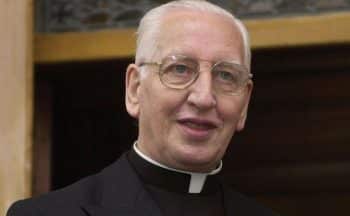
    Cardinal Desmond Connell has died aged 90, generating – since he was the best known avatar of the conservative Catholic Church – predictably ambivalent obituaries. Born in Dublin’s Phibsborough he attended Belvedere College, Clonliffe diocesan seminary, and UCD where he picked up a brilliant MA. After St Patrick’s College, Maynooth where he was a bachelor of, among other things, divinity, he was ordained in 1951 and got a doctorate at the Pontifical University of Leuven, where his subject was the 17th-century French philosopher, Nicolas Malebranche – whose trick was to synthesise the thinking of St Augustine with that of Descartes – and about whom he later wrote a book which addressed many of the most complex issues relating to angels. He was appointed professor of metaphysics in UCD in 1972 and became dean of the faculty of philosophy and sociology in 1983 from where he held doctrinaire sway for a generation. In 1988, the future St John Paul II named him Archbishop of Dublin which he remained for sixteen long and purgatorial years. In 2001 he became the first Archbishop of Dublin to have been made a cardinal in almost 120 years. He led the archdiocese at a difficult time as faith broke down due to the ‘Late Late Show’, the invention of the contraceptive pill and an outbreak of education, and lovechild scandals such as those of Bishop Eamon Casey and Fr Michael Cleary enveloped an increasingly unsheepish flock. Despite his seraphim-on-a-pin unworldliness, he managed to pull the diocese out of crippling debt. He also championed the underdog at every opportunity: Travellers, refugees, the unemployed. A close colleague said, “he loved music, history, gardening, dogs. He loved his pipe”. He liked Bruckner, Elgar and Mahler and, according to obituary writers, was greatly loved by his priests and by many of his former university students. It was not enough. The first draft of history has already been written and it damns him, in temporal terms, for how he handled child abuse in his diocese. The 2009 report of the independent Commission of Investigation, headed by Judge Yvonne Murphy, looked specifically at the handling of some 325 abuse claims in the Archdiocese of Dublin, 1975-2004 incorporating much of Connell’s time: “The Dublin Archdiocese’s preoccupations in dealing with cases of child sexual abuse, at least until the mid-1990s, were the maintenance of secrecy, the avoidance of scandal, the protection of the reputation of the church and the preservation of its assets”, concluded the report. “All other considerations, including the welfare of children and justice for victims, were subordinated to these priorities”. Although he had had the nous to set up the Child Protection Office in 2003, the report said then-Archbishop Connell was “slow to recognise the seriousness of the situation when he took over in 1988. He was over-reliant on advice from other people, including his auxiliary bishops and legal and medical experts”. There is substantial evidence that while personally appalled at the horror of a little child being abused by a person who had promised to give his life to God, he was not good at conveying this horror to victims. It is fatuous, as many have unsympathetically claimed, to make out that Connell did not himself realise this. In 2009 Connell issued a full apology in the Pro Cathedral. At a mass to commemorate the 24th anniversary of Pope John Paul II’s papacy, he said, “I did not effectively deal with it. I failed”. He also has said “I ask pardon of all whom I have offended, especially of those who suffered unspeakable abuse by priests of the diocese and experienced a lack of the care that ought to have been provided”. This is, perhaps appropriately in view of the special social privilege afforded the clergy in its ascendancy, a much more abject apology than would be normal from, for example, a politician, or a banker. According to Breda O’Brien, the Irish Times’ apologist for Catholicism: “The general consensus is now that he was a good man trying his best in a role for which he was radically unsuited, but he was more complex and faced a more complex time than that simple summation suggests”. She refers then to his concept of mental reservation – that is, the idea that while one could not tell a direct lie, one was not obliged to tell the full truth – we were profoundly shocked”. Certainly it is determining that the Archbishop didn’t make the Truth his central concern. But why would he? She goes on to defend his secrecy: “His age and generational values meant that he opposed the opening of diocesan files, not in a desire to hide damaging secrets but because he was horrified at the idea that people who had told their stories in confidence would be betrayed”. Again that was to be expected. As Murphy so clearly inferred, Connell’s central concern was the faith and the institutional Catholic Church and its traditions teachings, transcendent as they are. If his concern had been the Truth he would have better been a scientist or cosmologist. He was driven by Catholic dogma defined as “a truth revealed by God, which the magisterium of the Church declared as binding” but also, according for example to the Second Vatican Council’s document on divine revelation, Dei Verbum (‘The Word of God’), both sacred Tradition and sacred Scripture are to be accepted and venerated with the same devotion and reverence”. Abuse survivor Marie Collins, who met Connell often during the period covered by the Murphy report said, before expressing the wish that he rest in peace : “He was a man of his time”. Again this entirely misses the point. He thought of himself as a man for all time, an agent for the eternal Church. Otherwise why be a priest rather than a social worker? If he failed to follow the vogue for happy-clappy openness, for the fallible watering down of God-given theology by liberalism, that was not because he was a man of his time

    Loading

    Read more

  • Posted in:

    Government Policy the main barrier to housing supply

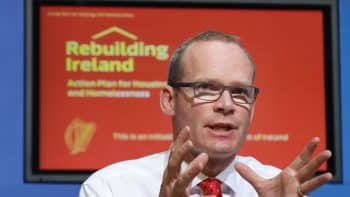
    Mandatory standards, regulations and policy introduced since 2014 have negatively affected the feasibility of many residential projects, increased costs and contributed to the skills shortage in the construction sector. This has led to continued sluggish residential output and increasing rents. Despite Ireland’s vacancy rate of twice the ‘normal’ – with 200,000 vacant homes, Government policies have focused on new-build homes. Residential land values have increased dramatically as a result of policy interventions. There are three main areas of concern: (1) Building Control, (2) Planning Regulations and (3) Housing Policy. 1: Building Control Following introduction by the Department of Housing of S.I.9 of the Building Control (Amendment) Regulations (BCAR), in 2014, a 60% fall-off in one-off housing commencements was observed in the first year of operation. No estimated Impact Assessment of the Regulations (Regulatory Impact Assessment) was undertaken in advance of their implementation. BCAR direct and indirect costs of up to €50,000 per house for self-builders and up to €25,000 per apartment were confirmed by industry commentators Karl Deeter and Dr Ronan Lyons (Trinity College, Dublin). A Ministerial review (April-September 2015) resulted in an ‘opt-out”, SI.369, which permitted one-off houses and extensions to be exempted from BCAR. ‘One-off’ house commencements have recovered as a result. However, no Government review of BCAR is planned for the multi-unit residential sector. As an example from my own practice, a modest change-of-use project in suburban Dublin with a construction budget of €25,000 required three separate statutory appointments which cost over €10,000, and permissions which took six months to obtain. Of this, Building Control procedures cost €7,600 and took one hundred days to complete. In contrast, in the UK similar Building Control permits cost £695 and take ten days. Planning is not the problem. Reliance by Government on privatised Building Control ‘self-certification’ compliance procedures rather than simplified inspections is placing unnecessary cost burdens on the sector, and increasing skills shortages – with little improvement in either consumer protection or quality. 2: Planning Standards The Department’s proposed ‘fast-track’ Bord Pleanála process for schemes of one hundred dwellings or more will not address timescales; rather it allows developers to bypass development plan ‘inconsistencies’ e.g. the requirement for passive house standards in Dun Laoghaire Rathdown, or ‘leave the door open’ for suburban housing applications in ‘green belts’, e.g. around Cork City. The Department’s Minimum Apartment Standards were issued in December 2015. The stated intention was that reduced space standards would yield considerable cost savings, and improve feasibility and supply. The purported savings are not seen in the weak accompanying Department research which underpins it and which suggested a profit margin of just 0.7% would result from application of the standards in its own worked example. No Regulatory Impact Assessment was undertaken in advance. The assumed saving from lower standards is not borne out by detailed analysis, and mandatory standards have little effect on feasibility. Three out of five Local Authorities have seen costs increase as a result. The current availability for sale of affordable Passive Standard homes contradicts the Department’s assumption that increased performance comes at a premium. In 2006 the Society of Chartered Surveyors estimated that a typical County Dublin house cost €330,000. When a Local Authority assumes the developer’s role, significant savings can be passed on to end-users. Last November, Minister Coveney confirmed on the Dáil record that Local Authority housing costs ranging from €141,445 (two-bed outside Dublin) to €205,250 (three-bed in Dublin) including vat. 3: Housing Policy The Government’s recent ‘Rebuilding Ireland’ plan relies heavily on the private sector for the provision of ‘affordable rentals’ and for social housing. The majority of the plan’s 47,000 new social homes are rented or leased units. The balance of 15,000 units will be a mixture of Public Private Partnerships, ‘Rapid’ builds, Approved Housing Body projects and Local Authority housing. The Department of Housing uses new ESB connections as a proxy for new-build ‘completions’. This flawed methodology effectively means that the plan’s actual new-build five-year social-housing target is just over 8,000. Recent analysis by Dr Rory Hearne (Maynooth University) concludes that at current rates it will take at least thirty years to house those on current housing waiting lists. To put ‘Rebuilding Ireland’ in context, there were 8,794 Local Authority homes completed in 1975. Dr Declan Redmond (UCD) has confirmed out of 567,585 new dwellings completed in a ten-year period, the equivalent of 19,539 Part V homes (2.6%) were delivered. Part V (under which local authorities can now obtain up to 10% of land zoned for housing development at “existing use value” rather than “development value” for the delivery of social and affordable housing) was revised down last year to less than half the previous requirement and units can be leased instead of purchased. Over a thirty-year period a typical rental house costs €270,000 more than a Local Authority-built passive house (PH) standard home. A simple cost-benefit analysis suggests the ‘Rebuilding Ireland’ private rental model will cost €291m more per annum than state-built PH homes – that is €8.74bn more expensive over thirty years. Conclusion There is little evidence to support the Government’s reliance on the private sector for delivery of social and affordable housing, or affordable rentals. Ambitious five-year plans have come and gone – Housing 2020 was launched in May 2014 with a budget of €3.8bn and promised 25,000 new social homes in five years. However in fact, in 2015 and 2016 less than 300 local authority homes were built. Building Control Procedures introduced in 2014 continue to negatively affect the residential sector. Reform of our ‘reinforced self-certification’ system along the lines of Northern Ireland’s self-funded version could reduce costs, improve standards and safety, increase consumer protection, ease the industry skills shortage and significantly improve supply. Local Authority directly-procured housing can deliver affordable rentals and social and affordable housing at significant discounts. The private sector will wait for asset prices to rise to a level where a reasonable profit margin can be achieved, and it is naive to expect new homes to be provided at or below

    Loading

    Read more

  • Posted in:

    Editorial: Enda the puns

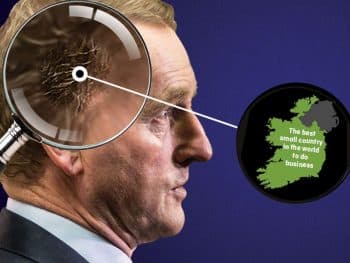
    Enda Kenny has been Taoiseach since 2011 and leader of Fine Gael since 2002, a political aeon ago, and was first elected to the Dáil in 1975, before the flood. When he retires as he will next month he will be the longest serving Fine Gael Taoiseach, overtaking John A Costello. He has been consistently under-rated primarily because he is not an intellectual and Fine Gael is a conservative, and often self-righteous, party that dices with dourness, so it amuses some to ridicule its leaders. He has done some foolish things, like summoning in aid ‘Paddy’ a notional Irishman who likes to know the truth, and imagining a meeting with the minister for children, which has precipitated his demise. But in 2011 Village predicted that he would be error-prone and let down the office. This he has notably not done.  He has fulfilled his duties with dignity and gained international respect. It is easy to complain about Ireland but our politicians have conducted themselves in ways that have allowed an increase in tolerance and avoided the rise of the dangerous hard right that threatens in a great number of other liberal democracies. Kenny was decent to his colleagues, including his coalition partners, and when his imagination was let loose, allowed himself to be socially progressive on issues like gay marriage, abortion, the Magdalen laundries and Traveller’s rights. He leaves a legacy of social change that could not have been expected of his younger self, or his conservative instincts. Most of all, however, he will be remembered for his role in what is touted as the turnaround of the economy which was bankrupt and under IMF management when he became premier. For example our public-debt-to-GDP ratio has reduced from 120.1% to 77%, and the unemployment rate from 14.8% to 6.6%. Nevertheless he leaves a country where iniquity and poverty, including homelessness, are endemic, and where, because of an absence of political vision, the quality of life is gratuitously subdued. In particular Kenny has little interest in the environment or equality, especially equality of outcome. On numerous occasions Kenny has offered his own limited vision: “that the country will become the best little country in the world in which to do business” (by 2016).  However, the genesis of the quote was in 2011 where during the election campaign he expressed a vision that went beyond that, and indeed he has often repeated the extended vision. For example, before Budget 2012, Kenny spoke in a television broadcast of the “challenges we face as a community, an economy and as a country”. He explained: “I want to be a Taoiseach who retrieves Ireland’s economic sovereignty. I want to make this the best small country in the world in which to do business, in which to raise a family, and in which to grow old with a sense of dignity and respect”. The vision is fuller than the impoverished business-centred mantra but business remains central and it is remarkable how unideological, how workaday, the folksy formula that seems to represent his broadest ‘vision’ is. Kenny promised a new regime of transparency but had to be dragged into it – through measures like whistleblowers legislation and the regulation of lobbyists.  A plethora of tribunals has been his response to a wave of scandals, centring on Garda whistleblowers. It is also a pity that the current partnership government which should represent a democratic turn towards accountability, in fact is fractious, inert and time-serving. He promised a new politics but instead we have carping and chaos. However long Kenny’s service, it is a pity that new-found vanity has propelled him on a lap of honour that may fuel instability in the so-called partnership government. It is said that leaders should be assessed for their temperament and their intellect. Kenny has a first-class temperament and remains untainted by allegations of personal venality.  It is a pity that he did not ally his political talents to a vision, better still a progressive vision.

    Loading

    Read more

  • Posted in:

    PAC has vindicated C&AG

    The Public Accounts Committee (PAC) has criticised finance minister, Michael Noonan, over his dealings with Cerberus, the US fund which controversially purchased the property assets held by NAMA in Northern Ireland in April 2014. Following public hearings late last year into the detailed analysis report of the Comptroller and Auditor General (C&AG) on the sale of Project Eagle for £1.24bn to Cerberus, the PAC has signed off on its report which is said to be critical of Noonan and a number of senior officials in the Department of Finance. Village has learned that the final PAC report will defend the C&AG investigation as thorough and robust and support its finding that the portfolio of assets mainly in Northern Ireland, but also in the UK, was sold too cheaply by NAMA leaving the public purse short by over €220m. Although restricted by its terms of reference to investigating the C&AG’s ‘value for money’ report it is understood that the PAC has also raised questions over various conflicts of interest that arose in the sale of Project Eagle, and in particular those involving Frank Cushnahan, a former member of the Northern Ireland Advisory Committee of NAMA. When the C&AG, Séamus McCarthy, launched his report into Project Eagle last Autumn, it was heavily criticised by NAMA executives who suggested that the C&AG was not equipped to assess the sale of such a massive property portfolio and disagreed with his conclusions on a number of issues, including the discount rate applied to the transaction. The PAC has concluded that because there were no up to date property valuations at the time of the sale it was impossible to calculate the exact value of the portfolio. There was no mention in the board minutes of NAMA detailing the 10% discount rate to be applied in the sale leading to the probable loss, according to the PAC report. However, McCarthy and his team have now been vindicated by the PAC and the spotlight has turned on the failure of NAMA properly to supervise the sale of its single largest asset portfolio which had an estimated value of £4.6bn when the loans associated with over 800 properties across the North and in the UK were transferred to the agency. The PAC has identified a series of meetings where Cushnahan was involved with global investment funds, Northern Ireland politicians and other businessmen with an interest in the property portfolio which took place as far back as 2012 without the knowledge of senior NAMA executives, chief executive officer, Brendan McDonagh and chairman, Frank Daly. Serious conflicts of interest were disclosed by Cushnahan to the NAMA executives when he informed the agency that he represented a number of business people and property developers whose loans, representing almost 50% of the entire Project Eagle portfolio, were under the control of the agency. Meetings took place in 2013 between Cushnahan, Ian Coulter – a senior partner with Tughans Solicitors in Belfast, former finance minister, Sammy Wilson and first minister, Peter Robinson, at which the sale was discussed. From the outset, a representative from Brown Rudnick, an international law firm with offices in New York, London and Dublin, was closely involved in the discussions surrounding the sale and that represenative first invited the giant US investment fund, Pimco, to make an offer. In mid-2013 Pimco suggested that it would make a bid for the portfolio if it was granted an exclusive right to tender and its interest was relayed by Wilson to his counterpart in Dublin, Michael Noonan. Noonan referred the letter of interest to NAMA who engaged with Pimco in relation to the sale but NAMA’s board resisted the idea of an exclusive-bid or single-tender arrangement. However, it did provide Pimco with access to the virtual data room which set out in detail the content of the portfolio, the level of indebtedness of each distressed borrower and the likely current market value of the properties involved. Pimco remained as the favoured bidder almost to the end of the process when it disclosed that it had agreed to pay a “finder’s fee” of £15m to be divided between Brown Rudnick, Tughans and Cushnahan if it was successful in acquiring the portfolio. On the advice of its legal compliance team in New York, who argued that the fee arrangements could be in breach of US law, Pimco withdrew from the bidding process in March 2014. Noonan was informed by the NAMA executives of this startling development in relation to the purchase of Project Eagle but accepted assurances that the process remained competitive as other tenders were on the table from Cerberus and another US fund, Fortress. The PAC, however, questions why Noonan and some department officials agreed to meet with executives of Cerberus just the day before the fund won the sensitive tender given the perception that it might be interpreted as an expression of support for Cerberus or of providing inappropriate access to the minister while the tender process was still underway. According to committee sources, Noonan has objected to the suggestion that he may have acted inappropriately or that he in anyway interfered with the bidding process and has written to the PAC to complain that he is the victim of an adverse finding against him. However, the Committee has rejected this complaint and has insisted that it has merely reported the facts as presented to it from the various parties that appeared during it public hearings last year or in written correspondence. The PAC has also questioned how Cerberus, which entered the bidding race in early 2014 ended up with the same solicitors, Brown Rudnick and Tughans, who had helped prepare the Pimco bid and who also promised a £15m finder’s fee to the solicitors and to Cushnahan. It has also concluded that the criticisms of the C&AG in relation to the price paid by Cerberus are justified and has raised concerns, not least in respect of the conflicts of interest involving Cushnahan and others. The PAC has found the

    Loading

    Read more

  • Posted in:

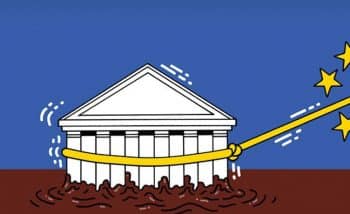
    EU of Nations must stick together

    The beginning of 2017 doesn’t look good for the European Union. But things are at least becoming clearer. In light of attacks from both the US and the UK, the choice between unity and disintegration is registering for Europeans. This is a good thing. Disintegration would result in accelerated poverty and maybe even war, so unity seems like the easy choice. However, tougher decisions lie ahead as unity will be difficult to protect since the EU is facing its own contradictions. In the last few weeks the EU has had to face two unprecedented attacks. The first is the iconoclastic declaration by an American President that he is expecting more European countries to leave the EU and that it will be a good thing, notwithstanding the risks to worldwide peace. This came along with a direct attack on the role of Germany in Europe. This announcement was preceded by the news that Trump would fast track an exhaustive free-trade agreement with the UK. The second attack came from Theresa May. On 17 January, she announced that the UK will go the route of ‘hard Brexit’. She confirms that UK will carry out fiscal dumping by cutting corporate taxes if it doesn’t get access to the single European market. During the Christmas holidays, news surfaced in the UK media that its Queen favoured Brexit, presumably because it would allow the UK to refocus on the Commonwealth. This illustrates to what extent, even at the highest levels, the English never really wanted the EU… and have kept their colonial mindset. Seccessiontist moves from the UK vindicate Charles de Gaulle who always opposed UK membership on the grounds that the UK would never be enthusiastic members. But it is a shame that after 43 years, the EU had not been better at winning over English and Welsh hearts and minds. Threat to post-war order Donald Trump’s declaration is a direct affront to the very post-war order that the US helped to foster. Despite all her words of friendship with the EU, let’s be clear: Theresa May’s declaration was a message of economic war to her neighbours. On 18 January, the cover of The Times couldn’t have been more explicit: “May to EU: Give Us Fair Deal or You’ll Be Crushed”. The implied threat is that the UK could turn into a tax haven by lowering corporate tax and regulation to lure as many multinationals as possible away from the EU. This threat is credible: London already has many tools to attract high-powered business away from the continent. All of this points to a new direction in the current world disorder: a stronger Anglo-Saxon axis. Of course this axis has always existed: it is the ‘special relationship’. For years new Foreign Secretaries in Britain visited the US before any European countries. But recent developments have only strengthened this relationship. The directions the UK and the US have taken make things much clearer for Europeans in 2017. With an assertive Russia in the East, the risks of an isolationist and erratic America in the West, an ascendant China and the protectionism that would follow the implosion of the EU, disintegration would almost certainly lead to poverty and even war. So naturally, Europeans should choose to stick together. Regarding negotiations with the UK, the choices are easy too, at least on paper. With the EU, the English at least want to have their cake and eat it too. Theresa May’s premise is that the EU is desperate for access to the UK market because the UK is the fifth economic power in the world. But this is partly because France and Italy are so weak. While Sweden, Denmark, the Netherlands and Germany have done so well in international markets, it is baffling to hear that the UK thinks EU membership has held it back. May plainly puts the blame for UK failures on the backs of others. The UK has a number of its own problems holding it back, including the fact that it has no industrial policy. In addition, UK internet, telecom, road and train infrastructure is sub-standard; healthcare is on the point of collapsing; the regions are emptying out to London; many economic sectors are uncompetitive and the ones that are competitive overlap with those in America. The irony is that in the end, the UK’s weaknesses and new direction may well backfire on Brexit voters or at least on the least advantaged – and angriest – in the UK. It is clear that the slightest concession in the name of economic interests would create a precedent that would lead more members to leave the EU. The UK tax-haven threat is only credible if UK-based firms get free access to the single market. If they did not, none would choose to invest in the UK to trade with the EU. And EU companies and countries can work even harder to become innovation hubs that would mitigate any advantage of being based in the UK. It is slightly reassuring that the President of the German Industrial Association recently declared that German industrialists will not lobby their government to make concessions to protect their access to the UK market. But in practice, since European politicians have always bowed to Britain, I am not sure we can count on firmness. Are the populists on to something? But it would be foolish automatically to dismiss the new positions in London and Washington, even if they are both arrogant. They highlight an uncomfortable truth for the European political establishment, and the tough choices that lie ahead for the EU if it wants to survive. The difficult choices are about how we will stick together. What the UK have been saying for a while, without being listened to, is that continuing on the same federalist track will drive the EU into a wall. The EU has been much too casual and naïve in the way its institutions are disconnected from citizens. It suffers from a lack of inspirational leadership.

    Loading

    Read more

  • Posted in:

    How Ireland goes neoliberal, by stealth

    Inadequacy is set to remain one of the most significant features of the welfare state in Ireland. Fiscal conservatism, lack of capacity to get traction from ‘taxability’, and failure to generate adequate revenue suggest Ireland’s welfare state will remain not up to its task. This is the somewhat gloomy conclusion to the recently published book, ‘The Irish Welfare State in the Twenty-First Century: challenges and change’, edited by us. This book focuses on four dimensions of post-crisis structural change in the welfare state. It explores what welfare is for, who delivers it, who pays for it and who benefits from it. It addresses these questions for social protection, education, health, housing, pensions, the labour market, water, financial services, early childhood education and care, and corporate welfare. While new social risks and demographic trends drive welfare change, so too does globalisation, Europeanisation and financialisation. Processes of marketisation, privatisation and fiscalisation also drive welfare change in uneven and sometimes unexpected ways. The discourse of welfare is often ambivalent and contradictory. This is most evident in exploring the question of what welfare is for. Discourse on water has shifted from of its conception as a social good to as an economic good. Corporate welfare has shifted from a developmental welfare agenda to a more explicit competitiveness and growth agenda. Social protection and activation have moved from addressing poverty and social inclusion, to addressing active inclusion through employment and a more overt work-first discourse. Third-level and further education and training has shifted from a focus on the person to a product with a focus on meeting the needs of employers and the economy. We see more ambivalent discursive shifts in early childhood education and care that struggle to decide whether they should aim to meet the needs of the labour market or those of children. In debt and financial services a conflict exists between whether the aim is a conservative moral imperative or a social-liberal model offering the prospect of a fresh start. In social housing, we see discursive repetition of the mantras of security, quality and choice but little policy to realise such goals. Finally, in health and pensions we hear a discourse about universalisation but see a dualist public/private system. Ireland has long had a mixed economy for welfare. When it comes to the question of who delivers welfare, rather than any outright transfer of responsibility between state, market and civil society in provision, funding and regulation, we see a blurring of boundaries. The crisis broke some path-dependent policy, providing opportunities for organisational reconfiguration to rationalise and downsize the public sector and introduce other providers. Some of the largest and most disproportionate budget cuts were in community initiatives and development services delivered via the now vulnerable social and community sector. Credit and debt services have been changed by the instigation of a range of new institutions delivering new services with a strong market logic that filters through to civil society organisations like credit unions. Overall, who delivers welfare seems less important than how delivery is controlled. With the concerted roll-out of neoliberal agencies and mechanisms, the market logic has pervasively infused the mixed economy of welfare. Meanwhile there has been more overt marketisation and privatisation in some sectors. As to the ‘activation’ of employment for those without jobs, we have seen the introduction of JobPath, a private-sector-delivered service, but little significant change in the state’s role in delivering income support. As to pensions, we see a return to pre-crisis-style reinforcement of private-market funding and financing accompanied by residualisation of the public system. Housing policy is similar, with reliance on private providers for the delivery of social housing. As to water, we see the failed creation of a quasi-market institution and the fall back to a ‘state’ owned company. In health see significant re-organisation of existing state, voluntary and private systems, albeit with more privatisation, but no real reform, and abandonment of the proposed market-led universal health insurance. Education now offers private sector delivery in third level and further education and training, alongside greater managerialism where the state remains involved. In early childhood education and care there is an ongoing creeping privatisation. Corporate welfare ie support for business is experiencing significant infrastructural and institutional change and a scaling down of state agencies. The question of who pays is interlinked with changes in how welfare is funded. Social protection shifts from social insurance to tax-funded social assistance, while employers still pay the lowest PRSI in Europe. The next generation of workers will pay even more for the present generation’s pensions, while the state subsidises the richest 20% to invest in their own private pensions. Debt and credit markets are complex. Mortgage arrears have hit a middle-class, home-owning population, while the poor ultimately pay through over-priced credit. The attempt to shift to user water charges appears stymied and the taxpayer continues to pay for water provision. There is no roll-back of health-service user charges. People and families increasingly pay for care, or ration services. Increased user charges for those in social housing in the form of a reduction of rent assistance payments ultimately manifests as deprivation and homelessness. In education, students have experienced increased fees and higher self-contributions. Families continue to pay the highest childcare costs in the OECD. In tandem with discursive shifts, citizens are construed as customers, further undermining the welfare state’s role in generating solidarity. It is not always clear who benefits from state welfare functions. There are well known instances of regressive redistribution and hidden beneficiaries, but often the beneficiaries are impossible to discern, with serious data deficits and a culture of not evaluating outcomes. The social protection system benefited Irish citizens during the height of the crisis through its effectiveness in mitigating poverty. However, child poverty doubled during the crisis, deprivation rates soared and the younger generation bore the brunt of social protection cuts. Activation policy means employers benefit from the subsidisation of low pay. In healthcare, we see unequal access and unequal geographical delivery and ultimately unequal health

    Loading

    Read more

  • Posted in:

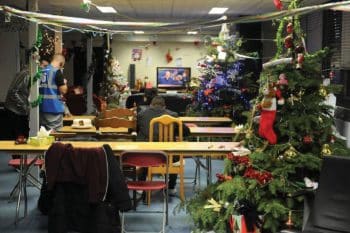
    Apollo House: channel for change

    Josephine Campbell (not her real name) volunteered for the media team in Apollo House during the 28 day occupation, which saw a vacant NAMA building transformed into a shelter for people sleeping rough. In total, 205 people stayed as residents in Apollo House. “I’m currently without a home or a tenancy since May 2015. Before this I was 15 years living in the same area. We had to move out due to a rent increase of €400 a month. Myself and my son, who is in sixth class were forced to stay with my elderly parents on the other side of town, after months of looking for a place to live and staying between friends’ houses, usually on couches. Now we are in overcrowded conditions, sleeping in the same room with no space for our belongings. We travel across town every morning to get to school. When we moved, everything we owned had to either be destroyed or stored in friends’ houses. We are still living out of bags, seventeen months after. I’m eleven years on the Dublin City Council waiting list. I was never involved in any housing campaign before Apollo House. I only knew I wanted to help so I signed up a few days after the occupation. The day before I signed up I had passed a man outside Stephen’s Green shopping centre. It was freezing out. I gave him some food and asked had he a place to stay that night. He said he hadn’t. I wrote him out the details of Apollo House and said he should to go there, that he’d be safe. I don’t know if he went in the end, but It was the first time I’d felt I could actually do something, just giving him the details was enough to feel like I was helping in some way. Everyone who entered Apollo House had no idea what they would be faced with when they went in. I don’t think anyone was aware really what a success it would become.  Everyone thought, “I’ll do a few hours then I’ll head off”. From day one I stayed 12 to 14 hours without noticing the time go by. There was an all-consuming energy the minute you walked in the door. That energy was care, love and determination, alongside all the issues we were faced with every day stretching from the residents needs to the media backlash. The day-after-day change in the residents was astounding, from coming in tired, weary, pale, and very unhealthy, to getting three meals a day, the colour back in their face, feeling empowered and feeling their voice was heard. I really think it brought out the very best in everyone. There is something quite magical in that. It is why it worked so well, only good can come from good. The Apollo Alchemy is a huge catalyst for change. After Apollo, I feel more than ever that people like me, who are living this crisis every day, have a voice. We are all affected. Once you start to see just how horrific the situation really is, it is very hard just to ignore it. Apollo House brought this to the fore, the isolation and loneliness you feel when you’re affected by homelessness and how to beat it. It highlighted the standard of care people should be receiving, from 24-hour beds to the supports they need to become part of society again. This is breaking the cycle of poverty. You can’t put a person in substandard care and throw them out again. All people need proper support, love and care. What would success be? Success would be to increase the standard of care for those currently living on the streets and to give vulnerable people support. Success would be more public housing. I feel the funding given towards the private rental market (HAP & RAS) was counterproductive. There is still no security of tenure or available property for rental, particularly in Dublin. There is also the need to prevent homelessness, not just deal with it after the fact. The homeless crisis is so bad that it is starting to normalise horrendous conditions. People think because I have somewhere to stay that it’s ok. But it’s not, and neither is living in tents, cars or parents’ houses, or paying your entire earnings just to put a roof over your head. All volunteers have a story.  Each story becomes a channel for change. I know what it is like to lose everything. I lost my home, my neighbours, my community. My son lost everything. If my experience helps anyone else feel less isolated or alone then I will continue to fight for housing rights. Rosi Leonard is involved in The Irish Housing Network and in Home Sweet Home.

    Loading

    Read more

  • Posted in:

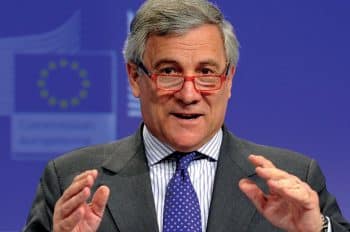
    Parliament President is Berlusconite

    On 17 January, the European Parliament elected a new President, the Italian MEP Antonio Tajani. The election of Tajani may have gone unnoticed by most citizens in Ireland, however the implications of it could have far reaching consequences for their everyday lives. Tajani, is a member of the European People’s Party (EPP), a group he shares with the four Fine Gael MEPs. This group refers to itself as the centre right. However, in its quest for power it has accepted political parties with extreme right-wing views, including parties like Fidesz from Hungary, the party of Viktor Orban. The new president of the European Parliament, Tajani, is not as extreme as his Fidesz colleagues, but he does hold some conservative views. A founding member of Silvio Berlusconi’s Forza Party, Tajani was once spokesperson for the controversy-ridden Prime Minister. He has been a vocal opponent of reproductive and LGBTI rights. In 1996 he wrote that “the child of a same sex couple is certain to have serious psychological problems and experience major difficulties in being accepted as part of society”. More recently he signed up to the Novae Terrae Pledge. This takes a hard line on abortion and on LGBTI people. On the issues of abortion and euthanasia, it asserts the right to life from conception to natural death. On same-sex marriage, it asserts that “families consist of the union of a man and woman”. It refers to same-sex relationships “as homosexual private affectivity” and claims any comparison between this and families is “insane”. The choice of such a socially conservative man by the EPP for the role of President of the Parliament is deeply concerning. It marks a further shift to the right for this, the largest group in the Parliament. The election of Tajani also saw the end of the grand coalition between the ‘Socialist and Democrats’ group, the second largest in the Parliament, and the EPP. A dispute on who would take over the role of President of the Parliament led to this split. To secure his election, Tajani and his political group struck a deal with Guy Verhofstadt the leader of the ‘Alliance of Liberals and Democrats for Europe’, the fourth largest group in the Parliament. This hitching of the liberals to such a conservative candidate raised many an eyebrow on the corridors of power in Brussels. The deal is being sold as a pro-European coalition to combat the rise in far-right populism. Ironically this so-called pro-European coalition may very well further undermine citizens’ confidence in the European institutions. Tajani is another insider, another establishment man who is very much part of the golden circle of European bureaucrats. His election, like those before him, was secured in a secret backroom deal. This is the type of deal that gives the EU its bad reputation. The contents of the deal will also do little to comfort citizens. This so called ‘pro-European’ deal is about federalism, it is about creating the basis for a united states of Europe. It wants to see more economic governance at EU level, a move that only one in five citizens actually supports. The deal envisions a European defence union incorporating an EU coastguard and an EU army. Both these political groups are supportive of the call for Member States to increase defence spending to 2% of GDP, a large proportion of which would have to be spent on the arms industry. Ireland currently spends less than 0.6% and an increase of such magnitude would have to come from cuts to spending on other public services such as health and education. EU Barometer polls show that citizens see social inequality and unemployment as the priority for the EU. Despite this, the pro-European deal calls for more international trade deals. These trade deals have been shown to diminish workers’ pay and conditions and to undermine employment. If there is anything positive to be taken from the election of Tajani it is that it may finally bring about a left/right realignment in the Parliament. It is rumoured that many of the more progressive members of the Socialists and Democrats group are secretly relieved at the break-up of the grand coalition. Across Europe they have been leaking votes and many have put this down to their failure to act asa voice of real opposition to the EU’s policies of austerity. These people have already made contact with my political group, the ‘European United Left – Nordic Green Left (GUE/NGL)’, and with the ‘Greens – European Free Alliance group’ to see if we can forge a progressive left-wing voting bloc. It is only through such a bloc that a coherent approach can be taken to tackling the right-wing economic and social policies of the new President, and to stem the rise of fascism. By Lynn Boylan

    Loading

    Read more

  • Posted in:

    ParentAlienation

    During 2015 in Ireland there were 49,689 applications to the family law courts in the context of relationship breakdowns. This indicates a high level of contentious separations and divorces exposing children to ongoing conflict between their parents. Definition One emerging phenomenon currently facing social, legal and mental health practitioners is that of a child or children strongly aligning themselves with one parent while rejecting the relationship with the other despite having had a previous loving relationship with that parent, either mother or father. The primary behavioural symptom is the child’s refusal to have contact with the alienated parent. The behaviour of the child includes a persistent campaign of denigration against the alienated parent and weak, frivolous and absurd rationalisations for the child’s criticism of the alienated parent. This phenomenon is referred to as parental alienation. Is it recognised? A frequent critique put forward is that the dynamics of parental alienation are not recognised. But it is important to note that in fact these dynamics have been independently noted and documented in the empirical psychiatric and psychological literature since the early 1950s. More recently, the current edition of the Diagnostic Statistical Manual 5 (DSM) has included a number of terms that contain the spirit of parental alienation such as “child affected by parental relationship distress”, “parent-child relational problem”, and “disruption of family by separation or divorce”. Rates of Alienation Studies have concluded that there were elements of false or negative ideas about the other parent in eighty percent of the 700 divorces studied5. Further studies have demonstrated that the vast majority of parents were considered at a minimum, to be naive alienators while at the other end of the spectrum there were obsessed and active alienating behaviours in an effort to damage and terminate the child’s relationship with the targeted parent. Key Features of Parental Alienation Practitioners are increasingly being faced with angry and distressed children who strongly insist that they do not want any contact with a previously loved parent in the context of a high conflict separation or divorce. The child may react aggressively toward the targeted parent by kicking, punching or spitting at him or her. The names of Mum or Dad are replaced with him, her or it. They may destroy property belonging to the targeted parent. They may suddenly and completely shun the targeted parent and his or her extended family including grandparents, uncles and aunts in public. The child may offer scripted responses using adult language to justify their rejection of the targeted parent and make allegations of neglect and abuse. They deny previous positive experiences with the targeted parent, say that they do not remember them or that they were just pretending to be happy at those times. Some examples of the reasons for parental alienation offered by children include “she treats me like a slave” (10-year-old female) when explored further, she went on to say, “She makes me empty the dishwasher” and “she makes me tidy my room and put my clothes into the wash basket”. It is striking that these seemingly ordinary reasons are used to warrant such an extreme response from the child, however, in high-conflict divorces events can take on alarming new meanings. In another case a 9-year-old boy presented with fourteen written pages of reasons as to why he hated his father and did not want to see him again, while another 11-year-old female stated: “Under Article 12 of the United Nations Convention on the rights of the child I do not have to see my mother if I do not want to”. Some children present with more serious concerns about themselves and their safety such as “I am in fear of my life”, “I fear for my safety”. Thus, the clinician may find themselves obliged to report and/or investigate such allegations. It is important to acknowledge that some children do indeed reject a parent for what can be considered normative reasons such as abusive or neglectful parenting. This is considered realistic estrangement and is not to be considered alienation whereas, an alienated child is described as expressing freely and persistently unreasonable negative beliefs that are disproportionate to the child’s actual experience with that parent. It is crucial to be able to differentiate true estrangement from parental alienation. Therefore, unless there is compelling evidence to investigate or there has been proven sexual, physical or emotional abuse children should be strongly encouraged to have contact with the other parent in order to preserve the relationship into the future when the child may be feeling less angry and upset. When it comes to decisions regarding custody and access it is important to recognise that joint custody is usually in the child’s best interest when both parents are fit to parent. Therefore, it is crucial to look behind the statements of a child who seeks no contact with a previously loved parent rather than simply accept a child’s strident rejection at face value as somehow being a negative reflection on a parent’s parenting capacity or competency. A close evaluation of the parent/child relationship before the relationship breakdown is important; otherwise practitioners may assume that the current parent/child relationship is a reflection of the true parent/child relationship resulting in professionals recommending reduced contact time between the targeted parent and child. This may lead to perpetuating the alienation process by practitioners, albeit unwittingly. The aligned or alienating parent may present as disempowered regarding contact with the non-resident parent stating, “what can I do if my child does not want to see him/her”? Paradoxically, this same parent will present as very much empowered in all other aspects of the child’s life. False allegations of abuse and neglect in contact disputes The contemporary literature provides us with numerous examples regarding the prevalence of false allegations of abuse and neglect in this context. These studies demonstrate 70 per cent of cases where false allegations of neglect and abuse have been identified. Other researchers found that both mothers and fathers are equally likely to make unfounded allegations.

    Loading

    Read more

  • Posted in:

    Fury and Avoidance

    The prospect of a Commission of Investigation into the sale by NAMA of its Northern Ireland property portfolio to US vulture fund, Cereberus, in April 2014, looks to be receding by the day. Judging by the demeanour and language of finance minister, Michael Noonan, during a special debate on the issue on 1 February the Government has no intention of exploring the serious allegations of corruption and fixer fees that surrounded the Project Eagle deal, despite an all-party agreement to set up a commission. Given that Fianna Fáil leader, Micheál Martin had pressed the Taoiseach to agree to a Commission last year, it seemed until then that Enda Kenny and Noonan would have no choice but to accede to the calls across the opposition benches for an inquiry into the astounding claims about the sale which have been aired north and south of the border over the past eighteen months. Indeed on 1 February, Fianna Fáil finance spokesman, Micheál McGrath, accused Noonan of resiling from the Taoiseach’s promise of an inquiry just a few months ago, and said he detected what he described as a “muddying of the waters” in relation to the Government’s commitment. “There is a shift here in the Government’s position”, he told Noonan in response to the claim by the finance minister that any “Commission of Inquiry cannot circumvent the Garda or other law enforcement agencies” such as the National Crime Agency (NCA) in the UK and the Security and Exchange Commission and the FBI in the US, which are investigating the Project Eagle deal. “What should be most obvious is that a Commission of Investigation cannot deal with a range of non-specific claims”, Noonan replied before raising concern over the possibility of “unfocused and ill-defined” inquiries which could distract NAMA from completing its vital task of winding down its distressed loan book. He said that the findings of the Public Accounts Committee (PAC) investigation due for publication within weeks should be assessed in any case before any decision on a Commission is made by the Oireachtas. With that, the chairman of the PAC and Fianna Fáil deputy, Sean Fleming, got to his feet alongside McGrath to trot out all the reasons why a Commission may not be the best way forward given that his committee had already covered a lot of ground during its public hearings last year. A FF double act was revealed when Fleming expressed his concern that “NAMA will fold up its tent” long before any commission makes its findings. It would have problems with compelling witnesses from outside the jurisdiction, Fleming said, and that it would be preferable and less costly for the Oireachtas to do the job of investigating such matters, rather than an inquiry led by an independent judicial figure. Careful not to contradict his party colleague, it was evident to those listening from the other opposition benches that Fianna Fáil was engaged in a public u-turn. Pearse Doherty of Sinn Féin immediately noted the display of political gamesmanship between the two largest parties. He rounded on Noonan for failing to use his powers to stop the sale of Project Eagle in April 2014 when he was informed of the £15 million fixer-fee arrangements promised to a former member of NAMA’s Northern Ireland Advisory Committee (NIAC), Frank Cushnahan, Tughans Solicitors and solicitors Brown Rudnick – by US fund Pimco. Doherty reminded Noonan that he had instructed NAMA in relation to other matters and the minister’s argument that he was not legally empowered to intervene with the Project Eagle sale was untrue and unsustainable. In other words, Noonan has a political interest in preventing any independent public inquiry into the sale and purchase, despite the strong whiff of corruption involved in it. Further, Doherty asked about the developers whose loans were taken into NAMA who have repaid substantially less than the money they owed despite the expressed intentions by the agency’s architects that it would pursue “developers to the end of the earth” for every cent they owed. His colleague, David Cullinane, a member of the PAC, reminded Noonan of the sequence of events which led to Pimco withdrawing from the sale process in March 2014 when it was advised by its own compliance department that the fee payments were in breach of US law. He described how Cushnahan and Ian Coulter of Tughans had been working with solicitors Brown Rudnick as far back as 2012 in relation to the NI Portfolio and on the basis of a potential £15 million fee to be shared between them if successful in offloading the portfolio through a single sale. They met Pimco in April 2013 and then a month later brought the US investors to meet NI first minister Peter Robinson and finance minister Sammy Wilson, to discuss the “conceptual transaction” they envisaged. In other words, a member of the NIAC, apparently without the knowledge of the NAMA board, chairman or chief executive, was exploring a possible fire-sale of its NI loans to interested buyers. NAMA already knew that Cushnahan had associations with six NAMA debtors, which raised potential conflicts of interest that were subsequently explored in last year’s critical report by the Comptroller and Auditor General (CAG) on the sale. But the CAG was only dealing with the value-for-money aspects of the sale, not the entire “corrupted process” that appears now to have underpinned it, Cullinane said. If this assessment and further contributions by PBP/AAA TD’s Richard Boyd Barrett and Ruth Coppinger were not enough to scare the government troops from going anywhere near a Commission of Inquiry, an impassioned speech by Independents for Change TD, Mick Wallace, must certainly have done the trick. Wallace outlined a series of sensitive matters which such an inquiry must investigate including the unauthorised leaking of documents from NAMA, the allegation of cash payments made to agency officials by clients seeking to get from out of its clutches, and the more recent claim by businessman Barry Lloyd that he was approached as far back

    Loading

    Read more

  • Posted in:

    Sinn Féin and DUP up

    Changes to the number of Assembly seats in the forthcoming Northern election will give an artificial seat boost to the two big parties, the DUP and Sinn Féin. Each of the 18 constituencies will elect five MLAs (Members of the Legislative Assembly) rather than the previous six. Because the Assembly will be reduced from 108 seats to 90, all parties (with the possible exception of Alliance) will lose seats. Last time round, everything went right for the DUP in several constituencies, where it shaded extra seats – which it can’t hold. However, the vote outside of the big two is fragmented. Thus both could survive a fall in votes, while increasing their relative strengths in the Assembly. The new system makes it harder for smaller parties to win seats: the quota in each constituency will be just over 16%, where previously it had been just over 14%. The election was brought about because of the scandal about the Renewable Heat Incentive (RHI), the latest in a line of scandals to hit the Executive. The Newsletter, the traditionally Unionist daily, has made the running in exposing this. However, it is important not to confuse the attitude of the media with that of ordinary voters: especially DUP voters. This will be a rough, sectarian election: the RHI scandal will definitely be put to one side in some of the more polarised constituencies, where it will be a straight sectarian headcount. This is being written five weeks before the election. The issues will certainly shift, and it is foolish to be categorical, nevertheless it is clear that a number of high-profile figures are under threat. Veteran campaigner Eamonn McCann finally won a Council seat in Foyle (Derry City and surrounding area) in May 2016, 47 years after his first electoral outing. He is fighting a difficult battle on behalf of People Before Profit: Unionists have a quota in the constituency, which will go to the DUP, while both the SDLP and Sinn Féin have just short of two quotas each. Former culture minister Carál Ní Chuilín of Sinn Féin will be in a three-way battle for the last two seats in North Belfast, with the SDLP’s Nicola Mallon and the bottom DUP candidate. The surplus from her running mate, Gerry Kelly, will probably, but not certainly, win her a seat. Assembly Speaker Robin Newton is in difficulty in East Belfast. The DUP currently holds three seats there. Newton has faced controversy over his handling of the Speakership. Last year, he was the last-placed DUP candidate. That vote, if repeated, would only give the DUP two and a quarter quotas. Even holding last year’s vote just would not keep them the third seat. East Belfast is one of the constituencies most worth watching. A significant fall in the DUP vote would be very significant. It is the North’s most Protestant constituency. There are several large working-class areas. A previous DUP scandal cost former First Minister Peter Robinson his Westminster seat there. It will be tremorous if PBP take a second seat in Sinn Féin’s former West Belfast heartland. An increasingly professionalised Sinn Féin no longer has its former activist base. Many in its former heartland see it as having introduced cuts, and being on the wrong side on local issues such as the Casement Park stadium where outgoing Infrastructure Minister Chris Hazzard has ‘called in’ the redevelopment application after local objection. Despite being the wrong side of controversy, Arlene Foster will top the poll in Fermanagh and South Tyrone. Foster is rooted in Fermanagh’s Protestant community. There will be a backlash of support for her, portraying her as a victim of the metropolitan media (to the extent that Belfast is metropolitan). Foster is, however, terminally damaged: the longer she hangs on as DUP leader, the more damage she – and it – suffers. She has flip-flopped on several issues since the crisis developed, sending out very mixed messages. It is uncertain whether an Executive can be put together after the election. Materially, both Sinn Féin and the DUP need to do so: they have too many party workers dependent on the Assembly. However, neither can control the logic of events. The intentions of both parties may not be enough to produce an agreement – at least in the short term. By Anton McCabe

    Loading

    Read more

  • Posted in:

    Naming and faming not naming and shaming

    (2010) The king of Irish investigative journalists, Paul Williams, will join forces with the Irish News of The World on March 10 [2010] as its crime editor.  The clamorous controversy about his departure from the Sunday World is indicative of how he has become the indisputable media godfather of crime reporting.  But  does “the journalist of his generation”, as his friend Joe Duffy has branded him, really believe that his so-called courageous crime reporting is constructive in preventing crime in Ireland?  Between May and September of 2009, I investigated how Williams’ subjects – young Irish males convicted of violent criminal offences – interpret his sensational crime reports.  I conducted research (comprising questionnaires and one-to-one interviews) with a total of thirty convicted young offenders aged between 16 and 21 years old, all of whom are currently serving prison sentences in a well-known young offenders’ institution.  While much of what they say may be considered misapprehension, the misapprehensions are nonetheless real and dangerous.  I found that these young offenders are being inspired by what they see as glorification within Paul Williams’ reporting, and consider themselves consequently, to be the ‘criminal masterminds’ of their generation. The prison co-ordinator told me, “Most of the lads in here come from low socio-economic backgrounds:it is not an excuse but it is a fact.  Their prison sentences range from a couple of months up to couple of years, depending on the severity of the crime committed.” He added, “The majority of the lads will re-offend and probably end up in Mountjoy prison several times throughout their lifetimes.  Very few go on the straight after they leave here”. Whilst ‘right thinking’ members of society may interpret Williams’ sensational crime writing as ‘naming and shaming’ for the greater good, this research revealed that the criminal mind identifies this weekly media exposure as more of a case of ‘naming and faming’.  The prison coordinator also told me that: “There is a huge appetite for Paul Williams’ crime writing amongst the prisoners.  All the politicians and journalists seem eager to crack down heavy on the act of crime but few are interested in tackling the root causes…  Most of the lads are streetwise but as you can see for yourself it is a misconception to think these lads are ‘criminal masterminds’”. The young offenders highlighted the ways in which Paul Williams glorifies gangland criminal, “You know you are up there with the best if Paul Williams calls you a ‘crime boss’ or gives you a nickname, that makes people more afraid of you.  That can’t be a bad thing in the business of crime.  He makes us out to be like the mafia godfathers – most lads love it”.  They revealed how Williams’ crime-writing acts, albeit unintentionally, as a source of encouragement towards criminality.  “When Williams writes about guns, robberies and shootings, it’s exciting.  Everyone wants a piece of the action.  His books don’t turn me off crime they make me want to be part of it.  Why would I want to go on the straight?  It’s boring in comparison”. Some of the young men serving time noted how Williams’ work risked being mistaken for promoting the ‘achievements’ of their criminal predecessors.  “Gerry Hutch is a celebrity now thanks to Williams.  All Gerry’s achievements are glorified, like getting away with the two biggest robberies ever in Irish history”.  Gerry Hutch is often known by his nickname of ‘The Monk’ he was the subject of investigation in the popular factual television series Dirty Money in which Paul Williams describes him as the “quintessential criminal mastermind”.  According to the young offenders who took part in this research Paul Williams’ crime writing serves to educate them about criminal activity.  “If prison is a villain’s university like Williams says on the [Dirty Money] DVD then it is his books that learns us the tricks of the trade”.  Another young man serving a prison sentence tells me, “To be honest Paul Williams’s books are the first proper books I have ever read in my whole life”. The most startling issue raised by the young offenders was the way in which – presumably unwittingly – Paul Williams risks his writing being used as a reliable source for their next gangland hit.  “He is actually adding fuel to all the gun crime because the boys get paranoid over his stories and then they start shooting each other”.  Other convicted criminals revealed their disgust at what they see as the misrepresentation of criminality portrayed by Paul Williams’ sensationalist reportage.  “If he cared about stopping crime he would write about how shit it feels to be locked up.  Crime should be made out to be a crap life because that’s what it is –Williams makes it out to be glamorous to everyone, but it’s not like that when you’re counting your days inside here, or looking over your shoulder when you’re on the outside.  Why doesn’t he write about that? Does he honestly think we want to be killing each other? It’s stupid”.  Another young man unhappy with Williams’ interpretation of the world of violent crime says, “I was brought up around all this shit so like it’s just normal to me.  Williams just makes people more afraid of lads like me, which will make it harder for me to go on the straight when I get out of here”. At least – according to some of those that contributed to the research – despite one hoax attempt on his life, Paul Williams is not in danger from gangland criminals.  “He wants people to think he is in danger – that is part of his act.  He will not get shot because even though we don’t like admitting it, he’s doing us a fuckin’ favour”.  The young offenders highlighted how Paul Williams indirectly advertised the Viper’s debt collection business.  Martin ‘The Viper’ Foley is one of the criminals frequently featured in Williams’column.  ‘The Viper’ has approximately 43 convictions and there have been several alleged attempts on his life including being shot on five

    Loading

    Read more