
Culture

Random entry RSS

  • Posted in:

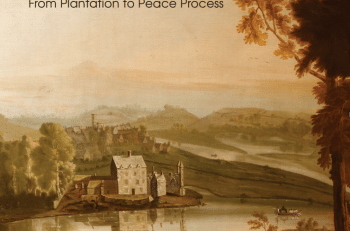
    Delving into the Past to Understand the Present, David Burke reviews Margaret Urwin’s ‘Fermanagh, From Plantation to Peace Process’.

    Margaret Urwin is known for her work with Justice for the Forgotten/the Pat Finucane Centre. Her published works include the pamphlet Counter-gangs (2012) which describes the activities of undercover British special force units in Ireland in the 1970s. In 2016 she published the highly- regarded ‘A State in Denial: British Collaboration with Loyalist Paramilitaries‘. She has now added ‘Fermanagh, From Plantation to Peace Process’ to this body of work. It delves back deeper into Irish history to help us understand the present. The book takes the reader on a compelling historical tour of Fermanagh. The early chapters deal with the Plantation and the Rebellion of 1641 and draw on depositions preserved by Trinity College, original material that brings the era vividly to life. The author then moves through the Cromwellian era and the Williamite wars. The penal laws, the famine, the Orange Order, Catholic emancipation, WW1 and the Easter Rising – and more – are all covered later. Focusing on the period from the 1920s onwards, Urwin examines what life was like in the new six-county state of Northern Ireland after partition – the systemic discrimination against Catholics in all areas of life; the role played by the Free State government; the fiasco of the Boundary Commission; the distrust of the Protestant community of their Catholic neighbours due to the IRA campaign of 1956-62; the more recent IRA campaign in the county which began after the introduction of internment in 1971. She reflects on the short-lived loyalist campaign in the county which ceased permanently in the mid-1970s, unlike in neighbouring counties, Tyrone and Armagh. Based on official declassified British and Irish Government documents, the role of the border during the conflict and Irish Government co-operation with its British counterparts are analysed while claims of ethnic cleansing and genocide are tested. The core of the book is the detailed analysis of all conflict-related deaths in the county which boosts the biographies contained in the seminal publication, Lost Lives. Case studies of particular killings are provided, e.g. Protestant civilians and alleged informers killed by the IRA; the Enniskillen bombing; the notorious ‘Pitchfork’ murders carried out by members of the British Army; the killing of IRA members by the SAS and loyalist killings of Catholic civilians. A consistent thread throughout the centuries is the enduring influence exerted by the Fermanagh aristocracy including the earls of Enniskillen, Erne and Belmore, and Baronets Archdale and Brookeborough. (The Brookeboroughs were later upgraded to Viscounts). An example of this influence occurred during the land war. This was a period of remarkable cohesion between Catholic and Protestant tenants, which gained a particular momentum in Fermanagh. (Urwin has drawn on local and national newspapers to bring this era to life). Throughout the period the aristocracy had met with limited success in their efforts to cause division but as Urwin demonstrates: In the autumn of 1882, Parnell disbanded the Land League and established in its place the Irish National League. The aims of the new organisation were more political than agrarian, the main objective being to assist the Home Rule movement. This decision sounded the death knell to Protestant and Catholic cohesion around the land issue. This at last provided the aristocracy with the opportunity they were hoping for and brought about an end to this sadly short-lived period of Catholic-Protestant cohesion The influence of the Fermanagh aristocracy was maintained up until the last century when one of their own, Sir Basil Brooke, served as prime minister of Northern Ireland 1943-63. Coming into more modern times, Urwin has conducted personal interviews with living witnesses. One of them was a participant during the IRA’s Border Campaign, Operation Harvest, 1956-62. He was involved in the best-known engagement of that conflict, the IRA raid on the RUC barracks at Brookeborough during which Seán South and Fergal O’Hanlon were killed. A fascinating fact which is brought to light in the book was the short-duration of the loyalist campaign in the county. Killings by loyalists ceased in 1975 and did not resume. This may possibly be attributed to the fact that Fermanagh is bordered on three sides by four counties of the Republic – Monaghan, Cavan, Leitrim and Donegal. Fermanagh loyalists may have felt more vulnerable to cross-border retaliation by IRA units than their neighbouring counties.   Urwin has identified another interesting fact about Fermanagh namely that it is the only county in present-day Northern Ireland that has an Anglican, as opposed to a Presbyterian, majority. Another section of the book deals with the election of hunger striker Bobby Sands as MP for Fermanagh-South Tyrone in April 1981. Urwin has unearthed new material in Britain’s National Archives. During the election campaign British officials were deeply concerned that Sands might win or, at least, get a ‘respectable’ vote. The implication of such an outcome would suggest that the Provos were a democratic alternative to the SDLP. However, the consensus among them was that a win for Sands was highly unlikely. They reckoned that, at most, 15-20,000 nationalists would vote for him. They were proved wrong and Sands emerged victorious. The result had a polarising effect which aroused huge resentment in the Protestant community. They felt betrayed by their Catholic neighbours. The events touched upon in this review are merely illustrative of the scope and breadth of this fascinating book. It will undoubtedly be received well in the subject county but has much to commend it to a wider audience. Fermanagh, From Plantation to Peace Process is published by Eastwood Books, www.eastwoodbooks.com

    Loading

    Read more

  • Posted in:

    Jeff has enough money. Save Ireland’s publishers this Christmas.

    By David Burke. I was fortunate to have a book published recently. I won’t personally be much affected by who sells it it but it did spark me thinking about the beleaguered publishing industry in Ireland. It does sterling work promoting diverse, minority and high-quality works. Writing is an Irish speciality. Reflecting this, thankfully Ireland has more than its fair share of small publishing houses, a fact that reflects well on this country. Unfortunately, even  in good times many of them just about managed to scrape by. Without them, the work of many Irish novelists, poets and historians would never see the light of day. Covid-19 now threatens to crush many of them. While heroic efforts have been made by some small  bookshops to set up click and collect facilities and others are able to remain open because they sell other essential items, many have had to shut their doors. Tragically, Amazon is set to make a killing in their place. This is a shame because most independent Irish publishers have their own websites which do exactly what Amazon does with one big difference: Jeff Bezos – who doesn’t even know their books exist – grabs an enormous slice of the purchase price for doing very little. This is a shame because most independent Irish publishers have their own websites which do exactly what Amazon does with one big difference: Jeff Bezos – who doesn’t even know their books exist – grabs an enormous slice of the purchase price for doing very little. This article is a plea to go directly to the website of an Irish publisher or your local bookshop if open (and many bookshops have their own websites too) if you wish to purchase a homegrown – or any – book instead of visiting Amazon. There are quite a number of Irish books which were selling well before the latest lockdown. The bestselling example of this – literally – is ‘Champagne Football’ by Mark Tighe  and Paul Rowan. In this instance the authors and their publishers have received a well deserved reward for their superb effort and hopefully will continue to do so. But what about the books which have just been launched or are about to come out over the next day or two? Frank Greaney’s ‘Crowded House, The Definitive Story behind the Gruesome Murder of Patricia O’Connor’  is a perfect example of this. Greaney attended the trial on a daily basis of those accused of both the murder itself and other offences in the aftermath thereof and, in the finest traditions of quality Irish journalism,  has produced a riveting book length account of it. He gets to grips with the story behind the tragic death and dismemberment of Patricia O’Connor as well as the lengthy trial that followed the discovery of her remains scattered in the Dublin Mountains. In human terms this is an important book because it sets the record straight about the victim who had, in the course of the evidence which unfurled during a seven-week-long trial been portrayed as a monster. Greaney’s work tips the scales very much in favour of the deceased to build up a picture of what she was really like: a warm, caring, generous individual, a solid employee – she worked as a caterer in Beaumont Hospital – and decent colleague. Greaney weaves in the evidence given at trial (particularly that of the forensic anthropologist who dealt with examination of the bones of the dismembered parts, and the pathologist) into a chronological narrative to give the story the feel of a novel. Patricia O Connor had no voice but Frank Greaney has given her one. Anyone who followed this trial will also be able to read about many of the events and facts that had to be kept from the jury and therefore were not reported in the media but are now. The book also provides a fascinating insight into how a modern trial is run in our democracy. Does Jeff Bezos deserve to scoop up the lion’s share of the proceeds from this book and all the others which are about to be published? Greaney’s publishers are Gill. If you or anyone you know is interested in this or any other Irish publication, bypass Amazon and go to the website of the publisher.

    Loading

    Read more

  • Posted in:

    Carl Beech and the ‘Useful idiots’ at the BBC. The incompetence of the BBC has now made it a pawn in the cover-up of VIP sex abuse. The darkest forces in MI5 and MI6 are the true beneficiaries of its ineptitude.

    By Joseph de Burca. Introduction. The documentary on the liar and fraud Carl Beech raises the most serious questions about the competence of the BBC which broadcasted it on 24 August. For years Beech masqueraded as the survivor of a VIP sex-abuse ring that allegedly engaged in the rape, torture and murder of children. During his charade, Beech enjoyed the attention of the mainstream British media and a now defunct website called Exaro. Meanwhile, the reporters who gave Beech acres of publicity ignored the existence of genuine victims of sex abuse. Some even misreported what they said. The BBC documentary on Beech did not reveal a single new fact of any relevance and was a pointless exercise from a journalistic point of view. All it has done is cast doubt on the credibility of genuine victims of sex abuse such as Richard Kerr. Instead of devoting its massive resources to a meaningful inquiry into the issue of actual VIP sex abuse, the BBC has now produced two documentaries on Beech. Village magazine has produced an online book which describes the role of MI5 and MI6 in the exploitation of children in Ireland and Britain in the 1970s and 1980s for those who would like to look beyond the output of the BBC and the Murdoch press. It begins at The Anglo-Irish Vice Ring. Chapters 1 – 3. One question about Beech was raised repeatedly during the BBC documentary, namely why did he lie? Yet, having raised this extremely important question, it did not provide anything resembling an answer. Instead, it offered speculation and bewilderment. Significantly, none of the speculation touched upon the possibility that Beech was a player – and a well-paid one at that –  in a plot by a cabal determined to convince the public that VIP sex abuse was nothing more than a figment of his imagination. Once he had achieved his goal, it was his plan to start a new life in Sweden with his financial rewards. The media had not published a single picture of his face and had only referred to him as ‘Nick’. Then he was thrown to the wolves by his erstwhile colleagues, discredited and sent to prison. Now, even if he were to reveal that he was part of a plot to discredit claims of VIP child sex abuse, his credibility has crumbled and no one will ever believe a word of what he has to say. If this is actually what has happened or close to it, the BBC has served the cabal’s purposes admirably. Intelligence services have a term for people who advance the agenda of those they oppose without realising they are being manipulated: they are called “useful idiots”. 1. THE USEFUL IDIOTS AT THE BBC Last year the more excitable elements of the British media went into something of a frenzy after the conviction of Beech by a Newcastle jury. Beech, a former NHS manager then aged 51, was convicted for perverting the course of justice, i.e. telling the police a pack of lies. He was sentenced to 18 years imprisonment. Beech’s deceit related to the existence of an alleged murderous  VIP paedophile ring based around Westminster involving Jimmy Savile, the former British prime minister Ted Heath (1970-74), and others. Beech’s allegations prompted a £2million Scotland Yard inquiry. Beech claimed he was a survivor of an “establishment group” which including politicians, military figures and spies. Absurdly, he claimed the group kidnapped, raped, tortured and murdered  boys in the 1970s and 1980s. This had triggered an ill-fated police probe that ended without a single arrest being made. The BBC broadcast did not attempt to answer any of the questions which Village  magazine and other publications raised last year. It did not even ask: Who funded Beech’s lavish expenditure in Sweden; Why did the police treat Beech as a credible witness when it was obvious he was a liar; Who was the “high-level” figure who told the police not to look at Beech’s laptop computer for two years, something that permitted him to engage in the crime of watching child pornography during that time period. 2. WHO FUNDED BEECH’S EXPENDITURE IN SWEDEN? Beech planned to make a new life for himself under an assumed identity in Sweden. He was in the process of arranging this while his lies were unravelling and he was facing a slew of criminal charges in Britain.  He purchased a riverside property in the village of Overkalix near the Artic Circle in the name of Stephen Anderson. Yet, the BBC did not bother to ask: Did he have a passport in the name of Stephen Anderson? Did he have fraudulent legal documents in the name of Anderson? If so, how did he acquire them? Did he get them from MI5, MI6 or another government agency? What documents did he use in the purchase the house in Sweden? The BBC did not raise the issue of his funds apart from mentioning that he had received the sum of £22,000 in compensation for his alleged abuse. That sum, however, could not possibly have funded his lavish lifestyle. The BBC did not make that important fact clear. Even if the BBC lacked the wit to raise the mystery surrounding Beech’s wealth on its own volition, the issue was already in the public domain. The Daily Telegraph reported last year as follows: “Seemingly flush with cash [in Overkalix], Beech, who was given £22,000 from the Criminal Injuries Compensation Authority in the wake of his claims of abuse, did not hesitate to pay 450 Krona (£38) for a haircut, £84 for a tin of paint, or £1,350 to fix the air conditioning in his car”. The Sun reported how the house cost £17,000 and that Beech planned to buy a “large house across the road plus several cabins by the riverside, including a luxury villa”. A local plumber called Patrik Elemalm has revealed how he installed a new bathroom and renovated the pipework for £4,500.  According to Par Andersson, the budget for the villa was £85,000. The BBC also

    Loading

    Read more

  • Posted in:

    Looking up in a lockdown.

    An Indian woman’s experience of isolation downs and ups on Irish shores. By Mehar Luthra I was about to leave and take the bus to the university when I got a call from one of my classmates. An older Irishwoman, she asked me if I needed her help with anything and implored me to give her a call if I did. Thoroughly bewildered, I thanked her and asked why she sounded so worried. RTE had just broken the news: Ireland was now officially in lockdown. I had, of course, anticipated this but there was momentary shock still; eclipsed, however, by immense countervailing gratitude that this kind lady’s first thought was concern for a stranded Indian girl. I reassured her that I was well and living in a secure apartment with a nearby grocery store. In a country that had only ever shown me smiles, banter and kindness, I was preparing to hunker down and weather the storm. But still for several days I would sit still in the bedroom of my apartment as the unseen divider raged on outside the curtained windows. I made to-do lists and pondered whether to stick around or go home. Everyone I saw asked me why I had chosen to stay back in Galway and hadn’t raced home to my family in New Delhi.  But one thought recurred over and over: if I did go back home, I would simply be sitting in the bedroom of another apartment (this one shared by my parents and sister) and I would still be doing the same things I am doing here. So why would I drag myself through traumatised airports and risk infection just to go and sit beside a different curtained window in another city ravaged by the same virus?  It’s curious. Before I made my unhasty choice, every person I encountered suggested the same thing: stay where you are. The universe, in all its simultaneously unwavering and perpetually varying wisdom, had decided to nudge me to stay put. But neither did I leave my heart in India. I had feared that I would be crying tears of regret every night into my pillow, missing the company of my oldest friends, weak in the solitude. But no. I did cry into my pillow sometimes in the early hours of the mornings, unable to sleep, heavy with exhaustion and the heartbreak of a carefully planned-out summer shattered. But then I would have done the same into the pillows that I left behind in New Delhi too, wouldn’t I? Regret, I was not open to. Now, hysteria and doom did come in gentle waves slithering through the letterbox studded in my front door. They peeked out from behind windows and verandas and underneath the empty and cold oven in my kitchen. I begrudged my body its daily need to be fed, it’s urgent imperative to be stretched, fed, comforted and entertained. Dating apps were useless and my laptop looked at me expectantly, waiting for me to empty buckets of words into its hungry void on days I could barely formulate coherent thoughts.  Why did I have to eat and shit and breathe and hydrate? It seemed unfair somehow that I could not count on oblivion when so many other things and routines had been wiped out.   And my mouth remained bare of lipstick, my shoes unworn. I spent many days under the covers, simply wishing I could stay under and hibernate as bears do.  During long nights spent willing myself to sleep, the bathroom light from under the doorway anchored me like the North Star and pulled me out of my own head with its swirling thoughts and bubbling worry. Spring came knocking on our doors and tugged at our sleeves, even in Galway. It seemed like the rampant new season hadn’t received news of its cancellation. Flowers bloomed defiantly, leaves latched onto branches and the pathway to the grocery store began to line itself with cheerful tulips. Birds reclaimed lost lands and cats sunned themselves on shining roofs.   I took my coffee on the tiny, square balcony that gives over roads, filled now with car after car passing by in a hurry. Where were these people going? The virus was stalking us – were they running away? I now felt warmth and a gentle breeze in a land that had only ever given me winter.  Some days I was productive and could almost remember routines that had seemed endless to me only a few weeks beforehand. I stretched, and performed sit-ups, push-ups, leg raises and ab-crunches – until my body sang with soreness and the delight of tested muscles. I read great tomes, lost myself in my writing and sucked, as reward and vitaliser, at my coffee until not a drop remained in my oversized, cheerful yellow mug. I waged war with my skin and exiled pimples and blackheads.  Didn’t they know there was a lockdown in place? Go home.  I called people incessantly, perhaps as a reminder to myself that I still had friends and people I could count on. I devoured comedy movies and revelled in the twin pulls of irritation and gratitude when I spoke to my parents who couldn’t help but worry and fret. I embraced moments of sympathy and gushes of affection for my parents. Mothers and fathers must live in a cloud of self-inflicted anguish and anxiety, even without this novel plague.  I retreated into a shell for days on end, reappearing with a thwarted zest for conversation and camaraderie. It was becoming easy to resign myself to the blanket of powerlessness that covered me and my life, a dome which had descended on my hopes and dreams. Much harder was to find joy; and the urge to express hatred, love, ambition. Or even hunger. My anxiety packed a suitcase and settled down to wait in the corners. Its roar began to sound farther and farther away until I could tune it out and go about my dinner. The world was at a

    Read more

  • Posted in:

    Starring in a novel, just for being famous Pól Ó Muirí reviews ‘Actress’ by Anne Enright (Jonathan Cape, €16.99)

    As of a few weeks ago Kourtney has quit Keeping Up With The Kardashians. I do not keep up with the Kardashians but could not avoid the news. I’m embarrassed to say it. I couldn’t escape her fame. Fame, then. Norah FitzMaurice in Anne Enright’s latest novel Actress (Jonathan Cape), is not a media celebrity but is, in Irish terms, well-known for being the off-spring of someone well-known. Her mother, Katherine O’Dell, is an actress who found fame in Hollywood in days gone by but who lived long enough to see that fame become diluted over time. Still, in contemporary Dublin, she was once someone of note and her daughter inherits some of the cachet of being the daughter of someone famous.  The daughter narrates the story and it brings us from Dublin to London to Los Angeles. In between all the travelling, O’Dell’s fame is examined, as is her relationship with her daughter, the poverty of Irish arts (in every sense) is touched upon, religion is ticked, and then there is the student who is writing a thesis on O’Dell and has enlisted Norah for help: “I sit down and write a long email to Holly Devane, who wanted to know about my mother’s ‘sexual style’ (these phrases burn into you slowly, I find)”. Enright’s exploration of Katherine O’Dell’s life is fluent and shallow; her sudden rise from walk-on bit-player to Hollywood stardom; the unimagined fame and money that follow and then the gradual fall from grace and favour as Hollywood finds newer, younger, talent. The theme is certainly one with which contemporary readers will be familiar: there is Gabriel Byrne in Miller’s Crossing, Brónagh Gallagher in Tarantino’s Pulp Fiction and Domhnall Gleeson in Star Wars.  We all know about the Hollywood star factory by now. We know how it can make you and break you and we know how actors from Dublin to Ballymena can become stars.  There is much skimming on Dublin’s literary and cultural life. Various characters and chancers appear, none of whom are particularly pleasant. There is the university lecturer, Niall Duggan, ‘Duggan the Fucker’, with whom Norah sleeps voluntarily once and reluctantly a second time: “Perhaps this is why I helped Niall Duggan with my underwear. The need to sort men’s incompetencies, perhaps. Here let me get that. Even though I was at the time saying no and he was not taking no for an answer”.   (Author’s emphasis.) There is a duplicitous priest and there are other bits and bobs of bohemian flotsam afloat on the cultural current in joyless Dublin. The city’s pubs, hotels and streets feature while the Troubles also encroach on the sad, sad life of the poor “hackette” as she tries to make a living in an impoverished city. In short, a little bit of everything is thrown at a gloomy city’swalls in the hope that some of it might cling.  There are one or two genuinely humorous moments: “There was talk of jobs in the Irish Times or ‘out in’ UCD. Are you out in UCD? A place that was exactly two miles down the road”. A hare is, madly, buried at a television centre. A famous actor has a fist fight in a pub and a plaque is put up to mark the occasion while a Garda at a trial says: “She would only provide answers in the Irish language, he said, but the language that came out of her was not Irish, though she had the feel of it all right. He was from Gweedore himself, he said, which anyone would tell you was the hardest Irish in the world to understand…”.  The light-hearted moments relieve what is a very turgid story; chiefly because neither of the main characters is particularly engaging or charismatic. O’Dell suffers one horrific, and forensically described, episode in her early career which is intended to give her character depth but which occurs so late in the book as to leave the reader wondering why it is there at all. It certainly points to more contemporary events, such as the fall from grace of Hollywood producer, Harvey Weinstein. It is, without doubt, a life-defining event but one which does not seem to have shaded O’Dell’s character up until that point. While Norah is just dull and a bit sour; she belongs to that peculiar class of Dublin intellectual who are really not that interesting but, because of who they are and who they know, dominate the roost, such as the roost is. Kourtney has left the Kardashians. Kourtney may come back. Who really cares? Fame cannot prop a novel. Pól Ó  Muirí is a freelance journalist and writer.

    Read more