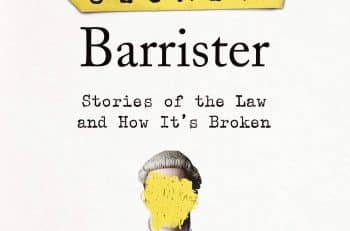


The rage of London at the moment is a self-consciously anonymous blog called “The secret barrister” which is an exposé of the profession of a criminal barrister and indeed of the criminal justice system written by a junior counsel specialising in criminal law. This blog aims to provide a fly-on-the-wall view of the criminal justice system, and of life at the Criminal Bar in general. He writes for the New Statesman, The Sun, The Mirror and Huffington Post. His first book, ‘Stories of The Law and How It’s Broken, published in March, is a bestseller. If the author had named himself the professional repercussions would not have stinted so, sagely, he has not. The book is written with an avowed sense of sadness, indignation and anger grounded in an overarching desire to secure a measure of fairness within the criminal justice system. The morphology of the book is to take a criminal case from inception to conclusion to show what goes wrong – to demonstrate that which is unfair. The book’s argument, delphically stated and perhaps not fleshed out in the detail it should, is that we are moving from a criminal justice system to a criminal system which risks presumptions of guilt. The presumption of innocence which is a British creation is central to justice in a civilised system. But the scruple-based process has become telescoped and mere accusation is now criminalisation. The hallowed, flawed system is losing its protections and safeguards. There is, in criminal justice possibly more than any other sphere of public life, a devastating lack of public education, exacerbated by inaccurate, ill-informed media reports and political pronouncements that betray an ignorance of the legal system that stretches up to the very top of government. This lack of understanding means that politicians escape scrutiny when terrible things are wreaked upon criminal justice – such as the policy that you can be wrongly accused of an offence, denied legal aid and then denied the cost of your private legal fees even when acquitted – and that, when we see a legal story reported in the press – such as the latest ‘look at how much legal aid this murderer received from your taxes – we often lack the tools to critically evaluate it”. Now I agree with all this and it corresponds with my professional experience in Ireland and the United Kingdom. We are not far from the point that corrupt and (in Ireland) criminal state authorities use an accusation to create a snowball effect, Often an accusation alone touted and reinforced by a dirty and compliant media is enough to destroy. Once the machinery of mediocrity and state incompetence gets a half baked sense of an accusation the whole thing trundles along and guilt or innocence are merely matters of happenstance. This is augmented by the cult of the pseudo-expert: a three-week training course alone underpinning the pontificator’s cant. This is accentuated in Ireland by our deeply corrupt and criminal professional classes and as we have seen the toxic relationship between TUSLA, the Department of Injustice and the bar with its illusory independence. In the UK I have not seen not overt state criminality though I recognise the book’s theme of derelict state disclosure of favourable unused material in the practice of the criminal bar here in London where I am now working. In an extraordinary 87 per cent of cases audit trails show the disclosure of evidence to defence lawyers from the police or Crown Prosecution Service to be unsatisfactory, In my view this is systemic, as the police, social services, academics and an over-burdened professional class are making decisions in conditions of radical uncertainty and often with limited training. Putting victims first, witness protection and the prohibition of hard and intimidating cross-examination is very dangerous. It protects liars and fabricators. A cloak of protection engineered by police, social workers and a dumbed down culture protecting those who enlist the nanny state of the semi competent. Advocates have a right to annihilate people and not to be stopped in their tracks, as I was recently, if they reduce someone to tears where necessary. Through lack of training, under-resourcing, lack of motivation and a drop in standards the system is descending in both jurisdictions into chaos. The system’s flaws flaws are not those of the people who work within it, but are imposed: by the state. Each flaw is “either deliberately designed – such as the Innocence Tax, (the Legal Aid Act 2012 under which defendants find themselves massively out of pocket even when found not guilty) or the restriction of compensation for miscarriages of justice – or is the product of populist, tough-on-crime, anti-defendant posturing, or betrays warped spending priorities where politicians persuade voters that one penny off a pint of lager is a better investment than a working justice system”. Moreover, as the Secret Barrister notes, “Part of the problem, as well, is the legal profession. We do a stunningly poor job of explaining to people what the law is, and why it matters. Too many of us are content to busy ourselves in our own work, safe in the knowledge that what we do is important, but without feeling the need to deconstruct for the man on the street why two wigged figures incanting Latin before an old man wearing a giant purple robe, and the obscured codes and rules governing this mediaeval ritual, has any relevance to their everyday life. We then wonder why there is an obvious disconnect between the legal system and the people it exists to serve and protect”. He is concerned about the ethical compass of vulture solicitors, as am I. He does not say much about the art of the advocate per se but much about how cuts over time and an increasing workload have diminished the quality of justice and the profession. He is scathing of minor prosecutions: “Much prosecuting in the