Environment

Random entry RSS

  • Posted in:

    Party climate poopers

    To say that environmental issues didn’t have much of an impact on Election 2016 would be a bit like observing that feminism hasn’t exactly been the defining feature of Donald Trump’s exciting US presidential run. The topic was completely ignored in the botched opening Leaders’ Debate on TV3, and again, on RTÉ’s seven-way debate the following week. The Green Party had fallen foul of an internal RTÉ decision to exclude it from a slot among the extended parties. This telling ruling was upheld in the High Court, and sure enough, RTÉ’s Claire Byrne steered the seven leaders through two long hours of questions and answers without a mention of anything remotely environmental. Ironically, the same journalist had dramatically dashed in an Air Corps helicopter only a few weeks earlier to interview some of the latest victims of this winter’s extreme flooding event. This dramatic fare, with long shots of ruined farms and submerged houses, interspersed with heart-rending stories of loss and struggle, is understandably grist for RTÉ’s current affairs mill. It is standard training in journalism to ask the five Ws – who, what, where, when – and why. We are getting lots of who, what, where and when from our media on flooding disasters and other climate- fuelled events, but precious little time is being devoted to that all important final W: why. And the ‘why’ is of course climate change. This vast topic made it into the last few min-includes lots of easy utes of the nal leaders’ debate, where just the savings, by 2020 four main parties were involved. Presenter Miriam O’Callaghan admitted in her introduction to it that it hadn’t featured at all in the campaign up to that point – the media weren’t asking and the politicians sure as hell weren’t going to bring it up spontaneously. O’Callaghan lobbed the climate grenade into the reluctant lap of outgoing Taoiseach, Enda Kenny, who – shocked that there might be an Idea in play – took fright and ubbed his lines. First off, he announced that the EU’s 2020 targets (20% emissions reduction versus 2005) “are targets we cannot reach”. Fair enough. And why, prime minister, would that be? “We have a chance with the abolition of milk quotas to expand greatly the capacity of our national herd…to increase our dairy herd by 50%”. Having fessed up to the fact that Ireland has chosen not to meet its 2020 targets, Kenny then went on to make the following quite extraordinary statement: “The targets that are set for 2030 are dif cult targets, but we will meet them”. The targets he is referring to are for a massive 40% cut in emissions. Given our inability to hit 20%, which includes lots of easy savings, the idea that we can escalate to an infinitely tougher 40% target in just one more decade suggests, to the cynical, that Kenny knows for certain that he will be long gone before the fantasy 40% emissions cuts by 2030 are exposed as a sham. So, the world’s greatest existential threat, according to Mr Kenny, is a distant second to pushing the agri- industrial expansionist agenda on behalf of the IFA and the food PLCs it so often appears to speak on behalf of. These same transnational organisations offshore their tax affairs to ensure the Irish Exchequer gets as little as possible. Glanbia, for example, routed its €40 million profits in 2014 via brass-plate companies with no employees in Luxembourg in order to cut its Irish tax bill to a paltry €200,000, or an effective tax rate of 0.5%. These patriotic enterprises represent, in the view of our Taoiseach, so vital a national interest as to set aside all other considerations to ensure their burger and baby milk powder export operations are in no way impacted by binding international emissions targets. To be fair to Mr Kenny, when asked to choose between agricultural expansion and climate chaos, the three other major party leaders also waffled and equivocated in equal measure, all fearful of riling up the assorted special interest groups that maintain such an effective lock on Irish environmental policy. Both Micheál Martin and Joan Burton did try to point out that the transport sector is on an equally ruinous trajectory, but the clear instruction that O’Callaghan pursued single-mindedly was to pitch climate policy in Ireland as either pro- or anti-farmer. This obsessive focus on agriculture seems to be a rut that RTÉ’s PrimeTime has dug for itself, as reflected in its paltry two efforts at covering climate change since 2009, which have lurched from cack-handed to catastrophic. Having attracted a slew of written complaints, the BAI will rule in the coming weeks on whether PrimeTime’s most recent ‘climate debate’, in early December, was in breach of broadcasting regulations. While climate and environmental issues were squeezed to the periphery of both the media and political framing of Election 2016, there was sufficient to be gleaned from the assorted party manifestos to suggest that whatever coalition is eventually assembled to lead the 32nd Dáil might represent a step forward on the hugely underachieving FG/Labour coalition, and the woeful Alan Kelly in particular. While Labour’s stewardship of the Environment ministry was a huge failure, the loss of outgoing Energy Minister, Alex White is a genuine setback, as he is regarded as one of the few politicians with the brains to truly understand climate change, and the guts to speak publicly on it. Not that it in any way helped his own political cause. The obliteration of Renua signals that the Irish public is in no mood to return to the simple-minded moral certainties of the 1980s. For the Green Party, turning a 2.8% national share of vote into two seats was an impressive achievement; whether such slender representation can really add a green hue to the new Dáil remains to be seen. While both Labour and the Green Party have plenty of useful things to say about addressing climate change and moving Ireland towards decarbonisation, given that the two

    Loading

    Read more

  • Posted in:

    (Good)gers and Cattle TB

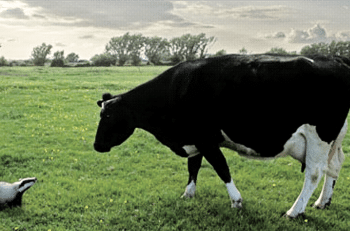
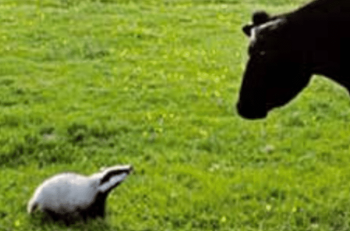
    Sometimes farmers find difficulty sleeping at nights. Random, gnawing thoughts drift into our heads as we doze off. Are badgers prowling around the farmyard? Are they sniffing the cattle? Is TB being transmitted? New research will allow us to sleep more easily. A project led by district conservation of cer Enda Mullen, with Trinity College Dublin (TCD) and the Department of Agriculture, spent three years tracking badgers in the Wicklow countryside. 40 badgers from twelve social groups had radio collars fixed around their necks. Then enthuastiac National Parks and Wildlife Service (NPWS) staff and volunteers from TCD plotted the 12,500 movements of the badgers as they made their ways through the countryside. We usually find TB in cattle in the lungs.The conventional wisdom states that badgers transmit TB to cattle via aerosol – direct breathing close to a cow. A badger may be lured into a farmyard by the presence of spilled grain, and come in contact with livestock housed in sheds. But this study proved otherwise. Badgers tended to avoid farmyards – and particularly farmyards with cattle. If they visited farmyards at all, they tended to frequent equestrian, and disused, farmyards. But most badgers kept away even from these. A single individual badger (which the researchers christened Violet) seemed to like a trip to the horses, but most other badgers kept well away from all livestock, and even were shy of visiting disused farmyards. A second study undertaken by Declan O Mahony in Northern Ireland confirmed that badgers avoid cattle. Declan works with the Agri-Food and Biosciences Institute in Belfast, and his approach was slightly different. He affixed proximity collars on 58 cattle and 11 badgers in a TB hotspot in Northern Ireland. If the badgers and cattle came within 2 metres of each other (enough distance to share a breath), the collars would emit a pulse. This would be plotted via GPS. In addition, motion sensor cameras were positioned all over the farmyards to video anything which moved. The results were amazing. There were over 350,000 interactions between cattle and cattle. There were 11,774 interactions between badger and badger. Clearly, you hang out with your own species. And there were no interactions between cattle and badgers. Zero. So is TB being transmitted by badgers? And if so, how? The researchers looked at water troughs. But badgers and cattle did not use water troughs concurrently. In fact, badgers rarely used water troughs at all. So the researchers turned their attention to the farmyards. They recorded 500,000 hours of video at farmyards in a mammoth undertaking, and analysed the results. The visiting animals recorded mostly were feral cats, some of which were in poor health. Farm cats play an important role in rodent control, but can also be carriers of TB, and any animal in poor condition is more susceptible to disease. Mice and rats were also seen on camera, and very rarely an individual badger (perhaps a cousin of Violets) turned up at a meal shed for a few min-utes. Most other badgers kept away – and all badgers avoided the cattle sheds. Cattle are large, sometimes dangerous, and often scarily frisky. It seems that the badgers have known this all along, and are keeping well away from them. Instead of scapegoating the badger,we need to increase bio security measures on our feed sheds. And thanks to this hard work and wonderful research, we can settle down to sweet dreams and sleep without worries. Now – did I feed the farm cats? Donna Mullen

    Loading

    Read more

  • Posted in:

    Energy, Environment and Planning – Report Card.

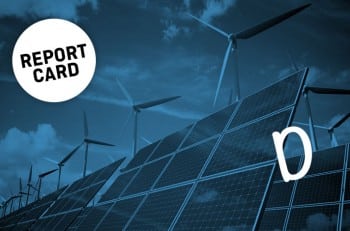
    Result: D Two foolish Ministers for the Environment merely went throught the motions The environment isn’t a vested interest so it doesn’t rate in Ireland. Enda Kenny argues for Irish exceptionalism on climate change and prevailed in Europe which has now recognised the special position of Irish agriculture in European climate-change policy. We’re not and we do not deserve to get any exemptions at all. We’re a wealthy country that emits twice as much Greenhouse Gas (GHG) emissions as for example the Swedish, per head. If cattle farming is noxious, the world needs to stop it, not allow more of it to happen in Ireland which does it marginally less noxiously than most others. The number of wild animals on Earth – vertebrates – has halved in the past 40 years, yet Ireland pursues food-production targets that will devastate our wildlife. The Department of the Environment isn’t too keen on environmentalism so the new planning bills are inert, any new national spatial strategy will be toothless, and there is no chance of a binding Climate Change Act or the elevation of quality of life over GDP growth as the benchmark of ireland’s success. Most of all Ireland’s planning and environmental regime remains discretionary and unenforced, characterised by the use of terms like “may: rather than “shall” and “shall have regard to” rather than “shall be in compliance with”. Our heart isn’t in it. Report Card – Energy, Environment and Planning

    Loading

    Read more

  • Posted in:

    Hedgemony

    ‘Twas the night before Christmas, and the Minister for Arts, Heritage and the Gaeltacht was beavering away looking for ways to ensure that no creature was stirring. Especially not a mouse. On 23rd December last year, in the political dead of night, the Minister charged with protecting natural heritage announced a plan to make destroying it even easier for farmers. Heather Humphreys – who lives on a farm, is married to a farmer, and whose brother is the Ulster/North Leinster Regional Chairman of the Irish Farmers Association – took the regressive decision to weaken Section 40 of the Wildlife Act, which deals with the cutting of hedgerows and burning of uplands, on the basis that doing so “will help to address some of the challenges faced by those living in rural areas”. She didn’t address rural people whose challenges are that they actually like hedges and uplands. An already flimsy piece of environmental legislation and notoriously difficult to enforce, Section 40 of the Wildlife Act, 1976 and the subsequent Wildlife (Amendment) Act, 2000 ban cutting and burning between March 1st and August 31st on the well-evidenced grounds that this is the time of year when the birds – including endangered species such as curlew, yellowhammer, linnet and greenfinch – have their birdy babies. The legislation does make provisions to accommodate summer cutting for health and safety reasons (ie on dangerous stretches of road) and in “the ordinary course” of agriculture or forestry. Humphreys, however, contends that this is not, farmers are finding, enough. “I want to strike a balance here”, she said, in a press release that neglected to mention the enormous imbalance that already exists in favour of agriculture over nature. “While hedge-rows and upland areas are very important in terms of wildlife habitat, they also need to be managed in the interests of both farming and biodiversity”. That biodiversity is a prerequisite for farming seems to elude the Minister. Nevertheless, for what it’s worth, last month, for example, an international team of researchers (including Trinity College Dublin’s Yvonne Buckley) proved for the first time that biodiversity “strongly and consistently” enhances productivity. In addition, hedgerows and uplands are known to improve rainwater attenuation and filtration, mitigate flooding, harbour the species that control pests and provide important foraging for crop pollinators such as bees (a third of which are threatened in Ireland). They sequester carbon, support soil fertility, provide resilience to soil erosion and assimilate the nutrients in agricultural run-off. All that tedious old natural- balance stuff. The benefits are provided by the natural world to farmers for free, despite the fact that the environmental cost of farming remains unpaid (according to a 2015 FAO report, the unassailable Irish beef industry alone has racked up debts of at least $15bn in environmental destruction). What might not be lost on her, however, are the 15,000 citizen signatures which oppose the measures. A petition launched by Birdwatch Ireland, An Taisce, the Irish Wildlife Trust and the Hedgelaying Association of Ireland has shown that healthy uplands and hedgerows and the biodiversity they support are beloved by more people than might have been expected, and that a freshly-slaughtered one at the height of summer is something a lot of people, though perhaps no-one the Minister ever meets, don’t want to see. Nonetheless, the proposed changes will be included in the Heritage Bill 2015 on a “pilot” basis, for two years. According to the DAHG website: “Managed hedge cutting will be allowed, under strict criteria, during August to help ensure issues such as overgrown hedges affecting roads can be tackled. Power will also be given to the Minister to allow for controlled burning in certain areas around the country, to be specified by the Minister, during March, should it be necessary, for example, due to adverse weather conditions”. No detail has yet been provided on the “strict criteria” and no provisions for the effective monitoring or enforcement of these measures have been mentioned. To Humphreys and her ag-mates, hedgerows are the annoying prickly bits of brown and green between the luscious elds of monoculture through which Oscar nominees frolic in hazy late-summer sun. Like the overgrown fringes of small children, these superfluous strips of deficit require meticulous and regular trimming in order to avoid negative comment on their unkemptness. The atavistic and visceral commitment to ‘tidiness’ and post-Victorian standards of natural beauty is the exact opposite of what is needed for an environment that is robust enough to support an ever-intensifying agricultural system and resilient enough to absorb the environmental impact it produces. The ‘dog- whistle’ call from IFA Environment Chairman, Harold Kingston, for “a workable outcome” has as so often been met with a grovelling response that works for farmers only, in the short-term, if at all. Michael Smith

    Loading

    Read more

  • Posted in:

    Climate Change Policy – Report Card

    Result: D- Little real engagement on climate. Promised little but delivered even less: ‘dog ate my climate policy’ not a valid excuse. Avoided a ‘fail’ by scraping in Climate Act) The Fine Gael/Labour coalition government did manage to pull off one headline act that had eluded the previous FF/Green administration, and that was they managed to get climate legislation, of sorts, on to the statute books for the first time ever. In its 2016 Annual Report on the Programme for Government, this fact is trumpeted as burnishing the ecological credentials of an administration that has, over the last five years, shown a strong aversion to what husky-hugging UK prime minister David Cameron once memorably called “that green crap”. The reason is hardly a mystery. Both IBEC and the IFA are among the lead industry players who have lobbied tirelessly to ensure any climate actions that should emanate from the Cabinet table would be so diluted as to be worthless. And, with Fine Gael in particular basing its entire political pitch on growth-at-all-costs, nothing that looked like slowing that gallop was ever going to be entertained. IBEC and the IFA have lobbied tirelessly to ensure any climate actions tabled would be diluted “The recently enacted Climate Action and Low Carbon Development Act 2015 builds on existing efforts to decarbonise the economy and places the Government’s adaptation efforts on a legal statutory footing”, according to the Annual Report. And those “existing efforts” would be what exactly? ‘The Act provides for a National Mitigation Plan which will specify how we will achieve our objectives as well as a National Climate Change Adaptation Framework which will provide a strategic policy focus”, it goes on to say. This Mitigation Plan has been safely kicked into that distant place known only as “later in 2016” – somewhere safely beyond the shores of this election. Back in February 2011, Fine Gael and Labour jointly published their Programme for Government. Its section dealing with climate change ran to all of 95 words, including the promise to deliver a Climate Change Bill, which “will provide certainty surrounding government policy and provide a clear pathway for emissions reductions, in line with negotiated EU 2020 targets”. The section also promised legislation to give the relevant ministers temporary powers over the State’s response to what it calls “natural disasters”. This was at least prescient, given the unnatural number of weather-related disasters that have occurred in the term of the outgoing government, up to and including the severe winter flooding that – yet again – recently plunged much of the Shannon region into chaos. The last, brief, section in this 2011 document promised to “further improve energy efficiency for new buildings, with a view to moving towards zero carbon homes in the longer term. All new commercial buildings will be required to significantly reduce their carbon footprint”. By ‘further improve’, this presumably meant, at the very least, maintaining the progress of the outgoing FF/Green administration regarding energy efficiency in the building sector. How has this one measurable commitment worked out? One of the widely accepted successes of the previous government was its home-retrofit programme. In 2011, some 67,500 homes underwent an energy overhaul under the scheme. By last year, under FG/Labour, this had plummeted, to just 21,600 energy retrofits. Indeed, efforts by the atrocious outgoing Environment minister Labour’s Alan Kelly to stymie local authorities from pushing towards ‘passive house’ standards speaks volumes for the “green crap” mentality that has pervaded the Cabinet since 2011. To be fair, the writing was on the wall from the outset. Take a section in the 2011 Programme for Government under the heading ‘Peat’. First off, the incoming administration magisterially granted “an exemption for domestic turf cutting on 75 National Heritage Area sites subject to the introduction of agreed national code of environmental practices”. What, you might wonder, is the value of a bog being designated as a National Heritage Area when the government signs off on this free-for-all before even taking office? Soothingly, they went on to promise to “establish an independent mediation to resolve outstanding issues associated with turf cutting on blanket bogs”. It would be unfair to single out the private contractors and their political accomplices for sole mention in this regard. Three woefully inefficient peat-burning plants in the midlands only remain open thanks to the Public Service Obligation (PSO) levy on electricity bills siphoning some €120 million a year into these plants – that’s around €2.5 million a week in subsidies to produce the dirtiest, poorest grade and most ecologically damaging form of energy possible. In 2014, this State-supported madness exceeded the total PSO support for the production of clean electricity using renewable energy. The Climate Mitigation Plan has been safely kicked into that distant place known only as “later in 2016” Meanwhile, the government has extended the life of these monuments to parochialism and incompetence by another 15 years, which is nicely timed to coincide with 2030, by which time Bord Na Mona will have completed its decades-long assault on some of Europe’s richest ecological regions, as well as what used to be our most efficient carbon sinks. Quite where this fits with the government’s new climate legislations that “builds on existing efforts to decarbonise the economy”, it’s difficult to even begin to fathom. To understand the true objectives of the 2011 Programme for Government, it’s necessary to look elsewhere. For instance, under the section headed ‘Growing the agri-food sector’, the seeds of the agri-steamroller later known as Food Harvest 2020 are clearly set out: “Further expansion and innovation in our dairy and meat sectors will be a key priority under a reformed CAP and we will work with industry to achieve more intensive levels of production”. Note the blunt language above. Such sly euphemisms as “sustainable intensification” hadn’t yet entered the lexicon of spin – this was a straightforward declaration of expansion and intensification. Later in the same section, it mentions that Bord Bia will be given a number of marketing

    Loading

    Read more