Environment

Random entry RSS

  • Posted in:

    Just for show

    By Michael Smith Climate change is the biggest issue of our age. It seems likely to leave a legacy for future generations that will mean our epoch will be remembered primarily for its stupidity and spendthrift environmental profligacy. The long-heralded Climate Action and Low Carbon Development Bill 2015 may or may not be adopted before the summer recess. The Bill purports to establish how our transition towards a low-carbon economy will be achieved. While there are no explicit targets set out, the Bill obliges the State to “take into account any existing obligation of the State under the law of the European Union or any international agreement”. This compares with the 2008 British Act which provides for an 80% reduction by 2050. Regrettably overall the Climate Bill remains like a washout – of non-binding ‘commitments’, legislation that has none of the characteristics of legislation. In essence it provides that government shall endeavour to achieve the national climate objectives’. A 2013 draft (and the British legislation) notably said ‘The Taoiseach (and the British Environment Minister) has the duty to ensure’ objectives. The nub of the matter is that if the Taoiseach (or Environment Minister) has a duty to ensure particular percentage reductions every year (say) then individuals and worthy groups can probably sue the Taoiseach (or Environment Minister) for failures, possibly even injuncting her. Clear, aggressive targets, and teeth are basically all that this Bill required and the failure to provide teeth or new targets makes it useless. Agriculture, energy-supply and development interests know exactly what “shall endeavour”, “shall have regard to” etc mean in the context: nothing. In passing it is worth pausing to note that the Greens’ bill, about which much was made in the dying days of the 2007-11 coalition, was not much better. As to the targets themselves in effect the Bill formally obliges, or rather reiterates the obligation, of the State to adhere to EU targets such as a 20 per cent reduction in emissions by 2020 over 1995 (or is it 2005) levels. The legislation will offer formal recognition to Government policy on climate change, without specifying its carbon reduction target of 80 per cent by 2050, based on 1990 figures. The sole useful concession made during passage of the bill has been the formal incorporation of specific, minimum, national targets governing emissions reduction between now and 2050. Nevertheless ‘National’ ie vested interests especially agriculture and transport promoted by the IFA and IBEC will not be derailed by this government or any likely replacement or by any likely Act. The Department of Agriculture estimates that emissions from the beef and dairy sector will increase by about one-third by 2020. Irish farmers are efficient, low-carbon producers and milk output has already surged by about 16 per cent this year. Should production be increased – without carbon reductions elsewhere – if it adds to misery and dislocation in poor countries? No Irish Government has ever specified how the overall 2020 EU-led target to cut greenhouse gas emissions by 20% on 2005 levels is to be shared – i.e., what each sector must do to meet the required total reduction. Therefore we can only assume that each sector has the same 20% target as the National target. Ireland is committed to reducing greenhouse gas emissions in 2020 to a level 20% lower than in 2005 in the buildings, transport and agriculture sectors combined. This is the so-called ‘non-ETS’ group of sectors that makes up the national emissions that are not traded within in the EU Emissions Trading Scheme (ETS). Agriculture comprises over 44% of Ireland’s non-ETS sector and transport 26%. In that light, it is shocking that the Departments of Transport and Agriculture in particular, appear to be already preparing to renege on such targets.  Rather than the 20% reduction, transport is set to achieve nothing at all. Agriculture is set for only a 4% cut, which has been further reinforced by the publication of “Food Wise 2025”, a new “10-year vision for the Irish Agri-food industry”. Despite an entire chapter dedicated to “sustainability”, there is still no concrete sectoral commitment to absolute emissions reduction of any level – the spin is on reducing the emissions per unit of beef. And almost no-one in the environmental sector wants to tell the truth that, worldwide, people are going to have to get used to eating less beef because its production is necessarily environmentally profligate. The Bill provides that there will be a National Mitigation Plan (to lower greenhouse-gas emissions) and a National Adaptation Framework (to deal with the changes that climate change will bring). Following amendments, the timeframe for production of a National Mitigation Plan will be reduced to 18 months. Based on EPA calculations, however, the State will have exceeded its 2020 emission targets by the time that plan is made public. It will also have become liable to heavy EU fines. These two plans will be renewed every five years, They will embrace tailored sectoral plans for all government departments. So-called concessions, following criticism from environmental NGOs and Opposition parties in the Dáil, have inevitably been ‘welcomed” by the likes of Stop Climate Chaos, an umbrella group that specialises in welcoming governmental climate measures, even weak ones, and then applying a caveat, rather than deploring where appropriate – and applying a qualifier for anything positive. An assessment of the Bill by Client Earth, a London-based organisation of activist environmental lawyers, whose terms of reference were amateurishly constructed by Stop Climate Chaos, concluded that the lack of a 2050 target for reducing emissions produces “critical uncertainty” for investors. It also finds the membership of the Expert Advisory Council undermines its independence and concludes that unless the Bill is revised at Committee Stage in the Dáil, the Bill will “do little to help Ireland meet its international commitments or move the economy onto a less polluting pathway”. Nowhere does the assessment refer to the failure to make the bill justiciable, ie actionable by third parties such as environmentalists.

    Loading

    Read more

  • Posted in:

    Extinction again

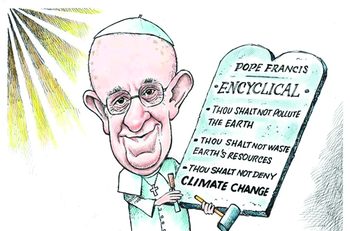
    By Ken Phelan It seems, environmentally, that we have finally reached the nadir of life. Whereas 65m years ago it was probably an asteroid that threatened all life on Earth, now it is life itself – in the shape of humans. Scientists at a number of north American universities recently produced a report stating that planet Earth is at the beginning of the ʻSixth Great Mass Extinctionʼ. The report, published in Science Advances, shows that mankind has been central to current extinction rates. Scientists at Stanford University claim that in terms of extinctions, we have recently seen the biggest loss of species since the Cretaceous-Tertiary mass extinction which wiped out the dinosaurs 65m years ago. Co-author of the report, Dr Gerardo Ceballos asserts that should current extinction-levels continue, life on Earth would take millions of years to recover, with our own species likely disappearing early on. Humans, led by our generation, could generate an event to rival the one that killed the dinosaurs, in as little as 250 years. While natural population changes in the wild usually lead to two species of mammals dying out every 10,000 years, the current rate is up to 114 times that level. Since 1500, 77 species of mammals, 140 types of bird and 34 types of amphibian have disappeared. There has been a notable increase in extinctions since the onset of the industrial revolution; to compound the problem, many more species have suffered diminished populations, leaving some species as good as extinct. Sixty-nine mammal species are believed to have become extinct since 1900, along with about 400 other types of vertebrates. Indeed 468 more vertebrates have died out since 1900 than should have. Habitat loss, pollution and climate change have all combined to produce a toxic ecological mix that man alone has created. Creatures such as the dodo, the Caspian tiger, the Falkland Islands wolf and the Cape lion have all become extinct since 1500. From elephant hunts for ivory tusks to illegal whaling, man has driven extinction, while species have been further pushed to the brink of extinction by shrinking natural habitats. Some of the most endangered species now include: the South China tiger; the Sumatran elephant; the Amur leopard; the Gulf Porpoise; the Black Rhinoceros and the Chinese Pangolin. So what is a mass extinction? A mass extinction is when vast numbers of species die out at the same time or within a short period of time. It gives context to look at the previous five great extinctions: The Ordovician-Silurian mass extinction of 443m years ago saw 83% of sea life wiped out; 90 million years later, the Late Devonian mass extinction left three quarters of life on Earth extinct; the so-called ʻGreat Dyingʼ or Permian mass extinction of 248m years ago left 96% of all species extinct; 48m years later half of Earth’s species were wiped out by climate change and asteroid impacts; 65m years ago marked the end of the dinosaurs under the Cretaceous-Tertiary event, caused by a 10km-wide asteroid impact. Pope Francis expressed concern over the issue in his recently released encyclical letter on the environment. The title ‘Laudato Si”’ or ‘Praised Be’ warned of the danger of climate change. He acknowledges that: “If present trends continue, this century may well witness extraordinary climate change and an unprecedented destruction of ecosystems, with serious consequences for all of us”. The pope called for an ecological conversion and he urged readers to think of the kind of world they want to leave to future generations. What were the odds that we should find ourselves the only generation of the only species in the history of life on our 4.5bn year-old Earth, apparently the only one ever to host life, that has both threatened life as it is known, especially its own, and perhaps has the capacity to save it? The culpability and the burden are great. •

    Loading

    Read more

  • Posted in:

    Bus-ting myths

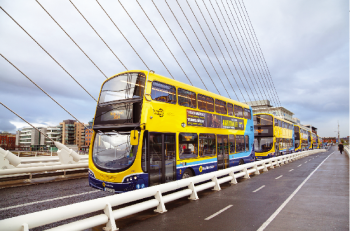
    By Anne Graham The National Transportation Authority was unhappy with the assertion in a recent article in Village (Labour’s Weapon , May 2015, by Michael Smith), that: “… Dublin Bus continues to buy polluting vehicles rather than the best available emission-efficient standard”. On behalf of the National Transport Authority, which now purchases all vehicles for Ireland’s state-subsidised (Public Service Obligation) services, including all Dublin Bus vehicles, I can confirm that all new vehicles purchased by Dublin Bus meet the current stringent standards with regard to emissions, currently Euro 6 Standard. See Table 1 for a detailed display of data relating to these standards. Dublin Bus is committed to reducing its energy emissions (and hence CO2 emissions) as required by the Government’s National Energy Efficiency Action Plan. Significant progress has already been achieved to date through the reorganisation of bus routes, through the Network Direct programme and reductions in vehicle fuel consumption. Further improvements are planned through continued investment in fleet upgrade, supported by the National Transport Authority, replacing older higher-emissions vehicles, and also by extending eco-driving techniques. In relation to the fleet-replacement programme supported by the Authority, diesel-engine emissions have declined significantly in recent years due to the introduction of new EU standards limiting the emission levels of various pollutants. These include Carbon Monoxide (CO), Hydrocarbons (HC), Nitrous Oxides (NOx) and Particulates (PM). These directives are summarised 9n Table 1 below. The Directives are not retroactive and vehicles built before the relevant dates are not required to meet later Directives. Only the latest vehicles, Euro 6, are fitted with Diesel particulate filters. Emissions from the bus fleet will continue to improve as older vehicles are replaced with new vehicles to the latest standard; therefore, the Dublin Bus fleet replacement programme is a fundamental part of Dublin Bus’s emission-reduction strategy. This year the National Transport Authority is grant-funding Dublin Bus to purchase a further ninety Euro 6 double-decker buses. These will replace older Euro 2 and Euro 3 vehicles. As can be seen from the table above, this will result in a significant reduction in overall emission levels from the Dublin Bus fleet, with a lowering in PM of 93% and 90% respectively. You can see the huge improvements that have been made in recent years, and that will continue to be made into the future.  We are happy that you are agreeable to correcting the impression given in your recent article, so that your readers are now better informed on the matter. • Anne Graham is chief Executive Officer of the National Transport Authority   Michael Smith replies The reference in the article was to the diesel-hybrid electric buses used since 2007 in London and many other cities. Hybrid electric buses emit about a third less pollutants and a third less fuel than the most recently-manufactured buses with diesel-only engines (Euro 6). Comparing climate-change pollutants, for instance, hybrids emit 30% lower emissions than Euro 6 diesel-only buses. Moreover, a key advantage of hybrids is that they can switch off their diesel engines in favour of their electric motors when journeying through populous and sensitive parts of the urban environment – with no local pollution whatsoever. This clearly benefits cyclists, pedestrians and residents. London currently has 1,200 hybrids (more than the entire Dublin Bus fleet) and plans to have 1,700 by 2016, at which point hybrids will make up 20% of its fleet. Dublin does not currently operate any hybrids, and unless action is taken, Dublin will slip further behind. The 97% figure cited in the headline refers to new buses of course. And to particulates.  No reference is made to CO2 emissions. I understand that buying a small number of hybrid electric buses as a trial basis was recently considered for Dublin but that this option has not yet been adopted. It would be welcome .

    Loading

    Read more