

Environment

Random entry RSS

  • Posted in:

    Kenny fumbles in a greasy planetary till

    The mammoth COP21 circus will folds its tent after Paris, on December 11th. Already, it’s been a record-breaker, with thousands of journalists and the largest ever gathering of heads of states descending on Paris for the two week jamboree. Conspicuously absent from the event were the tens, possibly hundreds, of thousands of activists and demonstrators who had been planning for months to descend on central Paris to apply ‘street pressure’ on the politicians and policymakers to deliver a deal that, for once in 21 of these annual Conference of Parties mega-talking shops, just might actually mean something. History suggests otherwise. Since this whole UNFCCC (UN Framework Convention on Climate Change) was first mooted after the 1992 ‘Earth Summit’ in Rio de Janeiro, with the express aim of avoiding “dangerous anthropogenic interference with the climate system”, the emissions, rather than being stabilised or reduced, have in fact spiralled by over 60%.   Kenny dispensed with the hiatus and instead effectively completely retracted his entire three-minute speech on behalf of Ireland to COP21 an hour before he delivered it   This time the result will be different. Maybe. The last ‘make or break’ conference, COP16, took place in Copenhagen in a bitterly cold December 2009. Obama was then still wet behind the political ears, the Chinese were completely disengaged and, to make a bad situation hopeless, the dark money poured into the climate denial networks struck gold with the phoney ‘Climategate’ scandal which a credulous and lukewarm global media swallowed without even chewing. An older, undoubtely wiser Obama was back, this time with his political legacy very much in mind, and the Chinese fully engaged. Joining the pantheon of statesmen for the opening day was our own Taoiseach, Enda Kenny. Given what we have come to expect from Mr Kenny, it may well be said that while he disappointed, he did not surprise. Kenny usually waits a couple of weeks after his latest outing on the world stage before telling Paddy back home what’s the real deal. This time, most likely under acute pre-election pressure from the IFA lobby machine, Kenny dispensed with the hiatus and instead effectively completely retracted his entire three-minute speech on behalf of Ireland to COP21 an hour before he delivered it. This, even by his standards, was quite something. Just before he addressed the Summit on World leaders’ day, Kenny told reporters that the targets for Ireland needed to be “fair” and “sustainable”, which is Kennyspeak for “meaningless’ and ‘unenforceable”.   “What we want is an understanding that we are serious about achieving fair and sustainable targets but we need space in order to achieve that…what we have to have is plenty of ambition but one that is tempered with reality”. He went on to make the quite grotesque argument that we as a nation are just too poor to shoulder our share of the burden. “Ireland was not in a position over the lost last decade to plan for the future in the way we would like”. From here, Kenny started channelling Flann O’Brien: the recession, apparently had resulted in Ireland “not being in a position to invest in climate change mitigation and research”. “Until we have an economic engine that will enable us to change structures – and to invest in research and innovation to invest in more sustainable ways of doing agriculture – it presents us with a challenge”. Linguistics departments are, even as I write, rushing to parse this last couple of paragraphs to see if even the slightest morsel of meaning was inadvertently trapped between the layers of waffle. Kenny must have forgotten his IFA briefing notes – the ones that repeatedly brag about our world-beating levels of ‘carbon-smart’ agriculture, our amazing ‘carbon footprinting’ of tens of thousands of individual farms. Wandering dangerously off message from Farm Centre, Kenny admitted that we in fact have not developed any “innovation to invest in more sustainable ways of doing agriculture”. Turns out all this ‘carbon efficiency’ is just more fairy dust being sprinkled around by the agri-industry spoofers and boosters. Lest this seem a little harsh, it’s worth considering what Kenny committed to the Green Climate Fund in time for COP21 – €2 million, or less than 50 cent per capita, and, by unhappy coincidence, precisely the amount of the payoff agreed between IFA president Eddie Downey and ousted general secretary Pat Smith. Oisin Coghlan of Friends of the Earth correctly identified the apparent main purpose of Kenny’s talking down of the achievability of EU emissions targets for Ireland: Kenny is trying to get the goalposts moved so that everyone, bar the hard-case Irish can do their share. In the future, of course, things will be different, honestly: “As our economy and technology improves and smarter ways of doing production, we will have a stronger economy being able to make the changes after 2020”. Translated, this sounds like Kenny code for: “I’ll be long gone by the time the emissions shit hits the fan, so long suckers!”. For the leader of a first-world country with a GDP per capita of almost €40,000 to have the gall to say it is too poor to shoulder its share of the critical burden of dramatically lowering greenhouse gas emissions almost defies parody; and may be unique. Perhaps Malawi, with a GPD per capita of around €750, a negligible contributor (unlike Ireland) to current or historic global GHG emissions, should take the hit instead? Crazy, but this appears to be how Kenny’s logic works. For COP21 to break the long and disastrous sequence of broken promises and missed opportunities to finally put a brake on runaway climate change, there has to be an agreement that we all jump together. As Barack Obama put it in his COP address: “One of the enemies that we’ll be fighting at this conference is cynicism, the notion we can’t do anything about climate change”. Little did he know that, as he spoke, Ireland’s leader had just come into the room having

    Loading

    Read more

  • Posted in:

    Dominic Dunne: Obituary.

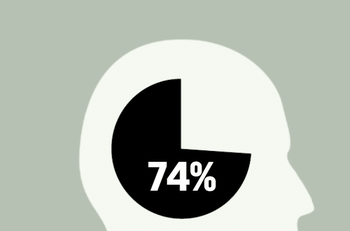
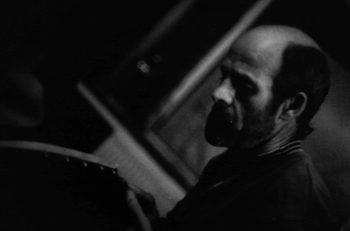
    By Ruadhán MacEoin. Irish-Army soldier, fisherman, truck driver, horseman, horticulturalist but above all campaigner, Dominic Dunne was many men during his tragically curtailed but eventful life.  He has died after a very short illness. It was typical of Domo’s mischief: his friends thought he was 55 but in fact he was born in 1954. He appeared youthful, such was his zest for life – not just for his own, but for that of the planet and its environment. Socially, ecologically, culturally, Domo’s enthusiasm for engagement with the world around him was on the one hand a mission of fun but on the other a stealthy manifesto that the world around him could be a better place. He wanted the world to be more equal, more just and more sustainable but this most good-natured of men also wanted it to be joyful. A little man, with a big heart, and great brain, he was an activist up and down. ‘Raise Awareness’ was one of Domo’s favourite battle cries; and he was central to a number of civic initiatives, initially as an active volunteer working magic on the ground – and in more recent years at more strategic levels. He had attended the Carnsore anti-nuclear protests in the 1970s, as a demonstrator. Famously he initially went in to Carrickmines Castle (a major archaeological complex under threat from the M50 motorway), on a two-day hike in 2002; but his stop-off merged with an international cause célèbre in two Supreme Court cases where he was plaintiff – one of which he won. Domo was an ideal plaintiff as he was fearless, and penniless. In those days – before the Aarhus Convention – citizens risked losing their home if they took cases in the public interest to protect the environment. Even public-interest court cases could only be taken by the unfeasibly wealthy or, alternatively and paradoxically, by a citizen who didn’t own a home. Though Carrickmines was lost it inspired many other theatres of campaign around the country. Public opinion as to the value of protecting heritage shot up from 46% to 74% during those years. Environment, heritage and sustainability entered the public consciousness as the Celtic Tiger was sharpening its claws – and all the while, Dominic would gently strum his guitar, have a giggle – and engage those around him on the issues. Domo was winning the war. Again with the now celebrated 1916 Moore Street National Monument, his was to be a crucial role – in chairing the first meeting in 2005 of the successful campaign that ultimately saved the last headquarters of the 1916 Provisional Republican Government – and the three adjacent historic buildings. Culture Minister Heather Humphreys wrote a letter that was read at Domo’s humanist funeral that acknowledged that without him the monument would not have been saved. Yet Domo always said it was the Glen of the Downs that was the key turning point for environmental awareness in Ireland. A campaign began in 1997 to protect the nature reserve in Wicklow where the road was being widened; a world of tree houses, camp fires and protest was rose, with – despite stresses – a great deal of good fun! The Irish media were fascinated. The Irish Times ran articles such as ‘Party time in the Glen of the Downs as eco-warriors get out of their trees’ but it only whetted the appetite of the ego-free but contrarian protestors; and in the end they even managed to get the width of the extension of the dual- carriageway cut back. Principles were Dominic’s thing but seeming intransigence could happily switch to positive pragmatism – as long as principles were not compromised, and ideally a few more adopted for good measure. Originally born in Ballyfermot, he put down roots in Clondalkin but lived the last few years near Cloughjordan, Co Tipperary, in the eco-village. Those who met him would proclaim his friendship with pride; and each of his friends thought they were his best friend. Among them was archaeologist Dr Mark Clinton, who initially met Dominic at Carrickmines where he was actually site director of the archaeological excavations – and with whom, Dominic, this writer, and others close to him, including Shirley O’Brien and the late Stephen Devaney, subsequently formed the National Monuments and Antiquities Committee of An Taisce. To say we miss him, would be, as Domo would often cheerfully declare – “to state the bleedin’ obvious”’. Our heartfelt sympathies go foremost to his family, including his former partners Sheila and Jackie – and five children; Katie, Ian, Orla, May, and Kiki – who miss him most of all, and to whom he was devoted beyond all else. For May and Kiki, only seven and six years old, a great light has gone out of their childhood. His work, his spirit, his sense of fun and his values continuing to inspire. Others might die for their country – but Domo lived for his. And the awareness is rising: as Domo would say, Beir bua! •

    Loading

    Read more

  • Posted in:

    A beady eye on plastic toxin balls.

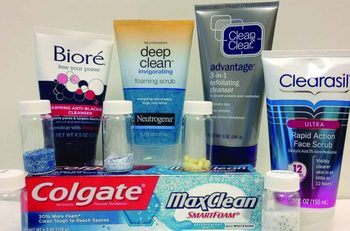
    By John Gibbons There are some products, notably tobacco, that are only tolerated because they have been around for a very long time. These days, no one in their right mind would expect deliberately to bring such a toxic product to the market in western countries and to be allowed to promote and sell it to the public. Or so you would think. Back in the late 1990s, the product development team in a cosmetics company came up with a brilliantly simple – and cheap – solution for how to add texture to personal hygiene products, such as exfoliants. Until then, the industry used natural materials, including dried coconut, crushed walnut shells and finely ground walnut shells to add an abrasive touch to cosmetics. These are, however, relatively expensive, and present manufacturing challenges. The industry’s ingenious solution was quietly to replace these natural ingredients with tiny round balls of polyethylene. Inexpensive and easy to handle, thousands of billions of these tiny balls have since been embedded in hundreds of personal care products, including some brands of toothpaste. These microbeads are typically less than 1mm in width, and, once used, they quickly find their way into water systems, both inland and offshore. Their tiny size means they slip through the filters of almost all water-treatment facilities. In the US, an astonishing 1,200 cubic metres of microbeads end up in the rivers, lakes and seas every year. Microbeads may be tiny, but they pack a fearsome ecological punch. Given their large surface area relative to their size, potent organic pollutants like PCBs and DDT adhere to microbeads, forming super-concentrated mini toxin balls. These travel quickly up the food chain, as plankton ingest individual dots and are then ingested in huge quantities by other creatures across the food web. And, lest we forget, humans sit at the apex of the world’s aquatic food chains. While other creatures have little choice, by failing to regulate these dangerous plastics, we as a species are actually choosing to poison ourselves. At a stretch, you might argue that the industries responsible for introducing this potent new aquatic pollutant could have initially argued that nobody really thought about what happened to these products once they were washed down the drain. However, years of campaigning by environmental NGOs, scientists and concerned public officials have proved that the manufacturers couldn’t care less just how much damage their products cause. Since they don’t have to contribute a cent towards cleaning up the mess, microbead pollution is just another off-balance sheet ‘externality’ the shareholders of corporations like Johnson & Johnson, Unilever and Procter & Gamble are happy to make someone else’s problem. In mid-2014, New York State became the first place in the world to outright to ban products laced with microbeads (a single tube of a well known facial cleanser was found to contain over 350,000 individual plastic beads). This followed entirely unsuccessful efforts to persuade cosmetics companies to voluntarily withdraw these toxic but profitable products. The decision of the New York State Assembly to go for a total ban followed findings by scientists that America’s Great Lakes were becoming cesspools of floating plastic beads. Water samples drawn from Lake Ontario found 248,000 microbeads per square kilometre of the lake. When dissected, the innards of fish caught in the Great Lakes were found to be “festooned with microbeads”. The scientist who led the research, Dr Sherri Mason, was asked by a reporter what she thought would be an ‘acceptable’ level of plastic in the Great Lakes. Her reply: “There shouldn’t be any plastic in our water, period”. Within New York State, more than two thirds of its 610 waste-water treatment plants are unable to filter out fine plastic particles. At EU level, progress on phasing out microbeads remains painfully slow, thanks to well organised foot-dragging by many of the main culprits. A spokesperson for Irish Water described microbeads as “an emerging contaminant issue”. Irish Water plans to initiate a monitoring programme to determine the scope and scale of the problem here, and to assess to what extent, if any, Irish water-treatment plants are capable of filtering out these tiny beads. In a sane world, no corporation could introduce such a novel element, unannounced, into its products without them first being rigorously independently reviewed and assessed, both for toxicity and for their potential to disrupt food webs. In the real world, polluters profit and the rest of us pick up the tab. • John Gibbons is an environmental writer and commentator and tweets @think_or_swim

    Loading

    Read more

  • Posted in:

    Tone deaf.

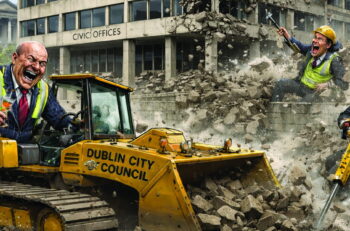
    After years of Dublin City Council (DCC) vandalism and neglect, its senior management has conceded that that the current layout of Wolfe Tone Park which it manages – and indeed designs – has not worked, and redevelopment is being considered. But are DCC capable of appropriately redeveloping the park; and, can they be trusted to? Wolfe Tone Park is located on the site of the old St Mary’s Churchyard: the cemetery attached to the church on Mary Street, opposite the Jervis St Shoping Centre. For almost three centuries the park served the community and its visitors as a place to respect the dead and, later, a place to embrace the living. Local residents share fond memories of the park as their childhood playground and communal garden, while photographs reveal the park as a popular sanctuary for respite in a busy city-centre. However, with the arrival of the Jervis Centre and a desire to extend the success of Henry St as far as Capel St, the City Council considered there was an imperative to cater for commerce, and the tired shopper – more than beleaguered inner city residents whose voice rarely registers with usually suburban decision-makers. In this case residents too were content with changes in the belief that the walls and railings conduced to “anti-social behaviour” and made it difficult to police the park. In the event, there has been no diminution of obnoxious gatherings in the park. The space and indeed the area are so hostile to children and families that it is inevitable there will be drinking and the public carousing that characterises much activity in many of Ireland’s urban parks. The slate was clean for DCC to redevelop the park into a faux European-style plaza. In 2001 the park garden and railings were removed, and the headstones, which had been uprooted years before, re-arranged to accommodate a bland, windswept plaza furnished with a bleak array of concrete plinths that serve as seating. The new and voguish plaza was described as an “urban beach” by Boyd Cody Architects which won the architectural competition to overhaul the park for DCC, but the grass that was its centrepiece has long-since been removed by the DCC, without any attempt to obtain planning permission or to assess the environmental impact. St Mary’s Church, the oldest parish church in Dublin and one of its most important buildings has been converted to pub use, with drinkers swilling over memorial headstones in a Wren-quality building that deserves more dignity. Since 2001, the park has been commercialised and sterilised by DCC. Like waves eroding a cliff-face, under-attended gaudy events and commercial promotions consume what remains of the park. One TV3 production, ‘The Box’, did enough damage to warrant the closure of the park to the public for three months as the last solitary wedge of grass was removed to make way for the brown desert-like deposit that can be seen there today. However, applying the cautionary theory of the broken window – where tolerance of a single act of vandalism encourages others to vandalise – DCC cast the first stone. DCC continues to renege on a 2006 commitment to restore the park while facilitating and effecting damage to, and disparagement of, the relics of the original setting. Many of the headstones around the park have been defaced, and some broken by DCC’s own vehicles; other vehicles are permitted to join in the destruction while conducting typically tasteless events. Reports of infringement to DCC are met with apathy; we do not know of a single resident complaint or concern that has been heeded by the council in relation to Wolfe Tone Park. For years the park has been used to house what is believed to be, a DCC staff toilet within a vandalised metal container. DCC staff occupy the parking bays on the west side of the park; identifiable by the branded vests draped over the steering wheels. A ‘Dublin City Centre BID [Business Improvement District] Company Ltd’ (BID) information kiosk was wheeled into the park, presumably from Henry Street, and has been abandoned for the past few months. The DCC litter helpline failed to have the obstruction removed; suggesting either a lack of willingness or control. Suppliers of goods and services to the Church Bar regularly park their vehicles on the north end, while ordinary residents and visitors anxiously await the next time we are a few minutes late returning to our clamped cars on Jervis Street – that is, if indeed, we can find a vacant space to begin with. Today the park is closed to the public, hidden behind black hoardings and beneath the stage of Dublin Fringe Festival Ltd’s Spiegeltent; another antisocial event that will broadcast amplified music into the homes of residents living only fifteen meters away for the next three weeks. It is clear that the park, which should be an amenity for hard-pressed residents in one of the least green parts of the city, is an inappropriate venue for events such as funfairs and ice rinks, but despite appeals and objections from local residents DCC have granted permission for the Tiger Beer Dublin Fringe Festival circus. Of concern too is that, after months of objections and requests for information, residents were directly informed that permission for the event had been granted only hours before the circus rolled into the park. This would suggest that the event was advertised long before permission was granted, or that DCC waited until the eleventh hour to notify the residents that permission had been granted for the amplified music event that will run until at least 11pm/12am for three weeks in September. Perhaps deluded by group-think, encouraged by internal back-slapping, or empowered by commercial belly-scratching DCC staff appear oblivious of their own contribution to the demise of the park. At a DCC/BID meeting in March, BID members proposed that the park be rebranded as “Wolfe Tone Square” in a cynical attempt to lower public expectations of ‘the space’. Discussions also took place about the

    Loading

    Read more