General

Random entry RSS

  • Posted in:

    Carl Beech and the ‘Useful idiots’ at the BBC. The incompetence of the BBC has now made it a pawn in the cover-up of VIP sex abuse. The darkest forces in MI5 and MI6 are the true beneficiaries of its ineptitude.

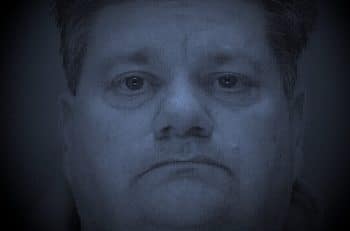
    By Joseph de Burca. Introduction. The documentary on the liar and fraud Carl Beech raises the most serious questions about the competence of the BBC which broadcasted it on 24 August. For years Beech masqueraded as the survivor of a VIP sex-abuse ring that allegedly engaged in the rape, torture and murder of children. During his charade, Beech enjoyed the attention of the mainstream British media and a now defunct website called Exaro. Meanwhile, the reporters who gave Beech acres of publicity ignored the existence of genuine victims of sex abuse. Some even misreported what they said. The BBC documentary on Beech did not reveal a single new fact of any relevance and was a pointless exercise from a journalistic point of view. All it has done is cast doubt on the credibility of genuine victims of sex abuse such as Richard Kerr. Instead of devoting its massive resources to a meaningful inquiry into the issue of actual VIP sex abuse, the BBC has now produced two documentaries on Beech. Village magazine has produced an online book which describes the role of MI5 and MI6 in the exploitation of children in Ireland and Britain in the 1970s and 1980s for those who would like to look beyond the output of the BBC and the Murdoch press. It begins at The Anglo-Irish Vice Ring. Chapters 1 – 3. One question about Beech was raised repeatedly during the BBC documentary, namely why did he lie? Yet, having raised this extremely important question, it did not provide anything resembling an answer. Instead, it offered speculation and bewilderment. Significantly, none of the speculation touched upon the possibility that Beech was a player – and a well-paid one at that –  in a plot by a cabal determined to convince the public that VIP sex abuse was nothing more than a figment of his imagination. Once he had achieved his goal, it was his plan to start a new life in Sweden with his financial rewards. The media had not published a single picture of his face and had only referred to him as ‘Nick’. Then he was thrown to the wolves by his erstwhile colleagues, discredited and sent to prison. Now, even if he were to reveal that he was part of a plot to discredit claims of VIP child sex abuse, his credibility has crumbled and no one will ever believe a word of what he has to say. If this is actually what has happened or close to it, the BBC has served the cabal’s purposes admirably. Intelligence services have a term for people who advance the agenda of those they oppose without realising they are being manipulated: they are called “useful idiots”. 1. THE USEFUL IDIOTS AT THE BBC Last year the more excitable elements of the British media went into something of a frenzy after the conviction of Beech by a Newcastle jury. Beech, a former NHS manager then aged 51, was convicted for perverting the course of justice, i.e. telling the police a pack of lies. He was sentenced to 18 years imprisonment. Beech’s deceit related to the existence of an alleged murderous  VIP paedophile ring based around Westminster involving Jimmy Savile, the former British prime minister Ted Heath (1970-74), and others. Beech’s allegations prompted a £2million Scotland Yard inquiry. Beech claimed he was a survivor of an “establishment group” which including politicians, military figures and spies. Absurdly, he claimed the group kidnapped, raped, tortured and murdered  boys in the 1970s and 1980s. This had triggered an ill-fated police probe that ended without a single arrest being made. The BBC broadcast did not attempt to answer any of the questions which Village  magazine and other publications raised last year. It did not even ask: Who funded Beech’s lavish expenditure in Sweden; Why did the police treat Beech as a credible witness when it was obvious he was a liar; Who was the “high-level” figure who told the police not to look at Beech’s laptop computer for two years, something that permitted him to engage in the crime of watching child pornography during that time period. 2. WHO FUNDED BEECH’S EXPENDITURE IN SWEDEN? Beech planned to make a new life for himself under an assumed identity in Sweden. He was in the process of arranging this while his lies were unravelling and he was facing a slew of criminal charges in Britain.  He purchased a riverside property in the village of Overkalix near the Artic Circle in the name of Stephen Anderson. Yet, the BBC did not bother to ask: Did he have a passport in the name of Stephen Anderson? Did he have fraudulent legal documents in the name of Anderson? If so, how did he acquire them? Did he get them from MI5, MI6 or another government agency? What documents did he use in the purchase the house in Sweden? The BBC did not raise the issue of his funds apart from mentioning that he had received the sum of £22,000 in compensation for his alleged abuse. That sum, however, could not possibly have funded his lavish lifestyle. The BBC did not make that important fact clear. Even if the BBC lacked the wit to raise the mystery surrounding Beech’s wealth on its own volition, the issue was already in the public domain. The Daily Telegraph reported last year as follows: “Seemingly flush with cash [in Overkalix], Beech, who was given £22,000 from the Criminal Injuries Compensation Authority in the wake of his claims of abuse, did not hesitate to pay 450 Krona (£38) for a haircut, £84 for a tin of paint, or £1,350 to fix the air conditioning in his car”. The Sun reported how the house cost £17,000 and that Beech planned to buy a “large house across the road plus several cabins by the riverside, including a luxury villa”. A local plumber called Patrik Elemalm has revealed how he installed a new bathroom and renovated the pipework for £4,500.  According to Par Andersson, the budget for the villa was £85,000. The BBC also

    Loading

    Read more

  • Posted in:

    Philibuster

    The wily Trade Commissioner’s future rests on a report into his implausible explanations from the circumspect but stringent EU Commission President. By Jonathan Baxter. National morale had already been starting to crack before more than 80 attendees sat down for dinner at the Clifden Station House Hotel. As a result, this was never going to be a story that could be waited-out and wished-away. Yet that is exactly what one of Ireland’s most influential politicians has been manoeuvring towards. In the first three months of the pandemic, Irish people were among the most positive in the world in rating their government’s response to the crisis. A large part of that was due to the trust and credibility that Leo Varadkar and Simon Harris generated. It was impressive. So often criticised as elitist and out of touch, Fine Gael had managed to position themselves as the guardians of the people. There were mistakes and disapproval but never enough to bring the position of the government into question. When British anger erupted over Dominic Cummings in May, there was some gratitude that we in Ireland did not have to suffer such a personality. That has now changed with Fine Gael’s Phil Hogan and his stuttering three-stage response to fury over his choice to attend the Oireachtas Golf Society dinner in Galway. His initial statement included no apology, instead diverting blame to the Irish Hotels’ Federation. The lack of personal responsibility – so emphasised by public health frontmen Dr Tony Holohan and Dr Ronan Glynn – was evident and damning.  His second response was a textbook political non-apology, stating he apologised “for any distress caused by his attendance”. This artful placement of “any” instead of “the” was another refusal to meet public anger with a real, direct and humble apology. It was a simple but deliberate choice, and one which has no favourable interpretation. On Sunday, Hogan issued a third statement and second apology. This time he apologised “fully and unreservedly”, stating his actions “touched a nerve” and that he was “extremely sorry”. It seemed he was on the right track. It was inevitably too, he said, “fulsome” a word that is so widely misused that most people have forgotten it means insincere. But then came the choice to state that he recognised “the issue is far bigger than compliance with rules and regulations and adherence to legalities and procedures.” Within that is a subtle suggestion that he had not broken any rules. Even if that were true, the need to include such a point is another example of hubris on Hogan’s part. Very few politicians are willing to jump before they’re pushed and resign out of a principled acknowledgement of wrongdoing. Hogan is not unusual in that respect. But there is a tipping point when the consequences of not resigning are greater than any benefit of staying on.  The intervention by Michéal Martin and Leo Varadkar in asking Hogan to “consider his position” was initially significant but later recast. On RTE Radio 1’s Sunday ‘This Week’ programme, Varadkar said Hogan must apologise, explain himself and – only if the explanation was wanting – consider his position. Antagonism was waning where it mattered.  Retribution was quick for others but Hogan is prevaricating.  He doesn’t want to step down, either because he feels he doesn’t need to or his importance in the European Commission is too great. But ultimately the Trade Commissioner is prevaricating because he can. Big Phil is too big to fail. Fianna Fáil backbencher Jim O’Callaghan suggested to This Week that the balance lay with retaining his expertise where it was unlikely any Irish replacement for him would retain his portfolio. This seemed to be weighing apples against oranges: ethics against pragmatism. Micheál Martin’s stance too was unclear or at least without vigour. The Irish Times, whose views on these things is respected among some of the people who will take decisions on Hogan, seems on balance to be suggesting the Big Man should go. The calculations for Hogan’s fellow attendees Dara Calleary and Jerry Buttimer, or at least their respective parties, was clear. They were not going to get out of this scandal intact and offered what they thought was a proportionate sacrifice in resigning from an elevated position in the Oireachtas. While both remain in place as elected representatives, they have lost their offices. The public has been satisfied. The position is different with Phil Hogan and Supreme Court judge Séamus Woulfe who, only appointed to the highest judicial authority in July, also attended the dinner. Separation of powers make a government move against Woulfe unrealistic while Hogan has no title or role within the Oireachtas to resign from.  Beyond their signal to the public that Hogan’s action were unacceptable, neither Martin or Varadkar hold much power over Hogan. Varadkar could expel him from Fine Gael but, as European Commissioner for Trade, Hogan serves the EU, not the appointing member state. The real power over Hogan rests with his boss, European Commission President Ursula von der Leyen. Technically dismissal requires an adjudication of the European Court of Justice but no-one believes that he would not jump if von der Leyen demanded it. At that point, even the most stubborn and arrogant politician would have no option but to resign.  At the time of writing and according to high-ranking sources, the Irish government is awaiting Von der Leyen to receive the trade commissioner’s report before deciding on Hogan’s future. Her decision will have to take into account that Hogan appears to have lied about observance of national quarantine restrictions. His European Commission spokesperson initially said compliance was complete but it now emerges he returned to locked-down Kildare to collect “personal belongings and essential work documents”. Why did he need to do this? It is implausible he could not have taken his work material with him when he left pre-lockdown Kildare for Kilkenny. And that is to assume some significant purpose of his return was genuinely work-related.  The EU has an acuter eye for

    Loading

    Read more

  • Posted in:

    Beware of Murmuring Judges and prepare for Whigs on the Green.

    The current political administration in Britain attacks the Civil Service (by cull) and the Judiciary (by murmuring) while tightening the grip of the Executive, particularly through unelected advisers and ‘specialists’. By Christopher Stanley For readers of Village the names of Gina Miller and Shamina Begum may not immediately be recognised. They are two women with British citizenship. That is probably all they have in common. But both have made headlines in the British press by way of their (ab)use of the courts. They have atttracted notoriety within parts of the British media and have now provoked the hositility of the  Conservative government or rather its Executive (right) wing in the Cabinet Office. Their actions may have dangerous constitutional consequences, not by any fault of their own but by the reaction of unelected officialdom (SPADS), including media commentators (The Daily Telegraph and The Spectator) and right-wing think-tank ‘influencers’ (intellectuals) such as Policy Exchange.  My last post for Village examined an apparent  constitutional ‘crisis’ in Britain. This ‘crisis’ was presented from the perspective of “The Narrow Ground” of Northern Ireland. However, it was also written as a warning to other advanced democracies tempted to tamper with the constitutional machinery of their systems of governance and also to identify emerging trends in the governance of complex societies under threat from ‘emergency’ situations including terrorism, fiscal downturn and pandemics.  For Northern Ireland, any tinkering with the British constitutional settlement (actually English constitutional convention within a devolved jurisdictional structure) must be considered in terms of The Belfast/Good Friday Agreement 1998 (GFA98), the expectations of all people in Northern Ireland and the current political arrangements including the maintenance of the security of what is a politically and economically fragile society.  A semblance of stability at Stormont has only recently been restored.  Northern Ireland has its own ‘particular circumstances’ and within the fabric of its society is a commitment to human rights and the Rule of Law, of which the judiciary are the principal guardians.  I have been critical of the most recent Whitehall proposals for Northern Ireland which, if implemented, would, I suggested, undermine the commitment to human rights and the Rule of Law for Northern Ireland. These proposals could lead to valid legal challenge (or disruptive ‘political litigation’?), dissent and fracture (see: The Pall is Lifting written for readers of Village). As ever Whitehall-thinking and Westminster-ideology ignore the subtleties required to secure the peace process in Northern Ireland. [i] Where do Gina Miller and Shamina Begum figure in this view from The Narrow Ground? In short, their cases are being used as an excuse by the Conservative government to reign in “excessive” judicial power. This is part of a process of radical response to the apparent constitutional “crisis” which, if implemented, would further increase dominance by the Executive over the Legislature (Parliament) and the Judiciary.  This is happening on the false pretext of restoring Parliamentary Sovereignty which is the none too subtle sleight of hand within an Elective Dictatorship by which the roles of Parliament and the Judiciary within the dynamic of the Separation of Powers are dangerously diminished, undermining accountability and transparency by limiting scrutiny of Executive discretionary powers. It severs the trust – the fiduciary relationship – required between those who govern and those who are governed and blurs government for the public good, needed now more than ever in an era of uncertainty and emergency.  [ii] Why should Westminster Politicians and Whitehall Ministers, Civil Service Mandarins and Cummings-Type SPADS be careful when Murmuring Judges?  Murmuring judges is an offence in Scottish law (called Scandalising Judges in English law) and is the act of causing offence to judges, accusing them of corruption – or indulging in judicial overreach (See: BBC News 10 12 2012). Judicial overreach or the exercise excessive judicial power is the present scourge of some in the current British government, of their advisers and their friends in right-wing neo-liberal think-tanks such as Policy Exchange whose express role is Protecting the Constitution: “The rise of judicial power in the UK in recent years is a striking change in our constitutional arrangements – in how we are governed – a change that threatens good government, parliamentary democracy, and the rule of law. The expansion of judicial power is a function both of Parliament’s decision to confer new powers on courts, most notably by enacting the Human Rights Act 1998, and of the changing ways in which many judges, lawyers and scholars now understand the idea of judicial power. Parliament is responsible for maintaining the balance of the constitution and should restate limits on judicial power, restoring the political constitution and the common law tradition.  The Government has been elected on a manifesto commitment “to look at the broader aspects of our constitution: the relationship between the Government, Parliament and the courts”, to “update the Human Rights Act and administrative law to ensure that there is a proper balance between the rights of individuals, our vital national security and effective government” and to “ensure that judicial review … is not abused to conduct politics by another means or to create needless delays” (page 7). Gina Miller’s ‘offence’ was (on two occasions) to challenge the British government regarding exiting from the EU. On both occasions the UK Supreme Court (UKSC) upheld her application.  In R (Miller) v Secretary of State for Exiting the European Union [2017] UKSC 5 the court ruled that fresh legislation had to be enacted before the Government could trigger Article 50 and begin the process of the UK leaving the EU.  In Miller (No 2) [2019] UKSC 41 following the prorogation of Parliament — a step formally brought about by the Queen on the advice of the Prime Minister — the court was ask to determine whether that advice, and the resulting prorogation, was unlawful.  The court held that the issues raised by the case were properly justiciable and concluded that the advice and the prorogation were unlawful.  The UKSC held that the prorogation prerogative does not extend to a situation where a fundamental constitutional principle would be impinged upon without a reasonable justification.  Shamina Begum’s ‘offence’ was more straightforward. She is a British-born woman

    Loading

    Read more

  • Posted in:

    Ireland should stand with Poland on threats to gay rights

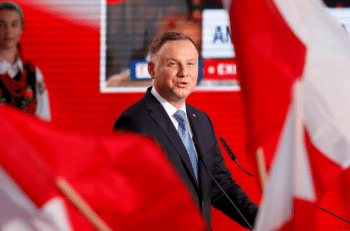
    An emigrée contrasts Poland’s reversion to hatred of LGBT+ with Ireland’s recent liberalisation. By Sara Chudzik. I was twelve when I first moved to Ireland in 2007. Ever since then with every passing year I would count how many years it is that I’ve lived in Poland and how many in Ireland. Now the Irish half is becoming top-heavy and I’ve lost count of the years. Yet, for the past few days I’ve felt more Polish than ever. On 6 August 2020 Andrzej Duda was sworn in for his second term as the President of the Republic of Poland, having narrowly defeated the liberal mayor of Warsaw, Rafał Trzaskowski, who  in 2019 promised to provide greater support to the city’s gay community, including offering some anti-discrimination and anti-bullying education in schools. Duda had claimed the mayor’s gesture constituted the “sexualisation of children” and the destruction of the family. Duda’s wish and promise it is to make Poland an LGBTQ+ free zone and to stop the spread of LGBTQ+ ‘ideology’. Since the election activists have taken to the streets to peacefully protest the extension of Duda’s conservative regime. Rainbow flags have begun to appear around monuments and statues around cities. Margot, a transgender activist, was violently arrested for stealing a registration plate from a van belonging to an anti-LGBT+ Fundacja Pro, an organisation responsible for spreading pseudo-scientific facts such as that homosexuality is on par with paedophilia. Margot was detained and taken to a man’s prison yesterday. Since then 48 more activists have been detained;  in many cases with no immediate information about their whereabouts.  Back in 2015 when Ireland became the first country to legalise gay marriage in a popular vote, I did not vote because I couldn’t. Despite living in this country for years and being educated here, I was still not a citizen. Technically, I did qualify. Practically, I never had the money to buy an Irish passport. I have never voted in Irish elections and could not take part in either the 2015 marriage equality or the 2018 choice referendums. Living in a country in which you don’t vote makes you feel like an observer or a lurker rather than an active participant of society. I feel deep regret at the fact that I wasn’t part of these monumental and historic changes in Ireland.  This entire time I’ve been a remote Polish citizen and when my parents reminded me of my right to vote in the upcoming election, knowing about Duda’s hatred-fuelled ideologies, I was excited at being able to exercise my right to vote. I wanted to take part in stopping Duda from continuing to a second term. When that didn’t happen, I felt useless. I’ve already heard of LGBTQ+ people being targeted by the police and about the violence that erupted at pride marches in June. Then Duda got re-elected and I was in Ireland, not knowing how to take action.  In the past few days, the situation has gone from bad to worse, as more peaceful demonstrations followed that were violently interrupted by the police. People gathered in their hundreds around Warsaw and other major cities in Poland. I saw brutal videos and images and read about the arrests of activists from the safety of my phone screen. For years I have considered Ireland my primary home but now I wish I was in Poland to be part of the fight — a wish that only those from a safe distance could make.  I watched and wondered — what about Ireland? The Polish are the biggest minority group here. There must be people out there angered by this. Eventually I came across a social media group which listed cities in Poland and around the world where peaceful protests and demonstrations were to take place. After scrolling through the comments, I saw a user ask about Dublin. Later I found an event which was to take place this Sunday.  I felt like I should make a poster for that purpose as I didn’t have any flags with me. I took out whatever materials I could find in my room in order to draw a Polish flag with the outline of the country with rainbow colours. Months ago, I bought some make-up and an eyeshadow palette that had red in it. Whatever could I use that for? Today that came in handy. Sometime later I found myself outside the GPO amongst dozens of both Irish and Polish people with LGBTQ+ flags and signs showing both solidarity and expressing the need for action. We stayed there for an hour as passers-by took interest and some stopped to learn more about the situation.  The GPO was the appropriate place for this as the sight of Ireland’s fight against oppression. And we weren’t standing there alone. Behind us were two stands with food for the homeless, one set up by the Sikh community, the other by a group of nuns. At the end, men with turbans offered us some rice and curry.  This wasn’t an uprising – it was only a small crowd, mostly young adults, but we all knew that being able to stand there uninterrupted and safe was a privilege that is not given to people like us in Poland. Some older demonstrators  who came from different parts of Poland remembered the protests from years ago. They said not much has changed. The goal right now is to raise awareness. People in Ireland need to know what is going on — we have been here and lived here for many years now and are part of this country — help us to protect people from where we came from. We aren’t in Poland but there are a number of things that we can do from here. You can donate to various organisations in Poland at  https://lgbtqpl.carrd.co The goal of the activists at the GPO on Sunday is for there to be consequences for the Polish government. The EU as well as governments outside of Poland have the power to prevent the spread

    Loading

    Read more

  • Posted in:

    The elephant in the (staff)-room – lack of diversity.

    We need to move beyond tokenism to ensure genuine equality of access to training and jobs for teachers from minority backgrounds.   By Sorcha Grisewood. In her memoir, ‘No You Shut Up: Speaking Truth to Power and Reclaiming America’, political activist Symone Sanders recalls her experience of school in America: “In Omaha, my sister and I went to elementary school in my predominantly African American neighbourhood.  Despite this, there was not a single Black teacher in our school (something that is still an all too common an occurrence)…You know what?  There wasn’t a single Black teacher at my high school, Mercy High School, either.  In fact, one of my classmates had never even seen a person of colour before meeting me and some of our classmates”.   Her words also aptly describe the experience of ethnic-minority pupils in Irish schools.  In June, eleven-year old Tré Jones from County Meath read out a heart-breaking poem on RTÉ Radio One’s Liveline programme describing his experience of racism growing up in Ireland, and his eloquent words have been echoed by several other black and mixed-race voices.   Schools have a crucial role to play in tackling racism and discrimination.  Our school-going population has become more diverse in recent decades but not our school staff rooms.  Teachers cannot simply talk to pupils about tolerance, equality and respecting difference; our staffrooms need to embody those values.  We must acknowledge the lack of diversity in the teaching profession as a real problem and then facilitate increased participation by people from minority groups.   99% of applicants for primary teacher training courses listed their ethnicity as “White Irish” and “Settled” but 9.91% of pupils were not born in Ireland or had parents not born in Ireland  Research by Dr Elaine Keane and Dr Manuela Heinz of NUI Galway, for their 2018 paper, ‘Socio-demographic composition of primary initial teacher education entrants in Ireland’, found that 99% of applicants for primary (and post-primary) teacher training courses listed their ethnicity as “White Irish” and “Settled”. Applicants from a minority background are clearly greatly underrepresented.      Imagine how students from minority backgrounds feel in primary schools – a formative encounter with a State institution – learning about racism, diversity, tolerance and the importance of respecting difference, but never seeing any teachers like themselves. Ireland has 3,106 mainstream primary schools and 133 special schools, catering for 567,731 pupils.  Neither the Department of Education and Skills nor the Teaching Council keeps official records of the socio-economic or ethnic backgrounds of pupils and teachers, but figures from the CSO for 2019 show that 9.91% of pupils were not born in Ireland or had parents not born in Ireland.  The largest group came from EU countries, then the Middle East and Asia, and then Africa.  These pupils are extremely unlikely to ever encounter a teacher like themselves in an Irish classroom.   Little data had been collected on teacher diversity, Keane said, before her project with Heinz, with prior discussions of teacher homogeneity having been “completely uninformed by data on the national context”.  The research by Keane and  Heinz is the first national study of this important area.   Students, schools and society benefit from a diverse teaching profession.   “Minority teachers can be ‘cultural translators’ and inspiring ‘role models’ in and outside of classrooms” state Drs Keane and Heinz in their 2018 paper.  For this to work in practice, however, we need to move beyond mere tokenism and ensure genuine equality of access to training and job opportunities for those from minority backgrounds.   Simon Lewis is principal of Carlow Educate Together National School.  He is Jewish and the only ethnic minority teacher in his school.  He would love to see more diversity in staffrooms, but, sadly, he believes that he is “probably as diverse as teachers get”.  A new Migrant Teacher Project at the Marino Institute of Education, led by Dr Garret Campbell and supported by the INTO, may lead to change, however.  An INTO spokesperson stated that the union “actively support[s] the Migrant Teacher Project, including taking migrant teachers into our schools on placement as part of this project”. The Migrant Teacher Project started in 2019 and aims to support migrant teachers in understanding the requirements for teaching in Ireland and facilitate them in finding employment in the sector. Last year, 34 teachers from 17 countries graduated from the bridging programme.   The Migrant Teacher Project started in 2019 and aims to support migrant teachers in understanding the requirements for teaching in Ireland and facilitate them in finding employment in the sector.  Dr Campbell receives four or five queries most weeks about the project’s bridging programme and over 1,000 people subscribe to a newsletter.   Last year, 34 teachers from 17 countries graduated from the bridging programme.  Despite obvious interest from aspiring migrant teachers eager to work in Irish schools, significant financial, cultural and bureaucratic barriers, and the denominational ethos of most schools, deny them their dreams.   Overcoming these barriers will require discussion, collaboration, vision, political will and cultural change.  It remains to be seen whether our schools, our education system and our society are ready to embark on that scale of transformation.    

    Loading

    Read more

  • Posted in:

    Just Transiti ON

    The Green Party needs Just Transition Greens  to make it possible to negotiate a more ambitious programme for government. By Adam McGibbon. As the Green Party leadership election drew to a close last month, a new green-left affiliate organisation – the ‘Just Transition Greens’ – was born. The foundation of the Just Transition Greens, announced in a statement signed by TDs, councillors and Northern Ireland Assembly MLAs, is a hopeful sign. Former Northern Ireland Green Party leader John Barry told a podcast last week that around 400 people have joined JTG, and 10% of the Green membership are now involved. This is a good start. The Green Party desperately needs an internal opposition while in government. The Just Transition Greens could help the party achieve more in government, curb the most dangerous instincts of Fianna Fáil and Fine Gael, keep members involved who would quit otherwise, resist the rumoured drive to make the party less democratic and more centralised, and in the long term bring forward a more deeply embedded red-green politics in the party. The need for JTG is obvious from 2007-11. The membership trusted their TDs completely to get it right meaning that real dissent didn’t fully emerge until half way through the government term by which time many members had already left The need for JTG is obvious when the Greens’ previous time in government from 2007-11 is considered. The membership, excited to finally implement some of their agenda, desperately wanted the FF-Green coalition to work, and trusted their TDs completely to get it right. This implicit trust, combined with a less radical wider environmental movement and a relatively more centrist membership compared to now, meant that real dissent didn’t fully emerge until halfway through the government term. Many members had already left by 2009, but discontent had built up too slowly to exert any real pressure on the party’s TDs. The exodus of dissenting members meant it took longer for real discontent to emerge. In 2009, after the Greens threatened to pull out of the government, a more ambitious programme was negotiated with Fianna Fáil and voted through by the Green membership. But it was too late – as the government fell apart, few of the new renegotiated policies were implemented. The Green Party of 2020 desperately needs Just Transition Greens to prevent this from happening again. The climate crisis demands that the Greens use their position to demand fairer, faster climate action than what has already been negotiated. In voting to go into government, many members felt forced to prioritise environmental action over social justice, despite believing both are equally important. A 45 degrees Celsius heatwave in the Arctic during the voting period may have also focused minds for immediate climate action. Despite important wins like a new Climate Act, an end to oil and gas extraction and the blocking of gas terminals, the current programme for government will not achieve the internationally-agreed Paris Agreement climate goals – more is needed, and the action must be structured in a way that will benefit the worse-off. The Greens are a small party – if members who feel the deal is not ‘red’ enough (as opposed to just ‘green’) – and I count myself among them – can be properly organised within the party, they can exert a huge influence on party policy. They could even pull the party out of government if not enough is being achieved fast enough.  Internal opposition can achieve things, acting as pressure on the TDs to be more aggressive in government and giving them much-needed perspective on the world outside Leinster House. In 2009, the Irish Young Greens managed to prevent the introduction of a formalised UK-style tuition fees system in Irish universities, during the renegotiation of the FF-Green programme for government. A well-organised group could hope to achieve much more, as others have done across the world – it’s well-known that the UK Labour Party in government has often been forced into its better governing moves by the pressure of their affiliated trade unions and membership. Alexandria Ocasio-Cortez and the Democratic Socialists of America have had a noticeable impact on Joe Biden’s surprisingly bold climate plans, which some have labelled ‘a Green New Deal in all but name.’ Members who either voted for the Programme for Government – while recognising its shortcomings – or against it, can feel comfortable in Just Transition Greens.  Rumours abound of a shake-up of party structures, which could dilute membership control, potentially including the removal of the ability of members of the (more left-wing) Northern Ireland Green Party to have a say in government formation, and more generally, the member’s powerful ability to pull the party out of government. These moves must be resisted – it would make a mockery of the Greens claim to have ‘grassroots democracy’ as one of its four principles, and further centralise power around the party’s TDs. But it can only be resisted if members who disagree stay involved and organise themselves effectively as an internal opposition. Members are free to leave or join other parties, but the Greens are uniquely democratic (for now) and more is likely to be achieved inside. Saoirse McHugh and her colleagues are natural leaders of an internal opposition. Although she has ended her membership of the Green Party, she could still play a huge role through the Just Transition Greens. It is likely that McHugh and allies could have more impact doing this, than by joining another organisation – Fis Nua, the green-left splinter group formed by Greens who left over the FF-Green government, got 0.3% of the vote in the 2011 general election and disappeared.  Saoirse McHugh and her colleagues are natural leaders of an internal opposition JTG will not find it easy, from supporting TDs voting against the government, to harnessing the power of youth climate-strikers and the wider climate movement, to recruiting members branch-by-branch – and if too much is being compromised, organise to pull the party out of government. This isn’t factionalism – it is

    Loading

    Read more

  • Posted in:

    Traduced (updated version): John Hume was the victim of a campaign of character assassination perpetrated by the British Secret Service, MI6, and was placed under MI5 surveillance in Dublin with the assistance of the Gardaí.

    By David Burke. UPDATE: See also Just declassified UK memo on John Hume reveals interest of PM John Major’s top civil servants in “possible press stories regarding John Hume’s private life”. John Hume was the victim of a campaign of character assassination in the early 1970s perpetrated by British spies. It was spearheaded by an individual called Hugh Mooney, a graduate of Trinity College Dublin, who once worked as a sub-editor for the Irish Times. Mooney belonged to the ‘Special Editorial Unit’ (SEU) of the Information Research Department (IRD). It was responsible for the production of black propaganda. Mooney’s boss was the IRD’s Special Operations Adviser, Hans Welser, a veteran of the WW2 Political Warfare Executive. The IRD was part of the Foreign Office and worked closely with the British Secret Service, MI6, which is also attached to the Foreign Office. The IRD operated from a building in London called Riverbank House. Although Mooney worked at Army HQ Northern Ireland under the cover title of ‘Information Adviser to the GOC’, official documents show that in 1972 he was reporting to the Director and Co-ordinator of Intelligence (DCI) at Stormont – not to the GOC. This means that his activities were known about at a very high level. Prior to his attack on Hume, Mooney had worked in Bermuda where his colonial and racist side had come to the fore, a story for another day. Mooney and his associates sought to depict John Hume: as part of a communist conspiracy to turn Ireland into Europe’s Cuba; as a supporter of the IRA; as a fundraiser for the IRA; as a thief who stole charitable donations; as a man for whom a warrant had been issued for his arrest in 1972. There may have been other smears which have not yet been detected. Unintentionally, Her Majesty’s spies and their colleagues in the British Army also made his task of achieving peace extraordinarily difficult at key moments in his career, such as those of Bloody Sunday in January 1972 in his native Derry. Rogue elements inside MI5 also plotted with the Ulster Workers’ Council (UWC) to tear down the 1974 Power-Sharing Executive of which Hume was minister for commerce. This left Hume without a reliable source of income for a number of years and could have forced him to abandon politics for a job outside of it. Throughout his career he was placed under surveillance, something that was tantamount to treating him as a subversive. In the 1980s the Gardai in the Republic of Ireland helped MI5 bug some of his conversations. A house where his deputy leader, Seamus Mallon, stayed in 1983 was also bugged by the Gardai. In the 1990s MI5 opposed his discussions with Gerry Adams. Hume was a towering political figure of immense courage, foresight and integrity. Boris Johnson has paid him a lavish tribute, praising his “strong sense of social justice” and saying that without him “there would have been no Belfast or Good Friday Agreement”. Despite Johnson’s fine words, the Tories did their best to stand in Hume’s way during the 1970s, 80s and 90s. In fact it is not an exaggeration to say that they made his life hell. HEATH IN THE 1970s: Ted Heath served as Tory prime minister, 1970-1974. He sent his black propaganda operatives to Ireland to conduct dirty trick campaigns in the early 1970s. It was they who ran the smear campaign against Hume. Ironically, it is Heath’s legacy which is in now in tatters while Hume’s has never soared higher. Heath’s reputation was destroyed by a report published by the Wiltshire Police in 2017 about his abuse of boys, one as young as 14. THATCHER IN THE 1980s: Margaret Thatcher, Tory PM, 1979-90, let MI5 (attached to the Home Office) spy on Hume in gross violation of his human rights. Some of this surveillance was carried out in the Burlington Hotel in the Republic of Ireland with the assistance of the Republic’s special branch. The first steps of the peace process were taken in the middle of Thatcher’s premiership in 1986 when a back channel was opened between Gerry Adams and Charles Haughey via Fr. Alex Reid. Haughey ‘s Northern Ireland adviser Martin Mansergh was a pivotal figure in the process. Thatcher’s battery of spies do not appear to have had any inkling of what was afoot. Had Thatcher discovered this development, it is – to put it mildly – likely she would have denounced it. The Haughey-Adams process was so secret that even John Hume did not know about it when he entered the process later and expressed disbelief when he finally discovered this fact. MAJOR IN THE 1990s: Thatcher’s successor at 10 Downing Street, John Major, PM 1990-97, was not supportive of the next phase of the process which became known as ‘Hume-Adams’. In 1993 and 1994 key elements of the press in the Republic denounced Hume’s dialogue with Adams, in particular Conor Cruise O’Brien who wrote for Ireland’s Sunday Independent. O’Brien was close to a number of dubious intelligence figures such as Dame Daphne Park, a self-confessed MI6 dirty tricks expert and David Astor, one of MI6’s most important assets in the media. O’Brien knew them through the British-Irish Association (BIA) which Astor had helped set up in the 1970s, and which Park co-chaired in the 1980s. It was Astor who appointed O’Brien as editor of The Observer. Haughey considered the BIA a British Intelligence front and forbade Fianna Fail figures (such as Brian Lenihan) from attending it. How much O’Brien was influenced by his friends in the British Establishment is an imponderable. Major, who had an exceptionally close relationship with his spymasters, was not supportive of what Hume, Adams and Dublin were trying to achieve either. Eventually, Bill Clinton had to intervene to twist Major’s arm and move the process forward. Still, MI5 tried to derail it. Haughey’s successor as taoiseach, Albert Reynolds, 1992-94, became so concerned about the hostility of MI5 that he told Major

    Loading

    Read more