
Politics

Random entry RSS

  • Posted in:

    Enda Kenny: not so lite now

    Enda Kenny has defied those detractors who have claimed for many years that he is not up to the job of leading the country. Or has he? His supporters claim that he has brought the country, and the economy, from the brink of complete meltdown to steady recovery and is now set to be the first Fine Gael leader to claim the title of Taoiseach in successive elections. Others say that timing and luck have played a huge part in his belated success after more than 40 years in the Dáil and that victory in this month’s poll is by no means certain. Kenny never forgets his friends even when the going gets tough Over the past five years, Kenny has displayed many of the characteristics that marked the career of his long-term adversary, Bertie Ahern, including the ability to shake off, or at least postpone, controversies that would have caused terminal damage to other party leaders. His claim to have secured a significant debt write-down from his EU partners in June 2012 proved to be untrue. His siding with the ECB and the Bundesbank against the struggling Greek people who put the radical leftists of Syriza into power was self-serving and opportunist and arguably undermined any prospect of Ireland getting some early relief on its enormous legacy of banking debt. His instruction to the Secretary General of the Department of Justice, Brian Purcell, to make a late-night visit to the Garda Commissioner, Martin Callinan, leading to the resignation of both senior public servants and of his own long -time supporter, Alan Shatter, in mid-2014, is all a fog of obfuscation. Similarly, the manner in which the Commission of Inquiry he announced to examine the purchase of Siteserv by long-time party supporter, Denis O’Brien, and other IBRC sales in mid-2015, was allowed to run into the sand due to its restricted powers and inadequate terms of reference bears all the finger prints of his senior handlers. His outrageous and inaccurate remarks from Davos to Madrid to Paris on Ireland’s crisis and his government’s role in recovery have confirmed that he has not lost the habit of appearing the clown, unintentionally, at the most unexpected moments. Enda Kenny also merits opprobrium for his broken promise to fix the health system, the failure to deal with a deepening housing crisis and the widening of the income divide between the richest and most vulnerable during these past few years. Yet the stars, and international factors, including a strong dollar and sterling, unpredicted multi-national tax payments and the dramatic oil-price collapse have combined to see Kenny emerge as the architect of the fastest-growing economy in Europe and the cheerful bestower of a fistful of promises to simultaneously cut taxes, improve public services and recruit thousands of nurses, teachers and gardaí. Kenny has luck on his side. He was fortunate to lose the leadership contest against Michael Noonan after John Bruton lost the 1997 general election to Ahern and before the 2002 poll when the Fine Gael vote imploded. Kenny survived with his lowest ever first preference vote in Mayo and Noonan resigned. The Mayo TD took over the party in June 2002 after a battle with Richard Bruton. Kenny was helped by transfers from his soon-to-be key ally, Phil Hogan, in the run-off and after the elimination of Jim Mitchell. He faced into the 2007 general election as the blitz of his bizarre financial arrangements threatened to take out Ahern but failed to convince voters that he could do better than Fianna Fáil in managing a faltering economy. Once again, luck was on Kenny’s side as Brian Cowen replaced Ahern a year later and was engulfed by the banking and property collapse. In 2011, after two failed heaves against him, the Fine Gael leader hauled his party to an historic victory and into government with a resurgent Labour Party, after the Fianna Fáil/Green administration collapsed in acrimony and the people gave it an unprecedented battering in the February election. He merits opprobrium for his broken promise to fix the health system, the failure to deal with a deepening housing crisis and the widening of the income divide between the richest and most vulnerable during these past few years There is no doubt that he has rid himself of the ‘Bertie lite’ tag that dogged him for years, although his closest aides still do not trust him enough to let him out on his own too often. Kenny maintains a quirky, hail-fellow-well-met style that makes him seem like a country bumpkin but disguises a more ruthless political streak and shrewdness.. In mid-2014, Kenny publicly distanced his party from its key strategist, and his close friend, Frank Flannery who was embroiled in a financial scandal which erupted after details emerged of enormous salaries and other payments involving the Rehab charity and its senior executives. Flannery who had left the charity some years previously was still being well paid by Rehab for consultancy work which involved lobbying his colleagues in Fine Gael. He had a pass for Leinster House and free parking which the public was informed was being removed. It was a humiliating experience for the suave PR man and no doubt difficult for Kenny. A few weeks later the pair sat down for lunch in Dobbins restaurant near the Dáil along with another old friend and party elder, the late Bill O’ Herlihy. Kenny expressed a degree of regret that Flannery had been shafted and was sorry that he had to withdraw his valuable Dáil pass. “Don’t worry about that, Enda”, replied Flannery, or words to that effect, as he pulled the pass from his jacket pocket, to laughter all round. Kenny never forgets his friends even when the going gets tough. Kenny was gifted a Dáil seat for Mayo west in November 1975 after the premature death of his father, Henry, from cancer. The young teacher was a newly appointed principal at Knockrooskey primary school near Westport and followed in his father’s footballing

    Loading

    Read more

  • Posted in:

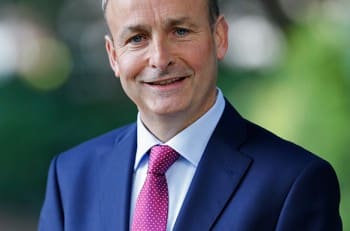
    “FF has always been centre-left and for equality of opportunity”: John Gormley interviewed Micheál Martin about the past and the future

    I interviewed Fianna Fáil Leader Micheál Martin in Leinster House and he was unfailingly cheerful and warm throughout though under time pressure. Before the 2011 General Election Martin told Village, “I am a constitutional republican and believe strongly that economic growth and social progress are closely linked. I believe the old left/right ideological divide has no real relevance for the 21st century”. He said his political philosophy was very similar to that of the revolutionary generation of Fianna Fáil,which understood the need for radical change. He said he believed in equality of opportunity, part of which is the necessity for social supports which enable this. However, “I don’t believe that there is a single example of a society which combines respect for human rights and high standards of living with enforced equality of outcomes”. He claimed, “Fianna Fáil has always represented ordinary people. The organisation is made up of ordinary people who work in their communities and take nothing from politics except a sense of making a contribution”. As to the original Fianna Fáil, having studied them, Martin says he’d slot them overwhelmingly as left of centre. He has a master’s in history from UCC. Occasionally he asks questions before answering them, recalling his background as researcher and briefly as history teacher, in PBC Cork. His thesis, elements of which he intermittently scrupulously recalls, was about how political parties evolved in Ireland from 1918 to 1932. He is passionate about the lessons of the period, particularly for Fianna Fáil. He claims, “When it was set up in 1926, Fianna Fáil in a sense represented the dispossessed, the outliers, the people who didn’t get involved in the mainstream after the Treaty and yet they picked themselves up. They did bring on a business element in the late 1920s. Once they accepted the Treaty and once they accepted the political norms they opened up to new potential support. Most particularly to what we call the ‘Irish Ireland’ business community, meaning people who believe in Irish industry, who believe in protectionism; believe in growing our own industry. The likes of Dowdalls margarine manufacturers moved to Fianna Fáil. The Cumann na nGaedheal Party was split between protectionists and free traders. Patrick Hogan the Minister of Agriculture was a classic free-trader but JJ Walsh, for example, actually defects from Cumann na nGaedheal and decides not to run in the general election of 1932 saying, ‘I’m no longer running for this free trade party’. Cork seems to have been a hotbed of protectionism. They produced their own newspaper, the Tribune. People like Professors Stockley and O Rahilly (who later became the president of UCC and drafted the Free State constitution) were writing articles ideologically promoting self reliance for Irish industry and they’re getting brassed off with Cumann na nGaedheal by the end of the 1920s. O’Rahilly actually stood for Cumann na nGaedheal and briefly in a kind of a George Lee like moment, he gets elected a TD. I came beautifully across his correspondence. He says ‘I’m wasting my time here. Cosgrave doesn’t understand how bright I am. And I have no intention of remaining on here as a negligible automaton’. And he resigns. Lemass demonstrated a capacity to change. His mind was elastic. He could understand shifting trends in the world in his times. So he was a protectionist in the 1930s who became a believer in removing tariffs and barriers. He got the bit about how Ireland needed to become an open economy to export its produce. However, there is no doubt that modern governments are far more constrained and restrained than previously because of global free trade; and the work of Piketty and others is important in demonstrating the growing gulf between the corporations and the wealthy and what they’re earning, and the middle-class and lower-income groups. Because the middle class is shrinking in developed societies. That in itself is posing a threat to democracy. Governments have to intervene more. I spoke to the former head of the ESRI recently before she’d left office, informally. She was making a point to me that one of the biggest political issues of the next decade would be the degree to which governments can intervene in the market on incomes policy. To be young today and to go into the labour market today as a young person is not pretty in terms of certainty, security, capacity to borrow money. The market is certainly controlling that to a degree that’s very, very worrying. Even in the state sector now, there is no certainty for a young teacher who could be ten years waiting for any security. Primary teaching is different but even their rates of pay are lower than people who are working with them in the staff. Morale in the Garda is shocking. They had to reverse the cuts to new recruits in nursing because they couldn’t get the nurses. They’ve all gone abroad. And then there’s the whole zero-hours contract issue. And the whole regional pull to the east coast and to Dublin which is very lopsided. I think the resolution is not easy and I think there has to be engagement between governments and corporations. Essentially what’s happened in the last 20 years, is that the West shifted an awful lot of manufacturing to Asia. It did help lift a lot of Asians out of poverty but their levels, their conditions, are reminiscent of 19th century industrialised Europe”. So how does all this position Fianna Fáil politically? “Now, I would put 2016 Fianna Fáil in the centre of the political spectrum. Somewhat left in terms of – what do I mean by that? I think you have to be careful of these labels. But it’s certainly centre in the sense that Lemass (his hero) and the whole industrial thing was always a feature of the party and probably became stronger in the 1960s, 1970s, and 1980s. Lemass didn’t mind whether it was state development or private development. So Fianna Fáil never had an

    Loading

    Read more

  • Posted in:

    Striking conservatism of opposition parties

    There is no surprise that Budget 2016 was an election budget. The budget will play an important role in framing the economic debate in the run up to the election. It is worth looking at Budget 2016 and the pre-budget submissions made by the opposition parties, to gain insights into the parameters of this debate. While there were some good suggestions in these submissions, it must be noted that some of their figures could not be considered credible. The most striking conclusion from any such exercise is the lack of vision, from all sides, on how the budgetary process could help to put us on a different path, a path towards a more equal, inclusive, and sustainable society with an economy that benefits all. A new narrative about the future direction of Ireland is much needed. We can only hope that this will emerge in the coming months. The economic climate is much improved and this should have offered room for new vision. Ireland is the fastest growing economy in the EU and GDP is forecast to grow at 5-6% (and some suggest more) for the year, with strong growth predicted for 2016. However, the current strong growth rate is being helped by the weak euro, low oil prices and historically-low interest rates. These are external factors that we have no control over. Changes such as rising interest rates and energy costs could have a dampening effect on economic activity. The former Governor of the Central Bank, Patrick Honohan, urged caution in a letter to the Minister of Finance before budget day. He said: “The rate of economic growth is being exaggerated and may be leading to overconfidence in planning for the future”. The business activities of multinational companies were affecting the figures, he said, creating a risk that Government policy would not be based on a realistic view of future prospects. Still, employment is growing strongly. The numbers at work are expected to exceed 2,000,000 next year. Unemployment is falling. It stands at 9.1% (203,000 people). However, long-term unemployment remains high, with over half (54%) of those who are unemployed being categorised as long-term unemployed. Budget 2016 had a 50/50 split between tax cuts and increases in public expenditure. It failed to focus on increasing investment in our social and economic infrastructure to the scale required to support our growing and ageing population and create the conditions for productive and sustainable economic growth. Budget 2016 was not as regressive as previous budgets. However, it failed to address income inequality and provide the range of supports needed to reduce poverty and deprivation in any significant way. Would the opposition parties have done better? An overview of their pre-budget submissions provides insights into their priorities and an indication of the economic policies for their election manifestos. Their figures are taken at face value. The overall increase/decrease in taxation and expenditure is calculated as the submissions included a range of measures that increased and decreased the tax take and the expenditure level. What is of particular interest is the areas that they focus on and the balance between taxation and expenditure. Sinn Féin The main proposals in the Sinn Féin pre-budget submission included an enhanced capital investment programme; investment in homelessness and refuge services; investment in health and education services; supporting parents and investing in childcare; tackling income inequality and establishing an equality and budgetary advisory body; protecting communities; and making provision for frontline workers, the Haddington Road agreement, and demographics (growing and ageing population). It proposed a range of tax increases and cuts resulting in an overall increase in taxation of €292m, which includes a reduction in the USC, and the abolition of the property tax and water charges. Its expenditure proposals came to an overall increase of €1.8bn. All the political parties, with the exception of People Before Profit, who presented a balanced budget, cut the budget by €1.5bn   Fianna Fáil Fianna Fáil’s key proposals were to reduce the tax ‘burden’; tackle the housing crisis; invest in services; and support families and older people. Their proposed taxation measures would reduce overall taxation by €557m overall, with almost €400m of this coming from cuts to the USC. Its expenditure proposals would increase spending by €888m. Social Democrats The main proposals outlined in the Social Democrats’ pre-budget submission included a new capital programme; a focus on housing; supporting parents, children and childcare; addressing child poverty; enhancing education; supporting The Budget had a 50/50 split between tax cuts and increases in public expenditure. It failed to focus on increasing investment in our social and economic infrastructure CHART 1: PROPERTY TAX IN IRELAND AND THE EU (2012) enterprise and improving health provision. The submission included a range of tax increases and cuts that would result in an overall decrease in taxation of €3m, which includes a reduction in the USC, the abolition of water charges and reductions in the property tax in certain circumstances. Its overall expenditure increase came to €1.5bn. People Before Profit The priorities outlined in the People Before Profit pre-budget statement included the abolition of the property tax, water charges and the USC for salaries below €35,000; the reversal of cuts to social welfare; an expansion in health funding; the restoration of jobs and public services that were cut; investment in social housing, education and childcare facilities. Their budget costings were presented as a balance sheet with an opening credit balance of €1.5bn called ‘fiscal space’. The ‘credit available’ is €8.8bn, with total expenditure coming to €8.7bn, thus presenting a ‘balanced’ budget. All the political parties, with the exception of People Before Profit, who presented a balanced budget, kept within an overall package of tax cuts and expenditure increases that amounted to a value of €1.5bn. While there was variation in taxation measures, there was common ground in the expenditure measures, including housing, education, health and social welfare. All parties proposed cuts to varying degrees in the USC, property tax and water charges. New taxes included a wealth tax,

    Loading

    Read more

  • Posted in:

    Why we shouldn’t care about university rankings

    University rankings are released every winter. It gives the media a few free stories. One or two universities go up the rankings, and one or two go down. University presidents rush out to the media to congratulate themselves and their staff on the hard work and innovation that led to the rise, how they are doing more with less etc. The stories write themselves. Alternatively the presidents remark gravely that the fall is the inevitable by-product of unsustainable funding cuts, and if the government doesn’t intervene it will only get worse. Of course if either were true we’d expect to see trends. The universities of hard work and innovation should be improving consistently, and the funding losers dropping. In fact we see that Irish universities are not moving in any particular direction. There’s a dramatic fall in some rankings: the Times Higher; but a hardly noticeable one in the QS one. In the Shanghai ranking Irish universities have improved. Surely if a change in performance is dramatic and real all rankings should pick it up? This gets us to the problems with these rankings. First is using rank at all. Rankings are inherently unstable. The rank a university comes in can change dramatically even if the performance of the university hasn’t changed that much. Think of the rank of someone in a marathon with 1000 runners. The top 10 runners will be spaced apart, the first and the tenth runner could have quite different performances. And these will be quite a way from the 100th runner. But we usually see that after a while bunching happens. The 100th runner and the 200th runner might not be that far apart, but the rank indicates a big difference. In the main middle bunch, between the 250th and 750th runners, small differences in performance will yield huge differences in rank order.   Students might be better off with mediocre researchers who are fantastic teachers   What are these scores based on? The different university rankings (there are about seven of them) use a variety of components to measure university performance, but they tend to rely heavily on one: university reputation. It accounts for between a third and a half of the score in each of the different rankings. Reputation is often based on some real differences, but it means that big, famous universities are scored higher because, well because we’ve heard of them. If you’re asked what is the best university in the world, some names come to mind, and these are the names that come out on top. Are they the best? They’re probably close to the best, but our assessment is based on nothing more than name recognition. This is a bit like using opinion polls far out from an election. Well known candidates perform best in these because voters have heard of them. After a campaign, in the real election, these advantages are reduced and the less well-known candidates perform better than expected. One ranking, Shanghai, rejects these repetitional criteria. But it replaces it with possibly more obscure criteria. It looks at the number of students and staff who won a Nobel Prize. These prizes aren’t plentiful, so most universities in the world will score zero. But do they really measure anything a student would want to know? That Samuel Beckett went to Trinity and then won a Nobel Prize is as much a matter of luck (for Trinity) as anything else. Does it reflect the contemporary student experience? Research output and citations measure less obscure things. Research is a core university activity, and it can be measured pretty reliably. A journal article that is published and relied on for further research makes some difference. But it is not clear that it makes a great deal of difference to the student experience. They should be getting taught by genuine experts in the field, which is good. But does it mean they are taught well? The busy researcher may be less engaged with teaching pesky undergraduates, who eat into research time or, more likely, the time they can spend chasing grant income. And teaching itself is remarkably difficult to measure. So the ranks rely on the staff-to-student ratios. We know that good teaching relies on interaction, and it’s easier to be interactive with small groups. But it’s also possible to be mind-numbingly boring in small groups. Students, and these are the core source of funding for Irish universities, might be better off with mediocre researchers who are fantastic teachers, who give them hands on experience doing whatever it is they are there to learn. There are few German universities in the top 100 of any rankings, but no one thinks German graduates deficient. One of the reasons there are so few German successes there is because research is often done in independent institutes, but it’s also because Germans spread resources so as not to create a few small elite universities that teach few students, but to make all universities pretty good. The path some are suggesting of ‘picking winners’ to create at least one Irish elite university by targeting resources may not be such a good idea.   The UCC president Michael Murphy rather clumsily instructed staff to ask academics they knew to think of UCC when assessing reputation   A further criterion used by most rankings is the internationalisation of the institution. Universities with a large number of foreign staff and students are given a higher score. But measures of internationalisation tend to favour small, open countries. Ireland is one of the most globalised countries in the world mainly because it is one of the smaller developed countries in the world. A small number of foreign students make a big impact here. We also benefit from speaking English, so it’s easier to move here. I’m not sure this reflects anything meaningful in the performance of our universities. Measuring university performance is difficult. The existing rankings capture something. If Harvard is in the top ten in all rankings, it is

    Loading

    Read more

  • Posted in:

    No to €350m

    It has been a long and hard struggle for a Financial Transaction Tax in Europe. Now it looks like a breakthrough is possible. This has yet to make an impression on the Irish media and there has been no critique of the Irish Government’s refusal to participate. The European Commission had proposed an EU-wide Financial Transactions Tax but failed to get the necessary unanimous support. Eleven Member States decided to proceed with introducing it through what is called the ‘enhanced co-operation’ procedure. These were Belgium, Germany, Estonia, Greece, Spain, France, Italy, Austria, Portugal, Slovenia and Slovakia. It was given a green light in January 2013. Even the International Monetary Fund has stated that the financial services sector is under-taxed Britain took a case to the Europeaember States as to what they were actually going to do. Now it’s down to the wire. The December 8th meeting of ECOFIN economics and finance ministers is widely seen as the make or break moment for the Financial Transactions Tax. The prospects are surprisingly good. France is pushing it, as it really needs new sources of finance if the COP 21 climate outcomes are to be ambitious and to be implemented. Germany remains determined but warns it must happen now or never. Angela Merkel has been clear all along “that financial markets have to contribute their share to the recovery of economies”. The final proposal must be agreed unanimously by all participating countries. They are working towards the progressive implementation of a tax that would involve a harmonised minimum 0.1% tax rate for transactions in all types of financial instruments except derivatives (to which a 0.01% rate would apply). It is suggested that this would enable the financial sector to make a fair and substantial contribution to tax revenues and complement regulatory and supervisory measures by creating a disincentive to transactions that “do not enhance the efficiency of financial markets”. There are blocks to be overcome. It seems that there is agreement to tax shares, corporate bonds and all derivatives with the exception of derivatives linked to sovereign bonds. This means particular issues for indebted nations are addressed. However, agreement has still not been reached on how the Financial Transactions Tax should be levied. Some Member States have also put forward specific proposals to meet their particular needs. If they do get agreement the Financial Transactions Tax would be levied from the second quarter in 2017. This is a small tax but with the potential to raise significant revenue for hard-pressed national budgets. It is estimated that the tax will raise between 30 and 35 billion Euro for the eleven Member States involved. NERI, a thinktank, has estimated that the tax would increase exchequer revenue by €350 m per annum in Ireland. Who could say no to that? At a time when tax revenue is needed to address alarming levels of poverty and homelessness and to restore damaged and diminished public services, why would an Irish Minister of Finance say no to an additional €350m? At a time when new revenue is needed to fund global development and the Sustainable Development Goals and measures to respond to climate change and the conclusions of COP 21 why would he say no? It is ultimately a measure of the power of the financial services sector in Ireland and its ability to influence politics. Michael Noonan says there would be job losses and that financial services would desert us for London. This argument fails to reflect the low level of tax proposed and the very favourable conditions enjoyed by companies in the Irish Financial Services Centre. Those campaigning for the tax – in a campaign organised by Claiming Our Future, argue that it would actually increase jobs because of the additional public expenditure. The Irish government put €64bn of public money into rescuing the banks. Some €42bn of this was borrowed. Over 20% of our public debt is now a result of the bank bailout. The Irish people are estimated to be paying €9,000 Euro each for the banking-crisis debt – the highest in the world. Across the rest of Europe, the average cost per person is just €192. Even the International Monetary Fund has stated that the financial services sector is under-taxed. It is not too late. Member States can sign up to enhanced co-operation at any time. We need a Minister for Finance who will say yes to a tax that would yield much needed revenue, reduce financial speculation, and ensure the financial sector pays its way.  

    Loading

    Read more

  • Posted in:

    Dismantling our housing

    We’re in the middle of a housing crisis. But we didn’t get there overnight. This government engineered the very crisis it found itself in and came up with its own grand plan to solve it. Or thinks it has. But it is all part of a drastic disaster economics. It involves what we have seen until now: people dying in the streets, children sleeping in hotel rooms, soup kitchens feeding hundreds of people, tenants being evicted after the homes they were living in were sold, an unprecedented increase in the number of suicide… But we may well see much more of this, for this government has essentially abdicated its responsibilities to the wolves.   Selling off assets when there is an acute shortage should be the last thing any government would want to do   Local authorities were sidelined What started with Irish Water and the Local Property Tax is part of a larger scheme in which they are first suffocated of funds, then made redundant, policy by policy. This is now what is happening with housing. The implementation of the Social Housing Strategy is being hampered by significant infrastructural issues, which are not being dealt with quickly enough. That’s according to Dr Donal McManus, CEO of the Irish Council for Social Housing (ICSH). He outlines three critical issues – from the perspective of housing associations – that need to be addressed: lack of sites for development; the urgent need for coordination of funding schemes for social housing; and the absence of development programmes for housing associations. The most serious obstacle hampering implementation of the Social Housing Strategy is the failure to make enough sites available to housing associations, he says. “There are over 800 sites in public ownership that could be assessed for social housing and transferred from local authorities to housing associations. Housing associations could then access private finance to deliver much-needed homes. However, this is not happening due to unnecessary infrastructural obstacles and delays. Alan Kelly’s Urban Regeneration and Housing Bill legislates such a move. Developers under previous bills were to surrender 20% of developments to Local Authorities. Not only did they bring it down to 10% in theory, in practice it now stands at virtually zero. Instead they will lease these premises to local authorities, retaining ownership. This means the already depleted stock will not increase. Another recent Kelly announcement, a new tenant-purchase scheme, will exacerbate this. Under this plan, Social Housing is to be sold off at discounts of 40 to 60 per cent of market value. This does not make any logical or economic sense: selling off assets when there is an acute shortage should be the last thing any government would want to do. Local authorities just lost the capacity to provide affordable housing at a local level. The statistics below illustrate that trend: No funds for essential repairs either Local Government lost the ability to provide new homes, but it also lost the capacity to repair vacant ones. Thousands of houses are sitting idle nationally, most for want of funding from central government. The Essential Repair Grant was discontinued in 2011, when it reached its lowest figure at €92,000, down from nearly €52m in 2008. One of the arguments advanced by Alan Kelly in favour of his new tenant-purchase scheme was that these costs would not be incurred by local authorities anymore, but this is small change on the value of state assets being sold at a loss in the first place. Calls were made for the Local Property Tax proceeds to be allocated for these repairs, but these were instead diverted to Irish Water. Ironically, you cannot buy a house under the new tenant-purchase scheme if you haven’t paid your water bill. NAMA has a stranglehold Thousands of houses were not built for lack of funds, thousands more remain idle for the same reason, and yet thousands more are in the control of Nama and are not released in the market or for social housing at a time we need it most. The December 2014 survey on Unfinished Housing Developments noted that 4,453 vacant homes were then ready to be occupied, but starved Local Authorities cannot avail of them. The report highlighted that: “To date, demand has been confirmed by the local authorities for 2,121 properties that NAMA has indicated are potentially available (This relates to all developments and not just developments identified as ‘unfinished’). A further 507 properties are currently being evaluated bringing the total that may be deemed suitable to 2,628”. So right in the middle of a housing crisis, we find that Nama is still to identify houses “that may be deemed suitable”. Its website states: “As at end June 2015, NAMA had identified over 6,542 residential properties as potentially suitable for social housing. Of these, demand has been confirmed by local authorities for over 2,500 properties, of which 1,386 have been delivered for social housing use. Confirmation of demand is a matter for local authorities and is not something in which NAMA has a role”.   Only 1386 units were delivered nationally, a trickle. And notice again the discrete disclaimer: Confirmation of demand is a matter for local authorities and is not something in which NAMA has a role. In other words the government has ample supply, but will not feed Local Authorities any funds to purchase it from itself. Local authorities are made the scapegoat of this government’s non-policy on housing. The media toed the government line, and few if any asked the local authorities for their opinion when reports came out that “4000 Social Housing units offered by NAMA” had apparently been rejected by them. The reality is evidently more complex and refusals usually stem from the government’s own policy and frameworks on housing, as well as building regulations. For example, South Dublin County and City Management Association offered the following insight in a statement to “The Dublin Gazette”: “Local authorities do not turn down available housing units unless there are strong reasons for

    Loading

    Read more