Europe

Random entry RSS

  • Posted in:

    Nay to the Mayor Yayers

    In any discussion about Mayoral governance’ in Dublin there are assumptions: firstly, that it is a good thing, that it will solve lots of problems in the city; and second, that the mayor should be directly elected. We usually hear the paraphrased quote – ‘who do I ring if I want to talk to Dublin?’. We want to be able to identify who runs the place. We want someone to be running the place. Directly-elected mayors give us that. The ‘direct’ in direct election, a bit like in direct democracy, is a ‘Yay’-word. It is seen as an unarguable good. Who could not be in favour of giving people a direct say in, a direct link to, who runs the city? These assumptions ignore the relationship between central government and city government and what competencies are appropriate for the mayor, what geographical area the mayor might rule over, and the central issue of funding. They also ignore the fact that we can and do have strong political leaders who are not directly elected. There are broadly three models for city governance. One is the Council-Manager system we currently have – where the mayor has no executive powers. There’s an assumption that it is a bad thing. It certainly isn’t very democratic: it is not responsive to voters’ wishes and there are no clear links between the vote in local elections and local government policy. It’s also not very transparent – though that might be due to the absence of real media reporting of city government. It in turn might be a function of the lack of clarity in decision-making. The second model is the directly-elected mayor or Mayor-Council system. It is used in London, some other European cities, such as Rome, and about half the big US cities, including New York and Chicago. Probably because our nearest neighbour and biggest influencers adopted and use it, we naturally assume it is the one for us. But within this system, things aren’t uniform. They can be strongly mayoral or weakly mayoral – so the Council’s control of the legislative and financial functions can vary considerably. There is a third model. It is a Council system. The elected councillors appoint a mayor, who has executive functions. As with the directly-elected mayor, depending on rules, the mayor’s power can vary quite significantly. The system is quite common, used in many northern European cities, such as Amsterdam, Berlin, Stockholm and Paris. So which works best? Well I’m not an expert in local government, but even the literature doesn’t have a clear conclusion. So the short answer is, we don’t know. But I am interested in the functioning of central government, and we can think of the two models, the directly and indirectly-elected executive mayors as functional equivalents to the presidential and parliamentary systems at the national level. And there is a long debate in political science about the relative success of the two systems at delivering democratic stability, human development, and a range of other indicators of a country’s success. So which should we choose if we are to be guided by the relative performance of presidential or parliamentary systems? The presidential system, which is the system analogous to directly-elected mayor, has some advantages. Candidates are required to present a vision to the public. It puts power in the hands of one person, on the basis of popular election. That means the presidential system is clearer and appears fairer. We all know who we vote for; and the person who gets most votes becomes mayor. Unlike in parliamentary systems, there is no messing about with coalition-building based on backroom deals that aren’t transparent and over which the voters have little control. Much of the debate in parliamentary elections is about who will coalesce with whom, a debate that could be avoided in presidential-style systems. Instead the rival candidates for mayor could debate the issues facing Dubliners. The presidential system also weakens the power of parties. Many people dislike parties, and regard them as gatekeepers of political ambition. With a presidential system new leaders can emerge without having to be sanctioned by a party. This is much less likely in a parliamentary system. And at a time when people complain that government is unresponsive to their needs, and lacks leadership, the mayor could have clear lines of power to deal with the big problems. A suitably empowered mayor might be able to deal with the housing crisis in a way that the local authorities, minister and agencies can’t. The parliamentary system, that is the indirectly-elected mayor, however, has some advantages of its own. One might seem a weak one, but it might be important. We are used to parliamentarianism – it’s in our political culture. Political culture governs how we behave and are expected to behave. It changes slowly and doesn’t always respond to institutional changes – perhaps not at all, or perhaps not in predictable ways. This is important because picking systems that we are used to means we are less likely to get nasty surprises. A stronger argument in favour of parliamentarianism is the way it divides power. Politics is meant to do at least two things. It should solve collective action problems: those that make us collectively better off if we are guided to behave in certain ways than if we were left to act individually. The classic example is fishing. Individually we have an incentive to extract as many fish as we possibly can from the seas. We would over fish, making us collectively worse off when fish stocks are depleted. So we are made better off being forced to restrict our fishing. Politics is therefore also a mechanism for the resolution of conflicts, such as the fishing one. In parliamentary systems the mechanism for the resolution of conflict is negotiation, and parties representing different interests compromise, strike deals and build consensus, embracing a wide range of views in the decision. This manifests itself in coalitions, with a formal opposition offering alternative policies. In presidential systems conflict

    Loading

    Read more

  • Posted in:

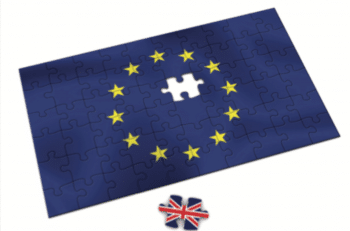
    Braced for Brexit

    Back in the 1960s I once stood on the plinth of Nelson’s column in Trafalgar Square, London, between Landseer’s lions, at a Connolly Association rally against anti-Catholic discrimination by the Northern Ireland Stormont regime. Lots of people were waving tricolours. Forty years later I spoke again in the same spot, at an anti-EU rally organised by the Democracy Movement, one of Britain’s EU-critical bodies, before a sea of little Union Jacks. I smiled to myself. Here were the English discovering the drawbacks of being ruled by foreigners, by people they did not elect, and how EU laws had come to have primacy over those of their own Parliament. They were reacting against losing their democracy and national independence. British Euroscepticism is largely English nationalism. The political psychology of the governing élites in England and Ireland is very different, not least in their attitudes to the EU. The lack of self-confidence of the Irish élite is shown by their continual anxiety to be seen as ‘good Europeans”’. Hence for example Enda Kenny’s boast that our recent modest economic improvement has “restored our reputation in Europe”. I was at the EU summit in Gothenburg, Sweden, a few days after Irish voters rejected the EU’s Treaty of Nice in 2001. The then Taoiseach, Bertie Ahern, was virtually beating his breast there as he explained apologetically to the international media how Irish voters were mistaken, but they would have a chance to change their minds in a second referendum – which of course duly happened. By contrast England’s governing élite has the psychology of a ruling power. For centuries they backed the second strongest powers of Europe against the strongest, thereby preventing any one power dominating the continent. When the EU came along after World War II they joined it in the hope of either prising France and Germany apart or else of being co-opted by the Franco-Germans as an equal partner to run ‘Europe’ as a triumvirate. Both hopes have proved illusory. Hence English disillusion with the EU. They never shared the Euro-federalist visions of the continentals – something that former Commission President Jacques Delors expressed when he said in 1993: “We’re not here to make a single market – that doesn’t interest me – but to make a political union”. Prime Minister Cameron wants to stick with the EU. But most of his party and large swathes of British public opinion see the EU as a low-growth economic area mired in recession, with a dysfunctional currency and high unemployment. They want to regain their freedom of action, especially over trade, by leaving. They want to develop trade and investment links with the five continents and the far-flung English-speaking world. The obvious power imbalance between the two sides would make it extraordinary if the “Leave” people were to prevail over the “Remain-Ins” in the Brexit referendum. On the one side are the British Government, the American Government, the German and 25 other EU Governments, Wall Street, the CBI, the TUC, the British Labour Party, the Brussels Commission, the European Movement, most EU-based High Finance and Transnational Corporations, plus in Ireland all the parties in the Oireachtas. On the other side is a diverse and sometimes quarrelsome range of groups and individuals on the Left, Right and Centre of British affairs, united only by their desire to get back their right to make their own laws, control their own borders and that their Government should decide independently its relations with other countries. It would be unrealistic though to think that a “Remain-in” vote in June will decisively settle the matter. It is likely merely to delay the inevitable divorce, for the interests of the continentals and the island Britons are just too fundamentally opposed. And what of the Celtic fringe? Contrary to the received wisdom there could well be a substantial “Leave” vote in those areas too. If the UK as a whole votes to leave, will Scotland want to break away from the rest of the UK in order to remain in the EU, abolish sterling and adopt the euro – that being a requirement for all newly acceding States to the EU? It is very doubtful. The Irish media have not yet picked up on one big downside for Irish people of the deal David Cameron concluded in Brussels before he launched his referendum. This is the implication of the EU agreement that if the UK votes to remain, new immigrants to the UK are liable to have lower social benefits for some years than those already there. It will be impossible under EU law to differentiate between Irish immigrants on the one hand and non-Irish ones on the other. This means that new Irish immigrants to Britain or the North must face cuts in social bene ts too if the “Remain” side wins. This proposal will not affect Irish people already settled in the UK, but solidarity with their fellow countrymen and women should still cause lots of them to vote Leave. If a booming British economy, freed of EU regulation, becomes the Singapore of Europe outside the EU, which is perfectly possible, it can only benefit Ireland economically. Lurid scenarios are being painted of the consequences of Britain leaving the EU while Ireland remains in it. If Brexit happens some uncertainty is inevitable for a year or two, but it will not be the end of the world. Free trade will continue between Ireland and the UK under all realistic “Leave” scenarios, so there will be no customs posts on the North-South border within Ireland, no passport controls or anything like that. Such claims are simply scaremongering, part of “Project Fear”. What of Northern Ireland in the event of Brexit? Over the past decade the UK has paid over £150 billion to the EU budget – far more than it has got back. It sends £350 million to Brussels every week. This is some ten times the Northern Ireland schools budget. EU subsidies to the North in the form of

    Loading

    Read more

  • Posted in:

    Hands off civil society

    The UN’s Secretary General, Ban Ki Moon, has called civil society “the oxygen of democracy” but its space is shrinking. This may be jargon, but it is inspired by a serious threat to democracy – the undermining of basic rights: freedom of expression, freedom of association, and the right to peaceful assembly. Civicus grandly describes itself as the ‘World Alliance for Citizen Participation’. It is more down to earth when highlighting failures to address this shrinking civil society space. In recent months environmental and land-rights activists have been assassinated in Honduras and South Africa. Civil society organisations in Egypt are being prevented from receiving funds from foreign sources. In India the police have repeatedly sought the arrest of a couple who criticised Prime Minister Narendra Modi for his role as Gujarat chief minister during the Gujarat riots in 2002 in which at least 790 muslims (and 250 Hindus) died. The police have confiscated their passports and blocked their bank accounts and their homes have been raided. A woman human-rights defender has been arbitrarily detained in Bahrain with her 15-month-old son. A new law in Jordan is imposing arbitrary conditions on the formation of civil society organisations. An activist opposing a hydropower dam in Cambodia has been given a suspended sentence. That is disturbing and unacceptable. However, some will argue that only happens elsewhere. But civil society space is shrinking in Ireland too: different means, same intent. Civil society organisations here are strangled with cuts and encumbered with ever greater levels of bureaucracy such as charity regulation, lobbying legislation and tendering demands; and are spending too high a proportion of their time reporting on endless indicators. For example our long-standing local not-for-profit development companies providing programmes to tackle unemployment and social exclusion suffered reductions in funding from €84.7m in 2008 to €48m in 2014 and have been required to submit detailed competitive tenders. Most got through the process but some didn’t. Those that did are now bogged down in an indicator-dominated programme. The environmental pillar of social partnership has been under severe pressure due to reductions in funding arising from cutbacks in the environment fund and Department of Finance obstruction. The Minister for the Environment implied he was considering removing An Taisce, the largest environmental NGO, which has been critical of him, from the list of bodies consulted over big planning applications. Organisations are bound into service-provision contracts that preclude criticism of the state. The structures for engagement with the State have been dismantled. There is an evident hostility to and a demonisation of protest and dissent. We can’t stand aloof in Ireland from this global attack on democracy and ostensibly valued freedoms. Locally, as internationally, those in power do not want these organisations giving voice to and mobilising dissent to a model of development that impoverishes, generates inequality and destroys the planet we live on. Civicus are seeking to foster greater coordination between civil society organisations to face down these threats. Civicus and Human Rights Watch hosted a meeting of regional and international civil society organisations to explore the agenda for a campaign on these issues. They identified the need to develop a new positive narrative about the contribution of civil society to national life. This seemingly basic step was prioritised in the face of what was described as ongoing stigmatisation and vilification of civil society organisations. A second step was to inform the general public about the nature, causes, and extent of restrictions on civil society activists and organisations. A third step was to broaden the debate beyond advocacy organisations and those working on civil and political rights. They noted that restrictions are increasingly applied to anti-poverty and development-focused organisations. Civicus are seeking inputs on how best to develop this global campaign. The International Civil Society Centre is the “global action platform” for international civil society organisations (ICSOs). It works to support the “world’s leading ICSOs in maximising their impact for a sustainable and more equitable world”. It is also initiating a process of consultation on a ‘Civic Charter’ which it will launch in October 2016 as a means of building international solidarity for civil society organisations. Some key directions have been suggested, including the need for new ideas for collective advocacy to reverse repressive legislation targeting civil society organisations, the adoption of progressive institutional frameworks for civil society engagement with Governments, and the recruitment of eminent persons to demand the release of unjustly imprisoned civil society activists. Civil society in Ireland should prioritise the re-appropriation of civil society space. It must participate in these global campaigns and aim to get international demands tailored to address how civil society is specifically being eroded here. As we face increasingly intractable inequalities and irreversible climate change it is a political imperative. Niall Crowley

    Loading

    Read more

  • Posted in:

    Retrograde results reflect recalcitrant republic

    The recent General Election was a very good one for Sinn Féin. We increased our number of TDs from 14 to One thing is clear: the after-math promises to be far more interesting than the insipid election campaign, a campaign defined by the monotony of the government’s ‘Keep the Recovery Going’ message. It may have resonated with the select few, but most reacted with an incredulous, ‘Are you for real?’ The employment figures may be up, but the people in jobs are still feeling the pinch eight years after the crash. Meanwhile, our public services appear to be getting worse. Most people – even those with private health insurance – have experienced the horror of watching a loved one on an A and E trolley. The opposition parties sensed that change in the public mood. Fianna Fáil, with its finger back on the public pulse, devised a set of policies that reflected people’s concerns. To be fair, this wasn’t just Fianna Fáil focus-group politics. Micheál Martin, as comes across in his recent Village interview, does have a commitment to social justice and has steered the party to the left of Fine Gael. The ideological differences may be slight but they are discernible and make a coalition less likely. There are, of course, other mercenary reasons why the grand coalition may not happen. Fianna Fáil won the election. It wasn’t a knock out, but it had/has Fine Gael on the ropes. A rematch at its time of choosing would suit it much better than it would a demoralised, soul-searching, Fine Gael party, which has fundamental problems. Inevitably, there will be a simplistic focus on the party leader. In post-election interviews pledges of allegiance to Enda from cabinet ministers have been noticeably absent or halfhearted. Big Phil, his protector in chief, is no longer around to sort out any of the renegades. The heave seems inevitable. Will it come to that? Or will it be a dignified resignation like Eamon Gilmore’s. The former Labour leader was treated mercilessly by Joan Burton who in turn will find her leadership questioned by the party faithful. The Labour Party’s mauling by the voters was entirely predictable. Bleating on about having to make hard decisions doesn’t win you much sympathy, as the Greens discovered last time out. Labour calculated that, having lost the working class vote to Sinn Féin and left-leaning parties, it could count on the socially liberal middle classes for support. The fact is that abortion has been shown not to be a defining issue either way. Those who wanted to repeal the eight amendment didn’t get a tail wind, and those vehemently opposed to abortion, like Lucinda Creighton, were kicked out. Likewise, the marriage referendum was seen as eaten bread. Fine Gael and all other parties had managed to appropriate that liberal space effectively – sure we’re all liberals now, some having got here a bit later than others – but who cares. Other electoral tactics back red. The political Banking Inquiry simply muddied the waters and showed that the last government had few options, and that the same pro-cyclical expansionary policies were advocated by all the parties. The Green resurgence owes much to the hard work and unstinting optimism of Eamon Ryan. Not even his narrow loss in the European elections could stop his gallop, and indeed it proved to be a blessing in disguise. He and Catherine Martin are the dream team: a moderate, articulate and photogenic pair, who have the capacity to provide a platform for further green success. Like other newly elected candidates, the Greens will hope that another election won’t happen too soon. But the signs on that front are not good. The rejection of Eamon Ryan’s proposal for co-operation amongst the opposition parties means that the new dawn for Irish parliamentary democracy will have to wait. Those who think that this election will result in a new Borgenesque Danish parliament of progressive legislators are delud-ing themselves. Instead, we may revert to the worst type of parish-pump horse-trading that the country has ever witnessed. We don’t have a Scandinavian list system; we have proportional representation with the single transferrable vote, an electoral system that has resulted in an array of independent political efs. Right now, shopping lists the length of your arm (in the case of the Healy Raes – the length of two arms) are being prepared for the highest bidder. It all promises to be unseemly and retrograde, and will be, perhaps, the best reflection of where we are as a nation in the centenary of 1916. John Gormley

    Loading

    Read more

  • Posted in:

    Democracy and war

    DEMOCRACY AT HOME General Election 2016 has thrown up an utterly unpredictable result with Fianna Fáil in the ascendant. At the time of writing the consequences of the vote including who will survive as leaders, who will be in government and who will lead the government could not be less predictable and, without resorting to metaphysics, will reflect only opaquely the will of the people. Yet we carry on as if this did not reflect in any way on the integrity of our democracy. DEMOCRACY ABROAD The Brexit referendum should have been framed on whether the UK will be in the EU, in EFTA, or independent. But, as always in these islands, the third option, the middle one, has been omitted. The outcome, therefore, is bound to be inaccurate. And given the divisive nature of the in-or-out, stay-or-leave question, it is highly likely that the ‘leave’ option will win. In a three-option poll, the ‘leave’ option will probably lose. On 20th Dec last year, Spain went to the polls… and two months later, Spanish politicians are still arguing about who should be in government. But this is par for the course. As happens in so many democracies, open and transparent elections are followed by closed and opaque discussions, as various parties wheel and deal behind closed doors, trying to concoct a majority coalition. In 2013, Germany’s four parties took 67 days to sort something out. In 2010/11, Belgium’s dozen took 451 days! Will Ireland have the same sort of uncertainty? Democracy is for everybody, not just a majority. Conflict zones like Syria and Ukraine need inclusive governance, governments of national unity. Inter alia, this should mean that elections are preferential and proportional; that power is shared in both joint presidencies and all-party coalition cabinets; while the third ingredient is preferential voting and collective responsibility in parliament. Sadly, while we preach at least some of these ideals abroad, we practice the very opposite at home: majority rule in the Dáil and the Commons, and divisive majority voting both in parliaments and national referendums. Before the Scottish referendum of 2014, it was widely assumed that ‘devo-max’, the middle option for maximum devolution, would get about 60 per cent. The ballot, however, included only the two other options, status quo and independence. The result, therefore, was a highly inaccurate nonsense. There are times, as with the election victory of Aung San Suu Kyi in Myanmar, or our own recent referendum on same sex marriage, when democracy is wonderful. On other occasions, as in the Balkans, it was downright dangerous: the 1990 elections there were little more than sectarian headcounts and “all the wars in the former Yugoslavia started with a referendum”. (Oslo- bodjenje, Sarajevo’s main newspaper, 7.2.1999.) It must also be remembered that Napoleon became the Emperor by a popular vote, one in which he, literally, dictated the question. Hitler, too, came to power ‘democratically’. In the 1924 elections, the National Socialists won just 14 seats but, in the wake of the great depression, this rose to 107 (17.6%). The subsequent history consisted of weighted majority votes in parliament (like the Enabling Act of 1933), simple majority votes in referendums in which, again, the dictator di tated the question, and war. DEMOCRACY AND WAR The focus of this article is Westminster’s democracy and the decision to go to war in Syria. Would the outcome of the debate on bombing in Syria have been different if the chosen methodology of decision-making in parliament were not majority voting? In other words, would the House have made a different decision if the procedures had allowed for a more pluralist decision-making methodology? First of all, a little background. In 2002, in the UN Security Council debate on Iraq, Resolution 1441, both France and Germany objected to the phrase “serious consequences” in Clause 13. Yet both voted in favour of that resolution. The outcome, described as “unanimous”, was (not the but) a cause of war, of the invasion of Iraq on 20.3.2003, and of the sorry story since, not least in Syria. But that outcome – 15-nil – was not unanimous! France and Germany did indeed object to the above clause, and perhaps would have objected to other paragraphs if but the procedures had catered for such criticisms. Maybe other Council members, one or other of the ten temporary non-veto powers, which at the time included Ireland, might have had policy proposals worthy of consideration. Unfortunately, binary voting means questions are dichotomous. So countries vote in favour, perhaps because the resolution is better than nothing, perhaps because of the need for international solidarity, we don’t know. There is the main resolution; there may be amendments to this clause or that, or even perhaps a wrecking amendment; but everything is yes-or-no; it is this methodology which is at fault. Majority voting was, yes, a cause of war. A MORE INCLUSIVE PROCEDURE A more accurate methodology would allow the UK and USA to propose one draft Resolution 1441; option A. If France and Germany objected to Clause 13 or whatever, they could propose an alternative wording, even if only for this one clause, whence their preference would be a slightly revised but nevertheless complete package, option B. Syria, then a temporary member of Council, might have preferred another complete package, option C. Ireland could have preferred a more obviously neutral option D, and so on. Naturally enough, countries might seek to come together in groups to favour this or that option but the first principle would remain: everything should be on the table, (computer screen and dedicated web-page). The subsequent debate would allow for questions, clarifications, composites and even new proposals (although of course, at any one time, any one country could sponsor only one motion). At various stages, participating countries could express their preferences, so to indicate where the eventual consensus might lie. Then, at the end of the debate, all concerned would cast their preferences on a final (short) list of about five options. The winning outcome,

    Loading

    Read more

  • Posted in:

    Put in perspective

    As we know well in Ireland cash is one of man’s greatest temptations. It’s a recurring theme in Russia. In the venal world, for example, of Fyodor Dostoevsky’s ‘The Idiot’ (1869) most of the characters succumb to greed. General Ivolgin desires money to support his addiction to alcohol and to allow him to spend time with his mistress. Lebedev is willing to put his hands into a replace to retrieve a package that Nastassya Filippovna has discarded, with 100,000 roubles inside. In the society of The Idiot, money not only creates one’s fortune it also obtains one a bride. ‘Bids’ for Nastassya Filippovna range from 75,000 roubles to 100,000 to over a million. Money, then, is a clear symbol of the perversion of human values in the novel. Russia fell into a similar stupor at the end of the Cold War when excessive wealth corrupted Russian politics as Boris Yeltsin amply filled the role of the Idiot, his powers declining in a haze of vodka as the plot unfolds. It was out of this pit of iniquity that Vladimir Putin rose to power, the short but muscly former KGB of cer emerging from obscurity to become prime minister and then being elected President in 2000 when Yeltsin finally lost his reason. The US embassy cables published by WikiLeaks in 2010, revealed that American diplomats considered Putin’s Russia had by then become “a corrupt, autocratic kleptocracy centred on the leadership of Vladimir Putin, in which officials, oligarchs and organised crime are bound together to create a virtual ma a state”. A 2007 CIA report estimated Putin’s wealth at $40bn. Indeed the one-time biggest foreign investor in Russia, Bill Browder, told Business Insider that Putin was worth $200bn, making him the richest man in the world. He claimed “the first eight or 10 years of Putin’s reign over Russia was about stealing as much money as he could”. A BBC Panorama investigation earlier this year showed he has a $1bn palace on the Black Sea Coast. Funds for it were diverted from the super-rich who thought it would be spent on healthcare. But of course for most Russians, after a decade of buoyancy, all is not good on the cash front because of Ukraine-fallout sanctions, and the collapsing currency and oil prices. The Russian economy shrank 3.7 percent in 2015, and 4.1 in 2014 in rouble values, but in dollar terms it is 40% below peak. Oil prices rebounded in early February to above $35 per barrel but they had peaked in 2012 at close to $110 (when oil and gas constituted 52% of government revenue) and government forecasts are based on €50. Real wages fell 10 per cent year-on-year in December, the 14th consecutive month of contraction. Russia is running an unsustainable budget deficit of almost 5%. Soon a key thresold will be reached where over 50% of an average income is spent on food. Putin’s dastardliness and vulnerablity to exposé is even more drastic on the security front. For example, it has been alleged that, presumably under the direction of Putin, the Russian secret services, the FSB, bombed apartment blocks in Moscow in 1999 killing almost 300 people and pinning the blame on Chechnyan separatists. Of course, Putin was able to use the war in Chechnya to good propagandistic effect but he may have created hostages to fortune, even in furtive Russia. Such tactical ethical nihilism might have appeared in another of Dostoevsky’s extraordinary novels, Devils (1872). Towards the end one of the conspirators Lyamshin is put on trial and asked, “Why so many murders, scandals and outrages committed?”. He responds that it was to promote: “the systematic destruction of society and all its principles; to demoralise everyone and make hodge-podge of everything, and then, when society was on the point of collapse – sick, depressed, cynical and sceptical, but still with a perpetual desire for some kind of guiding principle and for self-preservation – suddenly to gain control of it”. Destruction and demoralising animates much of Putin’s policy from Crimea to Ukraine, Syria to Chechnya. Russia consistently operates standards that are more indiscriminate than Western military powers. Last September Putin shocked the world by weighing into the Syrian conflict with air strikes against rebel-held targets. Controversially the primary targets did not seem to be ISIL. An article in Time magazine by Timothy Snyder argued that the motivation for Russia’s intervention in Syria was to turn Europe into a ‘refugee factory’, compelled to accommodate many more beleaguered victims than have already arrived. This is based on the credible assessment that the Putin views the stability of the European Union as a threat to Russia. He will also have appreciated the opportunity to create a client authoritarian regime in the Middle East and to play to a growing anti-Islamic gallery in Europe, particularly in the former Soviet Union. Ironically, Putin started as a centrist in Russian terms. However, he was threatened by nationalist support for electoral protests against his regime in 2011-12, and now by economic instability and public poverty. If Putin fails to deliver in Ukraine, there is a probability of a challenge to his authority from a more radical nationalist agenda. Confronting Putin may be the greatest geopolitical challenge that Europe has faced since the end of the Cold War. Machismo, personal and political, is a big part of his schtick. Whether it’s bare-back horse-riding, descending in a deepwater submersible, posing with a massive pike he’s just caught or a tiger he’s tranquilised, or drinking 24-year-old vintage wine with Berlusconi he’s not notably alive to his feminine site. It’s Haughey for the twentieth century, gone global. He divorced in 2014 and is now living with a fecund gymnast. Man-on-Man buddy of Trump. Antagonist of Elton John. Scathingly self-righteous denier of any connection with the characteristic polonium poisoning of Alexander Litvinenko in London, despite the finding of a former English judge that he had “probably authorised it” and the dead man’s allegation that “the howl of protest from around the world

    Loading

    Read more

  • Posted in:

    Mojocon no Mojo con

    MoJoCon – the Mobile Journalism Conference which debuted in Dublin last year – has its roots almost a decade ago, when Glen Mulcahy, then working with RTE Nuacht, began experimenting with the camera on his Nokia N93 smartphone. “Video quality was atrociously bad, photographs were tiny, 1Mb was seen as huge, it was very much in its infancy”, recalls Mulcahy, now RTE’s head of innovation. “We were experimenting with that around the time Reuters had deployed the same tools to their journalists in the UK to create content for websites”. A handful of stories was produced to an acceptable broadcast quality using the mobile devices, and Mulcahy started keeping track of other broadcasters who were doing the same.“I thought, we need to bring everyone together, talk about what we’re doing, and that was the birth of MoJoCon”. From those beginnings, and networks built up through Circom, the European Association of Regional Broadcasters, MoJoCon has evolved into a “leading international media conference focusing on mobile journalism, mobile content creation, mobile photography and new technology all in one event”. Mulcahy may be an advocate for new technology, but he doesn’t expect RTÉ reporters will be carrying smartphones and selfie sticks by the end of the decade. “People still expect a particular kind of look when they turn on the television. You can’t do sports coverage on mobile, for example – you need those broadcast cameras, powerful zoom, all those expensive things. That said, there is very interesting case study, a station in Luxembourg, Léman Bleu, uses mobile to create content for their TV news. I think they are very brave to go this early”. “You will still see cameramen, you will still see satellite trucks in five years time, not journalists with selfie sticks. There are times when mobile works, but mobile is not mature enough yet to do 100% of the work”. Where he does see openings for new technology to expand are in non— broadcast media outlets, from newspapers to independent pod-and video-casts. “There are a few case studies in the Irish Times where I was absolutely blown away by some of the stuff they were able to do. They also very cleverly decided to upskill all their press photographers who were interested in doing it into shooting video with their DSLR cameras. So you have a new aesthetic. You definitely have better, although not necessarily radically more expensive, cameras and you also have some of the journalists who responded and went out shooting stuff with their phones”. “You don’t need a broadcast-quality camera to produce content that going to be delivered (back) onto mobile phones. I’m more and more coming to the opinion that there is a mobile ecosystem where we create on the mobile phone, edit on mobile phone, and deliver to mobile phones”. New technologies, and the ability to produce programming and news quickly and cheaply, also have implications for how RTÉ covers different communities, Mulcahy believes. “In the UK, there’s been a concerted effort by the BBC over the last 12 to 18 months to try and encourage hyperlocal sites. There is a UK government initiative where you can get a modest fund to basically try and get it off the ground. So there’s more that the government here could do to encourage that level of local community content”. “This is a device that most people have in their pocket. Maybe not everyone has a top-of- the-line Android or whatever, but lots of people have smartphones that can do pretty decent video, reasonably decent video”. “There is potential to give community-group newsletters, the ones that get stuffed on A4 sheets through letterboxes, a mobile angle. We could really energise community activism at grass roots level by showing them what you can do with video on mobile”. Looking to the future, as technologies (and screens) merge, Mulcahy can see a point where RTÉ produces video and audio not just for broadcast, but for the web, and for web first. As technologies mature, there is no strict reason why, for example, a new report compiled during the mid-afternoon should have to wait until the Nine news to be seen, when it can be immediately streamed to desktop computers or phones. Gerard Cunningham

    Loading

    Read more

  • Posted in:

    1916 values diverted

    One value of the 1916 Rising commemorations is to highlight the contrast between the aspirations of those who set out to establish an independent Irish State for the whole island of Ireland and the reality of what exists today – a partitioned country whose native language, Irish, is on the point of death as a cradle-spoken tongue, and in which the State that did come from the independence movement has been reduced to provincial or regional status in a supranational EU quasi-Federation that now makes most of our laws. The Easter Proclamation read: “We declare the right of the people of Ireland to the ownership of Ireland and to the unfettered control of Irish destinies to be sovereign and indefeasible”. “Indefeasible” means cannot be lost. That right may notionally exist still, but the reality of a sovereign Irish State in which its own Parliament and Government are the sole source of the laws prevailing in its territory has clearly been lost, as with the 27 other EU countries, through membership of the EU. Growing public awareness of this fact, in Ireland and other EU countries, is at the root of the current EU discontents. Article 29.4 of the Constitution, which was inserted by referendum in 1972 to enable Ireland to join the then European Economic Community (EEC), gives European law primacy over any countervailing Irish law. It reads: “No provision of this Constitution invalidates laws enacted, acts done or measures adopted by the State that are necessitated by the obligations of membership of the European Union, or prevents laws enacted, acts done or measures adopted by the said European Union from having the force of law in the State”. Realisation of the implications of supranational EU law being given primacy in this way over the provisions of the 1937 Irish Constitution that he had personally drafted led then President Eamon De Valera to say, somewhat poignantly, to his family on New Year’s Eve 1972, the day before this change took place: “I am the first and last President of an independent Irish Republic”. So Eamon O Cuív TD, De Valera’s grandson, who was present on that occasion, told me*. The loss of independence has gone much further since. In 1999 Ireland abolished its national currency and joined the Eurozone, thereby abandoning control of either its rate of interest or its exchange rate – the former essential for controlling credit, the latter for influencing economic competitiveness. EU Commission President Romano Prodi underlined the political significance of this when he said at the time, “The two pillars of the Nation State are the sword and the currency, and we have changed that”. The 1987 Single European Act, the 1992 Maastricht Treaty, the 1998 Amsterdam Treaty and the 2001 Nice Treaty saw further growth of EU powers and simultaneous diminution of national State powers. This culminated in the 2009 Treaty of Lisbon, which gave the EU the constitutional form of a supranational Federal State. Lisbon incorporated 99% of the provisions of the Treaty Establishing a Constitution for Europe that had been rejected by French and Dutch voters in referendums in 2005. Whereas the rejected constitutional treaty gave the EU a Federal Constitution directly, the Treaty of Lisbon did so indirectly, in the form of amendments to the existing EU treaties. Although the legal content of the two treaties was virtually the same, the French and Dutch were not allowed referendums on Lisbon. Ireland was the only EU country to be allowed that, because of the Supreme Court’s decision in the 1987 Crotty case that, as the Irish people were the repositories of State sovereignty, only they could agree to surrender it to the EU through a referendum. When Irish voters rejected ratifying Lisbon in 2008, they were made vote on exactly the same treaty the following year to deliver a different result. In the Lisbon Two referendum the constitutional amendment permitting Lisbon’s ratification differed from that in Lisbon One in that it included the sentence: “Ireland affirms its commitment to the European Union…”. Here was a supposedly independent Irish State affirming a constitutional “commitment” to a superior entity made up of other States – surely a remarkable development? Yet the Explanatory Handbook which the statutory Referendum Commission sent to all voter households, supposedly to inform them what the referendum was about, made no reference to this change. Neither, so far as I know, did anyone in the Irish media. The Lisbon Treaty replaced the existing European Community with a European Union that had full legal personality and its own constitution for the first time. It made citizens of the different Member States into real citizens of this new federal-type Union for the first time also. One can only be a citizen of a State. Before Lisbon, citizenship of the then embryonic EU was stated to “complement” national citizenship. It was an essentially notional or honorary concept. The Lisbon Treaty provided that EU citizenship should be “in addition to” one’s national citizenship, just as citizens of provincial states like California, Massachusetts, Bavaria or Brandenburg have two citizenships, for they are citizens also of their respective Federal States, the USA and Germany. Lisbon also gave explicit primacy to EU law over national law for the first time in an EU treaty. In most years nowadays arguably the majority of laws that are put through the national Parliaments of the EU Member States come from Brussels, although most people do not realise this. Eur-Lex estimates that there are currently some 134,000 EU rules, international agreements and legal acts binding on or affecting citizens across the EU. These include 1842 EU Directives, 11,547 Regulations, 18,545 Decisions, 15,023 EU Court verdicts and 62,397 international standards which the EU has signed up to and which are therefore binding on all its 28 members. If a Member States does not obey any one of these, the EU Court of Justice can impose heavy daily fines to enforce compliance. The EU Treaties prevent voters at national level, their parliaments and governments from amending or abolishing

    Loading

    Read more